 by
by Introduction: Rewriting the Confidence Narrative
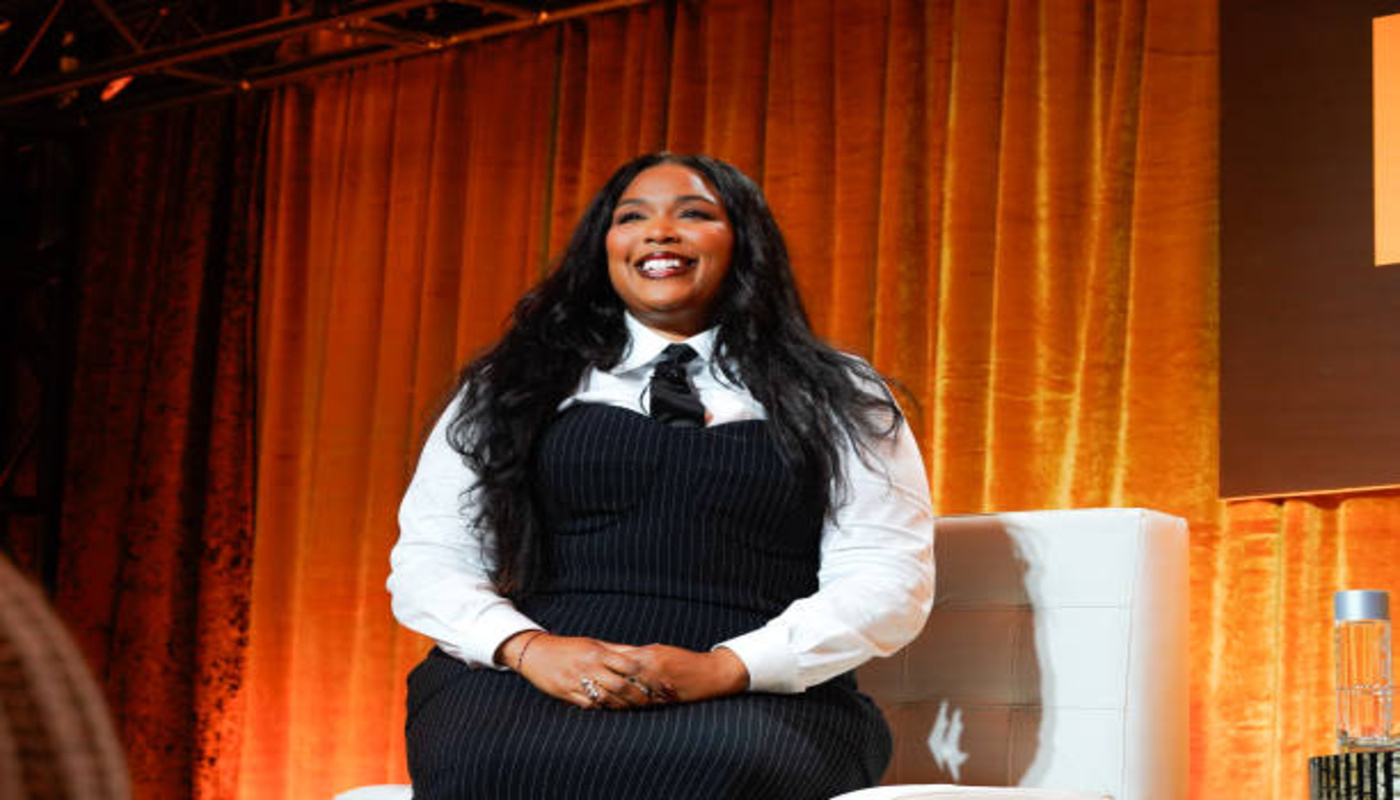
In a world where media has long equated self-worth with thinness, the rise of Lizzo represents a seismic cultural shift. The singer, rapper, and flutist has become a global icon not merely for her chart-topping music but for her unapologetic celebration of her body, talent, and confidence. While pop culture has historically framed confidence, charisma, and success as the domain of slender figures, Lizzo challenges this entrenched notion, asserting that self-assurance is not dictated by shape or size. Her career—punctuated by high-profile performances, award-winning music, and viral social media moments—has normalized body diversity in spaces where it was previously marginalized. By examining Lizzo’s public persona, verified interviews, and cultural impact, we can better understand how her visibility is reshaping societal expectations around beauty, confidence, and performance, inviting audiences across the globe to reconsider the meaning of self-love.
The Historical Weight of Thinness as a Cultural Standard
For decades, Western media has perpetuated a narrow conception of beauty: slenderness equated with discipline, desirability, and professional worth. This ideal has been reinforced through advertising, television, fashion runways, and social media, often marginalizing bodies that deviate from the standard. Psychological studies have documented how repeated exposure to thinness-centric media contributes to internalized body dissatisfaction, low self-esteem, and disordered eating behaviors. Lizzo’s emergence challenges this framework directly. Unlike artists who may conform to conventional beauty ideals, she foregrounds fullness as a symbol of vitality, joy, and authority. Through performances that center her movement, presence, and skill, she subverts the historical assumption that confidence must be thinly coded. By doing so, she not only represents an alternative aesthetic but also questions the moral and social value historically attributed to thinness, inviting audiences to interrogate culturally ingrained biases.
Lizzo’s advocacy extends beyond performance and media visibility; it influences everyday conversations about self-worth and inclusion. Through interviews, social media posts, and public appearances, she normalizes discussions about body confidence, self-love, and resilience. Her example empowers audiences to question internalized biases and societal pressures that equate thinness with competence, beauty, or authority. By celebrating her own body while highlighting joy, talent, and authenticity, Lizzo reframes confidence as accessible and multidimensional. This visibility encourages individuals to redefine personal benchmarks for success and self-esteem, cultivating a culture where self-assurance is based on agency, creativity, and self-expression rather than appearance.
Her impact also emphasizes the importance of representation in shaping cultural values. Seeing a prominent, successful artist inhabit a larger body challenges stereotypes and validates diverse experiences. Lizzo’s career demonstrates that influence and admiration are not confined to conventional aesthetics, inspiring audiences across ages, cultures, and geographies. By centering empowerment, authenticity, and skill, she illustrates that confidence emerges from alignment with one’s identity and passions rather than conforming to external expectations. This approach reinforces body inclusivity as a central component of cultural transformation, fostering a society where people of all sizes can thrive personally, professionally, and socially.
Performance as Empowerment
Lizzo’s performances are not simply entertainment—they are deliberate acts of empowerment. Each concert, award show appearance, or public performance communicates a bold declaration that confidence is performative, public, and unapologetic. Her dynamic stage presence, from powerful vocal delivery to choreographed movement, demonstrates that occupying space confidently is not limited to bodies conforming to societal ideals of thinness. Fans respond with enthusiasm, creating participatory moments that validate diverse bodies in public spaces. Through her artistry, Lizzo converts performance into a cultural dialogue, showcasing how joy, skill, and authenticity can intersect with body positivity. These performances also function as a form of social proof, illustrating that audiences can celebrate fullness, talent, and charisma simultaneously. By consistently choosing bold costumes, expressive movement, and confident engagement, she models self-assurance as multidimensional, challenging long-held assumptions that authority, desirability, and stage presence are the preserve of conventionally thin performers. In doing so, Lizzo demonstrates that empowerment is performative, contagious, and culturally transformative.
Media Representation and Narrative Control
Lizzo exercises intentional control over her public narrative, countering traditional media biases surrounding body size. In interviews, magazine features, and social media campaigns, she frames confidence as intrinsic and multifaceted, emphasizing self-expression, artistry, and authenticity over appearance. Historically, media has portrayed bodies outside the narrow thin ideal as either anomalous or controversial, but Lizzo’s active narrative control disrupts this pattern. By highlighting her talent alongside body positivity, she shifts coverage from novelty to normalization, allowing audiences to see larger bodies as capable of authority, charisma, and mainstream success. Her presence in high-profile outlets like GQ, Billboard, and Rolling Stone exemplifies this shift, encouraging more inclusive storytelling in entertainment journalism. Importantly, she does not rely on external validation to define self-worth, which in turn models media literacy for her audience. Fans and other public figures observe not only her confidence but her ability to strategically shape public perception, underscoring the role of agency in transforming cultural and media standards around appearance, competence, and visibility.
Intersection of Music and Body Positivity
Lizzo integrates body positivity seamlessly into her music, transforming lyrical content into a platform for social commentary. Tracks like “Truth Hurts” and “Juice” celebrate self-assurance, independence, and joy, often foregrounding body confidence without moralizing or shaming others. This approach challenges the historic tendency in pop and hip-hop to equate thinness with desirability or legitimacy. Her lyrics invite audiences to embrace fullness, presence, and authenticity as equally valid markers of self-worth. Music, as a shared cultural medium, amplifies these messages across generational, geographic, and cultural boundaries, allowing diverse audiences to internalize positive representations of confidence. Moreover, the combination of catchy melodies, bold personality, and explicit self-affirmation creates a feedback loop where audiences both enjoy and internalize messages of self-love. Lizzo’s artistry demonstrates that music can serve as a cultural corrective, replacing limited beauty ideals with broader, more inclusive definitions of empowerment, showing that confidence is performative, relational, and rooted in self-acceptance rather than external measurement.
Social Media as a Platform for Inclusion
Social media has amplified Lizzo’s ability to normalize confidence across body types. Platforms like Instagram, TikTok, and Twitter allow her to share moments that highlight vulnerability, creativity, and self-love alongside performances. These glimpses into her life, ranging from casual videos to behind-the-scenes rehearsal clips, model authentic self-expression and challenge the notion that only thin bodies are worthy of visibility. By directly engaging with fans through comments, challenges, and campaigns, she cultivates interactive communities where body diversity is celebrated and internalized by participants. This participatory approach transforms passive viewership into active engagement, allowing audiences to see confidence as accessible rather than aspirationally exclusive. Social media also circumvents traditional gatekeeping mechanisms of mainstream media, enabling Lizzo to assert agency in representation and influence cultural norms on her own terms. Her digital presence demonstrates that inclusion is not merely symbolic but performative and relational, reinforcing the idea that confidence is a lived, shared experience rather than a static or physically coded trait.
Challenging Traditional Beauty Norms
Lizzo’s visibility directly confronts entrenched beauty norms that prioritize slenderness, Eurocentric features, and minimal body mass as indicators of worth. By occupying high-profile spaces—red carpets, award shows, and magazine covers—she redefines who can represent confidence, style, and talent in mainstream culture. Her bold fashion choices, unapologetic movement, and vocal assertiveness communicate that aesthetics are culturally constructed rather than biologically necessary. Importantly, Lizzo does not frame her body as a novelty or a spectacle; instead, it is a normalized, celebrated component of her public identity. This challenges audiences to question the assumptions underlying traditional standards and reassess their own internalized biases. By doing so, she destabilizes the implicit link between thinness and moral virtue, capability, or desirability. Lizzo’s career demonstrates that beauty standards are neither fixed nor universal, and that representation of diverse bodies in prominent spaces can create meaningful cultural shifts that normalize confidence across size, shape, and identity.
Psychological Impact on Fans and Communities
The psychological effects of Lizzo’s visibility are profound. Representation research indicates that seeing celebrated, accomplished figures inhabiting larger bodies can reduce internalized stigma, enhance self-esteem, and foster a sense of belonging. Fans report feeling validated, inspired, and empowered by her music, messaging, and public presence. This effect is particularly salient for adolescents and young adults navigating societal pressures around body image and performance. Lizzo’s approach models resilience, joy, and self-acceptance, demonstrating that confidence is cultivated through self-recognition rather than conformity. By emphasizing authenticity and vulnerability alongside talent, she humanizes success, allowing fans to internalize the principle that self-worth is independent of body size. Moreover, the social contagion effect—where behaviors and attitudes are adopted through observation—amplifies these psychological benefits, creating communities of practice in which body positivity is actively lived and shared.
Fashion and Body Inclusivity
Fashion is another arena where Lizzo challenges restrictive norms. By embracing bold, colorful, and tailored outfits, she demonstrates that style is inclusive of all body types. Her collaborations with designers and her red carpet appearances show that fashion can serve as both self-expression and advocacy. Through visibility, Lizzo disrupts the historically narrow sizing and aesthetic standards of the fashion industry. Her choice to wear high-fashion ensembles confidently signals that desirability and elegance are not limited to certain body types. Moreover, she encourages fans to experiment with clothing without fear of judgment, creating cultural spaces in which inclusion is celebrated. Fashion, in Lizzo’s case, becomes a medium for body liberation, reinforcing the idea that style, confidence, and self-expression are not conditional on body size but on creativity, authenticity, and personal agency.
Global Resonance of Lizzo’s Message
Although rooted in Western pop culture, Lizzo’s influence is global. International audiences, exposed to her music and public presence through streaming platforms, social media, and global media coverage, encounter an alternative narrative that validates larger bodies. In regions where Westernized thinness ideals dominate media messaging, her visibility provides a counter-narrative, encouraging viewers to redefine confidence and self-worth. Lizzo’s example demonstrates that cultural norms around body size are malleable and that cross-cultural dialogue about inclusion can be mediated through media representation. Her global resonance underscores the universality of the message: confidence is not contingent on a particular body type. By celebrating fullness alongside talent, joy, and authenticity, she fosters international conversations about self-acceptance, dismantling restrictive beauty norms while respecting cultural diversity in body ideals.
Redefining Success Beyond Aesthetics
Lizzo’s career reframes success as multidimensional, emphasizing talent, creativity, and authenticity rather than physical appearance. Awards, chart performance, and critical acclaim are presented alongside self-love advocacy, illustrating that professional legitimacy is decoupled from body size. Her example challenges industries, audiences, and peers to expand their definitions of achievement, moving away from aesthetics as a gatekeeper of opportunity. Success is reframed as a combination of skill, charisma, impact, and personal empowerment, signaling that bodies of all shapes can inhabit authority and influence. This broader definition has implications beyond music and media, inspiring inclusive practices across workplaces, education, and creative industries. By integrating body positivity into the concept of success, Lizzo normalizes the coexistence of professional accomplishment and self-acceptance, challenging centuries of cultural messaging that equate thinness with worth.
Toward a Sustainable Culture of Confidence
The lasting impact of Lizzo’s career lies in the potential to cultivate a sustainable culture of confidence. By modeling self-love, agency, and authenticity, she encourages audiences to embrace their bodies, talents, and identities without reliance on external validation or narrow societal standards. This cultural shift has implications for mental health, media literacy, and inclusivity, offering strategies for resilience against body shaming, social comparison, and unrealistic beauty expectations. Future artists, media professionals, and audiences can build upon this foundation by continuing to normalize diverse body types in public spaces, music, fashion, and media representation. Lizzo’s example demonstrates that confidence is a skill, a practice, and a cultural statement—not a product of thinness. By redefining public perceptions of empowerment, she inspires a new generation to prioritize self-acceptance, creativity, and joy, ensuring that body inclusivity is not merely aspirational but actionable, visible, and culturally transformative.
Lizzo’s Public Persona: Confidence in Action
Lizzo’s public persona is meticulously documented through interviews, award shows, and social media campaigns. In a 2019 interview with GQ, she described confidence as a practice rather than a fixed trait, emphasizing self-acceptance over societal approval. Her performances—ranging from the Grammys to viral TikTok moments—demonstrate a body in motion, unapologetically commanding space and attention. This performative confidence is neither contrived nor tokenistic; it reflects intentionality in resisting traditional beauty constraints. Her engagement with fans on platforms like Instagram and Twitter amplifies messages of body positivity and self-love, encouraging audiences to embrace individuality rather than conform to prescriptive norms. By leveraging her visibility, Lizzo reframes confidence as an internal state accessible to anyone, regardless of size, disrupting entrenched media narratives that equate slimness with competence, desirability, or authority.
Cultural Impact: Shifting Norms in Music and Media
Lizzo’s influence extends beyond personal branding into broader cultural ecosystems. Historically, pop and hip-hop have imposed narrow body standards on female artists, often privileging slender, conventionally attractive figures. Lizzo’s chart-topping success and critical acclaim challenge this precedent, demonstrating that mainstream audiences can embrace performers outside traditional size norms. Furthermore, her advocacy for inclusivity intersects with fashion, advertising, and music industries, compelling brands to reconsider their representation strategies. Globally, her presence resonates in countries where Western media exerts cultural influence, providing an alternative model for confidence and performance. By foregrounding talent, charisma, and authenticity over conformity, Lizzo disrupts the implicit equation of thinness with desirability, illustrating that audience engagement, artistic legitimacy, and personal empowerment are decoupled from body size.
Psychological Implications: Rewriting Internalized Beliefs
The visibility of Lizzo’s confidence has measurable psychological implications. Research in social psychology highlights how representation affects self-concept, particularly among marginalized groups. By seeing a celebrated, accomplished artist unapologetically occupying space in a larger body, individuals who do not conform to thinness ideals may experience affirmation, increased self-efficacy, and reduced internalized stigma. This effect is particularly salient for young women and adolescents who navigate conflicting cultural messages about body image, worth, and social validation. Lizzo’s openness about vulnerability, self-love, and joy humanizes confidence, countering the narrative that it is a product of external validation or specific physical standards. Her example illustrates that body diversity can coexist with self-assuredness, performance excellence, and public admiration, offering a corrective to decades of media-driven internalized biases.
Cross-Cultural Perspectives on Body Confidence
While Lizzo’s impact is rooted in Western pop culture, its resonance is global. Different societies have historically held diverse beauty and body standards, with some cultures celebrating fuller figures as symbols of wealth, health, or fertility. Lizzo’s visibility in international media contributes to cross-cultural dialogue about confidence and self-representation, challenging the homogenization of Western thinness ideals. In regions like Latin America, Africa, and South Asia, where media increasingly imports Western narratives, her prominence provides a counter-narrative that validates alternative embodiments of beauty and power. By transcending cultural boundaries, Lizzo exemplifies how confidence need not be constrained by arbitrary aesthetic norms, suggesting that global audiences can reinterpret self-worth through personal authenticity rather than adherence to dominant, often exclusionary, standards.
Conclusion: Toward a More Inclusive Definition of Confidence
Lizzo’s career exemplifies a profound cultural shift: the recognition that confidence is not predicated on conformity to thinness. By foregrounding talent, joy, and authenticity, she challenges entrenched societal assumptions and offers a template for broader representation across media, music, and fashion. Her visibility validates diverse bodies and experiences, fostering psychological benefits for audiences historically marginalized by mainstream standards. Moving forward, the implication is clear: industries, media, and audiences alike must embrace a more inclusive definition of confidence, one rooted in self-expression, skill, and individuality rather than physical conformity. Lizzo’s impact is not limited to performance or celebrity culture; it invites society to reconsider how empowerment, presence, and authority can manifest in bodies of all sizes, inspiring a new era of inclusivity and self-assurance.
Sources: GQ, Rolling Stone, Billboard, NPR, The Guardian, Variety