 by
by Introduction: Desire as Territory and Cardi B’s Cultural Disruption
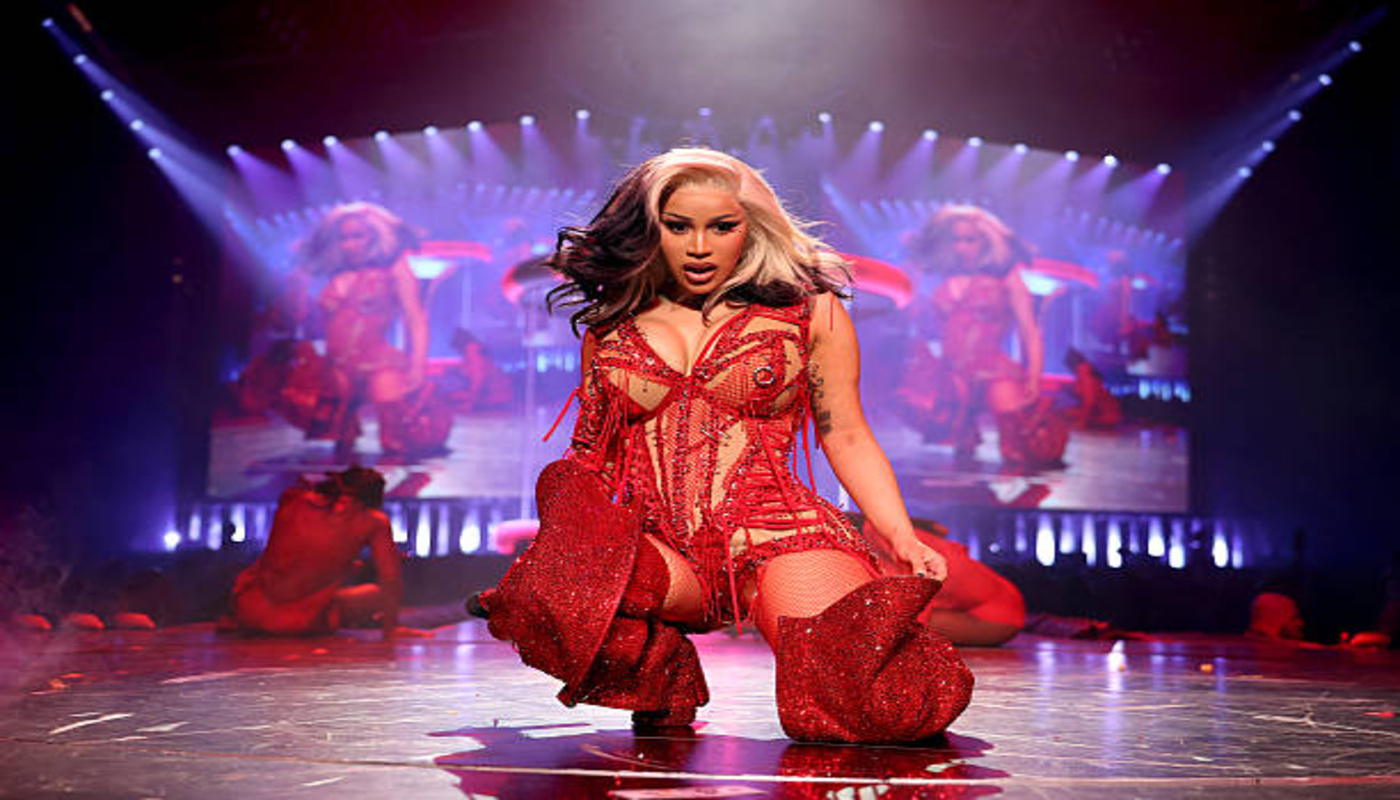
In mainstream media, discussions of desire—particularly female desire—have historically been shaped by patriarchal narratives that dictate who desires, what is desirable, and who “owns” that desire. From classic cinema to pop music, women have often been portrayed as objects to be desired rather than agents of their own desire. Into that entrenched cultural script stepped Cardi B—a Bronx-born artist whose unfiltered expression of self, sexuality, and ambition has reframed public conversations about desire, agency, and ownership. What distinguishes Cardi from contemporaries isn’t merely her candor but the cultural ripples she creates by insisting that desire be recognized as something women can articulate, claim, and celebrate on their terms.
This article explores Cardi B’s impact not through gossip or sensationalism but by examining her influence at the intersections of culture, psychology, and social liberation. It considers how she uses her platform to challenge norms around female sexuality, authenticity, respectability politics, and empowerment, ultimately expanding how desire is conceptualized in the modern cultural imagination.
From the Bronx to Billboard: A Narrative Rooted in Authenticity
Belcalis Almanzar—known globally as Cardi B—first gained attention through social media, captivating audiences with her no‑nonsense personality, humor, and unapologetic honesty about her life experiences. Cardi’s trajectory from the streets of the Bronx, through work as a stripper, into rap superstardom embodies a narrative of self‑actualization grounded in raw truth rather than sanitized glamour. Her openness about her past has not only demystified the pathways through which working‑class women navigate economic precarity, but it has also expanded the cultural space in which desire, hard work, and ambition can coexist without shame.
In interviews, Cardi frequently emphasises being “real” over conforming to sanitized expectations of female artists—especially Black women—who are often held to conflicting standards of purity and propriety. She spoke candidly about feeling the pressure to behave like “Mother Teresa” while also embracing her sexuality and rapping about it openly, asserting: “I’m a very sexual person. I love sex, and I like to rap about it… I’m not hurting nobody because I love my pussy and want to rap about it.”
This desire for authenticity is foundational to how Cardi B reframes ownership of desire—not as an abstract feminist thesis but as embodied experience.
Sexual Agency as Empowerment—not Performance
In 2020, Cardi B released “WAP” with fellow artist Megan Thee Stallion—a song that became a cultural flashpoint precisely because of its unflinching celebration of female desire. The track, whose acronym stands for “Wet-Ass Pussy,” was both lauded as a breakthrough in sex‑positive expression and vilified by critics who viewed it as vulgar or degrading. Yet its impact cannot be dismissed as mere provocation; WAP challenged long‑standing double standards in hip‑hop and society writ large, where male artists have historically flaunted sexual dominance without equivalent scrutiny.
By centering female pleasure, agency, and expectation, the song reframed desire not as something to be performed for male gratification but as a legitimate subject of female articulation. Critical acclaim from major publications praised the track for this exact reason—seeing it as a bold declaration that women can openly express what they want from sex without apology. Moreover, the intense debates that followed reveal exactly what makes this cultural moment significant: the discomfort it caused in confronting entrenched norms about who controls sexual narratives in popular culture.
Respectability Politics and the Female Desire Double Bind
Cardi B’s public discourse consistently pushes back against a phenomenon scholars call respectability politics—the policing of marginalized people’s behaviour to align with mainstream norms. In an industry that often expects women to behave with decorum while men enjoy a wide latitude of expression, Cardi’s refusal to be boxed into respectful silence becomes a reclamation of space for female desire.
In her Billboard interview as Woman of the Year, she highlighted this tension explicitly: while many women in entertainment are held to impossible standards of behaviour and expression, she insists she can still be “positive… and also be yourself.” This underscores a deeper psychological and cultural pivot: rejecting the notion that sexual expression diminishes one’s value as a public figure or role model.
This stance resonates with many because it dismantles the binary where women are either pure and respectable or sexual and dismissible. Cardi occupies a liminal space where both aspects coexist, revealing how respectability politics often fail to capture the complexity of real human desire.
Intersectionality: Race, Class, and Desire
Cardi B’s influence cannot be isolated from her identities as a woman of colour rooted in working‑class experience. Cultural commentary often overlooks how race and class shape perceptions of desire and agency. Black and brown women have long struggled against stereotypes that either hypersexualize or invisibilize their bodies and desires. Cardi’s narrative disrupts both tropes by asserting that desire—sexual, emotional, professional—is equally valid when voiced by women like her.
Her relationship with political discourse further illustrates this intersectional complexity. Through social media responses to conservative criticism and engagement with political figures, she has demonstrated that sexual expressiveness does not preclude—or undermine—engagement with social justice issues. Her commentary, even when controversial, forces a reckoning with how society treats women who challenge multiple, intersecting norms simultaneously.
In this way, Cardi’s articulation of desire becomes a cultural intervention, challenging not just stereotypes about female sexuality but also the racialized expectations of how Black women should express themselves publicly.
Psychological Implications: Desire as Self‑Authorship
At its core, reframing conversations around ownership of desire involves self‑authorship—the capacity to define one’s own desires and narrative identity. Cardi B’s public persona models this psychological process vividly. Her refusal to hide elements of herself—whether it’s her sexuality, her humour, her background, or her ambitions—signals a powerful mode of self‑ownership that resonates with many, especially young women.
This has implications beyond entertainment. In psychological terms, vocalizing desire contributes to agency and autonomy, facilitating healthier relationships with one’s body and choices. By normalizing discourse about female pleasure, boundaries, and wants, Cardi indirectly contributes to dismantling shame‑based constructs that many internalize around desire.
Moreover, her candidness underscores how speaking openly about desire intersects with emotional honesty and vulnerability. In an era where social media often showcases curated perfection, Cardi’s raw expression of her inner experiences offers a counter‑narrative rooted in real, imperfect, yet empowered self‑representation.
Social Influence and Global Cultural Impact
While Cardi B’s work is rooted in American hip‑hop culture, its influence has reached global audiences. The conversation around WAP, respectability politics, and sexual agency has reverberated across countries and cultural contexts, sparking debates about feminism, morality, and artistic freedom.
In many regions, audiences interpret her message through local lenses, navigating cultural taboos around sexuality, gender roles, and public expression. The global response highlights how conversations around desire are not monolithic: in some societies, Cardi’s frankness has been embraced as liberating, while in others it prompts deeper reflection on entrenched norms that stifle female autonomy.
This transnational dialogue—sparked, in part, by social media and music streaming—reveals how Cardi’s challenge to conventional narratives resonates beyond the United States. Her impact demonstrates how cultural products can catalyse conversations about desire, gender, and empowerment across diverse contexts.
Nuance Over Absolutes: Reframing, Not Redefining
A critical part of analyzing Cardi B’s influence involves moving past simplistic labels like “empowering” or “controversial.” Her cultural role doesn’t fit neatly into traditional feminist categories; rather, she complicates them. Some feminists argue that empowerment must look a certain way—centered on economic independence or political power. Cardi’s approach suggests a broader understanding of empowerment, one that includes sexual agency as a dimension of human autonomy.
Her refusal to be confined within pre‑defined ideological boxes—whether “respectable artist,” “role model,” or “feminist poster child”—forces culture to engage with the messiness of real life. It underscores that conversations about desire are inherently complex, involving personal identity, societal norms, and lived experience. This honesty, even when uncomfortable, encourages more nuanced discourse about what it means to own one’s desires without apology.
The Role of Humor and Authenticity in Negotiating Desire
One of Cardi B’s most distinctive tools in framing desire is her humor. Her interviews, social media, and even live performances are peppered with witty, self-deprecating, and often outrageous commentary that humanizes her while amplifying her message. Humor, in this context, functions as a subtle yet powerful mechanism of empowerment. By making audiences laugh at scenarios that would otherwise be shaming or taboo, she destabilizes societal expectations about how women should speak about sexual desire. This approach also expands the accessibility of the conversation, making it easier for people of different cultural backgrounds to engage without feeling alienated. Beyond entertainment, this blend of humor and authenticity reinforces her credibility; Cardi B isn’t performing a scripted version of desire for public consumption. Instead, she frames it as lived experience, creating space for audiences to reflect on their own desires without guilt or judgment. In doing so, she normalizes the ownership of desire as something both personal and socially valid, merging entertainment with cultural pedagogy in an unprecedented way.
Negotiating Public Scrutiny and Digital Spaces
In the digital age, conversations about female desire are inseparable from social media scrutiny. Cardi B navigates this terrain with remarkable savvy, using platforms like Instagram, Twitter, and TikTok to assert control over her narrative. The public dissection of her sexuality, personality, and choices often triggers polarized reactions, yet she consistently reclaims authority by addressing critics directly and transparently. This negotiation highlights a broader cultural lesson: the ownership of desire today is intertwined with the ability to manage visibility and commentary in hyperconnected environments. Her approach demonstrates that empowerment is not about avoiding critique but strategically engaging with it, framing her desires and experiences on her own terms. Furthermore, the global reach of social media allows her message to transcend borders, enabling young women and marginalized communities worldwide to see desire articulated in ways that affirm autonomy, challenge stereotypes, and cultivate self-expression, all while navigating the pressures of public visibility.
Economic Agency and Desire Intersections
Another layer of Cardi B’s influence lies in her seamless integration of economic agency with sexual and personal desire. By openly discussing financial independence alongside her sexuality, she disrupts narratives that position sexual expression as inherently at odds with professionalism or success. For instance, Cardi frequently references her journey from a stripper to a chart-topping artist as a means of illustrating how embracing her sexuality, rather than hiding it, contributed to her ability to negotiate power and wealth. This intersection highlights an important cultural insight: ownership of desire does not exist in isolation from broader forms of agency. Her candidness teaches that sexual empowerment and economic autonomy can reinforce each other, challenging audiences to reconsider societal frameworks that often pit morality against financial success for women, especially women of color. Cardi’s public discourse reframes desire as multidimensional, demonstrating that claiming pleasure and ambition are mutually reinforcing rather than contradictory.
Influence on Media Representations of Women
Cardi B’s cultural impact also extends to the media’s portrayal of women, especially in music, film, and advertising. By unapologetically embracing her body, speech, and sexuality, she creates a counter-narrative to longstanding tropes of female passivity, objectification, and decorum. Media outlets covering her achievements, controversies, and interviews are often forced to grapple with the tension she embodies—simultaneously entertaining, bold, and intellectually compelling. Her visibility challenges producers, journalists, and content creators to rethink the lens through which women are depicted, inspiring more diverse, layered, and authentic representations. In addition, her presence has prompted conversations about consent, pleasure, and agency in media training, music production, and pop culture criticism, demonstrating that her influence is not confined to entertainment but shapes the ways institutions consider female expression and desire. As a result, Cardi B becomes a case study in how a single cultural figure can shift media paradigms and inspire nuanced portrayals of female autonomy.
Cross-Cultural Conversations on Desire and Autonomy
While Cardi B’s work is rooted in American hip-hop culture, its resonance across global audiences underscores universal themes in the negotiation of desire. From Latin America to Europe and parts of Asia, young women engage with her messaging in relation to their own social norms, family expectations, and cultural taboos. Her candidness encourages dialogue around previously silenced topics, such as female sexual pleasure, autonomy, and professional ambition, creating cross-cultural spaces for reflection and debate. Anthropologists and media scholars note that exposure to public figures like Cardi B can catalyze shifts in perception, inspiring audiences to question restrictive social mores and embrace more nuanced understandings of agency. The global reception of her work highlights that desire is not monolithic; it is shaped by intersecting cultural, racial, and economic contexts. By sparking these conversations internationally, Cardi B demonstrates that ownership of desire is both a personal and collective phenomenon, inviting diverse communities to redefine norms around sexual expression, autonomy, and self-assertion.
Legacy and the Future of Desire Discourse
Looking forward, Cardi B’s cultural interventions suggest that discussions about desire will continue evolving toward inclusivity, complexity, and intersectionality. Her unapologetic approach has created space for emerging artists, activists, and public figures to articulate desire in ways previously marginalized or stigmatized. Beyond entertainment, her influence encourages education, dialogue, and social advocacy centered on consent, pleasure, and self-ownership. The legacy she is cultivating demonstrates that desire can be publicly acknowledged without moral compromise, creating a blueprint for future conversations about gender, power, and agency. As culture continues to shift in response to new voices and digital platforms, Cardi B’s example serves as a reminder that ownership of desire is not only an individual assertion but a societal challenge—a call to reimagine norms, dismantle double standards, and foster a world where desire is recognized as legitimate, multifaceted, and worthy of celebration.
Redefining Role Models Through Desire
Cardi B’s candid embrace of desire reshapes the notion of what it means to be a role model in contemporary culture. Traditional paradigms often present role models as morally flawless or constrained within socially acceptable behaviour, leaving little space for authentic, multidimensional expression. By openly discussing her sexuality, ambitions, and personal challenges, Cardi demonstrates that leadership, influence, and responsibility are compatible with unfiltered self-expression. This approach encourages audiences—especially young women and marginalized communities—to envision role models who reflect the complexities of real life rather than idealized, unattainable standards. Moreover, it reframes desire as a source of guidance rather than shame: by witnessing a public figure claim her wants and boundaries unapologetically, individuals gain permission to explore, articulate, and own their own desires. In this sense, Cardi B’s influence transcends entertainment, shaping cultural expectations around integrity, agency, and empowerment. Her example signals a shift toward role models who are celebrated not despite their desires and imperfections, but because they embody them fully, inviting society to expand its understanding of leadership, authenticity, and personal agency.
Conclusion: Forward Movement and the Future of Desire Conversations
Cardi B’s cultural footprint extends beyond catchy hooks and viral moments. Through her public presence, interviews, and music, she has challenged societal assumptions about who can speak about desire—and how. Her unfiltered expression of sexuality and agency has reframed cultural conversations, not by dictating a universal model but by amplifying the legitimacy of diverse expressions of desire.
As cultural conversations continue to evolve around gender, sexuality, and autonomy, Cardi’s role highlights the importance of ownership—not only of our desires but of the narratives that shape them. Her influence invites a future where conversations about desire are inclusive, intersectional, and grounded in individual agency. In that sense, the reframing of desire is not complete; it is ongoing, shaped by artists, audiences, and cultural makers who refuse to let normative boundaries define their experience.
Sources: Billboard, Dazed, People, Harper’s Bazaar, Wikipedia