 by
by A Cultural Shift That Didn’t Ask for Permission
In a global entertainment landscape that has historically relied on rigid definitions of masculinity and femininity to construct desirability, the emergence of Bad Bunny as a cultural force has disrupted not just music charts—but the very politics of attraction itself. His presence is not simply about fashion choices or aesthetic experimentation. It is about how attraction is negotiated, perceived, and reshaped in a world where gender expression is no longer bound by binary expectations.
For decades, popular culture has subtly reinforced a narrow template of what is considered attractive: muscular, stoic men for heterosexual appeal; hyper-feminized, soft, and conventionally styled women as the ideal counterpart. These norms have been deeply embedded in media, advertising, and celebrity culture across regions—from Hollywood to Latin America to South Asia. Bad Bunny’s gender expression challenges this framework at its core, not by rejecting masculinity, but by expanding its vocabulary.
His influence invites a fundamental question: What happens when attraction is no longer dictated by conformity, but by authenticity?
The Performance of Masculinity: A Global Construct
Masculinity has long been treated as a performance rather than an inherent trait. Sociological frameworks suggest that masculinity is constructed through repeated behaviors, symbols, and social reinforcement. Across cultures, men are expected to embody control, emotional restraint, and physical dominance. Deviation from this model is often penalized socially, particularly in hyper-masculine societies.
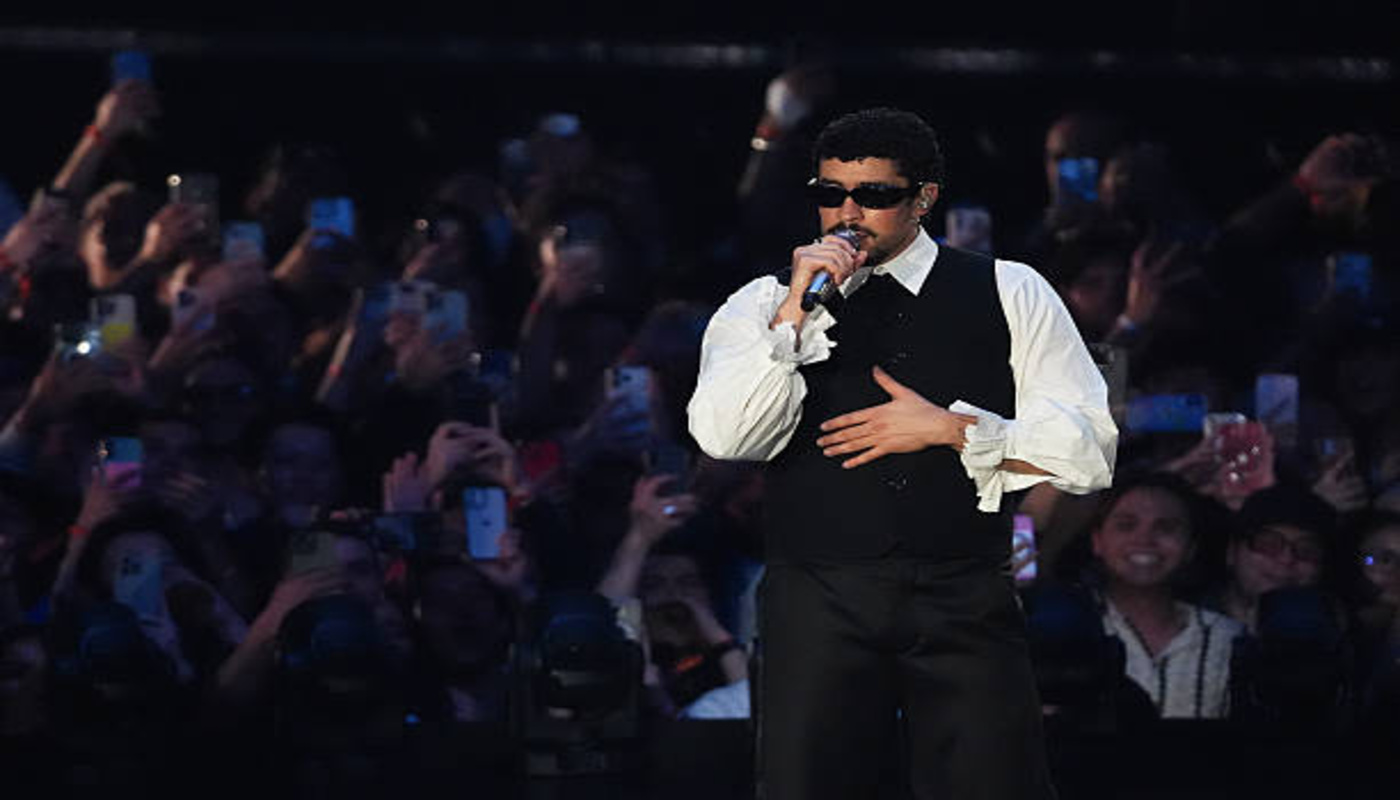
Bad Bunny’s public persona destabilizes this construct. Through painted nails, gender-fluid fashion, soft silhouettes, and experimental styling, he refuses to perform masculinity in its traditional sense. Instead, he performs self-expression.
Importantly, this is not an isolated phenomenon. Across global youth culture, there is a gradual shift away from strict gender signaling. However, what makes Bad Bunny particularly influential is the scale and visibility of his platform. He operates within mainstream Latin music—a genre often associated with machismo, reggaeton stereotypes, and highly gendered representations of men and women.
By occupying this space while openly challenging gender norms, he creates a cultural paradox: he is both deeply rooted in traditional genre structures and radically detached from their social expectations.
Attraction Politics: Moving Beyond the Binary
Attraction has historically been framed through heteronormative and binary lenses. Men are expected to be attracted to femininity; women to masculinity. This binary framework simplifies attraction into predictable patterns—but it fails to account for the complexity of human desire.
Bad Bunny disrupts this binary by embodying elements that are traditionally coded as feminine—such as softness, fluidity, and vulnerability—while maintaining a strong masculine identity. This creates a new aesthetic of attraction that is not dependent on gender polarity.
Instead, attraction becomes more about authenticity, confidence, and emotional expression.
This shift is significant because it allows individuals—especially younger audiences—to decouple attraction from rigid gender expectations. It creates space for:
- Attraction to emotional openness rather than emotional suppression
- Attraction to aesthetic fluidity rather than strict gender presentation
- Attraction to confidence that exists outside traditional masculinity
In doing so, Bad Bunny redefines attraction as something multidimensional rather than binary.
The Power of Visibility: Representation in Action
Representation plays a critical role in shaping societal norms. When public figures present alternative ways of being, they normalize those identities and expressions for broader audiences.
Bad Bunny’s visibility as a gender-nonconforming artist in a globally influential music scene has a ripple effect:
- It validates individuals who express themselves outside gender norms
- It introduces alternative representations of masculinity to mainstream audiences
- It challenges industries—fashion, music, advertising—to rethink their visual language
Unlike symbolic gestures, his representation is consistent and intentional. His appearance at major events, his music videos, and his public appearances all reinforce the message that gender expression is not fixed.
This consistency is crucial. Inconsistent or performative inclusivity often fails to create meaningful change. But sustained visibility can shift cultural expectations over time.
Cultural Context: Latin Identity and Machismo
To fully understand the impact of Bad Bunny’s gender expression, it is important to consider the cultural context from which he emerges.
Latin American cultures have historically been associated with strong machismo traditions. Machismo emphasizes hyper-masculinity, emotional suppression, and dominance. In such contexts, deviation from masculine norms can be perceived as a threat to cultural identity.
Bad Bunny’s rise within this context is particularly significant. By maintaining his Puerto Rican identity while openly challenging gender norms, he complicates the narrative that masculinity must be rigid to preserve cultural authenticity.
Instead, he demonstrates that cultural identity and gender expression are not mutually exclusive. This is a powerful statement, especially in regions where cultural pride is deeply tied to traditional gender roles.
His influence suggests that cultural identity can evolve without losing its essence. This is not about erasing tradition—but about expanding it.
Fashion as a Language of Resistance
Fashion has always been a form of non-verbal communication. It signals identity, values, and belonging. In Bad Bunny’s case, fashion becomes a tool of resistance and redefinition.
His use of nail polish, gender-fluid silhouettes, and unconventional styling choices disrupts the visual codes of masculinity. But more importantly, it normalizes these elements within a mainstream context.
This has broader implications for the fashion industry:
- Designers are increasingly incorporating gender-neutral collections
- Fashion campaigns are moving away from rigid gender binaries
- Male consumers are becoming more open to expressive styling
Bad Bunny’s fashion choices are not random—they are intentional cultural statements. They challenge the idea that masculinity must be visually minimal or restrained.
Instead, they present masculinity as expansive, expressive, and dynamic.
Emotional Expression: Redefining Strength
One of the most transformative aspects of Bad Bunny’s public persona is his openness to emotional expression.
Traditional masculinity often discourages men from expressing vulnerability, sadness, or emotional complexity. This suppression has been linked to mental health issues, emotional disconnection, and social isolation.
Bad Bunny’s music and public statements often reflect emotional honesty. He does not shy away from themes like heartbreak, longing, vulnerability, or introspection.
This redefinition of emotional strength is crucial. It challenges the idea that emotional openness is a weakness. Instead, it reframes it as a form of strength.
For many fans, especially men, this creates a new model of masculinity—one that allows space for emotional depth without compromising identity.
The Psychological Impact on Audiences
The psychological impact of seeing non-conforming gender expression in a mainstream figure is profound.
For individuals who have struggled to align with traditional gender norms, Bad Bunny’s presence can be validating. It signals that:
- Identity does not have to conform to societal expectations
- Attraction is not limited to binary constructs
- Self-expression can exist without social penalty
For others, it may challenge deeply ingrained beliefs about gender and attraction. This discomfort is not necessarily negative—it can be a catalyst for growth and reflection.
Cognitive dissonance plays a role here. When individuals encounter something that contradicts their existing beliefs, they are forced to reconcile that difference. Over time, this can lead to expanded perspectives.
Bad Bunny’s influence, therefore, operates not just culturally—but psychologically.
Global Reception: Different Contexts, Different Reactions
The global response to Bad Bunny’s gender expression varies significantly across regions.
In more progressive or urbanized contexts, his style is often celebrated as innovative and forward-thinking. It aligns with broader cultural movements toward inclusivity and fluid identity.
In more conservative contexts, reactions can be mixed. Some audiences may resist or reject his expression due to deeply rooted cultural or religious beliefs about gender roles.
However, even in these contexts, his visibility creates conversation. And conversation is the first step toward cultural change.
It is important to note that cultural transformation does not happen uniformly. It evolves in layers, often beginning with exposure, followed by discussion, and eventually—acceptance.
Bad Bunny’s global reach accelerates this process by placing these conversations on a worldwide stage.
Challenging the Male Gaze
The concept of the “male gaze” has long influenced how bodies and identities are represented in media. Traditionally, it refers to the tendency of media to depict the world through a heterosexual male perspective, often objectifying women and reinforcing gender hierarchies.
Bad Bunny disrupts this framework by refusing to conform to the expectations of the male gaze. His expression is not designed to be consumed in a traditional sense. It is self-directed rather than audience-directed.
This shift is important because it repositions the artist as an active participant in defining their own identity, rather than a passive object of visual consumption.
It also expands the concept of attraction itself. If attraction is no longer dictated by a singular gaze, it becomes more pluralistic—open to multiple interpretations and experiences.
The Role of Masculinity in a Post-Binary World
We are entering an era where gender is increasingly understood as a spectrum rather than a binary. In this context, masculinity itself must evolve.
Bad Bunny represents a version of masculinity that is:
- Fluid rather than fixed
- Expressive rather than repressive
- Inclusive rather than exclusive
This does not mean abandoning masculinity. It means redefining it.
In a post-binary world, masculinity can coexist with softness, vulnerability, and aesthetic fluidity. It can be both strong and gentle, assertive and expressive.
This evolution is not just cultural—it is necessary. As society becomes more inclusive, definitions of identity must expand to reflect that inclusivity.
The Future of Attraction Politics
Bad Bunny’s influence is part of a broader cultural shift that is reshaping attraction politics.
In the future, attraction may be less about rigid categories and more about:
- Individual expression
- Emotional intelligence
- Authenticity
- Confidence that transcends gender norms
This shift has the potential to create more inclusive and psychologically healthy models of attraction. It reduces pressure to conform and allows individuals to explore identity without fear of judgment.
However, this transition is not without resistance. Cultural change often faces pushback from those who are invested in maintaining traditional norms. But over time, visibility and representation tend to shift these norms toward inclusivity.
Expanding the Language of Desire in Popular Culture
Bad Bunny’s impact extends beyond individual identity—it reshapes the language through which desire is communicated in popular culture. Traditionally, desire has been coded through hyper-visual signals: muscular physiques, overt sexualization, and gendered performance cues. In contrast, his aesthetic introduces a quieter, more ambiguous form of allure that resists immediate categorization. This ambiguity is powerful because it invites interpretation rather than dictation. Instead of telling audiences what to find attractive, it encourages them to question why they find certain traits desirable in the first place.
This shift is especially significant in an era dominated by social media algorithms, where visual content is constantly optimized for engagement through familiar patterns. By introducing elements that disrupt these patterns—such as gender-fluid styling and non-conforming aesthetics—Bad Bunny interrupts the predictability of desire. This disruption creates space for audiences to re-evaluate their own attraction frameworks, moving away from passive consumption toward active reflection. The result is a more conscious form of engagement with beauty and identity.
Importantly, this does not mean that traditional forms of attractiveness disappear. Rather, they are contextualized within a broader spectrum. Attraction becomes less about adherence to a singular standard and more about personal resonance. In this way, Bad Bunny contributes to a cultural environment where desire is not prescribed but explored.
Masculinity, Vulnerability, and the Politics of Emotional Access
One of the most transformative elements of Bad Bunny’s cultural influence is his openness to vulnerability, which directly challenges the long-standing association between masculinity and emotional restriction. In many societies, men are conditioned to suppress emotional expression as a marker of strength. This suppression not only limits individual well-being but also shapes how attraction is constructed—favoring stoicism over emotional availability.
Bad Bunny disrupts this narrative by embodying a masculinity that includes emotional access. Through his music, interviews, and public persona, he normalizes expressions of sadness, longing, and introspection. This creates a new form of desirability—one rooted not in dominance or control, but in emotional depth. For many audiences, especially younger generations, this is a refreshing and relatable alternative.
From a psychological perspective, emotional openness enhances relational intimacy. When public figures model this behavior, they influence how audiences understand connection and attraction. It signals that attraction can be built on emotional resonance rather than superficial performance. This has broader implications for interpersonal relationships, where individuals may begin to prioritize emotional compatibility over rigid gender expectations.
By reframing vulnerability as an integral part of masculinity, Bad Bunny contributes to dismantling harmful emotional hierarchies. This shift is not only culturally significant but also deeply humanizing, allowing for more authentic forms of connection in both personal and societal contexts.
Global Youth Culture and the Fluidity of Identity
Bad Bunny’s influence is particularly pronounced within global youth culture, where identity is increasingly understood as fluid, intersectional, and self-defined. Younger generations are less constrained by traditional binaries and more open to exploring identity across multiple dimensions, including gender, sexuality, and self-expression. His visibility reinforces and accelerates this shift by providing a high-profile example of non-conformity that is both normalized and celebrated.
In many parts of the world, youth culture operates as a site of resistance against established norms. Bad Bunny’s aesthetic and messaging align with this resistance, offering a model of identity that rejects rigidity in favor of exploration. This is especially relevant in digitally connected societies, where cultural trends transcend geographic boundaries. A young person in Karachi, São Paulo, or Seoul can engage with the same cultural influences, creating a shared global dialogue around identity and attraction.
This interconnectedness also means that changes in attraction politics are not confined to one region—they ripple across cultures. Bad Bunny becomes a cultural reference point within this global conversation, symbolizing the possibility of redefining identity without losing cultural roots. For many young people, this represents a form of liberation: the ability to define themselves on their own terms while still participating in a shared cultural landscape.
As youth continue to shape cultural narratives, figures like Bad Bunny will remain central to the evolution of identity politics, particularly in how attraction is understood and expressed across generations.
Commercialization, Authenticity, and Industry Response
The entertainment and fashion industries have historically capitalized on trends, often adopting elements of cultural movements without fully engaging with their deeper meanings. Bad Bunny’s influence presents both an opportunity and a challenge in this regard. On one hand, his impact has encouraged brands to explore gender-neutral fashion and more inclusive representations. On the other hand, there is a risk of commodifying his expression without acknowledging its cultural significance.
Authenticity plays a crucial role here. Bad Bunny’s gender expression is not a marketing strategy—it is an extension of his identity. This distinction is important because it highlights the difference between performative inclusivity and genuine self-expression. When industries attempt to replicate his aesthetic without understanding its context, they risk reducing a meaningful cultural shift to a superficial trend.
However, the commercial response to his influence also indicates progress. Brands are increasingly aware that modern consumers value authenticity, inclusivity, and representation. This has led to more diverse campaigns, expanded gender categories in fashion, and a broader acceptance of non-traditional aesthetics.
The challenge moving forward is maintaining integrity. If industries can engage with these cultural shifts in a way that respects their origins and intentions, they have the potential to contribute positively to the evolution of attraction politics. If not, they risk diluting the very movements they seek to participate in.
Redefining Beauty Standards in a Post-Performance Era
The traditional concept of beauty has often been tied to performance—how well an individual adheres to established standards of appearance, behavior, and presentation. Bad Bunny’s influence challenges this paradigm by shifting focus from performance to presence. Instead of striving to meet external expectations, he emphasizes authenticity as the foundation of attractiveness.
This shift reflects a broader cultural movement toward what can be described as a “post-performance” era. In this context, beauty is no longer about fitting into predefined molds but about expressing individuality in its purest form. This has significant implications for how beauty is perceived, both socially and psychologically.
When individuals are no longer required to perform beauty in a specific way, they gain the freedom to explore their identities without fear of judgment. This can lead to increased self-acceptance and a more inclusive understanding of attractiveness. It also reduces the pressure to conform to unrealistic standards, which have historically contributed to issues related to self-esteem and body image.
Bad Bunny’s presence in this evolving landscape serves as a reminder that beauty is not static—it is shaped by culture, context, and individual expression. By embodying a form of beauty that transcends traditional categories, he contributes to a more expansive and inclusive vision of attraction. This vision moves beyond performance and toward a more authentic, human-centered understanding of what it means to be desirable.
Conclusion: Redefining Desire Through Authenticity
Bad Bunny’s gender expression is not simply a stylistic choice—it is a cultural intervention.
By challenging traditional notions of masculinity and attraction, he opens the door for a more inclusive and expansive understanding of identity. His influence demonstrates that attraction is not fixed—it is shaped by culture, visibility, and evolving social norms.
In redefining attraction politics, he does not offer a singular answer. Instead, he offers possibility.
A possibility where identity is not constrained by expectation.
A possibility where attraction is not limited by binary thinking.
A possibility where authenticity becomes the most powerful form of desirability.
As culture continues to evolve, figures like Bad Bunny remind us that the future of attraction lies not in conformity—but in the freedom to express who we truly are.
Sources: Rolling Stone, Billboard, Vogue, The New York Times, BBC, The Guardian, NPR, GQ