 by
by Introduction: When Strength Became Visible
For decades, the cultural script surrounding female bodies was quietly but firmly dictated: be small, be delicate, be unobtrusive. Strength—when allowed—was expected to be subtle, almost invisible. Muscles were acceptable only insofar as they did not disrupt femininity as defined by softness and restraint. Athleticism in women was often celebrated in performance but minimized in appearance.
Then came a shift that was not sudden, but seismic.
When Serena Williams stepped onto global courts, she did more than win matches—she reoriented the visual and psychological language of what a powerful female body could look like. Her presence did not ask for permission. It demanded recognition.
But Serena’s impact is not an isolated story. It exists within a broader constellation of athletes—like Venus Williams, Simone Biles, and Allyson Felix—who collectively disrupted entrenched ideals of femininity. Together, they have transformed not only sports culture but also how society perceives strength, beauty, and gender itself.
This is not just a story about sports. It is a story about visibility, resistance, race, media narratives, and the psychological liberation of millions who finally saw themselves reflected in bodies that were once marginalized or misunderstood.
The Historical Constraint: Femininity as Fragility
To understand the cultural disruption, we must first understand what came before.
For much of the 20th century, femininity was tightly linked to fragility. Western beauty standards emphasized slimness without visible muscularity, positioning strength as a masculine trait. Even as women entered competitive sports, their bodies were often scrutinized against these standards.
Female athletes were frequently described in paradoxical terms—“strong but still feminine,” “powerful yet graceful”—as though strength required justification. The underlying message was clear: athletic excellence was acceptable, but only if it did not visibly challenge traditional gender norms.
This created a psychological split. Women were encouraged to perform strength but not embody it.
The Role of Motherhood in Reframing Strength
One of the most powerful expansions of the “strong female body” narrative came when athletes like Serena Williams publicly navigated motherhood alongside elite performance. Traditionally, motherhood has been framed in opposition to physical strength—associated more with sacrifice, softness, and withdrawal from demanding careers. However, Serena’s return to professional tennis after giving birth challenged this deeply ingrained assumption.
Her openness about the physical and emotional realities of postpartum recovery—shared through interviews and documented experiences—shifted the conversation from idealized motherhood to embodied resilience. Strength was no longer just about winning titles; it became about healing, endurance, and reclaiming one’s body on one’s own terms. This reframing resonated globally, particularly with women who had been conditioned to see motherhood as a limitation rather than an extension of their physical and personal power.
By continuing to compete at the highest level while embracing motherhood, Serena helped dismantle the binary between nurturing and strength. She demonstrated that the female body is not defined by a single phase or role, but is capable of transformation without loss of identity. In doing so, she expanded the cultural imagination—making space for mothers to be seen not as exceptions in sport, but as integral to its future.
Strength and Emotional Visibility
Another dimension of redefining strong female bodies lies in the integration of emotional expression. For years, strength—especially in sports—was equated with stoicism. Female athletes were often expected to maintain composure, their emotional expressions scrutinized more harshly than their male counterparts. Serena Williams disrupted this expectation by allowing herself to be visibly human on and off the court.
Her emotional transparency—whether in moments of victory, frustration, or vulnerability—challenged the notion that strength requires emotional suppression. Instead, it presented a more holistic understanding of power, one that includes feeling deeply and expressing it authentically. This has significant psychological implications, particularly in cultures where women are often labeled as “too emotional” when they deviate from expected norms.
By refusing to compartmentalize her emotions, Serena contributed to a broader cultural shift that validates emotional expression as a component of strength rather than a weakness. This perspective is especially important in conversations around mental health, where the pressure to appear “strong” can often lead to internalized distress. Her example encourages a redefinition of resilience—one that embraces complexity rather than perfection.
Commercial Influence and the Economics of Representation
The transformation of strong female bodies into culturally valued identities has also had significant economic implications. Athletes like Serena Williams have not only influenced perception but have also reshaped market dynamics. Brands that once prioritized narrow beauty standards are increasingly aligning with messages of strength, diversity, and authenticity—largely because figures like Serena have proven that these narratives resonate with global audiences.
Serena’s collaborations with major companies, as well as her own entrepreneurial ventures, reflect a shift in how female athletic bodies are monetized and represented. Rather than being styled to fit pre-existing ideals, her image has often been centered on power, presence, and individuality. This has contributed to a broader acceptance of diverse body types in advertising and branding.
Importantly, this shift is not purely aesthetic—it signals a deeper recognition of women as multidimensional consumers and creators. The visibility of strong female athletes in commercial spaces challenges outdated assumptions about desirability and marketability. It also creates opportunities for younger generations to see themselves reflected in industries that once excluded them. In this way, the economics of representation become a powerful tool for cultural change.
Intergenerational Impact and the Future of Body Narratives
Perhaps the most enduring impact of athletes like Serena Williams lies in how they have influenced intergenerational perceptions of the body. Young girls growing up today are exposed to a far broader spectrum of physical representation than previous generations. They see strength not as something to hide, but as something to cultivate and celebrate.
This shift has implications beyond sports. It affects how future generations approach fitness, self-worth, and identity. When strength is normalized early, it reduces the internal conflict many women experience between societal expectations and personal capability. It also encourages a more inclusive understanding of beauty—one that accommodates diversity rather than enforcing uniformity.
At the same time, this progress remains uneven across different regions and communities. Cultural norms, access to sports, and media representation continue to shape how these narratives are received. However, the foundation laid by athletes like Serena provides a framework for ongoing change.
Looking ahead, the challenge is not only to sustain this progress but to deepen it—ensuring that all bodies, regardless of size, race, ability, or background, are recognized as valid expressions of strength. In this evolving landscape, the legacy of Serena Williams is not just historical—it is actively shaping the future.
The Arrival of a New Archetype
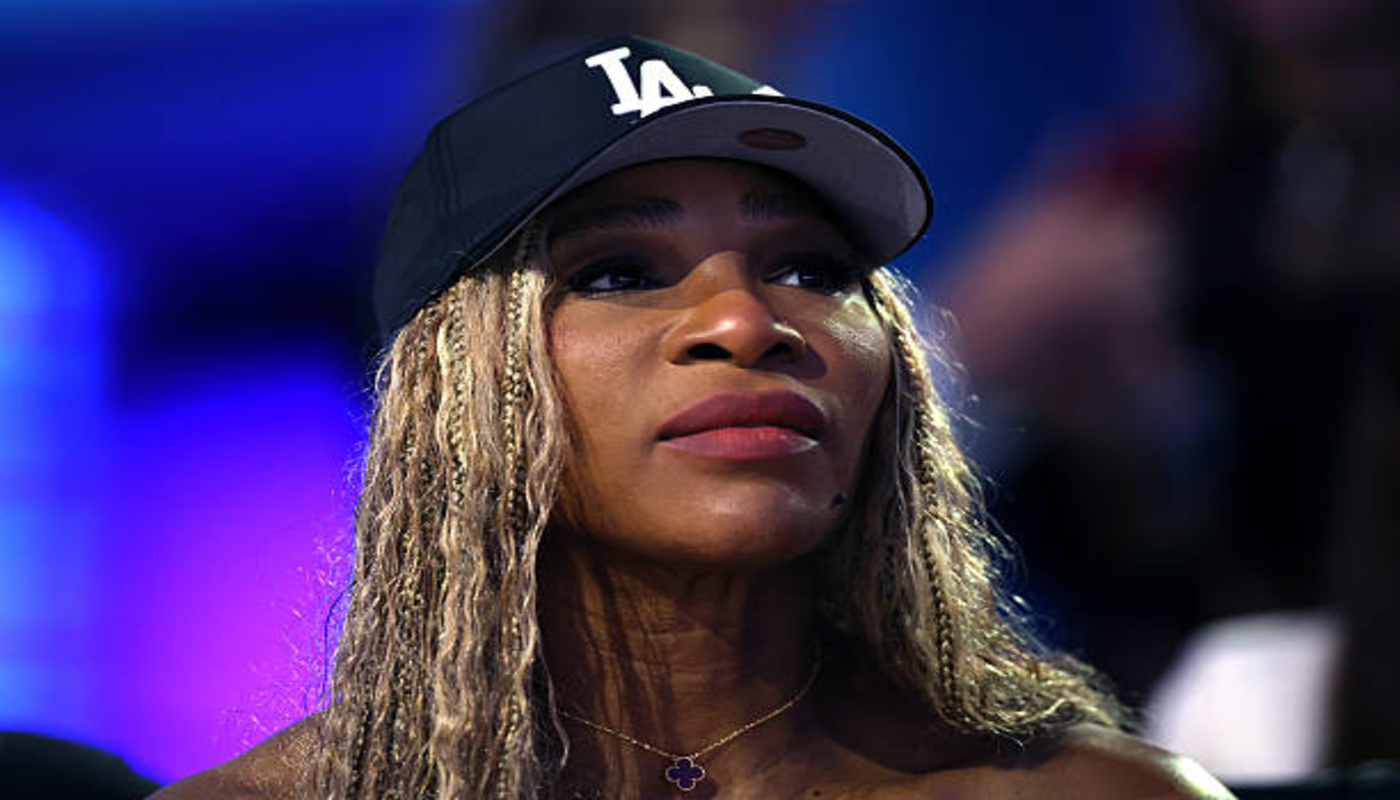
When Serena Williams began dominating tennis in the late 1990s and early 2000s, she did so with a body that defied these constraints. Her muscular build, explosive power, and unapologetic presence stood in stark contrast to the sport’s historically narrow aesthetic.
Unlike previous athletes who were subtly pressured to conform, Serena did not shrink herself—physically or symbolically. She wore bold outfits, expressed emotion openly, and refused to separate her strength from her identity as a woman.
This was not merely representation; it was redefinition.
Her body became a site of cultural negotiation. Media narratives often struggled to categorize her, sometimes praising her athleticism while simultaneously framing her physique as “unusual” or “intimidating.” These reactions revealed less about Serena and more about the limitations of existing beauty frameworks.
Over time, however, something shifted. What was once framed as deviation began to be recognized as power.
Media Narratives and the Politics of Visibility
The media plays a crucial role in shaping public perception, and the coverage of athletes like Serena reveals deep cultural tensions.
Early portrayals often emphasized difference—highlighting her body as something to be explained rather than accepted. This was particularly pronounced given the intersection of race and gender. As a Black woman in a predominantly white sport, Serena’s body was not just read through the lens of gender norms, but also through racialized expectations.
Historically, Black women’s bodies have been subject to hypervisibility and misinterpretation—either exoticized or criticized. Serena’s presence disrupted these narratives by asserting control over her own image.
In interviews and public appearances, she consistently reframed conversations around her body, emphasizing functionality, resilience, and self-acceptance. Campaigns featuring Serena—such as those celebrating strength and motherhood—further expanded the narrative, positioning her not as an exception, but as a new standard.
This shift did not happen overnight. It required repetition, visibility, and cultural dialogue.
Strength as Identity, Not Exception
One of the most significant changes brought about by athletes like Serena is the normalization of strength as an intrinsic part of femininity.
Before this shift, strength in women was often contextual—acceptable within sports, but not necessarily beyond it. Athletes were seen as exceptions to the rule, rather than catalysts for redefining the rule itself.
Serena challenged this by integrating strength into every aspect of her public identity. She was not just strong on the court; she was strong in her voice, her fashion choices, her business ventures, and her advocacy.
This holistic embodiment of strength allowed audiences to see it not as a temporary state, but as a valid and enduring form of femininity.
The Psychological Impact: Representation and Self-Perception
Representation is not just about visibility—it is about possibility.
For young girls and women who do not fit traditional body ideals, seeing athletes like Serena can be profoundly transformative. It expands the range of what is considered acceptable, desirable, and achievable.
Psychologically, this shift can reduce body dissatisfaction and increase self-esteem. When strength is celebrated rather than stigmatized, it allows individuals to form healthier relationships with their bodies.
Research in body image studies suggests that exposure to diverse body types—especially those associated with competence and success—can counteract the negative effects of narrow beauty standards. Athletes like Serena provide precisely this kind of representation.
They do not just show that strong bodies are valid; they show that strong bodies are powerful, successful, and worthy of admiration.
Beyond Tennis: A Broader Movement
While Serena’s influence is unparalleled, she is part of a broader movement of athletes redefining body norms across disciplines.
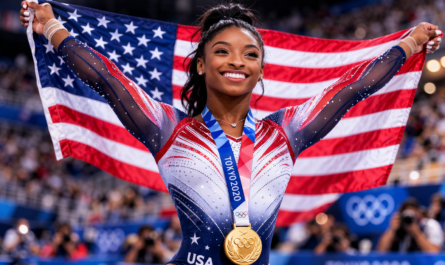
Simone Biles, for instance, has challenged expectations within gymnastics—a sport traditionally associated with petite physiques. Her power-driven routines and muscular build have redefined what excellence looks like in her field.
Similarly, Allyson Felix has used her platform to advocate for maternal health and equity in sports, expanding the conversation around what athletic bodies can endure and represent.
Even within tennis, Naomi Osaka has contributed to this evolving narrative by embracing authenticity and mental well-being, further complicating the idea that strength is purely physical.
Together, these athletes create a mosaic of strength—diverse, multidimensional, and deeply human.
Cross-Cultural Perspectives: Strength in a Global Context
The impact of these athletes extends beyond Western contexts, influencing global perceptions of female bodies.
In many cultures, femininity has historically been tied to modesty and restraint, often limiting the visibility of physically strong women. However, global media and digital platforms have allowed athletes like Serena to reach audiences worldwide.
In countries where opportunities for women in sports are still emerging, these representations can be particularly powerful. They challenge not only beauty standards but also societal expectations around gender roles.
At the same time, the reception of strong female bodies varies across cultures. In some contexts, muscularity may still be stigmatized, while in others, it is increasingly embraced.
This tension highlights the ongoing nature of cultural change. Representation alone is not enough; it must be accompanied by dialogue, policy changes, and grassroots movements that support inclusivity.
Fashion, Branding, and the Aesthetic of Strength
Another dimension of this cultural shift is the intersection of athletics and fashion.
Serena’s collaborations with major brands and her own ventures in fashion have played a significant role in redefining aesthetics. By designing clothing that celebrates rather than conceals strong bodies, she has contributed to a more inclusive fashion landscape.
This is particularly important because fashion has historically reinforced narrow body ideals. When athletes enter this space, they bring with them a different set of priorities—comfort, functionality, and empowerment.
The result is a new aesthetic language, one that values strength as a form of beauty.
Resistance and Criticism: The Cost of Redefinition
It would be incomplete to discuss this transformation without acknowledging the resistance it has faced.
Athletes like Serena have not only been celebrated; they have also been criticized, scrutinized, and, at times, unfairly targeted. These reactions are not incidental—they are indicative of the discomfort that accompanies cultural change.
When established norms are challenged, there is often a backlash aimed at preserving the status quo. In Serena’s case, this has sometimes manifested in disproportionate criticism of her behavior, appearance, or expression.
However, this resistance also underscores the significance of her impact. The very fact that her body and presence provoke strong reactions indicates that they are disrupting deeply ingrained beliefs.
Redefining Beauty: From Aesthetic to Function
One of the most profound shifts brought about by athletes like Serena is the redefinition of beauty itself.
Traditional beauty standards often prioritize appearance over function. In contrast, athletic bodies emphasize what the body can do—its strength, endurance, and capability.
This shift from aesthetic to function has far-reaching implications. It encourages a more holistic view of the body, one that values health, performance, and well-being over conformity to arbitrary ideals.
For many, this redefinition is liberating. It allows them to appreciate their bodies not just for how they look, but for what they enable them to do.
The Digital Age: Amplifying the Message
Social media has played a crucial role in amplifying these changing perceptions.
Platforms like Instagram and TikTok have enabled athletes to share their stories directly, bypassing traditional media filters. This has allowed for more authentic and diverse representations of strong female bodies.
It has also given rise to communities that celebrate strength in all its forms—from professional athletes to everyday individuals documenting their fitness journeys.
The visibility of these communities reinforces the idea that strength is not limited to elite athletes; it is accessible to everyone.
Toward an Inclusive Future
The transformation initiated by athletes like Serena is ongoing.
While significant progress has been made, challenges remain. Body diversity is still not fully represented in media, and societal expectations continue to evolve.
However, the groundwork has been laid.
Future generations are growing up in a world where strong female bodies are not anomalies but possibilities. They are seeing a wider range of representations, each contributing to a more inclusive understanding of femininity.
The legacy of athletes like Serena is not just in their records or titles, but in the cultural shifts they have catalyzed.
Conclusion: Strength as a Language of Liberation
The story of Serena Williams is, at its core, a story about liberation.
By embodying strength unapologetically, she—and athletes like her—have expanded the boundaries of what it means to be a woman. They have challenged narrow definitions, confronted biases, and created space for new narratives to emerge.
This transformation is not just visual; it is deeply psychological and cultural. It reshapes how individuals see themselves and how society values different forms of embodiment.
Strength, once seen as a contradiction to femininity, is now increasingly recognized as one of its many expressions.
And in that recognition lies the possibility of a more inclusive, empowering future—one where every body, in all its forms, is seen not as something to be constrained, but as something to be celebrated.
Sources: Nike, Vogue, ESPN, The New York Times, The Guardian, Forbes