 by
by Aging is one of the few universal experiences we all share, yet it is often framed as something to resist, correct, or hide. From anti-aging advertisements to social media filters that erase lines and texture, we are constantly told—explicitly and implicitly—that growing older is a problem to be solved rather than a natural process to be honored.
For many people, especially women and marginalized bodies, aging comes with fear: fear of invisibility, fear of losing value, fear of no longer being “acceptable” or “desirable.” These fears are not inherent. They are learned. And what is learned can be unlearned.
Loving aging does not mean pretending it is always easy or joyful. It means choosing to see aging as a continuation of life, not a decline from worth. It means redefining beauty, success, and self-respect beyond youth. This article explores why aging is so feared, how those fears are socially constructed, and how we can slowly, compassionately shift toward a healthier, more loving relationship with growing older.
Why Society Teaches Us to Fear Aging
Fear of aging does not arise in a vacuum. It is shaped by cultural narratives, economic interests, and social hierarchies that benefit from making people feel inadequate as they age.
Youth as a Currency
In many cultures, youth is treated as a form of social capital. Younger bodies are often associated with beauty, productivity, innovation, and desirability, while older bodies are portrayed as outdated or irrelevant. This framing turns aging into a perceived loss of value rather than a gain in experience.
This dynamic is especially harsh for women, whose worth has historically been tied to appearance, fertility, and youthfulness. Men are often allowed to age into “distinction,” while women are pressured to age quietly, gracefully, or not at all.
The Anti-Aging Industry
Fear of aging is highly profitable. Entire industries are built on convincing people that wrinkles, gray hair, weight redistribution, and skin texture are problems requiring correction. The messaging is subtle but persistent: if you look older, you are failing at self-care.
This commercial pressure shifts the focus away from health, comfort, and joy, replacing it with constant monitoring and self-surveillance.
Ageism and Invisibility
As people age, particularly women and disabled individuals, they often experience social invisibility. Media representation decreases. Compliments diminish. Opportunities shrink. This exclusion reinforces the idea that aging equals disappearance.
When society stops reflecting you back to yourself, it becomes harder to see your own worth.
The Emotional Cost of Fearing Aging
Fear-based relationships with aging do real harm—not just emotionally, but psychologically and physically.
Chronic Self-Criticism
Constantly scanning your body for signs of aging trains the mind to look for flaws. This creates a cycle of dissatisfaction where no amount of “maintenance” ever feels like enough.
Delayed Living
Many people postpone joy, intimacy, creativity, or visibility because they feel they have “missed their prime.” This belief robs people of present-moment fulfillment.
Disconnection From the Body
When the body is seen as something to control or correct, rather than a partner in living, trust erodes. Aging then feels like betrayal rather than adaptation.
Reframing Aging as a Privilege, Not a Failure
One of the most radical shifts we can make is recognizing aging as something not everyone gets to experience.
Aging means survival. It means continuity. It means having lived long enough to change, learn, and grow.
This reframing does not erase grief for what changes, but it balances it with gratitude for what remains and what deepens.
Ask yourself:
- What have I learned that I could not have known earlier?
- What boundaries, wisdom, or clarity came with time?
- What parts of myself have softened or strengthened?
Aging is not the loss of self—it is the expansion of it.
Letting Go of the “Anti-Aging” Mindset
The phrase “anti-aging” itself implies that aging is an enemy. A more compassionate approach is to move toward pro-aging or aging-neutral thinking.
This means:
- Caring for your body without trying to erase its history
- Supporting health without chasing youth
- Choosing comfort and function over appearance-based rules
Instead of asking, “How do I look younger?” try asking:
- “How do I want to feel in my body today?”
- “What supports my energy, mobility, and peace?”
- “What helps me feel at home in myself?”
Redefining Beauty Across the Lifespan
Beauty does not disappear with age—it changes form.
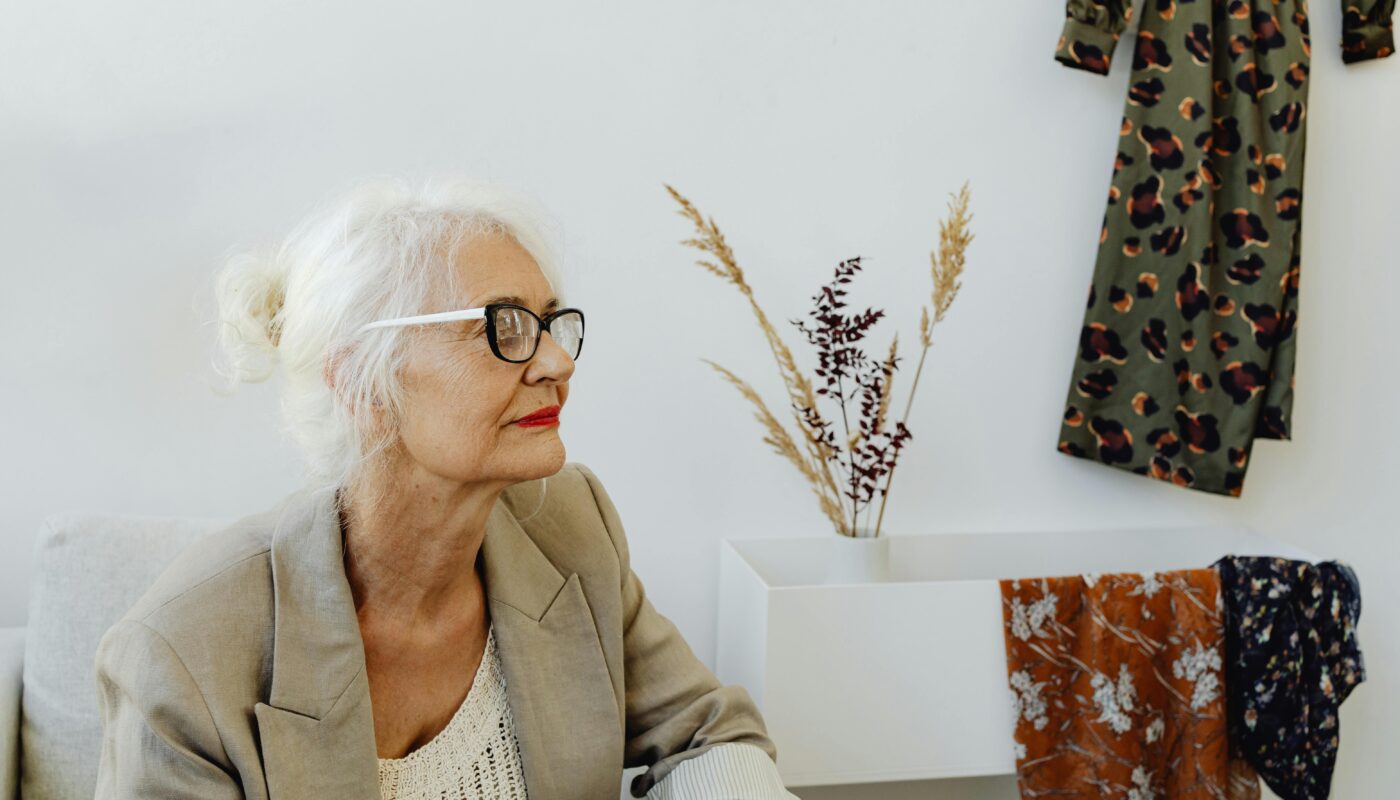
Lines can represent laughter, grief survived, concentration, and resilience. Softer bodies can represent rest, nourishment, and release from constant control. Gray hair can signal authenticity and presence.
To love aging, we must broaden our definition of beauty to include:
- Texture
- Depth
- Expressiveness
- Character
- Story
Follow and support media, creators, and brands that show aging bodies without apology or excessive retouching. Representation shapes perception.
Separating Self-Worth From Productivity
Another reason aging feels frightening is the way modern culture ties worth to productivity. As people age, they may work differently, slower, or not at all—and are often treated as less valuable because of it.
But worth is not earned through output.
Your value does not decrease because you rest more, move differently, or choose quieter forms of contribution. Aging can be a time of mentorship, creativity, emotional labor, and insight that productivity-focused metrics fail to measure.
Listening to the Body Instead of Fighting It
Loving aging requires shifting from domination to collaboration with the body.
Instead of pushing through pain, hunger, or exhaustion, aging invites deeper listening:
- What kind of movement feels supportive now?
- What rhythms of rest and activity feel sustainable?
- What foods feel nourishing rather than punishing?
This is not “giving up.” It is responding intelligently to change.
Bodies are not meant to remain static. Adaptation is not weakness—it is wisdom.
Grieving Without Shame
It is okay to grieve aspects of youth. It is okay to miss how your body once moved, healed, or looked. Loving aging does not require toxic positivity.
Grief becomes harmful only when it turns into self-rejection.
You can hold both truths:
- “I miss parts of my younger self.”
- “I respect and value who I am becoming.”
Grief is part of transition. Honor it, but do not let it define you.
Challenging Internalized Ageism
Much of the fear of aging comes from beliefs we absorbed long before we questioned them.
Try noticing:
- How do you speak about older people, including yourself?
- Do you equate age with decline, irrelevance, or burden?
- Do you joke about aging in ways that reinforce shame?
Language matters. So does curiosity.
Ask:
- Who benefits from me fearing aging?
- What messages did I inherit that no longer serve me?
- What would change if I assumed aging could be meaningful?
Finding Role Models for Joyful Aging
It is hard to love what we never see celebrated.
Seek out older role models who live visibly, creatively, and unapologetically. This might include artists, activists, elders in your community, or online voices who speak honestly about aging without glamorizing or hiding it.
Seeing people age with complexity helps dismantle the myth that life narrows after a certain number.
Aging as a Site of Freedom
Many people report unexpected freedom with age:
- Less concern with external approval
- Stronger boundaries
- Clearer priorities
- Greater self-trust
As the pressure to perform youth fades, authenticity can rise.
Ask yourself:
- What expectations am I ready to release?
- What rules about appearance or behavior no longer fit?
- What do I finally feel permission to be?
Aging can be a return to self.
Building a Supportive Relationship With Time
Instead of seeing time as something that takes from you, consider seeing it as something that accompanies you.
Time has:
- Held you through losses
- Allowed healing
- Offered second chances
- Deepened your capacity to love and understand
You are not racing against time. You are moving with it.
Practical Ways to Practice Loving Aging
Loving aging is not a single realization—it is a practice.
Some gentle starting points:
- Follow age-diverse representation online
- Unsubscribe from content that shames natural aging
- Speak kindly about your body in front of others
- Celebrate birthdays as continuity, not decline
- Invest in comfort, pleasure, and health over appearance correction
These small shifts accumulate into deeper acceptance.
Conclusion: Aging Is Not the End of Beauty—It Is the Expansion of It
Aging is not something to conquer. It is something to experience.
Loving aging does not mean ignoring fear—it means refusing to let fear dictate your self-worth. It means choosing respect over resistance, curiosity over shame, and presence over perfection.
Your body is not expiring.
Your beauty is not fading.
Your life is not shrinking.
You are becoming more fully yourself.
And that is something worth honoring.