 by
by Introduction: When the Strongest Athlete in the World Chose to Stop
For generations, sport has been the stage where societies rehearse their myths about strength. Athletes are not merely competitors; they are symbols. They carry national pride, gender expectations, racial politics, and deeply embedded beliefs about what it means to endure. The Olympic arena, in particular, has long celebrated a specific version of strength: stoic, silent, sacrificial. Pain is overcome. Fear is hidden. Doubt is conquered privately, if at all.
Then, in 2021, at the postponed 2020 Tokyo Olympic Games, one of the most decorated gymnasts in history stepped back.
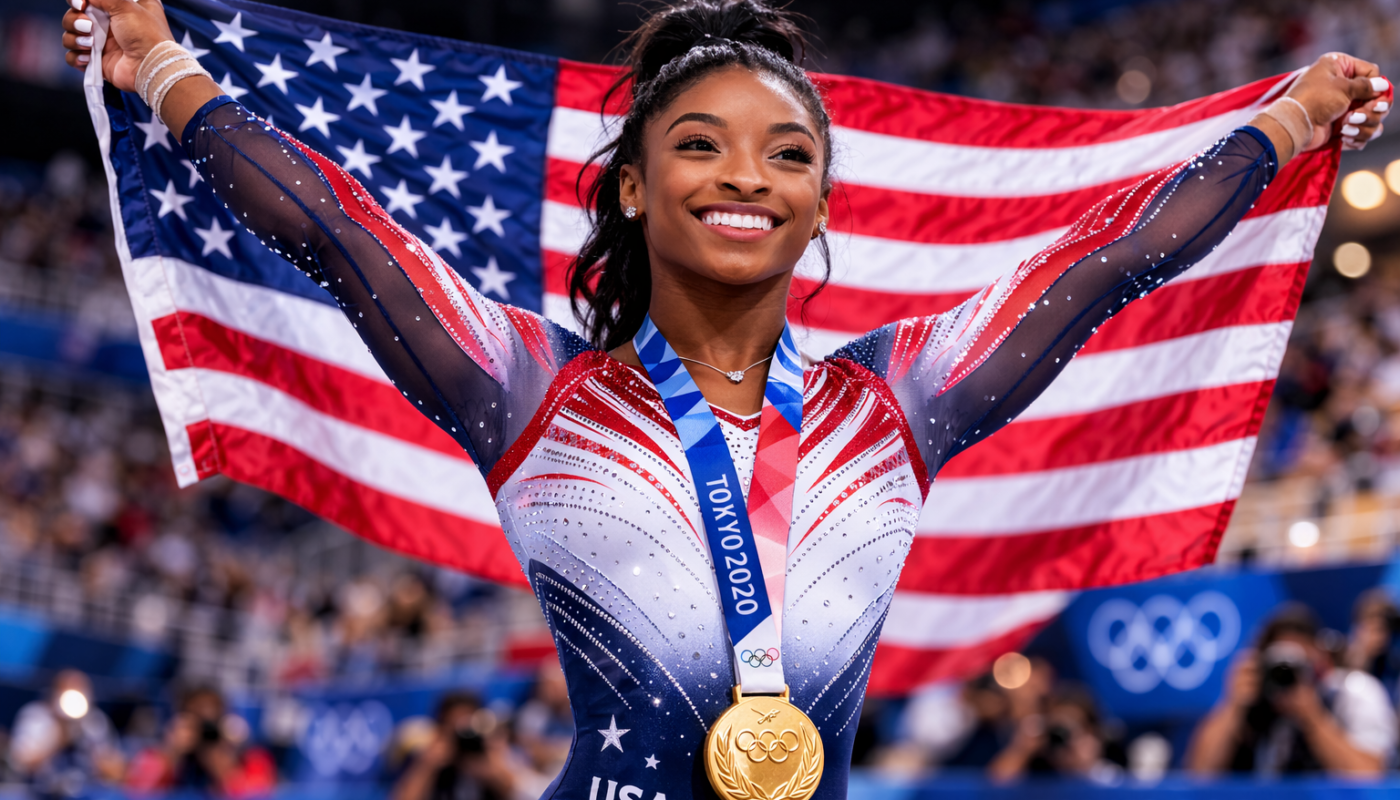
When 2020 Summer Olympics unfolded amid a global pandemic, the world watched Simone Biles not just as an athlete, but as a symbol of American excellence. She was widely expected to dominate the competition. Instead, after experiencing the “twisties” — a dangerous mental block that disrupts spatial awareness in gymnastics — she withdrew from multiple events, citing mental health concerns and safety.
Her decision reverberated far beyond the gymnastics floor.
It ignited debates across continents about resilience, responsibility, vulnerability, gender, race, and what strength truly means. It challenged decades of cultural conditioning that equated endurance with silence. And perhaps most importantly, it redefined strength not as the capacity to absorb harm, but as the courage to protect oneself.
This was not simply a sports story. It was a cultural rupture.
1. The Myth of Invincibility in Elite Sport
Elite sport has historically been structured around the mythology of invincibility. Athletes are trained to push past discomfort, ignore fatigue, and override fear. From childhood, many are taught that excellence requires self-erasure. Pain becomes proof of commitment.
In gymnastics especially, the culture of perfection is intensified. The sport demands precision, aesthetic control, and near-impossible physical feats performed under unforgiving scrutiny. For decades, the narrative surrounding gymnasts—particularly young women—has centered on discipline, obedience, and sacrifice.
When Simone Biles entered the Olympic spotlight, she was already rewriting athletic history. Her difficulty scores were unmatched. She performed skills so advanced that they were named after her. Media outlets often described her as “superhuman.” Praise, though well-intentioned, subtly reinforced an expectation of invulnerability.
But labeling someone superhuman carries consequences.
It strips space for vulnerability. It denies complexity. It creates a performance cage.
When Biles publicly acknowledged that she could not safely continue due to mental disorientation, she disrupted this myth. Instead of fulfilling the narrative of heroic endurance, she chose self-preservation. In doing so, she challenged the foundational story that greatness must always come at personal cost.
2. The Twisties: Psychological Reality Meets Physical Risk
In verified interviews following Tokyo, Biles described experiencing the “twisties,” a phenomenon gymnasts know well but rarely discuss publicly. The twisties are not a sign of weakness; they are a dangerous neurological disconnect between mind and body. Athletes lose spatial awareness mid-air, dramatically increasing the risk of catastrophic injury.
This detail is crucial.
Her withdrawal was not simply emotional fragility under pressure. It was a safety decision grounded in embodied awareness.
Sport culture often separates mental health from physical health, as though one is optional and the other essential. But Biles’ experience exposed how inseparable they are. A fractured focus can break bones. Anxiety can alter muscle memory. Mental disorientation in high-risk sport is not symbolic—it is physically perilous.
By articulating this publicly, she shifted discourse. Mental health was no longer framed as a luxury conversation reserved for post-career reflection. It became a matter of immediate athlete safety.
This reframing forced audiences to confront an uncomfortable truth: if the strongest gymnast in the world can experience psychological disruption under extreme stress, then vulnerability is not an anomaly—it is human.
3. Gendered Expectations of Strength
Reactions to Biles’ withdrawal were revealing.
Many supporters praised her bravery. Others accused her of quitting, lacking toughness, or failing her team. These critiques were not neutral. They were steeped in gendered expectations.
Female athletes have long navigated a contradictory demand: be graceful yet powerful, emotionally composed yet intensely competitive. When they display emotion, they are labeled unstable. When they suppress it, they are praised for composure.
Contrast this with historical treatment of male athletes who step away for mental health. When professional athletes in men’s sports have taken breaks for psychological reasons, conversations often center on recovery and resilience. Women, especially women of color, are more frequently scrutinized for “letting others down.”
Biles, as a Black woman representing the United States on the Olympic stage, carried layered expectations. She was not only an athlete; she was a symbol of national excellence and Black achievement in a historically white-dominated sport.
Her decision disrupted intersecting narratives about race and gender resilience. Black women in particular are often burdened with the “strong Black woman” stereotype — expected to endure without complaint. By stepping back, Biles dismantled this expectation publicly.
She demonstrated that strength does not require silent suffering.
4. Trauma Context and Institutional Accountability
Any cultural analysis of Biles’ decision must also consider the broader context of gymnastics’ institutional trauma. Biles is among the many survivors of abuse perpetrated by former USA Gymnastics doctor Larry Nassar. She has spoken publicly about accountability, testifying before the U.S. Senate and criticizing institutional failures.
This context matters.
Elite gymnasts have historically been conditioned to prioritize performance over personal safety. The culture of obedience within the sport has, in the past, silenced athletes’ voices. Biles’ withdrawal, therefore, carried deeper symbolic weight. It was not simply about one competition; it was about reclaiming agency within a system that had previously failed to protect its athletes.
Her decision aligned with a broader post-#MeToo shift toward demanding institutional accountability. It signaled that athlete well-being must not be secondary to medals.
In this way, her action was both personal and political.
5. Redefining Team Loyalty
One of the most persistent criticisms was that withdrawing hurt her team. But what followed complicates that narrative.
After stepping back from certain events, Biles remained present to support her teammates. She cheered from the sidelines. She offered strategic encouragement. She publicly expressed trust in their abilities. The U.S. women’s gymnastics team went on to win silver in the team event.
This moment reframed loyalty.
True team commitment does not mean sacrificing personal safety to meet expectations. It means trusting others to rise, and recognizing that collective success is not dependent on a single individual’s self-destruction.
By modeling this, Biles offered a healthier blueprint for leadership: one that includes boundaries.
6. Media Narratives and the Language of Strength
Media coverage in the days following her withdrawal evolved rapidly. Initial shock headlines gradually shifted toward reflective analysis. Prominent outlets interviewed sports psychologists. Discussions about athlete burnout surfaced globally.
Importantly, Biles herself controlled much of the narrative. In press conferences, she spoke calmly and directly about her mental state. She emphasized safety and long-term health. She rejected framing that cast her as either hero or villain.
This nuanced self-advocacy disrupted binary thinking.
She was neither weak nor invincible. She was a high-performing athlete making a complex decision under extraordinary pressure.
That complexity is often missing from sports storytelling, which favors simple arcs of triumph or failure. Biles’ story demanded something more mature from audiences: the ability to hold excellence and vulnerability simultaneously.
7. Global Ripples: Cross-Cultural Reactions
The Tokyo Games were watched worldwide. Responses varied across cultural contexts.
In some countries, particularly where mental health discourse is less normalized, her withdrawal sparked confusion or criticism. In others, especially where athlete welfare reforms are emerging, her decision was seen as progressive.
The global conversation reflected broader cultural tensions about mental health stigma. In collectivist societies, stepping back from national representation can be perceived as failing communal duty. In individualistic societies, personal autonomy may be more readily defended.
Yet across these differences, one theme became universal: the recognition that mental strain in elite sport is real and deserving of serious attention.
International sports federations began amplifying discussions about psychological resources. Athletes from various countries referenced Biles in subsequent interviews when discussing their own mental health journeys.
Her impact transcended nationality.
8. The Pandemic Pressure Cooker
The Tokyo Olympics were unlike any before. Athletes competed in near-empty stadiums due to COVID-19 restrictions. Training schedules had been disrupted for over a year. Uncertainty loomed over qualification processes.
Biles herself noted in interviews that the year-long delay intensified pressure. The world expected dominance despite unprecedented global disruption.
The pandemic revealed how fragile our assumptions about productivity are. Many industries were forced to reconsider work expectations. Biles’ decision mirrored a broader societal reckoning: performance cannot be demanded in isolation from context.
Her withdrawal became part of a larger pandemic-era shift toward questioning burnout culture.
9. Influence Beyond Gymnastics
The cultural resonance of Biles’ decision extended beyond gymnastics.
Professional athletes in basketball, tennis, soccer, and track cited her example when speaking about their own mental health boundaries. Conversations about sports psychology funding gained momentum. Universities reexamined athlete support systems.
Even outside sports, her action influenced corporate and educational spaces. Leaders referenced her when discussing burnout and employee well-being. Social media discourse reframed taking mental health days as responsible rather than indulgent.
This ripple effect illustrates the symbolic power athletes hold. When someone at the pinnacle of physical achievement validates psychological vulnerability, it disrupts stigma at scale.
10. Returning on Her Own Terms
Crucially, Biles later returned to competition and won a bronze medal on the balance beam in Tokyo. She continued her career beyond the Olympics, demonstrating that stepping back does not mean permanent retreat.
This matters deeply for cultural narratives.
Taking a break is often conflated with quitting. Biles showed that pausing can be strategic. It can preserve longevity. It can lead to renewed confidence.
Her return reframed the break not as an endpoint, but as a recalibration.
11. Strength Reimagined: From Endurance to Agency
Perhaps the most significant shift her decision initiated is conceptual.
For decades, strength in sports has been synonymous with endurance — the ability to withstand pain, silence doubt, and prioritize performance above all else. Biles expanded that definition.
Strength, as modeled by her, includes:
- Self-awareness
- Boundary-setting
- Risk assessment
- Long-term vision
- Public vulnerability
This broader definition is more sustainable and more humane.
It aligns with evolving understandings in psychology that resilience is not about suppression, but about adaptive response.
12. The Future of Athlete Well-Being
In the years following Tokyo, sports organizations have increasingly invested in mental health resources. Athlete advocacy groups have gained visibility. Discussions about safeguarding policies continue.
While change is uneven and ongoing, the narrative landscape has undeniably shifted.
Young athletes watching Biles witnessed something transformative: permission.
Permission to say no.
Permission to prioritize safety.
Permission to redefine success.
This generational shift may be her most enduring legacy.
Conclusion: A New Blueprint for Greatness
When Simone Biles stepped back at the 2020 Summer Olympics, she did more than withdraw from events. She withdrew from a harmful narrative that equated worth with relentless output.
In doing so, she offered a new blueprint for greatness — one rooted not in invincibility, but in integrity.
Her choice unsettled audiences because it exposed how deeply we rely on athletes to embody our fantasies of control. But in relinquishing that role, she modeled something more radical: self-trust.
Strength, she showed us, is not the absence of struggle. It is the wisdom to recognize limits, the courage to honor them publicly, and the commitment to return on one’s own terms.
In a world still learning how to value mental health as deeply as physical achievement, her moment in Tokyo remains a turning point — not just for gymnastics, but for the cultural imagination of what it means to be strong.
Sources: BBC, The New York Times, The Washington Post, NBC News, ESPN, Time Magazine, The Guardian