 by
by Introduction: Confidence as Cultural Language
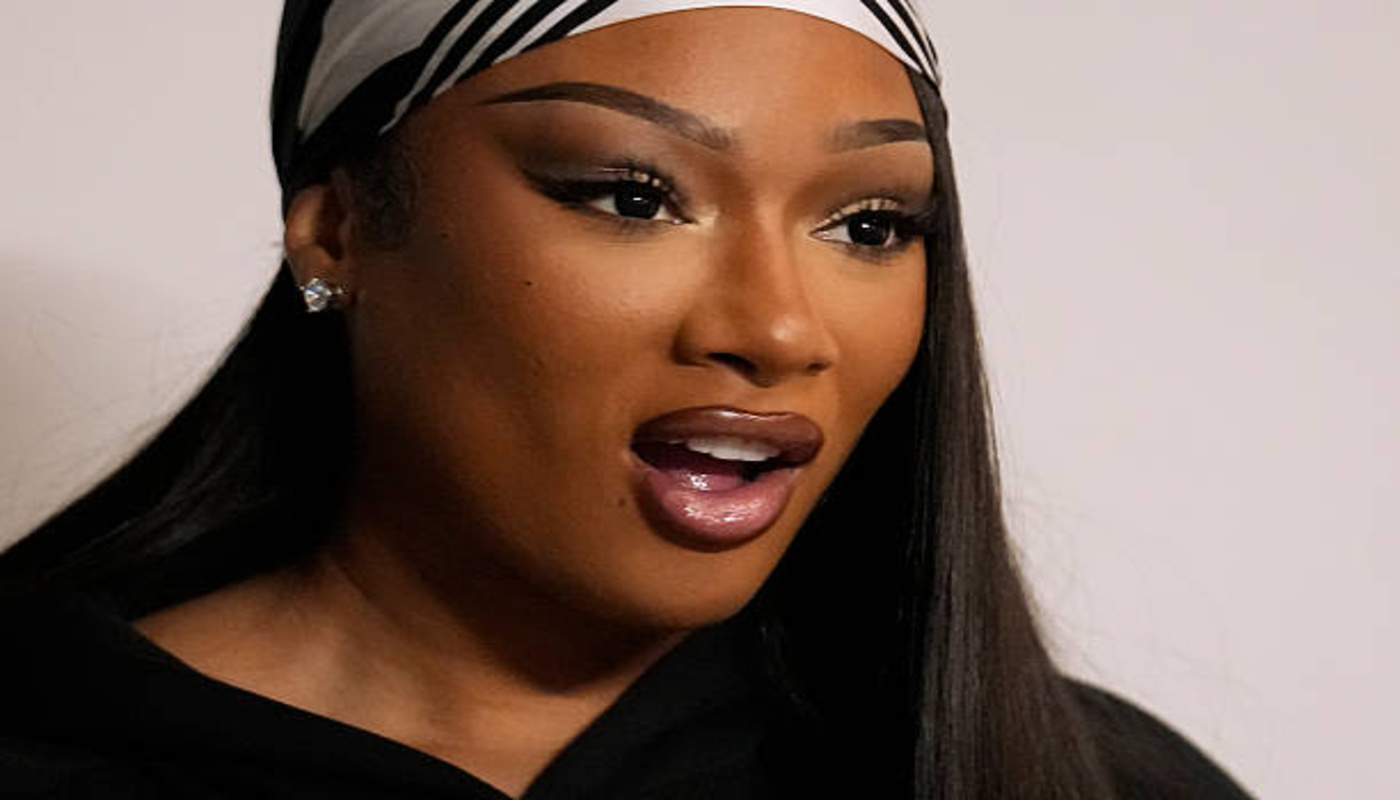
In the past decade, the conversation around sexual expression has undergone a significant shift. What was once confined to whispers, coded lyrics, or heavily censored performances has emerged into full visibility—bold, unapologetic, and increasingly self-defined. At the center of this transformation stands Megan Thee Stallion, an artist whose presence extends far beyond music charts into the realm of cultural discourse.
Her confidence is not simply aesthetic or performative—it is ideological. It challenges long-standing narratives about who gets to express sexuality freely, under what conditions, and at what cost. For many, her work raises a deeper question: what does it truly mean to own one’s sexual expression in a world that has historically policed it?
This article examines Megan Thee Stallion’s confidence not as an isolated personality trait, but as a cultural signal. Through her music, public statements, and visual identity, she reveals how sexual expression can shift from being objectified to being self-authored. More importantly, her influence offers a lens into the psychological, social, and global implications of reclaiming bodily autonomy in modern culture.
Rewriting the Narrative: From Objectification to Self-Authorship
For generations, sexual expression—especially for women—has been shaped by external narratives. Media industries, cultural traditions, and patriarchal norms have long dictated how sexuality should look, sound, and behave. Women were often positioned as objects of desire rather than agents of it.
Megan Thee Stallion disrupts this framework by repositioning herself not as someone being watched, but as someone who is in control of the gaze. Her lyrics are explicit, but they are also intentional. They articulate desire from a first-person perspective, rather than as a response to male validation.
This shift is critical. It reframes sexual expression from something that is consumed to something that is declared. Ownership, in this context, is not about visibility alone—it is about authorship. Who is telling the story? Who defines its boundaries?
Her music often centers themes of autonomy, pleasure, and self-worth. These are not new ideas, but their delivery—confident, direct, and unfiltered—marks a departure from traditional expectations. In doing so, she creates space for a broader understanding of sexuality as a form of personal language rather than public property.
The Economics of Sexual Expression: Power, Profit, and Control
Another critical dimension of Megan Thee Stallion’s confidence lies in how it intersects with economics. Sexual expression in the entertainment industry has long been commodified, often benefiting corporations more than the individuals whose bodies and identities are being marketed. What makes Megan’s approach notable is her visible assertion of control within this system. Through documented moments—such as advocating for artist rights and speaking openly about ownership and contracts—she highlights that autonomy is not just about expression, but also about who profits from it.
This introduces a layered understanding of ownership. It is not enough to express freely if the structures surrounding that expression remain exploitative. Megan’s stance reflects a broader shift among artists who are increasingly aware of the financial dimensions of their image and identity. By asserting control over her narrative and business dealings, she challenges a long-standing pattern where women, particularly women of color, are positioned as the face of a product but not its beneficiaries. Her confidence, therefore, extends beyond performance into economic agency, reinforcing the idea that true ownership includes both visibility and value.
Sexual Expression and Education: Redefining What Young Audiences Learn
Megan Thee Stallion’s influence also extends into how younger audiences understand sexuality, confidence, and self-worth. In a media-saturated world, public figures often serve as informal educators, shaping perceptions through visibility rather than formal instruction. Megan’s unapologetic expression introduces an alternative framework—one that centers consent, self-definition, and agency.
However, this influence is not without complexity. Critics often question whether such explicit content is appropriate for younger audiences, reflecting broader societal anxieties about exposure and morality. Yet, these concerns also reveal a gap in how sexual education is approached globally. In many cultures, conversations about sexuality remain limited, stigmatized, or entirely absent, leaving media as one of the primary sources of information.
Megan’s presence disrupts this silence. While her work is not designed as educational material, it nonetheless encourages dialogue. It challenges the idea that sexuality must be hidden or framed solely through cautionary narratives. Instead, it presents it as something that can coexist with confidence and self-respect. This does not eliminate the need for structured education, but it does highlight the role of representation in shaping understanding—particularly when that representation emphasizes agency over shame.
The Emotional Labor of Confidence in Public Spaces
Confidence, especially when displayed publicly and consistently, often comes with an invisible cost. Megan Thee Stallion’s persona, while empowering, also reflects the emotional labor required to maintain such a presence in highly scrutinized environments. Public figures are not only expected to express themselves but to do so in ways that withstand constant critique, projection, and interpretation.
This dynamic reveals an important tension: confidence is celebrated, but it is also policed. When individuals assert themselves too strongly, they risk being labeled as excessive or inappropriate. Megan’s ability to navigate this tension highlights the resilience required to sustain ownership in the face of external pressure. Her public statements and appearances often demonstrate a balance between vulnerability and strength, reminding audiences that confidence is not the absence of challenge, but the decision to persist despite it.
This emotional labor is particularly significant for women, who are often expected to moderate their expression to align with societal expectations. Megan’s refusal to conform fully to these expectations underscores the effort involved in redefining them. Her confidence, therefore, should not be viewed as effortless, but as an ongoing act of resistance that requires both internal clarity and external negotiation.
Beyond Individualism: Collective Shifts in Cultural Attitudes
While Megan Thee Stallion’s confidence is deeply personal, its impact is inherently collective. Cultural change rarely occurs through isolated actions; it emerges through patterns, repetitions, and shared experiences. Megan’s visibility contributes to a broader shift in how sexual expression is perceived, particularly within communities that have historically been marginalized or misrepresented.
Her influence can be seen in the increasing diversity of voices within music, media, and digital spaces. More individuals are exploring and expressing their identities in ways that challenge traditional norms, suggesting a gradual expansion of what is considered acceptable or authentic. This does not mean that resistance has disappeared—cultural shifts are often met with backlash—but it does indicate movement.
Importantly, this shift is not about replacing one standard with another. It is about creating space for multiplicity. Megan’s confidence does not prescribe a singular way of being; rather, it affirms the legitimacy of self-definition. In doing so, it encourages a cultural environment where ownership of sexual expression is not an exception, but a possibility accessible to many.
The Psychological Dimension of Confidence
Confidence, particularly in the realm of sexual expression, is deeply tied to psychological constructs such as self-efficacy, body autonomy, and identity formation. Megan Thee Stallion’s public persona offers a case study in how confidence can function as both a protective mechanism and an empowering force.
When individuals feel ownership over their bodies and identities, they are more likely to experience a sense of agency. This agency reduces the internalization of shame—a common byproduct of restrictive cultural norms. Megan’s unapologetic presence challenges the idea that sexual expression must be accompanied by modesty, guilt, or justification.
However, her confidence is not without complexity. Public reactions to her work often reveal underlying societal discomfort. Critics sometimes label her expression as “too much,” reflecting a broader tension between evolving norms and entrenched beliefs.
This tension highlights an important psychological reality: confidence disrupts systems that rely on control. When someone asserts ownership over their sexuality, it challenges the structures that have historically regulated it.
For audiences, this can be both inspiring and unsettling. On one hand, it offers a model of self-assuredness. On the other, it forces a confrontation with internalized biases about gender, morality, and respectability.
The Double Standard: Gender, Power, and Expression
One cannot analyze Megan Thee Stallion’s impact without addressing the persistent double standards that shape sexual expression. Historically, men have been afforded greater freedom to express desire openly, often celebrated for behaviors that would attract criticism if performed by women.
Megan’s work exposes this imbalance. Her confidence is often scrutinized in ways that mirror broader societal patterns. The same traits—boldness, assertiveness, explicitness—that are praised in male artists are frequently contested when embodied by women.
This discrepancy reveals how power dynamics influence perception. Sexual expression is not judged in isolation; it is evaluated through the lens of gender, race, and cultural expectation.
Megan’s identity as a Black woman adds another layer to this analysis. Black women’s bodies have historically been hypersexualized and controlled simultaneously—a paradox that continues to shape public discourse. By asserting control over her narrative, Megan challenges both stereotypes and restrictions.
Her confidence, therefore, is not just personal—it is political. It questions who is allowed to be visible, vocal, and self-defined in a society that often imposes limitations based on identity.
Visual Culture and the Politics of Presentation
Beyond her music, Megan Thee Stallion’s visual presentation plays a crucial role in her cultural impact. Fashion, choreography, and performance aesthetics all contribute to how her confidence is communicated and interpreted.
Visual culture is a powerful medium for shaping perception. It operates on immediacy, often bypassing rational analysis and engaging directly with emotion and instinct. Megan’s visual choices—bold outfits, controlled choreography, and intentional framing—reinforce her narrative of ownership.
Importantly, these choices are not passive. They are curated. They reflect a deliberate engagement with how bodies are seen and understood in public spaces.
This intentionality challenges the assumption that sexualized imagery is inherently disempowering. Instead, it suggests that context and control are key. When individuals dictate how they are presented, the meaning of that presentation shifts.
However, this perspective is not universally accepted. Debates continue about whether such expressions reinforce or disrupt existing norms. Megan’s work sits at the center of this conversation, embodying its complexities rather than resolving them.
Digital Platforms and the Amplification of Voice
The rise of social media has transformed how sexual expression is shared and consumed. Platforms like Instagram, TikTok, and Twitter have democratized visibility, allowing individuals to present themselves outside traditional gatekeeping structures.
Megan Thee Stallion’s digital presence exemplifies this shift. She engages directly with her audience, often reinforcing themes of confidence and self-worth. Her online persona aligns with her artistic identity, creating a cohesive narrative across platforms.
This consistency is significant. It reinforces authenticity—a key factor in how audiences perceive confidence. When expression feels genuine, it is more likely to resonate.
At the same time, digital platforms introduce new challenges. Visibility comes with scrutiny. Public figures are subject to constant evaluation, often facing both admiration and criticism simultaneously.
Megan navigates this landscape by maintaining a clear sense of self. Her confidence acts as a buffer against external judgment, illustrating how self-definition can mitigate the impact of public scrutiny.
Global Perspectives: Cultural Variations in Sexual Expression
While Megan Thee Stallion’s influence is rooted in American culture, its impact extends globally. Audiences around the world engage with her work, often interpreting it through their own cultural frameworks.
In more conservative societies, her expression may be seen as provocative or controversial. In more liberal contexts, it may be celebrated as empowering. These varying interpretations highlight the cultural relativity of sexual expression.
However, the core theme—ownership—transcends cultural boundaries. The desire to define one’s identity and body on one’s own terms is a universal human experience.
Megan’s global reach contributes to a broader conversation about how cultural norms evolve. Exposure to diverse forms of expression can challenge existing beliefs, prompting reflection and, in some cases, change.
At the same time, it is important to recognize that empowerment is not one-size-fits-all. What feels liberating in one context may feel restrictive in another. Megan’s influence does not dictate a single model of expression but rather expands the range of possibilities.
Criticism, Misinterpretation, and the Limits of Visibility
No cultural figure operates without criticism, and Megan Thee Stallion is no exception. Her work has sparked debates about the boundaries of expression, the impact on younger audiences, and the commercialization of sexuality.
Some critics argue that explicit expression reinforces objectification rather than challenging it. Others suggest that it risks being co-opted by industries that profit from commodifying bodies.
These critiques are not without merit. They reflect ongoing tensions within feminist discourse about how to navigate a system that both restricts and capitalizes on sexual expression.
Megan’s work does not provide definitive answers to these questions. Instead, it exposes their complexity. It highlights the difficulty of achieving true ownership within structures that are inherently unequal.
However, it also underscores the importance of intention. Ownership is not about eliminating all external influence—it is about maintaining agency within it.
The Intersection of Confidence and Community
One of the most notable aspects of Megan Thee Stallion’s influence is how it resonates within communities. Her message of confidence often extends beyond individual expression to collective empowerment.
Through her fan base, often referred to as “Hotties,” she fosters a sense of belonging. This community aspect reinforces the idea that confidence can be shared, supported, and amplified.
Community plays a crucial role in shaping identity. When individuals see their experiences reflected and validated, it strengthens their sense of self. Megan’s influence contributes to this process by normalizing expressions that might otherwise be marginalized.
At the same time, community dynamics can also introduce pressure. Expectations about how to embody confidence can create new standards, potentially limiting the very freedom they aim to promote.
This duality highlights the need for nuance. Empowerment should expand possibilities, not replace one set of expectations with another.
Ownership Beyond Performance: Real-World Implications
While Megan Thee Stallion’s work is rooted in performance, its implications extend into everyday life. Her confidence prompts broader questions about how individuals navigate their own relationships with their bodies and identities.
Ownership of sexual expression is not limited to public figures. It manifests in personal choices—how people dress, speak, and engage with their own desires.
Megan’s influence encourages a shift from external validation to internal alignment. It suggests that confidence is not about meeting societal expectations but about defining them for oneself.
This perspective has significant implications for mental health and well-being. When individuals feel empowered to express themselves authentically, it can reduce anxiety, increase self-esteem, and foster a stronger sense of identity.
However, achieving this level of ownership requires navigating complex social dynamics. It involves balancing personal desires with cultural expectations, often in environments that may not be supportive.
Megan’s visibility does not eliminate these challenges, but it provides a reference point—a reminder that alternative ways of being are possible.
Conclusion: Toward a More Expansive Understanding of Expression
Megan Thee Stallion’s confidence is more than a personal attribute; it is a cultural force. It challenges long-standing narratives about who controls sexual expression and how it is defined.
Her work does not offer a singular solution to the complexities of ownership. Instead, it opens up space for dialogue, reflection, and redefinition. It invites audiences to consider not just what is being expressed, but who holds the power to express it.
As cultural norms continue to evolve, the concept of ownership will remain central. It will shape how individuals understand themselves and how societies negotiate boundaries.
Megan’s influence suggests that the future of sexual expression lies not in uniformity, but in diversity. It is about expanding the range of voices and experiences that are recognized and valued.
In this context, confidence becomes more than self-assurance—it becomes a tool for transformation. It enables individuals to reclaim narratives, challenge limitations, and ultimately redefine what it means to be seen and heard.
Sources: Rolling Stone, Billboard, The New York Times, Harper’s Bazaar, Vogue