 by
by Introduction: When Fabric Became a Statement
There are moments in cultural history when fashion transcends aesthetics and becomes language—when clothing is no longer just about style, but about identity, resistance, and belonging. In contemporary pop culture, few artists have harnessed this transformative power of fashion as effectively as Lizzo. Known for her electrifying performances, genre-blending music, and unapologetic confidence, Lizzo has done something that extends far beyond chart-topping hits: she has reshaped how audiences perceive bodies on stage.
For decades, performance fashion has been implicitly coded—tight, revealing outfits were reserved for bodies that aligned with narrow beauty standards, while performers outside those ideals were often styled in ways that minimized visibility rather than celebrated presence. Lizzo disrupted this pattern. Her stage wardrobe did not merely include her body; it centered it. Through bold silhouettes, daring cuts, and unapologetic exposure, she redefined what performance fashion could look like for people of all sizes.
This article explores how Lizzo’s wardrobe choices have influenced cultural perceptions, challenged fashion norms, and reshaped the psychological relationship between bodies and visibility in public spaces.
The Politics of Skin: Rewriting Exposure Norms
One of the most quietly radical aspects of Lizzo’s stage wardrobe lies in how it reframes the politics of skin exposure. In mainstream performance culture, the amount of skin a performer shows has long been tied to socially constructed ideas of “acceptability.” Bodies that align with conventional beauty standards are often celebrated for revealing fashion choices, while others are policed, criticized, or labeled inappropriate for the same styles. Lizzo disrupts this imbalance by wearing outfits that unapologetically reveal her body—not as provocation, but as normalization. Her choices challenge the deeply ingrained belief that exposure must be earned through conformity. Instead, she reframes visibility as a right rather than a privilege. This shift carries broader implications beyond entertainment. It influences how audiences interpret their own bodies in relation to clothing, encouraging a move away from restrictive thinking toward personal autonomy. Importantly, Lizzo’s approach does not ask for approval; it exists independently of it. By doing so, she creates space for others to reconsider their own boundaries around self-expression, ultimately contributing to a cultural environment where clothing becomes a tool of agency rather than a mechanism of control.
Digital Amplification: Social Media and the Spread of Inclusive Fashion
The rise of social media has played a crucial role in amplifying the cultural impact of Lizzo’s stage wardrobe. Platforms like Instagram, TikTok, and Twitter allow her fashion moments to reach millions instantly, transforming individual performances into global conversations. This digital visibility extends the life of her outfits beyond the stage, turning them into reference points for discussions about inclusivity, confidence, and representation. Importantly, social media also enables audience participation. Fans recreate her looks, share their own interpretations, and engage in dialogue about what her fashion represents. This participatory culture shifts fashion from a top-down industry to a more collaborative space, where meaning is co-created by both performers and audiences. However, digital spaces also mirror societal biases. Alongside celebration, Lizzo’s outfits are often subjected to scrutiny and criticism, revealing the persistence of body-based prejudice. Yet even this backlash contributes to visibility, forcing conversations that might otherwise remain unspoken. In this way, social media acts as both a magnifier and a battleground, where the significance of Lizzo’s wardrobe is continuously negotiated, challenged, and reaffirmed in real time.
Intersectionality and Representation: Beyond Size Alone
While much of the conversation around Lizzo’s wardrobe focuses on size inclusivity, her impact cannot be fully understood without considering intersectionality. As a Black woman in the global music industry, her presence carries layers of historical and cultural significance. Fashion has often marginalized not only diverse body types but also racial identities, creating a narrow framework of visibility that excludes multiple dimensions of difference. Lizzo’s stage wardrobe challenges these overlapping exclusions simultaneously. Her fashion choices draw from a wide range of influences—glam, streetwear, and performance couture—while centering a body and identity that have historically been underrepresented in these spaces. This intersectional visibility is important because it resists the simplification of inclusivity into a single dimension. It acknowledges that representation must account for the complexity of identity, including race, gender, and cultural background. By occupying space in this multifaceted way, Lizzo expands the conversation around fashion inclusivity, pushing it beyond size to encompass a broader, more holistic understanding of diversity. This layered representation resonates with audiences who see themselves reflected not just in one aspect, but in the fullness of her presence.
Economic Influence: Redefining Market Demand
Lizzo’s impact is not limited to cultural discourse—it also has tangible economic implications for the fashion industry. Her visibility has contributed to a growing demand for inclusive sizing and diverse representation, challenging brands to rethink their business models. Historically, extended sizing has been treated as a niche market, often sidelined or approached with limited investment. However, the popularity of artists like Lizzo demonstrates that inclusivity is not only a moral imperative but also a commercial opportunity. Consumers are increasingly seeking brands that reflect their identities and values, and this shift is reshaping purchasing behavior. Designers and retailers who fail to adapt risk becoming irrelevant in a changing market. At the same time, Lizzo’s high-fashion collaborations signal that inclusivity does not have to come at the expense of prestige or creativity. By appearing in couture-inspired stage outfits, she disrupts the notion that luxury fashion is inherently exclusive. This economic dimension underscores the broader impact of her wardrobe, illustrating how cultural change can influence industry practices and redefine what is considered viable, desirable, and profitable within the global fashion landscape.
Embodiment and Performance: Moving Beyond Static Beauty
Performance fashion is unique in that it exists in motion—it is not just seen, but experienced. Lizzo’s stage wardrobe embraces this dynamic quality, emphasizing movement, energy, and embodiment rather than static ideals of beauty. Her outfits are designed to support high-energy performances, from dancing to playing instruments, highlighting the functionality of fashion alongside its visual impact. This focus on movement challenges traditional beauty standards, which often prioritize stillness and perfection over expression and vitality. By centering performance, Lizzo shifts the criteria of evaluation from how a body looks to what it can do. This reframing has significant psychological implications. It encourages audiences to appreciate their bodies as active, capable, and expressive, rather than objects to be judged. In this sense, her wardrobe becomes part of a larger philosophy that values lived experience over external validation. The integration of fashion and movement also reinforces the idea that inclusivity is not about fitting into existing frameworks, but about expanding them to accommodate diverse forms of expression. Through this lens, Lizzo’s stage presence becomes a celebration of embodiment in its most dynamic and liberated form.
The Historical Context: Performance Fashion and Size Exclusion
To understand the significance of Lizzo’s impact, it is essential to examine the historical framework of performance fashion. For much of modern entertainment history, stage attire has been closely tied to ideals of desirability and spectacle. Performers—especially women—were often styled to align with dominant beauty standards: slim figures, toned physiques, and conventionally proportioned bodies.
Fashion designers and stylists frequently approached non-conforming bodies with a “corrective” mindset. Instead of celebrating these bodies, clothing was used to conceal, streamline, or “balance” them. This approach was not neutral—it reinforced the idea that certain bodies were inherently more worthy of visibility and admiration.
Even within the realm of body-positive representation, there were limits. Plus-size performers were often encouraged to embrace modesty as a form of empowerment, subtly reinforcing the notion that visibility should still be negotiated carefully.
Lizzo’s emergence disrupted this framework entirely. Her wardrobe did not seek permission—it declared presence.
Visibility as Power: Reclaiming the Stage
One of the most radical aspects of Lizzo’s stage wardrobe is its relationship to visibility. In a culture where larger bodies are frequently subjected to scrutiny, ridicule, or erasure, choosing to be visibly bold is inherently political.
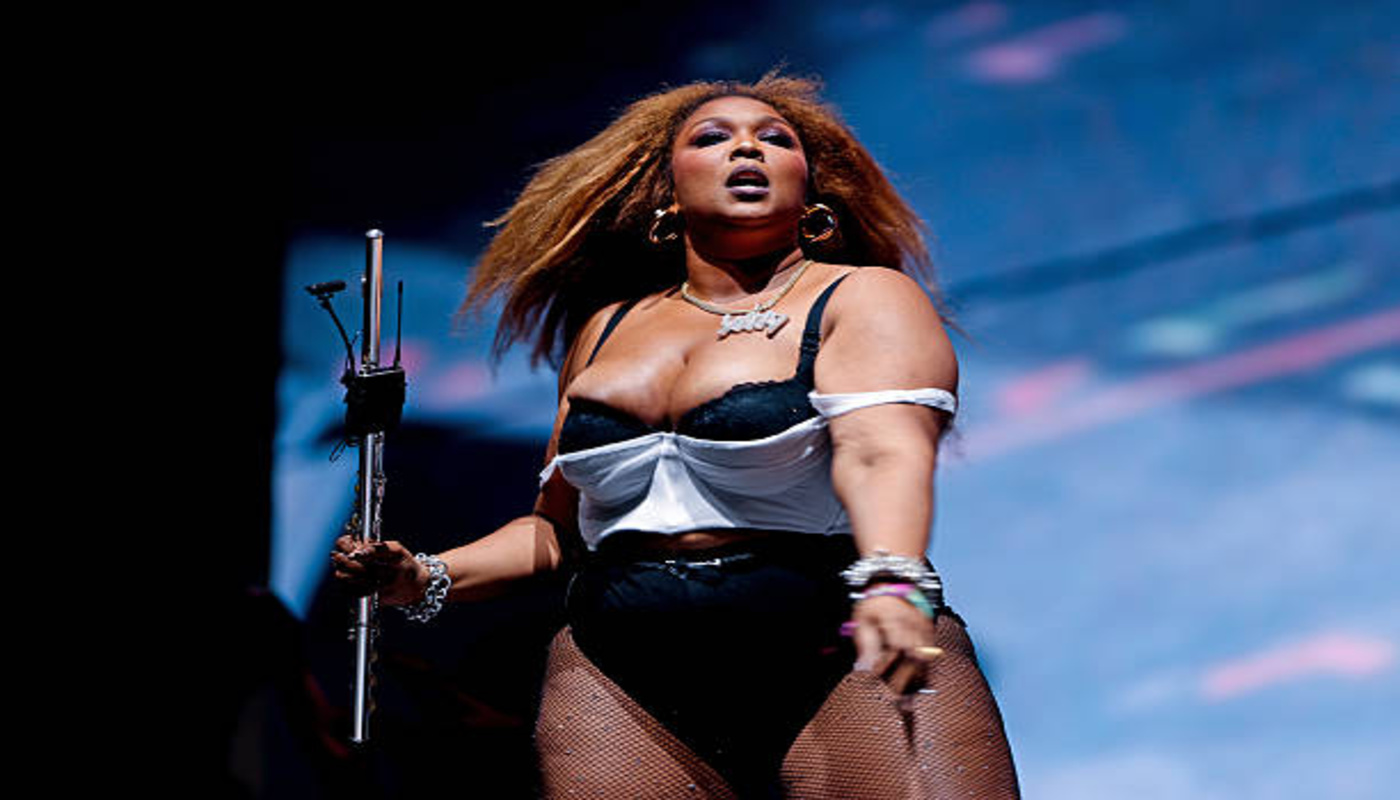
Lizzo’s outfits—whether crystal-studded bodysuits, high-cut leotards, or sheer ensembles—reject the idea that certain bodies should remain hidden. Instead, they assert that all bodies deserve to occupy space fully and unapologetically.
This shift is not just visual; it is psychological. Audiences are conditioned to associate confidence with conformity. When a performer who does not fit traditional beauty standards exudes confidence through fashion, it disrupts deeply ingrained biases. It forces viewers to confront their own assumptions about desirability, worth, and self-expression.
In this sense, Lizzo’s wardrobe becomes more than clothing—it becomes a tool of cultural re-education.
The Aesthetics of Joy: Beyond Resistance
While much of the discourse around body inclusivity focuses on struggle and resistance, Lizzo introduces another dimension: joy. Her stage wardrobe is not solely about challenging norms—it is about celebrating existence.
Bright colors, glittering fabrics, and playful designs dominate her aesthetic. These elements are not incidental; they communicate a deliberate message. Joy, in this context, is not frivolous—it is radical.
By embracing joy in her fashion choices, Lizzo reframes the narrative around larger bodies. Instead of positioning them within a framework of resilience or hardship, she situates them within pleasure, creativity, and self-expression.
This shift has profound cultural implications. It suggests that inclusivity is not just about acceptance—it is about celebration.
Collaboration and Craft: Redefining Design Possibilities
Another key aspect of Lizzo’s impact lies in her collaboration with designers. Her wardrobe has pushed the fashion industry to rethink its approach to size, structure, and innovation.
Designing for performance is already a complex task—it requires durability, flexibility, and visual impact. Designing for diverse body types adds another layer of complexity, challenging designers to move beyond standardized patterns and proportions.
Lizzo’s stage outfits demonstrate that inclusivity does not require compromise. Her looks are as intricate, high-fashion, and avant-garde as those worn by any other major performer. This challenges the industry’s long-standing excuse that extended sizing limits creativity.
Instead, her wardrobe proves the opposite: inclusivity expands creative possibilities.
Cultural Reception: Applause and Discomfort
Lizzo’s fashion choices have not been universally embraced—and that, in itself, is significant. The mixed reactions to her wardrobe reveal the cultural tensions surrounding body visibility.
On one hand, she has been celebrated as a symbol of empowerment and representation. Many fans see her as a transformative figure who has made them feel seen in ways they never have before.
On the other hand, her outfits have sparked criticism and discomfort. These reactions often reveal underlying biases rather than genuine concerns about fashion. The same styles that are praised on certain bodies are scrutinized on others, exposing the double standards embedded within cultural norms.
This tension is not a drawback—it is evidence of disruption. Cultural change rarely occurs without friction.
The Psychological Impact: Redefining Self-Perception
The influence of Lizzo’s stage wardrobe extends beyond the stage and into the minds of her audience. Representation is not just about visibility—it shapes how individuals perceive themselves and their possibilities.
For many people, especially those who have felt excluded from mainstream beauty narratives, seeing someone confidently embrace their body can be transformative. It challenges internalized beliefs about what is acceptable, desirable, or achievable.
This impact is particularly significant in the context of performance fashion. Clothing is a powerful medium of self-expression, and seeing diverse bodies represented in bold, expressive attire can expand the boundaries of what individuals feel comfortable wearing.
In this way, Lizzo’s wardrobe contributes to a broader cultural shift toward self-acceptance and experimentation.
Global Resonance: Beyond Western Frameworks
While Lizzo’s influence is rooted in the Western entertainment industry, its impact has resonated globally. Conversations around body inclusivity are taking place across cultures, each with its own complexities and histories.
In many regions, including parts of South Asia, the Middle East, and East Asia, beauty standards are shaped by a combination of colonial legacies, media influence, and local traditions. These standards often emphasize slimness and conformity, creating additional barriers for diverse representation.
Lizzo’s visibility on a global stage introduces alternative narratives. Through social media and digital platforms, her performances reach audiences far beyond traditional geographic boundaries. This exposure can spark conversations, challenge norms, and inspire local movements toward inclusivity.
However, it is important to approach this influence with nuance. Cultural contexts differ, and the adoption of body-positive narratives is not uniform. What resonates in one context may be interpreted differently in another.
Nonetheless, the global visibility of inclusive fashion contributes to a growing dialogue about representation and identity.
Fashion as Narrative: Telling a Different Story
At its core, Lizzo’s stage wardrobe is about storytelling. Every outfit communicates a message—not just about style, but about identity, confidence, and belonging.
Traditional performance fashion often tells a narrow story: that beauty and desirability are limited to certain bodies. Lizzo’s wardrobe tells a different story—one that is expansive, inclusive, and dynamic.
This narrative shift is crucial. Stories shape culture, and fashion is one of the most visible storytelling mediums. By changing the story, Lizzo is contributing to a broader cultural transformation.
Industry Implications: A Shift in Standards
The ripple effects of Lizzo’s influence can already be seen within the fashion and entertainment industries. Designers, brands, and stylists are increasingly recognizing the demand for inclusivity—not just as a moral imperative, but as a creative and commercial opportunity.
Runways are slowly becoming more diverse. Brands are expanding their size ranges. Conversations about representation are becoming more mainstream.
However, progress remains uneven. Inclusivity is often treated as a trend rather than a standard, and meaningful change requires sustained effort.
Lizzo’s impact serves as both inspiration and challenge. It demonstrates what is possible while highlighting how much work remains to be done.
Critiques and Complexities: Avoiding Simplification
It is important to approach Lizzo’s influence with nuance. While her wardrobe has been transformative, it does not single-handedly solve the systemic issues within the fashion industry.
Representation, while powerful, is not a substitute for structural change. Inclusivity must be integrated into all levels of the industry, from design and production to marketing and leadership.
Additionally, the celebration of confidence should not overshadow the realities of societal pressure. Not everyone feels empowered to embrace visibility in the same way, and that is valid.
Acknowledging these complexities allows for a more grounded and meaningful conversation about progress.
The Future of Performance Fashion
Looking ahead, the legacy of Lizzo’s stage wardrobe lies in its potential to reshape the future of performance fashion. As new artists emerge, they inherit a landscape that has been expanded by her presence.
The question is not whether inclusivity will continue—it is how it will evolve. Will the industry move toward genuine representation, or will it revert to tokenism? Will diverse bodies be celebrated consistently, or only when it is convenient?
Lizzo’s influence provides a foundation, but the future depends on collective action—from artists, designers, audiences, and institutions.
Conclusion: Beyond the Stage
Lizzo’s stage wardrobe is more than a series of outfits—it is a cultural intervention. It challenges norms, expands possibilities, and redefines what it means to be seen.
By embracing visibility, joy, and creativity, she has transformed performance fashion into a space of inclusion rather than exclusion. Her impact extends beyond the stage, influencing how people think about their bodies, their clothing, and their place in the world.
The significance of this shift cannot be overstated. In a society where bodies are constantly evaluated and categorized, choosing to celebrate them is a powerful act.
As the conversation around inclusivity continues to evolve, Lizzo’s wardrobe stands as a reminder that change is not just about representation—it is about reimagining the boundaries of possibility.
Sources: Vogue, Billboard, The New York Times, Harper’s Bazaar, Elle