 by
by There is a particular image that has long defined global beach culture: the “ideal bikini body.” It is often narrow, heavily filtered through Eurocentric beauty standards, and reinforced by decades of media repetition that suggests certain bodies belong on beaches while others are merely “present.” Yet, in Brazil—one of the most beach-centric cultures in the world—this narrative has been undergoing a quiet but powerful disruption.
Unlike many Western contexts where swimwear culture is seasonal and highly aestheticized, Brazil’s relationship with beaches is everyday, lived, and socially embedded. Beaches are not just destinations; they are public spaces of identity formation, social interaction, and cultural expression. In this environment, Brazilian influencers have become key agents in challenging restrictive body ideals. Through Instagram grids, TikTok storytelling, brand partnerships, and unfiltered beach content, they are reshaping what visibility, desirability, and confidence look like in swimwear culture.
But this shift is not simply about “body positivity” as a trending hashtag. It reflects deeper cultural negotiations around race, class, gender expression, regional identity, and globalized beauty standards. Brazilian influencers are not only expanding representation—they are confronting the historical systems that determined who was allowed to feel seen at all.
Brazil’s Beach Culture: Where Body Ideals Were Always Public
To understand why Brazilian influencers have become so influential in reshaping bikini body norms, one must first understand Brazil’s unique cultural relationship with the beach.
In cities like Rio de Janeiro, Salvador, and Florianópolis, the beach is not an escape from society—it is society itself. People of different social classes, body types, and identities share the same physical space more frequently than in many other countries. Swimwear is everyday attire, not occasional fashion.
However, this visibility has historically come with pressure. Brazilian media has long promoted a narrow aesthetic ideal shaped by global modeling industries and local television culture. This ideal often emphasized slim, toned bodies with specific racialized features aligned with Eurocentric beauty norms. While Brazil is a racially diverse nation with deep African, Indigenous, and mixed heritage influences, representation in mainstream fashion and advertising often failed to reflect this reality.
This contradiction—between real diversity in public space and restricted representation in media—created fertile ground for social media disruption. Influencers, particularly those outside traditional modeling circuits, began to fill this gap.
The Rise of the “Real Body” Movement in Brazilian Digital Culture
In Brazil, the “real body” movement did not emerge as a polished marketing campaign. It grew organically through social media platforms where everyday users began sharing unfiltered beach photos and challenging the expectation that swimwear content must be aspirational in a narrow sense.
Brazilian influencers started posting bikini photos that intentionally resisted editing norms. Stretch marks, cellulite, scars, body hair, softness, and non-standard proportions were not hidden but instead incorporated into the visual narrative. These posts often contrasted sharply with traditional fashion advertising, where bodies are smoothed, reshaped, and idealized.
What made this movement particularly powerful was its relational tone. Influencers were not simply presenting their own bodies; they were speaking directly to followers who had been conditioned to feel excluded from beach culture imagery. Captions often emphasized emotional honesty over performance—discussing insecurity, social pressure, and the experience of growing up under rigid beauty expectations.
This shift reframed bikini imagery from a space of judgment to a space of shared visibility.
Social Media as a Disruptive Cultural Archive
Instagram and TikTok have functioned as informal cultural archives where Brazilian influencers document bodies that were historically excluded from mainstream representation.
Unlike traditional media, these platforms allow creators to control narrative framing. A bikini photo is no longer just a visual object; it becomes a storytelling device. Influencers can pair images with reflections on self-perception, cultural conditioning, or rejection of beauty hierarchies.
In Brazil, this has been especially significant because it bypasses gatekeeping structures. Modeling agencies, television networks, and fashion magazines historically determined who could be seen as “desirable.” Social media disrupted that monopoly by allowing visibility to emerge from lived experience rather than institutional approval.
The result is not just increased representation—it is a redefinition of aesthetic authority. Brazilian influencers are increasingly positioning themselves not as exceptions to beauty standards, but as evidence that beauty standards themselves are incomplete.
Body Diversity in Brazilian Influencer Culture
A defining feature of Brazilian influencer culture is its broad spectrum of body representation. While global conversations often focus on size inclusivity alone, Brazilian creators frequently integrate multiple dimensions of identity into their body-positive narratives.
1. Size Diversity
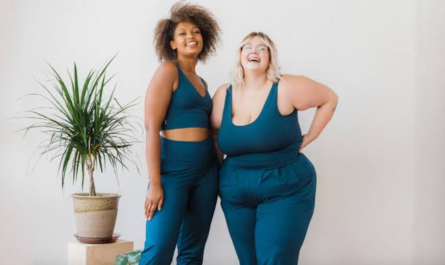
Influencers across a wide range of body sizes have become visible in bikini content, challenging the assumption that swimwear confidence is tied to thinness. Rather than presenting transformation narratives (“before and after”), many creators emphasize coexistence with their bodies as they are.
2. Racial and Ethnic Representation
Brazil’s population is one of the most racially diverse in the world, yet this diversity was historically underrepresented in beauty industries. Influencers of Afro-Brazilian and Indigenous heritage have played a central role in reclaiming beach visibility, often highlighting how cultural identity intersects with body perception.
3. Age Inclusivity
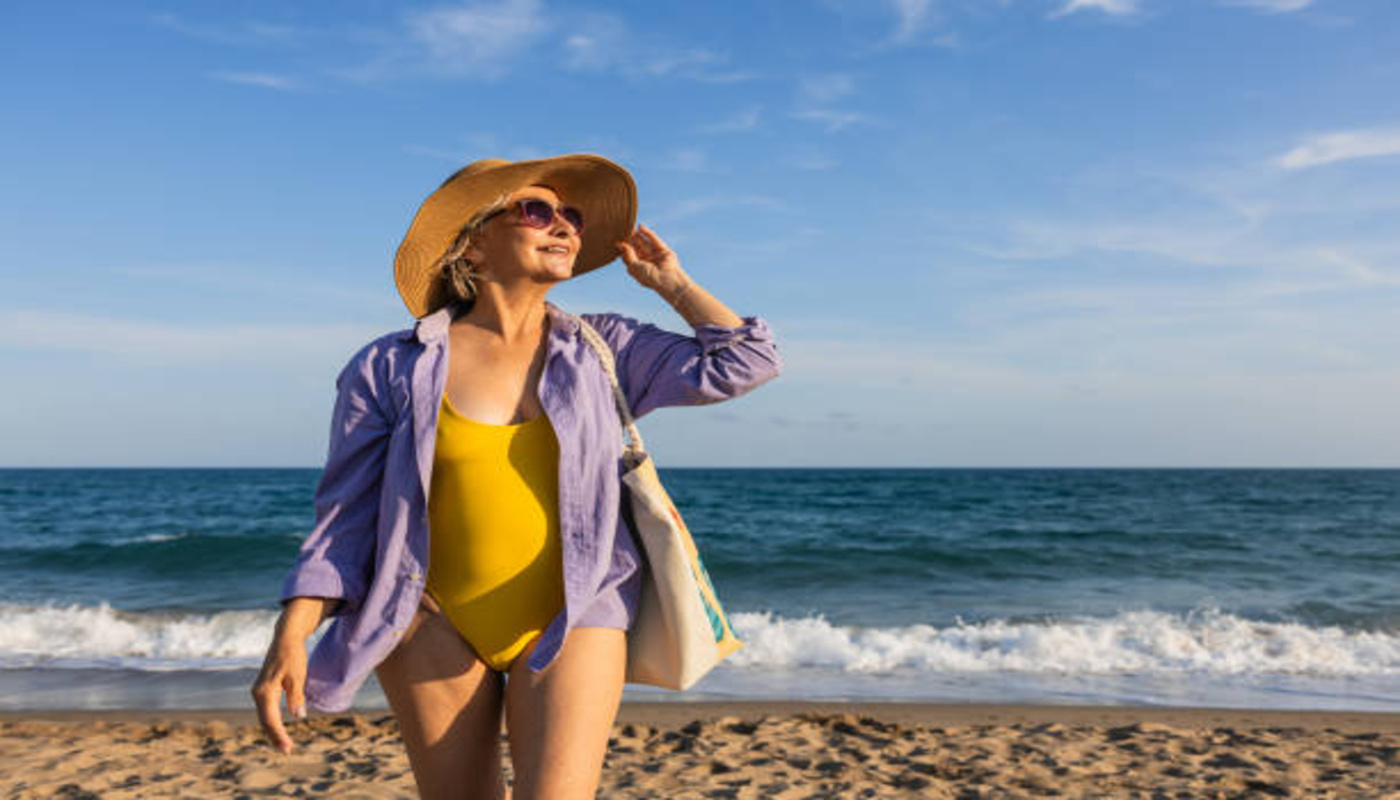
Another emerging shift is the visibility of older women in swimwear culture. Rather than framing aging as a loss of desirability, influencers are reframing it as an extension of embodied confidence.
4. Disability Representation
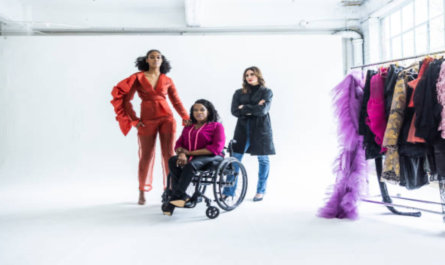
A smaller but growing segment of influencers is bringing disability visibility into beach culture, challenging the assumption that beaches are spaces reserved for “ideal” physical ability.
Together, these layers create a more complex and realistic portrait of Brazilian bodies in swimwear culture.
Challenging the “Perfect Bikini Body” Economy
The bikini industry has long been tied to aspirational marketing. Swimwear brands traditionally rely on idealized imagery to sell not just products, but emotional states: confidence, desirability, and social acceptance.
Brazilian influencers are disrupting this economy by shifting the emotional narrative. Instead of selling perfection, they are selling relatability and authenticity. This has forced brands to reconsider how they communicate beauty.
In recent years, several Brazilian swimwear brands have begun collaborating with influencers who represent body diversity, using unretouched imagery and inclusive casting. However, this shift is not purely altruistic—it is also driven by consumer demand. Audiences are increasingly rejecting hyper-polished visuals that feel disconnected from real life.
The result is a tension between commercial branding and cultural authenticity. Influencers often navigate this space carefully, balancing sponsorships with personal values.
The Psychological Impact of Visibility
The visibility created by Brazilian influencers has had measurable psychological implications for audiences, particularly young women who grew up with restrictive body ideals.
One of the most significant shifts is the normalization of “imperfect” bodies in public spaces. Seeing stretch marks or cellulite on a beach photo is no longer shocking or hidden—it is ordinary. This normalization reduces the internalized stigma that many individuals carry about their own bodies.
However, the impact is not universally linear. Social media can still reinforce comparison culture, especially when “body positivity” becomes aestheticized. Some influencers face pressure to present confidence in a way that itself becomes a new standard. In other words, even authenticity can be commodified.
This creates a complex psychological landscape where progress and pressure coexist. Brazilian influencer culture reflects this tension clearly: it is both liberating and, at times, paradoxically demanding.
Gender Expression and the Expansion of Bikini Culture
Another important dimension of this cultural shift is the expansion of gender expression in swimwear narratives. While bikini culture has historically been framed around feminine ideals, Brazilian influencers are increasingly challenging binary interpretations of beachwear.
Some creators are using swimwear content to explore non-conforming gender identities, presenting bikini fashion as fluid rather than fixed. Others challenge the assumption that swimwear must signal sexual availability or gendered expectation.
This is particularly significant in a cultural context like Brazil, where beach life is highly social and visually exposed. By reinterpreting swimwear as personal expression rather than gender performance, influencers are expanding the symbolic meaning of bikini culture itself.
The Role of Humor, Irony, and Cultural Self-Awareness
A distinctive feature of Brazilian digital culture is its use of humor and irony as tools of resistance. Influencers often incorporate playful captions, memes, or self-aware commentary into bikini posts that would otherwise be interpreted through a purely aesthetic lens.
This humor serves multiple purposes. It defuses the pressure of perfection, creates relatability, and acknowledges the absurdity of rigid beauty expectations. It also reflects a broader cultural tendency in Brazil to use humor as a coping mechanism in the face of social pressure.
By reframing bikini imagery through humor, influencers are not rejecting beauty—they are refusing to treat it as a rigid hierarchy.
Global Influence: How Brazilian Trends Travel
Brazilian influencer culture has increasingly influenced global conversations around body inclusivity. International audiences often engage with Brazilian creators as examples of more relaxed, embodied confidence in beach culture.
However, this global consumption can sometimes flatten context. What appears as effortless confidence is often the result of sustained cultural negotiation within Brazil’s own beauty politics. The risk is that international audiences adopt the aesthetic without understanding the social struggle behind it.
At the same time, Brazilian influencers are also influenced by global movements, particularly from North America and Europe. This creates a reciprocal exchange where ideas about body positivity, inclusivity, and representation circulate across borders and evolve in localized ways.
Brazil, in this sense, is not just a participant in global body discourse—it is a contributor shaping its direction.
Commercialization vs. Authenticity: A Growing Tension
As body inclusivity becomes more visible in Brazilian influencer culture, it also becomes more commercialized. Brands increasingly seek to align themselves with inclusivity narratives, sometimes without fully engaging with their deeper implications.
This creates a tension between authentic representation and performative diversity. Influencers often find themselves navigating questions such as: When does representation become marketing? When does visibility become exploitation? And how can authenticity be preserved within monetized platforms?
There is no simple answer. What is clear, however, is that Brazilian influencers are increasingly aware of these dynamics and are actively shaping how they engage with brand partnerships.
Rewriting the Meaning of Confidence
Perhaps the most significant cultural shift driven by Brazilian influencers is the redefinition of confidence itself. Confidence is no longer portrayed as the absence of insecurity or the achievement of a specific body type. Instead, it is increasingly framed as coexistence with complexity.
This reframing is subtle but powerful. It suggests that confidence is not a destination but a practice—one that involves ongoing negotiation with social expectations, personal identity, and cultural messaging.
In bikini culture, this means showing up without requiring perfection as a prerequisite for visibility.
Digital Activism and the Rewriting of Beauty Algorithms
Beyond individual posts and influencer aesthetics, a quieter but more structural shift is happening in how Brazilian creators are challenging the algorithms that shape visibility itself. Social media platforms are not neutral spaces; they reward certain body types, lighting styles, and engagement patterns that often align with long-standing beauty hierarchies. Brazilian influencers, particularly those focused on body inclusivity, are increasingly aware that visibility is not just cultural—it is computational.
Many creators are intentionally producing content that resists traditional “algorithm-friendly” aesthetics. Instead of overly curated swimwear shoots, they post raw, conversational beach moments: unposed laughter, candid movement, and captions that prioritize emotional honesty over viral hooks. This is not accidental. It is a form of digital resistance against systems that historically amplify a narrow visual ideal.
At the same time, Brazilian creators are also learning how to work within these systems without compromising authenticity. Some use storytelling-driven Reels that center body acceptance narratives, while others build community engagement through comments and dialogue rather than purely visual appeal. The result is a hybrid strategy—one that acknowledges algorithmic realities while refusing to be fully defined by them.
This shift matters because it reframes inclusivity as more than representation; it becomes infrastructural critique. Brazilian influencers are not just asking who gets seen, but why certain bodies are rewarded with visibility in the first place. In doing so, they are expanding the conversation from aesthetics to systems, from images to architecture.
Community-Led Beauty Standards and Peer Validation Culture
One of the most significant cultural changes emerging from Brazilian influencer spaces is the rise of peer-driven validation systems that challenge traditional top-down beauty authority. Instead of beauty being defined by magazines, fashion houses, or celebrity endorsements, it is increasingly being negotiated within comment sections, micro-communities, and follower interactions.
In these digital ecosystems, affirmation often comes from shared lived experience rather than aspirational distance. When influencers post bikini images that include stretch marks, softness, or non-idealized posture, the responses frequently reflect recognition rather than surprise. Comments like “this looks like me” or “finally representation” indicate a shift in how beauty is socially validated. It is no longer about achieving an external ideal, but about seeing oneself reflected in public space.
Brazilian influencer culture amplifies this dynamic because of its strong emphasis on relational communication. Followers are not passive viewers; they are active participants in shaping meaning. Influencers often respond directly, creating conversational loops that reinforce emotional connection rather than hierarchical admiration. This flattens the traditional distance between “ideal body” and “real body,” replacing it with a continuum of shared embodiment.
However, this peer validation system also introduces new complexities. Emotional labor increases for influencers who feel responsible for representing entire communities. At the same time, audiences may begin to rely heavily on digital affirmation for self-esteem reinforcement. Despite these tensions, the shift represents a meaningful decentralization of beauty authority, moving it from institutions to communities, from prescription to dialogue.
The Intersection of Tourism, National Identity, and Body Visibility
Brazil’s global image as a beach destination has long shaped how bodies are perceived both domestically and internationally. Tourism campaigns, travel photography, and global media representations have historically emphasized a stylized version of Brazilian beach life—sunlit, energetic, and visually idealized. Within this framing, bodies often become part of the scenery rather than subjects with agency.
Brazilian influencers are actively reshaping this narrative by reclaiming beach culture as a lived, diverse, and socially complex space rather than a curated postcard. Their content often highlights the everyday reality of beaches: crowded spaces, mixed social interactions, and a wide range of body types existing simultaneously. This disrupts the tourist gaze, which tends to simplify and aestheticize.
In doing so, influencers are also engaging with questions of national identity. Brazil’s diversity is frequently celebrated in abstract cultural terms—music, food, festivals—but less consistently acknowledged in visual representation of bodies. By placing diverse bodies at the center of beach imagery, influencers are aligning national identity with lived physical diversity rather than idealized exportable imagery.
This shift has implications beyond social media. It challenges how Brazil is marketed globally and how Brazilians perceive themselves internally. When inclusivity becomes visible in spaces associated with national pride, it complicates the idea that only certain bodies “represent” the country. Instead, representation becomes plural, fragmented, and more honest. This is not just a cultural correction—it is a redefinition of who belongs in the national visual imagination.
Toward Post-Ideal Swimwear Culture
The most forward-looking development in Brazilian influencer culture is the gradual emergence of what can be described as a “post-ideal” approach to swimwear representation. This does not mean the absence of beauty standards, but rather a cultural shift where beauty is no longer treated as singular, fixed, or universally applicable.
In this emerging framework, bikini content is less about achieving or rejecting ideals and more about expressing presence in the body as it is experienced. Influencers are increasingly centering movement, comfort, sensory experience, and emotional state over static visual perfection. A beach photo becomes less about how a body appears and more about how it exists in space and time.
This shift is subtle but significant. It moves the conversation away from correction—fixing, improving, or challenging the body—and toward coexistence. Brazilian influencers are not asking audiences to redefine beauty in a new way; they are questioning whether a single definition is necessary at all.
The implications of this are both cultural and psychological. It reduces the pressure of comparison by removing the notion of a singular endpoint. It also allows swimwear culture to become more inclusive by default rather than exception. However, it also raises new questions about how inclusivity can be sustained in an attention economy that still rewards extremes and spectacle.
Even so, the direction is clear. Brazilian influencers are not simply challenging bikini body norms—they are dissolving the idea that such a norm must exist in the first place.
Conclusion: Toward a More Expansive Bikini Culture
Brazilian influencers are not dismantling bikini body norms through a single movement or ideology. Instead, they are gradually expanding the cultural language through which bodies are seen, interpreted, and valued.
Their impact lies in multiplicity: size diversity, racial representation, age inclusivity, gender fluidity, humor, and emotional honesty all converge to create a more expansive vision of beach culture. Yet this evolution is not without contradictions. Visibility can be empowering and pressurizing at the same time. Authenticity can be both liberating and commodified.
What makes the Brazilian context particularly important is its refusal to treat these tensions as binary. Instead of positioning body positivity as a fixed endpoint, Brazilian influencer culture reflects it as an ongoing negotiation shaped by lived experience.
In a world still deeply influenced by narrow beauty ideals, this approach offers something more sustainable: not perfection, but presence. Not exclusion or reversal, but expansion.
The bikini, once a symbol of restrictive visibility, is being reimagined—not as a standard to meet, but as a space where bodies of many kinds can exist without apology.
Sources: Vogue Brasil, Elle Brasil, The New York Times, BBC, Harper’s Bazaar Brasil, The Guardian, Al Jazeera, Wired