 by
by The Postcard Illusion: What Travel Content Teaches Us About Bodies
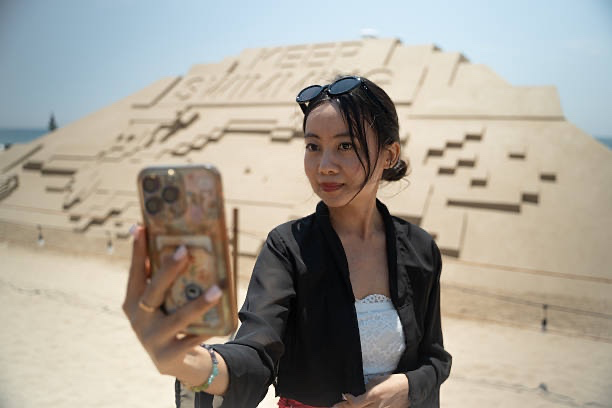
Travel was once imagined as expansion—new places, unfamiliar cultures, unexpected encounters, and altered perspectives. Yet scroll through contemporary travel feeds and another pattern quickly appears: alongside endless coastlines, mountain peaks, boutique hotels, and curated itineraries sits a surprisingly narrow representation of the human body.
Travel influencing has become one of the most aspirational forms of digital storytelling. The genre promises freedom, movement, transformation, and discovery. But while destinations have become more diverse, bodies shown within those destinations often remain remarkably uniform.
Smooth skin. Controlled poses. Strategic angles. Carefully selected outfits. Minimal signs of fatigue, bloating, accessibility realities, disability, aging, recovery, bodily change, or ordinary travel discomfort.
This absence is not simply an aesthetic preference. It reflects broader cultural systems that shape who gets seen as adventurous, desirable, marketable, and worthy of occupying public space.
Body realism in travel content does not mean rejecting beauty, ambition, style, or visual storytelling. Instead, it raises a deeper question: why does an industry centered around movement and global experience often portray such limited versions of embodied life?
Understanding this phenomenon requires looking beyond individual influencers and examining the platforms, audiences, brand economics, historical travel narratives, and psychological expectations that shape travel media today.
Another reason body realism remains limited in travel influencing is the increasing commercialization of “shareable experiences.” Destinations themselves are now designed with social visibility in mind—photo decks, mirror installations, infinity pools, curated viewpoints, and aesthetic cafés often encourage a specific type of image production. In these spaces, the body becomes part of the scenery rather than an ordinary participant in the journey. This changes how travelers interact with place. Instead of asking, “What does this destination make me feel?” the question quietly becomes, “How do I appear within this destination?” Influencers are not solely responsible for this shift; tourism boards, hospitality brands, and digital platforms all participate in constructing visual expectations. The result is a feedback loop where audiences expect polished content because polished content dominates visibility. Over time, bodies that do not fit conventional travel aesthetics may appear less often—not because they are absent in reality, but because they are photographed differently or excluded from campaigns altogether. Breaking this cycle requires expanding ideas of what makes travel imagery compelling and recognizing that emotional resonance can be just as powerful as visual perfection.
There is also an overlooked emotional dimension to body realism in travel spaces: memory. Many people discover after returning from trips that they avoided being photographed because they felt uncomfortable with how their bodies looked at the time. Years later, they regret the absence of those memories more than the appearance concerns that shaped those decisions. Travel influencers unintentionally influence this relationship with memory-making. When audiences repeatedly consume highly controlled travel imagery, they may begin treating personal travel photos as performances rather than records of lived experience. This creates pressure to curate rather than participate. Across cultures, family albums historically captured travel imperfectly—windblown hair, repeated outfits, crowded backgrounds, awkward angles, and spontaneous expressions. Those images documented presence rather than polish. Digital culture has shifted expectations toward publication-ready moments. Body realism invites a return to documenting experience without demanding aesthetic perfection. It encourages people to remain visible in their own stories instead of becoming photographers of everyone else’s experience. Travel memories become richer when bodies are treated not as objects to optimize but as witnesses to movement, connection, and discovery.
Emerging shifts in creator culture suggest that travel storytelling may already be changing. Younger audiences increasingly reward transparency, behind-the-scenes content, and narratives that feel emotionally grounded rather than endlessly aspirational. Some travel creators now include conversations about rest days, cultural adjustment, packing realities, climate discomfort, and the difference between professional travel and personal vacations. This evolution reflects a broader cultural move away from perfection as the only measure of value. Importantly, body realism does not mean centering bodies in every travel story. Sometimes it simply means allowing people to exist naturally within the frame—without excessive editing, rigid posing, or pressure to justify their presence. Travel becomes more inclusive when bodies are shown as active participants in exploration rather than aesthetic accessories to scenery. As audiences continue redefining what authenticity means online, travel influencing may gradually become less about proving an ideal lifestyle and more about inviting people into meaningful experiences. In that future, representation will not reduce aspiration; it will widen who feels entitled to imagine themselves crossing borders, discovering places, and being seen while doing so.
Perhaps one of the most meaningful indicators of change is that audiences themselves are beginning to question what travel success looks like. Increasingly, people are sharing moments that once remained hidden—missed trains, uncomfortable weather, repeated clothing choices, long walking days, and the ordinary realities that make journeys memorable. These moments do not reduce the beauty of travel; they deepen it. Body realism becomes part of this broader shift because it reminds people that experiencing a place matters more than performing it. The future of travel storytelling may belong not to perfection, but to presence.
Travel Content Was Built on Fantasy Before Social Media Ever Existed
Travel influencing did not invent idealized travel.
Long before social platforms, tourism advertising relied heavily on fantasy. Vintage travel posters, luxury resort campaigns, airline marketing, and destination magazines often featured carefully selected bodies associated with leisure, elegance, youth, and mobility.
Travel historically functioned as symbolic escape.
The visual language suggested:
- Travel makes you transformed.
- Travel makes you attractive.
- Travel makes life look effortless.
- Travel signals status and self-development.
Social media inherited these traditions but intensified them.
Where magazines once showed curated travelers occasionally, platforms now reward daily performance of ideal travel lifestyles.
The result is a shift from documenting travel to performing travel.
And bodies become central to that performance.
The Hidden Rule of Travel Influencing: The Destination Is Never the Only Product
Many people assume travel influencers sell locations.
In reality, they often sell aspiration.
Followers are not only consuming information about hotels, beaches, visas, or itineraries. They are consuming an imagined future self.
The message becomes:
“If you travel like this, perhaps you can become this version of yourself.”
That future self is frequently represented through a body that appears:
- energetic,
- photogenic,
- conventionally attractive,
- perpetually camera-ready,
- unaffected by travel stress.
Body realism becomes difficult because visible humanity can interrupt aspiration.
Sweating after climbing stairs in humid weather.
Compression socks on long-haul flights.
Skin texture under harsh sunlight.
Accessibility equipment.
Post-meal fullness.
Fatigue.
These realities may feel ordinary—but aspirational marketing often edits them out.
Algorithms Reward Visual Predictability
Travel influencing operates inside algorithmic systems that prioritize attention.
Research across digital culture repeatedly shows that visually polished images often receive stronger engagement.
This does not mean audiences consciously reject realism.
Instead, algorithms amplify patterns that already perform well.
Travel creators quickly learn subtle lessons:
Certain poses receive more saves.
Certain angles gain more reach.
Certain outfits attract sponsorships.
Certain body presentations generate positive comments.
This creates what media scholars sometimes describe as “algorithmic conformity.”
Influencers may begin with authentic intentions but gradually adapt toward content formats that feel safer, more rewarded, and more commercially sustainable.
Body realism becomes less visible not necessarily because creators reject it—but because systems quietly discourage it.
The Economics of Travel Influencing Encourages Control
Travel influencing appears spontaneous.
In practice, it is highly structured labor.
Creators manage:
- contracts,
- deadlines,
- editing,
- photography,
- transportation,
- partnerships,
- audience engagement,
- platform analytics.
Many creators report producing hundreds of images to publish only a few.
Under those conditions, visual control becomes professional survival.
Body realism can feel risky.
Creators may worry:
Will brands think my content looks less premium?
Will audiences engage less?
Will I lose bookings?
Will followers interpret natural body changes as decline?
This pressure is especially strong among creators whose income depends on appearance-linked engagement.
The issue is not vanity.
It is labor under visibility.
Why Women Travel Influencers Often Experience Stronger Body Expectations
Although body pressures affect all genders, women in travel spaces frequently face overlapping expectations.
Travel culture often merges three industries at once:
- tourism,
- fashion,
- lifestyle branding.
Women creators may encounter pressure to appear simultaneously:
adventurous,
elegant,
healthy,
effortless,
feminine,
camera-ready.
Public discussions from multiple creators across digital media have highlighted the invisible work behind travel aesthetics—timed shoots, outfit planning, editing routines, and emotional exhaustion.
The contradiction is striking.
Travel is marketed as freedom.
But creators sometimes operate within highly controlled visual systems.
The Global Dimension: Body Realism Looks Different Across Cultures
Body representation is not identical worldwide.
Different regions attach different meanings to visibility, modesty, beauty, and public self-presentation.
East Asian Travel Aesthetics
Travel content in several East Asian digital spaces often emphasizes harmony, composition, atmosphere, and polished presentation.
Body realism may appear indirectly through lifestyle storytelling rather than overt body-centered discussion.
Western Influencer Culture
Western travel spaces increasingly include conversations about authenticity and inclusivity, yet idealized imagery still dominates engagement.
South Asian Contexts
Travel content in South Asia often intersects with expectations around respectability, family perception, modest fashion, and class signaling.
Creators may navigate multiple audiences simultaneously.
African and Middle Eastern Spaces
Representation frequently intersects with local identity, cultural dress, tourism politics, and historical ideas about who gets imagined as a global traveler.
Body realism cannot be discussed without acknowledging these cultural frameworks.
The Body That Travels Is Not Always the Body We See
One of the most overlooked aspects of travel influencing is how travel physically feels.
Actual travel can include:
jet lag,
heat,
cold,
walking fatigue,
changing diets,
sleep disruption,
menstruation,
mobility adjustments,
weather discomfort,
sensory overload.
Yet most travel content removes physical experience.
Travel becomes visual rather than embodied.
This creates subtle cultural consequences.
Viewers may internalize unrealistic expectations:
“I should look perfect while traveling.”
“I should never feel tired.”
“My body should photograph beautifully everywhere.”
“If I struggle physically, I’m doing travel wrong.”
These beliefs can quietly reduce joy and increase self-surveillance.
The Accessibility Conversation Changed the Meaning of Travel Representation
Body realism is also connected to accessibility.
For decades, travel imagery centered highly mobile bodies.
Recent creators and advocates have expanded public understanding of travel realities by documenting:
wheelchair access,
adaptive travel,
fatigue management,
inclusive accommodation,
sensory considerations.
This shift matters.
Because travel is not only about reaching destinations.
It is about belonging within them.
When diverse bodies appear in travel narratives, they challenge the assumption that exploration belongs only to specific physical experiences.
When Influencers Break the Pattern
Some travel creators have started showing less filtered realities:
airport exhaustion,
sunburn recovery,
outfit repeats,
rain disruptions,
camera setup realities,
unposed moments.
Importantly, body realism is not simply posting unedited images.
It is allowing bodies to exist without constant correction.
Several creators have publicly discussed burnout and perfection pressure.
For example, travel creator conversations across podcasts and creator interviews increasingly describe how maintaining an ideal travel identity can reduce presence during actual experiences.
The audience often sees freedom.
The creator may experience production.
Celebrity Travel Culture Has Also Influenced Expectations
Celebrity travel imagery contributes to travel aesthetics even outside influencer spaces.
Public campaigns and documented interviews have increasingly acknowledged how travel photography involves teams, planning, styling, and production.
Campaigns featuring figures such as Ashley Graham helped expand conversations around visible body diversity in lifestyle and travel-related visual culture.
Similarly, documented public discussions by Jameela Jamil have questioned digitally perfected online environments and encouraged broader conversations around visibility and self-worth.
These examples do not solve representation issues—but they demonstrate growing public awareness.
Why Audiences Sometimes Prefer Idealized Travel Content
The conversation becomes incomplete if audiences are portrayed only as victims.
People often seek travel content for inspiration.
After difficult routines, economic stress, or uncertainty, idealized imagery can feel comforting.
Beautiful travel content can create hope.
Escapism itself is not harmful.
Problems emerge when aspiration becomes mistaken for reality.
Body realism does not require replacing beauty with struggle.
It asks for expanding what beauty includes.
The Emotional Cost of Constant Visual Comparison
Travel influencing affects viewers psychologically because travel is identity-rich.
People compare not only appearances but lifestyles.
Questions quietly emerge:
Who gets to rest?
Who gets photographed?
Who belongs in luxury?
Who looks “naturally” adventurous?
Who deserves visibility?
Repeated exposure to narrow body representation can increase:
- appearance monitoring,
- dissatisfaction,
- travel anxiety,
- performance pressure,
- reduced spontaneity.
People may postpone experiences waiting to feel more photogenic.
Entire trips become content opportunities rather than lived memories.
The Rise of “Soft Authenticity” and Why It Is Not Always Body Realism
A recent trend across social media is soft authenticity.
Creators show:
messy hotel beds,
airport selfies,
slightly imperfect lighting.
But many of these moments remain highly curated.
Authenticity itself can become aesthetic.
True body realism goes deeper.
It includes:
visible comfort,
movement diversity,
functional clothing,
ordinary posture,
space for bodily variation.
Realism is not anti-beauty.
It is anti-erasure.
Travel Influencing and the Politics of Being Seen
Travel historically carried social meaning.
Who travels publicly often reflects broader inequalities.
Representation matters because visibility shapes imagination.
If only certain bodies appear traveling, audiences may unconsciously associate exploration with those bodies.
This influences:
confidence,
aspiration,
belonging,
economic participation.
Showing broader body realities does not diminish travel inspiration.
It democratizes it.
What More Inclusive Travel Storytelling Could Look Like
A more inclusive future does not require abandoning aesthetics.
Instead, travel media can expand visual language.
Possible shifts include:
showing movement rather than posing,
documenting experiences over perfection,
including practical realities,
representing varied body types,
featuring adaptive travel experiences,
normalizing repeated outfits,
capturing local connection rather than appearance-first imagery.
Brands also play a role.
Campaigns increasingly recognize that audiences value relatability alongside aspiration.
Creators who balance beauty with honesty may build stronger long-term trust.
Reclaiming Travel as Experience Rather Than Performance
Perhaps the most meaningful question is not whether travel influencers should show “real bodies.”
It is whether travel itself deserves liberation from performance.
Travel at its richest is sensory.
It includes getting lost.
Laughing unexpectedly.
Eating unfamiliar food.
Feeling weather.
Changing perspective.
Bodies are not obstacles to those experiences.
Bodies make those experiences possible.
When travel content only celebrates polished embodiment, it narrows the meaning of movement.
When it welcomes body realism, travel becomes more human.
And perhaps more transformative.
Conclusion: The Future of Travel Visibility Is Bigger Than Representation
Travel influencers rarely show body realism not because individuals are uniquely superficial but because digital culture rewards visual control, aspiration, and polished identity.
Yet audiences are changing.
People increasingly recognize the labor behind beautiful feeds and are asking different questions about authenticity, accessibility, and belonging.
This does not mean idealized travel content will disappear.
Nor should it.
Beauty, creativity, and imagination remain meaningful parts of storytelling.
But a healthier future may emerge when travel media allows more room for bodies that sweat, rest, adapt, change, repeat outfits, move differently, and exist without constant correction.
Travel has always promised discovery.
The next evolution may be discovering that worthy experiences never depended on looking like a postcard.
Sources: National Geographic, Condé Nast Traveler, Vogue, The Guardian, BBC, Forbes, Harvard Business Review, Time, The New York Times, Refinery29, Psychology Today, Skift, Campaign, Travel + Leisure