 by
by Introduction: When the Body-Perfect Narrative Starts to Break
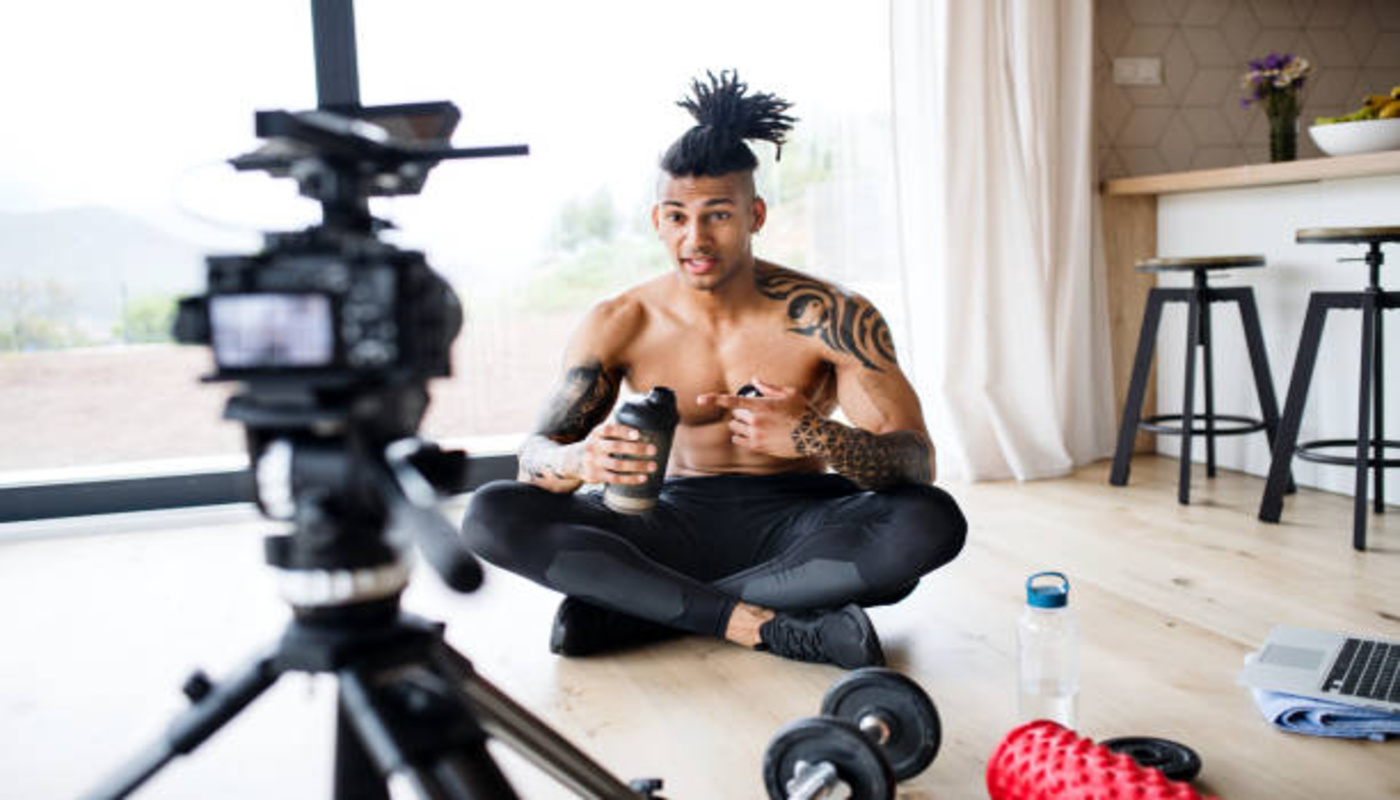
For years, fitness influencers occupied a very specific corner of digital culture. Their content was structured around visible transformation: lean physiques, sculpted abs, “what I eat in a day” routines, intense gym regimens, and before-and-after photos that promised control over the body through discipline. Their authority came from physical proof. The message was simple, even if unspoken: if you follow this lifestyle, your body will reflect it.
But something has been shifting.
Over the past few years, a growing number of fitness influencers have begun speaking less about visible perfection and more about invisible struggles—burnout, anxiety, body image pressure, performance fatigue, and emotional exhaustion. Workout videos are increasingly paired with captions about therapy. Nutrition advice is accompanied by discussions on stress. Some influencers now openly talk about stepping away from tracking macros, obsessing over physique goals, or maintaining unsustainable routines.
This shift toward mental health advocacy is not just a personal evolution of individual creators—it reflects a broader cultural turning point in how wellness is understood, performed, and consumed online. It signals tension between two competing narratives: the optimization of the body and the preservation of the mind.
To understand why this transformation is happening, we need to look beyond surface-level trends and examine the cultural economy of fitness influencing, the psychological consequences of visibility, and the growing audience demand for authenticity over perfection.
The Original Fitness Influencer Model: Discipline as Identity
The early era of fitness influencing, particularly during the rise of Instagram fitness culture in the 2010s, was built on a clear framework: discipline equals success. Influencers presented highly structured lives where food was measured, workouts were intense, and rest was often minimized or strategically optimized.
This model was not inherently new. It echoed long-standing fitness magazine culture and bodybuilding communities. However, social media amplified it in unprecedented ways. Suddenly, fitness was not just a private pursuit—it was a public identity.
The influencer’s body became both content and credential. A defined physique functioned as evidence of expertise. This created a feedback loop: the more visually “successful” the body appeared, the more authority the influencer gained, which in turn increased their audience and monetization opportunities.
Within this framework, mental health was often absent or secondary. Emotional struggle did not fit neatly into a narrative of control. The dominant aesthetic was one of mastery—over appetite, over fatigue, over inconsistency.
But this model contained an inherent contradiction: human bodies and minds do not operate with machine-like consistency. The pressure to perform perfection daily, publicly, and profitably eventually exposed cracks in the system.
What’s emerging next is a quieter shift within this already evolving space: fitness influencers are increasingly moving away from “constant optimization” and toward what can be called “maintenance culture.” Instead of framing life as an endless improvement project—more muscle, less fat, stricter routines, higher productivity—many creators are beginning to emphasize stability. This includes talking openly about sustaining routines that are “good enough” rather than maximal, and acknowledging that consistency sometimes looks like repetition rather than escalation. In mental health terms, this reframing matters because it reduces the pressure of perpetual self-surveillance. The body is no longer treated as a problem to solve, but as a system to live with. This subtle shift also changes the emotional tone of fitness content: workouts are no longer always framed as redemption arcs after “bad habits,” but as neutral, ongoing practices like sleep or hydration. In cultural terms, this reflects fatigue with hyper-optimization narratives that dominate digital wellness spaces. Audiences are responding positively to content that normalizes plateaus, rest phases, and even periods of disengagement. The idea that health must always “look like progress” is slowly being replaced by a more grounded understanding: that maintenance is not stagnation, but sustainability. This change is reshaping how credibility itself is defined in influencer culture.
Another important layer in this transformation is how fitness influencers are reshaping the language of accountability. Earlier fitness content often relied on rigid, sometimes guilt-driven framing—“no excuses,” “stay disciplined,” or “push through.” While these messages were effective for engagement, they also reinforced binary thinking around success and failure. The newer mental health–informed approach replaces this with softer, more flexible language: “listening to your body,” “honoring energy levels,” or “adjusting based on stress.” This is not simply semantic—it reflects a broader psychological recalibration in how people relate to behavior change. When influencers publicly model adaptive thinking, they subtly challenge the shame cycles that many audiences associate with fitness journeys. However, this shift also introduces ambiguity. Without clear structure, some followers may feel uncertain about how to interpret guidance or set boundaries for themselves. This creates an interesting cultural tension between freedom and structure: too much rigidity leads to burnout, but too much flexibility can lead to inconsistency or confusion. Influencers navigating this space often find themselves balancing both ends—offering enough structure to guide, but enough openness to prevent guilt. In this way, mental health advocacy is not removing discipline from fitness culture; it is attempting to soften its psychological edges while preserving its functional value.
A deeper cultural consequence of this shift is the changing relationship between visibility and vulnerability. Fitness influencing was historically built on visibility—the body as something to be seen, evaluated, and compared. Mental health advocacy introduces vulnerability into this visual economy, but not without complexity. When influencers share struggles with anxiety, burnout, or body image pressure, they disrupt the illusion of effortless perfection that once defined the space. This can create powerful moments of connection, especially for audiences who have silently experienced similar pressures. At the same time, vulnerability itself becomes visible content, which raises questions about emotional boundaries in digital spaces. How much emotional labor is appropriate to share publicly? When does openness become exposure? These are questions both creators and audiences are still learning to navigate. Interestingly, this shift is also changing audience behavior. Instead of purely aspirational engagement, followers are increasingly engaging in reflective consumption—saving posts, discussing mental health themes in comments, and sharing content that resonates emotionally rather than aesthetically. This suggests a broader cultural reorientation: fitness content is no longer only about how bodies look, but about how people feel within their bodies. The visual economy is slowly expanding into an emotional one.
Looking ahead, the integration of mental health advocacy into fitness influencing may eventually lead to a redefinition of authority itself. In earlier digital fitness culture, authority was primarily visual—defined by physique, transformation, or athletic performance. Today, credibility is becoming more multidimensional. Audiences are beginning to value lived experience, emotional intelligence, and transparency alongside physical expertise. This does not mean that physical results have lost relevance, but rather that they are no longer sufficient on their own to sustain long-term trust. Influencers who acknowledge uncertainty, discuss recovery from burnout, or openly revise their own beliefs about fitness often appear more relatable and credible than those presenting fixed, idealized systems. This shift also reflects broader societal changes in how expertise is understood in the digital age. Information is widely accessible, but interpretation and emotional framing are increasingly valued. As a result, fitness influencers are becoming less like instructors and more like interpreters of experience—narrating not just what to do, but what it feels like to do it. In this evolving landscape, mental health advocacy is not a trend layered onto fitness culture; it is actively reshaping what it means to be an authority in the wellness space.
The Psychological Cost of Performing Fitness Online
Fitness influencing differs from private fitness routines in one crucial way: it requires constant visibility. The body is not just experienced—it is displayed, evaluated, and compared.
Over time, this creates psychological pressures that extend beyond typical fitness discipline:
- The need to maintain a consistent visual standard
- The expectation to avoid visible fluctuations in physique
- The pressure to continuously outperform previous content
- The obligation to remain aspirational while appearing “relatable”
Even when audiences admire these influencers, admiration often comes with subtle expectations. Followers expect continuity. A sudden change in physique, tone, or messaging can trigger scrutiny, speculation, or loss of credibility.
This environment can encourage hyper-awareness of the body. Workouts become content opportunities. Meals become documentation. Rest becomes something to justify.
For many creators, this leads to a slow realization: the same system that rewards discipline can also erode mental well-being. The performance of fitness begins to overshadow the experience of it.
It is within this tension that mental health advocacy begins to emerge—not as a branding pivot, but often as a necessary recalibration.
From Aesthetic Discipline to Emotional Transparency
One of the most noticeable shifts in recent years is the move from aesthetic-focused content to emotionally transparent storytelling.
Instead of exclusively showcasing workouts, influencers increasingly share narratives such as:
- Feeling burned out from constant content creation
- Struggling with body image despite being “fit”
- Taking breaks from tracking or dieting systems
- Relearning exercise as enjoyment rather than obligation
- Seeking therapy or mindfulness practices
This shift reflects a broader cultural demand for authenticity. Audiences are increasingly skeptical of overly polished wellness narratives. There is growing awareness that highly curated lifestyles may not reflect emotional reality.
Mental health advocacy allows influencers to reconnect with audiences on a more human level. It replaces aspirational distance with relatability. Instead of saying “do this to look like me,” the message becomes “this is what I’ve learned about myself.”
However, this transition is not purely altruistic or purely commercial—it exists in a complex space between genuine personal growth and evolving content strategy.
The Algorithm and the Incentive Shift
Social media algorithms play a significant role in shaping this transformation.
Platforms increasingly reward engagement metrics such as comments, saves, and shares. Emotional content tends to perform strongly because it encourages reflection and conversation. Vulnerability, when expressed thoughtfully, often generates deeper audience connection than purely aesthetic content.
As a result, mental health discussions are not only personally meaningful for influencers—they are also structurally incentivized.
However, this introduces an important tension. When emotional expression becomes part of a content strategy, it raises questions about authenticity versus performance. Audiences may struggle to distinguish between genuine advocacy and algorithm-driven storytelling.
Despite this complexity, the overall effect has been a normalization of mental health discourse within fitness spaces that were once almost exclusively body-focused.
Fitness Culture’s Identity Crisis: Control vs. Compassion
At its core, fitness culture has always revolved around control—control over the body, routines, habits, and outcomes. Mental health advocacy introduces a different value system: compassion, flexibility, and acceptance of imperfection.
These two frameworks are not inherently incompatible, but they often sit in tension.
For example:
- Structured training can support mental well-being
- But excessive rigidity can increase anxiety
- Discipline can build confidence
- But obsession with control can lead to burnout
Influencers navigating this space often find themselves redefining what “health” means. Instead of equating health with visible outcomes, many now frame it as sustainability: the ability to maintain habits without psychological harm.
This reframing is significant because it challenges a decade of fitness messaging that prioritized visible transformation above all else.
The Global Dimension: How Mental Health Advocacy Differs Across Cultures
While much of influencer-driven fitness culture originates in Western platforms, its audience is global. As a result, mental health advocacy within fitness spaces takes on different meanings across cultural contexts.
In some regions, discussing mental health openly is still emerging from stigma. Influencers who speak about anxiety or burnout may be among the first public figures to normalize such conversations. In these contexts, fitness influencers can become unexpected entry points into mental health awareness.
In other cultures where wellness traditions already integrate mind-body balance—such as yoga philosophies or holistic health systems—the shift may feel less like innovation and more like rediscovery. However, even in these contexts, the commercialization of mental health messaging through influencer branding can create tension between tradition and monetized wellness culture.
Globally, one common pattern emerges: audiences are increasingly seeking holistic wellness narratives. Physical fitness alone is no longer seen as sufficient. Emotional resilience, stress management, and psychological balance are becoming integral to how health is defined.
Audience Expectations: From Perfection to Relatability
The evolution of fitness influencers toward mental health advocacy is also driven by audience fatigue.
Over time, highly polished fitness content can create unrealistic expectations. Followers may begin to feel disconnected from creators who appear perpetually disciplined, energetic, and physically optimized.
In response, audiences have started gravitating toward creators who acknowledge struggle, inconsistency, and emotional complexity.
This shift does not mean that discipline is no longer valued. Rather, it signals a preference for balance over extremity. Followers want to see fitness as something integrated into real life—not something that replaces it.
Mental health advocacy allows influencers to bridge this gap. It humanizes them. It also reduces the psychological distance between influencer and audience, making fitness feel more achievable and less intimidating.
The Risk of Oversimplification in Mental Health Messaging
Despite its positive cultural impact, the integration of mental health advocacy into fitness influencing is not without challenges.
One concern is oversimplification. Mental health is complex, multifaceted, and deeply individual. When reduced to short captions or motivational content, there is a risk of flattening that complexity into easily digestible narratives.
Another concern is the blending of wellness advice with personal storytelling without clear boundaries. While sharing lived experience can be powerful, it may inadvertently position influencers as informal authorities on mental health without formal training.
Additionally, there is the risk of performative vulnerability—where emotional sharing becomes another content category rather than a genuine expression of experience.
These tensions highlight the need for careful communication and ethical awareness within influencer culture, particularly when discussing sensitive topics.
The New Fitness Identity: Integration Over Perfection
What is emerging now is not the disappearance of fitness influencing, but its redefinition.
The modern fitness influencer is no longer solely a body-focused figure. Instead, they are increasingly positioned as lifestyle narrators who integrate physical health, emotional awareness, and mental resilience.
This new identity emphasizes:
- Sustainable routines over extreme discipline
- Emotional awareness alongside physical training
- Rest as part of performance, not its opposite
- Transparency about burnout and recovery cycles
Fitness is no longer framed as a destination but as an evolving relationship with the self.
Mental health advocacy, in this context, is not a separate topic—it becomes part of the broader conversation about what it means to be healthy in a digitally saturated world.
Conclusion: Toward a More Human Wellness Culture
The movement of fitness influencers toward mental health advocacy reflects a deeper cultural recalibration. It signals a growing recognition that bodies cannot be separated from minds, and that performance-based wellness narratives have limits when detached from emotional reality.
This shift is not linear or uniform. Some influencers fully embrace mental health discourse, while others integrate it selectively. Some audiences welcome the change; others remain skeptical of its authenticity. And the tension between visibility and vulnerability continues to shape how these conversations unfold.
Yet, despite its complexities, this evolution marks an important cultural moment: the beginning of a more integrated understanding of health—one that acknowledges that discipline alone is not enough, and that sustainability requires emotional as well as physical care.
In the long term, the most influential fitness narratives may not be the ones that show the most extreme transformations, but the ones that reflect the most sustainable truths about being human.
Sources: Harvard Business Review, Pew Research Center, Journal of Health Communication, BBC, The Guardian, Psychology Today, Forbes, The Atlantic