 by
by Introduction: When a Global Star Refuses the Script
In a world where masculinity has long been defined by rigidity—stoicism, dominance, emotional restraint—a quiet but powerful disruption has been unfolding on the global stage. It doesn’t arrive as a manifesto or political doctrine, but through something far more accessible: music, fashion, and presence. At the center of this shift stands Bad Bunny, a Puerto Rican artist whose influence extends far beyond reggaeton charts.
What makes his cultural impact particularly compelling is not simply that he challenges norms, but how effortlessly he does so. Painted nails, gender-fluid fashion, vulnerability in lyrics, and public resistance to machismo culture—these are not staged acts of rebellion. They are integrated expressions of identity that ripple across audiences worldwide.
For body-neutral and body-inclusive communities, Bad Bunny’s visibility represents something deeper than aesthetic disruption. It offers a reimagining of how bodies—especially male bodies—can exist outside narrow expectations. His presence asks a fundamental question: What happens when masculinity is no longer tied to control, but to freedom?
This article explores how Bad Bunny’s artistry and public persona reshape conversations around masculinity and body expression, examining the psychological, cultural, and global implications of his influence.
The Historical Weight of Masculinity
To understand the significance of this shift, it is important to recognize what masculinity has traditionally required. Across cultures, masculinity has often been constructed as a performance of control—over emotions, over bodies, and often over others. Strength has been equated with silence. Beauty has been feminized and therefore distanced from male identity.
In Latin American contexts, this framework is often tied to machismo—a cultural model that emphasizes dominance, heterosexual prowess, and emotional suppression. While machismo has diverse interpretations and evolutions, its more rigid forms have historically limited how men express themselves physically and emotionally.
Within such a system, the male body becomes a symbol of discipline rather than exploration. Clothing, grooming, posture, and even gestures are governed by unspoken rules designed to reinforce gender boundaries.
Bad Bunny’s emergence does not simply reject these rules; it exposes how arbitrary they are.
The Role of Media Amplification in Normalizing Expression
One of the most overlooked aspects of Bad Bunny’s cultural influence is how effectively his image circulates through global media ecosystems. Social media platforms, digital magazines, and streaming services do more than simply showcase his work—they amplify and normalize it. Each appearance, whether in a photoshoot or a performance, is rapidly shared, discussed, and reinterpreted across audiences that extend far beyond his core fan base. This constant visibility plays a crucial role in shifting perceptions. What may initially appear unconventional gradually becomes familiar, and familiarity reduces resistance. In psychological terms, repeated exposure can increase acceptance, even when the subject challenges deeply ingrained beliefs. For younger audiences especially, this creates a new baseline for what masculinity can look like. Painted nails or fluid fashion no longer register as shocking but as one of many valid expressions. Importantly, this normalization does not erase cultural tensions—it coexists with them. Some audiences embrace these changes enthusiastically, while others respond with discomfort or critique. Yet even this friction contributes to dialogue. By occupying mainstream media space without conforming, Bad Bunny ensures that conversations about masculinity and body expression remain visible, ongoing, and impossible to ignore.
Community Impact: From Individual Inspiration to Collective Identity
While celebrity influence often begins at the level of individual admiration, its most meaningful impact occurs when it shapes collective identity. Bad Bunny’s approach to masculinity has inspired not just personal style changes, but broader shifts in how communities discuss gender and expression. Online spaces, particularly among younger Latin and global audiences, increasingly reflect this evolution. Conversations around self-expression, emotional openness, and non-traditional masculinity are becoming more nuanced and inclusive. This is significant because identity is not formed in isolation—it is negotiated within social groups. When individuals see others embracing similar forms of expression, it reduces feelings of isolation and increases confidence. In this way, Bad Bunny’s visibility acts as a catalyst for community formation. Fans do not simply consume his work; they engage with it, reinterpret it, and incorporate its values into their own lives. This creates a ripple effect where change extends beyond the individual to influence group norms. Over time, these shifts can alter cultural expectations themselves. What begins as admiration for a public figure can evolve into a shared understanding that masculinity is not a fixed category, but a flexible and evolving experience shaped by collective participation.
Resistance and Critique: Why Discomfort Matters
No cultural shift occurs without resistance, and Bad Bunny’s redefinition of masculinity is no exception. Criticism often emerges from those who view his expression as a departure from tradition or as a threat to established norms. This discomfort, however, is not merely an obstacle—it is an essential part of the transformation process. Resistance reveals where cultural boundaries exist and highlights the values that people feel are being challenged. In many cases, critiques are rooted in fear of losing familiar structures rather than in the specifics of his expression. Understanding this helps move the conversation beyond simple opposition. Instead of framing the debate as right versus wrong, it becomes an opportunity to examine why certain forms of masculinity have been prioritized and who benefits from maintaining them. For body-inclusive discourse, this is particularly important. Challenging norms requires confronting discomfort, both individually and collectively. Bad Bunny’s visibility forces these confrontations into the open, where they can be discussed rather than suppressed. Over time, even those who initially resist may begin to reconsider their perspectives, not necessarily by fully adopting new ideas, but by recognizing the legitimacy of multiple forms of expression.
Reimagining the Future of Masculinity
Looking ahead, the influence of figures like Bad Bunny suggests that masculinity is moving toward a more expansive and inclusive future. This does not mean that traditional expressions will disappear, but rather that they will coexist alongside a wider range of possibilities. The shift is less about replacing one model with another and more about removing the hierarchy that privileges certain forms of expression over others. In this emerging landscape, the male body is no longer confined to a narrow set of expectations. It can be expressive without being questioned, vulnerable without being diminished, and diverse without needing validation. This transformation has implications beyond fashion or entertainment—it affects mental health, relationships, and social dynamics. When individuals feel free to express themselves authentically, it fosters deeper connections and a stronger sense of self. For future generations, this could mean growing up with fewer restrictions and greater acceptance of difference. Bad Bunny’s role in this evolution is not that of a singular revolutionary, but of a visible participant in a broader cultural movement. His impact lies in showing that change is not only possible, but already underway, inviting others to imagine and embody new ways of being.
Visibility as Disruption: The Power of Everyday Choices
One of the most striking aspects of Bad Bunny’s influence is how he uses visibility—not as spectacle, but as normalization. When he appears on magazine covers wearing skirts or dresses, or when he posts images with painted nails, the intention is not framed as provocation. It is presented as self-expression.
This distinction matters.
Historically, men who deviated from masculine norms in public spaces were often framed as “exceptions” or “statements.” Their bodies became sites of controversy. In contrast, Bad Bunny’s approach subtly shifts the narrative. By integrating these choices into his everyday aesthetic, he removes the sense of anomaly.
His Vogue cover, where he wore a skirt, became a widely discussed cultural moment. But what resonated was not just the imagery—it was the lack of apology. He did not frame his choices as rebellion or activism, even though they function as both. Instead, they appeared as natural extensions of identity.
For body-inclusive communities, this is transformative. It reinforces the idea that bodies do not need justification to exist outside norms.
Redefining Strength Through Vulnerability
Masculinity has long been tied to emotional restraint. From childhood, many men are taught that vulnerability signals weakness. This conditioning creates a disconnect between internal experience and external expression, often leading to emotional suppression.
Bad Bunny’s music disrupts this dynamic.
Through lyrics that explore heartbreak, longing, loneliness, and joy, he presents emotional openness as integral to identity. Songs that speak about loss or introspection are delivered without irony or distancing. There is no attempt to mask feeling with aggression or detachment.
Psychologically, this shift has significant implications. When high-visibility figures model emotional expression, it expands what is socially permissible. For listeners, especially young men, it creates space to experience emotions without shame.
In body-neutral discourse, this is deeply relevant. The body is not just physical—it is emotional. How we inhabit our bodies is shaped by what we allow ourselves to feel. By embracing vulnerability, Bad Bunny repositions the male body as a site of experience rather than control.
Fashion as Language: Reclaiming the Male Body
Clothing has always functioned as a form of communication. Yet for men, the vocabulary has historically been limited. Neutral tones, structured silhouettes, and minimal variation have defined what is considered “appropriate.”
Bad Bunny expands this language.
From bold prints to traditionally feminine garments, his fashion choices resist categorization. Importantly, these choices are not presented as costumes or temporary experiments. They are consistent elements of his public identity.
This consistency challenges a key assumption: that certain forms of expression inherently belong to specific genders.
From a body expression perspective, fashion becomes a tool for reclaiming autonomy. It allows individuals to shape how their bodies are seen—not in relation to societal expectations, but in alignment with personal identity.
Globally, this resonates in diverse ways. In regions where gender norms remain particularly rigid, such visibility can feel both inspiring and controversial. Yet even controversy signals disruption. It indicates that long-standing assumptions are being questioned.
Machismo Reimagined: Cultural Tensions and Transformation
Bad Bunny’s influence is particularly significant within Latin American contexts, where machismo remains a powerful cultural force. Rather than rejecting cultural identity, he engages with it—redefining what it can include.
He has publicly spoken about rejecting toxic masculinity and advocating for respect, particularly toward women. In his music and public statements, he challenges behaviors associated with dominance and entitlement.
This approach is nuanced. It does not position tradition as inherently negative, but rather invites evolution. By maintaining his cultural roots while expanding their expression, he demonstrates that change does not require abandonment.
For body-inclusive conversations, this is critical. Cultural identity often intersects with body norms. Challenging one without acknowledging the other can create resistance. By working within cultural frameworks, Bad Bunny makes transformation more accessible.
The Politics of Presence: Bodies in Public Space
Bodies are political—not because they are inherently controversial, but because societies assign meaning to them. Who is allowed to take up space, how they are expected to appear, and what expressions are deemed acceptable are all shaped by power structures.
Bad Bunny’s presence disrupts these structures.
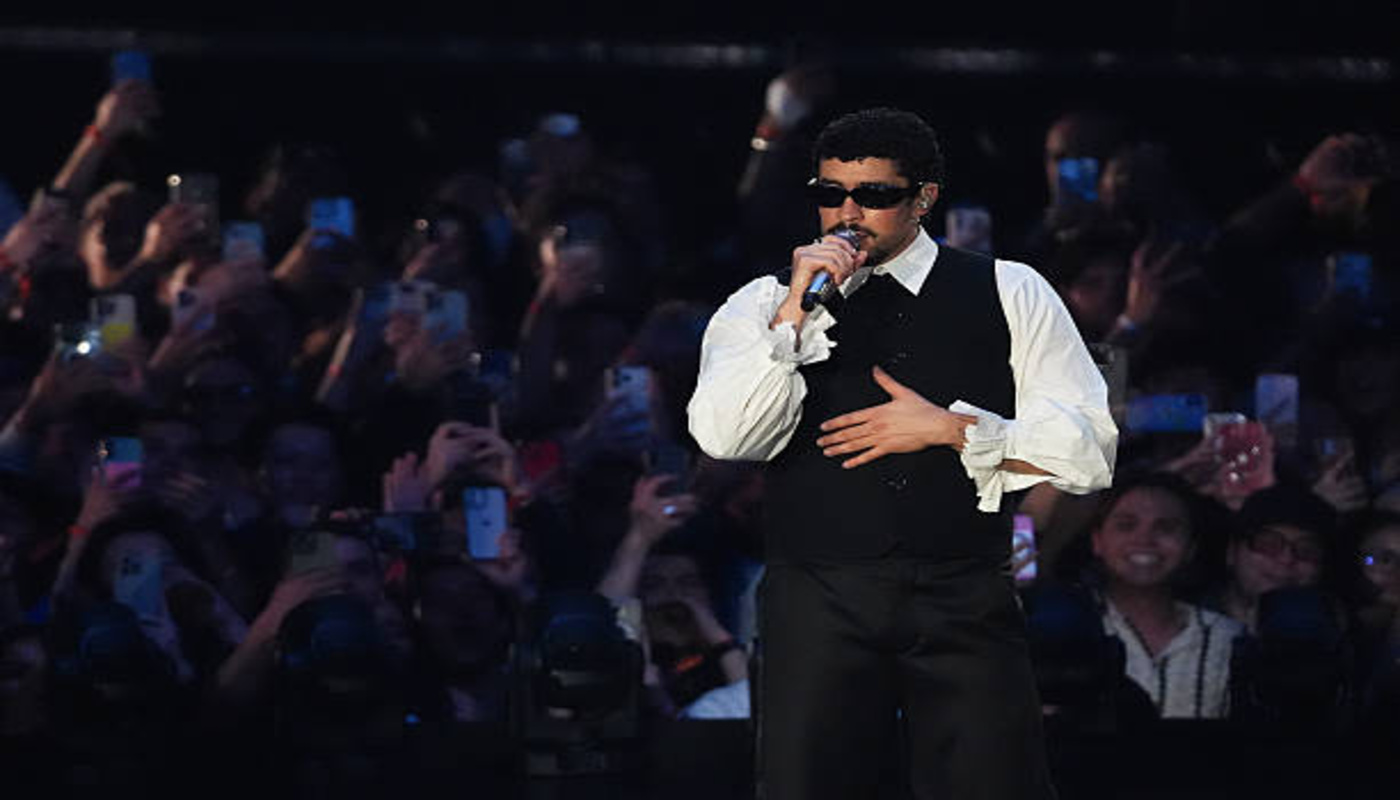
When he performs on global stages, appears in campaigns, or engages with fans, he brings with him a version of masculinity that does not conform. This visibility has a ripple effect. It influences not only individual perceptions but also industry standards.
Representation matters not just in quantity, but in diversity of expression. By existing visibly and unapologetically, he expands what audiences consider possible.
For individuals navigating their own relationships with their bodies, this can be profoundly validating. It suggests that there is no single correct way to inhabit a body.
Global Resonance: Beyond Borders and Languages
While Bad Bunny’s roots are firmly Puerto Rican, his influence is global. This raises an important question: Why does his message resonate across cultures with vastly different norms?
Part of the answer lies in universality. The pressure to conform to gender expectations is not limited to any one region. While its expressions vary, the underlying dynamics are widely shared.
At the same time, his cultural specificity adds depth. By bringing Latin identity into global conversations, he challenges the idea that progressive expression is confined to Western contexts. This is particularly significant for audiences who rarely see their cultures represented in discussions about gender fluidity.
The result is a cross-cultural dialogue. Different societies interpret his influence through their own lenses, creating a complex and evolving conversation about masculinity and body expression.
Psychological Liberation: Expanding the Self
From a psychological perspective, restrictive gender norms limit not only behavior but identity. When individuals feel compelled to suppress aspects of themselves, it can lead to internal conflict.
Bad Bunny’s model of self-expression offers an alternative.
By demonstrating that identity can be multifaceted—strong and soft, bold and introspective—he encourages a more integrated sense of self. This integration is closely linked to well-being. When individuals are able to align their external expression with internal experience, it reduces cognitive dissonance.
For body-neutral communities, this alignment is essential. Body neutrality emphasizes acceptance without pressure to idealize or transform. It allows bodies to exist without constant evaluation.
Bad Bunny’s approach complements this philosophy. His body is not presented as an object to be perfected, but as a medium through which identity is expressed.
The Commercial Paradox: Authenticity in a Market-Driven World
It is important to acknowledge that Bad Bunny operates within a commercial industry. Fashion choices, public appearances, and artistic decisions are all part of a broader ecosystem that includes branding and marketing.
This creates a paradox.
On one hand, his visibility is amplified by the very systems that often reinforce norms. On the other, he uses that platform to challenge those norms.
This tension does not diminish his impact; rather, it complicates it. It raises questions about how authenticity is maintained within commodified spaces. Can self-expression remain genuine when it is also marketable?
For audiences, the key lies in interpretation. Regardless of industry dynamics, the cultural messages conveyed through his work have real effects. They influence how people see themselves and others.
Beyond the Individual: Collective Shifts
While it is tempting to focus on Bad Bunny as an individual, his influence is part of a broader cultural shift. Conversations about gender fluidity, body positivity, and emotional expression are gaining momentum across various platforms.
What sets his contribution apart is accessibility. His music reaches millions, many of whom may not actively engage with academic or activist discourse. Through entertainment, he introduces ideas that might otherwise remain distant.
This accessibility is crucial for change. Cultural shifts rarely occur through isolated efforts; they emerge from collective exposure and gradual normalization.
Conclusion: Toward a More Expansive Future
Bad Bunny’s impact on masculinity and body expression cannot be reduced to fashion choices or lyrical themes. It lies in the space he creates—space for ambiguity, for contradiction, for freedom.
He does not offer a new rigid definition of masculinity. Instead, he dissolves the need for one.
For body-inclusive communities, this is a powerful development. It aligns with the idea that bodies do not need to conform to predefined standards to be valid. Expression becomes a choice rather than an obligation.
Looking forward, the question is not whether masculinity will continue to evolve, but how. As more individuals feel empowered to explore identity on their own terms, the boundaries of expression will expand.
Bad Bunny’s legacy, then, may not be a set of specific changes, but a shift in possibility. A reminder that bodies—regardless of gender—are not meant to be confined, but lived in.
Sources: Vogue, Rolling Stone, Billboard, The New York Times, GQ, NPR