 by
by Introduction: When Fitness Stopped Looking in the Mirror
For decades, fitness culture has been visually driven. Mirrors lined gym walls, transformation photos dominated social media, and “before-and-after” narratives became the dominant language of progress. Movement was rarely just about movement—it was about how movement reshaped the body into something more socially acceptable, more disciplined, more desirable.
But in the past several years, something subtle yet significant has begun to shift inside fitness communities worldwide. A growing number of trainers, athletes, yoga instructors, and everyday gym-goers are beginning to question a core assumption: that the value of exercise must be tied to how the body looks.
Instead, a different philosophy is gaining traction—body neutrality.
Unlike body positivity, which encourages appreciation and love for one’s appearance, body neutrality asks something quieter and arguably more radical: what if we didn’t center appearance at all? What if the body was not an object to admire or criticize, but a functional, living system that allows us to experience life?
In fitness spaces—historically some of the most appearance-focused environments—this shift is especially transformative. It is not loud or performative. It is not built on slogans alone. It is unfolding in workout cues, coaching language, social media captions, and the internal narratives of people who are learning to move without self-surveillance.
This article explores how body neutrality is reshaping fitness culture across different regions, its psychological implications, its tension with commercial fitness industries, and what it might mean for the future of movement itself.
From Body Positivity to Body Neutrality: A Philosophical Shift
To understand the rise of body neutrality in fitness, it is important to trace its evolution from earlier movements.
Body positivity emerged prominently in the late 20th and early 21st centuries, rooted in fat acceptance activism and later amplified by social media. It challenged narrow beauty standards and encouraged people to appreciate their bodies regardless of size or shape. It was empowering, especially for those excluded from traditional fitness and fashion narratives.
However, as body positivity became mainstream, critics pointed out a subtle shift: it often remained visually centered. Loving one’s body still required looking at it, evaluating it, and affirming it. For some individuals—particularly those struggling with body dysmorphia, eating disorders, or chronic body anxiety—this emotional labor could feel overwhelming or inauthentic.
Body neutrality emerged as a response to that tension.
Rather than asking individuals to love their bodies, it asks them to step outside appearance-based judgment altogether. It reframes the body as a vessel of experience rather than an object of evaluation.
In fitness communities, this distinction becomes especially powerful. Exercise is one of the most appearance-scrutinized behaviors in modern culture. Body neutrality disrupts that script by decoupling movement from aesthetics.
Instead of:
- “I worked out to burn calories”
- “I need to fix my body”
- “I earned this food”
The internal narrative becomes:
- “I moved my body because it helps me feel grounded”
- “This strengthens my joints and energy”
- “I am practicing mobility for my daily life”
This shift may seem subtle linguistically, but psychologically, it is profound.
The Gym as a Cultural Stage: Why Fitness Needed This Shift
Fitness spaces have always reflected broader cultural values. In the 1980s and 1990s, gym culture was heavily influenced by aerobics aesthetics, bodybuilding ideals, and the rise of commercial fitness marketing. The body became a project to optimize.
By the 2010s, social media intensified this dynamic. Platforms like Instagram transformed fitness into a visual economy. Workouts were filmed, bodies were filtered, and progress was documented through appearance-based metrics.
Even wellness culture, which initially positioned itself as holistic, often fell into aesthetic traps. “Clean eating” became moralized. “Fitspiration” content blurred the line between motivation and pressure.
In this environment, body neutrality is not simply a personal mindset—it is a form of resistance.
Fitness communities are beginning to recognize that constant body surveillance can undermine the very goals exercise is meant to support: strength, mobility, mental clarity, stress reduction, and longevity.
In many gyms today, particularly in urban centers across North America, Europe, and parts of Asia, trainers are actively shifting their language. Instead of emphasizing “fat burning zones,” they speak about cardiovascular endurance. Instead of “toning,” they refer to muscle function and strength capacity.
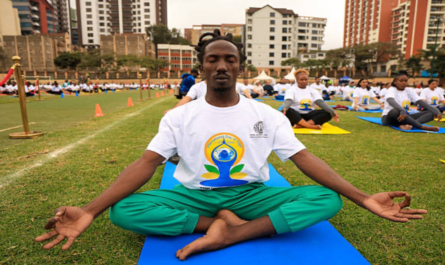
Yoga studios in particular have been early adopters of body-neutral language. Instructors increasingly avoid mirrors during classes or encourage practitioners to close their eyes to reduce external comparison.
The gym is no longer just a place to sculpt the body—it is slowly becoming a space to inhabit it.
Psychological Foundations: Why Body Neutrality Works
Body neutrality resonates strongly with contemporary psychology, particularly in the fields of cognitive behavioral therapy (CBT), trauma-informed care, and eating disorder recovery.
One of the core principles in therapeutic work around body image distress is reducing cognitive fusion—the tendency to over-identify with thoughts about appearance. Body neutrality aligns with this by reducing the importance of appearance-based cognition altogether.
Instead of challenging negative thoughts with positive affirmations (“I love my body”), which can feel emotionally inaccessible, body neutrality suggests a different approach: disengagement.
For example:
- “I am noticing that I am judging my body”
- “That thought is present, but it does not define my experience”
- “I will focus on what my body can do right now”
This shift reduces emotional friction. It allows individuals to participate in fitness without requiring a resolved or positive body image state beforehand.
Clinical practitioners working with eating disorder recovery have also noted that body neutrality can be more sustainable for patients who experience intense appearance-related anxiety. It reduces the pressure to feel good about the body in order to function in it.
Importantly, body neutrality does not deny the existence of body dissatisfaction. Instead, it removes it from the center of decision-making.
In fitness contexts, this has major implications. It allows individuals to engage in movement for stability, mental health, and strength without requiring emotional reconciliation with their appearance first.
Digital Fitness Culture and the Neutrality Movement
Social media has historically been one of the strongest drivers of body comparison in fitness culture. Yet paradoxically, it is also where body neutrality is gaining visibility.
A new wave of fitness creators is challenging aesthetic-centric content. Their posts often avoid transformation framing entirely. Instead of “before and after” photos, they share:
- workout routines focused on energy or mood
- educational content on mobility or posture
- reflections on consistency over appearance
Captions increasingly emphasize internal states rather than external outcomes.
This shift is particularly visible among Pilates instructors, strength coaches, and mobility educators who frame movement as functional intelligence rather than aesthetic engineering.
However, the digital space also reveals tension. Algorithms still prioritize visually appealing bodies. This creates a paradox: even neutral content is often filtered through aesthetic appeal to gain visibility.
As a result, body neutrality online is not a fully realized movement—it is an ongoing negotiation with platform logic.
Some creators explicitly address this tension, acknowledging that their bodies may still be interpreted through aesthetic lenses even when their intention is not to center appearance.
This transparency is itself part of the cultural shift. It reveals a growing awareness that body image is not just personal—it is structurally reinforced.
Global Perspectives: Body Neutrality Beyond Western Fitness Culture
While much of the body neutrality discourse originates in Western wellness spaces, its global interpretations vary significantly.
South Asia: Function Over Form in Everyday Movement
In South Asian contexts, particularly in countries like Pakistan and India, fitness culture is often shaped by familial, social, and practical considerations rather than purely aesthetic gym trends. Walking, household labor, and informal physical activity remain central to daily movement for many people.
Here, body neutrality often emerges not as a named philosophy but as a lived reality: bodies are valued for endurance, caregiving capacity, and functionality in daily life.
However, urban fitness spaces influenced by Western media are beginning to introduce aesthetic pressure more prominently. This creates a cultural duality—traditional functional views of the body coexisting with modern appearance-focused fitness ideals.
Body neutrality offers a bridge between these worlds, allowing individuals to engage with structured fitness without fully adopting aesthetic surveillance.
East Asia: Discipline, Aesthetics, and Emerging Counter-Narratives
In countries like South Korea and Japan, fitness culture has long been intertwined with discipline and appearance expectations, often reinforced through media and pop culture industries.
Yet in recent years, alternative wellness communities have begun to emerge, particularly among younger populations. These communities emphasize mental health, gentle movement practices, and sustainable exercise routines over extreme body modification goals.
Body neutrality here often intersects with burnout culture—especially among individuals who feel overwhelmed by perfectionist standards in both work and appearance.
Europe and North America: Institutional Adoption of Neutral Fitness Language
In Western fitness industries, body neutrality is increasingly being integrated into professional certifications and training methodologies. Personal trainers are being taught to avoid weight-centric language. Group fitness classes often emphasize performance metrics unrelated to appearance, such as strength gains or endurance improvements.
This institutional adoption marks a significant shift: body neutrality is moving from a grassroots philosophy into structured fitness education.
The Commercial Tension: Can Body Neutrality Survive the Fitness Industry?
Despite its growing popularity, body neutrality faces a fundamental challenge: it does not always sell easily.
Fitness marketing has historically relied on transformation narratives. Gym memberships, supplement brands, and workout programs often promise visible change. The language of “before and after” remains one of the most effective marketing tools in the industry.
Body neutrality disrupts this logic. It does not guarantee visible transformation. It does not center aesthetic outcomes. Instead, it emphasizes internal experience and long-term wellbeing.
This creates a tension between values and commerce.
Some fitness brands attempt to bridge the gap by reframing neutrality as “sustainable fitness” or “performance-based training.” Others incorporate neutrality language while still subtly reinforcing appearance goals.
The risk is dilution—where body neutrality becomes a branding tool rather than a genuine philosophical shift.
However, consumer behavior is also changing. Many individuals are becoming more skeptical of appearance-based marketing, particularly younger generations who have grown up under constant digital surveillance of bodies.
This suggests that while body neutrality may not replace traditional fitness narratives entirely, it may increasingly coexist as a parallel value system.
Emotional Impact: What Changes When Appearance Stops Leading?
One of the most profound effects reported by individuals practicing body neutrality in fitness is emotional relief.
When appearance is no longer the primary metric of success, exercise becomes less psychologically loaded. A missed workout is no longer a moral failure. A changed body is no longer a constant evaluation point.
This can reduce anxiety and increase consistency in movement—not because of discipline, but because of reduced emotional resistance.
Many individuals describe a shift from self-monitoring to self-experience. Instead of observing their bodies from the outside, they begin to feel them from within:
- the rhythm of breathing during cardio
- the stability of muscles during strength training
- the grounding sensation of stretching
This embodied awareness is central to body neutrality’s psychological appeal. It reconnects movement with sensation rather than appearance.
Limitations and Critiques of Body Neutrality
Despite its benefits, body neutrality is not without critique.
Some argue that it may unintentionally minimize the importance of body appreciation for those who find empowerment in body positivity. Others note that complete neutrality is difficult to achieve in a culture that constantly visualizes and evaluates bodies.
There is also the question of privilege. For some individuals, especially those whose bodies are subject to discrimination, it may not be possible to fully disengage from appearance-based social realities.
Additionally, in competitive sports, performance and body composition remain relevant metrics. Body neutrality may need to be adapted rather than strictly applied in these contexts.
These critiques highlight an important nuance: body neutrality is not a universal solution, but a flexible framework.
The Future of Fitness: Toward Embodied, Not Evaluated, Movement
The rise of body neutrality in fitness communities signals a broader cultural transition. It reflects growing fatigue with constant self-optimization and visual comparison.
The future of fitness may not be about abandoning aesthetics entirely, but about decentralizing them. Movement may increasingly be understood as:
- functional
- experiential
- mentally supportive
- socially inclusive
Rather than asking “How does my body look?”, more people may begin asking:
- “How does my body feel?”
- “What does my body need today?”
- “What kind of movement supports my life right now?”
This shift has the potential to reshape not only fitness culture, but also how societies define health, discipline, and self-worth.
One of the most compelling developments within body neutrality in fitness is how it is reshaping the language of coaching itself. Across personal training sessions, group classes, and online fitness programming, there is a noticeable movement away from instruction that centers appearance-based outcomes and toward cues that emphasize sensation, alignment, and capability. Instead of telling clients to “burn fat in the lower body” or “tone the arms,” many contemporary trainers now focus on neuromuscular awareness, joint stability, and functional strength. This shift is not merely semantic; it changes the internal experience of exercise. When the focus is placed on how a movement feels rather than how it will alter appearance, participants often report reduced performance anxiety and greater engagement with the present moment. Fitness becomes less of a visual audit and more of an internal conversation between breath, muscle activation, and coordination. In this environment, success is no longer defined by external validation or aesthetic change but by improved mobility, consistency, and reduced discomfort in daily life. Over time, this reframing can help dismantle long-held associations between worth and appearance, especially for individuals who have experienced chronic body dissatisfaction. It also allows fitness professionals to build more inclusive spaces where diverse bodies can participate without feeling constantly measured against a singular visual standard.
At the same time, body neutrality is beginning to influence how communities interpret progress and motivation in long-term fitness journeys. Traditional fitness narratives often rely on visible milestones—weight loss, muscle definition, or transformation photos—to sustain engagement. However, body neutrality introduces a more layered understanding of progress that includes emotional stability, improved relationship with movement, and reduced self-critical thinking. This is particularly significant in group fitness communities, where comparison has historically been a dominant psychological force. As neutrality-based thinking spreads, participants are increasingly encouraged to notice subtle internal shifts: feeling less dread before workouts, recovering faster after movement, or experiencing fewer intrusive thoughts about appearance during exercise. These changes, while less visible, are often more sustainable indicators of well-being. Importantly, this approach also reframes setbacks. Missing a workout or experiencing a period of low motivation is no longer interpreted as failure but as part of the body’s fluctuating needs. This reduces the all-or-nothing mentality that often leads to burnout or disengagement. In this way, body neutrality is not eliminating ambition from fitness culture but redistributing it—away from appearance-driven outcomes and toward longevity, psychological resilience, and embodied awareness that can support a person across different stages of life.
Conclusion: When Movement Becomes Enough on Its Own
Body neutrality does not ask individuals to reject their bodies or celebrate them constantly. It asks something quieter and more sustainable: to stop making appearance the center of every physical experience.
In fitness communities, this shift is especially powerful because it challenges one of the most deeply embedded cultural narratives—that movement must be justified through visible change.
Instead, body neutrality suggests that movement is already meaningful in itself.
As this philosophy continues to evolve across gyms, studios, digital platforms, and global fitness spaces, it may not erase the visual culture of fitness entirely. But it offers an alternative way of being in the body—one that is less about surveillance, and more about presence.
In a world that constantly asks bodies to be seen, evaluated, and improved, body neutrality quietly offers something different: permission to simply exist in motion.
Sources: Harvard Health Publishing, American Psychological Association, National Eating Disorders Association, British Journal of Sports Medicine, Psychology Today, Journal of Health Psychology, World Health Organization, Mayo Clinic, Frontiers in Psychology