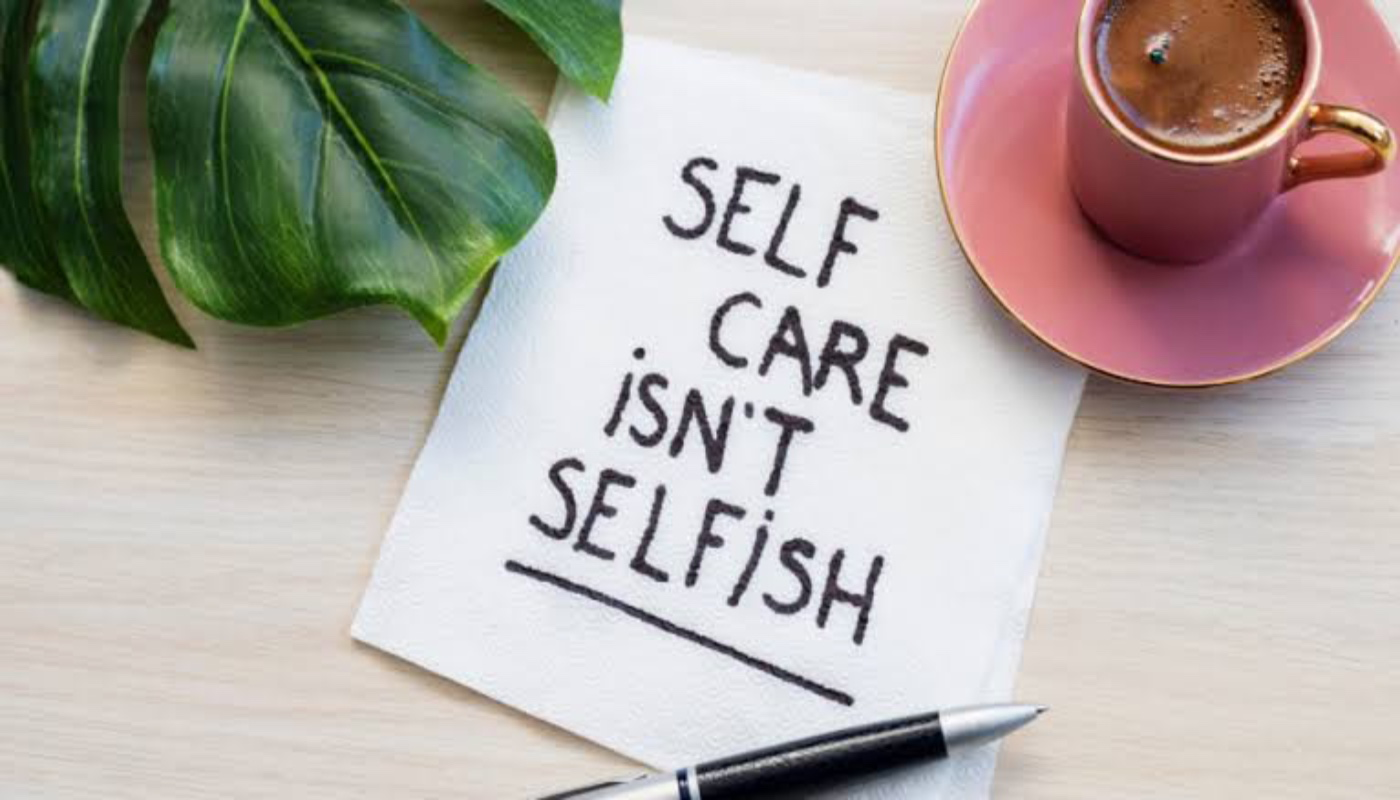
 by
by There is something strangely revealing about a Sunday afternoon spent changing bedsheets.
The sheets are pulled from the mattress. Laundry is sorted. A shower is taken. Skincare is applied. The room is tidied. A candle is lit. Perhaps groceries are arranged in the refrigerator, meals are prepared for the week, a planner is opened, and a cup of tea appears beside an immaculate bedside table.
Then comes the final shot: a clean room, freshly made bed, soft lighting and a caption promising a “reset.”
This is the visual language of Self-Care Sunday and its closely related social-media cousin, the Sunday Reset.
What might once have been ordinary household maintenance has become something much larger. Across TikTok, Instagram, YouTube and lifestyle media, Sunday has increasingly been presented as a designated opportunity to restore the body, organise the home, prepare the mind and emotionally transition into Monday.
The phenomenon is fascinating because it sits between several worlds.
It is wellness, but it is also productivity.
It is rest, but it can involve hours of work.
It is personal, yet millions of people perform it publicly online.
It can be liberating, but it can also introduce another set of expectations about what a “good” weekend should look like.
And most importantly for conversations about body inclusivity, Self-Care Sunday raises a deceptively simple question:
Who gets to decide what caring for yourself is supposed to look like?
The answer has become increasingly complicated in an age when even rest can be photographed, optimised, branded and turned into content.
The cultural meaning of Self-Care Sunday therefore extends far beyond face masks and freshly washed sheets. It tells us something about contemporary relationships with work, bodies, domesticity, social media, mental wellbeing and the increasingly blurred boundary between taking care of ourselves and improving ourselves.
Self-Care Was Never Just About Pampering
The modern image of self-care is often associated with indulgence: skincare, candles, baths, beauty treatments, wellness products, quiet mornings and aesthetically pleasing routines.
But the broader concept is considerably more expansive.
The World Health Organization defines self-care as the ability of individuals, families and communities to promote and maintain health, prevent disease and cope with illness, with or without support from a healthcare worker. Its definition includes healthy lifestyle choices, sleep, physical activity, nutrition, connection with others and other forms of health management. Importantly, WHO stresses that self-care complements rather than replaces healthcare systems. (World Health Organization)
That distinction matters.
Self-care does not inherently mean purchasing something.
It does not necessarily mean looking beautiful.
It does not require a perfectly organised bedroom.
It does not even have to be relaxing in the conventional sense.
Sometimes self-care is making an appointment.
Sometimes it is eating a proper meal.
Sometimes it is going to bed early.
Sometimes it is asking someone for help.
Sometimes it is cleaning the room because disorder makes daily life harder.
And sometimes it is doing absolutely nothing productive.
The popular Self-Care Sunday aesthetic captures only one narrow expression of a much wider idea.
That gap between the expansive meaning of self-care and its highly visual social-media representation is one of the most important cultural tensions surrounding the trend.
Why Sunday?
Sunday is not an arbitrary choice.
For much of the modern working world, Sunday occupies an unusual psychological position. It is technically part of the weekend, but Monday is already approaching.
Saturday often carries the emotional possibility of escape: going out, seeing friends, travelling, sleeping late or simply doing nothing.
Sunday has a different atmosphere.
The future begins intruding into the present.
Emails may be waiting.
Work may be approaching.
Classes may be starting.
Laundry has accumulated.
The refrigerator may be empty.
Schedules need to be checked.
The so-called “Sunday scaries” capture this anticipatory anxiety about the week ahead.
Self-Care Sunday transforms that emotional transition into a ritual.
Instead of allowing Sunday evening to become a passive countdown to Monday, the person actively creates a bridge between the two.
The logic is simple:
I cannot control everything about next week, but I can make the transition into it feel more manageable.
That may explain why the Sunday Reset has resonated so strongly online.
Lifestyle coverage has described the trend as involving cleaning, decluttering, changing bedding, meal preparation, planning and personal-care rituals. The objective is not merely cleanliness; it is the psychological sensation of starting again. (Which?)
In this sense, Self-Care Sunday is partly a ritual of control.
Not control over life itself, but control over the immediate environment.
A clean room cannot guarantee a good Monday.
But it can make Monday morning feel slightly less chaotic.
The Sunday Reset Turns Ordinary Chores Into Emotional Rituals
One of the most interesting aspects of the trend is that many of its activities are not new.
People have always washed clothes.
They have always cleaned kitchens.
They have always changed bedsheets.
Families have traditionally prepared food before busy weeks.
People have always taken baths, moisturised their skin, planned appointments and organised belongings.
What has changed is the meaning attached to these activities.
A chore becomes a ritual.
Laundry becomes “resetting.”
Meal preparation becomes “future self-care.”
Cleaning becomes “protecting my peace.”
Changing bedsheets becomes a form of emotional renewal.
This reframing is culturally significant.
Instead of treating domestic maintenance as invisible labour, Self-Care Sunday can give it emotional value.
A person who spends Sunday cleaning is no longer necessarily “wasting” the weekend.
They may be creating an environment in which they feel comfortable.
That can be particularly meaningful in a culture where domestic work has historically been undervalued or unequally distributed.
But there is another side.
If every mundane task must be transformed into a wellness ritual before it feels worthwhile, ordinary life can become psychologically expensive.
Cleaning simply because the dishes need washing is one thing.
Feeling that you must light a candle, put on calming music, organise your refrigerator and film the transformation before your Sunday counts as successful is another.
The distinction between care and performance of care becomes increasingly important.
From Sunday Rest to Sunday Productivity
There is a subtle contradiction at the centre of Self-Care Sunday.
The ritual is often described as rest.
Yet many Sunday Reset videos involve substantial amounts of work.
Cleaning.
Laundry.
Meal preparation.
Planning.
Organisation.
Exercise.
Skincare.
Grocery shopping.
Digital organisation.
Wardrobe preparation.
Some routines can resemble a small domestic project rather than a day of rest.
This reflects a broader cultural shift in how contemporary societies understand wellbeing.
Rest is increasingly expected to produce something.
You rest so that you can perform better.
You sleep so that you can be productive.
You exercise so that you can feel energetic.
You meditate so that you can concentrate.
You organise your home so that you can work efficiently.
Even relaxation can acquire an output.
The danger is not that these practices are inherently bad.
They can genuinely help people.
The problem arises when the cultural message becomes:
You must optimise yourself before you are allowed to feel okay.
Self-care then stops being a break from performance and becomes another form of performance.
The Rise of the Aesthetic Reset
Social media did not invent weekly preparation, but it dramatically changed how it is represented.
The Sunday Reset is particularly compatible with short-form video because it contains visual transformation.
Dirty room.
Cleaning.
Laundry.
Shower.
Skincare.
Fresh clothes.
Fresh sheets.
Organised refrigerator.
Tea.
Book.
Bed.
Finished.
The format offers a beginning, middle and satisfying conclusion.
It is almost cinematic.
The internet loves transformation because transformation is instantly understandable.
A messy space becoming clean requires little explanation.
The viewer sees the before and after.
This helps explain why cleaning and organisation content became deeply embedded in digital culture. Coverage of the Sunday Reset has repeatedly highlighted its calming visuals and its connection to the broader CleanTok phenomenon. (TechRadar)
But the aesthetic has consequences.
The more attractive the ritual becomes, the easier it is to confuse beautiful self-care with effective self-care.
A person watching a perfectly edited Sunday Reset may unconsciously conclude that wellbeing should look like that.
Clean apartment.
Neutral bedding.
Matching containers.
Expensive skincare.
Fresh flowers.
Pilates.
Healthy meals.
Minimal clutter.
Calm lighting.
The visual vocabulary can become a lifestyle template.
And templates create standards.
When Self-Care Becomes Another Beauty Standard
For BodyInclusivity.com, this is where the conversation becomes especially important.
Beauty standards have historically told people how their bodies should look.
The emerging wellness aesthetic can increasingly tell people how their lives should look.
The ideal self is not simply thin, conventionally attractive or youthful.
The ideal self may now also appear:
Organised.
Calm.
Disciplined.
Hydrated.
Well-rested.
Glowing.
Active.
Minimalist.
Emotionally regulated.
Productive.
Always improving.
This is a different kind of pressure.
A person can feel inadequate not because their body fails to match a beauty advertisement, but because their ordinary Sunday does not resemble a wellness video.
Perhaps their bedroom is cluttered.
Perhaps they spend Sunday sleeping.
Perhaps they cannot afford elaborate skincare.
Perhaps they work weekends.
Perhaps they care for children or relatives.
Perhaps they live with roommates.
Perhaps their body does not comfortably participate in every trendy fitness activity.
Perhaps their version of restoration is watching television for several hours.
None of these realities makes their self-care less legitimate.
Yet social media can make certain forms of care more visible than others.
That visibility matters.
The “Perfect Sunday” and the Problem of Invisible Labour
Another cultural question is hidden beneath the aesthetic:
Who has the time to reset?
The idealised Sunday often assumes access to time, space, privacy and resources.
A person with a private bedroom can film a peaceful morning differently from someone sharing a crowded home.
A person with flexible employment has a different relationship with Sunday than someone working retail, hospitality, healthcare, transportation or other weekend-heavy jobs.
A person without caregiving responsibilities may have several uninterrupted hours.
Another person may spend Sunday caring for children, cooking for a household, supporting family members or completing paid work.
This does not mean the Sunday Reset is inherently privileged or inaccessible.
Rather, it reminds us that wellness practices exist within material conditions.
Even WHO’s broader framework recognises socioeconomic circumstances and cultural beliefs as part of the context surrounding self-care. (NCBI)
The cultural mistake is assuming that a ritual can be separated from the life surrounding it.
Self-care does not occur in a vacuum.
Time is a resource.
Privacy is a resource.
Money is a resource.
Healthcare access is a resource.
A supportive household is a resource.
Rest itself is a resource.
When these realities are ignored, wellness can quietly become another way of measuring individual worth.
The Body-Inclusive Sunday
A genuinely body-inclusive approach to Self-Care Sunday begins by removing the requirement that care must transform the body.
This is an important distinction.
Self-care can involve caring for the body without treating the body as a problem that requires constant correction.
A shower can be enjoyable without being preparation for looking attractive.
Skincare can be sensory and comforting without being a campaign against every perceived imperfection.
Movement can feel good without being punishment for eating.
Rest can be valuable without being something earned through productivity.
Food can provide nourishment and pleasure without becoming a moral test.
This approach changes the question from:
“How can I improve myself this Sunday?”
to:
“What would help me feel supported this Sunday?”
That is a much gentler question.
And it leaves room for different bodies, different abilities, different cultures, different schedules and different emotional needs.
Self-Care Does Not Have to Be Visually Impressive
One of the most radical possibilities of contemporary self-care may be accepting that the best version is sometimes completely unphotogenic.
There may be no clean aesthetic.
No perfect lighting.
No matching pyjamas.
No carefully arranged breakfast.
No skincare shelf.
No workout.
No before-and-after.
Perhaps self-care means cancelling plans.
Perhaps it means sleeping.
Perhaps it means eating leftovers.
Perhaps it means sitting beside a family member.
Perhaps it means going outside.
Perhaps it means calling a friend.
Perhaps it means allowing yourself to have a messy room because you simply do not have the energy to clean it.
The American Psychiatric Association has noted that social media can create both positive feelings of connection and negative effects, encouraging users to curate their online environments and remember that internet use should complement rather than displace offline life. (Psychiatry)
That principle is particularly relevant here.
A Self-Care Sunday should ideally make life feel more inhabitable, not more performative.
A Global Perspective: Sunday Is Not Everyone’s Reset Day
The phrase “Self-Care Sunday” can also appear more universal than it actually is.
Sunday carries specific religious, cultural and economic histories.
For many Christians, Sunday has traditionally been associated with worship and rest.
For others, Sunday is simply a weekend day.
In countries and communities where the working week follows different schedules, Sunday may be an ordinary workday.
In parts of the Muslim world, Friday carries a particularly significant religious and social role.
In many households across South Asia, the weekend may be shaped around extended-family visits, household responsibilities, religious practices, shopping, cooking or social gatherings rather than solitary wellness rituals.
In East Asian contexts, communal and family obligations can shape weekend rhythms differently from the individualised wellness narratives commonly presented by Western lifestyle media.
This does not mean the Self-Care Sunday concept cannot travel across cultures.
It can.
But when it does, people often adapt it.
The deeper concept is not necessarily Sunday.
It is the weekly pause.
The day of recalibration.
The transition between one period and another.
The moment when a person deliberately asks what they need before another week begins.
That idea is much more culturally flexible.
From Self-Care to Community Care
One of the most important historical critiques of contemporary self-care concerns its emphasis on the individual.
Black feminist thought provides a particularly important counterpoint.
Audre Lorde’s writing is frequently invoked in conversations about self-care because she framed caring for oneself within a broader context of survival, resistance and political struggle. The Smithsonian’s National Museum of American History has specifically explored how Lorde’s understanding of self-care has been repurposed into modern ideas of self-pampering, while also connecting self-care to community care. (National Museum of American History)
This history complicates the modern image of a solitary woman in a spotless bedroom applying a face mask.
Self-care was never simply about escaping society.
For many communities, caring for oneself can make continued participation in community possible.
That is a very different philosophy.
Instead of:
“I take care of myself because I am my own project,”
the logic becomes:
“I take care of myself because I am a person whose wellbeing matters—and because people are interconnected.”
That perspective has major implications for body inclusivity.
It shifts attention away from individual perfection and toward collective environments.
Are workplaces humane?
Are healthcare systems accessible?
Are public spaces welcoming to different bodies?
Are families sharing domestic labour?
Are disabled people given meaningful opportunities for rest?
Are people economically secure enough to care for themselves?
Are communities designed around human wellbeing?
These questions cannot be solved with candles.
The Neoliberal Problem: When Everything Becomes Personal Responsibility
Scholars have long questioned the way self-care can become entangled with neoliberal ideas of individual responsibility.
One influential critique argues that self-care can be mobilised in ways that shift responsibility for wellbeing from institutions and governments onto individuals. At the same time, scholarship also emphasises that self-care has histories rooted in collective struggle, disability activism, women’s health movements and community support. (DOI)
This distinction is crucial.
It is entirely reasonable to tell someone that sleep matters.
It is less reasonable to imply that a person who is exhausted simply has not optimised their routine sufficiently.
It is useful to encourage healthy habits.
It is dangerous to suggest that individual discipline can solve structural problems.
A person cannot meditate their way out of an exploitative workplace.
A beautifully organised refrigerator cannot eliminate food insecurity.
A skincare routine cannot solve inaccessible healthcare.
A Sunday planner cannot guarantee economic stability.
A morning walk cannot compensate for every form of social inequality.
Self-care can support a person living within difficult circumstances.
It cannot be used as evidence that difficult circumstances are their personal failure.
Why Ritual Still Matters
Critiquing the commercialisation of self-care should not mean dismissing rituals themselves.
Humans have always used rituals to create psychological boundaries.
Morning rituals distinguish waking from sleeping.
Meals create pauses in the day.
Religious observances structure time.
Seasonal celebrations mark transitions.
Bedtime routines signal the body that the day is ending.
Self-Care Sunday can operate similarly.
Its power may have less to do with the individual activities and more to do with repetition.
Every week, the same moment arrives.
Pause.
Assess.
Prepare.
Restore.
Begin again.
In an increasingly fragmented digital culture, this kind of repetition can create a sense of continuity.
The person is not trying to reinvent themselves every Sunday.
They are reminding themselves that they can return to themselves.
That distinction makes ritual potentially more sustainable than constant self-improvement.
The Psychology of “Starting Fresh”
There is also something emotionally powerful about the idea of a reset.
The word itself suggests that the past week does not have to dictate the next one.
A difficult week can end.
An untidy room can be restored.
Laundry can be folded.
A calendar can be reconsidered.
Plans can be changed.
The coming week can be approached differently.
This is not necessarily about denial.
It can be about psychological transition.
The danger appears when “reset” becomes synonymous with “fix everything.”
Then Sunday becomes a deadline for becoming a better version of oneself.
That can create its own anxiety.
A person who fails to complete the reset may feel that they have already failed before Monday begins.
The healthiest interpretation is therefore not:
“I need to get my life together every Sunday.”
It is:
“I can give myself a small point of reconnection each week.”
The Social Influence of Watching Other People Care for Themselves
There is another reason Self-Care Sunday matters culturally: watching other people perform ordinary care can itself become comforting.
A person may not want to copy every routine.
They may simply enjoy seeing someone make a bed, organise a desk, cook food or take a quiet shower.
There is something reassuring about mundane life being treated as meaningful.
This may partly explain why cleaning and routine videos can become so soothing.
They provide predictable sequences in an unpredictable digital environment.
Social media can expose people to endless crises, arguments, advertisements and rapidly changing information.
A video showing someone quietly folding towels offers something different.
There is no argument.
No urgent headline.
No dramatic reveal.
Just repetition and completion.
The appeal may therefore be less about cleanliness than about order in an era of uncertainty.
But the Viewer Should Not Become the Judge
The challenge is that inspiration can quickly become comparison.
The viewer sees someone else’s Sunday and begins evaluating their own.
Why don’t I exercise?
Why is my room not this clean?
Why don’t I meal prep?
Why don’t I have products like that?
Why don’t I wake up early?
Why don’t I have the discipline?
Why doesn’t my body look like that?
Why doesn’t my life feel that calm?
This is where body-inclusive wellness requires a conscious separation between inspiration and measurement.
Another person’s routine can be an idea.
It does not need to become a benchmark.
The internet is particularly powerful because it compresses thousands of people’s lives into a single feed. The result can make extraordinary levels of organisation appear ordinary.
Pew Research Center’s research on TikTok demonstrates how the platform has become a major environment for content ranging from lifestyle and entertainment to personal stories and advice, particularly among younger audiences. (Pew Research Center)
When these platforms become part of everyday life, their visual standards can quietly influence expectations.
The solution is not abandoning them.
It is learning to interpret them critically.
What Would an Inclusive Self-Care Sunday Look Like?
Perhaps the future of Self-Care Sunday is not about making the ritual more elaborate.
Perhaps it is about making it more inclusive.
An inclusive version might look completely different from person to person.
For one person:
A long walk.
For another:
A nap.
For someone else:
Cooking with family.
For another:
Ordering food because cooking feels exhausting.
For one person:
A workout.
For another:
Gentle stretching.
For another:
No exercise whatsoever.
For one:
Cleaning the entire home.
For another:
Washing only the dishes that are necessary.
For one:
A detailed planner.
For another:
Turning the phone off and refusing to make plans.
The common thread is not the activity.
It is intention.
The practice asks:
What will support me rather than punish me?
That is a profoundly different foundation for wellness.
Reclaiming the Sunday Reset From Perfection
The most valuable evolution of the trend may be its movement away from perfection.
A reset does not have to return life to zero.
Humans are not machines.
There is no universal “factory settings” option.
Some weeks end messily.
Some Sundays are exhausting.
Some Mondays arrive before the laundry is finished.
Some people need rest more than organisation.
Some people need connection more than solitude.
Some people need professional support rather than another wellness routine.
Some people need to do less.
And doing less can itself be an act of care.
This is particularly important for people whose bodies or circumstances do not conform to conventional wellness expectations.
A culture of inclusivity cannot simply replace one rigid standard with another.
It cannot say:
“Everyone should now have the perfect self-care routine.”
That would only create a new form of conformity.
True inclusivity requires allowing wellbeing to have multiple appearances.
The Future of Self-Care May Be Less Instagrammable
The future of wellness may ultimately become more interesting when it becomes less visually uniform.
The next generation of Self-Care Sunday does not need to eliminate candles, skincare, clean sheets or aesthetic routines.
There is nothing inherently wrong with enjoying beautiful things.
The goal is to expand the definition.
Self-care can be luxurious.
It can also be free.
It can be solitary.
It can be communal.
It can be active.
It can be passive.
It can involve the body.
It can involve the mind.
It can involve the home.
It can involve another person.
And sometimes it can involve asking for help.
WHO’s contemporary framework is useful precisely because it refuses to reduce self-care to pampering. It recognises individual agency while emphasising that self-care exists alongside formal healthcare and within supportive social conditions. (World Health Organization)
That broader understanding may become increasingly important as wellness culture matures.
The question may gradually shift from:
“What can I buy to take better care of myself?”
to:
“What conditions allow people to care for themselves at all?”
That is a much more consequential question.
A Sunday That Belongs to You
Perhaps the most beautiful thing about Self-Care Sunday is also the simplest.
It gives people permission to pause.
The ritual does not have to be perfect to be meaningful.
You can change the sheets without making the bed look like a magazine.
You can shower without turning skincare into a ten-step project.
You can eat without photographing the meal.
You can clean without filming it.
You can rest without earning it.
You can move your body without trying to change its shape.
You can leave your phone untouched.
You can spend time with people.
You can spend time alone.
You can have an ambitious Sunday.
You can have a completely lazy Sunday.
You can do nothing at all.
And none of these choices determines your worth.
The cultural significance of Self-Care Sunday ultimately lies not in the candle, the planner, the freshly organised refrigerator or the viral hashtag.
It lies in the idea that a person is allowed to deliberately create a moment of care in a culture that often asks them to keep producing.
That idea deserves to survive.
But perhaps it deserves to become bigger than its aesthetic.
The most inclusive Self-Care Sunday is not the one that produces the most beautiful before-and-after video.
It is the one that leaves a person feeling more at home in their own life.
And perhaps that is where the ritual is heading next: away from the performance of having everything together, and toward a more honest understanding of what it means to support a human being through another week.
Because sometimes the greatest reset is not becoming a new person by Monday morning.
It is remembering that the person you already are deserves care.
Sources: World Health Organization, Smithsonian National Museum of American History, Oxford Academic, Cambridge Core, Signs: Journal of Women in Culture and Society, American Psychiatric Association, Pew Research Center, The Spruce, Which?, TechRadar, Stylist, Times of India