 by
by In Latin America, the body has rarely been treated as merely personal.
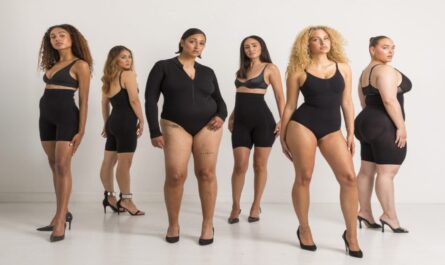
It can become a family conversation, a social currency, a marker of femininity, a reflection of class, a target of racial prejudice, a subject of religious expectations, and increasingly, a political question. Across countries as different as Brazil, Mexico, Colombia, Argentina, Chile and Bolivia, people have inherited complicated ideas about what a “beautiful” body should look like—and those ideas have never existed in isolation from history.
Against that background, Latin American body positivity movements have developed their own distinctive language of resistance.
They are not simply reproductions of body-positive conversations originating in the United States or Europe. In many cases, Latin American activists have connected body acceptance to fatphobia, racism, gender inequality, sexuality, disability, class, colonial beauty standards and access to public life. Digital platforms have allowed these conversations to cross national borders, while local communities have transformed them according to their own cultural realities.
This matters because the body-positive message changes meaning depending on where it is spoken.
A demand to “love your body” may sound individualistic when considered through a Western wellness lens. In Latin American activism, however, the question can become much larger: Who taught us which bodies deserve admiration? Who profits from our dissatisfaction? Which bodies are represented in fashion, television and advertising? Who gets treated with dignity in healthcare? Who can find clothes in their size? And what happens when a person refuses to apologize for occupying physical space?
Recent research increasingly demonstrates that weight stigma is widespread throughout Latin America and the Caribbean, appearing in education, healthcare, workplaces, media and everyday social life. A 2026 regional review drawing on 128 studies described weight stigma as a widespread structural issue and noted that many countries still lack legal protections against weight-based discrimination. (ScienceDirect)
The significance of Latin American body positivity, therefore, is not that it has convinced everyone to love their reflection.
Its deeper impact is that it has helped change the question from “How can I make my body acceptable?” to “Why was my body considered unacceptable in the first place?”
Beyond the Imported Idea of “Body Positivity”
The phrase “body positivity” is now familiar around the world, but the movement itself has complicated roots.
Contemporary body positivity has been shaped by earlier fat-acceptance, feminist, Black and queer organizing. Scholars have warned that commercial versions of body positivity can erase those origins by turning a social-justice movement into an aesthetic lifestyle message. Research examining #BodyPositive content has found that supposedly inclusive online spaces can still disproportionately feature young, white, thin, able-bodied and cisgender people. (Frontiers)
Latin American activism adds another layer to that history.
The region is not culturally uniform. Spanish-speaking Latin America alone contains enormous differences in race, ethnicity, class, geography and beauty traditions, while Brazil brings a Portuguese-speaking history with its own racial and cultural dynamics. Indigenous and Afro-Latin American communities have also experienced beauty hierarchies shaped by histories of colonialism and racial stratification.
Consequently, activists increasingly question whether “body positivity” should mean simply celebrating more body shapes.
For many, the goal is closer to body justice.
Body justice asks whether different bodies can actually participate equally in society. Can someone find clothing that fits? Can they enter public spaces without humiliation? Can they receive respectful healthcare? Can they appear in advertising without being presented as an inspirational exception? Can they be photographed without their body becoming the joke? Can they exist without constantly being encouraged to become smaller?
That distinction is crucial.
A woman posting a photograph saying she loves her body may challenge beauty norms. A movement demanding that fashion companies produce broader size ranges challenges an industry. A campaign against weight-based bullying challenges education systems. A discussion about discriminatory healthcare challenges institutions.
All of these can belong to the same cultural ecosystem, but they operate at different levels.
Why the Latin American Context Is Particularly Significant
Latin American beauty culture has historically contained contradictory expectations.
Women may be encouraged to embrace curves while simultaneously being expected to maintain a highly controlled silhouette. A curvier body may be celebrated in music, dance or popular culture while being criticized in professional environments. Certain forms of femininity may be praised while larger bodies remain stigmatized.
This creates a particularly complicated beauty hierarchy.
The “ideal” is not necessarily identical to the extremely thin ideal associated with some Western fashion cultures. Instead, it can involve an apparently contradictory combination: thinness in some areas, curves in others, youth, smooth skin, carefully styled hair, whiteness or proximity to whiteness, and a highly polished presentation.
This is why simply saying that Latin America has moved “from thin to curvy” is inadequate.
A culturally preferred curvy body can itself become another restrictive standard.
The problem is not that curves are celebrated.
The problem arises when one body type replaces another as the requirement for social approval.
Body-positive movements have begun exposing this contradiction by arguing that representation should not merely expand the list of aesthetically desirable bodies. It should challenge the assumption that every body has to be aesthetically desirable in order to deserve respect.
Social Media Became a Counter-Archive
Instagram, TikTok and other digital platforms have been particularly important to Latin American body activism.
For generations, mainstream media controlled which bodies were visible at scale. Magazines, television networks, advertising agencies and fashion companies acted as cultural gatekeepers.
Social media disrupted that arrangement.
A person could photograph themselves, publish an outfit, discuss fatphobia, share a personal experience, review plus-size clothing or simply exist publicly without waiting for a magazine editor to decide whether their body was commercially attractive.
Academic research specifically examining Latin American fat activists on social media found that activism has become a collective process involving reflection on the moral, social and cultural meanings assigned to women’s bodies. The research also describes activism as moving toward debate, community participation and political demands rather than remaining confined to personal self-esteem. (SciELO)
That transformation is important.
The photograph becomes more than a photograph.
An outfit post can become a demand for fashion access.
A discussion about dating can become a conversation about desirability politics.
A complaint about a doctor’s behavior can become a discussion about weight stigma in healthcare.
A childhood memory of bullying can become an argument for changing how schools talk about bodies.
Social media therefore operates as a kind of counter-archive: it records bodies and experiences that traditional media historically underrepresented.
Mexico: Turning “Fat” Into a Political Conversation
Mexico provides one of the clearest examples of the relationship between digital activism, fashion and cultural resistance.
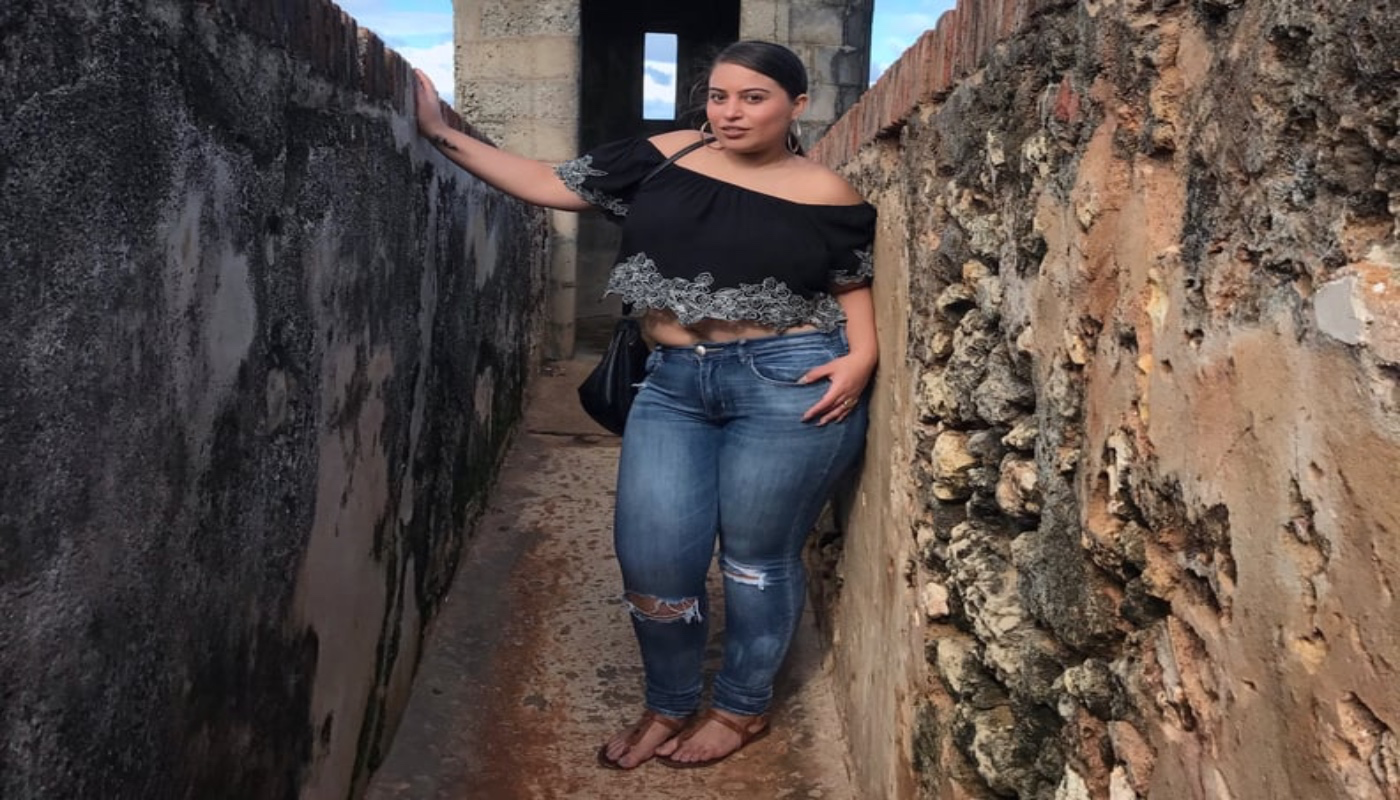
Mexican activist and fashion figure Priscila Arias, known publicly as La Fatshionista, has become associated with promoting body acceptance, plus-size fashion and opposition to gordofobia, the Spanish-language term commonly used for fatphobia. Mexican media have documented her work as part of a broader effort to challenge exclusion in fashion and encourage people to rethink assumptions about larger bodies. (El Universal)
What makes this culturally significant is the connection between visibility and practicality.
Representation can sometimes become abstract: seeing a larger body in an advertisement may feel progressive, but it does not necessarily change someone’s everyday life.
Fashion makes the issue tangible.
If a person sees themselves represented but cannot buy the clothes being advertised, representation becomes incomplete.
This is one reason plus-size fashion activism has mattered in Latin America. It challenges an implicit social message: that some consumers are entitled to style while others should settle for whatever clothing manufacturers choose to produce.
More recent research on Mexico’s fat-activist collective Gordas Expansivas has examined how activists construct counternarratives around bodily and emotional pain, community care, autonomy and educational action. The study found that activists use both digital and physical spaces to challenge dominant ideas about female bodies, including efforts directed toward children and adolescents. (ResearchGate)
That is a significant evolution.
The movement is not merely telling adults to feel prettier.
It is questioning how the next generation learns to interpret bodies.
Brazil: Where Fat Activism Meets Art, Race and Social Justice
Brazil offers another distinctive case.
Brazilian popular culture has long been internationally associated with the body, fashion, carnival and physical performance. Yet the visibility of bodies within Brazilian culture does not automatically mean equality among bodies.
Brazilian fat activism has therefore developed through multiple channels, including social media, scholarship, art and feminist organizing.
Research into Brazilian artists Elisa Queiroz and Fernanda Magalhães shows how visual art became a space for challenging prejudices surrounding fat bodies from the late twentieth century onward. Their work did not simply make fat bodies “beautiful”; it used the body itself as a site of provocation and resistance against dominant ideas about normality. (Taylor & Francis Online)
That distinction is culturally powerful.
Art does not necessarily ask viewers to approve of the body.
It can force viewers to confront their reaction to it.
A body presented outside conventional beauty can make the viewer aware of how strongly they have been trained to categorize bodies as attractive, unattractive, disciplined, undisciplined, respectable or excessive.
Recent scholarship comparing Brazilian and Spanish fat activism similarly examines how activists challenge stigma, reinterpret bodily norms and frame fatness as a question involving rights and social meaning rather than simply personal appearance. (Taylor & Francis Online)
Brazilian activism has also increasingly intersected with discussions about race, gender and sexuality.
A 2025 study examining fatness, transness, racism and beauty in Mexico and Brazil argues that hegemonic beauty standards are shaped by white supremacy, heteronormativity and patriarchy. Its analysis demonstrates why body politics cannot be separated neatly from racial and gender politics. (Sage Journals)
The implication is profound: there is no single “Latin American body.”
There are bodies positioned differently according to race, class, gender identity, sexuality, disability, geography and cultural history.
The Importance of Intersectionality
One of the most important contributions of Latin American body activism is its challenge to the idea that all body discrimination happens in exactly the same way.
A wealthy urban woman and a poor rural woman may both experience body policing, but their experiences are not interchangeable.
An Afro-Latin American woman may encounter beauty standards intertwined with racial hierarchies.
An Indigenous woman may navigate expectations inherited from both local and colonial cultural structures.
A queer or trans person may experience body regulation through gender conformity as well as size stigma.
A disabled person may encounter a beauty culture that assumes bodily ability as part of attractiveness.
A fat person from a marginalized socioeconomic background may experience body stigma alongside class discrimination.
This is why intersectionality matters.
Latin American scholarship increasingly treats corporeality not as a purely biological fact but as something carrying history and social meaning. Research on Latin American cyber-activism similarly emphasizes that activists question the moral and cultural meanings imposed on women’s bodies rather than limiting their activism to appearance. (SciELO)
The body carries social history.
That means changing how bodies are represented can also challenge the histories attached to them.
From “Love Your Body” to “Your Body Deserves Rights”
Perhaps the most important shift in body-positive discourse is the move away from compulsory self-love.
Not everyone wakes up loving their body.
And they should not have to.
This may sound like a minor distinction, but it has major psychological implications.
If body positivity becomes another requirement—“You must love your body every day”—people can feel as though they are failing at positivity when they experience insecurity.
A more sustainable message is body neutrality or body respect: the idea that a person does not need to admire every part of themselves to deserve dignity.
Latin American activism increasingly pushes the conversation toward this broader framework.
The question becomes:
Can I live without constantly negotiating whether my body is acceptable?
That is different from asking:
Do I love the way I look today?
The distinction can reduce the psychological burden of appearance monitoring.
Research on weight stigma in Latin America and the Caribbean has documented emotional harm, social exclusion, bullying, moral stereotyping and family-related pressures. Importantly, the research identifies relational dynamics as particularly relevant to how stigma is experienced in the region. (PubMed Central (PMC))
This is especially significant because family and community relationships can play powerful roles in Latin American societies.
Body criticism does not necessarily come from strangers.
It can come from relatives who believe they are expressing concern, friends who treat teasing as affection, partners who comment on appearance, or social environments where discussing someone’s body is considered normal.
Body activism challenges that normalization.
The Family Conversation Is Part of the Movement
A major cultural contribution of body positivity is making everyday body commentary visible.
In many families, remarks about weight or appearance are treated as ordinary conversation.
“You look thinner.”
“You gained weight.”
“You should lose a little.”
“That dress would look better if…”
Such statements may be delivered casually, but repetition can teach people that their bodies are constantly open for evaluation.
Body-positive movements do not necessarily argue that family members are malicious.
Instead, they question the cultural script that makes appearance commentary seem harmless.
This is especially important for younger people.
If children repeatedly hear that thinner bodies receive praise, larger bodies receive concern and appearance determines social value, they may internalize the hierarchy long before they can articulate it.
That is why educational interventions matter alongside social media activism.
A body-image program adapted for Mexico and other Latin American countries has been implemented through training across countries including Argentina, Bolivia, Colombia, Costa Rica, Chile, the Dominican Republic, El Salvador, Guatemala, Mexico and Panama. The program incorporates strategies intended to challenge appearance ideals and weight stigma. (PubMed)
This demonstrates that cultural change does not have to remain online.
It can enter classrooms, professional training and community programs.
Fashion Became a Battleground for Visibility
Few industries demonstrate the contradictions of body acceptance more clearly than fashion.
A movement can encourage people to feel comfortable in their bodies, but confidence becomes difficult when clothing options are restricted.
This is why Latin American plus-size fashion activism has had cultural significance beyond shopping.
Clothing is public.
It determines what people can wear to work, weddings, universities, parties, dates and everyday social events.
When certain sizes are missing, exclusion becomes physical.
The body-positive movement has challenged designers, retailers and media organizations to consider who gets to participate in fashion culture.
Yet the movement also faces a contradiction.
Once larger bodies become commercially valuable, brands may adopt body-positive language without changing deeper systems.
A company may feature a diverse campaign while maintaining limited sizing.
An advertisement may celebrate curves while continuing to use narrow standards in other campaigns.
A retailer may launch a plus-size collection without offering comparable variety.
This is why representation must be evaluated alongside accessibility.
Visibility matters.
But visibility without structural inclusion can become marketing.
The Commercialization Problem
Latin American body positivity has not escaped a global problem: movements can become products.
“Self-love” can be packaged into clothing.
Body confidence can become a beauty campaign.
Empowerment can become an advertising slogan.
The danger is not that brands participate.
Commercial participation can expand representation and provide financial support for inclusive products.
The danger emerges when activism is stripped of its political substance.
If body positivity means only buying a product that makes someone feel beautiful, the movement becomes compatible with the same consumer culture that previously profited from insecurity.
Research on mainstream #BodyPositive culture has documented this tension, noting that body positivity can be commodified while still reproducing narrow forms of representation. (Frontiers)
Latin American activists therefore face an ongoing question:
How can a movement become more visible without becoming less radical?
There is no simple answer.
But the strongest movements tend to preserve a connection between representation and material change.
Body Positivity Does Not Mean Rejecting Health
Another important nuance is that body positivity should not be reduced to an argument against health.
People have different bodies, different health experiences and different relationships with food, movement and appearance.
Respecting bodies does not require pretending that health is irrelevant.
Likewise, discussing health does not justify humiliating people because of their bodies.
The crucial distinction is between healthcare and moral judgment.
A healthcare system can discuss health without treating body size as evidence of character.
A person can pursue fitness without believing everyone else must pursue the same body.
A person can change their body without making transformation a requirement for dignity.
A person can also reject dieting culture without telling others what choices they should make.
This nuance is particularly important because body-positive activism is sometimes criticized as though it demands one universal lifestyle.
The strongest version of the movement does the opposite.
It challenges the idea that there is one legitimate way to inhabit a body.
The Psychological Impact: From Shame to Agency
The psychological significance of these movements is not simply that positive images make people happier.
The deeper change concerns agency.
Weight stigma can teach people to view their bodies from the outside—to imagine how strangers, family members, employers or romantic partners might judge them.
That constant self-surveillance can make ordinary experiences exhausting.
What should I wear?
Will people stare?
Will this photograph make me look large?
Can I sit comfortably here?
Will the doctor blame everything on my weight?
Will someone comment on my body?
Body-positive activism can interrupt this cycle by creating communities where people share experiences rather than privately assuming that they alone are failing.
Research into Latin American fat activism describes community participation and collective reflection as central to the movement. (SciELO)
That communal dimension matters.
The individual who once interpreted stigma as a personal failure can begin recognizing it as a cultural pattern.
And recognizing a pattern can be the first step toward resisting it.
From Shame to Language
Language itself has become part of the activism.
Terms such as gordofobia allow people to describe discrimination rather than simply describing themselves as “too sensitive.”
Naming a phenomenon changes the conversation.
If a person says, “I feel bad about my body,” the problem appears psychological and individual.
If they say, “I experienced gordofobia,” the question becomes social.
What happened?
Who participated?
What assumptions were made?
Could the situation have been different?
Language can therefore transform private pain into collective knowledge.
This is one reason digital activism matters so much. Social platforms provide vocabulary as well as visibility.
People discover that an experience they thought was uniquely theirs has been experienced by thousands of others.
The Movement Is Also Redefining Desirability
Perhaps one of the most emotionally powerful challenges is the rejection of the idea that only certain bodies are desirable.
Historically, larger bodies have often been represented through stereotypes: comic relief, transformation stories, cautionary tales or characters whose romantic fulfillment arrives only after changing their appearance.
Body-positive activists disrupt that narrative.
They present fat people as fashionable, romantic, ambitious, sexual, creative, professional and ordinary.
The word “ordinary” is important.
Representation does not always need to be inspirational.
A larger person does not have to be extraordinary to justify appearing on screen.
They can simply be there.
This is a subtle but profound change in visual culture.
The body stops being the plot.
Latin American Activism Is Influencing Global Body Politics
The influence does not move only from the Global North toward Latin America.
Latin American activists are also producing ideas that can travel outward.
The region’s emphasis on community, relational stigma, intersectionality and culturally specific beauty hierarchies provides a useful challenge to universalized body-positive narratives.
A recent Brazilian study explicitly examines how fat activism across Latin America contributes to Brazilian fat activism while using decolonial feminism and intersectionality to locate these struggles within the specific histories and diversity of the region. (Revistas UFMT)
This represents an important intellectual shift.
Instead of asking how Latin America can adopt an American model of body positivity, researchers and activists can ask what Latin American movements have to teach the rest of the world.
That reverses the traditional flow of cultural authority.
What Latin America Can Teach Other Body-Positive Movements
The first lesson is that representation is not enough.
People need access, rights and participation.
The second is that body politics cannot be separated from race and class.
A body hierarchy rarely operates through size alone.
The third is that community matters.
Digital validation can be helpful, but long-term change often requires networks of people supporting one another offline as well.
The fourth is that body positivity should not demand constant happiness.
People can experience insecurity and still reject discrimination.
The fifth is that cultural context matters.
A movement becomes stronger when it speaks the language, history and social realities of the people participating in it.
And perhaps most importantly, Latin American activism demonstrates that body acceptance can evolve into a broader demand for dignity.
The Limits and Contradictions of the Movement
No social movement is immune from contradiction.
Body positivity can sometimes center conventionally attractive “curvy” bodies while leaving larger bodies, disabled bodies, older bodies, Indigenous bodies, Afro-Latin bodies, trans bodies and gender-nonconforming bodies less visible.
It can become dominated by influencers with commercial incentives.
It can create new hierarchies in which some bodies become the “acceptable” face of inclusivity.
It can also place emotional labor on marginalized people, expecting them to educate everyone else about discrimination.
These criticisms should not be treated as evidence that body positivity has failed.
They demonstrate that movements evolve.
The question is not whether body positivity is perfect.
The question is whether it can continue expanding its definition of whose dignity matters.
What Comes Next?
The future of Latin American body positivity may depend on whether the movement continues moving beyond imagery.
The next stage could involve stronger anti-discrimination protections, more inclusive healthcare education, broader fashion sizing, better representation in entertainment, school-based body-image education and greater recognition of the psychological effects of stigma.
The 2026 regional evidence on weight stigma makes the structural challenge particularly clear: discrimination is present across multiple institutions, and most countries in the region still lack comprehensive legal protections specifically addressing weight-based discrimination. (ScienceDirect)
That means social-media visibility cannot be the final destination.
A photograph can challenge a stereotype.
A campaign can shift public attitudes.
A community can create belonging.
But policy and institutional practice determine whether that cultural change becomes durable.
The future of body inclusivity will therefore require both cultural imagination and structural action.
A Movement About More Than Loving the Mirror
Latin American body positivity is sometimes described as a celebration of curves, confidence or self-love.
Those descriptions are not entirely wrong.
They are simply incomplete.
The deeper movement is about who gets to occupy space without apology.
It is about challenging the belief that bodies can be ranked according to their social usefulness or aesthetic value.
It is about questioning why some people are encouraged to be visible while others are encouraged to hide.
It is about recognizing that body shame is not always an individual psychological problem. Sometimes it is the result of cultural systems that repeatedly teach people which bodies are worthy of attention.
And it is about creating alternatives.
Mexico’s digital activism, Brazil’s artistic and political traditions, regional fat-activist networks and educational interventions across Latin America demonstrate that the conversation is becoming increasingly sophisticated. Researchers are no longer examining only whether people feel dissatisfied with their bodies; they are asking how stigma is produced, how communities resist it and how bodily dignity can become a social value. (SciELO)
Perhaps the most meaningful achievement of these movements is therefore not convincing every person to love their body.
It is making body hatred less inevitable.
A teenager who sees bodies like theirs represented without ridicule encounters a different cultural possibility.
A shopper who can finally find fashionable clothes in their size receives a practical message of belonging.
A patient whose concerns are taken seriously rather than reduced to body size experiences healthcare differently.
A parent who stops treating weight commentary as harmless changes what a child learns about their own body.
A community that replaces mockery with solidarity creates a different social environment.
These changes may look small individually.
Together, they can reshape a culture.
Latin American body positivity is still evolving, and its future will contain disagreements, contradictions and debates about commercialization, health, representation and political strategy. That is not necessarily a weakness. A living movement should be capable of questioning itself.
Its most promising direction lies in continuing to expand the conversation—from beauty to dignity, from representation to access, from individual confidence to collective rights.
The ultimate goal is not to create a world in which every body is declared beautiful.
It is to create one in which beauty is no longer the admission price for respect.
Sources: SciELO, The Lancet Regional Health – Americas, PubMed, Frontiers, Fat Studies, Social Movement Studies, Revista Brasileira de Estudos da Homocultura, El Universal, Los 40 México, Deutsche Welle