 by
Introduction: When Fashion Looks Back, Who Gets Left Behind?
Fashion has a remarkable ability to make the past feel like the future. A familiar silhouette returns to the runway, a vintage photograph resurfaces on social media, and suddenly an entire generation begins reconsidering the beauty ideals that defined another era. Today, the revival of 1990s supermodel aesthetics illustrates this phenomenon particularly well. From minimalist slip dresses and sculpted cheekbones to voluminous blowouts, understated makeup, and the commanding presence of iconic models, the decade has reemerged as a powerful reference point for contemporary fashion and beauty culture.
The resurgence is more than a nostalgic celebration of memorable photographs and glamorous runway appearances. It raises important questions about how society defines attractiveness, whose bodies are considered desirable, how beauty standards influence self-perception, and whether the fashion industry has genuinely become more inclusive.
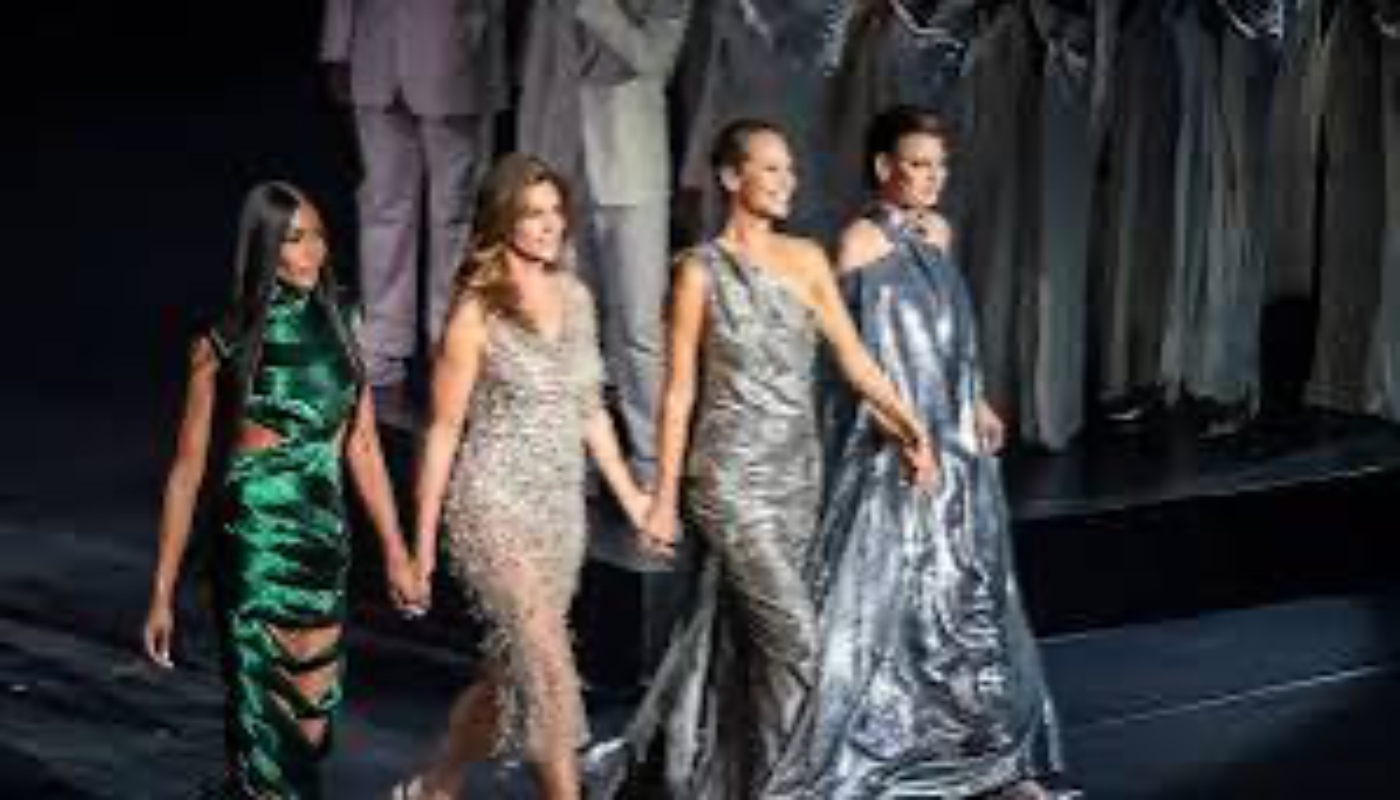
The 1990s were not defined by one universal aesthetic. The decade encompassed the glamorous, athletic confidence associated with supermodels such as Naomi Campbell, Cindy Crawford, Linda Evangelista, and Christy Turlington. It also witnessed the emergence of minimalist fashion, grunge-inspired styling, and the controversial heroin-chic aesthetic that became prominent in parts of the fashion industry. These contrasting movements reveal a complicated cultural history in which glamour, individuality, thinness, commercial ambition, and rebellion frequently existed side by side.
Contemporary interest in this period therefore deserves a more nuanced examination than simply declaring that the 1990s are back.
The return of supermodel aesthetics can represent an appreciation of fashion history, a celebration of mature women in the public eye, and a renewed interest in expressive personal style. However, it can also reactivate restrictive beauty expectations when the imagery associated with the decade is reproduced without questioning its underlying assumptions.
For Body Inclusivity, the central question is not whether 1990s fashion should return. It is whether the industry can reclaim the decade’s creativity and cultural significance without reviving the narrow standards that excluded so many people.
Understanding this distinction requires examining the revival through the interconnected lenses of body image, representation, consumer culture, social media, and the evolving politics of beauty.
1. Understanding the Original 1990s Supermodel Phenomenon
The supermodel era transformed fashion models from relatively anonymous participants in commercial imagery into internationally recognizable cultural figures.
During the early 1990s, models including Naomi Campbell, Cindy Crawford, Linda Evangelista, and Christy Turlington occupied prominent positions across fashion magazines, advertising campaigns, and runway shows. Their collective visibility helped establish modeling as a form of celebrity in its own right.
These women were not interchangeable representations of one beauty ideal. Campbell’s commanding runway presence, Crawford’s recognizable beauty mark, Evangelista’s changing hairstyles, and Turlington’s distinctive elegance contributed to different public images. Their individual identities helped make the supermodel phenomenon commercially powerful.
Fashion photography, television, magazines, and advertising worked together to circulate these images internationally. Before social media made personal style accessible through smartphones, fashion magazines and televised runway coverage played an important role in determining which faces and bodies received sustained attention.
The period also brought substantial commercial power to models. Their appearances could influence clothing campaigns, beauty advertising, and public conversations about fashion. Their visibility demonstrated that models could become central to a brand’s identity rather than simply presenting garments.
Yet this visibility did not mean that the fashion industry represented all women equally.
The models most prominently featured by prestigious fashion houses still occupied a highly selective environment shaped by conventional expectations around appearance, age, body proportions, and commercial desirability.
Furthermore, the decade’s glamorous supermodel image existed alongside a contrasting movement toward extreme thinness. Vogue’s historical account of 1990s fashion describes the transition from the glamorous supermodel image to the waif-like aesthetic associated with heroin chic. These were distinct visual cultures, even though both emerged within the same decade.
Recognizing this contradiction is essential to understanding the current revival.
The 1990s did not offer a single, uncomplicated model of beauty. They provided multiple competing ideals, each influenced by commercial incentives, cultural anxieties, and changing attitudes toward femininity.
The modern revival selectively draws from this complicated history. What returns is not necessarily the entire decade, but the version of it that contemporary fashion finds commercially and aesthetically useful.
2. Why 90s Supermodel Aesthetics Are Returning
Fashion rarely revisits the past without a reason. Nostalgia can provide creative inspiration, but it can also offer brands a familiar visual language through which to reach consumers.
The renewed interest in 1990s supermodels reflects several overlapping cultural developments.
Nostalgia as a commercial strategy
For older audiences, the decade can evoke memories of formative experiences, influential magazines, memorable campaigns, and recognizable fashion trends.
For younger audiences, however, the 1990s often represent a period encountered through photographs, archived runway footage, vintage clothing, and contemporary reinterpretations.
This difference makes nostalgia commercially valuable. The same aesthetic can appeal to people who remember the original moment and people discovering it for the first time.
A 2024 report by Fortune examined how brands were using 1990s nostalgia to connect with younger consumers. Its examples included Monica Lewinsky’s Reformation campaign, Fran Drescher’s AMI Paris campaign, and Pamela Anderson’s work with fashion and beauty brands. These documented campaigns illustrate how familiar cultural figures can help brands connect historical references with contemporary audiences.
The strategy extends beyond clothing. Beauty companies can revisit understated makeup, haircare brands can emphasize voluminous styling, and fashion labels can revive familiar silhouettes.
Nostalgia becomes a commercial shortcut: instead of introducing an entirely unfamiliar visual identity, a brand draws upon a cultural reference that audiences may already recognize.
A reaction against highly curated beauty
Another explanation lies in changing preferences around presentation.
Some consumers are drawn to the apparent simplicity of 1990s beauty: neutral lips, softly defined eyes, natural-looking skin finishes, restrained accessories, and hairstyles that emphasize movement rather than elaborate decoration.
This aesthetic can feel refreshing after periods when beauty content has emphasized sharply sculpted features, elaborate contouring, and highly coordinated appearances.
However, the distinction between understated beauty and natural beauty matters.
A minimalist makeup look may require carefully selected products, professional techniques, flattering lighting, and extensive preparation. An apparently effortless hairstyle can involve considerable styling.
The visual message of simplicity does not necessarily reflect the actual labor behind the appearance.
Consequently, the return of minimalist beauty offers an opportunity to reconsider how society values effort. Beauty should not become more legitimate simply because the work required to achieve it has been made less visible.
The renewed appeal of recognizable personalities
Contemporary audiences encounter fashion through countless digital creators, sponsored posts, and rapidly changing trends. Against this crowded backdrop, established supermodels offer recognizable identities and a sense of continuity.
Their return can also challenge the assumption that fashion relevance belongs exclusively to the young.
The renewed presence of established models on contemporary runways demonstrates how fashion history can become part of the industry’s present rather than remaining confined to archival photographs.
In its April 2024 coverage of returning models, Vogue highlighted familiar faces appearing in contemporary collections and noted how their experience could bring a different energy to runway presentations.
This development offers a potentially valuable alternative to the constant replacement of women as they age.
However, the significance of such appearances depends on whether they represent a broader acceptance of age diversity or remain exceptional moments involving a small group of already famous women.
3. The Difference Between Reviving a Style and Reviving a Body Ideal
One of the most important distinctions in this discussion is the difference between an aesthetic and the body ideal historically associated with it.
Aesthetic choices include clothing, makeup, hairstyles, photography, accessories, and presentation. Body ideals involve expectations about which physical characteristics make someone attractive, fashionable, or worthy of admiration.
The two can overlap, but they are not identical.
Someone can appreciate 1990s fashion without believing that a particular body size is necessary to wear it successfully. Similarly, a designer can recreate a vintage-inspired campaign while featuring models with different body types.
Problems emerge when the visual language of a historical period is treated as inseparable from a narrow physical ideal.
For example, a campaign may celebrate the return of minimalist slip dresses while repeatedly presenting them on extremely thin models. The clothing itself does not require that body type, but repeated casting choices can imply that certain people embody the look more authentically than others.
This implication matters because advertising communicates through more than its explicit message.
A brand may never state that thinness is a requirement for elegance. Nevertheless, if almost every image associates elegance with the same narrow range of bodies, audiences can absorb that association.
The result is a hierarchy in which some bodies appear naturally suited to fashion while others seem to require modification before they can participate.
A genuinely inclusive revival would separate the creative qualities of 1990s fashion from the assumption that those qualities belong to a particular body type.
The objective should be to preserve the aesthetic while expanding the people who are allowed to represent it.
4. Thinness, Heroin Chic, and the Risk of Historical Amnesia
The return of 1990s aesthetics also makes it necessary to revisit the decade’s more troubling beauty narratives.
Heroin chic became a prominent fashion image during the 1990s, characterized in its most recognizable forms by extreme thinness, deliberately disheveled styling, pale or tired-looking presentation, and an aesthetic of detachment.
It should not be confused with the entire supermodel movement. The two visual traditions were different, and the decade contained many other forms of fashion expression.
Nevertheless, heroin chic demonstrated how an industry could transform a controversial image into a commercially desirable look.
The problem was not simply that a particular style existed. It was that physical characteristics associated with fragility could be presented as aspirational, while the social and psychological implications of idealizing extreme thinness received insufficient attention.
A contemporary revival becomes concerning when historical imagery is reproduced without acknowledging this context.
Vintage photographs may appear visually striking because of their composition, clothing, lighting, and cultural associations. But when these photographs are circulated primarily as evidence of an allegedly superior beauty era, the conditions that shaped the imagery can disappear from view.
The past becomes romanticized.
This is a form of selective historical memory: audiences remember the glamour while forgetting the exclusions and anxieties that accompanied it.
A more responsible approach would recognize the creative significance of the decade while refusing to turn its most restrictive beauty expectations into standards that contemporary consumers should pursue.
Fashion history should help audiences understand how ideals are constructed, not encourage them to treat every historical ideal as worthy of restoration.
5. Body Image and the Psychology of Comparison
Beauty imagery influences more than purchasing decisions. It can affect how people evaluate themselves, interpret attractiveness, and understand their position within a social environment.
The psychological implications of the supermodel revival therefore deserve serious consideration.
How comparison changes self-perception
Social comparison occurs when people evaluate themselves in relation to others.
In fashion culture, this process can involve comparing body proportions, facial features, skin texture, hair, clothing, and perceived attractiveness with the images that receive the greatest public attention.
A person looking at a vintage campaign might simply admire its photography. Another person might begin measuring their own appearance against the models presented.
Neither response is inevitable, and individual experiences vary. However, repeated exposure to idealized imagery can create an environment in which comparison becomes habitual.
The danger increases when a highly selective visual standard is mistaken for a realistic representation of how people generally look.
Professional fashion imagery often involves carefully controlled lighting, styling, camera angles, and editing. Social media can then circulate these images without the original context, presenting them alongside everyday photographs and encouraging audiences to compare fundamentally different kinds of representation.
Research published in the journal Body Image in 2024 examined the effects of viewing social media images featuring women with different body sizes. The study found that exposure to images of smaller-bodied women negatively affected several body-image outcomes, while viewing larger-bodied women was associated with more positive body appreciation or neutral outcomes in the experimental setting. The researchers also found increased self-objectification across the conditions.
These findings do not establish that every thin-model image harms every viewer. They do, however, demonstrate why the body types presented in visual media deserve attention.
A fashion revival that repeatedly privileges one physical ideal may influence how some audiences evaluate themselves, particularly when they already internalize narrow appearance expectations.
The illusion of a disappearing standard
Beauty trends are often presented as liberating because they change over time.
One decade celebrates a particular silhouette, another elevates a different appearance, and the next introduces a seemingly new ideal.
Yet the constant movement between trends can conceal an underlying expectation: that the body must remain responsive to fashion.
The ideal changes, but the pressure to adapt may remain.
When 1990s supermodel aesthetics return, people can encounter familiar expectations in contemporary packaging. The desired appearance may be described as vintage, effortless, or timeless, but the implicit demand to resemble the image can still generate dissatisfaction.
This is particularly troubling when body types are treated as trends that people should follow rather than natural variations that deserve acceptance.
Clothing can change with the season. Human bodies should not have to justify their existence through seasonal relevance.
6. Social Media Has Changed the Scale of the Revival
The original supermodel phenomenon developed through a media environment dominated by magazines, advertising, television, and fashion shows.
Today’s revival operates through a much more immediate and participatory digital environment.
Users can encounter archival photographs on Instagram, watch runway compilations on TikTok, recreate vintage makeup looks on YouTube, and purchase clothing inspired by the decade through online marketplaces.
This accessibility has expanded opportunities for fashion discovery.
People no longer need access to expensive fashion publications to learn about historical designers, models, or beauty techniques. Independent creators can introduce audiences to forgotten campaigns, discuss the cultural meaning of particular trends, and challenge inaccurate accounts of fashion history.
However, digital distribution also changes how beauty ideals circulate.
From isolated images to continuous exposure
A magazine photograph once appeared within a specific publication and editorial context. Today, similar imagery can become part of a continuous feed in which users encounter hundreds of beauty-related images in a single session.
The same face, silhouette, or styling choice may appear repeatedly across different accounts.
This repetition can make a particular appearance seem more common, more desirable, or more culturally important than it actually is.
Social media also makes beauty trends interactive. Users can reproduce a look, upload their interpretation, receive feedback, and compare their results with those of other participants.
The trend becomes a performance in which audiences are not merely observers but also potential participants.
This creates opportunities for experimentation and creativity. It can also make beauty ideals feel personally demanding because users are encouraged to demonstrate their ability to embody them.
Algorithms and the amplification of familiar ideals
Digital platforms organize content through recommendation systems influenced by multiple signals, which can include user engagement and viewing behavior.
When people interact repeatedly with supermodel photographs, beauty tutorials, or body-focused fashion content, they may encounter additional material related to those interests.
The result can be an increasingly concentrated visual environment.
However, it would be inaccurate to assume that every recommendation system works identically or that all users experience the same effects. Digital experiences vary according to platform design, individual behavior, and the content available.
The broader concern is that highly engaging images can receive extensive circulation regardless of whether their cumulative effects support healthy relationships with appearance.
Fashion brands and creators should therefore consider not only the message of an individual image but also the visual culture they help establish through repeated publishing.
The question is no longer simply whether a campaign uses inclusive casting. It is whether inclusive representation remains visible after that campaign enters a much larger digital ecosystem.
7. The Supermodel Revival and the Limits of Body Positivity
The growth of body-positive messaging has encouraged more public discussion about representation, appearance-based discrimination, and the relationship between self-worth and body size.
Yet the return of 1990s aesthetics exposes an important tension: a culture can celebrate body diversity in principle while continuing to privilege a narrow physical ideal in practice.
A brand might publish messages about confidence and self-acceptance while most of its prestigious campaigns continue to feature models with very similar body proportions.
The contradiction is not always intentional, but its implications deserve attention.
Representation is not the same as structural inclusion
Representation concerns who appears in images and public narratives.
Structural inclusion asks whether different people can participate consistently, access opportunities, receive professional support, and occupy positions of influence.
A single campaign featuring a model outside conventional sample-size expectations can improve visibility. However, it does not establish that the broader fashion system has become inclusive.
The same distinction applies to age diversity, disability representation, racial inclusion, and gender expression.
A mature model’s appearance in a prestigious campaign may challenge age-related assumptions, but the effect is limited if older women remain rare across the industry’s wider visual landscape.
Similarly, featuring a plus-size model in a nostalgic campaign does not necessarily demonstrate that the brand offers its clothing in a meaningful range of sizes.
Body inclusivity must extend beyond the image.
It should influence product development, sample availability, retail sizing, casting practices, professional treatment, and the language used to discuss bodies.
Why occasional diversity is not enough
A 2026 study published in Proceedings of the National Academy of Sciences examined nearly 800,000 records of fashion imagery across a 25-year period. The research found that visible diversity had increased, but the typical model physique remained largely stable. Its analysis also identified uneven representation across intersecting demographic categories.
This finding offers a useful perspective on the supermodel revival.
An industry can introduce more variation into its campaigns without fundamentally changing the body ideal that dominates its most prestigious spaces.
The presence of a few different body types may create an appearance of progress while leaving the central standard largely intact.
The challenge is not to reject every familiar fashion silhouette or insist that every campaign represent every possible body. It is to examine whether opportunities for visibility and professional participation are distributed meaningfully rather than concentrated in occasional exceptions.
A successful revival should expand the range of people who can embody the aesthetic, not merely decorate an unchanged hierarchy with isolated examples of diversity.
8. Age Inclusivity: Who Gets to Remain a Fashion Icon?
One of the most promising aspects of renewed interest in established supermodels is the opportunity to challenge the assumption that women’s cultural relevance declines with age.
Fashion has frequently associated desirability with youth, particularly in industries that market clothing, cosmetics, and personal care through aspirational imagery.
The return of established models complicates this expectation.
Their professional histories provide a different form of visual authority. They bring recognizable identities, accumulated experience, and an understanding of how fashion imagery has evolved.
This can challenge the idea that women must continually disappear from public view as younger models enter the industry.
The distinction is especially important because age discrimination can operate alongside other appearance-based exclusions.
Women may encounter cultural expectations that they should conceal visible aging, abandon particular clothing styles, or become less interested in fashion as they grow older.
A revival that features mature women wearing contemporary designs can undermine these assumptions.
However, age inclusivity should not become another demand that women must remain exceptionally glamorous to deserve attention.
There is a difference between celebrating an older model and suggesting that a woman must maintain a highly polished appearance to remain relevant.
A genuinely inclusive culture should recognize older women as full participants in fashion, regardless of whether they resemble their younger selves.
It should also acknowledge that the experiences of internationally famous models are not representative of every woman.
Established supermodels often possess professional recognition and commercial influence that most people do not. Their continued visibility is valuable, but it cannot substitute for broader representation of ordinary women across different ages, sizes, and backgrounds.
The future of age-inclusive fashion depends on making participation normal rather than exceptional.
9. Race, Representation, and the Uneven Legacy of Supermodel Culture
Any discussion of the 1990s supermodel era must account for race and the unequal distribution of visibility within fashion.
Naomi Campbell’s international prominence made her an important figure in fashion history. Her career also existed within an industry where Black models faced barriers to recognition and opportunities that were not distributed equally.
The significance of her success cannot be reduced to her appearance in famous campaigns. It also concerns the broader question of who is permitted to occupy positions of authority within luxury fashion.
A revival of supermodel aesthetics can create opportunities to revisit these histories.
Archival campaigns and contemporary retrospectives can introduce younger audiences to models whose achievements shaped fashion while encouraging discussion about the conditions under which those achievements occurred.
However, historical recognition should not obscure the continuing importance of inclusive casting.
A campaign can feature a celebrated Black model while retaining narrow expectations about which complexions, facial features, hairstyles, or body types are considered commercially desirable.
Representation also becomes limited when one individual is expected to stand in for an entire racial or cultural group.
No model can represent the full diversity of Black women, just as no single model can represent all women of Asian, Indigenous, Middle Eastern, European, or mixed-race backgrounds.
A more meaningful approach recognizes individuality while expanding access to professional opportunities.
It also acknowledges that race and body size can intersect in ways that shape how people are represented. The 2026 research on fashion imagery found that increased diversity was unevenly distributed across demographic categories, underscoring the importance of examining inclusion through more than one dimension.
For contemporary fashion, the lesson is clear: celebrating historically influential models should accompany sustained attention to the people who remain underrepresented.
The goal is not simply to recreate a memorable runway lineup. It is to build a fashion culture in which access to visibility is less dependent on conformity to a narrow set of expectations.
10. A Global Perspective: When Western Beauty Trends Travel
The return of 1990s supermodel aesthetics also raises questions about the global circulation of beauty standards.
Fashion has never developed within isolated national boundaries. International magazines, advertising campaigns, designer collections, films, and celebrity culture have helped move visual trends between regions for decades.
Digital platforms have accelerated this exchange.
A makeup look originating in a Western fashion editorial can be recreated by a beauty creator in South Asia. A vintage runway photograph can inspire styling in East Asia. A model’s hairstyle can become a reference point for consumers in Africa, Europe, Latin America, or the Middle East.
These exchanges can encourage creativity and introduce audiences to unfamiliar fashion histories.
Nevertheless, global circulation does not guarantee equal cultural influence.
When a beauty ideal originates in a powerful fashion market and receives extensive international promotion, it may be treated as a universal standard rather than one cultural expression among many.
This can place additional pressure on people whose features, complexions, hair textures, or body proportions differ from those most frequently celebrated in global campaigns.
South Asian beauty culture and the imported ideal
In South Asian contexts, international fashion imagery exists alongside local beauty traditions, film industries, bridal aesthetics, and long-standing expectations surrounding femininity.
The result is not a simple replacement of local ideals by Western ones. Instead, consumers navigate overlapping and sometimes contradictory standards.
A person might admire the understated makeup of a 1990s supermodel while also participating in beauty traditions shaped by South Asian cinema, family celebrations, or regional fashion.
The return of minimalist styling can therefore represent creative experimentation rather than an abandonment of cultural identity.
However, imported imagery can become exclusionary when its popularity reinforces the belief that only certain facial features, skin tones, or body types communicate sophistication.
The answer is not to reject international fashion or treat cultures as sealed categories. Cultural exchange is a normal and often enriching part of contemporary style.
The more important question is whether global beauty culture allows different traditions and physical characteristics to remain visible without forcing everyone toward one supposedly universal ideal.
African, East Asian, and other fashion contexts
The same principle applies across other regions.
African fashion cultures encompass diverse textile traditions, local designers, contemporary streetwear, and international luxury influences. East Asian beauty industries likewise contain multiple aesthetic traditions that cannot be reduced to one shared standard.
The 1990s revival can provide a reference point for experimentation in these environments, but its meaning will differ according to local histories and social expectations.
For some audiences, the look may represent vintage sophistication. For others, it may offer an opportunity to reinterpret familiar fashion references through local styling, textiles, or beauty practices.
A genuinely global perspective should therefore avoid assuming that all consumers interpret thinness, glamour, aging, or femininity in identical ways.
Cultural influence is strongest when people can adapt a trend to their own lives rather than being expected to reproduce its original form.
11. Beauty Marketing: Selling the Dream of Effortlessness
The commercial appeal of the supermodel revival extends beyond clothing.
Beauty brands can associate products with the appearance of luminous skin, defined eyes, polished hair, and understated glamour. Fashion companies can promote minimalist wardrobes as investments in timeless elegance.
These messages often suggest that a small number of carefully chosen products or garments can help consumers achieve an elevated appearance.
There is nothing inherently wrong with selling cosmetics or fashion through aspirational imagery. Consumers can enjoy experimentation, admire professional styling, and purchase products because they find them beautiful or useful.
The concern arises when aspiration becomes inadequacy.
A campaign can encourage people to enjoy a particular aesthetic without suggesting that their existing appearance is deficient.
By contrast, advertising that presents beauty as a problem requiring constant correction can turn ordinary physical variation into a commercial opportunity.
Visible pores, textured skin, different body proportions, and natural signs of aging can become framed as obstacles to an idealized result.
The supermodel revival risks reproducing this pattern when it presents a highly curated image as a naturally superior way of looking.
The economics of dissatisfaction
Appearance-related marketing often depends on creating a gap between how consumers perceive themselves and how they would like to look.
A brand then offers a product that appears to bridge that gap.
This process is not unique to the 1990s aesthetic, but nostalgic marketing can give it a powerful emotional dimension. Consumers may be encouraged to associate a historical period with an imagined standard of effortless beauty and then purchase products intended to recreate that appearance.
The commercial message becomes especially problematic when it implies that the look requires changing the body rather than experimenting with styling.
An inclusive approach would emphasize the creative possibilities of beauty products without implying that certain bodies need to be corrected before they can participate.
Fashion and beauty should offer options, not manufacture shame.
12. Fashion Designers and the Responsibility of Casting
Designers play a central role in determining how a returning aesthetic is interpreted.
Clothing is not inherently inclusive or exclusionary in isolation. Its cultural meaning also depends on how it is presented, who is allowed to wear it, and which bodies receive visibility.
A minimalist slip dress, tailored blazer, or vintage-inspired evening gown can communicate different things depending on the model, styling, setting, and accompanying campaign narrative.
Casting decisions are therefore more than logistical choices.
They help establish the visual boundaries of the brand’s imagined audience.
Beyond token representation
A responsible revival would consider diversity across multiple dimensions, including body size, age, race, disability, and gender expression.
This does not mean every collection must follow an identical casting formula. Creative direction can vary, and different campaigns may have specific artistic purposes.
However, sustained inclusion requires more than occasional exceptions.
Brands should examine whether their casting decisions repeatedly associate prestige with one narrow appearance. They should also consider whether models outside conventional expectations receive the same quality of styling, photography, promotion, and professional treatment.
A model’s presence in a campaign should not be used as a substitute for broader institutional change.
Extending inclusivity to the clothes themselves
Representation loses some of its value when consumers cannot purchase the products shown.
A campaign may communicate that a particular look is open to everyone, yet the brand’s available sizes may exclude a substantial portion of its audience.
Inclusive design requires attention to sizing, fit, garment construction, accessibility, and the practical experiences of different customers.
It also requires listening to consumers whose needs have historically received less attention.
If a brand wishes to revive 1990s fashion responsibly, it should consider how the garments can work across a meaningful range of bodies rather than simply changing the models in its advertisements.
The aesthetic should be adaptable in practice, not merely inclusive in its promotional language.
13. The Role of Consumers: Enjoying Fashion Without Surrendering Self-Worth
Consumers are not passive recipients of beauty culture.
They interpret images, develop personal preferences, question marketing messages, and influence brands through purchasing decisions and public discussion.
This gives audiences a role in shaping how the supermodel revival develops.
One useful distinction is between appreciating an appearance and treating it as a requirement.
Someone can admire a model’s styling without believing that they must possess the same facial features or body proportions. They can recreate a makeup look because it is enjoyable rather than because their existing appearance needs improvement.
This approach allows fashion to remain a form of expression rather than a continuous evaluation of personal worth.
Building a more critical relationship with inspiration
Consumers can begin by asking what specifically attracts them to a look.
Is it the clothing’s silhouette? The photography? The color palette? The hairstyle? The confidence conveyed by the model?
Identifying these elements can help separate creative inspiration from assumptions about body type.
A person who admires a vintage editorial may discover that they are drawn primarily to the tailoring, understated accessories, or composition. Those elements can be incorporated into personal style without reproducing every aspect of the original image.
This does not eliminate the influence of beauty culture, but it creates more room for individual choice.
Curating a healthier visual environment
Social media users can also make deliberate decisions about the content they consume.
Following a wider range of models, designers, and creators can introduce alternative interpretations of the same aesthetic.
For example, users can seek out vintage-inspired fashion on people of different ages, sizes, and physical abilities. They can also follow creators who discuss fashion history, garment construction, and cultural context rather than focusing exclusively on appearance.
The objective is not to avoid attractive imagery or stop enjoying fashion.
It is to prevent one narrow visual standard from dominating the definition of what looks stylish, sophisticated, or worthy of attention.
A broader visual environment makes it easier to recognize that beauty can take multiple forms.
14. The Media’s Responsibility: Contextualizing Nostalgia
Fashion journalism has a significant role in determining how historical trends are remembered.
Headlines announcing that an iconic look is returning can generate interest, but they can also oversimplify the period being discussed.
A more thoughtful approach would examine the different movements within 1990s fashion and distinguish between their creative contributions and their restrictive expectations.
Coverage could explore the commercial conditions that shaped supermodel culture, the rise of minimalist design, the popularity of heroin chic, and the changing representation of women in advertising.
It could also investigate how contemporary designers reinterpret historical references rather than simply reproducing them.
This approach would help readers understand that nostalgia is a process of selection.
Fashion does not bring the past back in its entirety. It chooses particular images, identities, and styles to emphasize while leaving others in the background.
Journalists can make this process more visible by asking whose history is being celebrated, whose experiences are missing, and which commercial interests benefit from the revival.
The same responsibility applies to beauty journalism.
Articles about vintage makeup or iconic models can celebrate technique and artistry without implying that a particular physical appearance represents the ideal form of femininity.
The media’s task is not to eliminate glamour. It is to provide the context that allows audiences to appreciate glamour without confusing it with a universal requirement.
15. Can the 90s Revival Become More Inclusive Than the Original?
The answer depends on what the industry chooses to preserve.
The most valuable aspects of the supermodel era include its emphasis on distinctive personalities, the cultural significance of professional modeling, the relationship between fashion and photography, and the ability of individual models to become recognizable public figures.
These qualities can be celebrated without reproducing every historical beauty expectation.
Indeed, contemporary fashion has an opportunity to reinterpret the period in ways that were less visible in the original era.
A modern campaign could combine vintage styling with models representing a wider range of body sizes and ages. A designer could recreate a minimalist silhouette while offering extended sizing. A beauty brand could revisit a 1990s makeup palette while featuring different complexions, facial features, and gender expressions.
Such approaches would preserve the creative reference while changing the boundaries of participation.
However, progress should not be assumed simply because a campaign appears more diverse.
Brands must consider whether inclusive representation continues across seasons, whether products are accessible to the audiences featured, and whether models receive meaningful professional opportunities.
The industry should also resist the temptation to turn inclusivity itself into a short-lived marketing trend.
If diversity appears only when commercially fashionable, people who have historically been excluded remain vulnerable to being excluded again when consumer attention moves elsewhere.
Sustainable progress requires practices that remain in place after a trend loses its novelty.
The strongest interpretation of the 1990s revival would therefore preserve its creativity while refusing to treat its limitations as essential parts of its identity.
16. A Future in Which Beauty Trends Do Not Dictate Bodily Worth
The return of supermodel aesthetics offers an opportunity to reconsider the relationship between fashion, identity, and self-perception.
Trends will continue to change. Minimalism may give way to maximalism, vintage styling may be replaced by futuristic experimentation, and different forms of glamour will move in and out of commercial popularity.
There is nothing inherently wrong with this cycle.
Fashion becomes culturally interesting partly because it allows people to explore different identities and forms of expression.
The problem emerges when changing trends create the impression that bodies themselves must continually change to remain acceptable.
An inclusive future would recognize a distinction between the freedom to experiment with appearance and the pressure to conform to a preferred physical ideal.
It would allow people to enjoy supermodel-inspired fashion without suggesting that only certain bodies can embody confidence or elegance.
For designers, this means expanding the possibilities of casting and garment design.
For beauty brands, it means separating product promotion from messages that frame ordinary physical characteristics as defects.
For journalists, it means examining fashion revivals with historical awareness rather than treating nostalgia as proof that the past was universally better.
For consumers, it means allowing inspiration to coexist with self-acceptance.
The broader cultural goal is not to establish a new, supposedly perfect beauty ideal. It is to reduce the power of any single ideal to determine who receives recognition, respect, and opportunity.
Conclusion: Reclaiming the Style Without Repeating the Exclusions
The return of 1990s supermodel aesthetics reveals the enduring power of fashion to shape collective memory. Familiar faces, minimalist silhouettes, iconic campaigns, and vintage beauty techniques have found new relevance in a digital culture that constantly recirculates the past.
This revival can be meaningful. It can celebrate influential women, challenge assumptions about age, encourage creative experimentation, and introduce younger audiences to important chapters in fashion history.
Yet nostalgia becomes less constructive when it romanticizes restrictive beauty standards or treats one physical appearance as the natural expression of elegance.
The original supermodel era was culturally influential, but it was not universally inclusive. Its glamour existed alongside narrow expectations, unequal representation, and competing ideals that sometimes placed considerable pressure on women’s bodies.
Recognizing these contradictions does not diminish the achievements of the models or the artistic significance of the period. It allows their legacy to be understood more honestly.
The most important question is therefore not whether the 1990s should return. It is whether contemporary fashion can learn from that decade without repeating its exclusions.
A more inclusive revival would preserve the confidence, creativity, individuality, and visual artistry associated with supermodel culture while expanding the range of people who can participate in it.
It would celebrate mature women without making exceptional youthfulness a condition of relevance. It would embrace vintage silhouettes without assigning them to a narrow range of body types. It would recognize historically influential models while creating meaningful opportunities for those whose identities and appearances have received less visibility.
Above all, it would separate admiration from obligation.
A person should be able to love a fashion era without feeling compelled to transform their body to belong to it. Beauty should be a source of expression, not a standard against which people are continually measured.
The future of the 1990s supermodel aesthetic will ultimately be shaped by the decisions of designers, advertisers, editors, digital creators, and consumers.
If they treat the revival as an opportunity to reconsider who gets to be seen, it can become more than another nostalgic trend. It can contribute to a fashion culture in which style remains exciting, history remains meaningful, and a person’s body is never a prerequisite for dignity or belonging.
Sources: Vogue, Fortune, Proceedings of the National Academy of Sciences, Body Image, Young Consumers, Emerald Publishing