 by
Introduction: When Everyday Fashion Becomes an Unspoken Body Standard
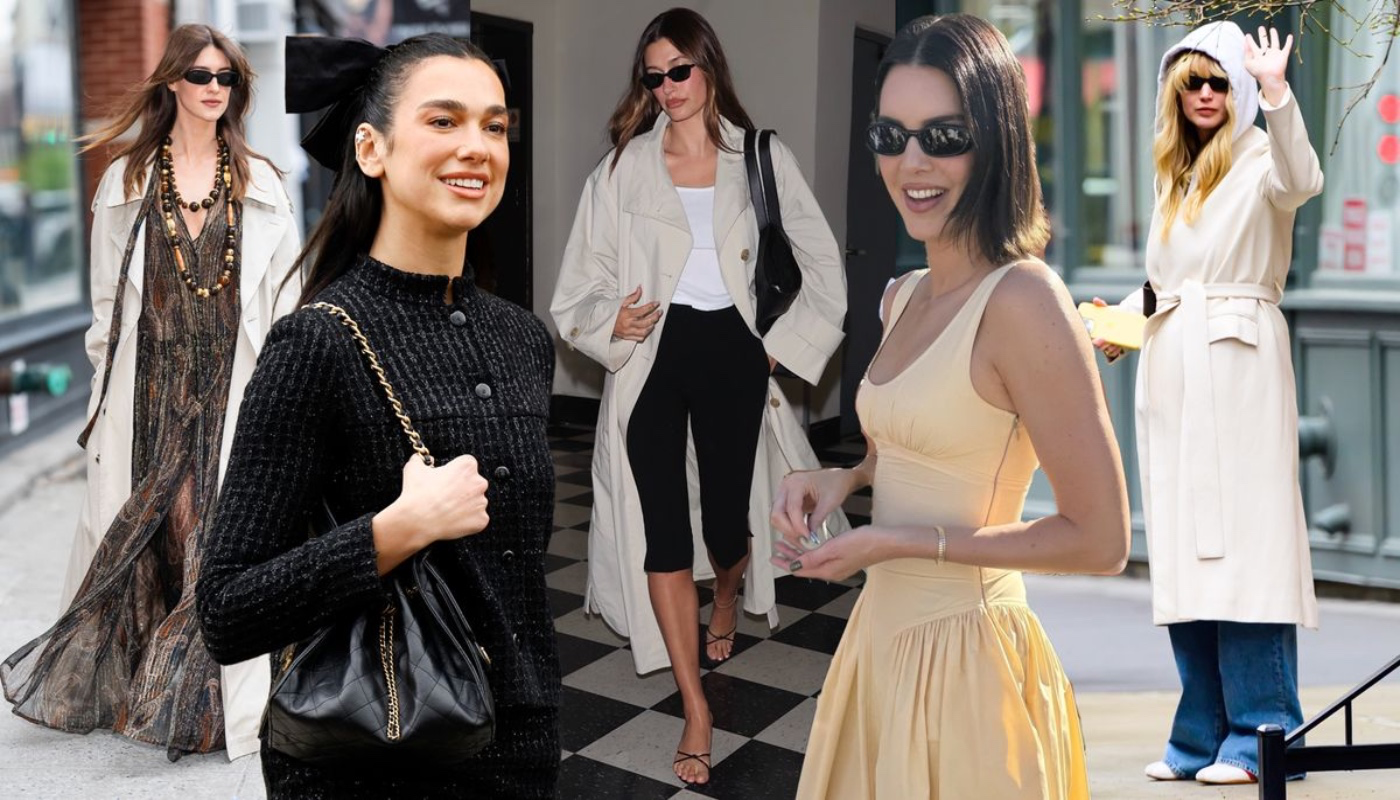
A photograph of a celebrity stepping out of an airport, walking through a city, leaving a restaurant, or running a casual errand can become a fashion reference within minutes. A pair of oversized jeans, a fitted white T-shirt, a cropped jacket, or an apparently effortless combination of basic wardrobe pieces can suddenly dominate social media feeds, shopping searches, fashion discussions, and everyday dressing decisions. What appears to be an ordinary outfit often becomes something much larger: a visual representation of how people are expected to look when they are not even trying.
Celebrity street style occupies a distinctive position in contemporary fashion culture because it presents glamour through the language of ordinary life. Unlike red-carpet appearances, which are widely understood to involve formal styling, elaborate preparation, and designer clothing, street-style photographs frequently communicate spontaneity. They suggest that fashionable people simply wake up, select a few wardrobe essentials, and naturally look polished.
However, this apparent effortlessness can conceal a complicated cultural process. Celebrity street style is not always an unplanned reflection of personal clothing choices. It can involve professional stylists, carefully selected garments, luxury accessories, photographers, brand relationships, and extensive media circulation. The resulting images are then consumed by audiences who may interpret them as realistic examples of how everyday bodies should look.
The influence extends beyond clothing preferences. It can affect how people perceive their waistlines, shoulders, legs, proportions, posture, height, and overall appearance. A particular outfit might become associated with an ideal body type, even when the garment itself is not inherently designed for one specific figure.
This creates an important distinction between fashion inspiration and body expectation. The former encourages individuals to experiment with personal expression. The latter can make people feel that they must possess particular physical characteristics before they can participate confidently in a trend.
As celebrity fashion becomes increasingly accessible through digital platforms, understanding its influence requires looking beyond individual outfits. The larger question is how repeated images of carefully presented bodies shape the standards ordinary people apply to themselves.
Celebrity street style is not simply about what famous people wear. It is increasingly about who gets to look effortlessly fashionable, which bodies are associated with desirable clothing, and how those associations influence everyday experiences of self-image.
1. The Illusion of Effortlessness and the Commercial Construction of Casual Fashion
One of the strongest features of celebrity street style is its apparent lack of preparation.
A celebrity wearing sneakers, denim, sunglasses, and an oversized shirt can generate enormous fashion interest precisely because the outfit appears accessible. Unlike couture clothing, which belongs to an obviously elevated fashion environment, casual dressing seems achievable through ordinary shopping decisions.
Yet the circumstances behind celebrity street style are often considerably different from those of ordinary consumers.
Public figures may have access to professional stylists, personal shoppers, designer wardrobes, tailoring services, exclusive collections, and photographers who understand how to capture their clothing from flattering angles. Even when an outfit is genuinely selected without a commercial arrangement, the celebrity’s access to fashion resources can make the final appearance difficult to reproduce.
This creates an uneven relationship between the image and the audience.
A consumer might purchase an oversized blazer inspired by a celebrity photograph, only to discover that the same garment creates a different silhouette on their body. The difference may have little to do with styling ability. It can reflect variations in height, shoulder width, torso length, proportions, garment construction, and personal comfort.
Nevertheless, fashion marketing frequently presents the celebrity’s appearance as the desired outcome.
The result is a subtle shift in responsibility. Instead of questioning whether the clothing was designed with a narrow range of bodies in mind, consumers may assume that their own appearance is preventing them from achieving the intended look.
This is particularly important because casual fashion is often marketed as democratic. The clothes appear accessible, but the bodies most frequently celebrated wearing them may remain relatively limited.
The problem is not that celebrities have access to professional styling. It is that audiences are rarely encouraged to recognize the difference between an editorially circulated appearance and an ordinary dressing experience.
2. How Street-Style Photography Turns Bodies Into Fashion References
Street-style photography has transformed the way contemporary audiences understand fashion.
Previously, fashion authority was concentrated in magazines, runway presentations, advertising campaigns, and established designers. Today, images of celebrities outside fashion events can circulate independently of traditional fashion publications.
A photograph can become a reference point for an entire trend without requiring an accompanying fashion article.
However, street-style photography does more than document clothing. It also communicates which physical appearances are considered visually desirable.
The camera frequently captures the relationship between a garment and the person wearing it. The way trousers fall, how a jacket sits across the shoulders, how a skirt moves, or how a silhouette appears in motion becomes part of the image’s appeal.
When the same narrow range of body types repeatedly dominates these photographs, audiences can begin associating fashionable clothing with those bodies.
This association is not always explicit.
A fashion publication might praise a particular pair of jeans for creating a streamlined silhouette. A social media account might describe an outfit as flattering because it emphasizes a narrow waist. A celebrity photograph might become popular because the clothing appears especially elegant on its wearer.
Individually, these descriptions may seem harmless. Collectively, however, they can establish a visual vocabulary in which certain proportions become synonymous with style.
The consequence is that clothing is no longer evaluated exclusively through creativity, construction, comfort, or personal preference. Its perceived success can become dependent on how closely the wearer resembles the body associated with the original inspiration.
This also affects people who are not actively trying to imitate celebrities. Repeated exposure to similar images can influence their understanding of what fashionable people are supposed to look like.
3. The Social Comparison Mechanism: Why Celebrity Outfits Can Affect Body Confidence
The psychological influence of celebrity street style is closely connected to social comparison.
People naturally evaluate aspects of their lives by observing others. Clothing, appearance, lifestyle, and physical presentation are particularly visible areas for comparison because they can be assessed quickly through photographs.
Celebrity images intensify this process because public figures often occupy aspirational positions within popular culture.
Research published in the journal Body Image has examined the relationship between celebrity photographs and women’s body perceptions.
In a 2016 experimental study, researchers Zoe Brown and Marika Tiggemann examined the effects of attractive celebrity and peer photographs on women’s mood and body image. The study involved 138 female undergraduate participants.
The findings indicated that exposure to attractive celebrity and peer images increased negative mood and body dissatisfaction compared with viewing travel photographs. Appearance comparison played an important role in explaining these effects.
A subsequent 2020 study by the same researchers examined whether disclaimers or body-positive captions could reduce the impact of celebrity Instagram images. The research involved 256 female undergraduate participants.
Exposure to celebrity photographs was associated with increased body dissatisfaction and decreased body appreciation. Neither disclaimer captions nor body-positive captions significantly eliminated the effect.
These studies examined Instagram imagery rather than street-style photography specifically, so their findings should not be interpreted as direct measurements of every street-style experience. Nevertheless, they help explain the psychological mechanisms through which celebrity appearance content can influence audiences.
Street-style images provide particularly convenient material for comparison because they present fashion within recognizable environments.
A person viewing a photograph of a celebrity wearing casual clothing might compare their own appearance with the image while preparing for work, shopping, meeting friends, or attending university.
The comparison can move beyond the clothing itself.
Instead of thinking, “I like that jacket,” someone may begin thinking:
- My waist does not look like that.
- My legs are not the right shape for those trousers.
- I am too short for that outfit.
- My shoulders make that silhouette look different.
- I cannot wear that style confidently.
The original fashion inspiration gradually becomes an assessment of physical suitability.
This is one reason body inclusivity must be considered part of fashion communication rather than treated as a separate conversation about self-esteem.
4. The Rise of the Model-Off-Duty Aesthetic and Its Narrow Physical Expectations
The model-off-duty aesthetic has become one of the most recognizable expressions of celebrity street style.
It typically combines simple wardrobe pieces such as straight-leg jeans, leather jackets, neutral tops, sneakers, tailored coats, sunglasses, and understated accessories.
Its popularity comes from the suggestion that sophisticated fashion does not require elaborate styling.
However, the aesthetic has historically been associated with the fashion industry’s preferred model image.
Long limbs, particular proportions, narrow silhouettes, and a relatively limited range of body presentations have frequently been central to its visual identity.
This association can make the aesthetic seem more restrictive than its individual garments actually are.
Straight-leg jeans are not inherently exclusive to tall or slender people. Neither are oversized coats, fitted shirts, or leather jackets. Yet the repeated presentation of these garments on a relatively narrow range of bodies can create the impression that certain proportions are necessary to achieve the intended appearance.
The distinction matters because it changes the way consumers approach clothing.
Someone who likes the model-off-duty aesthetic may begin searching for ways to alter their appearance rather than exploring how the clothing could be adapted to their existing body.
This can produce a cycle in which fashion trends appear accessible in theory but feel physically inaccessible in practice.
A more inclusive interpretation would recognize that the aesthetic is defined by styling choices, not a mandatory body shape.
The same visual language can be recreated through different cuts, proportions, fabrics, and personal interpretations.
Fashion becomes more meaningful when the style is allowed to evolve according to the wearer rather than requiring the wearer to conform to an established silhouette.
5. The Celebrity Airport Look and the Pressure to Look Presentable Everywhere
The celebrity airport look deserves particular attention because it has transformed the cultural expectations surrounding casual public appearances.
Airport fashion traditionally involved practical considerations: comfortable shoes, easy-to-remove layers, functional bags, and clothing suitable for extended travel.
Celebrity airport photography has introduced a different visual standard.
Public figures are frequently photographed wearing carefully coordinated outfits that combine comfort with recognizable fashion elements. Tracksuits, tailored trousers, sunglasses, expensive handbags, coordinated knitwear, and statement outerwear can become part of a carefully circulated airport aesthetic.
The photographs create a curious contradiction.
Airport clothing is supposed to represent relaxation and practicality, yet celebrity airport images can make even the most ordinary travel experience appear like a fashion presentation.
For everyday consumers, this can subtly expand the definition of looking presentable.
A person may begin feeling that comfortable clothing is insufficient unless it also produces a polished silhouette. A loose outfit might feel less attractive because it does not resemble the coordinated appearance repeatedly celebrated online.
This pressure can be particularly noticeable during travel.
Airports involve long waiting periods, uncomfortable temperatures, walking, carrying luggage, and physical fatigue. Yet celebrity airport fashion encourages audiences to view the journey as another opportunity for appearance management.
The cultural expectation is no longer simply to dress appropriately for the occasion. It is to remain visually impressive even in situations where comfort should take priority.
A healthier fashion culture would make room for both possibilities: dressing expressively when desired and choosing practical clothing without feeling that appearance has become a public obligation.
6. The Influence of Celebrity Denim: When a Jeans Trend Becomes a Body Test
Denim is one of the most revealing examples of how celebrity street style can influence body expectations.
Jeans are everyday garments. They are worn across different age groups, professions, cultures, and economic backgrounds. Their widespread use makes them especially powerful carriers of fashion trends.
Celebrity appearances can quickly elevate particular denim styles, including low-rise jeans, baggy jeans, wide-leg silhouettes, straight-leg cuts, and fitted designs.
However, denim trends frequently become associated with specific body proportions.
Low-rise jeans, for example, are often presented through styling that emphasizes the waist and hip area. Wide-leg trousers may be praised for creating a particular relationship between the waist, hips, and legs. Skinny jeans have historically been marketed through images that emphasize close-fitting silhouettes.
The difficulty emerges when fashion descriptions imply that a particular body characteristic determines whether someone can wear a style successfully.
This is not simply a matter of personal preference. Clothing industries contribute to the problem through inconsistent sizing, limited cuts, and product imagery that rarely demonstrates how garments behave across a broad range of bodies.
Consumers may encounter a celebrity-inspired pair of jeans and discover that the same design fits differently because of variations in hip measurements, waist proportions, thigh circumference, or torso length.
Rather than interpreting this as a normal feature of clothing design, people may perceive it as a personal failure.
Celebrity denim culture therefore illustrates how an ordinary shopping decision can become connected to body dissatisfaction.
The more inclusive approach is to recognize that denim should accommodate bodies rather than function as a test of whether bodies meet a fashionable standard.
7. When Oversized Fashion Becomes Another Form of Body Expectation
Oversized fashion is frequently presented as a more relaxed alternative to restrictive clothing.
Loose shirts, oversized blazers, wide-leg trousers, roomy jackets, and relaxed silhouettes can offer comfort and creative freedom.
Yet oversized fashion can develop its own narrow expectations.
A particular oversized silhouette may be praised because it appears deliberately loose while still maintaining a specific relationship with the wearer’s proportions.
For example, fashion commentary might celebrate an oversized jacket when it creates a dramatic contrast with a narrow waist or long legs.
This can make oversized dressing seem less like an invitation to comfort and more like another styling formula.
The issue becomes especially complicated for people who have previously felt excluded from fitted fashion.
They may assume that loose clothing is automatically more flattering or socially acceptable, even when they would prefer to experiment with different silhouettes.
In addition, oversized clothing does not always fit every body in the same way. Sleeve lengths, shoulder placement, garment volume, and overall proportions can produce different results.
The idea that one silhouette is universally flattering therefore deserves reconsideration.
Body-inclusive fashion should challenge the expectation that every garment must create a particular visual effect.
Sometimes clothing can simply be expressive, comfortable, dramatic, playful, or practical.
Its value does not need to depend on whether it makes someone’s body appear smaller, longer, narrower, or more proportionate.
8. Rihanna and the Cultural Significance of Expanding Fashion Representation
Few contemporary fashion figures demonstrate the cultural potential of broader body representation as clearly as Rihanna.
Through her Savage X Fenty fashion presentations, which began in 2019, Rihanna helped popularize a more expansive approach to fashion imagery.
The presentations featured models across different body sizes, racial backgrounds, and gender expressions.
Their significance extended beyond individual garments. They challenged the traditional assumption that fashionable or desirable clothing should be presented through a narrowly defined physical ideal.
Although Savage X Fenty’s runway presentations were not examples of everyday street style, their wider influence is relevant to how audiences interpret fashion outside formal settings.
They demonstrated that fashion visibility can be expanded without limiting creative expression.
The 2025 reporting by ABC News on changing attitudes toward fashion inclusivity included Australian model and content creator Shauna Ryan reflecting on the impact of seeing diverse bodies represented in Rihanna’s presentations.
Ryan described the emotional significance of seeing people with bodies like hers represented wearing lingerie.
Her experience illustrates something important about visual culture: representation is not simply about appearing in an image. It is about appearing in a context that communicates desirability, confidence, and participation.
For audiences accustomed to seeing particular body types associated with fashion authority, broader representation can change what they consider possible.
This is particularly relevant to street style.
If fashion media regularly photographs people with different physical characteristics wearing contemporary clothing, the association between fashionable dressing and a narrow body ideal can gradually weaken.
Rihanna’s influence demonstrates that fashion visibility can become a cultural intervention rather than merely a commercial presentation.
9. Ashley Graham and the Question of Who Gets to Wear Fashion Confidently
The work of model and entrepreneur Ashley Graham offers another important perspective on the relationship between body representation and fashion expectations.
Graham has consistently participated in public conversations about size inclusivity and the limitations of traditional fashion representation.
In February 2024, Vogue published an interview featuring Graham and Good American co-founder Emma Grede discussing the fashion industry’s lack of progress on size inclusivity.
Their discussion highlighted the continued difficulties of normalizing clothing availability across a broader range of sizes.
Good American, launched in 2016, has positioned size-inclusive denim and apparel as part of its business identity. Its open casting initiatives have also attempted to broaden access to fashion modeling.
The importance of this work becomes clearer when considering celebrity street style.
Fashion inspiration is only genuinely accessible when consumers can find clothing that accommodates their bodies.
A photograph of a stylish outfit may encourage experimentation, but that inspiration becomes frustrating when the available garments are produced in a restricted size range.
Representation and availability must therefore work together.
Seeing different body types wearing fashionable clothing can challenge cultural assumptions, but the fashion industry must also provide garments that make participation possible.
Graham’s broader contribution to size-inclusive fashion conversations highlights the difference between celebrating diversity as an image and supporting it through actual products and industry decisions.
10. Katie Sturino and the Idea That Style Does Not Require Celebrity Proportions
A particularly interesting development in contemporary fashion culture is the emergence of creators who recreate celebrity outfits on different body types.
American fashion influencer and body-positive advocate Katie Sturino has developed a recognizable approach through her Super Size the Look series.
The concept involves recreating outfits worn by celebrities while demonstrating how similar styling ideas can be interpreted on a different body.
The significance lies in the challenge to a familiar fashion assumption: that people need the same body proportions as a celebrity to participate in a particular trend.
In October 2024, People reported that Blake Lively had reposted and praised one of Sturino’s outfit recreations.
The exchange brought additional attention to a project that had been questioning restrictive fashion expectations for years.
Sturino’s approach offers an alternative to conventional celebrity fashion coverage.
Instead of asking whether an everyday person can reproduce a celebrity’s exact appearance, it asks how the central idea of an outfit can be adapted.
A celebrity might wear a denim-on-denim combination with a particular jacket, skirt, handbag, and accessories.
Someone else can recreate the aesthetic using different garment proportions, alternative cuts, and clothing that works with their own preferences.
The objective is not to achieve an identical silhouette.
It is to demonstrate that fashion inspiration can travel across body types without requiring physical imitation.
This represents an important shift from appearance-based comparison toward creative participation.
It also illustrates the potential of social media to challenge some of the expectations that celebrity fashion imagery can create.
11. The Global Circulation of Celebrity Street Style and Its Unequal Cultural Effects
Celebrity street style is now consumed across international borders.
A photograph taken in New York, London, Paris, Seoul, Mumbai, or Los Angeles can circulate globally within hours.
This creates an increasingly interconnected fashion culture, but the influence is not identical everywhere.
Different societies have their own histories of beauty standards, clothing traditions, social expectations, and ideas about respectable public appearance.
International celebrity fashion introduces additional influences into these existing cultural environments.
South Asia: The Intersection of Fashion, Modesty, and Body Expectations
In South Asian societies, celebrity street style interacts with established expectations surrounding modesty, femininity, family presentation, and social respectability.
Fashion inspiration may come from Bollywood celebrities, international musicians, fashion influencers, and television personalities.
However, consumers do not necessarily reproduce these looks exactly.
They may adapt them through longer shirts, layering, different trouser cuts, dupattas, alternative fabrics, or styling choices that accommodate local preferences.
This adaptation is important because it demonstrates that fashion participation does not require cultural imitation.
At the same time, body expectations can become complicated when international fashion ideals are combined with local preferences.
Women may encounter conflicting expectations concerning thinness, curves, height, clothing fit, and modest presentation.
A particular celebrity silhouette might be celebrated internationally while local fashion commentary applies different standards to the same body.
These overlapping expectations can make clothing choices emotionally complicated.
A woman might want to experiment with contemporary denim or fitted western clothing while also navigating judgments about how her body and outfit are perceived within her community.
A genuinely inclusive fashion culture should recognize these differences rather than assume that one international standard can represent everyone.
East Asia: The Influence of K-Pop and Carefully Constructed Casual Fashion
South Korean celebrity fashion has become an important influence on international street-style culture.
K-pop performers and actors frequently inspire interest in oversized clothing, coordinated casual outfits, tailored outerwear, sneakers, and carefully selected accessories.
Their public appearances contribute to a fashion environment in which even relaxed dressing can receive substantial visual attention.
However, the broader cultural influence should be understood carefully.
Celebrity fashion does not independently create East Asian beauty standards, which have their own histories and social contexts.
Nevertheless, highly circulated images can reinforce particular appearance expectations when specific body proportions are repeatedly associated with fashionable presentation.
The international popularity of Korean entertainment also means that these images reach audiences who may interpret them through entirely different cultural frameworks.
This creates a two-way process: local fashion aesthetics travel internationally, while international consumers incorporate them into their own clothing cultures.
The opportunity is to appreciate the creativity of these styles without treating the bodies associated with them as universal requirements.
Latin America: Curves, Celebrity Visibility, and the Politics of Fashion
Latin American fashion culture encompasses a wide range of national identities, body ideals, and clothing traditions.
Celebrity street style from countries such as Brazil, Colombia, Mexico, and Argentina contributes to international conversations about glamour, femininity, casual dressing, and personal presentation.
However, it would be inaccurate to reduce the region to a single preference for curvier bodies.
Different communities maintain different beauty ideals, and individuals experience these expectations differently.
The important cultural question is who gets to participate in fashionable public life without having their bodies treated as exceptions.
When celebrities and fashion creators present a broader range of silhouettes, they can help expand the visual vocabulary of everyday fashion.
Yet representation must move beyond a limited number of highly visible individuals.
The objective should be a fashion culture in which different bodies are ordinary participants rather than occasional symbols of diversity.
12. The Male Body and the Expanding Expectations of Celebrity Casual Fashion
Although discussions about celebrity body image frequently concentrate on women, street-style culture also shapes expectations surrounding men’s bodies.
Male celebrities are often photographed wearing fitted T-shirts, tailored trousers, sleeveless tops, relaxed denim, athletic clothing, and coordinated streetwear.
These outfits can communicate particular ideals of masculinity.
Broad shoulders, muscular arms, a defined torso, and a particular relationship between height and clothing proportions can become associated with fashionable presentation.
The model-off-duty aesthetic also influences male fashion through oversized outerwear, minimalist basics, and carefully structured casual outfits.
The problem is not that athletic or muscular bodies are celebrated.
It is that repeated exposure to a limited visual range can make alternative body types seem less compatible with fashionable dressing.
Men who do not share the physical characteristics associated with certain celebrity looks may feel pressured to change their appearance before experimenting with similar clothing.
This can discourage creative self-expression.
The pressure also intersects with traditional expectations of masculinity. Men may encounter conflicting messages about whether clothing should emphasize strength, conceal perceived imperfections, or communicate effortless confidence.
Body-inclusive fashion must therefore consider the ways celebrity street style influences men as well as women.
Fashion should allow men to participate through personal taste rather than requiring a specific muscular or athletic appearance.
13. Age, Visibility, and the Expectation to Dress Like a Celebrity
Celebrity street style can also influence assumptions about age and fashionable appearance.
Younger celebrities frequently dominate social media fashion discussions, which can create an association between trend participation and youth.
Certain outfits may become widely described as youthful, modern, or contemporary because they are popular among younger public figures.
This can make people from older age groups feel that their clothing choices are being evaluated against an increasingly narrow definition of fashionable aging.
The issue is not that younger celebrities should have less visibility.
It is that fashion culture often treats age as a reason to restrict experimentation.
A woman in her fifties may be encouraged to dress conservatively even when she prefers contemporary streetwear. A man in his sixties may feel that certain casual styles are no longer socially appropriate.
These assumptions limit the relationship between personal identity and clothing.
Fashion is not an activity that expires at a particular age.
Celebrity street style can contribute positively to changing these expectations when it features public figures from different generations wearing clothing that reflects their personalities.
The broader cultural message should be that style develops with individuals rather than disappearing as they grow older.
14. The Hidden Role of Fashion Algorithms in Reinforcing Body Expectations
The influence of celebrity street style becomes more complicated when algorithm-driven platforms enter the picture.
Instagram, TikTok, Pinterest, and other visual platforms allow fashion photographs to circulate repeatedly.
Users may begin by searching for a specific celebrity outfit or clothing item. Their feeds can subsequently become filled with similar photographs, styling videos, shopping recommendations, and influencer recreations.
This repetition can create the impression that a particular aesthetic represents the dominant definition of fashionable appearance.
However, algorithmic visibility should not be confused with cultural consensus.
The images receiving the greatest engagement are not necessarily representative of the wider population.
They are shaped by platform design, user interactions, commercial interests, content production practices, and existing popularity patterns.
This distinction matters because people may interpret repeated exposure as evidence that a particular body type is universally admired.
The more frequently an individual sees similar silhouettes, the easier it can become to perceive those appearances as normal or expected.
A 2023 study published in Body Image by Ivanka Prichard, Brydie Taylor, and Marika Tiggemann examined the effects of influencer imagery on women’s body image.
The findings indicated that viewing influencer images increased negative mood and body dissatisfaction, with appearance comparison playing an important role.
The study also found that sexualized imagery could have negative effects beyond the influence of thinness and attractiveness alone.
Although this research did not focus exclusively on celebrity street style, it highlights the importance of examining the wider visual environment in which fashion images circulate.
Platforms do not simply show people what is fashionable.
Through repeated recommendations, they can influence which appearances remain visible and which become less familiar.
Greater diversity in fashion content is therefore important not only for individual representation but also for the wider visual environment audiences encounter.
15. The Fashion Industry’s Inclusion Paradox: More Visibility, Limited Structural Change
The fashion industry has made visible efforts to broaden body representation.
However, the difference between promotional diversity and sustained industry change remains significant.
The Vogue Business Spring/Summer 2025 Size Inclusivity Report, published in October 2024, documented limited progress in size diversity across major fashion weeks.
Earlier reporting on the Autumn/Winter 2024 collections found that 95.5 percent of the 8,800 looks examined across 230 shows and presentations were presented on straight-size models, while 3.7 percent were mid-size and 0.8 percent were plus-size.
These figures concern runway representation rather than celebrity street style, but they reveal an important background condition.
The bodies most visible in fashion’s influential spaces continue to be distributed unevenly.
This affects street-style culture because fashion authority is interconnected.
Runway casting influences designer collections. Designer collections influence celebrity wardrobes. Celebrity appearances influence editorial coverage and social media trends. These trends then shape consumer expectations.
When the industry makes limited progress in size inclusion, the resulting celebrity fashion environment can continue reflecting narrow assumptions.
A particularly revealing development is the difference between occasional representation and sustained visibility.
One plus-size celebrity photographed in a fashionable outfit can attract considerable attention.
But genuine inclusion requires a broader range of people to appear regularly without their bodies becoming the central subject of every fashion discussion.
A 2026 study published in the Proceedings of the National Academy of Sciences examined 25 years of representation across fashion shows, advertisements, magazine covers, and editorials.
The researchers analyzed 793,199 records and identified a contradiction: representational diversity had increased, but the typical model physique remained relatively stable.
Their findings also highlighted how size and racial diversity can become concentrated among particular individuals rather than producing broader structural change.
This research offers an important perspective on celebrity street style.
Visibility alone does not necessarily change the standard.
The more meaningful question is whether the industry is changing the range of bodies it routinely treats as fashionable.
16. Body Neutrality and the Freedom to Wear Clothing Without Constant Evaluation
One way to reconsider celebrity street-style influence is through the concept of body neutrality.
Body positivity has played an important role in challenging narrow beauty standards by encouraging acceptance and representation.
However, some individuals may find constant demands to love their appearance emotionally exhausting.
Body neutrality offers a complementary perspective.
It recognizes that people do not need to feel enthusiastic about every aspect of their bodies to deserve comfortable clothing, personal expression, and social participation.
Applied to street style, this means separating the enjoyment of an outfit from the evaluation of the body wearing it.
Someone might admire a celebrity’s leather jacket without comparing their waistline.
They might appreciate a particular pair of jeans without deciding that their legs need to look different.
They might enjoy a fashionable outfit because of its colors, textures, proportions, or cultural references.
This shift is significant because it reduces the pressure to treat every fashion choice as an opportunity to improve physical appearance.
Clothing becomes something people use rather than something they must earn through physical conformity.
Fashion publications can support this approach by describing garment construction, styling techniques, fabric choices, and creative combinations without repeatedly relying on language that presents certain body proportions as superior.
17. How Fashion Media Can Change the Language of Street-Style Coverage
Fashion journalism has considerable influence over the meanings audiences attach to clothing.
Descriptions such as “the perfect figure for this trend,” “the ideal body for low-rise jeans,” or “the silhouette everyone wants” can reinforce the idea that fashionable dressing depends on particular physical characteristics.
Even positive descriptions can create unintended exclusions.
Calling a celebrity’s outfit flattering because it makes their waist appear smaller reinforces the assumption that reducing the visual appearance of certain body areas is a desirable objective.
This does not mean fashion writers must abandon discussions of fit or proportion.
Instead, coverage can become more precise and less judgmental.
For example, a journalist can explain how an oversized blazer creates contrast with a fitted top, how wide-leg trousers change the visual balance of an outfit, or how layering adds dimension.
These descriptions focus on clothing rather than presenting bodies as problems requiring correction.
Fashion media can also broaden the range of individuals featured in everyday styling coverage.
Including people with different heights, sizes, ages, disabilities, and physical proportions would make street-style photography more representative of the audiences consuming it.
The goal should not be to replace one fashionable body ideal with another.
It should be to establish that style is not dependent on a single physical template.
18. The Responsibility of Brands: Making Celebrity-Inspired Fashion Accessible
Brands benefit considerably from celebrity street-style culture.
A public figure wearing a particular jacket, handbag, pair of shoes, or denim design can create immediate consumer interest.
However, the commercial relationship between celebrity fashion and everyday consumers comes with responsibilities.
If a brand markets a garment through an exclusive celebrity image but offers limited sizing, it creates a gap between inspiration and accessibility.
Consumers may admire the outfit but discover that the product does not accommodate their bodies.
This problem extends beyond numerical sizing.
Inclusive design also involves differences in garment proportions, body measurements, construction, fabric flexibility, and functional requirements.
A brand might technically offer a wide size range while providing garments that are not equally well designed across those sizes.
Similarly, using diverse models in one advertising campaign does not automatically establish a commitment to inclusive production.
Brands should consider several areas:
Consistent size availability: Popular designs should be developed across a meaningful range of sizes rather than limiting extended sizing to a small selection.
Representative product photography: Garments should be shown on people with different proportions so consumers can understand how the clothing may fit.
Inclusive design development: Pattern construction and tailoring should account for variations in body proportions rather than simply increasing garment measurements.
Long-term representation: Body diversity should remain visible throughout regular campaigns, seasonal collections, and everyday fashion coverage.
Transparent product information: Accurate garment measurements and fit descriptions can help consumers make informed decisions.
The commercial value of celebrity fashion should not come at the expense of the people purchasing the clothes.
19. The Emotional Cost of Feeling Unqualified to Participate in Fashion
Perhaps the most overlooked consequence of narrow street-style expectations is the gradual loss of confidence in personal fashion choices.
A person who repeatedly feels excluded from particular trends may eventually stop experimenting.
They may avoid certain clothing categories, restrict themselves to familiar silhouettes, or purchase garments primarily because they conceal areas of their bodies they feel uncomfortable displaying.
This can affect more than shopping habits.
Clothing plays an important role in identity, social participation, creativity, and self-expression.
People use fashion to communicate their interests, cultural backgrounds, personalities, professional identities, and changing moods.
When body-related concerns begin determining which clothing someone feels permitted to wear, an important form of personal expression becomes restricted.
The experience can also vary across life circumstances.
A person navigating pregnancy or postpartum changes may find that celebrity street-style imagery presents a particularly narrow version of casual dressing.
Someone with a disability may struggle to find garments that combine accessibility with fashionable design.
An older consumer may feel excluded by youth-centered trends.
A person who cannot afford designer-inspired clothing may experience a different form of exclusion.
These experiences are not identical, but they demonstrate that fashion accessibility involves more than the availability of attractive images.
A genuinely inclusive fashion culture must consider the practical and emotional conditions that allow people to participate.
20. Reclaiming Celebrity Street Style as Inspiration Rather Than Instruction
Celebrity street style does not need to disappear from popular culture.
Its influence can be enjoyable, creative, and culturally valuable.
Public figures introduce audiences to new designers, emerging aesthetics, unconventional combinations, and different approaches to everyday dressing.
The problem begins when inspiration becomes an instruction about how a body should look.
Consumers can reclaim a more flexible relationship with celebrity fashion by focusing on the elements they genuinely enjoy.
A person might admire a celebrity’s monochromatic outfit but choose a different color palette.
Someone might like a particular denim silhouette but select a cut that better suits their comfort and preferences.
Another person might enjoy oversized fashion while experimenting with different proportions.
These choices do not represent unsuccessful imitations.
They represent personal interpretations.
Fashion trends become culturally richer when people are encouraged to transform them instead of reproducing them exactly.
Content creators also have opportunities to contribute to this change.
Recreating celebrity outfits across different body types, explaining alternative styling techniques, showing garments in motion, and discussing fit without judgment can make fashion content more useful and representative.
The objective is not to eliminate admiration.
It is to remove the assumption that admiration requires physical comparison.
21. A Future Where Street Style Reflects the Diversity of Everyday Life
The future of celebrity street style will depend partly on whether fashion media and commercial brands recognize that their audiences do not share one body type.
Digital platforms have made fashion visibility more accessible than ever before.
Independent creators can challenge established fashion hierarchies, demonstrate alternative styling approaches, and introduce audiences to people whose appearances have historically received limited attention.
At the same time, commercial incentives can encourage familiar visual formulas, particularly when brands continue relying on established beauty ideals to market products.
This creates a tension between the possibilities of digital representation and the persistence of traditional fashion expectations.
A more inclusive future requires consistent changes in several areas.
Fashion publications must expand their understanding of whose everyday clothing deserves documentation.
Brands must create garments that accommodate different bodies rather than relying exclusively on representative advertising.
Stylists should be encouraged to approach different body proportions as creative opportunities rather than limitations.
Social media platforms can also support a more varied visual environment by making diverse fashion content easier to discover.
Importantly, progress should not be measured only by the number of different bodies appearing in a campaign.
It should also consider how those bodies are presented.
Are they being treated as ordinary participants in contemporary fashion? Are they photographed wearing a broad range of clothing? Are they associated with style authority, creativity, and commercial relevance?
Or are they included only when the conversation specifically concerns body positivity?
The distinction determines whether representation becomes a lasting cultural change or remains a temporary promotional gesture.
Conclusion: Fashion Should Expand the Possibilities of the Body, Not Restrict Them
Celebrity street style has become one of the most influential expressions of contemporary fashion because it connects aspirational dressing with recognizable everyday situations.
A celebrity’s casual outfit can introduce a trend, influence shopping decisions, inspire personal styling, and shape conversations about what looks fashionable. These cultural contributions are not inherently harmful. Fashion has always evolved through observation, imitation, and creative reinterpretation.
However, the relationship becomes more complicated when the bodies associated with desirable clothing remain narrowly represented.
Repeated images can establish subtle expectations about height, proportions, waistlines, silhouettes, age, and physical presentation. Through social comparison and commercial reinforcement, these expectations can influence how people experience ordinary activities such as shopping, getting dressed, travelling, and appearing in public.
The solution is not to discourage people from admiring celebrities or enjoying fashion inspiration. It is to challenge the assumption that a particular body is necessary to participate in a particular aesthetic.
The work of figures such as Rihanna, Ashley Graham, and Katie Sturino demonstrates different ways representation and styling can challenge restrictive fashion conventions. Their contributions also highlight why visibility must be accompanied by accessible clothing, meaningful industry participation, and sustained changes in fashion communication.
Ultimately, the cultural value of street style should be measured by the possibilities it creates rather than the physical standards it reinforces.
An oversized jacket should not require a particular waistline. A pair of jeans should not demand a particular hip measurement. A fashionable outfit should not depend on someone’s age, height, or proximity to a celebrity’s proportions.
The most meaningful evolution in celebrity street style would occur when people can appreciate an outfit without questioning whether their bodies qualify to wear it.
Fashion should offer inspiration without imposing conditions.
And the everyday street, rather than becoming another place where people feel evaluated, should remain a space where different bodies can participate in style with equal freedom.
Sources: Body Image, Proceedings of the National Academy of Sciences, Vogue, Vogue Business, People, ABC News