 by
Introduction: When the Red Carpet Becomes a Mirror of Society
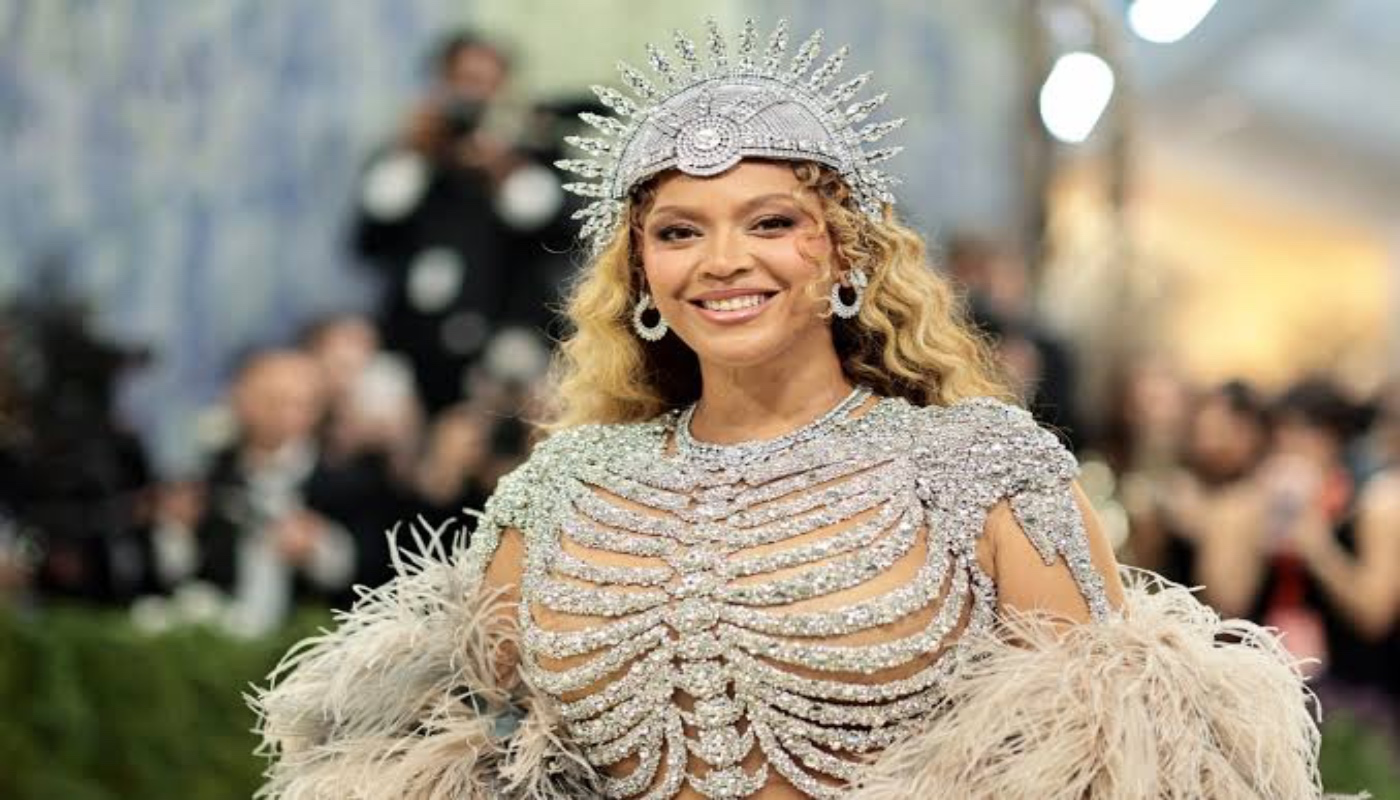
Every year, on the first Monday of May, the steps of the Metropolitan Museum of Art transform into one of the world’s most influential stages for fashion, celebrity culture, and visual self-expression. Designers construct extraordinary garments, celebrities interpret elaborate themes, and millions of people watch as familiar public figures present unfamiliar versions of themselves. Yet beneath the spectacle of dramatic gowns, sculptural silhouettes, extravagant accessories, and experimental beauty looks lies a more significant cultural conversation: who gets to define beauty, and how are those definitions changing?
The Met Gala has become considerably more than an exclusive fundraising event. It is a cultural institution through which society observes its changing relationship with appearance. Its red carpet documents shifting preferences in fashion, but it also reveals evolving attitudes towards gender expression, racial identity, individuality, physical presentation, and the relationship between the body and clothing.
Beauty has never been a permanent or universally agreed-upon concept. Different societies have celebrated different complexions, proportions, hairstyles, facial features, and forms of self-presentation. Even within a single culture, ideals can change dramatically across generations. What was once considered unconventional may eventually become fashionable, while previously celebrated standards can lose their cultural dominance.
The Met Gala offers a particularly interesting opportunity to observe these transformations because its annual themes encourage participants to reinterpret established visual conventions. Sometimes the emphasis is historical, sometimes artistic, and sometimes explicitly political. Through these interpretations, beauty becomes a subject of conversation rather than simply a standard to be followed.
From the celebration of camp aesthetics in 2019 to the exploration of Black dandyism in 2025, the event has increasingly demonstrated that appearance is inseparable from history, identity, and social power.
For a body-inclusivity perspective, this distinction matters. Expanding beauty narratives is not simply about introducing more colours, silhouettes, or unusual styling choices. It involves questioning the assumptions that determine whose bodies are celebrated, whose identities are represented, and whose expressions are considered worthy of cultural attention.
The Met Gala does not single-handedly redefine beauty. However, its influence makes it an important reflection of the cultural forces attempting to do so.
The Met Gala as a Cultural Record of Changing Beauty Ideals
Established in 1948 by fashion publicist Eleanor Lambert, the Costume Institute Benefit originally served as a fundraising event for the newly established Museum of Costume Art. Over time, it developed into an internationally recognised gathering connecting fashion, entertainment, art, and influential public figures.
Today, the event raises essential funding for the Metropolitan Museum of Art’s Costume Institute, supporting its exhibitions, acquisitions, publications, and operations. Its annual theme corresponds with the institute’s spring exhibition, giving the evening an intellectual and artistic framework beyond celebrity appearances.
The Costume Institute’s historical exhibitions demonstrate how extensively clothing has participated in constructing ideas about physical attractiveness.
Its 2001 exhibition, Extreme Beauty: The Body Transformed, examined how fashion has historically altered the appearance of the human body. Corsetry, padding, footwear, and other techniques illustrated how societies have attempted to modify proportions according to changing aesthetic preferences.
This historical perspective challenges the assumption that contemporary beauty standards are entirely new. The desire to reshape, decorate, conceal, exaggerate, or emphasise particular physical features has existed across centuries.
Fashion has repeatedly reflected the ideals of its surrounding culture. Different periods have celebrated different silhouettes, and clothing has frequently been used to communicate wealth, status, femininity, masculinity, and social belonging.
The Met Gala brings this historical relationship into contemporary popular culture.
When celebrities interpret an exhibition through their clothing and beauty choices, they participate in a continuing conversation about how the body is represented. A corseted silhouette, an exaggerated shoulder, an unconventional hairstyle, or a gender-fluid ensemble can communicate ideas that extend beyond appearance.
The red carpet consequently becomes a visual archive of changing cultural priorities.
However, its significance also lies in its contradictions. While the event celebrates experimentation, it remains connected to a luxury fashion industry that has historically promoted restrictive standards of physical attractiveness. This tension makes the Met Gala an especially revealing subject for examining the difference between celebrating diversity and genuinely expanding representation.
From Conventional Glamour to Individual Expression
For much of modern fashion history, mainstream celebrity glamour relied on recognisable visual formulas.
Women were frequently expected to appear polished, conventionally feminine, and impeccably styled. Men were generally encouraged to maintain a narrower range of formal presentation, with traditional tailoring dominating prestigious occasions.
Although fashion has always contained experimental movements, mainstream red-carpet culture often rewarded conformity to established expectations.
The Met Gala gradually created opportunities to challenge those conventions.
Its thematic structure encourages participants to interpret fashion through artistic references rather than simply selecting expensive eveningwear. This distinction gives celebrities and designers greater freedom to experiment with proportion, texture, makeup, hairstyles, and unconventional representations of the body.
The 2019 theme, Camp: Notes on Fashion, was particularly important in this regard.
Inspired by Susan Sontag’s 1964 essay, the exhibition explored exaggeration, theatricality, artificiality, humour, and deliberate excess. Instead of presenting beauty as restrained perfection, camp celebrated the expressive possibilities of extravagance.
The evening encouraged visual interpretations that were intentionally dramatic and sometimes absurd.
Billy Porter’s appearance, featuring an elaborate golden ensemble and a dramatic entrance carried by attendants, became one of the evening’s most memorable examples. His presentation challenged conventional expectations surrounding masculinity, formalwear, and celebrity red-carpet behaviour.
Similarly, Ezra Miller’s elaborate makeup and multiple-eye visual illusion questioned the relationship between facial appearance and conventional glamour.
These appearances demonstrated that beauty does not always depend on symmetry, subtlety, or familiar styling conventions. It can also emerge through performance, theatricality, and the deliberate disruption of expectations.
From a body-inclusivity perspective, this represents an important cultural development.
When public figures experiment with appearance, they help expand the range of visual expressions that audiences encounter. Beauty becomes something that can be interpreted and constructed rather than something that must be achieved through compliance with a predetermined formula.
Nevertheless, experimental fashion should not automatically be confused with comprehensive inclusivity. A dramatic outfit may challenge conventional aesthetics without necessarily improving the representation of people who have historically been excluded from fashion spaces.
The distinction between artistic experimentation and structural inclusion remains essential.
Race, Representation, and the Expanding Definition of Beauty
One of the most significant developments in contemporary beauty conversations concerns the increasing visibility of racial and cultural diversity.
For decades, influential fashion institutions were criticised for centring narrow European beauty ideals. Although fashion has always drawn inspiration from different regions, the people most frequently presented as its leading visual representatives did not consistently reflect that global diversity.
The Met Gala provides an interesting platform for examining this imbalance because its themes have increasingly engaged with cultural identity and historical representation.
The 2015 exhibition, China: Through the Looking Glass, explored the relationship between Chinese aesthetics and Western fashion. It examined how Chinese culture had influenced fashion designers and how Western interpretations had transformed those references.
The exhibition created an opportunity to consider the relationship between cultural inspiration, historical representation, and the international circulation of beauty ideals.
However, it also raised important questions about cultural appropriation and the unequal relationship between cultural influence and cultural recognition.
When fashion borrows visual elements from another society, the result can be artistic appreciation, but it can also become problematic when the original cultural context is overlooked or reduced to decorative inspiration.
This distinction matters because cultural inclusion requires more than displaying recognisable symbols. It requires acknowledging the communities, histories, and creative traditions behind them.
The 2025 exhibition, Superfine: Tailoring Black Style, offered a particularly significant development.
Inspired by Monica L. Miller’s scholarship on Black dandyism, the exhibition examined how Black people have used clothing and personal presentation to construct identities, negotiate social expectations, and express political possibilities.
The exhibition explored themes including heritage, freedom, distinction, beauty, respectability, and cosmopolitanism.
Its significance extended beyond tailoring. It positioned Black fashion expression within a broader history of cultural creativity and resistance.
The accompanying 2025 Met Gala demonstrated how fashion can celebrate identities that have historically been marginalised or misunderstood.
The event’s emphasis on Black dandyism challenged the idea that conventional European formalwear represents the universal standard of sophistication.
Instead, it highlighted the historical importance of Black creative expression in shaping global fashion.
This was particularly meaningful because Black beauty has often been discussed through the lens of exclusion, rather than through its contributions to the wider cultural landscape.
By placing Black style at the centre of a major fashion exhibition, the Costume Institute created space for a more historically grounded understanding of beauty.
However, representation must continue beyond individual celebrations. Cultural recognition becomes more meaningful when designers, historians, stylists, models, and creative professionals from underrepresented communities receive sustained opportunities to shape the industry.
The Influence of Black Beauty and Hair Representation
Hair has always played an important role in the cultural construction of beauty.
For many communities, particularly within the African diaspora, hairstyles communicate heritage, individuality, social identity, and personal expression.
Yet natural Black hairstyles have historically faced discrimination in educational institutions, workplaces, and mainstream professional environments.
The broader fashion industry’s increasing engagement with Black aesthetics has helped bring these conversations into more visible cultural spaces.
The Met Gala’s celebration of Black dandyism in 2025 created an opportunity to examine how grooming, tailoring, accessories, and presentation contribute to identity.
Hair representation is especially relevant because beauty standards have frequently treated certain textures as more professionally acceptable or aesthetically desirable than others.
The celebration of natural textures, protective hairstyles, intricate braiding, and culturally significant grooming practices challenges the idea that beauty must conform to a single standard of manageability or polish.
Importantly, representation should not become another expectation placed upon individuals.
A person should be free to wear natural hair, straighten it, braid it, cover it, or experiment with different styles without having their choices interpreted as a measure of cultural authenticity.
True inclusion allows individuality within cultural identity.
The broader significance of the Met Gala’s evolving engagement with Black fashion lies in its potential to recognise historically overlooked forms of creative expression as central to fashion history rather than peripheral influences.
Gender Expression and the Transformation of Red-Carpet Beauty
Beauty narratives have traditionally been organised around strict gender expectations.
Women have frequently been associated with softness, decoration, elegance, and carefully constructed femininity. Men have often been expected to demonstrate strength, restraint, and conventional masculinity.
These expectations influence clothing, grooming, cosmetics, and the ways individuals are encouraged to present themselves publicly.
Contemporary fashion has increasingly questioned the assumption that appearance must follow rigid gender boundaries.
The Met Gala has provided a prominent platform for this discussion.
The 2019 camp theme encouraged participants to explore theatrical masculinity, exaggerated femininity, and deliberately ambiguous presentations.
Billy Porter became an important example of how formalwear can challenge conventional ideas about who is permitted to wear particular silhouettes and styles.
His appearance demonstrated that clothing does not need to reinforce established gender expectations to communicate elegance or authority.
The 2025 celebration of Black dandyism further developed this conversation.
Dandyism has a complicated history involving class, race, masculinity, and self-presentation. Within Black cultural history, it has also functioned as a means of negotiating social hierarchies and reclaiming personal agency.
The 2025 event highlighted the relationship between tailoring and identity, illustrating how clothing can challenge assumptions about masculinity without abandoning sophistication.
These developments are important because gender inclusivity does not require eliminating femininity or masculinity.
Instead, it involves allowing individuals to engage with these expressions in ways that reflect their own identities.
A woman should not have to reject conventional femininity to be considered progressive. Likewise, a man should not have to demonstrate traditional masculinity to be considered sophisticated.
The expansion of beauty narratives makes room for both familiar and unconventional expressions.
For younger audiences encountering these images online, such visibility can provide reassurance that personal presentation does not need to follow a single socially approved template.
The Body as Art Rather Than an Object of Correction
Perhaps one of the most important questions raised by the Met Gala concerns the relationship between clothing and the physical body.
Fashion has historically treated the body as something that can be modified to achieve a particular silhouette.
Corsets, structured garments, padding, shaping underwear, and carefully engineered tailoring demonstrate how clothing can alter visual proportions.
These techniques are not inherently problematic. Fashion is an artistic discipline, and transforming silhouettes is one of its defining characteristics.
The difficulty emerges when a particular silhouette becomes a social requirement rather than an artistic choice.
Historically, people have been encouraged to modify their appearance according to prevailing ideals. These expectations have influenced how individuals perceive their proportions, clothing sizes, posture, and physical attractiveness.
The Met Gala’s theatrical approach offers an alternative perspective.
A garment can exaggerate the shoulders, transform the waistline, create unusual proportions, or conceal the natural outline of the body.
Rather than treating the body as a fixed template that clothing must flatter, experimental fashion can use the relationship between fabric and physical form as an artistic opportunity.
This idea connects particularly well with the Costume Institute’s 2026 exhibition, Costume Art.
The exhibition places the dressed body at the centre of an exploration of fashion and art, bringing garments into conversation with objects from other areas of the museum.
Its approach encourages visitors to consider how the body is represented, interpreted, and experienced through clothing.
This is an important conceptual shift.
Traditional fashion advice frequently revolves around questions such as what flatters a particular figure or what creates the most desirable proportions.
An artistic approach introduces different questions.
What does the garment communicate? How does it transform movement? What emotions does its shape evoke? What historical or cultural references does it contain?
These questions allow clothing to become an expressive medium rather than simply a tool for improving physical appearance.
For body inclusivity, this distinction can be liberating.
Not every outfit needs to make someone look slimmer, taller, smaller, or more conventionally proportioned. Clothing can simply express personality, creativity, and identity.
The Psychological Influence of Celebrity Beauty Narratives
The Met Gala’s cultural influence extends far beyond the people attending the event.
Its images circulate through television coverage, fashion magazines, online publications, and social media platforms.
Audiences encounter these images in highly edited environments where celebrities are frequently presented through professional photography, specialised lighting, luxury styling, and carefully coordinated beauty teams.
This creates an interesting psychological dynamic.
Celebrity fashion can inspire creativity and self-expression, but it can also intensify appearance-based comparisons.
Social comparison theory, associated with psychologist Leon Festinger, explains how individuals evaluate themselves partly through comparisons with others.
When people repeatedly encounter idealised images of celebrities, they may begin comparing their own appearances with carefully constructed public presentations.
These comparisons can influence confidence, body satisfaction, and perceptions of attractiveness.
The problem is not necessarily celebrity fashion itself. It is the tendency to interpret highly produced images as ordinary or universally achievable representations of beauty.
The Met Gala provides an opportunity to question this assumption.
A celebrity’s red-carpet appearance is a collaborative artistic production involving designers, stylists, makeup artists, hairstylists, photographers, and fashion houses.
It is not a neutral representation of everyday appearance.
Understanding this creative process can help audiences appreciate fashion without treating celebrity presentation as a personal standard they must reproduce.
There is also a positive psychological dimension.
Seeing individuals challenge established beauty conventions can help broaden perceptions of what is socially acceptable.
When audiences encounter different forms of gender expression, cultural aesthetics, hairstyles, and artistic silhouettes, they are exposed to a wider vocabulary of appearance.
This exposure can encourage curiosity and reduce the assumption that unfamiliar presentations are inherently unattractive or inappropriate.
However, representation alone cannot resolve every psychological consequence of appearance-based culture.
Audiences also need media literacy, supportive social environments, and a broader understanding of self-worth that does not depend entirely on physical presentation.
Social Media Has Changed Who Participates in the Beauty Conversation
The Met Gala was once primarily experienced through traditional media.
Fashion publications selected photographs, television programmes presented highlights, and celebrity coverage was largely controlled by established entertainment outlets.
Social media has fundamentally changed this relationship.
Today, audiences can examine individual looks, debate their interpretations, create comparisons, discuss designers, and question the cultural implications of particular fashion choices.
Instagram, TikTok, and other digital platforms have transformed the event into a participatory cultural conversation.
This change has expanded the range of voices contributing to beauty discussions.
Fashion historians, independent creators, makeup enthusiasts, body-positive advocates, and ordinary viewers can all interpret the same appearance from different perspectives.
For example, a particular garment may be praised for its craftsmanship by fashion commentators, interpreted through cultural identity by historians, and discussed in relation to body representation by inclusivity advocates.
These overlapping conversations demonstrate that fashion does not have a single meaning.
However, social media also introduces new challenges.
The constant circulation of celebrity photographs can encourage excessive scrutiny of appearance. People may become more interested in ranking bodies, faces, outfits, and perceived attractiveness than understanding the artistic ideas behind them.
Online commentary can also reproduce the same beauty hierarchies that fashion institutions are attempting to challenge.
A red carpet can celebrate individuality while its digital audience simultaneously judges participants against conventional expectations.
This contradiction highlights an important reality: changing beauty culture requires more than changing the images being produced. It also requires changing the ways people interpret and discuss those images.
The language surrounding fashion matters.
Discussing an outfit’s construction, historical references, cultural significance, and artistic execution creates a richer conversation than reducing its success to whether someone looks attractive or conforms to a particular physical ideal.
Global Beauty Perspectives Beyond Western Fashion
Although the Met Gala takes place in New York, its influence reaches audiences across continents.
Its international visibility makes it an important platform for considering how Western fashion institutions interact with global beauty traditions.
Beauty ideals differ significantly across cultures.
In some societies, particular hairstyles communicate family heritage or religious identity. In others, clothing traditions express regional belonging, social status, or historical continuity.
Different communities also have distinct relationships with modesty, adornment, complexion, body proportions, and gender presentation.
These differences challenge the assumption that beauty can be defined through a single international standard.
The 2015 China: Through the Looking Glass exhibition was one example of the Costume Institute examining the relationship between Western fashion and a non-Western cultural tradition.
Its importance lay partly in recognising the influence of Chinese visual culture on fashion history.
Nevertheless, exhibitions involving cultural interpretation must remain attentive to the difference between appreciation and appropriation.
Cultural symbols do not exist independently of the people and histories that give them meaning.
The same consideration applies to South Asian, Middle Eastern, African, Indigenous, and other cultural traditions.
For instance, South Asian beauty traditions encompass a wide range of regional clothing, jewellery, textiles, hairstyles, and forms of personal adornment.
Sarees, lehengas, traditional embroidery, elaborate jewellery, and distinctive draping techniques represent centuries of artistic development rather than simply decorative trends.
Similarly, Middle Eastern fashion encompasses diverse approaches to modest dressing, luxury textiles, jewellery, and contemporary design.
African fashion traditions cannot be reduced to a single aesthetic because the continent contains an extraordinary range of cultural identities, textile histories, and creative practices.
When global fashion institutions engage with these traditions, meaningful representation requires context and recognition.
It also requires recognising designers and creative professionals from the cultures being represented.
The future of beauty inclusivity depends partly on whether global fashion institutions move beyond borrowing visual references and create sustained opportunities for different cultural perspectives to shape the conversation.
Modesty, Visibility, and the Freedom to Choose
An often-overlooked dimension of beauty inclusivity concerns the relationship between modesty and personal freedom.
Fashion conversations sometimes assume that liberation must involve revealing clothing, unconventional silhouettes, or openly challenging traditional expectations.
However, this perspective can unintentionally create another restrictive standard.
For many individuals, modest clothing is an expression of religious commitment, cultural identity, personal comfort, or aesthetic preference.
For others, revealing or experimental clothing represents confidence and creative freedom.
Neither choice should automatically be treated as more progressive than the other.
The larger principle is autonomy.
An inclusive understanding of beauty recognises that people should be able to decide how much of their bodies they wish to display without being subjected to assumptions about confidence, sophistication, or social values.
This perspective is particularly relevant to international audiences who encounter Western celebrity fashion through social media.
A person in Karachi, Dubai, London, or Kuala Lumpur may appreciate the creativity of a Met Gala ensemble without wanting to reproduce its styling or relationship with modesty.
Cultural participation does not require abandoning personal values.
The event’s broader influence can therefore be understood through the opportunities it creates for audiences to engage with unfamiliar aesthetics while retaining their own cultural identities.
True inclusivity expands choice rather than replacing one set of expectations with another.
Age, Identity, and the Limitations of Youth-Centred Beauty
Another important dimension of changing beauty narratives is the relationship between age and visibility.
Mainstream fashion and entertainment industries have frequently privileged youth, particularly when representing women.
Youthfulness is often associated with freshness, desirability, and commercial appeal, while ageing can be presented as something that must be concealed or resisted.
These assumptions influence the beauty market, advertising, celebrity coverage, and the opportunities available to people at different stages of life.
The Met Gala provides a setting where established fashion figures, younger entertainers, artists, business leaders, and cultural personalities appear within the same visual environment.
This diversity of professional generations offers an opportunity to recognise that style and creative influence are not exclusively connected to age.
Personal presentation can evolve throughout life.
Some people become more experimental as they grow older, while others develop a preference for understated clothing and familiar silhouettes.
Neither trajectory should be considered more valuable.
An inclusive beauty culture must also resist the tendency to turn ageing into a public performance in which individuals are expected to demonstrate that they have successfully avoided visible signs of time.
The more useful question is whether people can continue participating in fashion and cultural life without having their relevance determined by their age.
The Met Gala’s emphasis on artistic interpretation provides a framework for moving towards that understanding, although the wider fashion industry’s youth-centred commercial structures remain influential.
Fashion Diversity Versus Structural Inclusivity
One of the most important distinctions in contemporary beauty discussions is the difference between visibility and structural change.
A fashion event can showcase an impressive variety of aesthetics without necessarily transforming the systems that determine access to the industry.
For example, a red carpet may include different cultural identities, gender expressions, and unconventional designs.
However, meaningful inclusivity also depends on who receives invitations, who designs the clothing, who controls creative decisions, who receives media attention, and who has access to influential fashion institutions.
The 2025 Met Gala offered an interesting case study.
According to Vogue’s analysis of identified looks, Black designers created 42.4 percent of the looks examined, while white designers accounted for 50.6 percent. Asian designers represented 5.7 percent and Latino designers 1.3 percent.
The figures demonstrated the significant visibility of Black creative leadership during an exhibition specifically celebrating Black dandyism.
However, they also highlighted the unequal distribution of representation among other creative communities.
Similarly, the analysis showed that men designed more than 73 percent of the identified looks, demonstrating that increased attention to one form of representation does not automatically produce equality across every dimension.
These figures are important because they move the conversation beyond individual celebrity appearances.
They encourage audiences to consider the creative structures behind the event.
Who is designing the clothes? Who is shaping the exhibition? Whose historical contributions are being recognised? Which creative communities remain underrepresented?
The answers reveal whether diversity is becoming embedded within fashion institutions or appearing primarily during selected cultural celebrations.
Inclusivity becomes more meaningful when it is sustained through professional opportunities, institutional recognition, and access to decision-making positions.
The Commercialisation of Inclusivity
The growing popularity of inclusive beauty narratives has also created commercial opportunities.
Fashion houses, cosmetics companies, and luxury brands increasingly recognise the importance of communicating diversity.
Representation has become an influential element of brand identity, particularly among younger consumers who expect companies to demonstrate cultural awareness.
The Met Gala’s international visibility makes it an attractive environment for luxury marketing.
Designers gain exposure, fashion houses associate themselves with cultural conversations, and celebrities become representatives of particular creative visions.
This relationship is not necessarily negative.
Commercial partnerships can finance ambitious artistic projects and provide opportunities for designers who might otherwise struggle to reach international audiences.
However, there is a risk when inclusivity becomes primarily a marketing strategy.
A brand may celebrate diversity in a campaign while maintaining restrictive casting practices elsewhere.
It may feature an unconventional beauty aesthetic without changing its broader approach to representation.
It may publicly recognise a cultural tradition without meaningfully supporting the communities responsible for its development.
This is where audiences need to distinguish between symbolic visibility and long-term commitment.
The commercialisation of inclusivity does not invalidate every positive development. It simply means that representation should be evaluated through consistent practices rather than promotional language.
The Met Gala’s influence is therefore partly determined by whether the conversations it generates continue after the red carpet has disappeared.
Why the Met Gala’s Contradictions Matter
It would be inaccurate to present the Met Gala as an entirely inclusive institution or as an event that simply reinforces traditional beauty standards.
Its cultural significance emerges partly from the tension between these positions.
It celebrates artistic freedom while operating within a highly exclusive luxury environment.
It showcases unconventional fashion while remaining connected to an industry with a history of restrictive physical ideals.
It encourages cultural interpretation while raising questions about who has the authority to represent particular traditions.
These contradictions should not be ignored because they provide an opportunity for meaningful criticism.
Cultural progress rarely occurs through a perfectly consistent process.
Institutions can create valuable opportunities for representation while continuing to reflect broader social inequalities.
Recognising this complexity makes it possible to appreciate artistic achievements without treating them as proof that structural problems have disappeared.
The most productive approach is to examine both what has changed and what remains unresolved.
The Met Gala can help expand the public imagination, but it cannot independently eliminate discrimination, transform fashion employment practices, or resolve the psychological consequences of appearance-based social expectations.
Those responsibilities extend across the fashion industry, entertainment media, educational institutions, and wider society.
The Future of Beauty: From Being Seen to Being Respected
As beauty conversations continue evolving, the next stage of inclusivity should involve moving beyond the simple question of visibility.
Being represented matters, but representation is only the beginning.
Individuals and communities should also have the opportunity to shape the narratives through which their appearances and identities are understood.
This means recognising that diversity includes more than race or gender.
It also encompasses age, disability, body proportions, cultural background, skin conditions, personal presentation, and different relationships with fashion.
A genuinely inclusive fashion culture should allow people to participate without requiring them to become exceptional examples of their communities.
It should also avoid placing the burden of educating audiences entirely on individuals who already experience marginalisation.
The Met Gala’s future cultural relevance will depend partly on how effectively its exhibitions and creative collaborations engage with these broader questions.
Its 2026 Costume Art exhibition offers an interesting direction by considering the dressed body through connections between fashion and other artistic disciplines.
Meanwhile, the announced 2027 exhibition, extraORDINARY: Fashion and the Poetics of the Everyday, is expected to examine how familiar garments and everyday materials can become extraordinary through design.
Together, these directions suggest an expanding understanding of fashion as an artistic experience rather than simply a display of luxury or conventional glamour.
They also create opportunities to reconsider the relationship between everyday identity and extraordinary presentation.
Beauty does not exist exclusively on a red carpet.
It is present in ordinary clothing choices, cultural traditions, personal grooming, and the ways individuals express themselves through their appearance.
The more fashion institutions recognise this broader reality, the more meaningful their contribution to inclusivity can become.
Conclusion: Redefining Beauty Beyond the Red Carpet
The Met Gala reflects shifting beauty narratives because it brings together fashion, art, celebrity, history, and cultural identity in a highly visible setting.
Its evolution demonstrates that beauty is not a fixed standard inherited unchanged from one generation to another. It is continually shaped by social expectations, creative movements, historical recognition, and changing attitudes towards identity.
From the theatrical experimentation of Camp: Notes on Fashion to the cultural significance of Superfine: Tailoring Black Style, the event has provided opportunities to question established ideas about appearance, masculinity, femininity, race, and self-expression.
Its influence also reveals the limitations of representation.
A diverse red carpet does not automatically produce an inclusive fashion industry. Artistic experimentation does not eliminate restrictive beauty expectations, and commercial recognition does not necessarily guarantee long-term cultural change.
Nevertheless, the Met Gala remains a valuable platform for examining how societies negotiate the meaning of beauty.
Perhaps its most important contribution is not that it tells audiences what to consider fashionable or attractive. Rather, it creates opportunities to question why certain appearances have traditionally received greater recognition than others.
For body inclusivity, this distinction is essential.
The future should not depend on replacing one narrow ideal with another, nor should it require everyone to celebrate the same aesthetic. It should involve creating an environment in which people can experience beauty without being forced into a predetermined physical, cultural, or gender-based category.
A body does not need to become a fashion statement to deserve respect. A person does not need to wear an extraordinary outfit to possess individuality. And beauty does not become meaningful only when recognised by influential institutions.
The red carpet may provide a spectacular reflection of cultural change, but the most meaningful transformation happens beyond it.
It happens when people become less afraid of expressing themselves, when different identities receive recognition without being reduced to stereotypes, and when appearance becomes a form of personal expression rather than a measure of human worth.
Ultimately, the Met Gala’s evolving beauty narratives remind us that fashion is most powerful when it expands possibilities rather than prescribing perfection.
And perhaps that is the most important definition of beauty worth carrying into the future: not the ability to fit an ideal, but the freedom to exist beyond one.
Sources: The Metropolitan Museum of Art, Vogue, The Museum at FIT, University of Surrey, Proceedings of the National Academy of Sciences