 by
Introduction: When the Beauty Standards of the 1990s Become Fashion’s New Obsession
Fashion has an extraordinary relationship with nostalgia. Every generation eventually looks backward for inspiration, rediscovering silhouettes, hairstyles, makeup techniques, and cultural icons that once defined an earlier period. Yet some fashion revivals carry implications that extend far beyond clothing. The renewed fascination with 1990s supermodel aesthetics is one such example.
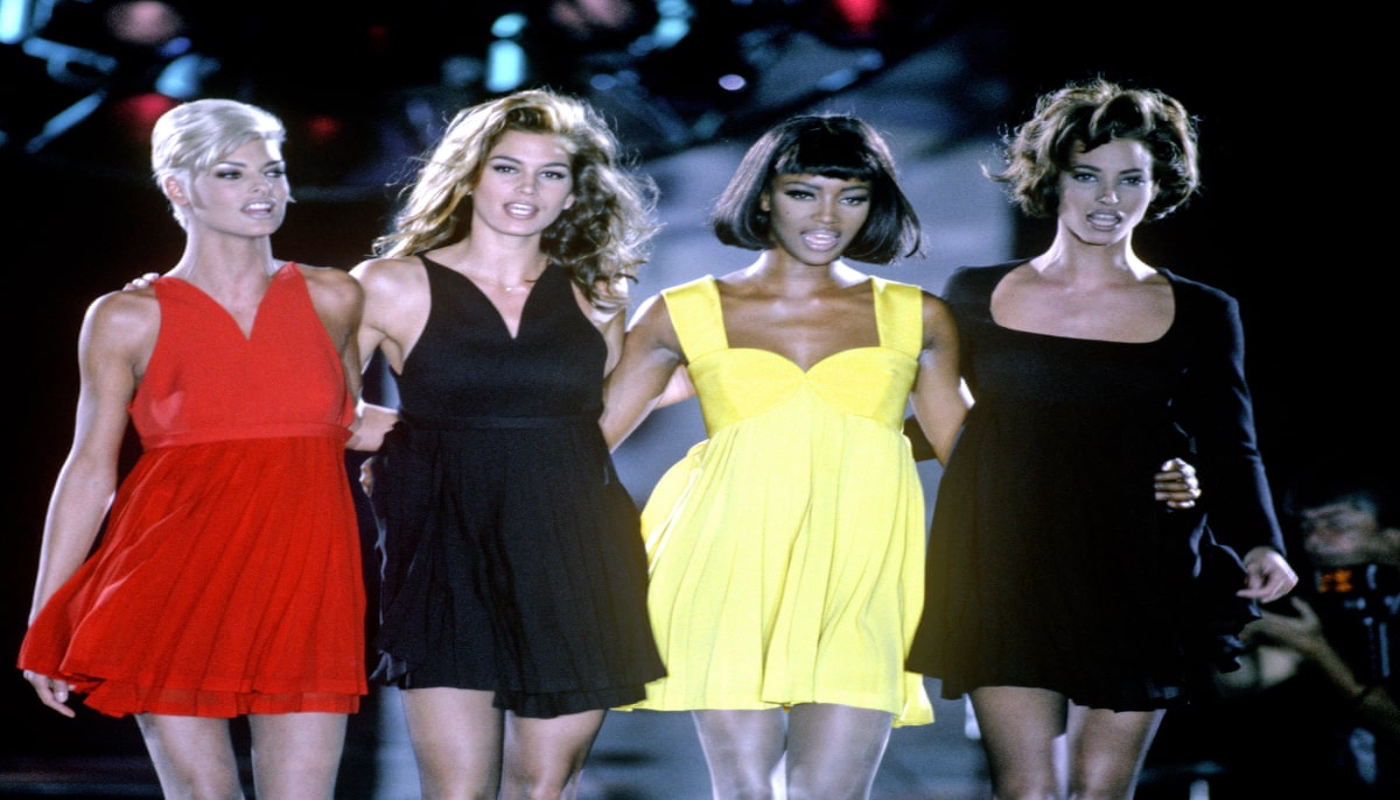
From the effortless glamour of Cindy Crawford and Christy Turlington to the commanding runway presence of Naomi Campbell and Linda Evangelista, the 1990s established an influential image of feminine beauty that continues to shape contemporary fashion. These women were not simply models displaying designer clothing. They became international celebrities, advertising personalities, cultural references, and symbols of an era when the fashion industry could transform a handful of faces into globally recognizable figures.
Today, that aesthetic is experiencing another moment of cultural prominence. Vintage-inspired editorial photography, minimalist designer wardrobes, voluminous hairstyles, defined brows, neutral makeup, leather jackets, tailored trousers, and polished eveningwear have returned to fashion conversations. Established supermodels are appearing in contemporary campaigns, while younger celebrities and social media personalities reinterpret the visual language of the decade.
However, the revival raises an important question: What happens when an era associated with extraordinary fashion influence also brings back some of its restrictive beauty expectations?
The 1990s were not defined by a single body type or aesthetic. The decade included athletic glamour, minimalist elegance, grunge-inspired fashion, experimental styling, and different interpretations of femininity. Nevertheless, its most commercially celebrated supermodel imagery frequently emphasized narrow physical ideals, particularly thinness, height, symmetry, and conventionally attractive facial features.
Consequently, the return of this aesthetic presents both opportunities and challenges. It can celebrate professional longevity, recognize the achievements of influential women, and encourage a renewed appreciation for individual style. At the same time, it can strengthen appearance-based comparisons if audiences interpret nostalgic fashion imagery as a new standard that everyone should reproduce.
Understanding this revival requires examining not only what people are wearing but also the cultural expectations that accompany the images.
Understanding the Original Supermodel Phenomenon
Before examining its contemporary revival, it is important to understand what made the 1990s supermodel era culturally distinctive.
During earlier decades, fashion models generally occupied a more specialized position within the entertainment and advertising industries. They were recognizable within fashion circles, but relatively few achieved the mainstream celebrity status that musicians, actors, and television personalities enjoyed.
The early 1990s changed that relationship.
Models including Naomi Campbell, Cindy Crawford, Christy Turlington, Linda Evangelista, and Tatjana Patitz became recognizable beyond fashion publications. Their personalities, professional relationships, advertising campaigns, and runway appearances helped transform modelling into a form of celebrity culture.
The cultural significance of this development was particularly visible in George Michael’s 1990 music video for Freedom! ’90. Featuring several prominent supermodels, the video brought fashion personalities into popular music culture and helped establish their collective image as an international phenomenon.
The models were no longer simply associated with individual designers. Their presence became a selling point in itself.
Fashion magazines, luxury advertisements, television appearances, and international campaigns strengthened this visibility. Their professional identities developed beyond the conventional expectation that models should remain anonymous.
This distinction matters because the contemporary revival is not simply about reproducing a particular hairstyle or outfit. It is also about recovering an era when models possessed substantial cultural influence.
The original supermodel phenomenon represented a transformation in the relationship between fashion, celebrity, commerce, and female visibility.
However, the commercial success of these models also contributed to the consolidation of particular beauty ideals. Their images became aspirational reference points, and the industry’s repeated use of similar physical characteristics helped establish a narrow understanding of what a successful fashion model was expected to look like.
The legacy is therefore complicated: the era expanded the cultural significance of models while simultaneously reinforcing restrictive standards of appearance.
Why Are 90s Supermodel Aesthetics Returning?
Fashion nostalgia rarely develops without cultural reasons. The renewed interest in 1990s aesthetics reflects several overlapping developments.
1. The Influence of Digital Nostalgia
Social media has changed how younger generations discover fashion history.
In previous decades, fashion trends were primarily circulated through magazines, television, runway presentations, and advertising campaigns. Contemporary audiences encounter historical fashion through Instagram, TikTok, Pinterest, YouTube, and digital fashion archives.
A photograph from a 1990s editorial can circulate internationally within minutes. A runway appearance from three decades ago can become the inspiration for thousands of contemporary styling videos.
This accessibility has transformed nostalgia into an active component of modern fashion consumption.
Younger audiences who did not experience the 1990s firsthand can nevertheless develop strong emotional connections with its imagery. They encounter the decade through carefully selected photographs, memorable advertising campaigns, celebrity appearances, and reconstructed outfits.
The result is a form of cultural nostalgia that does not necessarily depend on personal memories.
People are attracted to an imagined version of the past, often one that emphasizes glamour, confidence, individuality, and visual simplicity.
However, digital nostalgia also removes historical context. A photograph may circulate without information about the fashion industry’s working conditions, the limited range of accepted body types, or the commercial pressures surrounding modelling.
The aesthetic survives, but the circumstances that produced it can disappear from the conversation.
2. Fashion’s Search for Familiarity
The fashion industry frequently revisits successful historical references because recognizable aesthetics provide commercial opportunities.
Designers and creative directors can reinterpret established visual languages while presenting them to new audiences.
The 1990s offer particularly versatile inspiration. Minimalist tailoring, slip dresses, structured coats, simple denim, understated accessories, and streamlined silhouettes remain relevant because they can be adapted to different lifestyles.
In August 2025, Vogue examined fashion’s continued fascination with the 1990s, observing how nostalgia had become an increasingly persistent feature of contemporary fashion rather than an occasional seasonal reference.
This development demonstrates that the decade has evolved into a lasting design vocabulary.
Its appeal is not limited to reproducing historical outfits. Contemporary designers can borrow its proportions, textures, and attitudes while creating something visually relevant to the present.
3. The Return of Established Supermodels
Another significant factor is the renewed visibility of models whose careers helped define the original era.
In April 2024, Vogue documented the return of numerous established models to contemporary runways. The coverage highlighted the appearances of familiar fashion personalities and the significance of experienced models participating in new collections.
Similarly, Fashionista examined the resurgence of models from the 1990s and early 2000s, identifying the growing commercial and creative interest in established fashion figures.
The return of these women challenges the assumption that professional modelling must end when someone reaches a particular age.
Their continued participation also introduces a different kind of representation. Instead of presenting women as permanently associated with youth, fashion can acknowledge that professional relevance, beauty, and creativity can continue throughout adulthood.
This is one of the most encouraging aspects of the revival.
The Supermodels Who Continue to Shape Contemporary Beauty Culture
The renewed interest in 1990s fashion cannot be understood without considering the individual cultural contributions of the women who helped establish the era.
Naomi Campbell: Confidence, Professional Longevity, and Representation
Naomi Campbell occupies a particularly important position in fashion history.
Her career challenged established assumptions about who could occupy the most prominent positions within international modelling. As one of the most recognizable Black supermodels of her generation, she became an influential presence in luxury campaigns, runway presentations, and international fashion media.
Her professional legacy also highlights the importance of representation.
For decades, fashion industries across major international markets operated within restrictive racial and aesthetic expectations. Campbell’s visibility demonstrated the cultural and commercial significance of Black women within luxury fashion.
Her continued presence in contemporary fashion also challenges age-related assumptions about professional relevance.
The significance of her legacy should not be reduced to the continued popularity of her appearance. It reflects the importance of recognizing professional achievement, individual identity, and the women who helped change the industry’s cultural landscape.
The revival of 1990s supermodel aesthetics offers an opportunity to revisit these achievements rather than simply reproducing photographs from the past.
Cindy Crawford: The Commercial Power of Supermodel Celebrity
Cindy Crawford represents another important dimension of the original supermodel phenomenon.
Her modelling career helped establish the relationship between fashion visibility and mainstream commercial influence.
Through advertising campaigns, magazine appearances, and television exposure, Crawford became recognizable to audiences who might not otherwise have followed fashion.
Her public image demonstrated how a model could become a powerful commercial personality without losing her connection to the fashion industry.
The renewed interest in 1990s styling frequently draws upon this polished, accessible form of glamour.
Crawford’s legacy is particularly relevant because it illustrates the commercial possibilities of a recognizable personal aesthetic.
However, contemporary audiences should distinguish between appreciating her professional image and treating her appearance as a universal requirement for attractiveness.
Christy Turlington: Elegance Beyond a Single Fashion Era
Christy Turlington became associated with a sophisticated and understated form of modelling.
Her editorial and advertising work contributed to the decade’s visual language of minimalist elegance.
Her career also demonstrates how professional identity can extend beyond fashion modelling. Her humanitarian and maternal health advocacy work through Every Mother Counts has established another important dimension of her public profile.
This broader identity is relevant to contemporary discussions about women in fashion.
Models are individuals with professional interests, intellectual commitments, and contributions beyond their physical appearance.
A meaningful revival of the supermodel era should recognize these dimensions rather than reducing established models to nostalgic images.
Linda Evangelista: Reinvention and Fashion Identity
Linda Evangelista became particularly associated with the transformative possibilities of fashion.
Her willingness to experiment with hairstyles, styling, and editorial presentation helped establish the idea that a model could possess a recognizable identity while continually changing her appearance.
This ability to move between different visual identities remains relevant to contemporary fashion.
Today, social media often encourages individuals to establish highly recognizable personal aesthetics. However, the original supermodel era demonstrated that style could also involve experimentation and reinvention.
Evangelista’s career offers an important reminder that fashion identity does not have to remain fixed.
The Visual Language of 90s Supermodel Beauty
The renewed fascination with the decade is particularly visible in its beauty techniques and styling choices.
Several characteristics repeatedly appear in contemporary interpretations.
Minimalist Makeup and Defined Features
The 1990s popularized a recognizable approach to makeup that often emphasized defined facial features rather than elaborate decorative effects.
Brown and neutral lip colours, softly sculpted cheeks, understated eye makeup, and carefully shaped brows became important elements of the decade’s beauty vocabulary.
This aesthetic has returned through contemporary makeup collections, beauty tutorials, and celebrity styling.
Its popularity partly reflects the appeal of versatility. Neutral makeup can complement professional clothing, casual outfits, and eveningwear without requiring dramatic changes.
Nevertheless, the interpretation of minimalist makeup has become more complicated in the social media era.
Modern filters, editing applications, and high-definition photography can create unrealistic expectations about skin texture and facial symmetry.
A makeup style originally intended to appear relatively natural can become another highly controlled beauty standard when perfection is treated as its defining characteristic.
Voluminous Hair and Individual Styling
Hair was another important component of 1990s supermodel aesthetics.
Blowouts, layered hairstyles, movement, volume, and face-framing shapes contributed to the polished editorial appearance associated with the era.
Contemporary beauty culture has rediscovered these techniques through salon trends, online tutorials, and celebrity-inspired styling.
However, hair trends also reveal the importance of cultural context.
A particular hairstyle may look different depending on hair texture, density, curl pattern, and personal styling preferences.
When a nostalgic aesthetic is presented as universally achievable, it can overlook the diversity of natural hair.
A more inclusive interpretation allows people with straight, wavy, curly, and coily hair to participate without treating one texture as the preferred standard.
The Return of Understated Fashion
The 1990s were also influential because of their minimalist fashion philosophy.
Slip dresses, tailored trousers, leather jackets, simple white shirts, monochromatic outfits, and understated accessories created a recognizable wardrobe language.
This style has returned because it offers flexibility.
Instead of relying entirely on temporary decorative trends, minimalist fashion emphasizes proportion, fabric, fit, and styling.
Yet minimalist clothing can become restrictive when its visual appeal is connected to the idea that only certain body types can wear it successfully.
The return of slip dresses and fitted silhouettes should encourage broader access to fashion, not reinforce the assumption that particular garments belong exclusively to slender bodies.
Clothing is a form of expression, not a reward for meeting a specific physical standard.
The Body Image Implications of Reviving the 1990s
The most important cultural question surrounding the supermodel revival concerns body image.
Fashion does not operate independently of society. Its images influence how people interpret beauty, attractiveness, confidence, and physical identity.
When a particular body type repeatedly appears in aspirational imagery, audiences may gradually begin to associate that appearance with social approval and professional success.
The 1990s provide an important historical example.
Although the decade featured different types of models, its most prominent high-fashion imagery frequently celebrated extremely slender silhouettes.
This emphasis existed alongside broader cultural discussions about dieting, appearance, fitness, and the pressure to achieve an idealized feminine body.
A study examining fashion magazine covers between 1959 and 1999 found that models’ body sizes decreased significantly during the 1980s and 1990s.
The researchers also identified a growing emphasis on full-body representations, making physical appearance an increasingly visible component of fashion imagery.
These historical developments demonstrate why the contemporary revival deserves critical examination.
The Difference Between Fashion Inspiration and Body Comparison
There is nothing inherently harmful about appreciating the appearance of a supermodel or finding inspiration in a particular fashion era.
Problems emerge when admiration becomes comparison.
A person may initially appreciate the styling, confidence, and presentation of a 1990s editorial. However, repeated exposure to idealized images can encourage them to evaluate their own appearance against a narrow visual standard.
This process can affect people regardless of their age, clothing size, or previous relationship with their bodies.
The issue is not that individuals should stop enjoying fashion.
Rather, audiences should recognize that professional fashion imagery is constructed through multiple decisions involving casting, lighting, photography, makeup, clothing, editing, and commercial positioning.
An editorial photograph is not a neutral representation of everyday human appearance.
It is a carefully produced visual message.
Understanding this distinction can help audiences appreciate fashion without interpreting its images as instructions for changing their bodies.
The Psychological Effects of Appearance-Based Social Comparison
Psychological research has repeatedly examined the relationship between idealized appearance imagery and body satisfaction.
A 2023 study published in Body Image investigated the effects of viewing appearance-ideal images and short-form videos.
The researchers found that exposure to appearance-focused content was associated with reduced appearance satisfaction, more negative mood, and increased self-objectification compared with appearance-neutral material.
These findings are particularly relevant to the return of 1990s supermodel imagery.
Social media does not simply expose audiences to individual photographs. It can repeatedly present similar aesthetics through recommendations, hashtags, short videos, and influencer content.
When a user frequently engages with supermodel-inspired content, their digital environment may become increasingly dominated by a particular interpretation of beauty.
Over time, this can make an aesthetic appear more culturally universal than it actually is.
The psychological implications are especially important for adolescents and young adults, who may still be developing their understanding of identity, attractiveness, and self-worth.
The objective should not be to eliminate fashion inspiration but to encourage a healthier relationship with visual media.
When Thinness Becomes a Fashion Trend Again
One of the more complicated aspects of the revival is the relationship between 1990s nostalgia and contemporary body-size expectations.
It would be inaccurate to suggest that every person interested in supermodel aesthetics wants to reproduce the physical characteristics of models from that period.
Fashion preferences are diverse, and individuals may appreciate minimalist styling without endorsing narrow beauty standards.
Nevertheless, the industry cannot ignore the historical association between high-fashion prestige and slender body types.
A significant 2026 study published in the Proceedings of the National Academy of Sciences examined 793,199 records spanning 25 years of fashion advertising, magazine covers, runway shows, and editorial imagery.
The research identified a striking contradiction.
Although the range of represented appearances had increased, the median model physique remained largely unchanged.
The researchers also found that body-size diversity was disproportionately concentrated among models who were already underrepresented in other ways.
These findings complicate the industry’s public narrative about progress.
More diverse casting does not automatically mean that the dominant beauty ideal has changed.
The distinction is important when evaluating the return of the 1990s aesthetic.
Fashion can feature a wider range of ethnic backgrounds, hairstyles, and personal identities while continuing to privilege a narrow physical silhouette.
A genuine commitment to body inclusivity requires examining who receives the most prominent campaigns, runway opportunities, editorial coverage, and commercial visibility.
It is not enough to include different body types occasionally while maintaining the same dominant standard everywhere else.
The Role of Social Media in Reconstructing Supermodel Culture
The original supermodel phenomenon developed through relatively concentrated media channels.
A limited number of major fashion magazines, advertising campaigns, television programmes, and designers held considerable influence over what audiences encountered.
Contemporary fashion operates differently.
Social media has expanded access to fashion inspiration, but it has also created new mechanisms through which beauty expectations circulate.
TikTok and the Transformation of Fashion Nostalgia
TikTok has become an important platform for rediscovering historical fashion.
Creators produce videos reconstructing 1990s outfits, discussing vintage designer collections, comparing historical and contemporary beauty trends, and explaining how established models influenced fashion.
This content makes fashion history accessible to audiences who may never have purchased a traditional fashion magazine.
However, short-form content can also simplify complicated cultural histories.
A decade associated with several different fashion movements can become reduced to a few recognizable images.
The complexity of the original supermodel phenomenon may disappear when the entire period is presented through an idealized collection of glamorous photographs.
The platform’s emphasis on visual engagement can further intensify appearance-based comparisons.
A video celebrating a particular outfit may attract comments focused less on the styling and more on whether the creator has the physical characteristics associated with the original model.
This shifts attention away from fashion expression and toward body evaluation.
Instagram and the Commercialization of Nostalgia
Instagram has helped establish a visual culture in which historical aesthetics can be continuously reconstructed.
Brands, fashion creators, celebrities, and photographers regularly use nostalgic references to create recognizable visual identities.
The 1990s provide an especially useful commercial resource because the decade has a distinctive visual vocabulary.
However, the commercialization of nostalgia creates an important distinction between celebrating historical fashion and selling an idealized lifestyle.
A vintage-inspired campaign can present its clothing as timeless, sophisticated, and desirable.
At the same time, its casting and photography may reproduce restrictive beauty expectations.
Consumers should therefore examine the complete visual message rather than focusing exclusively on the garments.
Who is represented? Which bodies are given visibility? Are different ages included? Are people shown as individuals, or primarily as decorative elements?
These questions help establish whether a campaign genuinely expands representation.
A Global Perspective: Whose 90s Beauty Is Being Revived?
The return of supermodel aesthetics is not exclusively a Western cultural phenomenon.
Fashion trends travel internationally, but their interpretation changes according to local beauty traditions, cultural expectations, economic conditions, and media environments.
This makes the revival particularly interesting from a global body-inclusivity perspective.
South Asia: Imported Glamour and Local Beauty Expectations
In South Asia, international fashion imagery has long influenced advertising, celebrity styling, beauty products, and popular understandings of glamour.
The 1990s supermodel aesthetic has found contemporary relevance through minimalist makeup, defined hairstyles, fitted eveningwear, neutral clothing, and vintage-inspired editorial photography.
However, its reception exists within a different cultural environment.
In Pakistan, India, Bangladesh, and neighboring countries, beauty expectations have historically been shaped by multiple influences, including cinema, traditional clothing, family attitudes, colourism, commercial advertising, and international fashion.
The return of Western supermodel imagery therefore intersects with existing appearance pressures rather than replacing them.
For example, a contemporary South Asian beauty campaign may combine 1990s-inspired makeup with local clothing, jewellery, and traditional styling.
This can create an interesting cultural exchange.
Yet inclusivity requires more than borrowing Western fashion references. It also requires recognizing the diversity of South Asian bodies, complexions, hair textures, facial features, and personal identities.
There is no single South Asian interpretation of beauty.
The popularity of a particular international model should not diminish the cultural importance of regional fashion personalities or local expressions of glamour.
A more meaningful revival would allow South Asian audiences to reinterpret the decade through their own aesthetic traditions.
East Asia: Minimalism, Beauty Media, and Digital Influence
East Asian fashion markets provide another important perspective.
Countries including South Korea, Japan, and China have influential fashion and beauty industries with their own histories of aesthetic experimentation.
The minimalist visual language associated with the 1990s can intersect with contemporary preferences for refined styling, understated clothing, and carefully coordinated beauty looks.
However, these markets also demonstrate how beauty expectations can be reinforced through highly developed digital advertising environments.
Online beauty content frequently connects appearance, lifestyle, fashion consumption, and personal identity.
The circulation of idealized imagery can therefore influence how individuals evaluate their appearance.
A culturally sensitive understanding of the supermodel revival must acknowledge that body-image pressures are not exclusive to Western societies.
They can develop through different media systems and local beauty expectations.
At the same time, global audiences should avoid assuming that every East Asian consumer interprets Western fashion trends in the same way.
Local fashion cultures possess their own histories, creative priorities, and standards of visual expression.
Africa: Reconsidering the Historical Importance of Representation
The supermodel revival also provides an opportunity to revisit the contribution of African and African-diaspora models to international fashion.
Naomi Campbell’s influence is an important part of this history.
Her success challenged the limited visibility historically afforded to Black models in some of the industry’s most prestigious spaces.
However, representation should not be reduced to the presence of one internationally celebrated personality.
African fashion industries encompass diverse creative traditions, designers, photographers, models, and beauty cultures.
The global fashion industry can learn from these perspectives by recognizing that inclusivity requires sustained professional opportunities rather than occasional symbolic representation.
The contemporary revival should also acknowledge the influence of models such as Alek Wek, whose distinctive presence helped broaden international conversations about beauty and representation.
Her significance extends beyond nostalgic references. She represents the importance of expanding the visual vocabulary through which fashion communicates beauty.
Europe and North America: Nostalgia as a Commercial Language
In European and North American fashion markets, the return of 1990s aesthetics is particularly visible through luxury campaigns, vintage-inspired styling, designer collections, and celebrity wardrobes.
The popularity of minimalist fashion also reflects a wider interest in clothing that appears timeless rather than tied to rapidly changing trends.
However, these markets face an important contradiction.
They increasingly celebrate diversity in public-facing marketing while continuing to operate within commercial systems that may privilege relatively narrow body expectations.
This contradiction demonstrates why fashion nostalgia should be evaluated through actual representation rather than promotional language.
Age Inclusivity: A More Positive Legacy of the Supermodel Revival
Although discussions about the return of 1990s aesthetics often concentrate on body size, another important implication concerns age.
The original supermodel era was built around extraordinary professional visibility, but fashion modelling historically operated within expectations that frequently privileged youth.
The return of established models challenges this limitation.
When women who built successful careers decades ago continue appearing in fashion campaigns and runway presentations, they demonstrate that professional relevance does not have to disappear with age.
This is particularly meaningful in an industry where women have often been expected to remain visually youthful to maintain commercial value.
The contemporary visibility of established supermodels creates opportunities to reconsider how fashion represents adulthood.
It also offers a more realistic understanding of beauty.
People do not stop participating in fashion when they reach their forties, fifties, sixties, or beyond.
They continue buying clothing, experimenting with makeup, expressing personal style, and developing new creative identities.
Brands that recognize this reality can reach audiences who have historically received limited representation.
However, age inclusivity should not require older models to look younger than they are.
Its value lies precisely in recognizing different stages of life without treating visible aging as something that must be concealed.
The return of established supermodels is most progressive when it challenges the industry’s assumptions about age rather than simply reusing familiar faces for nostalgic marketing.
Fashion Campaigns and the Responsibility of the Industry
The fashion industry plays a significant role in determining which appearances receive visibility.
Designers, casting directors, photographers, advertisers, editors, and creative agencies all contribute to the construction of beauty standards.
Their decisions influence which individuals become associated with luxury, desirability, sophistication, and commercial success.
This creates an important responsibility during periods of aesthetic revival.
Casting Beyond Historical Replication
A campaign inspired by the 1990s does not need to reproduce the original casting practices.
It can retain the decade’s visual language while featuring models with different body sizes, ages, racial backgrounds, disabilities, and gender expressions.
Such an approach demonstrates that historical inspiration does not require historical limitations.
Fashion houses can celebrate the original supermodels while also creating opportunities for emerging talent.
This distinction is especially important because the commercial success of established personalities should not prevent new models from entering the industry.
A healthy fashion culture requires both professional continuity and creative renewal.
Inclusive Sizing and Accessibility
Body inclusivity must also extend beyond advertising.
A campaign may feature models from different body-size categories, but the actual clothing range must be accessible to the consumers represented.
When a brand promotes diversity without offering meaningful size availability, its message becomes incomplete.
The same principle applies to accessibility.
Fashion should consider how clothing accommodates different mobility requirements, body proportions, sensory preferences, and everyday needs.
The return of classic silhouettes can provide an opportunity to revisit garment construction and improve access to traditionally restrictive styles.
For example, designers can reinterpret fitted trousers, tailored dresses, and structured jackets through more flexible fabrics and broader size ranges.
The objective is to make fashion more accessible without sacrificing creativity.
The Influence on Younger Generations
The revival of 1990s supermodel aesthetics is particularly influential among younger audiences because it arrives in an environment where appearance is constantly documented and evaluated.
Unlike previous generations, young people can encounter beauty imagery throughout the day through smartphones and social media platforms.
They are not simply viewing fashion advertisements.
They are also exposed to influencers recreating editorial looks, celebrities discussing beauty products, creators presenting styling transformations, and strangers commenting on one another’s appearances.
This creates a complicated relationship between fashion inspiration and identity development.
The Pressure to Have a Signature Aesthetic
Contemporary digital culture frequently encourages individuals to establish a recognizable personal style.
Terms associated with particular fashion identities can become popular, encouraging users to organize their wardrobes, makeup, hairstyles, and even lifestyles around a single visual category.
The 1990s supermodel revival fits naturally into this environment.
A person may want the effortless wardrobe of a particular model, the makeup of a vintage editorial, and the hairstyle associated with an iconic advertising campaign.
There is nothing inherently wrong with developing a signature aesthetic.
The problem arises when personal expression becomes another performance requirement.
Individuals may begin to believe that their appearance must remain consistent, polished, and photographically attractive to receive social approval.
Fashion should provide creative possibilities rather than create another standard that people feel obligated to satisfy.
Learning to Appreciate Style Without Evaluating Bodies
Younger audiences can benefit from a different way of engaging with historical fashion.
Instead of concentrating on whether their bodies resemble those of famous models, they can examine the elements that make an outfit successful.
These include proportion, colour coordination, texture, tailoring, accessories, and personal styling choices.
This approach shifts the conversation from physical comparison to creative expression.
It also makes fashion more accessible.
A person does not need to resemble Cindy Crawford, Naomi Campbell, or Christy Turlington to appreciate the fashion history associated with their careers.
The most valuable lesson from the original supermodel era may be the importance of confidence and individuality rather than physical imitation.
The Commercial Contradiction: Selling Individuality Through a Standardized Ideal
One of the most interesting aspects of contemporary fashion is its ability to market individuality through highly recognizable aesthetic formulas.
Consumers are encouraged to express their identities, yet advertising often presents a limited range of appearances as the most desirable.
The 1990s supermodel revival highlights this contradiction.
Brands can promote confidence, timelessness, authenticity, and self-expression while relying on familiar beauty ideals to communicate luxury.
This is not necessarily evidence of deliberate exclusion in every individual campaign.
However, it demonstrates how commercial systems can reproduce familiar standards even when their public messaging emphasizes diversity.
The 2025 Vogue Business Spring/Summer Size Inclusivity Report raised concerns about the inconsistency of size representation across contemporary fashion.
Its reporting highlighted the continued prominence of very thin models and the uneven presence of curve and mid-size representation.
These developments suggest that the fashion industry’s progress toward body inclusivity remains vulnerable to changing commercial priorities.
When economic pressure increases, representation can become one of the areas where brands reduce investment.
The supermodel revival therefore presents an opportunity for fashion businesses to reconsider whether inclusion is a lasting commitment or simply a temporary marketing strategy.
Authentic representation requires consistency across seasons, collections, advertising, and retail experiences.
Can the 90s Supermodel Aesthetic Become More Inclusive?
The answer depends on how the fashion industry and its audiences interpret the revival.
There is no reason why the decade’s most influential styling techniques must remain connected to restrictive physical expectations.
The original aesthetic can be reconstructed through a more inclusive approach.
Redefining What Supermodel Beauty Represents
The term supermodel traditionally suggests more than physical attractiveness.
It also reflects professional influence, international recognition, commercial success, confidence, and the ability to shape fashion culture.
Expanding this definition creates space for a wider range of individuals.
Models with different body sizes, ages, physical abilities, ethnic backgrounds, and gender identities should be able to participate in fashion at every professional level.
Representation should not be limited to occasional campaigns designed to demonstrate that a brand supports diversity.
It should become a normal feature of fashion production.
Celebrating Different Body Types in the Same Aesthetic
A particularly meaningful development would be the presentation of 1990s-inspired clothing across a broad range of body types.
Tailored suits, slip dresses, leather jackets, denim, minimalist eveningwear, and neutral makeup can be styled in different ways for different individuals.
This demonstrates that a fashion aesthetic does not belong to one body category.
The clothing itself becomes the focus rather than the physical characteristics of the person wearing it.
Such an approach would challenge the assumption that fashion trends must be reproduced through a particular silhouette.
Recognizing the Difference Between Historical Appreciation and Historical Repetition
Fashion history deserves to be celebrated, but its achievements should not prevent critical examination of its limitations.
The 1990s produced extraordinary creative work, memorable models, influential designers, and important changes in celebrity culture.
It also existed within social and commercial structures that restricted who could participate and which appearances received the greatest recognition.
A mature revival can acknowledge both realities.
It can appreciate the women who transformed modelling while questioning the standards that shaped their professional environment.
It can celebrate minimalist styling without glorifying body dissatisfaction.
It can recognize established supermodels without making youth the requirement for beauty.
Most importantly, it can preserve fashion’s creative legacy while creating a more inclusive future.
What the Future of Supermodel Culture Could Look Like
The future of supermodel culture will likely depend on whether the industry can move beyond nostalgia and develop a broader understanding of representation.
Established models will continue to have cultural significance because their careers are connected to important moments in fashion history.
However, the next generation of influential models may emerge from a much wider range of professional and cultural backgrounds.
Digital platforms have already changed how models develop audiences and establish public identities.
An individual no longer needs to depend exclusively on traditional fashion magazines to become recognizable.
This creates opportunities for models who may previously have been overlooked by conventional casting systems.
At the same time, digital visibility should not become another restrictive measure of professional value.
Followers, engagement numbers, and viral popularity cannot replace fair employment opportunities, professional development, and meaningful representation.
The fashion industry must also reconsider how it communicates beauty.
Rather than presenting diversity as an occasional departure from the norm, brands can create campaigns that reflect the variety of people who participate in fashion.
The future of supermodel culture should not depend on finding a new version of the same historically celebrated appearance.
It should involve expanding the definition of who can become influential.
For audiences, this means approaching fashion nostalgia with curiosity rather than pressure.
A person can appreciate the elegance of a 1990s editorial without attempting to reproduce the body of the model featured in it.
They can adopt a vintage hairstyle, experiment with minimalist clothing, or explore historical makeup techniques while maintaining their own identity.
The revival becomes more meaningful when it encourages creativity instead of comparison.
Conclusion: Keeping the Glamour, Leaving the Limitations Behind
The return of 1990s supermodel aesthetics represents more than another fashion cycle.
It reflects the continuing cultural influence of an era that transformed models into international celebrities and established a visual language that remains recognizable decades later.
The renewed popularity of minimalist fashion, vintage-inspired beauty, established supermodels, and editorial glamour demonstrates that the decade continues to offer creative inspiration.
There are genuinely positive developments within this revival.
The continued visibility of established models challenges assumptions about aging and professional relevance. The recognition of influential Black models and other historically underrepresented personalities provides opportunities to revisit important moments in fashion history. The accessibility of digital archives allows younger audiences to discover the creativity and cultural significance of previous generations.
Nevertheless, the revival also requires critical attention.
The 1990s were associated with restrictive expectations surrounding women’s bodies, and contemporary fashion must avoid reproducing those limitations under the attractive language of nostalgia.
Research demonstrates that greater visual diversity does not automatically mean that dominant body ideals have changed. The continued influence of appearance-focused social media also makes it important to distinguish creative inspiration from harmful comparison.
Ultimately, fashion should not require people to transform themselves into historical images.
The most meaningful interpretation of the 1990s supermodel revival would preserve its confidence, creativity, individuality, and professional ambition while rejecting the idea that beauty belongs to a limited category of bodies.
The women who defined that era deserve recognition for their contributions, but their legacy should inspire new possibilities rather than establish another generation of expectations.
Fashion has the opportunity to move forward without abandoning its past.
It can retain the glamour of the supermodel era while making room for different bodies, ages, identities, cultures, and expressions of beauty.
Perhaps the greatest evolution would be a fashion industry in which the next generation does not have to resemble the supermodels of the 1990s to be celebrated.
They should be able to create their own era.
Sources: Vogue, Vogue Business, Fashionista, Proceedings of the National Academy of Sciences, PubMed, International Journal of Communication, History.com