 by
by The Body That Refused to Stay Invisible
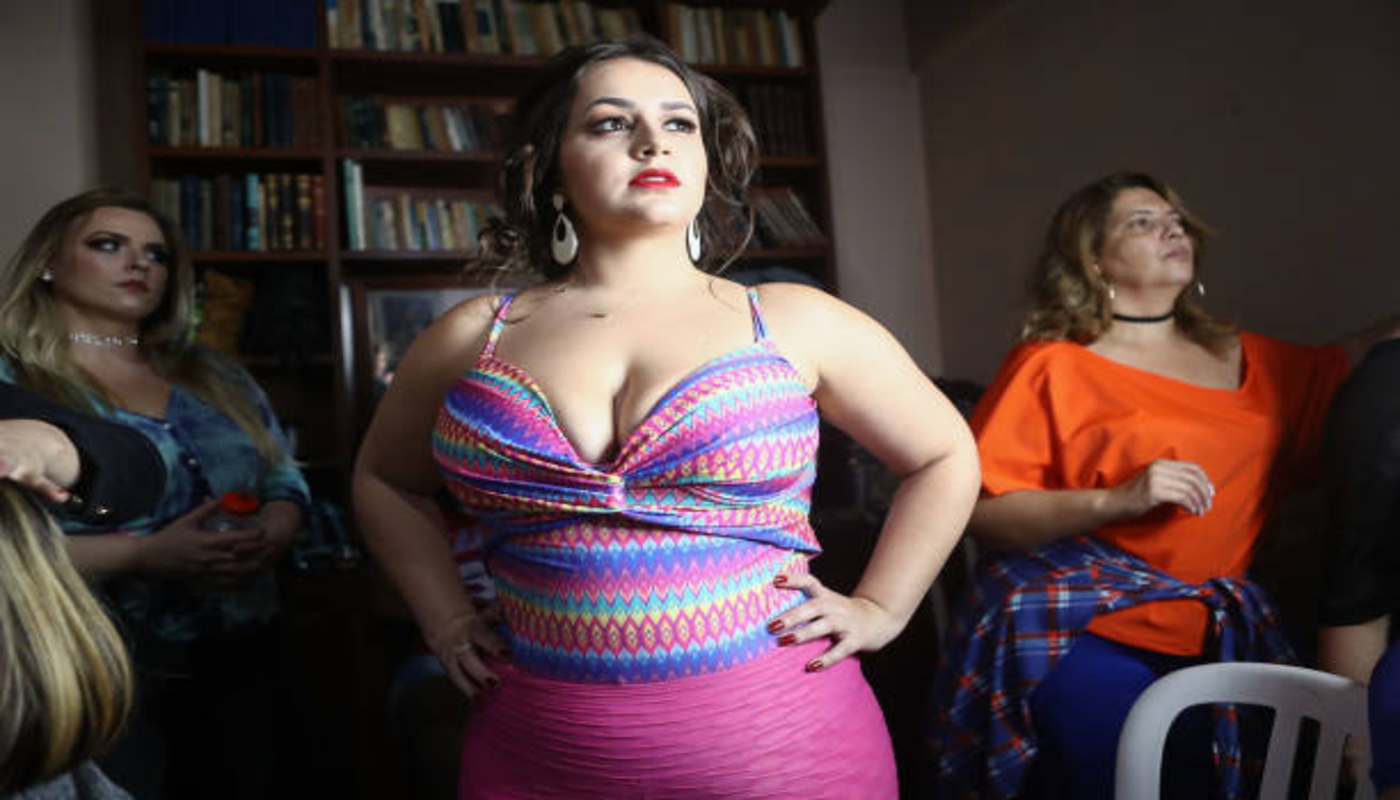
In every generation, certain public figures become symbols of conversations much larger than themselves. Sometimes they do not intend to occupy that role; it emerges because their visibility challenges deeply rooted cultural expectations. Brazilian influencer Thais Carla is one such figure. Through dance videos, family-centered content, fashion collaborations, television appearances, and an unapologetic online presence, she has become one of Brazil’s most recognizable voices in discussions surrounding plus-size representation.
Yet understanding Thais Carla solely through the lens of body positivity would miss the complexity of her cultural significance.
Her influence exists at the intersection of race, gender, beauty standards, digital celebrity, motherhood, entertainment, and Latin American social norms. Rather than representing a simple story of confidence overcoming criticism, her public career illustrates how visibility itself can become both an opportunity and a burden.
In many parts of the world, plus-size representation has gradually expanded through fashion campaigns, entertainment, and social media. However, the Brazilian context introduces unique cultural dynamics. Brazil simultaneously celebrates bodily expression through dance, carnival traditions, beach culture, and fitness lifestyles while maintaining exceptionally demanding beauty ideals. These two realities coexist, creating a society where bodies are constantly visible but rarely free from judgment.
Within this landscape, Thais Carla’s public presence has become culturally significant not because she fits existing expectations but because she continuously appears despite not fitting them.
Her career raises broader questions that extend well beyond one influencer:
- What happens when a plus-size woman occupies digital spaces traditionally dominated by narrow beauty ideals?
- Can visibility itself change cultural attitudes?
- How do audiences negotiate inspiration, discomfort, admiration, and criticism simultaneously?
- Does representation automatically create inclusion, or does it simply reveal society’s existing tensions?
These questions make Thais Carla an important case study—not because she represents every plus-size experience, but because her visibility exposes how body politics function in contemporary digital culture.
Brazil’s Complicated Relationship With the Body
To appreciate Thais Carla’s cultural impact, one must first understand Brazil’s longstanding relationship with physical appearance.
Globally, Brazil is often associated with beaches, carnival celebrations, samba, dance, and expressive fashion. Popular imagery frequently celebrates vibrant bodies in motion, colorful self-expression, and physical confidence.
Yet beneath these celebrations lies another reality.
Brazil has one of the world’s most influential beauty industries. Cosmetic procedures, aesthetic treatments, fitness culture, and appearance-focused media have become deeply embedded within everyday life. Beauty is often presented not merely as personal preference but as social expectation.
This creates an interesting contradiction.
Bodies are highly visible.
But only certain bodies receive consistent celebration.
The expectation to appear youthful, toned, fashionable, and physically disciplined influences advertising, entertainment, television programming, and increasingly social media algorithms.
In such an environment, a plus-size influencer does more than create content.
She interrupts visual norms.
Visibility as Cultural Disruption
Historically, larger bodies have often appeared in entertainment through limiting stereotypes.
Characters were frequently portrayed as:
- comic relief
- secondary personalities
- maternal figures
- symbols of excess
- people whose stories revolved around transformation
Digital platforms changed this dynamic.
Instead of waiting for television producers or magazine editors to decide who deserved visibility, creators could publish directly.
Instagram, TikTok, YouTube, and Facebook allowed audiences to encounter people whose lives had rarely been represented authentically in mainstream media.
Thais Carla emerged during this transformation.
Rather than presenting herself as someone waiting for acceptance, she created content centered around everyday life, dancing, parenting, fashion, humor, and professional collaborations.
This distinction matters.
Representation changes when larger bodies are shown living complete lives instead of existing only within narratives about their size.
Why Dance Became Such a Powerful Medium
Dance occupies a unique place within Brazilian culture.
From samba to funk, axé, and numerous regional traditions, movement is closely tied to celebration, identity, and collective expression.
For decades, however, popular dance imagery often centered particular body ideals.
Audiences became accustomed to associating professional-level dance performance with thinness or highly athletic physiques.
Thais Carla challenged that visual expectation.
Her dance videos were culturally significant not because plus-size people had never danced—of course they always had—but because social media allowed millions of viewers to watch those performances without traditional gatekeepers deciding whether they belonged on screen.
Movement itself became symbolic.
Every choreographed performance subtly questioned assumptions about who deserves to occupy visual space confidently.
This does not mean every viewer interpreted her content positively.
In fact, disagreement became part of her cultural influence.
When audiences debate whether certain bodies “should” dance publicly, the discussion often reveals more about social expectations than about dance itself.
Digital Platforms and the Democratization of Visibility
Influencers differ from traditional celebrities in important ways.
Television stars often appear polished and professionally curated.
Influencers, by contrast, invite audiences into kitchens, living rooms, family routines, vacations, workdays, celebrations, and ordinary moments.
This continuous exposure changes audience relationships.
Followers begin seeing creators less as distant public figures and more as familiar personalities.
For Thais Carla, this meant plus-size visibility became normalized through repetition rather than occasional representation.
Instead of one magazine cover every few months, audiences encountered:
- daily routines
- parenting moments
- fashion choices
- celebrations
- dance rehearsals
- collaborations
- lifestyle content
Psychologically, repeated exposure matters.
Research across media studies suggests that familiarity can gradually reduce the perception of difference.
When viewers repeatedly encounter bodies historically excluded from media, those bodies become less culturally “exceptional.”
Representation shifts from novelty toward normality.
This process is slow.
It is often contested.
But it remains significant.
Beyond Body Positivity: The Importance of Everyday Visibility
Many discussions about plus-size representation focus exclusively on confidence.
Confidence certainly plays an important role.
However, Thais Carla’s influence illustrates something equally meaningful:
Ordinariness.
Her content often exists outside explicit activism.
Sometimes she dances.
Sometimes she shares family experiences.
Sometimes she promotes fashion.
Sometimes she collaborates with brands.
These everyday activities quietly challenge one persistent stereotype—that plus-size individuals should only speak about their bodies.
Instead, audiences encounter someone living a multidimensional life.
This multidimensionality represents an important evolution in representation.
True inclusion occurs not when someone’s identity disappears but when it no longer becomes the only story worth telling.
Social Media as Both Stage and Battlefield
Visibility online rarely exists without consequences.
The same platforms that amplify marginalized voices also amplify criticism.
For creators whose appearance diverges from dominant beauty ideals, public attention often becomes unusually intense.
This reflects broader patterns across digital culture.
Algorithms reward engagement.
Controversial content frequently generates comments, reactions, shares, and debates.
As a result, creators challenging conventional beauty standards often receive disproportionate scrutiny.
Thais Carla’s online experience illustrates how digital visibility simultaneously creates opportunity and vulnerability.
The conversation surrounding her extends beyond individual reactions.
It reveals how internet culture frequently treats women’s bodies as public discussion topics rather than personal realities.
This phenomenon affects countless creators worldwide, regardless of nationality.
However, plus-size influencers often experience these dynamics more intensely because their appearance becomes interpreted as symbolic rather than simply individual.
Representation Is Not the Same as Agreement
One misunderstanding surrounding representation is the belief that increased visibility requires universal approval.
Cultural representation works differently.
Representation simply means more people become visible within public life.
Audiences remain free to hold diverse opinions.
The significance lies in expanding who is seen—not guaranteeing unanimous praise.
Thais Carla’s visibility demonstrates this distinction.
Some audiences celebrate her confidence.
Others appreciate her dancing.
Some focus on fashion.
Others engage in broader conversations about beauty standards.
Still others disagree with aspects of body positivity discourse altogether.
These varied reactions demonstrate that representation opens conversations rather than ending them.
From a sociological perspective, disagreement often accompanies cultural change.
Whenever long-standing norms are questioned, public debate becomes inevitable.
Visibility creates dialogue.
Dialogue creates reflection.
Reflection sometimes leads to gradual shifts in cultural expectations.
The Commercial Shift: When Brands Recognize an Overlooked Audience
One of the clearest indicators that cultural attitudes are changing is not simply the tone of public conversation—it is the behavior of businesses. Companies rarely invest in long-term partnerships without believing there is an audience worth serving. In this sense, Thais Carla’s collaborations with brands have reflected a broader commercial recognition that plus-size consumers are not a niche afterthought but a substantial and influential market.
For decades, fashion and beauty marketing often operated under a narrow assumption: aspiration could only be sold through a limited range of body types. Plus-size consumers purchased the same products but were frequently absent from advertisements or represented only in special campaigns rather than everyday marketing.
Digital influencers helped reshape this landscape. Instead of waiting for major companies to broaden representation, creators built loyal communities independently. Brands then began recognizing that authenticity often resonated more deeply than idealized perfection.
Thais Carla became part of this transition through documented public campaigns and collaborations. Her presence in advertising has communicated more than product promotion. It has suggested that consumers deserve to see themselves reflected in commercial imagery, regardless of body size.
This shift also carries economic implications. Inclusive representation is increasingly understood not only as a social value but as good business. When people recognize themselves in campaigns, they are more likely to feel acknowledged rather than overlooked. For marketers, that realization has encouraged a gradual movement toward broader representation, even though progress remains uneven across industries and regions.
Motherhood and Plus-Size Representation
Another distinctive aspect of Thais Carla’s public image is that she has shared elements of family life alongside professional content. This matters because mothers in media often face particularly intense appearance expectations.
Across cultures, women are frequently expected to balance contradictory ideals. They are encouraged to embrace motherhood while simultaneously maintaining narrowly defined beauty standards. Popular media often celebrates the idea of “bouncing back” after pregnancy, reinforcing the notion that physical appearance remains a measure of success even during major life transitions.
Influencers who share parenting experiences can either reinforce these expectations or complicate them.
In Thais Carla’s case, public family content has contributed to a more multidimensional representation. Rather than existing solely as a fashion creator or dancer, she has also appeared as a parent navigating everyday experiences. This broader identity challenges the tendency to reduce plus-size women to conversations about appearance alone.
For many viewers, especially mothers who rarely see themselves reflected in mainstream imagery, this kind of visibility can feel validating. It suggests that parenting, creativity, professional ambition, and self-expression are not mutually exclusive.
At the same time, family-oriented influencers often face heightened public scrutiny, illustrating how women in digital spaces are frequently evaluated not only for their own choices but also for how they embody cultural ideals of femininity, motherhood, and respectability.
A Global Conversation, Not Just a Brazilian One
Although Thais Carla’s career is rooted in Brazil, the conversations surrounding her resonate internationally. Around the world, social media has enabled creators from different cultures to challenge dominant beauty norms in ways that traditional media rarely allowed.
In the United States, Europe, Africa, Asia, and Latin America, audiences have witnessed the rise of plus-size models, dancers, athletes, actors, and influencers who broaden public perceptions of beauty and visibility. Yet each cultural context brings its own history and expectations.
In many Western countries, body positivity movements have become closely linked with fashion inclusivity and advertising diversity. In parts of Latin America, discussions often intersect with cultural celebrations of dance, family, and public expression. In other regions, modesty norms, colorism, socioeconomic status, or traditional gender roles shape conversations about body image differently.
Thais Carla’s visibility therefore contributes to an international dialogue rather than a single national story. Her experience highlights how local cultural dynamics can reflect global questions:
- Who gets to be visible?
- Who is considered aspirational?
- Who is allowed to express joy publicly without their appearance becoming the central narrative?
These questions continue to emerge across continents, suggesting that plus-size visibility is increasingly understood as part of a broader discussion about representation, dignity, and belonging.
The Psychology of Seeing Someone Like Yourself
Representation is often discussed in symbolic terms, but it also has measurable psychological dimensions.
Media psychologists have long argued that people develop ideas about themselves partly through repeated exposure to cultural imagery. When only one body type is consistently portrayed as attractive, successful, or confident, viewers may internalize the belief that these qualities belong exclusively to that appearance.
Conversely, seeing a wider range of bodies in public life can expand perceptions of who belongs in different spaces.
For plus-size viewers, encountering influencers like Thais Carla may contribute to:
- Reduced feelings of isolation.
- Greater recognition that confidence is not reserved for a particular body type.
- Increased willingness to participate in public activities such as dancing, fashion, or creative expression.
- A broader understanding that identity extends beyond appearance.
This does not mean representation automatically transforms self-esteem. Personal experiences, family influences, community attitudes, and mental well-being all play important roles.
However, media visibility can influence what psychologists call “possible selves”—the ways people imagine their own futures. When individuals see someone with similar characteristics living visibly and successfully, they may find it easier to envision possibilities for themselves.
That psychological shift, although difficult to quantify precisely, represents one of the most meaningful forms of cultural influence.
Why Visibility Alone Is Not Enough
While increased representation deserves recognition, it should not be mistaken for complete inclusion.
Visibility can coexist with persistent discrimination, unequal opportunities, and ongoing stereotypes. Simply appearing on social media does not eliminate structural barriers within fashion, entertainment, healthcare, education, or employment.
This distinction is important because conversations about representation sometimes become overly simplified.
Celebrating visibility should not prevent society from asking broader questions:
- Are clothing options genuinely inclusive?
- Are workplaces addressing appearance-based bias?
- Are entertainment industries expanding casting opportunities consistently rather than occasionally?
- Are public discussions becoming more respectful, even during disagreement?
Thais Carla’s public career illustrates both progress and remaining challenges. Her influence demonstrates that visibility has expanded considerably compared with previous decades. Yet the intensity of public debate surrounding her also reminds us that inclusion remains an evolving process rather than a completed achievement.
Social Media’s Double-Edged Legacy
Influencers have transformed how cultural norms develop.
In earlier generations, beauty standards flowed primarily from magazines, television, and film studios. Today, ordinary individuals can shape international conversations from smartphones.
This democratization has created remarkable opportunities for underrepresented voices. At the same time, it has intensified public scrutiny.
Creators now exist within a cycle of constant visibility:
- Every photograph invites commentary.
- Every dance video attracts interpretation.
- Every fashion choice becomes part of broader cultural conversations.
- Every public appearance may be framed as symbolic rather than simply personal.
For influencers who represent marginalized identities, this burden can become particularly significant. Their audiences often expect them to serve simultaneously as entertainers, educators, activists, role models, and cultural representatives.
Such expectations are difficult for any individual to carry.
Recognizing this complexity encourages a healthier understanding of digital influence. Public figures can contribute meaningfully to cultural conversations without being expected to embody perfection or represent every perspective within a diverse community.
A More Nuanced Understanding of Body Inclusivity
The discussion surrounding Thais Carla also invites a broader reflection on what body inclusivity truly means.
Inclusivity is not about replacing one ideal with another. Nor is it about insisting that everyone interpret bodies in identical ways.
Rather, it involves creating cultural environments where people are not excluded from opportunities, dignity, or visibility because they do not fit dominant aesthetic norms.
That goal requires nuance.
People can support inclusive representation while continuing to discuss health, fashion, athletics, or personal preferences responsibly. Likewise, audiences can appreciate confidence without assuming every public figure represents every lived experience.
The most productive conversations avoid extremes. They recognize that societies are capable of celebrating diversity while also acknowledging that cultural attitudes continue to evolve.
Thais Carla’s public presence contributes to this more balanced conversation because it encourages audiences to examine their own assumptions rather than simply reacting to someone else’s appearance.
Conclusion: Visibility as an Ongoing Cultural Conversation
Thais Carla’s significance extends beyond social media metrics or individual campaigns. She represents a broader shift in how digital culture allows people historically excluded from mainstream beauty narratives to occupy public space on their own terms.
Her influence is not best understood through simplistic labels of inspiration or controversy. Instead, it reflects the evolving relationship between representation, identity, commerce, psychology, and culture in an increasingly connected world.
By dancing, creating content, collaborating with brands, and sharing aspects of everyday life, she has participated in a wider movement that asks audiences to reconsider who deserves visibility in public life. Whether viewers approach her content with admiration, curiosity, or critical reflection, they are engaging with questions that extend far beyond one individual.
Her story illustrates an essential truth: meaningful representation is not measured solely by the number of people who appear on screens but by whether those appearances expand our collective understanding of humanity.
The future of body inclusivity will likely depend less on finding perfect ambassadors and more on creating cultures where many different bodies, identities, and life experiences can coexist without being reduced to stereotypes. In that future, visibility is not the final destination—it is the beginning of a richer, more inclusive conversation about belonging.
Sources: BBC, Reuters, Forbes, Vogue Brasil, GQ Brasil, CNN Brasil, Globo, Folha de S.Paulo, Estadão, Campaign, The New York Times