 by
by Across Africa, wellness has never been simply about counting calories, lifting weights, or downloading the newest meditation app.
Long before “wellness” became a global industry, African communities had their own languages of nourishment, movement, rest, healing, spirituality, community, and connection to the natural world. Knowledge about plants was passed through families. Food was understood not only as fuel but as heritage. Movement could be inseparable from dance, celebration, work, and community. Emotional wellbeing was often connected to relationships, spirituality, belonging, and collective responsibility.
Today, that cultural knowledge is meeting something very modern: social media.
On Instagram, TikTok, YouTube, podcasts, and other digital platforms, African wellness creators are translating conversations about nutrition, fitness, mental wellbeing, traditional foods, herbal practices, mindfulness, and preventive health for audiences that may span Lagos, Nairobi, Accra, Johannesburg, London, Toronto, Dubai, and New York.
But this movement is more complicated than simply “mixing old and new.”
The most interesting African wellness voices are participating in a much larger cultural negotiation: What happens when ancestral knowledge enters a world that demands scientific evidence?
Some creators are reclaiming ingredients and practices that were once dismissed as old-fashioned. Others are using medical or nutritional education to explain familiar foods in contemporary language. Some combine African movement traditions with modern fitness. Others discuss mental wellbeing through both psychological concepts and culturally familiar ideas of community, spirituality, and identity.
The result is an emerging form of wellness that does not necessarily ask Africans to choose between tradition and science.
Instead, it asks whether the two can enter into a more thoughtful conversation.
Wellness in Africa Did Not Begin With Social Media
One of the biggest mistakes in discussing African wellness is treating contemporary wellness culture as something imported from Europe or North America.
The modern global wellness industry may have popularized terms such as mindfulness, clean eating, functional nutrition, holistic health, and self-care. But many of the underlying ideas have long existed in African societies in different forms.
Traditional medicine across the continent encompasses an enormous range of knowledge systems, practices, plants, beliefs, practitioners, and community traditions. There is no single “African traditional medicine,” just as there is no single African culture.
The WHO describes traditional medicine as knowledge and practices originating in particular cultural contexts and used in maintaining health and wellbeing. In the WHO African Region, herbal treatments remain particularly important, while traditional medicine continues to occupy a significant place within pluralistic healthcare systems. (WHO | Regional Office for Africa)
That distinction matters.
A herbal practice in Ghana should not automatically be treated as interchangeable with a healing tradition in South Africa. A food practice from Senegal may have an entirely different cultural meaning from one in Nigeria. Spiritual approaches in one community cannot simply be generalized across the continent.
African wellness creators increasingly operate inside this complexity.
They are not merely reviving the past. They are deciding which elements of inherited knowledge can be translated into modern life, which require scientific investigation, which belong to particular cultural contexts, and which should remain clearly separated from evidence-based medical treatment.
That process itself is culturally significant.
From Grandmother’s Kitchen to the Digital Feed
One of the most powerful shifts is happening around food.
For generations, African families have used ingredients that are now being rediscovered by global nutrition culture: leafy greens, legumes, fermented foods, whole grains, indigenous fruits, seeds, spices, roots, and locally produced staples.
But the language surrounding those foods has changed.
A grandmother may have understood a fermented food through experience, taste, tradition, and household knowledge. A modern nutrition educator might discuss fermentation in terms of beneficial microorganisms, nutrient availability, digestion, or food preservation.
The underlying practice may be similar.
The vocabulary is different.
This translation is one of the most interesting functions performed by contemporary wellness creators.
Instead of telling audiences to abandon traditional foods in favor of imported “superfoods,” culturally grounded wellness content can demonstrate how familiar meals fit into contemporary conversations about nutrition.
That shift has psychological importance.
Food is deeply connected to identity. When wellness messaging presents traditional African food as inherently unhealthy or backward, it can create an uncomfortable choice: improve your health by distancing yourself from your culture.
Culturally intelligent wellness does something different.
It asks whether healthier habits can be built within cultural identity rather than against it.
Recent African wellness content has increasingly highlighted familiar meals, local ingredients, African dance, community spaces, and culturally recognizable routines as legitimate components of contemporary wellbeing. (Topping Africa)
That does not mean every traditional dish is automatically nutritionally ideal, nor does cultural familiarity make a health claim scientifically valid.
It means the starting point for health education can be culturally recognizable.
That distinction is crucial.
Science Is Becoming a Translator, Not Just an Authority
For decades, conversations about traditional knowledge and modern science were frequently framed as opposites.
Tradition represented experience.
Science represented proof.
One was associated with elders, communities, plants, spirituality, and inherited knowledge; the other with laboratories, hospitals, universities, clinical trials, and professional institutions.
But contemporary African wellness culture is beginning to challenge that binary.
Science can be used not simply to replace traditional knowledge, but to investigate it.
This is increasingly visible in research and policy conversations around African traditional medicine. The WHO has emphasized the importance of improving evidence, quality, safety, regulation, and appropriate integration of traditional medicine into health systems. (WHO | Regional Office for Africa)
A 2026 review in Frontiers in Pharmacology similarly describes African traditional medicine as continuing to coexist with biomedical systems while highlighting scientific validation, governance, safety, and ethical considerations as central questions for future integration. (Frontiers)
This creates an important middle ground.
The question is no longer simply:
“Is traditional medicine real or fake?”
A better question is:
“Which practices, under which circumstances, have evidence of benefit, what are their risks, and how should they responsibly coexist with conventional care?”
That is a much more mature conversation.
The Rise of the African Health Educator
Not every wellness influencer is selling herbal products or presenting themselves as a traditional healer.
Some of the most influential figures are medical professionals and science communicators who use social media to make health information understandable.
Nigeria’s Aproko Doctor, for example, became known for translating medical information into accessible digital content. His use of everyday language and social-media storytelling illustrates another important development: scientific knowledge can become culturally powerful when it is communicated in a language and style audiences actually understand.
This matters because scientific credibility and cultural accessibility are not the same thing.
A technically accurate health message can still fail if its language feels distant, judgmental, elitist, or disconnected from everyday realities.
African digital health communicators have helped demonstrate that evidence-based information does not have to sound institutional.
It can sound conversational.
It can be humorous.
It can use local references.
It can address misconceptions without humiliating the people who believe them.
And it can recognize that health decisions are influenced by family, religion, economics, tradition, gender expectations, food availability, and social relationships—not merely by information.
That is a form of cultural translation.
Why Language Matters in Wellness
One of the quiet revolutions happening online is linguistic.
Health information is increasingly being communicated through African Englishes, Pidgin English, local languages, slang, storytelling, humor, music, and culturally familiar examples.
That can make scientific concepts more accessible.
For many audiences, hearing a complex health topic explained in an everyday linguistic register creates psychological distance from the intimidating image of the medical textbook.
The message becomes:
This information is for people like me.
That feeling of inclusion matters.
Wellness culture has often been criticized for being visually polished but socially exclusive. Expensive supplements, luxury retreats, designer activewear, imported foods, private gyms, and highly controlled lifestyles can make “healthy living” appear financially inaccessible.
African creators can challenge that image by placing wellness within ordinary environments.
A healthy meal can come from a local market.
Movement can happen through dance.
Rest can be discussed as a legitimate need rather than laziness.
Mental wellbeing can be connected to relationships.
A walk can happen in a neighborhood rather than on a luxury treadmill.
Wellness can become less about purchasing an identity and more about developing sustainable habits.
The Cultural Power of African Movement
Fitness is another area where tradition and modernity are increasingly meeting.
African dance provides a particularly compelling example.
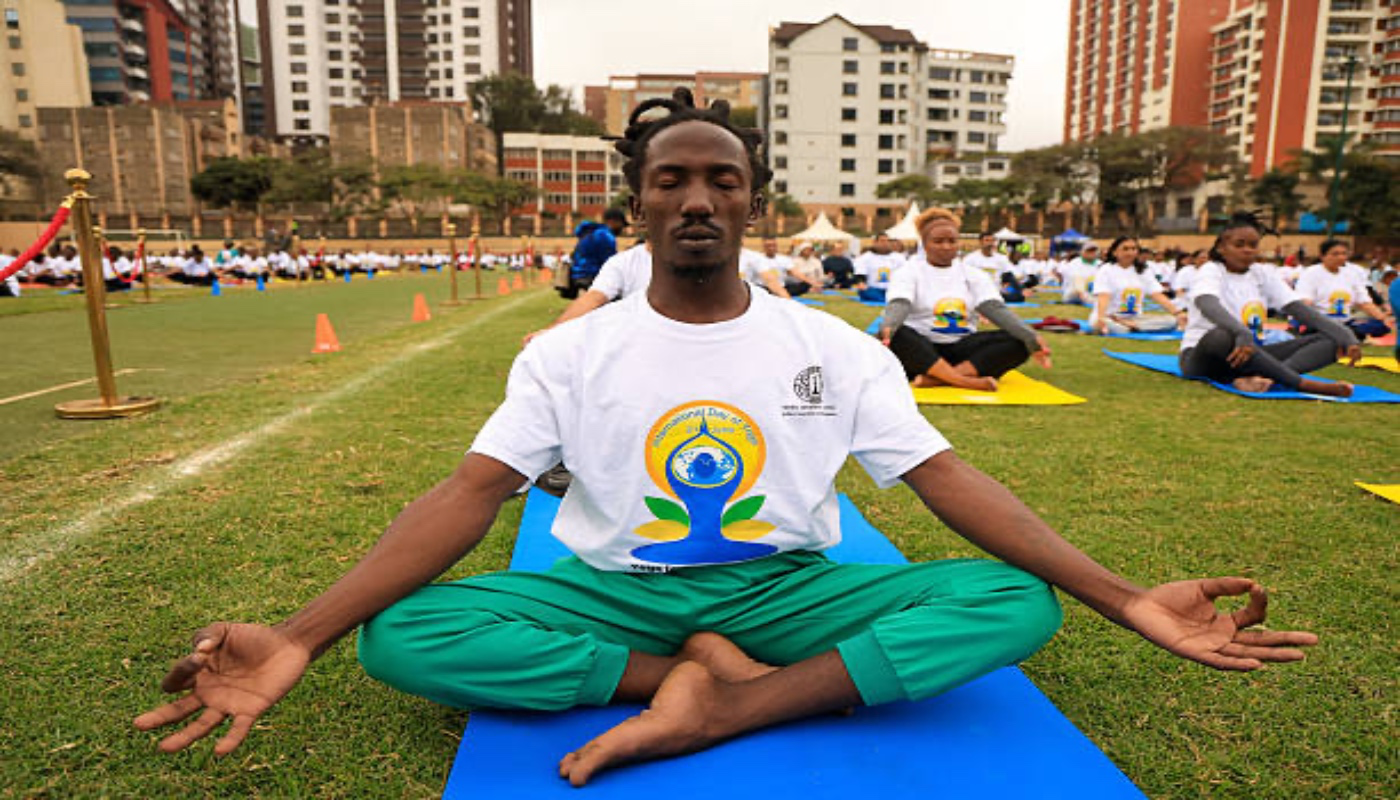
Movement traditions across the continent are extraordinarily diverse, but dance has often been connected with celebration, ceremony, storytelling, music, social bonding, and community.
Modern fitness culture can isolate exercise from those meanings.
The gym can become a private, individual activity performed primarily for physical transformation.
African dance-based wellness can offer a different emotional framework.
Movement becomes enjoyable before it becomes measurable.
That difference matters psychologically.
When physical activity is framed exclusively around appearance, people may associate exercise with correcting their bodies.
When movement is associated with music, rhythm, cultural expression, and social connection, it can become something people participate in because it feels good.
African wellness entrepreneurs such as Kukuwa Kyereboah have helped bring African dance and Afrocentric movement into contemporary fitness and wellness spaces, including experiences that combine dance, music, food, community, and cultural celebration. (LinkedIn)
This is not simply an exercise trend.
It represents a different philosophy of movement.
The body is not only an object to discipline.
It is also an instrument of cultural expression.
Body Inclusivity Changes the Wellness Conversation
This is where the subject becomes especially relevant to BodyInclusivity.com.
Wellness has historically been entangled with appearance.
A person may begin exercising for mental wellbeing but encounter messaging centered on shrinking the body. Nutrition education can quickly become dieting. Self-care can become beauty optimization. “Healthy” can become shorthand for thin, toned, youthful, or conventionally attractive.
African wellness creators have an opportunity to disrupt that equation.
A culturally grounded wellness approach can recognize that wellbeing includes strength, energy, mobility, nourishment, emotional resilience, rest, confidence, belonging, and quality of life.
None of these qualities automatically has a particular body shape.
This distinction is particularly important because African societies themselves contain diverse ideas about beauty, femininity, masculinity, maturity, and body presentation.
There is no universal African body ideal.
Urbanization, globalization, Western media, local beauty traditions, social media, fashion, religion, class, and generational expectations all interact differently across communities.
The emerging wellness conversation therefore has to resist replacing one rigid beauty standard with another.
The goal should not be to create a new “African wellness body.”
It should be to create more room for different bodies to participate in wellness without being treated as unfinished projects.
Tradition Can Support Belonging—but It Can Also Be Romanticized
There is an important danger in celebrating ancestral wellness without examining it critically.
Tradition is not automatically safe.
Modernity is not automatically superior.
Both categories contain complexity.
Traditional remedies can have pharmacological effects, interactions, contamination risks, dosage uncertainties, or contraindications. Modern medicine can also have limitations, side effects, access problems, and failures of communication.
This is precisely why evidence and regulation matter.
The WHO has emphasized quality assurance and scientific validation of traditional medicines, while also recognizing their cultural and practical importance. (WHO | Regional Office for Africa)
The responsibility of wellness influencers becomes particularly significant here.
A person with a large platform can turn a personal experience into what audiences interpret as medical advice.
A statement such as “my grandmother used this” is a cultural story.
A statement such as “this treats a disease” is a medical claim.
Those are not the same thing.
Responsible creators need to understand that distinction.
The strongest future for African wellness will not come from romanticizing every ancestral practice.
It will come from respecting traditional knowledge enough to investigate it carefully.
The Problem With the “80 Percent” Statistic
Discussions of African traditional medicine frequently repeat the claim that around 80 percent of Africans rely on traditional medicine.
The statistic has indeed appeared repeatedly in WHO materials and discussions of African health systems. (WHO | Regional Office for Africa)
However, researchers have also warned that the widely repeated figure has an old and uncertain evidentiary origin. A WHO-SAGE study published in Health Policy and Planning specifically examined the problem of treating the 80-percent figure as a universally reliable contemporary statistic. (PubMed Central (PMC))
This is an excellent example of why modern science matters even when discussing traditional medicine.
Good cultural analysis does not simply repeat impressive numbers because they support a preferred argument.
It asks where the number came from.
What exactly does “use” mean?
Does it mean occasional use of a herbal remedy, regular consultation with a traditional practitioner, reliance on traditional medicine as primary care, or some combination?
Which country?
Which population?
Which year?
That intellectual caution is itself part of responsible wellness communication.
The African Diaspora Is Expanding the Conversation
The influence of African wellness creators does not stop at continental borders.
African diasporic communities increasingly encounter wellness content that speaks to cultural memory.
A Ghanaian living in London may recognize ingredients from childhood in a modern nutrition video.
A Nigerian in Toronto may encounter a conversation about familiar foods that previously felt absent from mainstream wellness culture.
A South African in New York may see African movement or mindfulness practices presented in a contemporary format.
This creates a fascinating feedback loop.
The diaspora consumes African wellness culture.
It also helps commercialize and globalize it.
African ingredients may appear in international skincare.
African-inspired fitness programs may develop audiences overseas.
Traditional foods may be repackaged as premium wellness products.
Cultural practices may enter luxury markets.
That creates opportunities—but also ethical questions.
Who owns traditional knowledge?
Who profits?
Who gets credited?
What happens when a community practice becomes a global commodity?
These questions are becoming increasingly important as African wellness moves from informal cultural spaces into international business.
From Appropriation to Cultural Ownership
For decades, Western wellness industries have frequently adopted practices from non-Western cultures and presented them as newly discovered trends.
African wellness creators have the opportunity to change that narrative.
When a creator explains the history behind an ingredient, credits the community that preserved the knowledge, distinguishes tradition from scientific evidence, and participates in ethical sourcing, wellness becomes more than a product category.
It becomes cultural storytelling.
But cultural ownership also requires care.
Not every ritual should be packaged for Instagram.
Not every sacred practice belongs in a commercial wellness program.
Not every traditional ingredient needs to become the next global “superfood.”
Sometimes respect means leaving something within its cultural context.
That principle is particularly important as international audiences increasingly seek “ancestral” experiences.
The Psychology of Reclaiming Traditional Knowledge
There is also a psychological dimension to this movement.
Colonialism did not simply alter political systems and economies. Across many societies, it also disrupted relationships with indigenous knowledge.
The idea that modernity necessarily meant becoming more Western contributed to complicated relationships with local traditions.
For some people, rediscovering traditional foods, languages, movement practices, botanical knowledge, or community rituals can therefore feel like a form of cultural reconnection.
The wellness creator becomes more than an educator.
They become a cultural intermediary.
This can create pride.
It can strengthen intergenerational conversations.
It can make younger audiences curious about knowledge previously considered old-fashioned.
But cultural pride should not require rejecting modern science.
That is where the most sophisticated wellness conversations differ from simplistic “ancestral versus modern” narratives.
A person can celebrate an indigenous ingredient while still believing in clinical research.
Someone can value family knowledge while consulting a doctor.
A person can practice meditation or prayer while also using evidence-based psychological care.
Identity does not have to be a battlefield between knowledge systems.
Mental Wellness Is Becoming More Culturally Specific
Mental wellbeing may be one of the most important areas in which African wellness creators can contribute something distinctive.
Global mental-health conversations often rely on individualistic language.
Protect your peace.
Set boundaries.
Prioritize yourself.
Take time alone.
These ideas can be valuable, but they do not always map neatly onto cultures where family and community relationships play a major role.
African wellness creators can broaden the conversation by exploring wellbeing through connection as well as individuality.
Community can be restorative.
Friendship can be protective.
Intergenerational relationships can matter.
Spirituality can be meaningful to some people.
Cultural identity can affect psychological wellbeing.
At the same time, cultural expectations can also create pressure.
Family obligations can become overwhelming.
Religious expectations can contribute to guilt.
Gender roles can restrict emotional expression.
Community scrutiny can make vulnerability difficult.
A culturally intelligent approach therefore cannot simply romanticize “community.”
It must examine both its protective and restrictive dimensions.
Research on contemporary African healing environments has found complex interactions between traditional healing spaces, biomedical professionals, religious workers, patients, and different forms of spirituality in countries including Nigeria and Ghana. (Sage Journals)
That complexity is important.
African wellness is not a single system.
It is a negotiation.
Social Media Is Turning Wellness Into Conversation
The internet has fundamentally altered who gets to speak about health.
Previously, health information was largely filtered through institutions: doctors, hospitals, universities, newspapers, television, and public-health organizations.
Now, a creator can reach hundreds of thousands of people directly.
That democratization has advantages.
It allows people to hear experiences that mainstream institutions may overlook.
It makes health information more accessible.
It can reduce stigma.
It can connect people across borders.
But it also creates risks.
Popularity is not expertise.
Personal experience is not clinical evidence.
Aesthetic presentation is not proof.
And confidence is not the same thing as accuracy.
This is particularly important in wellness because the industry frequently operates at the boundary between lifestyle content and health claims.
African creators who combine cultural knowledge with modern science therefore have an unusually important responsibility.
Their credibility should come not from presenting themselves as having every answer, but from demonstrating how to ask better questions.
Why “Evidence-Based” Should Not Mean “Culture-Free”
There is another misconception worth challenging.
Evidence-based healthcare does not require cultural erasure.
Scientific research itself increasingly recognizes the importance of context, behavior, social determinants, communication, and patient preferences.
If a nutrition recommendation is technically sound but completely incompatible with a person’s food culture, household budget, or social environment, implementation becomes difficult.
A culturally adapted recommendation may be more sustainable precisely because it respects the person’s existing life.
This is where African wellness creators can play a valuable role.
They can help translate general scientific principles into culturally familiar practices.
Instead of saying:
“Stop eating your traditional food.”
They can ask:
“How can this meal be prepared, balanced, portioned, or combined in ways that align with your goals?”
Instead of:
“You need a Western gym routine.”
They can ask:
“What forms of movement already exist in your community that you enjoy?”
Instead of:
“Your traditional practices are outdated.”
They can ask:
“What can be studied, preserved, improved, regulated, or safely integrated?”
Those questions are far more productive.
Wellness Is Also About Access
There is a socioeconomic dimension that cannot be ignored.
Global wellness culture frequently assumes disposable income.
Memberships.
Supplements.
Retreats.
Special foods.
Wearable technology.
Private coaching.
Luxury skincare.
African wellness creators often operate in environments where affordability is central to health decisions.
Traditional practices may remain popular partly because they are accessible, familiar, locally available, or culturally trusted. WHO materials have repeatedly identified affordability and accessibility as important factors in the continued use of traditional medicine in many African settings. (WHO | Regional Office for Africa)
That does not mean traditional remedies are automatically preferable.
It means wellness messaging has to acknowledge economic reality.
A recommendation that costs more than a family’s weekly food budget is not an inclusive recommendation.
African wellness creators can therefore contribute to a broader definition of accessible wellbeing: cooking with available ingredients, walking, dancing, sleeping adequately, maintaining social relationships, seeking appropriate medical care, and understanding health information.
Inclusivity is not only about body size.
It is also about who can realistically participate.
Women Are Particularly Important to This Transformation
Women have historically carried enormous amounts of informal health knowledge in many African communities.
They have managed household food.
Passed down recipes.
Cared for children and relatives.
Maintained beauty and grooming traditions.
Prepared herbal preparations.
Shared reproductive and maternal knowledge.
And acted as informal sources of advice.
Modern wellness platforms are giving some of that knowledge a public digital form.
But there is an important tension.
Women are simultaneously being encouraged to care for themselves and being exposed to increasingly aggressive beauty and body-optimization pressures online.
A wellness movement can therefore empower women while unintentionally creating another form of perfectionism.
The most inclusive African wellness messaging should reject the idea that cultural wellness requires looking perpetually youthful, thin, sculpted, flawless, or aesthetically curated.
A woman does not have to transform her body to prove that she values her health.
She can simply learn more about it.
That distinction could become one of the movement’s most important contributions.
African Wellness Brands Are Becoming Knowledge Platforms
The emerging wellness economy also demonstrates a shift from selling products to selling education.
Some African wellness businesses increasingly position themselves around nutrition education, lifestyle coaching, locally sourced foods, herbal knowledge, or holistic experiences rather than simply marketing a single product.
Nigeria’s Plant2Wellness, for example, has been described as combining herbs, food, lifestyle education, and coaching rather than presenting itself solely as a product business. (guardian.ng)
That model reflects a broader transformation.
Consumers increasingly want to know:
Where did this ingredient come from?
How is it produced?
What evidence supports the claim?
How should it be used?
Who should avoid it?
What does the traditional context mean?
Education becomes part of the product.
And that can be positive—provided the education remains accurate and transparent.
The Future May Be Integrative, Not Either-Or
The most promising future for African wellness is unlikely to be a complete return to the past.
Nor is it likely to be the total replacement of tradition by biomedical modernity.
Instead, the future may be integrative.
A nutrition scientist may study an indigenous food.
A pharmacologist may investigate a medicinal plant.
A doctor may ask patients about traditional remedies to prevent potentially harmful interactions.
A wellness creator may explain the evidence surrounding a traditional practice.
A community elder may preserve knowledge that scientists can investigate.
A public-health institution may work with traditional practitioners on safety and referral systems.
This is already reflected in broader policy discussions. In 2026, WHO highlighted efforts to move African traditional medicine from policy discussion toward practical implementation within primary healthcare, emphasizing evidence, regulation, and appropriate integration. (World Health Organization)
The important phrase is appropriate integration.
Integration does not mean accepting every claim.
It means creating systems capable of distinguishing between cultural value, experiential knowledge, biological plausibility, demonstrated efficacy, potential risk, and established medical treatment.
That is a much more sophisticated model than either blind skepticism or unquestioning faith.
What This Means for the Global Wellness Industry
African wellness creators are also challenging the geography of wellness innovation.
For years, the global wellness industry often looked toward California, Scandinavia, Japan, India, or luxury European markets for its newest ideas.
Africa was more frequently portrayed through narratives of health deficits.
That perspective is changing.
African creators are increasingly positioning the continent not simply as a recipient of health interventions but as a source of ideas, foods, movement traditions, community practices, scientific research, entrepreneurial models, and cultural knowledge.
This does not mean everything emerging from Africa should be marketed globally.
It means the direction of cultural influence is becoming more multidirectional.
A wellness idea can travel from Accra to London.
From Johannesburg to New York.
From Nairobi to Toronto.
From Lagos to Dubai.
And eventually return to Africa transformed by the global conversation.
That circulation can produce innovation—but it can also produce cultural dilution.
The challenge will be retaining context while allowing ideas to evolve.
The Most Powerful Message May Be “You Don’t Have to Choose”
Perhaps the most emotionally significant part of this movement is the possibility of rejecting false choices.
You do not necessarily have to choose between your grandmother’s kitchen and a nutrition textbook.
Between prayer and therapy.
Between African dance and strength training.
Between cultural identity and scientific literacy.
Between traditional ingredients and modern food-safety standards.
Between body acceptance and caring about health.
Between community and individual boundaries.
Between ancestral pride and critical thinking.
These can coexist.
The key is not to pretend they are identical.
They are not.
Traditional knowledge and biomedical science operate through different systems of evidence and authority. Cultural practices can contain wisdom as well as assumptions. Modern healthcare can contain extraordinary scientific achievements alongside access and communication challenges.
A mature wellness culture can hold these tensions without collapsing them.
A New Definition of African Wellness
Perhaps the most important development is not the popularity of herbal teas, African ingredients, fitness creators, or wellness podcasts.
It is the possibility of redefining what wellness means.
Wellness does not have to be an imported aesthetic.
It does not have to mean endless optimization.
It does not have to mean shrinking the body.
It does not have to mean purchasing expensive products.
It does not have to mean rejecting medicine.
And it does not have to mean romanticizing everything associated with the past.
African wellness at its most thoughtful can mean something broader:
knowledge that is culturally grounded, scientifically curious, socially accessible, psychologically aware, and respectful of bodily diversity.
That definition is particularly powerful for body inclusivity.
A body should not have to resemble an influencer’s body to belong in wellness spaces.
A traditional meal does not have to become a “superfood” to deserve respect.
A person does not have to abandon their culture to become health-conscious.
And science does not have to become less rigorous simply because a cultural practice is meaningful.
Conclusion: The Future Is a Conversation Between Generations
There is something profoundly symbolic about the meeting taking place inside African wellness culture.
An elder remembers a plant.
A parent remembers a recipe.
A young creator remembers the family story but reaches for a smartphone.
A nutrition scientist examines the ingredient.
A doctor asks questions about safety.
A researcher designs a study.
A creator explains the findings online.
A teenager watches.
And suddenly, knowledge that once moved quietly from one generation to another enters a global conversation.
That does not guarantee that every tradition will prove scientifically effective.
It does not mean every modern wellness claim deserves trust.
It does not mean Africa has one unified philosophy of health.
What it does mean is that the conversation itself is changing.
African wellness influencers and health educators are helping create a space where tradition can be questioned without being dismissed, where science can be embraced without becoming culturally detached, and where wellbeing can be understood as something larger than physical appearance.
The next chapter will require more than viral videos.
It will require research.
Ethical regulation.
Cultural ownership.
Responsible communication.
Affordable access.
Better health literacy.
And a willingness to admit what remains unknown.
If that balance can be achieved, African wellness could offer the global industry something it urgently needs: a model of wellbeing that remembers where knowledge comes from while remaining open to discovering what is true.
The future of wellness may not belong to tradition or science alone.
It may belong to the people willing to let them speak to one another—with curiosity, humility, evidence, and respect.
Sources: World Health Organization, WHO Regional Office for Africa, Frontiers in Pharmacology, Health Policy and Planning, SAGE Journals, The Guardian Nigeria, THISDAY, Fitness Magazine South Africa, Topping Africa