 by
Introduction: The Changing Image of Motherhood on Social Media
For decades, popular culture presented motherhood through carefully selected images: a glowing pregnant woman, a beautiful newborn, a perfectly decorated nursery, and a mother who appeared effortlessly happy. Even when the subject was physical transformation, the narrative usually followed a predictable direction. Pregnancy changed a woman’s body, but successful motherhood supposedly meant returning to the appearance she had before giving birth. The stretch marks, loose skin, abdominal changes, visible exhaustion, and complicated emotions associated with postpartum life rarely received the same attention as the celebrations surrounding a new baby.
Social media initially appeared to reinforce this contradiction. Instagram feeds became filled with carefully composed maternity photographs, immaculate breastfeeding portraits, fitness transformations, and celebrities seemingly returning to their previous physiques shortly after childbirth. These images were not necessarily dishonest, but their selective presentation created an incomplete picture of what motherhood could look like.
Something has gradually begun to change.
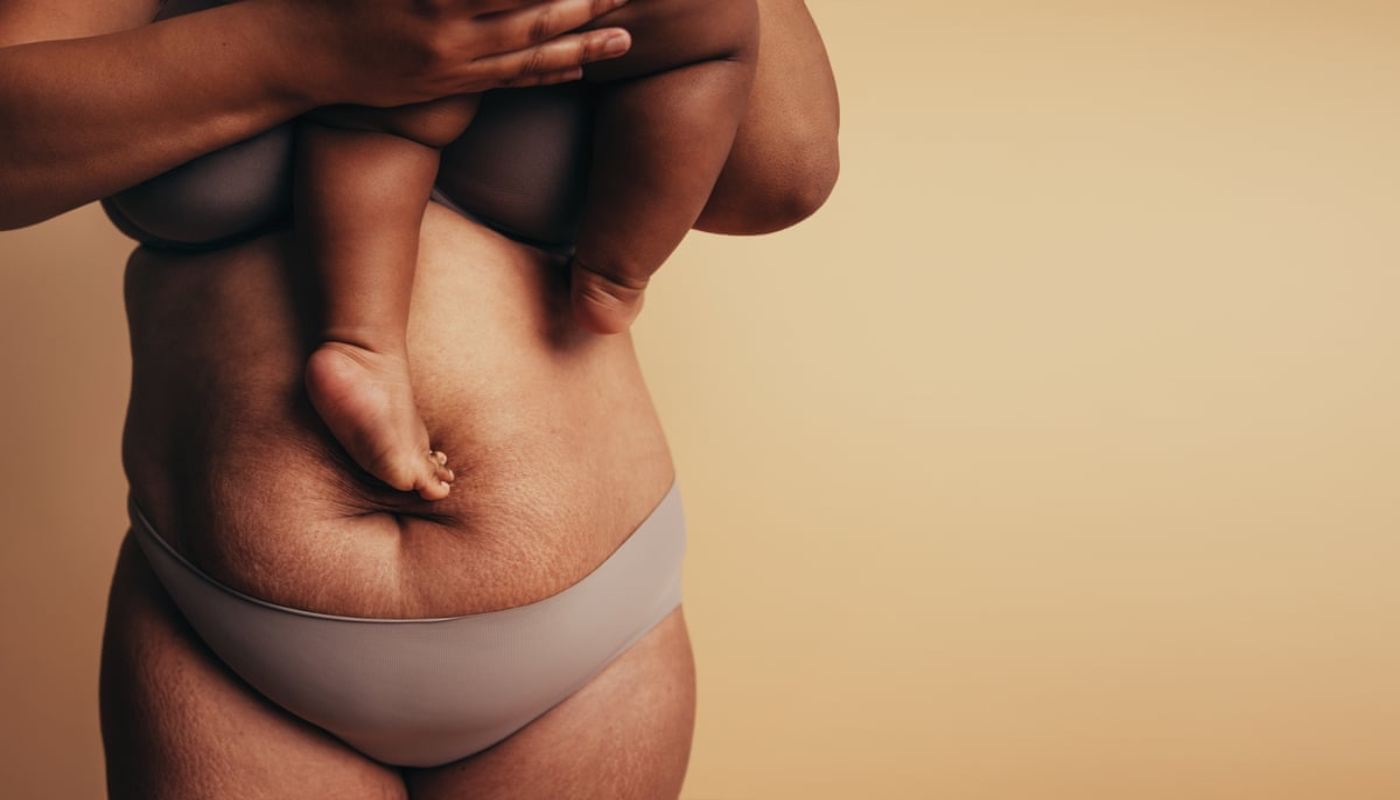
Influencers, models, public figures, and ordinary mothers are increasingly sharing photographs and videos that show their postpartum bodies without extensive retouching. Instead of presenting only polished maternity experiences, they are documenting stretch marks, changing abdominal shapes, healing bodies, comfortable clothing, breastfeeding experiences, and the emotional adjustments that accompany physical transformation.
This shift represents more than another social media trend. It challenges an established cultural expectation that women should demonstrate the success of motherhood through their ability to maintain or quickly recover a particular appearance.
The growing visibility of postpartum bodies also raises important questions about beauty standards, maternal identity, psychological well-being, commercial influence, and the relationship between social media representation and everyday self-perception.
Importantly, showing postpartum bodies without filters does not mean every woman must publicly celebrate every physical change. Nor does it suggest that women who enjoy fitness, cosmetic treatments, personal styling, or returning to particular physical goals are somehow less authentic. The deeper cultural development is the expansion of choice: women are increasingly demanding the freedom to experience motherhood without having their appearance constantly evaluated.
The conversation is moving away from asking how quickly a woman can get her old body back and toward recognizing that her body deserves respect throughout its changing experiences.
1. How the Postpartum Body Became a Cultural Secret
Pregnancy is widely celebrated in advertising, entertainment, fashion, and family photography. Postpartum life, however, has historically received a much narrower representation.
The pregnant body is often photographed as an expression of beauty, anticipation, and femininity. The postpartum body introduces a different set of visual realities. Abdominal skin may look different, stretch marks may become more visible, breasts may change, and a woman’s overall physical appearance may not resemble her pre-pregnancy photographs.
Although these experiences are not identical for everyone, their absence from mainstream representations created an unrealistic impression of what motherhood should look like.
Part of the problem came from the cultural division between pregnancy and motherhood. Pregnancy was treated as a beautiful transformation, while the physical aftermath was frequently approached as something that needed correction.
This distinction reflected a broader beauty culture that celebrated women’s bodies when they appeared controlled, youthful, and aesthetically pleasing but became uncomfortable with visible evidence of bodily change.
The postpartum body was therefore not necessarily rejected because it was unfamiliar. It was rejected because it challenged an established ideal of uninterrupted physical perfection.
Fashion photography, celebrity magazines, and entertainment coverage frequently reinforced the idea that postpartum transformation should be measured through appearance. Headlines celebrating how quickly famous mothers returned to their previous figures made physical recovery appear like a competitive achievement.
The cultural consequences extended beyond celebrities.
Ordinary women encountered these images during a period when their bodies, routines, identities, and responsibilities were already changing. Comparing their experiences with carefully selected photographs could make an ordinary recovery feel like a personal failure.
The growing willingness of influencers to show postpartum bodies challenges this inherited silence. It introduces an alternative visual vocabulary in which motherhood does not have to be separated from physical imperfection.
2. The Rise of the Unfiltered Motherhood Conversation
Social media has transformed who gets to participate in conversations about women’s bodies.
Previously, mainstream magazines, television programmes, and advertising agencies largely controlled which maternal experiences became publicly visible. Women could share personal experiences with family and friends, but their stories rarely reached a large audience unless they belonged to established entertainment or media circles.
Platforms such as Instagram, YouTube, and TikTok changed this relationship.
A mother can now document her experience directly, without waiting for a magazine interview or a television appearance. She can photograph her changing stomach, discuss the pressure to lose pregnancy weight, or explain why her relationship with her appearance has become more complicated.
This accessibility has helped create communities around hashtags and conversations such as postpartum body, motherhood unfiltered, real motherhood, and body acceptance.
The importance of these conversations lies in their everyday character.
A photograph of a mother wearing comfortable clothes, holding her baby, and showing visible stretch marks may not appear particularly extraordinary. Yet within a digital environment dominated by carefully edited images, such photographs can challenge assumptions about what women are expected to conceal.
Unfiltered content also changes the relationship between the person sharing an image and the audience viewing it.
Instead of presenting herself exclusively as an attractive subject, an influencer can become a narrator of her own experience. She decides which parts of motherhood deserve visibility and which conventional beauty expectations she no longer wishes to follow.
However, authenticity should not become another performance requirement. Women should not feel obligated to publish intimate photographs to prove that they are comfortable with their bodies.
The cultural value of this movement comes from making different representations possible, not from replacing one compulsory standard with another.
3. Ashley Graham and the Visibility of Postpartum Bodies
One of the most recognisable examples of this cultural shift comes from model and body-acceptance advocate Ashley Graham.
Graham has repeatedly used her public platform to challenge conventional expectations surrounding women’s bodies. Her postpartum experiences added another dimension to that advocacy.
In February 2020, following the birth of her first child, Graham shared an intimate photograph showing her postpartum stretch marks. Her caption, “Same me. Few new stories,” offered a simple but meaningful alternative to the language of physical correction.
The photograph attracted widespread attention because it presented something rarely celebrated in conventional fashion imagery: a woman’s changing body without attempting to conceal its visible marks.
Her approach also extended beyond a single social media photograph.
In February 2020, Graham shared a candid account of postpartum recovery, drawing attention to the practical and uncomfortable aspects of early motherhood. She discussed the realities of recovery and challenged the impression that having a baby immediately produces an uncomplicated, picture-perfect experience. Vogue documented the post and its significance in the growing conversation about postpartum visibility.
Graham’s later reflections offered an especially important dimension to the discussion.
In a 2022 essay and interview with Glamour, she spoke about the emotional complexity of experiencing physical changes during pregnancy and after childbirth. She explained that even as someone who had spent years advocating for body acceptance, she experienced moments of insecurity about her changing appearance.
This honesty complicated the popular idea that body-positive advocates must always feel confident.
Her reflections demonstrated that accepting a changing body can involve contradictory emotions. A woman can feel proud of motherhood and still struggle with unfamiliar physical changes. She can appreciate her body while wishing certain aspects looked different.
That contradiction deserves recognition.
Graham’s public experiences also demonstrate why postpartum representation matters particularly in fashion. The industry has historically relied on narrow expectations surrounding women’s physical appearance. When someone whose professional identity is closely connected to modelling openly discusses the difficulty of navigating postpartum expectations, the conversation reaches beyond motherhood and enters the wider debate about beauty standards.
Her example is significant because it does not suggest that every woman must love every physical change. Instead, it creates space for women to acknowledge those changes without interpreting them as evidence of diminished attractiveness or personal failure.
4. Chrissy Teigen and the Normalisation of Stretch Marks
Another influential cultural moment came from model and television personality Chrissy Teigen.
In May 2018, shortly after giving birth to her son Miles, Teigen shared an Instagram Story showing stretch marks on her hips. She humorously commented on the marks, expressing disappointment that skincare creams had not prevented them.
Later, in July 2018, she shared another video highlighting her postpartum stretch marks and describing her changing appearance as her new body.
The moment attracted considerable media attention because it challenged the polished presentation commonly associated with celebrity motherhood.
Vogue and Allure covered her posts, highlighting how her photographs contributed to conversations about the difference between ordinary bodies and the highly curated physiques frequently encountered on Instagram.
What made Teigen’s approach interesting was its refusal to turn body acceptance into a perfectly inspirational performance.
Her humour acknowledged that physical changes could be frustrating. She did not need to present herself as completely comfortable with every aspect of her appearance to make the experience relatable.
This distinction matters because contemporary body positivity sometimes creates an unrealistic expectation of constant confidence.
Women are encouraged to love their bodies, but the expectation can become another emotional responsibility. If they experience insecurity, they may feel they are failing at self-acceptance.
Teigen’s approach suggested another possibility: women can acknowledge physical changes, laugh about their experiences, and participate in conversations about beauty without pretending that every emotion is positive.
The cultural importance of these photographs was not that stretch marks suddenly became desirable. It was that their visibility became less dependent on whether they could be removed, hidden, or digitally corrected.
5. Why the ‘Bounce Back’ Narrative Is Losing Its Authority
One of the most persistent expectations surrounding motherhood is the idea that women should quickly return to their pre-pregnancy appearance.
Often described as the ‘bounce back’ culture, this expectation connects physical appearance with discipline, attractiveness, and even perceived success as a mother.
The phrase may sound harmless when used casually, but its cultural implications are significant.
It suggests that pregnancy is a temporary interruption to a woman’s original appearance rather than an experience that may permanently change her relationship with her body.
It also establishes an imaginary deadline.
Women are exposed to transformation photographs, fitness challenges, celebrity appearances, and promotional content suggesting that physical recovery should follow a predictable timeline.
Yet individual experiences vary considerably. There is no universal timetable for how a postpartum body should look.
The expectation also ignores the social circumstances surrounding motherhood.
Access to childcare, household support, financial resources, paid maternity leave, flexible employment, and appropriate healthcare can influence how much time and energy women have available for themselves.
A mother with substantial practical support may have opportunities that another woman does not.
When social media presents physical transformation as an individual achievement, it can obscure these inequalities.
The result is a culture in which women are encouraged to compete with one another while overlooking the structural conditions that shape their experiences.
The increasing visibility of unfiltered postpartum bodies questions this competition.
It suggests that returning to a previous appearance should not be treated as a compulsory milestone. Women can pursue personal fitness goals if they wish, but their bodies should not be judged according to how quickly those goals are achieved.
The movement is therefore not against fitness or personal transformation. It is against the assumption that a particular appearance represents the only acceptable outcome of motherhood.
6. The Psychological Impact of Seeing Real Postpartum Bodies
Representation has psychological consequences, particularly when individuals encounter images during periods of significant personal change.
The postpartum period can involve adjustments to identity, relationships, responsibilities, routines, and physical self-perception.
For some women, looking in the mirror after childbirth can feel unfamiliar. Their bodies may not resemble the images they remember from before pregnancy, while the media around them continues to celebrate narrow beauty ideals.
Social media can intensify this experience.
A woman scrolling through Instagram might encounter photographs of mothers who appear to have regained their previous appearance very quickly. Even when she understands that these images may be professionally produced, comparison can happen automatically.
A 2021 study published in Midwifery examined the relationship between social media use, appearance-related comparisons, and postpartum body dissatisfaction.
The research involved 252 mothers who had given birth within the previous 26 weeks. Its findings indicated that appearance-related comparisons and internalisation of thin beauty ideals played an important role in the relationship between social media use and postpartum body dissatisfaction.
This research helps explain why representation matters.
When the dominant images available to women show only highly idealised bodies, those images can influence what viewers consider normal.
Conversely, exposure to more varied representations can expand the range of bodies women recognise as acceptable.
A 2022 study published in Body Image examined how women responded to pregnancy and postpartum-related social media imagery.
Researchers found that exposure to body-positive images was associated with better body image outcomes than exposure to thin-and-toned ideal images. The findings suggest that the content women encounter can influence how they evaluate their own appearance.
This does not mean that one photograph can permanently transform someone’s self-image.
However, repeated exposure to diverse representations may gradually challenge the belief that there is only one acceptable way to look after childbirth.
The psychological significance of unfiltered postpartum content therefore extends beyond temporary reassurance. It can contribute to a broader cultural environment in which bodily variation becomes more familiar and less socially threatening.
7. From Body Shame to Body Neutrality: A More Nuanced Conversation
The growing visibility of postpartum bodies is often associated with body positivity, but another concept deserves attention: body neutrality.
Body positivity encourages individuals to appreciate and celebrate their bodies regardless of appearance.
Body neutrality offers a somewhat different perspective. It suggests that individuals do not need to feel enthusiastic about every physical feature to recognise their bodies’ value.
This distinction can be particularly meaningful during postpartum experiences.
A woman may appreciate the fact that her body has carried and delivered a child while feeling uncomfortable about certain changes. She may not want to celebrate her stretch marks, but she also does not want to spend her life feeling ashamed of them.
These feelings can exist together.
Body neutrality makes room for this complexity.
It moves the conversation away from the constant evaluation of appearance and toward a broader understanding of personal identity.
A mother is not required to become an enthusiastic spokesperson for her postpartum body. She is also not required to conceal it.
Her relationship with her appearance can change over time without needing public approval.
This perspective is especially important because social media often rewards emotionally compelling narratives.
An influencer who shares a photograph with a caption about loving every inch of her body may receive enthusiastic responses. Another woman who admits that she is still adjusting may receive less predictable reactions.
Both experiences deserve representation.
Authenticity should include confidence, uncertainty, frustration, appreciation, and gradual adjustment.
The objective is not to establish a new emotional standard for mothers. It is to remove the expectation that they must feel a particular way about their bodies.
8. How Influencers Are Changing the Language of Motherhood
The influence of postpartum content extends beyond photographs.
The language surrounding motherhood is also changing.
Older beauty narratives frequently used expressions such as:
- Getting your body back.
- Returning to your original shape.
- Losing the baby weight.
- Fixing your postpartum stomach.
- Restoring your pre-pregnancy appearance.
These expressions position the postpartum body as a problem requiring correction.
Increasingly, influencers are introducing different language into the conversation.
They discuss bodily changes, recovery, adaptation, self-acceptance, and the emotional realities of adjusting to motherhood.
This shift matters because language influences perception.
When a woman repeatedly hears that she needs to get her body back, she may begin viewing her current body as something temporary or undesirable.
When she encounters conversations that describe her body as changing rather than failing, the experience can be interpreted differently.
The difference is subtle but important.
A changing body is not necessarily a damaged body.
A woman who has stretch marks does not need to describe them as imperfections. A mother who wears comfortable clothing does not need to apologise for choosing practicality over appearance.
Influencers who use more inclusive language help make these perspectives visible.
However, the movement must also avoid replacing one restrictive vocabulary with another. Terms such as natural, real, or unfiltered should not become labels that exclude women who choose makeup, flattering photography, or personal styling.
Authenticity does not require abandoning beauty.
It requires allowing beauty to exist without compulsory concealment.
9. The Commercialisation of Postpartum Authenticity
The growing popularity of unfiltered motherhood has created new opportunities for brands.
Companies selling maternity clothing, nursing products, skincare, personal care items, wellness services, and fitness programmes increasingly recognise that audiences respond to relatable representations of motherhood.
This development has both positive and negative implications.
On one hand, commercial campaigns can introduce experiences that traditional advertising previously ignored.
For example, Frida Mom became widely discussed in 2020 after its postpartum-focused advertisement depicting the practical realities of a new mother’s recovery was rejected from airing during the Academy Awards broadcast.
The advertisement featured a woman navigating an ordinary postpartum bathroom experience rather than presenting motherhood through an idealised montage.
Its rejection generated discussion about why the everyday realities of childbirth and recovery were considered unsuitable for mainstream television advertising.
The controversy highlighted a contradiction in popular culture: childbirth is widely celebrated, yet some of its most ordinary physical consequences remain uncomfortable subjects for public representation. Vogue reported on the advertisement alongside Ashley Graham’s candid postpartum posts.
On the other hand, brands can turn authenticity into another marketing strategy.
An advertisement featuring stretch marks is not automatically inclusive simply because it avoids retouching.
A company may use realistic photographs while continuing to promote products designed around the idea that postpartum bodies need fixing.
This creates an important distinction between representation and genuine inclusion.
Representation means showing different bodies.
Inclusion requires changing the attitudes, products, and commercial messages that determine how those bodies are treated.
A maternity campaign might show a mother with visible stretch marks but still use language suggesting that she needs a particular product to restore her former appearance.
Such messaging weakens the cultural value of authentic imagery.
Consumers are increasingly capable of recognising this contradiction.
For influencer partnerships to contribute meaningfully to body inclusivity, the message should extend beyond the photograph. It should avoid presenting normal bodily variation as a defect that requires commercial intervention.
10. The Influence of TikTok and Instagram on Postpartum Visibility
Different social media platforms have created different opportunities for postpartum representation.
Instagram has traditionally encouraged visual storytelling through photographs, short videos, Stories, and curated personal profiles.
TikTok has expanded this approach through conversational videos, personal narratives, educational content, and everyday documentation.
This format allows mothers to discuss their experiences rather than simply display their appearance.
A creator can explain why a particular photograph was difficult to share, discuss the pressure to return to work, or reflect on how her understanding of beauty has changed.
These conversations can be especially valuable because they provide context.
A photograph of a postpartum stomach shows a physical reality. A discussion accompanying that photograph can explain how the creator feels about it, how she responds to comments, or why she decided to stop editing her images.
However, the growing volume of postpartum content does not automatically mean that representation has become inclusive.
A 2025 content analysis published in Body Image examined 286 TikTok videos using the hashtag #PostpartumBody.
Researchers found that more than half of the videos contained negative body-image themes, including the glorification of weight loss. Although 51% included positive body-image themes, approximately one-quarter contained both positive and negative messaging.
The research also identified limited demographic diversity, with most videos featuring White women and individuals classified within the healthy BMI range.
These findings reveal an important contradiction.
A platform can host more conversations about postpartum bodies while continuing to reproduce narrow beauty standards.
A video may appear realistic because it shows a woman discussing her pregnancy experience, but its message might still revolve around losing weight or achieving a particular physical appearance.
Consequently, the quality of representation matters as much as its quantity.
The future of postpartum visibility depends not simply on how many women appear online but on which experiences are being represented and what messages accompany them.
11. The Missing Diversity in Postpartum Representation
One of the most important challenges facing the movement is its limited representation of different racial, cultural, economic, and body-size experiences.
The phrase ‘real postpartum bodies’ may suggest a broad and inclusive movement, but social media visibility is not distributed equally.
Some women receive considerable attention for sharing photographs that challenge conventional beauty standards, while other experiences remain underrepresented.
For example, women from different ethnic backgrounds may have distinct experiences with beauty expectations, family pressures, maternity care, and public attitudes toward motherhood.
Skin tone, cultural expectations surrounding modesty, socioeconomic circumstances, and access to healthcare can influence how women experience and discuss postpartum life.
Body size also matters.
If the majority of visible postpartum creators still fit within relatively narrow appearance categories, the movement risks reproducing the same exclusions it claims to challenge.
A body-inclusive approach must recognise that postpartum experiences exist across a wide range of body sizes and physical appearances.
It must also acknowledge that not every woman has the same freedom to share intimate photographs publicly.
Some women may feel comfortable showing their stomachs online. Others may prefer to discuss their experiences without displaying their bodies.
Both choices deserve respect.
Representation should not become another demand placed on mothers.
The objective is to expand the available cultural images, not to establish a new requirement for public disclosure.
12. South Asian Motherhood: Modesty, Family Expectations, and Appearance Pressure
The conversation about postpartum bodies has particular significance in South Asian societies, where motherhood is often surrounded by strong family traditions, cultural expectations, and social commentary about women’s appearances.
In countries such as Pakistan, India, Bangladesh, and Sri Lanka, discussions about pregnancy and childbirth frequently take place within extended family environments.
Relatives may offer advice about food, rest, breastfeeding, clothing, and childcare. While these interactions can provide meaningful support, they can also create situations in which women’s bodies become subjects of unsolicited discussion.
Comments about whether a woman has lost pregnancy weight, how her clothes fit, or whether she looks the same as before childbirth may be presented as ordinary conversation.
Yet seemingly casual observations can influence how a new mother perceives herself.
In many South Asian households, motherhood is associated with responsibility, sacrifice, family honour, and traditional expectations of femininity.
Women may therefore encounter competing messages.
They are expected to devote themselves to their children, maintain household responsibilities, and demonstrate physical attractiveness, sometimes without receiving adequate practical support.
Social media introduces another layer of comparison.
A Pakistani mother scrolling through Instagram may encounter international influencers documenting their postpartum experiences alongside local creators sharing maternity photographs, parenting advice, and personal transformations.
However, global beauty standards do not always translate directly into local cultural experiences.
For some South Asian women, modesty is an important consideration when deciding what to share publicly. They may want to challenge unrealistic expectations without posting revealing photographs.
Others may feel comfortable showing their changing bodies but remain concerned about negative comments from relatives or strangers.
The important distinction is that body inclusivity should not be measured by how much skin a woman reveals.
A woman can participate in the movement through conversations about unrealistic expectations, clothing choices, body image, and emotional well-being without displaying intimate photographs.
Local creators can also challenge postpartum pressure through culturally relevant discussions.
For example, conversations about the expectation that new mothers should look presentable for family gatherings, the pressure to resume household responsibilities quickly, or the tendency to compare daughters-in-law and relatives can reveal how beauty standards operate beyond digital platforms.
South Asian representation should therefore extend beyond importing Western body-positive imagery.
It should recognise the specific social environments in which women experience motherhood and negotiate their identities.
13. The Global Conversation: Different Cultures, Shared Expectations
Although postpartum experiences vary across cultures, the pressure to maintain an attractive appearance is not limited to any particular country.
In Western entertainment industries, celebrity postpartum transformations have frequently been discussed through the language of fitness, weight loss, and physical recovery.
In East Asian beauty markets, narrow ideals of femininity and appearance can influence how pregnancy and motherhood are visually represented.
In South Asia, family expectations, modesty, and community commentary can shape women’s experiences of postpartum body image.
In parts of Africa, traditional understandings of motherhood, family support, body size, and femininity can create different relationships with post-pregnancy appearance.
These contexts should not be reduced to stereotypes. Attitudes vary significantly within every region, community, and generation.
Nevertheless, the global movement toward more authentic postpartum representation creates opportunities for cross-cultural understanding.
Social media allows women to encounter experiences beyond their immediate communities.
A mother in Karachi can discover a creator in London discussing stretch marks. Someone in Mumbai can encounter a mother in Toronto discussing the pressure to return to work. A woman in Nairobi can find conversations about the emotional experience of adjusting to motherhood.
These connections can help demonstrate that bodily changes are not isolated personal experiences.
They are part of a much wider human experience shaped by biology, culture, economic circumstances, and social expectations.
However, global visibility should not mean that one cultural understanding of body acceptance becomes the universal standard.
Authentic representation must leave room for different values, traditions, and personal boundaries.
14. Why Unfiltered Images Can Help Women Feel Less Alone
One of the most meaningful aspects of postpartum visibility is its potential to reduce isolation.
New motherhood can involve an enormous adjustment in daily life.
A woman’s time becomes organised around new responsibilities, and familiar routines may become difficult to maintain. Her relationship with her body may also change as she navigates an unfamiliar stage of life.
During this period, discovering that other women have similar experiences can offer reassurance.
This is where influencer communities can play a meaningful role.
A creator sharing a photograph of her postpartum body may receive messages from women who previously believed they were alone in experiencing particular physical changes.
A discussion about stretch marks may encourage another mother to reconsider why she feels compelled to hide them.
A conversation about body image may help someone recognise that struggling with appearance does not make her ungrateful for motherhood.
Research increasingly recognises the complicated relationship between social media and maternal well-being.
A 2025 qualitative study examining postpartum mothers’ experiences with social media identified both positive and negative influences. Participants described using social platforms for connection and parenting information while also experiencing comparison involving their bodies, lifestyles, and children’s development.
This dual experience is important.
Social media can provide connection, but it can also introduce new forms of pressure.
The value of postpartum communities therefore depends partly on the quality of their conversations.
Supportive spaces acknowledge differences without turning motherhood into a competition.
They allow women to discuss difficult experiences without being told that they should simply be grateful or more confident.
Most importantly, they recognise that mothers deserve care and consideration as individuals, not only as caregivers.
15. When Authenticity Becomes Another Performance
Despite its positive potential, the growing popularity of unfiltered content creates a new challenge.
Authenticity itself can become an aesthetic.
Influencers may feel pressure to show stretch marks, photograph messy homes, document exhaustion, or share vulnerable experiences because audiences reward content that appears relatable.
This creates a paradox.
Women originally began sharing less-polished images to challenge unrealistic standards. Yet the social media economy can transform those images into another carefully constructed form of personal branding.
A photograph may be unfiltered but still professionally composed.
A vulnerable caption may be part of a commercial campaign.
A video showing everyday motherhood may still be edited, scheduled, and strategically produced.
None of these characteristics automatically make the content dishonest.
Influencers are entitled to earn money from their work, choose attractive lighting, and maintain professional boundaries.
The problem arises when audiences begin treating particular presentations of authenticity as proof of moral superiority.
A mother who prefers polished maternity photographs should not be criticised for being less genuine.
A woman who chooses not to display her stretch marks should not be accused of reinforcing unrealistic beauty standards.
Likewise, a woman who shares her postpartum body should not be expected to explain every personal decision associated with it.
Authenticity is not the absence of editing alone.
It is the freedom to represent one’s experiences without being forced into an externally defined ideal.
The most inclusive version of this movement would allow women to be glamorous, ordinary, vulnerable, private, confident, uncertain, and everything in between.
16. The Difference Between Body Acceptance and Ignoring Physical Well-Being
Another important distinction is that celebrating postpartum bodies should not mean dismissing women’s physical needs.
Body inclusivity and maternal well-being are not competing ideas.
A woman can appreciate her body while seeking medical guidance, rehabilitation, comfortable clothing, appropriate nutrition, or other forms of support.
Likewise, wanting to address a physical concern does not mean rejecting body acceptance.
The World Health Organization’s 2022 recommendations on maternal and newborn care for a positive postnatal experience emphasise the importance of information, reassurance, consistent support, and healthcare that respects women’s individual and cultural circumstances.
The guidance treats postnatal well-being as an important part of maternal and newborn care rather than a brief period following childbirth.
This broader understanding challenges the tendency to reduce postpartum recovery to appearance.
Women’s needs extend beyond what can be seen in photographs.
They include access to appropriate healthcare, emotional support, practical assistance, rest, and reliable information.
Social media influencers can contribute by encouraging realistic conversations about seeking support and avoiding unqualified health claims.
However, they should not replace professional healthcare guidance.
The most useful postpartum content recognises that bodily acceptance and physical care can exist together.
A woman does not have to reject personal health goals to participate in body inclusivity.
Equally, she should never be made to believe that her worth depends on achieving a particular physical result.
17. How Body-Focused Social Media Can Influence Behaviour
The influence of postpartum imagery is not limited to feelings about appearance.
It can also shape attitudes toward eating, exercise, and everyday decisions.
A 2022 experimental study published in BMC Pregnancy and Childbirth examined how body-focused social media posts affected postpartum mothers.
Researchers assigned mothers of infants aged between zero and six months to different social media exposure conditions.
The group viewing body-focused posts experienced increased body dissatisfaction and poorer body-image outcomes compared with the control group. The study also identified changes in eating attitudes and restrained eating behaviours.
Interestingly, participants also reported increased inspiration to become physically active, demonstrating that the relationship between appearance-related content and behaviour is not entirely straightforward.
This is an important finding because fitness-related content is not automatically harmful.
Exercise can be discussed as a source of enjoyment, strength, mobility, and general well-being.
The problem develops when physical activity is consistently presented as a way to correct a postpartum appearance.
The same activity can communicate very different messages depending on its framing.
A creator sharing an enjoyable walk with her baby communicates something different from an influencer suggesting that mothers must follow an intensive routine to regain their previous bodies.
A 2025 experimental study published in Health Communication adds another dimension to this conversation.
Researchers compared postpartum mothers’ responses to body-positive and fitspiration videos. Participants exposed to fitspiration content reported more upward social comparisons, increased state anxiety, and lower body satisfaction, while those exposed to body-positive videos reported increased body satisfaction.
Together, these studies demonstrate why the content surrounding postpartum bodies deserves attention.
It is not enough to encourage women to spend less time comparing themselves with others.
The broader digital environment must also offer more balanced and realistic representations.
18. The Role of Followers: Changing What Social Media Rewards
Influencers do not create content in isolation.
Their decisions are influenced by audience responses, platform algorithms, commercial partnerships, and the types of images that generate engagement.
This means followers also have a role in shaping postpartum representation.
When audiences respond positively to realistic photographs and thoughtful discussions, they communicate that these experiences deserve visibility.
When comments focus exclusively on whether a mother has lost weight, returned to her previous appearance, or maintained attractiveness, they reinforce the same expectations that body-inclusive creators are trying to challenge.
The language of online engagement matters.
Instead of treating postpartum photographs as opportunities to evaluate appearance, audiences can respond to the message being communicated.
They can recognise vulnerability without turning it into a spectacle.
They can support creators without demanding increasingly personal disclosures.
They can also challenge harmful comments that compare mothers or shame women for their physical changes.
Another important responsibility involves recognising that influencers are not public property.
A woman who has shared photographs of her postpartum body does not owe followers continuous access to her private experiences.
She can decide to stop discussing motherhood, remove photographs, or return to more private content.
Authenticity includes the right to establish boundaries.
The healthiest digital communities recognise both visibility and privacy as legitimate choices.
19. A New Understanding of Beauty After Motherhood
Perhaps the most significant cultural contribution of unfiltered postpartum representation is its ability to expand the meaning of beauty.
Traditional beauty standards often depend on continuity.
Women are encouraged to maintain a consistent appearance, avoid visible ageing, preserve youthful features, and conceal signs of physical change.
Motherhood challenges this expectation.
It introduces a stage in which women’s bodies may change in ways that are not easily controlled or reversed.
The growing visibility of postpartum bodies invites society to reconsider why these changes are so frequently treated as undesirable.
Beauty does not need to be restricted to an unchanged appearance.
It can include different stages of life, personal expression, individuality, and the freedom to feel attractive without conforming to a narrow physical ideal.
This does not mean every woman must find her postpartum appearance beautiful.
That would simply create another expectation.
Rather, the cultural objective is to make beauty less dependent on the absence of visible bodily change.
A woman should be able to wear a fitted dress, comfortable loungewear, a swimsuit, or whatever makes her feel confident without worrying that her body must meet a particular post-pregnancy standard.
The same principle should apply to fashion advertising, maternity clothing, beauty campaigns, and entertainment media.
The industry can acknowledge that motherhood changes women’s lives without treating their physical appearance as a problem to solve.
20. What the Future of Postpartum Representation Should Look Like
The growing movement toward unfiltered postpartum imagery has created an opportunity, but its long-term influence will depend on whether representation becomes more comprehensive.
First, media platforms need greater diversity.
Postpartum content should reflect women from different ethnicities, cultures, body sizes, socioeconomic backgrounds, and stages of motherhood.
Second, the conversation should extend beyond physical appearance.
Women should have opportunities to discuss the practical, emotional, and social dimensions of postpartum life without every experience being turned into a beauty discussion.
Third, brands should reconsider the messages behind their campaigns.
Showing stretch marks while selling products through insecurity does not create meaningful inclusion.
Commercial storytelling should move away from presenting ordinary bodily changes as defects.
Fourth, influencers should have the freedom to maintain boundaries.
Women should not be pressured to share intimate photographs or personal information to prove that they support body acceptance.
Finally, audiences need greater awareness of how social comparison operates online.
Understanding that photographs are selected representations of life can help viewers approach social media more critically.
The future of postpartum visibility should not depend on replacing polished images with unpolished ones.
Both can exist.
A mother can share a professionally styled maternity photograph one day and an ordinary photograph of her changing body another day.
Neither image needs to invalidate the other.
The real progress will come when women no longer feel that they must choose between being attractive and being authentic.
Conclusion: Motherhood Deserves More Than One Image
The increasing visibility of postpartum bodies represents an important development in contemporary beauty culture.
For generations, women encountered messages suggesting that pregnancy could be celebrated as long as its physical consequences were eventually concealed. The cultural emphasis remained on returning to a previous appearance, maintaining attractiveness, and demonstrating that motherhood had not disrupted conventional beauty expectations.
Influencers and public figures sharing unfiltered postpartum experiences have begun challenging that narrative.
From Ashley Graham’s photographs and reflections to Chrissy Teigen’s candid conversations about stretch marks, these public moments have helped make previously overlooked experiences part of mainstream cultural discussions.
Research also supports the importance of representation. Studies have identified relationships between social media exposure, appearance-related comparisons, and postpartum body dissatisfaction, while experimental research suggests that body-positive content can offer more supportive alternatives to narrow appearance ideals.
Nevertheless, the movement still faces important challenges.
Representation remains uneven, commercial interests can turn authenticity into another marketing strategy, and social media can reproduce the very beauty standards it claims to challenge.
The next stage of progress must therefore move beyond simply showing more postpartum bodies. It must question why women are expected to meet appearance-based standards during such a significant period of their lives.
It must recognise that body acceptance is not a compulsory emotion, that privacy is a valid choice, and that physical well-being extends far beyond appearance.
Most importantly, motherhood should not become a competition in which women are judged according to how quickly they recover their former looks.
A postpartum body does not need to resemble a photograph from the past to deserve admiration, care, and respect.
The cultural shift toward unfiltered representation is meaningful because it gives women more ways to recognise themselves in the world around them.
And perhaps the most important future implication is this: the next generation should grow up seeing motherhood represented as a complete human experience, not a temporary interruption to female beauty.
A woman’s identity does not disappear when she becomes a mother. Neither should her individuality, confidence, attractiveness, or right to define her own relationship with her body.
The future of inclusive beauty culture depends on making room for all these realities.
Sources: Vogue, Allure, Glamour, Harper’s Bazaar, ELLE, Marie Claire, BMC Pregnancy and Childbirth, Body Image, Midwifery, Health Communication, World Health Organization, PubMed