 by
by When “Perfect Skin” Stopped Looking Real
For decades, beauty advertising relied on a simple promise: flawless skin was achievable if people bought the right products. Magazine covers erased pores. Television commercials softened every line. Billboards removed blemishes that naturally appear on even the healthiest faces. Then social media arrived, bringing with it a strange contradiction. While platforms appeared more authentic than traditional media, filters, editing apps, ring lights, smoothing effects, and carefully curated angles often created beauty standards that were even less attainable.
For millions of users, beauty content became an endless parade of impossibly smooth complexions. Foundation appeared invisible. Acne seemed nonexistent. Texture disappeared. Pores vanished. The face transformed into something closer to digital artwork than human skin.
Yet in recent years, another movement has quietly reshaped online beauty culture.
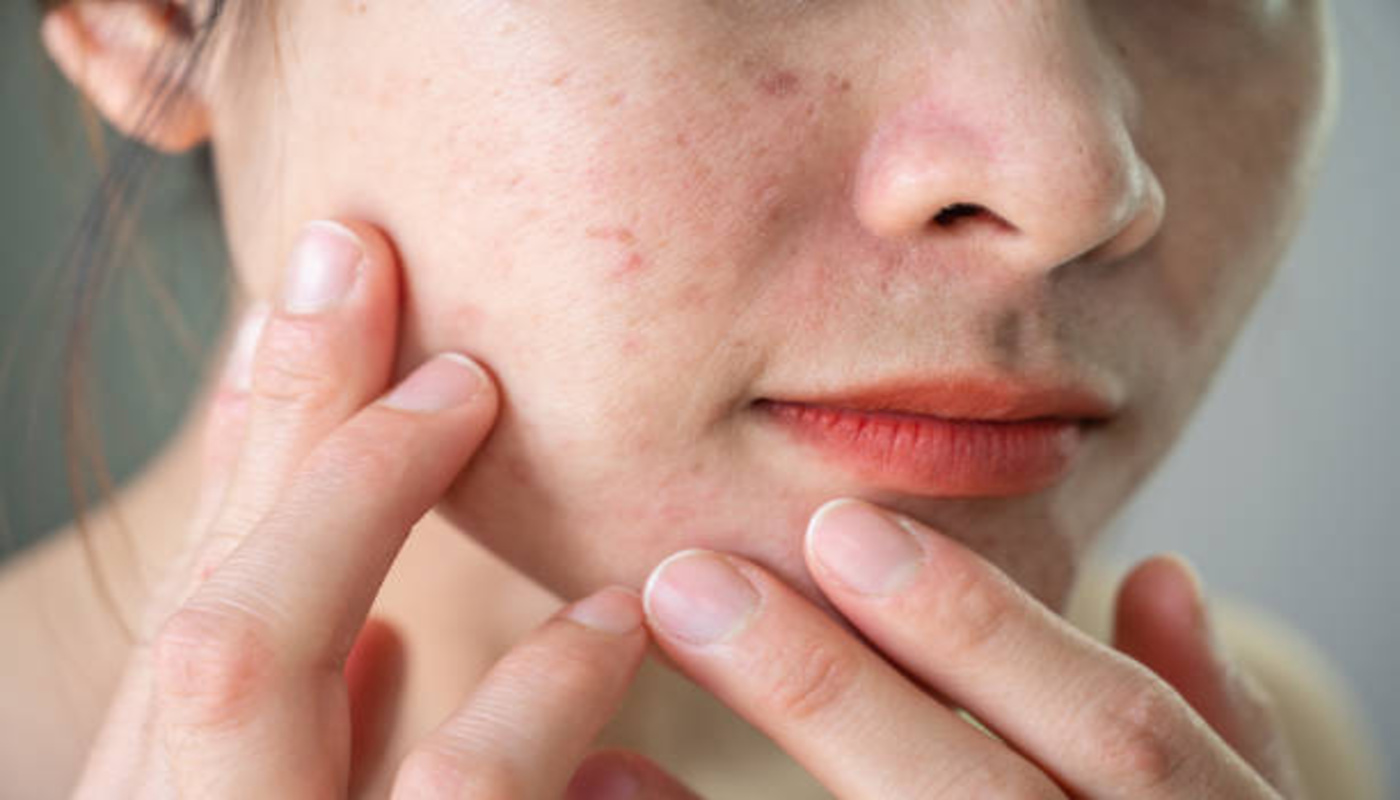
Across TikTok, Instagram, YouTube, and other digital platforms, an increasing number of beauty influencers have intentionally filmed themselves under harsh natural lighting, zoomed-in camera lenses, and high-definition settings that reveal enlarged pores, acne scars, fine lines, peach fuzz, rosacea, hyperpigmentation, and uneven texture. Rather than apologizing for these features, many simply continued applying makeup while allowing audiences to see skin exactly as it exists.
The result has been more than a cosmetic trend.
It represents a cultural shift in how authenticity is performed online, how beauty expertise is established, and how audiences negotiate the relationship between aspiration and reality.
Showing skin texture does not reject beauty altogether. Instead, it questions whether beauty must always depend upon digital perfection.
This subtle but significant shift has implications reaching far beyond makeup tutorials.
It influences self-esteem, purchasing decisions, advertising ethics, digital literacy, and even the emotional relationship people develop with their own reflection.
Understanding why visible skin texture matters requires examining not only influencers themselves, but also the cultural systems that made perfectly smooth skin appear “normal” in the first place.
The Historical Invention of Flawless Skin
The desire for smooth skin is hardly new.
Ancient beauty rituals across civilizations often emphasized clear complexions as symbols of youth, privilege, cleanliness, or social status. Throughout history, powders, oils, herbal remedies, and cosmetics attempted to improve the appearance of skin.
However, modern perfection emerged through technology rather than biology.
Photography introduced retouching.
Fashion magazines normalized airbrushing.
Hollywood lighting concealed imperfections.
Digital editing software accelerated these practices.
By the early 2000s, image manipulation had become so sophisticated that audiences regularly consumed faces that no longer resembled real human skin.
Then smartphones introduced an entirely new layer.
Instead of only brands editing photographs, individuals began editing themselves.
Face smoothing became automatic.
Beauty filters enlarged eyes while shrinking pores.
Camera software removed texture before photos were even saved.
Eventually, many users forgot what unedited skin actually looked like.
Researchers studying digital self-presentation have repeatedly observed that repeated exposure to idealized faces shifts people’s internal expectations. What once appeared unrealistic gradually becomes perceived as ordinary.
The consequence is psychological rather than merely visual.
People begin comparing themselves not with real faces, but with edited versions of humanity.
Why Skin Texture Became a Cultural Statement
Showing pores should not be revolutionary.
Yet culturally, it has become exactly that.
When influencers intentionally leave texture visible, they communicate something larger than skincare honesty.
They challenge several assumptions simultaneously.
First, they question whether expertise requires perfection.
Historically, beauty experts were expected to embody impossible ideals.
A makeup artist with acne risked being viewed as less credible.
A skincare educator with visible pores might once have struggled to gain authority.
Today’s creators increasingly reject that equation.
Many explain that makeup sits differently on textured skin because everyone’s skin contains texture.
This practical honesty often increases audience trust.
Second, visible texture disrupts algorithmic beauty norms.
Platforms frequently reward polished visuals.
Highly edited content often performs well because viewers have become conditioned to associate smoothness with quality.
Influencers who resist excessive editing therefore challenge platform aesthetics as much as beauty standards themselves.
Third, texture redefines vulnerability.
Instead of dramatic emotional confessions, authenticity may simply involve refusing to blur one’s face.
That small decision carries surprising emotional weight because audiences recognize how unusual it has become.
The Rise of “Real Skin” Beauty Education
Beauty tutorials once emphasized transformation.
Today’s educational content increasingly emphasizes understanding.
Rather than promising “glass skin overnight,” many creators explain:
- why foundation separates around pores
- why sunscreen affects makeup texture
- why acne heals differently across individuals
- why hormonal changes influence skin appearance
- why lighting dramatically changes complexion
These conversations shift beauty education away from illusion toward realism.
Several respected creators have openly discussed how professional studio lighting differs from daylight, demonstrating identical makeup under different conditions.
Viewers often express surprise.
Products that seemed flawless indoors suddenly reveal perfectly ordinary creasing, pores, and texture outside.
Instead of disappointing audiences, these demonstrations frequently build credibility.
Consumers increasingly appreciate realistic expectations over exaggerated promises.
Ironically, honesty has become a competitive advantage.
Skin Texture and the Psychology of Social Comparison
Psychologists have long recognized that people evaluate themselves through comparison.
Social media dramatically increases opportunities for such comparisons.
When every scroll presents polished faces, individuals may begin believing their own skin is unusually flawed.
Visible texture interrupts that cycle.
Research on appearance-based social comparison suggests that exposure to more realistic representations can reduce upward comparison—the tendency to compare oneself with people perceived as superior.
Although seeing natural skin does not eliminate insecurity, it can reduce the illusion that everyone else possesses perfect complexions.
Many viewers describe moments of relief after watching creators apply foundation over acne scars or film close-up skincare routines without filters.
The emotional reaction often sounds remarkably similar.
“I thought I was the only one.”
That sentence reveals the social power of representation.
The goal is not convincing audiences that texture is beautiful in every moment.
Rather, it reminds them that texture is universal.
Normalizing reality can be psychologically healthier than constantly redefining perfection.
From Selling Perfection to Selling Trust
Beauty influencing has evolved alongside consumer expectations.
Earlier influencer marketing frequently depended upon aspiration.
Creators appeared almost impossibly polished.
Brands benefited because products seemed miraculous.
Today, audiences have become increasingly skeptical.
Consumers investigate sponsorship disclosures.
They analyze lighting.
They question filters.
They compare before-and-after images.
Trust has become a valuable currency.
Some beauty influencers now deliberately zoom into their skin before reviewing products.
Instead of claiming complete pore elimination, they explain exactly what changed—and what did not.
For example, a foundation may reduce redness while leaving natural texture visible.
A concealer may brighten under-eyes without completely eliminating fine lines.
These nuanced evaluations often resonate more strongly than exaggerated promises.
Brands have gradually noticed this change.
Several skincare and cosmetics campaigns increasingly feature close-up photography that preserves freckles, pores, and natural skin details rather than erasing them entirely.
Although not yet universal, this represents a notable shift in visual marketing culture.
Authenticity itself has become commercially valuable.
Yet this creates another paradox.
If authenticity becomes profitable, does it remain authentic?
This tension continues shaping influencer culture today.
Case Studies: Influencers Who Changed the Conversation
The movement toward visible skin texture was not created by one individual. Instead, it emerged through many creators across different countries who collectively challenged unrealistic beauty expectations.
Among the most influential voices is Wayne Goss, the British makeup artist whose YouTube channel has long emphasized realistic makeup techniques over heavily edited fantasy. Goss frequently demonstrates how foundation behaves on mature skin, textured skin, and under different lighting conditions. Rather than promising perfection, he explains how makeup works with natural skin, helping audiences understand that pores and fine lines are not makeup “failures” but ordinary features of human faces.
Similarly, Robert Welsh, a professional makeup artist from the United Kingdom, has become widely known for explaining why makeup often looks different in real life than it does on Instagram. Through educational videos, Welsh regularly discusses camera lenses, beauty filters, studio lighting, and editing techniques. His recurring message—that skin naturally has pores and texture—has helped millions reconsider what realistic makeup should actually look like.
American beauty creator RawBeautyKristi has also contributed to conversations around authenticity through years of unfiltered discussions about makeup, skin, and the pressures of online beauty culture. Rather than presenting herself as permanently polished, she has publicly spoken about the emotional demands of maintaining an online beauty persona, encouraging broader conversations about honesty within influencer culture.
Another important example comes from skincare educator Hyram Yarbro, whose educational approach emphasizes understanding skin rather than chasing perfection. While Hyram consistently reminds audiences that skincare is highly individual, he also cautions against expecting impossible transformations from products alone. His content reflects a broader movement away from miracle marketing toward informed consumer education.
These creators differ significantly in style, personality, and audience. Yet they share a common characteristic: they reduce the distance between digital beauty and lived reality.
Their influence lies not simply in revealing pores, but in changing what audiences expect beauty education to look like.
Instead of teaching people how to hide every perceived imperfection, they increasingly teach viewers how to understand their skin as it naturally exists.
Although discussions around visible skin texture often gain traction through English-speaking social media, the movement has developed across cultures in distinct ways. Beauty ideals are never universal. They are shaped by history, media industries, cultural traditions, economic aspirations, and local standards of professionalism.
In South Korea, for example, skincare culture has become globally influential through K-beauty. While terms like “glass skin” emphasize luminosity and hydration rather than literal perfection, commercial imagery has often featured exceptionally smooth complexions. As beauty creators increasingly film under natural lighting and discuss enlarged pores, redness, or irritation without excessive editing, audiences have begun distinguishing between healthy skin and digitally perfected skin. This subtle distinction has encouraged more realistic conversations around skincare expectations.
In Japan, where beauty culture has long valued meticulous skincare routines and understated makeup, some creators have shifted attention toward skin maintenance rather than flawless appearances. Educational content increasingly focuses on consistency, barrier health, sun protection, and patience instead of dramatic overnight transformations.
Across South Asia, beauty influencers are also reshaping conversations around visible skin. Creators openly discuss acne marks, post-inflammatory hyperpigmentation, uneven pigmentation, and the realities of humid climates that affect makeup longevity. By refusing to erase these common experiences, they expand representation for audiences whose skin concerns have historically received less attention in global beauty campaigns.
In Latin America, creators frequently combine beauty education with discussions about confidence, identity, and cultural expectations. Many demonstrate makeup on real skin while celebrating diverse complexions and encouraging viewers to appreciate individuality alongside cosmetic creativity.
Meanwhile, African beauty creators have increasingly highlighted the importance of showing realistic skin texture across a wide range of skin tones. High-definition cameras and proper lighting have helped challenge outdated misconceptions that darker skin is naturally “flawless” or immune to concerns like acne, pigmentation, or texture. Their content broadens understanding while increasing representation in global beauty conversations.
Although these movements differ culturally, they share one common principle: authenticity can coexist with aspiration.
Beauty no longer requires pretending that human skin behaves like polished glass.
Algorithms, Filters, and the Economics of Perfection
Social media platforms are not neutral spaces.
Their algorithms reward attention.
Content that appears visually striking often receives more engagement, encouraging creators to prioritize polished aesthetics.
For years, filters became nearly invisible parts of digital communication. Many users applied subtle skin-smoothing effects so routinely that they forgot filters were active at all.
This technological normalization changed expectations.
Viewers gradually interpreted filtered faces as ordinary faces.
Beauty influencers who intentionally disable smoothing filters therefore challenge more than beauty standards—they challenge platform culture itself.
However, authenticity introduces economic risks.
Perfect imagery often attracts sponsorships.
Highly polished feeds appear commercially attractive.
Creators who consistently show acne, enlarged pores, or skin texture may worry about losing followers accustomed to idealized content.
Some have publicly discussed receiving comments asking why their skin suddenly “looks worse” simply because they changed cameras or lighting.
Such reactions reveal how deeply audiences have internalized edited appearances.
The issue is not merely vanity.
It reflects digital literacy.
As consumers become more aware of editing practices, they increasingly seek creators who distinguish between achievable results and digital illusion.
Transparency itself becomes valuable content.
The Beauty Industry Responds
Influencers do not shape culture alone.
Brands also adapt to changing consumer expectations.
In recent years, several cosmetics and skincare companies have reduced excessive retouching in advertising campaigns. Some campaigns preserve freckles, visible pores, facial lines, and natural skin variation rather than presenting digitally perfected models.
The significance of these campaigns extends beyond aesthetics.
Advertising has historically influenced public perceptions of what beauty “should” resemble.
When advertisements consistently erase texture, audiences may interpret texture as undesirable.
Conversely, when campaigns preserve natural skin details, they quietly expand visual norms.
Some brands have also shifted product messaging.
Rather than promising “poreless skin,” marketing increasingly emphasizes hydration, comfort, barrier support, radiance, or complexion enhancement.
This language reflects a broader understanding that skincare cannot eliminate every natural characteristic of human skin.
Consumers themselves have encouraged this evolution.
Online reviews increasingly reward honesty.
Product demonstrations filmed under daylight often receive praise because viewers believe they represent real-world performance.
Trust becomes an important competitive advantage.
Nevertheless, challenges remain.
Many campaigns still rely heavily on editing.
Authenticity exists alongside perfection rather than replacing it completely.
The industry continues negotiating these competing visual ideals.
Representation Beyond Acne
Public conversations about skin texture often focus primarily on acne.
While acne deserves thoughtful representation, visible skin encompasses much more.
Natural skin includes:
- Enlarged pores
- Freckles
- Fine lines
- Wrinkles
- Peach fuzz
- Birthmarks
- Hyperpigmentation
- Rosiness
- Uneven coloration
- Makeup creasing
- Dry patches
- Oily areas
Showing these characteristics broadens representation across age groups, ethnicities, and life experiences.
For mature audiences, visible expression lines challenge assumptions that beauty belongs exclusively to youth.
For people with freckles or birthmarks, realistic imagery counters years of cosmetic concealment.
For those with naturally textured complexions, authentic beauty content can reduce feelings of isolation.
Representation matters because beauty standards influence belonging.
When individuals repeatedly see faces resembling their own, appearance differences become less socially exceptional.
This process supports cultural inclusion rather than simply cosmetic diversity.
The Psychological Value of Imperfect Visibility
Not every viewer responds to visible skin in the same way.
Some find realistic imagery deeply reassuring.
Others continue preferring aspirational beauty.
These responses can coexist.
The goal of authentic beauty content is not eliminating glamour.
Instead, it expands the emotional possibilities available within beauty culture.
Psychologists studying body image increasingly recognize that repeated exposure to diverse appearances may encourage healthier self-perception.
Similarly, exposure to realistic skin may help reduce unnecessary shame surrounding ordinary biological features.
Importantly, this does not mean beauty influencers become therapists.
Nor should audiences expect influencers to disclose every insecurity.
Healthy authenticity respects personal boundaries.
Creators may choose how much they reveal while still contributing to broader cultural honesty.
Authenticity is therefore not measured by oversharing.
Sometimes authenticity simply means refusing unnecessary digital alteration.
The Risks of Turning Authenticity Into Performance
Ironically, authenticity itself can become performative.
As audiences increasingly reward honesty, creators may feel pressure to constantly prove how “real” they are.
This creates new challenges.
Some influencers carefully stage “messy” moments.
Others selectively reveal imperfections while continuing extensive editing elsewhere.
Brands may market authenticity as another aesthetic rather than a genuine ethical commitment.
This phenomenon reminds us that influencer culture remains commercial.
Authenticity does not automatically eliminate marketing.
Consumers therefore benefit from maintaining critical media literacy.
Questions worth asking include:
- Is this creator transparent about sponsorships?
- Are product claims supported by realistic demonstrations?
- Does educational content encourage informed decisions?
- Are expectations achievable without misleading editing?
These questions strengthen consumer confidence without requiring cynicism.
Authenticity is valuable, but thoughtful skepticism remains equally important.
A New Definition of Beauty Expertise
Perhaps the most lasting cultural impact of visible skin texture is the transformation of expertise itself.
Traditionally, beauty experts were expected to embody perfection.
Today, expertise increasingly depends upon honesty, education, and transparency.
Influencers gain credibility not because their skin lacks pores but because they explain products realistically.
This shift changes audience expectations.
Beauty knowledge becomes less about selling fantasy and more about understanding biology, cosmetics, lighting, photography, and individual variation.
Consumers become active learners rather than passive recipients of advertising.
Such educational approaches encourage informed purchasing decisions while reducing disappointment caused by unrealistic expectations.
Beauty evolves from performance toward conversation.
Looking Forward: The Future of Beauty in a High-Definition World
Technology will continue advancing.
Artificial intelligence can already generate flawless digital faces that never existed.
Filters become increasingly difficult to detect.
Editing tools grow more sophisticated each year.
Yet cultural movements rarely move in only one direction.
As technology becomes more capable of manufacturing perfection, public appreciation for visible humanity may also grow stronger.
Beauty influencers who show skin texture are participating in this broader cultural negotiation.
They remind audiences that realism possesses its own aesthetic value.
Future beauty culture will likely balance aspiration with authenticity rather than choosing one exclusively.
Consumers may still enjoy glamorous makeup, artistic transformations, and polished photography while simultaneously expecting greater transparency about editing.
This balance reflects a more mature digital culture.
Rather than rejecting beauty, society may gradually redefine what beauty looks like when honesty becomes part of the image.
Conclusion: Seeing Skin, Seeing Ourselves
The movement toward showing skin texture is about far more than pores.
It represents a reconsideration of authenticity in an era increasingly shaped by digital perfection.
Beauty influencers who reveal freckles, acne scars, fine lines, peach fuzz, or natural texture are not asking audiences to abandon cosmetics or stop enjoying beauty. Instead, they invite viewers to separate beauty from impossibility.
Their influence extends into advertising, consumer trust, media literacy, psychology, and representation across cultures. By demonstrating that even experienced makeup artists and skincare educators have textured skin, they quietly dismantle one of the internet’s most persistent illusions—that flawless skin is the default and everything else is failure.
The cultural importance of this shift lies not in replacing one beauty standard with another, but in expanding the definition of what deserves to be seen.
When texture is no longer hidden, people gain permission to see their own faces with greater realism and perhaps with greater compassion.
In a world where digital perfection grows increasingly easy to manufacture, choosing to remain visibly human may become one of the most influential acts a beauty creator can make.
Sources: Allure, Vogue, Harper’s Bazaar, Teen Vogue, The New York Times, BBC, The Guardian, Dazed, Refinery29, Byrdie, Cosmetics Business, American Psychological Association, Journal of Social and Clinical Psychology, International Journal of Environmental Research and Public Health, YouTube