 by
by In Latin America, the body has rarely been just a body.
It can carry family expectations, class signals, racial histories, gender rules, religious traditions, media ideals and ideas about what it means to be “presentable.” A woman may be praised for having curves but criticized for taking up too much space. A person may be encouraged to embrace their natural features while simultaneously being taught that lighter skin, a particular hair texture, a smaller waist or a carefully controlled silhouette is more socially desirable. Beauty can be celebrated as a form of confidence while also functioning as a form of social discipline.
This complexity makes Latin American body positivity especially significant.
Across countries including Brazil, Mexico, Argentina, Colombia, Chile and others, conversations about body acceptance have developed within societies where appearance has long held powerful cultural meaning. Social media has accelerated those conversations, allowing people whose bodies were historically underrepresented in mainstream fashion and entertainment to become visible on their own terms.
But the Latin American body positivity movement is not simply a regional version of a North American trend.
It has its own histories, contradictions and cultural vocabulary.
Research examining media influence and body image across Latin America has found consistent associations between media use, internalization of appearance ideals and body dissatisfaction, particularly among women. At the same time, qualitative research suggests that family and peers can sometimes exert an even stronger influence than media. That finding is important because it reveals why body acceptance cannot be achieved simply by changing advertisements or adding a few diverse models to fashion campaigns. (PubMed)
The deeper transformation is about changing what communities teach people to believe their bodies are worth.
Beauty in Latin America Has Never Been One Single Ideal
One of the most important mistakes in discussing Latin American beauty culture is assuming there is one universal “Latin body.”
There isn’t.
Latin America encompasses Indigenous communities, Afro-Latin populations, mestizo populations and people of European, Asian and Middle Eastern descent, alongside enormous differences in geography, class, language, religion and cultural history.
Beauty ideals consequently vary dramatically.
Brazilian beauty culture may emphasize different characteristics from Mexican beauty culture. Caribbean Latin America carries different histories from the Southern Cone. Urban elites may encounter different standards from rural communities. Indigenous and Afro-descendant women may experience appearance expectations differently from white or lighter-skinned women.
Even the celebrated image of the “curvy Latina” can become restrictive when it is treated as another mandatory template.
The cultural message can shift from “you must be thin” to “you should be curvy in the right places.”
That is not necessarily liberation.
A body can be excluded for being too large, too small, too muscular, too straight, too soft, too dark, too visibly Indigenous, too visibly aged or simply insufficiently similar to whatever silhouette happens to be fashionable.
Latin American body positivity therefore has the opportunity to make a more radical argument: there should not be one culturally approved way to inhabit a body.
That distinction matters.
From “Beauty Is Discipline” to “My Body Is Mine”
Historically, beauty practices across Latin America have often been connected with femininity, respectability and social mobility.
Looking polished can communicate professionalism. Dressing according to expected standards can influence how someone is treated. Physical appearance can become part of how women are evaluated in employment, relationships and public life.
This helps explain why appearance pressure can be difficult to dismantle.
For many people, beauty is not merely vanity.
It can feel practical.
It can feel protective.
It can feel economically useful.
It can even feel like a form of social survival.
Body positivity challenges that system by questioning why acceptance should be conditional on conformity.
Instead of asking, “How can I make my body acceptable?” the movement asks a fundamentally different question:
“Why does my body need permission to be acceptable in the first place?”
That shift is psychologically meaningful.
It moves the conversation away from constant self-correction and toward autonomy.
Brazil and the Rise of Digital Body Acceptance
Brazil offers one of the most interesting environments for understanding the cultural evolution of body positivity.
The country has a globally influential fashion, beauty and entertainment industry, but it has also developed strong digital communities around feminism, body acceptance and representation.
Academic research in Brazil has increasingly examined the relationship between social media and body satisfaction. One study involving more than 700 adults specifically investigated whether the type of content people viewed on social networks affected body dissatisfaction, illustrating how the digital environment can influence how individuals evaluate their appearance. (DOI)
This matters because social media has created an unusual cultural contradiction.
The same technology that can expose people to highly controlled beauty imagery can also allow previously excluded bodies to become visible.
A teenager in a Brazilian city does not have to encounter only magazine covers or television celebrities anymore. She can encounter creators who show stretch marks, cellulite, different body proportions, natural hair, disability, aging, different skin tones and ordinary clothing on ordinary bodies.
Representation becomes participatory.
Instead of waiting for an editor or casting director to decide whether a body deserves to be photographed, individuals can photograph themselves.
That changes the power relationship.
The camera is no longer exclusively controlled by the institution.
The person being photographed can control the narrative.
The Importance of Feminist Roots
Latin American body positivity cannot be separated from feminism.
Across the region, feminist movements have repeatedly challenged the idea that women’s bodies should exist primarily for public evaluation.
This includes questioning sexual harassment, beauty expectations, restrictive gender roles and the unequal standards imposed on women compared with men.
Body acceptance fits naturally into that larger conversation.
The issue is not simply whether someone likes what they see in the mirror.
It is whether women are allowed to exist without their bodies becoming the primary measure of their value.
This is especially important because conventional beauty culture can create a paradox.
Women are told to be attractive, but not to appear as though they are trying too hard.
They are encouraged to embrace their bodies, but only certain kinds of bodies receive social approval.
They are told to age gracefully, while being surrounded by industries built around reversing visible signs of aging.
They are encouraged to feel confident, while constantly receiving messages suggesting that confidence can be purchased through appearance-related products.
Body positivity exposes these contradictions.
Why the Latin American Conversation Is Also About Race
One of the most important dimensions of Latin American body positivity is race.
Discussions of body acceptance can become incomplete if they focus exclusively on size.
Skin tone, hair texture and facial features can also determine whether someone is perceived as fitting dominant beauty ideals.
Colorism and Eurocentric standards have shaped beauty cultures across parts of Latin America in different ways. Lighter skin, straighter hair and European-coded facial features have historically received greater visibility in many commercial environments.
For Afro-Latin and Indigenous communities, therefore, body acceptance may involve more than accepting a particular body size.
It can mean rejecting the assumption that beauty becomes more valuable as it moves closer to European standards.
This makes representation especially powerful.
When darker skin, natural curls, Indigenous features or traditionally marginalized aesthetics appear in mainstream cultural spaces without being treated as unusual exceptions, the psychological message is different.
The person watching does not merely see an attractive individual.
They see evidence that their own features can exist inside the category of beauty.
That is an important distinction.
Representation can expand the boundaries of what people imagine is possible for themselves.
Curves Are Not the Same as Inclusion
Latin America’s reputation for celebrating curves creates another important complication.
International popular culture has often romanticized the “curvy Latina.”
At first glance, this seems like an alternative to the global thin ideal.
But replacing one narrow body archetype with another does not necessarily create genuine inclusivity.
A woman can be told she is beautiful because she has curves and still feel inadequate if her body does not possess the “right” proportions.
The preferred body may become:
Small waist.
Prominent hips.
Certain proportions.
Smooth skin.
Youthful appearance.
Conventionally feminine presentation.
The result is a new form of body surveillance.
Instead of asking whether someone is thin enough, society begins asking whether they are curvy enough.
Body positivity becomes stronger when it refuses this exchange.
The goal is not to establish a new winning body type.
It is to weaken the cultural hierarchy that ranks bodies in the first place.
Fashion as a Battleground for Inclusion
Fashion provides one of the clearest demonstrations of how body positivity can move from cultural conversation to structural change.
If a brand tells consumers that every body is beautiful but produces clothing in only a narrow range of sizes, the message has an obvious contradiction.
A person cannot fully participate in fashion inclusion if the product is unavailable to them.
Argentina offers an especially important example.
The country’s Law 27.521 established a national standardized clothing-size system, known as SUNITI, based on anthropometric measurements of the population. The framework applies to clothing manufacturing and sales and requires retailers to provide standardized sizing information. It also establishes protections around dignified and equitable treatment, including recognition of abusive or stigmatizing practices related to physical appearance as discriminatory. (Argentina)
This is significant because it demonstrates a crucial evolution in the body acceptance conversation.
The question is no longer only:
“Do people feel good about their bodies?”
It becomes:
“Does society actually accommodate those bodies?”
That is a much more demanding question.
When a Clothing Size Stops Being a Personal Failure
Clothing has extraordinary psychological power.
A person walks into a store, chooses a garment and discovers that it does not fit.
The experience can easily become internalized:
“My body is too big.”
But there is another possibility:
“The clothing system was not designed around my measurements.”
That distinction may sound small, but psychologically it is enormous.
One interpretation produces shame.
The other identifies a structural limitation.
Standardized sizing systems attempt to reduce some of that confusion by creating more consistent measurement references. Argentina’s national framework requires retailers to display standardized measurement information and applies to clothing sold both physically and online. (Argentina)
Body inclusivity becomes more meaningful when people are not forced to interpret inconsistent clothing sizes as judgments about their bodies.
Social Media Has Become Both the Problem and the Protest
Perhaps nowhere is the complexity of modern body positivity more visible than on Instagram, TikTok and other visual platforms.
Social media can amplify unrealistic beauty standards.
But it can also democratize representation.
This creates an ongoing tension.
A feed filled with highly curated bodies can encourage comparison. A feed filled with body-positive creators can provide alternative representations. Yet even body-positive content can become another appearance-centered performance if every message ultimately returns to looking attractive.
The most transformative content often goes beyond appearance.
It shows people swimming.
Dancing.
Working.
Traveling.
Studying.
Dating.
Parenting.
Playing sports.
Going to the beach.
Wearing clothes without hiding.
The body becomes a participant in life rather than the central object of inspection.
That shift is psychologically important because it changes the question from:
“Do I look good?”
to:
“What can I experience?”
The Psychological Value of Seeing Ordinary Bodies
Body positivity is sometimes criticized for suggesting that simply seeing diverse bodies will automatically eliminate body dissatisfaction.
Research does not support such an uncomplicated conclusion.
The Latin American evidence base itself has limitations. A major systematic review found that much of the research has been cross-sectional and concentrated in countries such as Brazil and Mexico, particularly among adolescents and young adults. The researchers also emphasized the need for more longitudinal and experimental research. (PubMed)
That means cultural optimism needs to be balanced with scientific caution.
Representation can help.
But representation alone cannot erase deeply internalized beliefs.
If someone has spent years learning that thinness equals discipline, attractiveness equals social value, or certain features equal higher status, one positive Instagram post will not necessarily undo those beliefs.
Cultural change is cumulative.
People need repeated exposure to alternative narratives, supportive communities and environments that make those narratives materially believable.
Family Can Matter as Much as the Algorithm
One of the most revealing findings in the Latin American literature is that family and peers may exert stronger perceived influence on body image than media alone.
This makes cultural analysis essential.
A social media platform may show a person thousands of images.
But a relative’s comment about their appearance can become emotionally significant because it comes from someone whose approval matters.
A friend may casually criticize their own body and normalize dissatisfaction.
A parent may praise dieting as evidence of discipline.
A peer group may establish what clothing is considered flattering.
These interactions can turn beauty standards into everyday social language.
Body positivity therefore has to enter homes and friendships, not just social media feeds.
The most powerful cultural change may happen when a family stops commenting on someone’s body at the dinner table.
Or when friends stop treating weight loss as the default compliment.
Or when children grow up hearing that bodies change naturally rather than learning that every change represents failure.
The Movement Is Also Challenging Masculinity
Body positivity discussions have historically centered heavily on women.
Latin American men, however, also experience culturally specific appearance pressures.
Muscularity, athleticism, height, grooming and physical strength can become expectations of masculinity.
The ideal male body may be different from the ideal female body, but the underlying mechanism is similar: social value becomes attached to physical conformity.
This matters because a truly inclusive body movement cannot simply expand the category of acceptable women while leaving men trapped inside rigid masculine expectations.
Men also need permission to exist outside a narrow physical ideal.
And boys need to learn that bodies are not public scorecards.
Disability and Body Visibility
Another frontier for Latin American body inclusivity is disability representation.
Disability is frequently absent from conventional beauty imagery, or represented primarily through narratives of inspiration rather than ordinary life.
Body positivity offers an opportunity to change that.
An inclusive visual culture should not require disabled people to be extraordinary before they become visible.
They should be able to appear in fashion, advertising, entertainment and social media as people participating in everyday life.
That is part of the broader movement away from treating bodies as objects that must prove their worth.
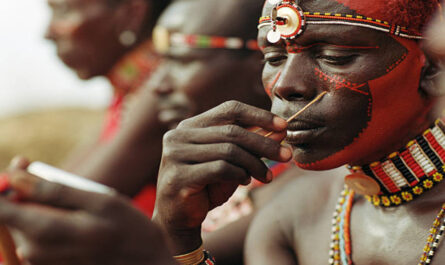
Indigenous Identity and the Politics of Visibility
Latin American body positivity also has an important relationship with Indigenous representation.
For Indigenous people, appearance can intersect with histories of cultural marginalization and assimilation.
Celebrating Indigenous clothing, hair, skin tones, facial features and cultural aesthetics can therefore carry meaning beyond fashion.
It can become a form of cultural recognition.
However, inclusion must avoid turning Indigenous identity into an aesthetic trend detached from the communities themselves.
There is a difference between genuine representation and borrowing visual elements because they have become fashionable.
Body inclusivity works best when cultural identities are represented with agency rather than consumed as decoration.
Why “Love Your Body” Can Sometimes Be Too Much to Ask
One of the most useful developments emerging from body positivity is the recognition that everyone does not have to love their body every day.
This is particularly important psychologically.
Body image fluctuates.
People experience aging, illness, pregnancy, hormonal changes, disability, stress, grief and ordinary physical changes. Demanding constant admiration can accidentally create another impossible standard.
“If I truly accepted myself, I would love everything about my appearance.”
That can become another form of pressure.
Body neutrality offers one alternative.
Instead of requiring constant celebration, it emphasizes the possibility of existing without treating appearance as a permanent emotional project.
You do not have to love every feature.
You do not have to feel beautiful every morning.
You do not have to photograph yourself.
You do not have to transform your body into a political statement.
You can simply live in it.
That may be one of the most psychologically sustainable lessons body positivity can offer.
The Commercialization Problem
As body positivity became culturally influential, brands discovered that inclusivity could sell.
This has created genuine opportunities.
Brands may expand size ranges, diversify campaigns, hire different models and rethink product development.
But commercial adoption also creates a danger.
A movement that began by questioning beauty hierarchies can become another marketing aesthetic.
The “inclusive campaign” can become a seasonal visual style rather than a long-term commitment.
A brand may celebrate body diversity in advertising while maintaining limited product availability.
A company may showcase different bodies without changing its workplace culture.
The question therefore becomes:
Is inclusion visible only in the advertisement, or does it exist inside the business model?
Consumers are increasingly capable of recognizing that distinction.
From Representation to Material Inclusion
The future of Latin American body positivity may depend on moving beyond visibility.
Representation asks:
“Who gets shown?”
Material inclusion asks:
“Who gets served?”
The difference is enormous.
A truly inclusive fashion system needs accessible sizing.
A truly inclusive media system needs diverse casting.
A truly inclusive workplace needs appearance-neutral professional standards.
A truly inclusive digital environment needs stronger protection against harassment.
A truly inclusive educational system should teach young people media literacy and body diversity.
A truly inclusive healthcare environment should treat people with dignity regardless of appearance.
The movement becomes strongest when cultural change and institutional change reinforce each other.
Latin America Can Teach the World Something About Cultural Specificity
There is a global tendency to export movements as if they can simply be translated from one culture into another.
Latin American body positivity demonstrates why that approach is insufficient.
A movement born in one social context may emphasize individual empowerment.
Another culture may emphasize family relationships.
Another may focus on racial identity.
Another may prioritize clothing access.
Another may connect body acceptance to feminist activism.
These approaches are not necessarily competing.
They reflect different social histories.
Latin American movements therefore contribute an important lesson to global body-inclusivity conversations: there is no single universal route toward body acceptance.
The language of inclusion has to respond to local realities.
What the Movement Means for Younger Generations
For younger Latin Americans, the relationship with appearance is being negotiated in an unusually complex environment.
They have greater access to diverse representations than previous generations.
But they are also exposed to unprecedented levels of visual comparison.
The same phone can contain a body-positive activist, a luxury fashion campaign, a fitness influencer, a beauty advertisement, a celebrity transformation and an edited image within seconds.
The challenge is no longer simply increasing representation.
It is teaching people how to interpret representation.
Media literacy becomes a form of body protection.
Young people need to understand that social media is curated, commercial and algorithmically organized. They need to recognize that popularity does not equal truth and that visibility does not equal desirability.
Most importantly, they need opportunities to construct identities that are not entirely dependent on appearance.
A More Inclusive Definition of Beauty
Perhaps the most meaningful cultural contribution of Latin American body positivity is that it challenges the idea that beauty must be a competition.
If only one body can represent the ideal, everyone else becomes a deviation.
But if beauty is understood as culturally diverse, constantly changing and incapable of being reduced to a single physical template, the hierarchy begins to weaken.
A woman does not have to reject femininity to reject beauty standards.
A man does not have to reject fitness to reject muscular expectations.
A person can enjoy makeup without believing they are unattractive without it.
Someone can pursue fashion without believing clothing determines their worth.
Someone can change their appearance without believing their original body was defective.
This nuance matters.
Body positivity should not become another rigid ideology in which every personal beauty choice is judged as either “empowering” or “problematic.”
People deserve autonomy.
The Next Stage: From Body Positivity to Body Freedom
The future of the movement may ultimately involve a broader concept: body freedom.
Body positivity asks people to value bodies.
Body neutrality asks people not to make appearance the center of identity.
Body freedom goes one step further.
It asks whether people are genuinely free to make choices about their bodies without shame, discrimination or coercive social expectations.
That includes the freedom to dress differently.
The freedom to age.
The freedom to participate in public life.
The freedom to be photographed.
The freedom not to be photographed.
The freedom to pursue beauty.
The freedom not to pursue it.
The freedom to occupy space.
The freedom to stop apologizing for occupying it.
For Latin America, this next stage could be especially powerful because appearance is intertwined with so many other social questions: race, gender, class, cultural identity, fashion, sexuality, media representation and social mobility.
Body freedom acknowledges all of those intersections.
Conclusion: A Movement Bigger Than the Mirror
Latin American body positivity is sometimes reduced to images of confidence, curves and colorful social media campaigns.
But its deeper significance is much larger.
It is challenging the cultural systems that teach people to measure their worth through appearance.
It is questioning why clothing sizes can become sources of shame.
It is exposing the relationship between beauty, race and social hierarchy.
It is creating new forms of visibility for bodies historically excluded from mainstream representation.
It is encouraging conversations about mental wellbeing, comparison and self-worth.
And increasingly, it is forcing institutions to confront a difficult question: what does inclusion look like when it becomes more than an advertisement?
The most important achievement of body positivity may not be convincing everyone to love their reflection.
It may be making the reflection less important.
A society moves toward body inclusivity when people can attend university, enter workplaces, shop for clothes, appear in media, build relationships, participate in public life and move through their communities without constantly wondering whether their bodies have earned the right to be there.
That is the deeper promise of the movement.
Not a world where everyone looks the same.
Not even a world where everyone feels beautiful.
A world where beauty no longer determines who deserves visibility, dignity or belonging.
Latin America’s evolving body positivity movements are contributing to that conversation in ways that are culturally specific, imperfect and sometimes contradictory—but precisely because of those complexities, they offer something valuable to the global movement for body inclusion.
The future will not be defined simply by how many different bodies appear on a screen.
It will be defined by whether those bodies are allowed to live fully beyond the screen.
And that is where body positivity becomes something more enduring than a trend: a cultural demand for the freedom to exist without apology.