 by
by Introduction: Beauty at the Intersection of Faith, Identity, and Visibility
For decades, global beauty standards have largely been shaped by Western aesthetics—often privileging visibility, exposure, and a narrow definition of femininity. Within this framework, modesty—particularly as practiced by many Muslim women—was frequently misunderstood, marginalized, or rendered invisible. Yet in the digital age, a powerful shift is underway. Muslim influencers across continents are not only participating in global beauty conversations but actively reshaping them—on their own terms.
What makes this transformation significant is not merely representation. It is the refusal to dilute identity for acceptance. These influencers are not negotiating their faith to fit into mainstream beauty culture; instead, they are expanding what beauty itself can mean. Through fashion, skincare, storytelling, and digital presence, they are redefining beauty as something that can coexist with modesty, spirituality, and cultural specificity.
Figures such as Halima Aden, Dina Tokio, and Huda Kattan have each, in different ways, contributed to this redefinition—not through conformity, but through conviction.
This article explores how Muslim influencers are reshaping beauty standards without compromise, examining the cultural, psychological, and social implications of their work. It moves beyond surface-level representation to understand how identity, faith, and self-expression intersect in a rapidly evolving digital landscape.
Algorithmic Visibility and the Politics of Aesthetics
An often-overlooked dimension of Muslim influencers’ impact lies in how they navigate algorithmic systems that were never designed with their identities in mind. Social media platforms reward certain visual cues—skin exposure, specific facial expressions, fast-paced content—which can sometimes conflict with modest presentation styles. Despite this, many Muslim creators have carved out visibility by innovating within these constraints rather than abandoning their values. They experiment with storytelling formats, camera work, and narrative depth to hold attention without relying on conventional markers of virality. This is not merely a technical adjustment; it is a subtle form of resistance against homogenized beauty standards embedded within digital infrastructures. In doing so, they expose how algorithms are not neutral but culturally coded. Their success challenges the assumption that engagement must come at the cost of authenticity. Instead, it proves that audiences are willing to engage with content that offers meaning, relatability, and integrity. Over time, this has begun to influence platform dynamics themselves, encouraging broader definitions of what “engaging” content looks like. Muslim influencers are, therefore, not just adapting to digital systems—they are quietly reshaping them from within.
Ritual, Routine, and the Intimacy of Beauty Practices
Another significant way Muslim influencers are redefining beauty is by integrating spiritual and cultural rituals into everyday beauty routines. Unlike mainstream beauty content that often isolates skincare and makeup as purely aesthetic practices, many Muslim creators frame them within a broader rhythm of daily life that includes prayer, fasting, and mindfulness. For example, the act of wudu (ablution) becomes more than a religious obligation—it influences product choices, application techniques, and even the frequency of skincare routines. This integration creates a more holistic understanding of beauty, where physical care is intertwined with spiritual awareness. It also invites audiences—Muslim and non-Muslim alike—to reconsider beauty as a practice of intentionality rather than performance. The quiet intimacy of these routines, often shared through soft-spoken tutorials or reflective captions, contrasts sharply with high-energy, consumption-driven beauty culture. It slows the viewer down, encouraging presence rather than perfection. In this way, Muslim influencers are not only diversifying what beauty looks like but also how it feels. Beauty becomes less about transformation and more about alignment—between body, belief, and daily life.
Language, Narrative, and Reclaiming the Gaze
Language plays a crucial role in how beauty is understood, and Muslim influencers are actively reshaping this linguistic landscape. Instead of adopting the often hyperbolic, perfection-driven vocabulary of mainstream beauty culture, many creators use language that emphasizes gratitude, self-respect, and intentional care. Terms like “flawless” and “perfect” are frequently replaced with narratives centered on growth, acceptance, and balance. This shift may seem subtle, but it has profound implications. Language shapes perception, and by altering the way beauty is described, these influencers are also altering how it is experienced. They challenge the external gaze—the idea that beauty exists primarily to be evaluated by others—and replace it with a more internal, self-defined perspective. Captions, voiceovers, and storytelling become tools for reclaiming agency, allowing creators to frame their own narratives rather than being framed by external expectations. This is particularly significant in a global context where Muslim identities have often been spoken about rather than spoken from. Through intentional language, influencers assert not only how they look but how they are understood, shifting beauty from an object of observation to an expression of self-definition.
Intergenerational Impact and the Future of Beauty Narratives
The influence of Muslim creators extends beyond their immediate audiences, shaping how future generations will understand beauty, identity, and self-worth. Younger viewers, growing up in a digital environment where diverse representations are more accessible, are encountering narratives that were largely absent in previous decades. This exposure can have lasting effects on how they perceive themselves and their possibilities. For many, seeing influencers who confidently integrate faith with creativity provides a framework for navigating their own identities without feeling forced to choose between different parts of themselves. At the same time, older generations are also engaging with this content, sometimes re-evaluating long-held assumptions about beauty and self-expression. This intergenerational dialogue adds depth to the movement, ensuring that it is not confined to a single demographic. Looking ahead, the continued growth of Muslim influencer culture suggests a future where beauty is increasingly pluralistic—defined not by a single standard but by a mosaic of perspectives. The challenge will be to sustain this inclusivity while resisting new forms of homogenization. If current trajectories continue, Muslim influencers will remain at the forefront of this evolution, not just participating in beauty culture but actively redefining its foundations.
Beyond Representation: From Visibility to Agency
Early conversations about diversity in beauty often focused on representation—getting more faces, more skin tones, more cultural markers into mainstream spaces. While representation remains important, Muslim influencers have pushed the conversation further toward agency.
Agency means having control over how one is seen, styled, and understood. It means not simply being included, but defining the terms of inclusion.
When Halima Aden became the first hijab-wearing model to appear on major fashion runways and magazine covers, her presence was widely celebrated. However, her later decision to step back from certain aspects of the fashion industry—citing conflicts with her personal beliefs—shifted the narrative entirely. It highlighted a critical tension: representation without respect for personal boundaries can still be limiting.
Her choice reframed beauty as something that must align with internal values, not just external validation. This act of withdrawal was, paradoxically, a powerful assertion of presence—demonstrating that true inclusivity must accommodate faith-based choices without pressure to conform.
Similarly, influencers like Dina Tokio have spoken openly about evolving relationships with modesty and self-expression. Her content reflects a nuanced journey rather than a fixed identity, challenging the idea that Muslim women must fit into rigid categories.
This shift from representation to agency is crucial. It moves the conversation from “being seen” to “being understood.”
Redefining Modesty: From Restriction to Creative Expression
One of the most transformative contributions of Muslim influencers is the redefinition of modesty itself.
In many mainstream narratives, modesty has been framed as restrictive—a limitation on self-expression. Muslim influencers have disrupted this assumption by demonstrating that modesty can be deeply creative, dynamic, and even avant-garde.
Modest fashion has evolved into a global industry, with influencers curating looks that blend cultural heritage with contemporary trends. Layering, texture play, bold color palettes, and innovative silhouettes have become hallmarks of this aesthetic.
What is particularly compelling is how modesty is reframed not as absence (of skin, of exposure) but as presence—of intention, of identity, of storytelling.
For example, Dina Tokio has used her platform to explore how modesty intersects with personal growth, often sharing how her style evolves alongside her beliefs. This approach resists static definitions and instead embraces fluidity.
Meanwhile, brands influenced by creators like Huda Kattan have expanded their offerings to cater to diverse audiences, including those seeking products that align with modest lifestyles—such as breathable, long-lasting makeup suitable for various environments.
In this context, modesty becomes a site of innovation rather than limitation.
Digital Spaces as Sites of Reclamation
Social media platforms have played a pivotal role in amplifying Muslim voices. Unlike traditional media, which often filtered or framed Muslim identities through external perspectives, digital platforms allow for self-representation.
This shift is not just technological—it is cultural.
On platforms like Instagram, TikTok, and YouTube, Muslim influencers curate their own narratives. They control the camera, the editing, the storytelling. This autonomy allows them to challenge stereotypes directly, rather than passively responding to them.
For instance, beauty tutorials by Muslim creators often incorporate discussions about skincare routines during Ramadan, the impact of ablution (wudu) on makeup choices, or the importance of halal-certified products. These are not niche concerns—they are lived realities for millions, now brought into global visibility.
This digital reclamation also fosters community. Followers see reflections of their own experiences, reducing feelings of isolation and validating diverse expressions of identity.
However, this visibility comes with complexity. Increased exposure can lead to heightened scrutiny, particularly around authenticity. Muslim influencers often navigate expectations from both within and outside their communities, balancing cultural accountability with personal freedom.
This tension, while challenging, also underscores the depth of their impact. They are not simply content creators; they are cultural negotiators.
The Psychology of Seeing Yourself Reflected
Representation is not just a visual experience—it is a psychological one.
For many Muslim women, especially those growing up in diasporic contexts, mainstream beauty standards have historically excluded or misunderstood their identities. This exclusion can shape self-perception, influencing everything from confidence to belonging.
The rise of Muslim influencers offers a counter-narrative.
Seeing someone who shares your faith, cultural background, or aesthetic values thriving in visible spaces can be profoundly affirming. It expands the realm of possibility, suggesting that one does not need to choose between authenticity and acceptance.
This phenomenon aligns with broader psychological theories around social identity and self-concept. When individuals see their identities positively represented, it can enhance self-esteem and reduce internalized stigma.
Influencers like Halima Aden have spoken in interviews about the importance of being visible for younger generations—particularly those who may not have had such representation growing up.
At the same time, the diversity within Muslim communities means that no single influencer can represent all experiences. This multiplicity is, in itself, a strength. It challenges monolithic narratives and reflects the richness of global Muslim identities.
Navigating Commercialization Without Losing Authenticity
As Muslim influencers gain prominence, they inevitably intersect with commercial industries. Beauty brands, fashion houses, and global campaigns increasingly seek collaborations with Muslim creators, recognizing both their influence and the market potential they represent.
This raises important questions: Can authenticity coexist with commercialization? What does it mean to remain “uncompromised” in a profit-driven environment?
Influencers like Huda Kattan offer one model. As the founder of a global beauty brand, she has navigated the transition from influencer to entrepreneur while maintaining a connection to her audience. Her approach often emphasizes inclusivity, product transparency, and engagement with community feedback.
However, not all collaborations are seamless. Some campaigns have faced criticism for superficial inclusivity—using Muslim aesthetics without meaningful engagement with the communities they represent.
In response, many influencers have become more selective, choosing partnerships that align with their values. This discernment is a form of resistance, ensuring that visibility does not come at the cost of integrity.
It also reflects a broader shift in consumer expectations. Audiences are increasingly attuned to authenticity, rewarding creators who remain consistent with their principles.
Cross-Cultural Influence: Beyond Borders and Binaries
One of the most remarkable aspects of Muslim influencer culture is its global reach.
From Southeast Asia to the Middle East, Europe to North America, Muslim creators are shaping beauty narratives that transcend geographic boundaries. Platforms enable cross-cultural exchange, allowing styles, ideas, and perspectives to circulate rapidly.
For example, Indonesian modest fashion influencers have popularized vibrant, layered looks that differ significantly from the minimalist aesthetics often associated with Western fashion. Meanwhile, Middle Eastern beauty influencers have influenced global makeup trends, particularly in areas like contouring, bold eye looks, and full-coverage glam.
This cross-pollination enriches the global beauty landscape, introducing new aesthetics while challenging the dominance of any single standard.
It also complicates simplistic binaries—such as “modern vs. traditional” or “Western vs. Eastern.” Muslim influencers often embody hybrid identities, blending influences in ways that reflect their lived experiences.
This hybridity is not a compromise; it is a creative synthesis.
Challenging Stereotypes Through Everyday Narratives
While high-profile campaigns and runway moments are significant, much of the cultural impact of Muslim influencers lies in the everyday.
Daily vlogs, skincare routines, outfit posts, and candid reflections all contribute to a broader narrative shift. These seemingly ordinary moments challenge stereotypes by normalizing diverse expressions of Muslim identity.
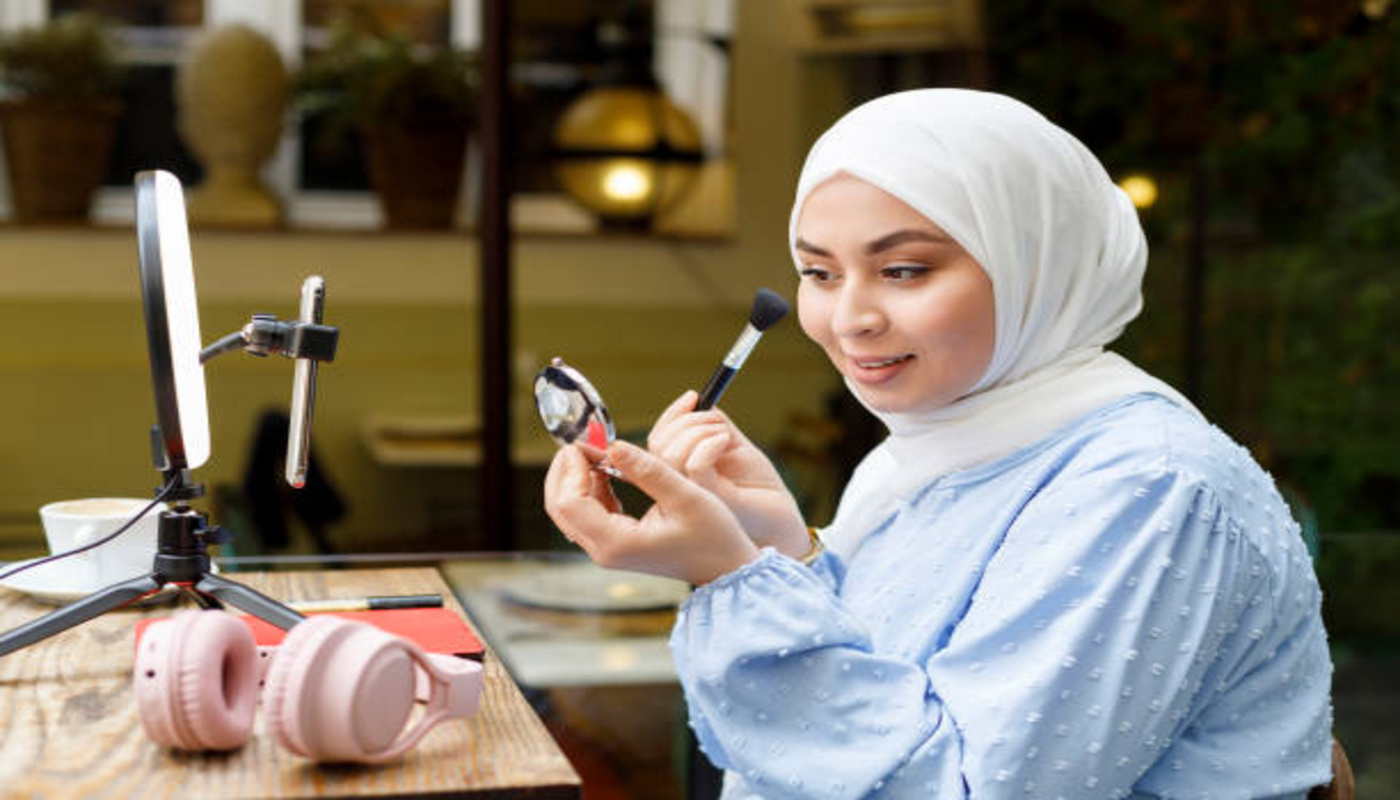
For instance, a simple makeup tutorial by a hijab-wearing influencer can disrupt assumptions about modesty and beauty being mutually exclusive. A travel vlog can counter narratives that frame Muslim women as restricted or confined.
These micro-narratives accumulate, gradually reshaping public perception.
Importantly, they also allow for vulnerability. Influencers often share personal struggles—balancing faith and career, facing criticism, navigating identity. These stories humanize their experiences, fostering empathy and connection.
In this sense, redefining beauty is not just about aesthetics; it is about storytelling.
The Role of Men and Broader Community Dynamics
While much of the focus is on women, Muslim men are also participating in conversations around beauty and self-expression. Grooming, fashion, and wellness content created by male influencers contributes to a more holistic redefinition of beauty within Muslim communities.
This broader participation challenges gendered assumptions about who gets to engage with beauty. It also opens up conversations about masculinity, care, and self-presentation.
At the same time, community dynamics play a significant role. Muslim influencers often navigate diverse expectations—from family, cultural traditions, and religious interpretations. These influences can shape how beauty is expressed and received.
Rather than presenting a unified narrative, this diversity highlights the multiplicity of Muslim experiences.
Critiques and Complexities: Avoiding Idealization
It is important to approach this topic with nuance.
While Muslim influencers are reshaping beauty standards, they are not immune to the pressures of digital culture. Issues such as algorithmic bias, comparison culture, and commercialization affect them as much as any other creators.
There is also the risk of creating new standards that, while more inclusive, can still be limiting. For example, the popularity of certain modest fashion aesthetics may inadvertently marginalize other forms of expression.
Additionally, the global visibility of Muslim influencers can sometimes lead to tokenization—where a few individuals are positioned as representatives of an entire community.
Recognizing these complexities prevents oversimplification and allows for a more honest understanding of their impact.
Conclusion: Toward a More Expansive Definition of Beauty
The rise of Muslim influencers in the beauty space is not just a trend—it is a cultural shift.
By refusing to compromise their identities, these creators are expanding the boundaries of what beauty can encompass. They are demonstrating that faith and self-expression are not mutually exclusive, that modesty can be innovative, and that authenticity can coexist with visibility.
Perhaps most importantly, they are redefining beauty as something that is not imposed from the outside but cultivated from within—rooted in values, experiences, and self-understanding.
As digital spaces continue to evolve, the influence of these voices is likely to grow. The challenge—and opportunity—will be to ensure that this growth remains grounded in the principles that made it transformative in the first place: authenticity, diversity, and agency.
In a world often driven by conformity, the refusal to compromise is, in itself, a radical act of beauty.
Sources: Vogue, Allure, Business of Fashion, BBC, Harper’s Bazaar, The Guardian