 by
by There are certain cultural moments that become larger than the film itself.
Not because of ticket sales. Not because of costume design. Not even because of performance alone.
But because a single casting decision unexpectedly reveals the assumptions society has been carrying for decades.
When Halle Bailey stepped into the role of Ariel in Disney’s live-action adaptation of The Little Mermaid, conversations erupted across the world. On the surface, public debate appeared to center on race and nostalgia. Yet beneath those discussions sat another question that often receives less attention: who has historically been allowed to embody fantasy, beauty, innocence, softness, desirability, and centrality in classic storytelling?
Body diversity conversations are frequently reduced to size alone. But bodies communicate much more than measurements. Bodies carry visible identity, texture, movement, hair, cultural memory, and ideas about who belongs in certain spaces. Film has long operated with narrow visual codes about which bodies appear universal and which appear “different.”
Halle Bailey’s emergence as a lead in one of cinema’s most recognizable fairy-tale roles challenged those visual traditions—not by delivering a speech about inclusivity, but simply by existing inside a role that generations had unconsciously learned to imagine differently.
This is what makes her cultural impact especially significant.
Her performance opened space for conversations about body diversity in a broader sense: diversity of appearance, embodiment, presentation, and identity within stories historically framed around a singular ideal.
Rather than transforming herself to fit an inherited image, Bailey entered the classic role while preserving elements of her own visual identity and presence. That decision created one of the most interesting case studies in modern body inclusivity.
Media Visibility and the Hidden Rules of Who Gets to Be “Universal”
One of the most overlooked aspects of body diversity is the idea of universality. In film history, certain appearances have often been treated as neutral or universally relatable, while others have been framed as specific, niche, or requiring explanation. This pattern becomes especially visible in fantasy and classic storytelling, where audiences rarely question why particular visual identities repeatedly occupy central roles. What Halle Bailey’s casting demonstrated was that universality may not be a fixed visual standard at all—it may simply be familiarity created through repetition. When audiences connected emotionally to her performance, they challenged the assumption that identification depends on sameness. Viewers recognized curiosity, vulnerability, hope, longing, and courage—qualities that transcend appearance. This shift matters because body inclusivity is not only about increasing visibility; it is about expanding emotional access. When people see different kinds of individuals carrying iconic narratives with depth and credibility, cultural imagination becomes less restrictive. Stories begin to function as shared spaces rather than inherited territories. That transformation has consequences beyond entertainment, influencing how people imagine leadership, belonging, beauty, and even whose experiences are treated as culturally central.
The Commercial Impact of Inclusive Storytelling
Representation conversations are often framed as purely social or political, but they are also changing the economics of entertainment. Global audiences increasingly expect stories that reflect contemporary realities rather than repeating narrow historical formulas. Studios have become more aware that viewers are emotionally invested in seeing broader forms of identity represented across genres—including fantasy, romance, and family storytelling. Halle Bailey’s visibility in a major franchise became part of a larger industry conversation about whether commercial success and inclusive casting can coexist. The answer appears increasingly complex and multidimensional. Audiences today are fragmented across cultures, generations, and expectations. Some seek nostalgia; others seek innovation. Inclusive casting does not guarantee artistic success, but it challenges the assumption that audiences only connect with familiar imagery. More importantly, it opens opportunities for future performers who may previously have been overlooked for classic roles. Body diversity becomes sustainable when industries stop treating inclusion as a temporary trend and begin treating it as standard creative practice. The broader effect is not replacing one audience with another—it is recognizing that audiences themselves have always been more diverse than entertainment systems assumed.
What Young Audiences Learn From Expanded Representation
Children and adolescents absorb cultural messages long before they consciously analyze them. The stories they encounter repeatedly help shape ideas about who is admired, who is protected, who receives happy endings, and who gets to become unforgettable. That process is rarely intentional, yet it carries long-term emotional influence. When young audiences see a broader range of people occupying meaningful roles, it expands not only identification but expectation. Halle Bailey’s presence in a classic role became significant because it inserted diversity into a space traditionally associated with idealized femininity and fantasy. This matters because children are not only watching stories—they are learning social possibilities through them. They observe who is presented as worthy of adventure, celebration, and transformation. Body inclusivity, therefore, extends beyond appearance into emotional education. Diverse representation can encourage viewers to imagine themselves more freely and reduce the pressure to conform to narrow ideals in order to feel visible. While media alone cannot reshape society, repeated exposure to broader narratives can influence how future generations understand beauty, belonging, and personal identity.
Moving From Symbolic Moments to Lasting Change
Cultural milestones matter, but long-term change requires continuity. One inclusive casting decision may create conversation, yet true transformation happens when representation becomes ordinary rather than exceptional. Halle Bailey’s impact should not be understood as a final destination or singular breakthrough—it should be viewed as part of a larger cultural evolution in storytelling. The goal of body inclusivity is not to constantly announce diversity as surprising. Instead, it is to build media environments where different kinds of people naturally exist across genres, narratives, and archetypes. Classic stories offer an especially meaningful opportunity because they are repeatedly revisited and reimagined. Each adaptation becomes a reflection of what a generation values. If future storytellers continue broadening who appears in iconic roles without reducing those choices to publicity moments, audiences may gradually stop treating inclusion as unusual. That cultural shift would represent something powerful: not the disappearance of tradition, but its expansion. The stories people love most deeply may become stronger when more individuals are allowed to see themselves inside them.
Expanding the Definition of Body Diversity Beyond Size
Body inclusivity discussions often become trapped inside narrow frameworks.
Popular media usually treats diversity as a sequence of categories: race representation, disability representation, age representation, or body size representation. Yet lived experience does not work in isolated compartments.
Bodies are interpreted through multiple layers simultaneously.
Who gets cast as elegant?
Who gets to appear delicate?
Who is framed as magical?
Who receives soft lighting and romantic narratives?
Who gets treated as timeless?
Classic film roles have historically answered these questions in relatively predictable ways.
For decades, many iconic fantasy heroines reflected a singular aesthetic language: youthful, able-bodied, conventionally feminine, and aligned with Eurocentric beauty expectations. Even when these stories claimed universality, visual repetition quietly taught audiences that only certain bodies could symbolize wonder.
Halle Bailey’s Ariel complicated that visual language.
Her casting did not replace one beauty standard with another. Instead, it expanded the category itself.
Body diversity, in this sense, becomes less about changing bodies and more about changing permissions.
The permission to imagine oneself as the protagonist.
The permission to see beauty without standardization.
The permission to exist in fantasy without explanation.
Why Classic Roles Carry More Cultural Weight Than Original Characters
Representation inside original stories matters.
But classic roles carry a different type of cultural influence.
Original characters enter culture with no collective memory attached to them. Classic characters arrive carrying decades of expectation.
That expectation becomes powerful because audiences often mistake familiarity for truth.
Ariel was introduced to generations through animation, merchandise, theme parks, costumes, and collective imagination. Over time, many viewers stopped seeing her as one artistic interpretation and began treating that interpretation as fixed identity.
When Bailey was cast, reactions revealed something important.
People were not simply responding to change.
They were responding to the realization that they had internalized an unspoken rule about who looked “correct” inside a beloved story.
Public interviews and production discussions emphasized that Bailey earned the role through qualities including voice, emotional range, spirit, and performance rather than visual replication.
That distinction matters.
Classic roles become culturally meaningful precisely because they expose how audiences define authenticity.
If authenticity means emotional truth, then many bodies belong.
If authenticity means preserving inherited appearance, then opportunities remain limited.
Bailey’s casting helped move the conversation toward the first interpretation.
The Power of Presence Without Transformation
Hollywood often celebrates “transformations.”
Actors gain praise for changing accents, changing appearances, or dramatically altering their presentation.
Yet there is another form of representation that receives less recognition: entering major spaces without erasing visible parts of yourself.
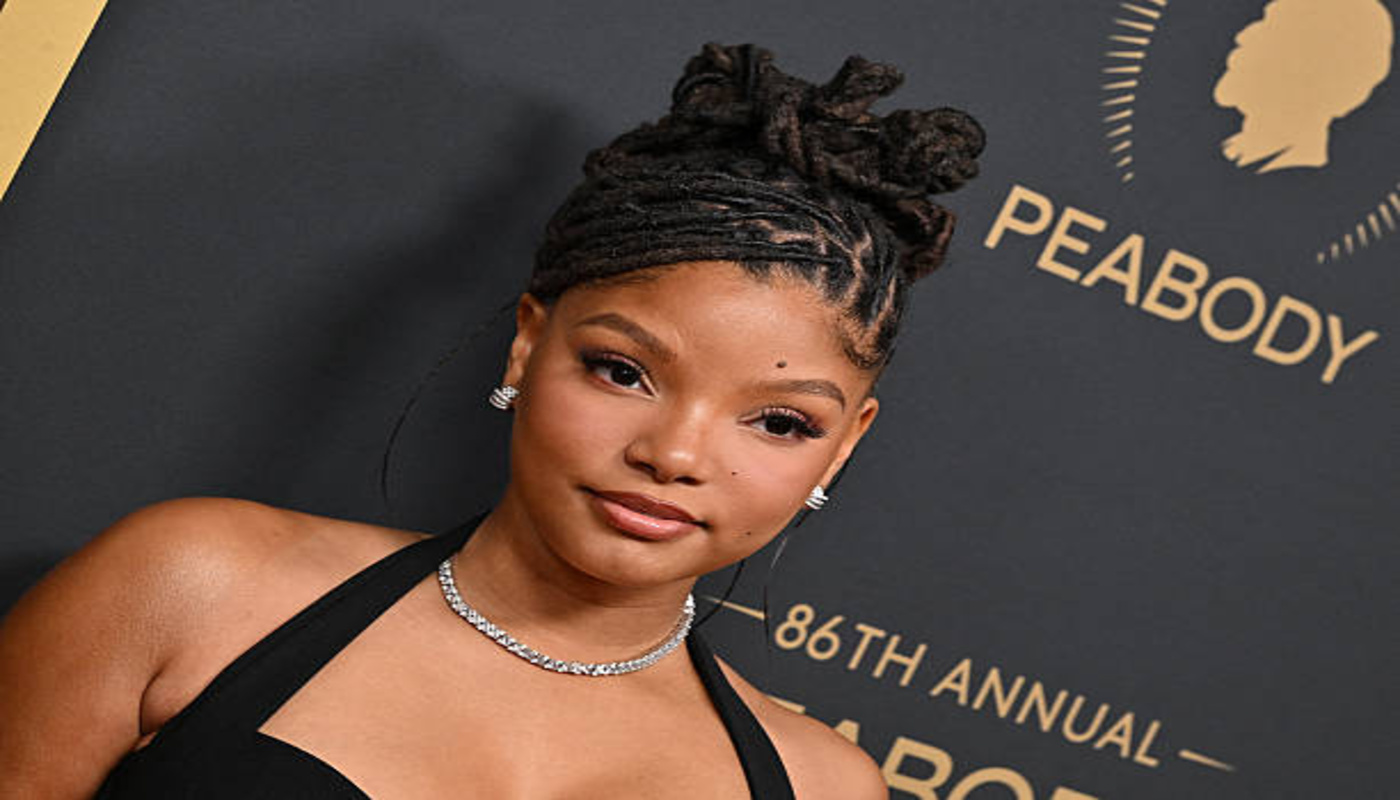
One of the most discussed creative decisions surrounding Bailey’s Ariel involved preserving aspects of her own visual identity—including incorporating her locs into the character design rather than requiring complete aesthetic conformity. Bailey later described bringing her own essence into Ariel as meaningful and personal.
This moment resonated far beyond hairstyle.
Hair is frequently treated as peripheral in film conversations, but culturally it functions as identity, memory, belonging, and embodied expression.
When audiences saw a classic princess figure retaining features associated with Bailey herself, the message became larger than aesthetics.
The implication was subtle but profound:
You do not always need to remove visible markers of yourself to become iconic.
That message intersects directly with body inclusivity.
For generations, inclusion often meant conditional acceptance.
You may enter—but only after changing.
Bailey’s presence suggested another possibility.
You may enter while remaining recognizable to yourself.
The Emotional Psychology of Seeing Yourself in Fantasy
One criticism frequently directed at representation conversations is the question: “Why does appearance matter?”
The answer is more psychologically complex than many assume.
Children—and adults—use stories to imagine possible futures.
Seeing oneself reflected does not guarantee confidence.
But repeated absence can quietly communicate boundaries.
Bailey herself publicly reflected on the emotional significance of representation and described how seeing a version of Ariel like this would have mattered to her as a child.
Following the trailer release, videos circulated globally showing children reacting emotionally to seeing Ariel performed by Bailey. Bailey later spoke about becoming emotional watching those reactions.
These moments should not be romanticized into simplistic claims that one movie changes everything.
But they do demonstrate something meaningful.
Representation creates moments of recognition.
Recognition creates possibility.
Possibility influences identity formation.
Body inclusivity exists partly inside those moments.
Beyond “Firsts”: Why Representation Must Move Past Scarcity
Media coverage often celebrates milestone moments in representation.
These moments matter historically.
But they can also unintentionally reinforce scarcity.
If every inclusive casting becomes a singular event, representation starts functioning like exception rather than evolution.
Bailey herself acknowledged earlier figures who helped create pathways and spoke about the importance of building on previous representation.
That acknowledgment points toward something important.
Body diversity should not depend on isolated breakthroughs.
One performer cannot carry collective expectations.
One film cannot solve structural limitations.
What Bailey’s example demonstrates is that inclusion becomes strongest when audiences stop treating diversity as disruption.
Classic stories become more culturally alive when multiple kinds of people can inhabit them.
The future of inclusive storytelling is not replacing one ideal with another.
It is removing the idea that only one ideal existed in the first place.
Global Responses and the International Politics of Beauty
Although much of the public conversation occurred in North America, reactions to Bailey’s casting revealed broader global tensions.
Beauty ideals do not emerge in isolation.
Many countries inherited visual standards shaped by colonial history, global entertainment industries, advertising systems, and imported media.
Disney characters have long circulated internationally.
For millions of children outside the United States, princess imagery became part of early cultural imagination.
That means casting decisions travel globally.
In some places, Bailey’s Ariel was celebrated as overdue expansion.
Elsewhere, audiences questioned whether changing classic imagery disrupted cultural memory.
Both reactions reveal something useful.
Representation conversations are rarely only about media.
They expose deeper questions:
Whose beauty becomes international?
Whose appearance becomes neutral?
Whose identity becomes interpreted as political?
Body inclusivity becomes especially meaningful globally because many societies continue rewarding proximity to narrow aesthetic norms.
When internationally distributed films widen visual possibilities, they influence aspirations, not merely entertainment.
Nostalgia Is Powerful—But It Is Not Neutral
One reason conversations around classic adaptations become emotionally charged is nostalgia.
Nostalgia feels personal.
People associate films with childhood, comfort, and memory.
That emotional attachment deserves respect.
But nostalgia is not culturally neutral.
What we remember as timeless often reflects what we repeatedly saw.
When audiences defend “how things always were,” they sometimes unknowingly defend inherited exclusions.
This does not mean every remake is automatically progressive.
Nor does it mean criticism equals prejudice.
People can disagree artistically.
Yet Bailey’s casting revealed how quickly visual expectations become mistaken for artistic necessity.
Body inclusivity asks an uncomfortable question:
If a story’s emotional truth survives changes in costume, visual effects, dialogue, and music—why does appearance often become the hardest thing for audiences to imagine differently?
That question extends beyond Ariel.
It applies to countless classic roles.
Embodiment and the New Language of Heroism
Traditional heroines often occupied narrow emotional territory.
Beautiful but passive.
Elegant but restrained.
Desired rather than self-defined.
Bailey’s interpretation arrived within a broader cultural shift toward more internally motivated female protagonists.
Discussion surrounding the adaptation emphasized Ariel’s ambitions, curiosity, and personal direction rather than defining her primarily through romance.
This evolution matters for body inclusivity.
Bodies are not simply visual objects.
Bodies act.
Bodies choose.
Bodies move through worlds.
Inclusive storytelling becomes strongest when representation extends beyond appearance into agency.
The question becomes not merely:
Who gets to be seen?
But:
Who gets to want things?
Who gets to lead?
Who gets to transform the world around them?
Conclusion: A Different Kind of Fairytale Future
Fairy tales survive because they adapt.
Every generation retells them.
Every generation finds new meaning inside old stories.
The question is not whether classic roles should remain untouched.
The question is whether cultural icons are allowed to grow alongside the audiences who love them.
Halle Bailey’s role in The Little Mermaid became meaningful not because it erased tradition, but because it expanded who tradition could belong to.
Her impact on body diversity conversations lies in something deeper than appearance.
She challenged assumptions about whose body can symbolize wonder.
Whose presence can carry nostalgia.
Whose image can become universal.
And perhaps most importantly, she showed that classic stories do not lose their magic when new people enter them.
Sometimes they reveal how much magic was always possible.
Sources: Essence, Teen Vogue, ABC News, Harper’s Bazaar, Los Angeles Times, The Guardian, Glamour, Entertainment Weekly, People