 by
by When Clothing Became Content
Once upon a time, trying on clothes was a private experience. It happened in fitting rooms, bedrooms, shopping malls, or occasionally in front of trusted friends. A person selected garments, checked mirrors from different angles, negotiated with self-image, and made decisions quietly. Today, for millions of people around the world, clothing evaluation increasingly unfolds in public.
On TikTok, try-on hauls have transformed everyday shopping into a form of entertainment, identity performance, and social participation. In these videos, creators purchase or receive clothing, style outfits, and model them for audiences while offering commentary on fit, quality, aesthetics, and trends. What appears at first to be harmless fashion content has become one of the platform’s most influential cultural formats.
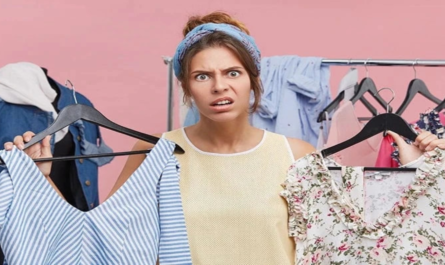
Try-on hauls are not new. Fashion YouTube creators normalized haul culture years earlier. Yet TikTok accelerated the phenomenon through short-form video, recommendation algorithms, instant trend cycles, and a stronger illusion of intimacy. A creator can stand in a bedroom, hold up five dresses, say “this looked terrible on me” or “I’m obsessed,” and millions of viewers may interpret those reactions through their own relationship with their bodies.
The influence of these videos extends far beyond purchasing decisions.
Try-on hauls shape ideas about proportion, attractiveness, desirability, confidence, belonging, and what bodies are imagined to “work” with certain clothes. They can make viewers feel represented, inspired, validated—or excluded, inadequate, and hyperaware of their own appearance.
The conversation becomes especially important because body comparison is rarely simple. People do not compare themselves only to beauty ideals anymore. Increasingly, they compare themselves to ordinary people who appear relatable, accessible, and authentic.
That shift changes everything.
TikTok’s try-on culture exists at the intersection of fashion, algorithmic visibility, identity formation, and emotional experience. It cannot be reduced to “social media is bad” or “body positivity fixes everything.” Instead, it reveals something more complex: how digital culture reshapes the way people understand themselves through clothing and through one another.
Why Try-On Hauls Feel More Personal Than Traditional Fashion Advertising
Traditional fashion advertising historically operated from distance. Magazine covers, runway campaigns, and luxury editorials often projected aspiration through exclusivity. Audiences understood that these images were produced, styled, and intentionally polished.
TikTok altered that relationship.
Try-on hauls often appear informal. Bedrooms replace studios. Everyday language replaces marketing copy. Creators discuss sizing struggles, returns, styling mistakes, and emotional reactions. This creates an atmosphere of authenticity—even when content is sponsored or strategically produced.
Psychologically, audiences often lower their defenses when content feels personal.
A viewer may think:
“She’s built more like me.”
“She shops at places I shop.”
“She isn’t a model.”
“She’s just being honest.”
That sense of relatability strengthens identification.
Social comparison theory suggests people frequently evaluate themselves through observing others, particularly people perceived as similar rather than unreachable. While a runway model might feel distant enough to dismiss, an everyday creator can feel close enough to become a comparison target.
This dynamic creates emotional intensity.
If a creator casually says, “This makes me look huge,” audiences may unconsciously absorb not only a style opinion but also assumptions about which silhouettes deserve approval.
If another creator celebrates visible stomach lines, wider hips, broader shoulders, or clothing sizes often excluded from mainstream fashion narratives, audiences may experience relief and recognition.
The emotional impact is not located only in the clothing itself.
It emerges from who is wearing it.
The Algorithm and the New Mirror
Body comparison once depended on geography and immediate social circles.
Today, algorithms curate comparison environments.
TikTok’s recommendation system learns preferences rapidly and feeds users content that sustains attention. Someone who watches fashion videos may receive endless sequences of outfit transitions, seasonal trends, styling tips, and haul content.
Unlike a mirror—which reflects only one body—the algorithm presents hundreds.
This creates what some cultural researchers describe as an “expanded comparison field.”
A viewer may wake up, scroll for twenty minutes, and encounter:
- luxury fashion creators,
- minimalist style influencers,
- fitness-centered fashion accounts,
- body-neutral fashion advocates,
- petite styling communities,
- plus-size fashion creators,
- modest fashion content,
- K-fashion trends,
- celebrity-inspired wardrobes.
Each creator becomes another reference point.
The cumulative effect matters.
Comparison rarely arrives as one dramatic moment. More often, it develops through repetition.
One video alone may not affect self-perception.
Three hundred videos over several weeks can quietly shift expectations.
This phenomenon becomes especially visible in clothing decisions. People increasingly report purchasing garments not because they fit personal preferences but because they hope to reproduce how an outfit looked on someone else.
When reality differs, disappointment may be directed inward.
The thought becomes:
“The clothes aren’t wrong. My body is.”
That interpretation can deepen dissatisfaction even when clothing design, lighting, posing, camera angles, or styling choices are responsible.
The Rise of “Body Diversity” Content—and Its Complications
One of TikTok’s most meaningful contributions to fashion culture has been increased visibility of bodies historically excluded from mainstream style media.
Creators across regions began posting realistic try-ons that included:
- multiple body shapes,
- varied heights,
- different ages,
- visible disabilities,
- postpartum experiences,
- modest fashion choices,
- gender-diverse styling,
- extended sizing.
These creators challenged a long-standing message that fashion belongs only to certain bodies.
Hashtags emphasizing outfit reality, size transparency, and fit reviews gained traction because audiences wanted practical information—not fantasy.
For many viewers, this was liberating.
Seeing someone with a similar body wear bold colors, fitted clothing, tailored silhouettes, or trend pieces expanded ideas of what was possible.
Representation became functional.
Instead of asking:
“Can people like me wear this?”
The question became:
“How would I style this for myself?”
Yet body diversity content introduced another complexity.
Representation does not automatically eliminate comparison.
People can compare themselves inside inclusive spaces too.
Someone may appreciate diverse fashion creators while still feeling pressure to match confidence levels, proportions, engagement metrics, aesthetics, or perceived authenticity.
Inclusivity can become performance if audiences begin treating self-acceptance as another achievement to perfect.
This reveals an uncomfortable truth:
Visibility matters.
But visibility alone does not resolve body comparison.
The deeper challenge is creating environments where people engage with fashion as expression rather than evaluation.
Global Perspectives: Why TikTok Hauls Mean Different Things Across Cultures
Try-on haul culture does not function identically across the world.
Fashion carries different meanings depending on local expectations around gender, modesty, class mobility, beauty standards, and public visibility.
In parts of East Asia, try-on videos often intersect with highly detailed aesthetic categories and trend precision.
In many Western contexts, they frequently emphasize individuality and personal branding.
Across South Asia, Middle Eastern communities, African fashion spaces, and diaspora audiences, clothing content may involve negotiations between tradition, family expectations, modern identity, and global trend participation.
These cultural layers influence body comparison.
For some viewers, comparison centers on thinness.
For others, it may involve height, skin visibility, style sophistication, elegance, perceived wealth, or social status.
Global TikTok culture creates unusual collisions.
Someone in Karachi can compare themselves to someone in Seoul, London, Lagos, Dubai, or New York within minutes.
Fashion inspiration becomes borderless.
So does self-evaluation.
That global exposure can expand creativity and reduce isolation.
But it can also multiply pressures by introducing audiences to beauty and style expectations they were never previously asked to meet.
Body comparison in the TikTok era is not only about bodies.
Micro-Trends, Fast Consumption, and the Pressure to Keep Up
Try-on hauls do more than showcase clothing—they accelerate fashion cycles.
On TikTok, trends move at unusual speed. A silhouette, color palette, styling technique, or specific clothing item can dominate feeds for days or weeks before disappearing into the next wave of content. This creates an environment where participation feels immediate and visible.
Fashion has always evolved, but digital trend cycles introduce a different emotional tempo.
Users are not simply observing trends; they are witnessing thousands of people adopting them simultaneously.
This changes the psychology of clothing.
Instead of asking:
“Do I like this?”
People increasingly ask:
“Am I behind?”
Try-on hauls contribute to this feeling because they package consumption as social engagement. Buying clothes becomes framed as joining a conversation.
Body comparison enters quietly.
When viewers repeatedly see the same trend presented across similar body types, they may begin interpreting aesthetic success as dependent on physical appearance rather than styling context.
Certain fashion micro-trends unintentionally reinforce this effect because they reward narrow visual outcomes.
A fitted dress may appear effortless on one person and structured differently on another.
Wide-leg trousers may create different proportions.
Layering techniques may change based on height, climate, cultural dress practices, and personal preference.
Yet TikTok’s rapid format leaves little room for this nuance.
Outfits appear instantly successful or unsuccessful.
Bodies become part of the product review.
This can produce emotional exhaustion.
People begin purchasing not to build wardrobes but to chase moments of feeling visually “correct.”
Ironically, constant exposure often leads not to satisfaction but to increased uncertainty about personal style.
The Language of Try-On Videos: How Casual Commentary Shapes Self-Perception
One overlooked influence of haul culture is language.
Words shape perception.
Try-on creators frequently narrate reactions in real time:
“This snatches everything.”
“This makes me look weird.”
“I hate how this sits.”
“This is flattering.”
“This shape is unforgiving.”
These statements may seem harmless because they reflect personal preference.
But repeated language patterns can normalize value judgments about bodies.
Terms such as “flattering” often carry hidden assumptions.
Flattering for whom?
According to whose standards?
Why is making a body appear smaller, taller, more defined, or more proportionate often treated as automatically positive?
This does not mean people should stop discussing fit or personal style.
Rather, it suggests that fashion language influences how audiences interpret themselves.
A creator might simply mean:
“I feel confident in this.”
But viewers may hear:
“This body shape deserves approval.”
Over time, audiences internalize categories.
Some outfits become associated with confidence.
Others become associated with correction.
This matters because clothing is rarely neutral.
What people wear often reflects identity, culture, profession, religion, mood, gender expression, creativity, comfort, and belonging.
When fashion conversations become overly focused on body management, clothing loses some of its expressive potential.
The question shifts from:
“What story does this outfit tell?”
To:
“What does this outfit hide?”
The Emotional Economy of Relatability
TikTok’s most successful try-on creators often succeed not because they appear perfect, but because they appear relatable.
Relatability has become social currency.
Viewers reward creators who seem accessible, candid, funny, vulnerable, and emotionally honest.
But relatability creates an unusual paradox.
The more audiences identify with creators, the more emotionally significant comparison becomes.
When viewers compare themselves with celebrities, differences can feel expected.
When viewers compare themselves with someone who appears “just like me,” differences can feel personal.
That emotional closeness creates stronger reactions.
A viewer may admire someone’s confidence and simultaneously question their own.
They may appreciate another person’s style while becoming dissatisfied with their own appearance.
These mixed emotions are increasingly common.
Body comparison is not always envy.
Sometimes it is admiration mixed with self-questioning.
Sometimes inspiration becomes pressure.
Sometimes validation becomes dependency.
TikTok’s structure intensifies these feelings because engagement creates feedback loops.
Users do not simply watch.
They comment.
Save.
Rewatch.
Purchase.
Recreate.
The boundary between observer and participant becomes blurred.
The Rise of “Realistic” Hauls and the Deinfluencing Movement
As audiences became more aware of idealized online presentation, a counter-movement emerged.
Creators began posting content designed to challenge consumer pressure and unrealistic expectations.
Some showed clothing under ordinary lighting.
Others demonstrated how garments looked after movement rather than posed transitions.
Many emphasized repeated outfit use instead of endless shopping.
Others discussed returning items that looked different in real life.
This shift became associated with broader conversations around “deinfluencing.”
Deinfluencing does not reject fashion.
Instead, it questions automatic consumption.
It asks:
Do I actually want this?
Would I like this without the algorithm?
Am I shopping for clothing—or for identity?
This movement also changes body comparison.
When creators normalize outfits appearing different across bodies, they create space for interpretation rather than evaluation.
A dress becomes a garment—not proof of success or failure.
This subtle shift matters.
Because reducing comparison does not necessarily mean reducing visibility.
It means changing expectations around what visibility should accomplish.
Fashion, Identity, and the Right to Be Seen Without Explanation
One of the most important cultural questions raised by try-on hauls is this:
Who gets to exist visibly in fashion spaces without needing justification?
Historically, many people entered fashion conversations only through transformation narratives.
Lose weight.
Dress strategically.
Fix proportions.
Earn confidence.
Digital platforms disrupted that expectation.
People increasingly post outfits not to explain their bodies but simply to express themselves.
That change carries cultural significance.
Fashion visibility becomes less about permission and more about participation.
Yet tension remains.
Algorithms often reward highly visual content.
Creators may feel pressure to present confidence constantly.
Audiences may interpret appearance as certainty.
But people are more complex than clips.
Someone can enjoy fashion and still experience insecurity.
Someone can post try-on videos and still reject comparison culture.
Someone can appreciate style while refusing appearance-based value systems.
These contradictions deserve space.
Because inclusivity is not achieved when everyone feels beautiful all the time.
It becomes possible when people no longer need beauty to justify visibility.
Toward a Healthier Relationship Between Fashion and Digital Culture
TikTok try-on hauls are unlikely to disappear.
Nor should the solution be withdrawing entirely from fashion communities.
Fashion remains one of humanity’s most creative forms of expression.
People connect through clothing.
They experiment.
They discover confidence.
They celebrate culture.
They build identity.
The challenge is learning to participate without turning self-worth into a performance metric.
A healthier relationship with haul culture may involve asking different questions:
Did this content inspire me—or evaluate me?
Do I want this outfit—or this outcome?
Am I dressing for expression—or comparison?
Can clothing be information rather than judgment?
These questions do not eliminate body comparison.
But they can create distance between seeing and measuring.
And that distance matters.
Because style becomes more meaningful when people stop treating their bodies as problems to solve and start treating them as places from which life is lived.
The Future of Fashion Content: What Happens When Audiences Become More Aware?
Every major media shift eventually creates a counter-question.
Television created conversations about representation.
Magazines created conversations about editing and beauty standards.
Social media created conversations about authenticity.
TikTok’s try-on haul era is increasingly creating conversations about awareness.
Viewers today are not passive audiences in the same way earlier generations often were. Many users now understand that lighting, editing, camera positioning, styling choices, selective posting, affiliate marketing, and algorithmic amplification shape what appears on their screens.
But awareness alone does not erase emotional response.
A person may fully understand that content is curated and still compare themselves.
They may know an outfit looks different in motion than in a posed frame and still wonder why it does not feel the same on them.
This tension reveals something important about body comparison: it is not created by ignorance.
Often, it emerges from human social instincts.
People naturally observe others to understand belonging, identity, attractiveness, and social positioning.
Digital platforms simply multiply the number of people available for comparison.
The future challenge, then, is not eliminating comparison entirely.
It is building cultures that reduce the harm comparison can create.
Fashion creators are already experimenting with alternatives.
Some show clothing on multiple people.
Some discuss tailoring and fit adaptation.
Others create styling content centered around comfort, practicality, personal expression, climate realities, cultural traditions, or outfit repetition.
These approaches shift value away from appearance optimization and toward fashion literacy.
That shift could reshape how future generations experience style online.
What Brands Are Learning from the Shift in Audience Expectations
Fashion brands are also adapting.
For years, digital fashion marketing often relied on aspiration alone: polished campaigns, idealized imagery, and narrow style narratives.
Today’s audiences increasingly expect more.
Consumers ask questions.
Who is represented?
How does the clothing actually fit?
Can people imagine themselves in the product?
Does the campaign reflect everyday life?
Try-on culture influenced these expectations because users became accustomed to seeing clothing in movement and in ordinary settings.
As a result, some brands began emphasizing broader styling examples, more flexible presentation formats, and campaigns that focus on wearability rather than perfection.
Yet audiences have also become more critical of performative inclusion.
Representation without meaningful change is often recognized quickly.
Featuring diverse people while continuing to design around narrow assumptions does not resolve exclusion.
Viewers increasingly notice the difference between visibility and accessibility.
This creates an opportunity.
Fashion can move away from treating bodies as obstacles and toward designing with variation in mind.
That transformation benefits everyone—not because all people want the same thing, but because human bodies were never meant to function as a single category.
Parents, Educators, and Digital Communities: Expanding the Conversation
Conversations around TikTok and body comparison often focus heavily on individual responsibility.
People are told:
Scroll less.
Build confidence.
Ignore social pressure.
These suggestions may help, but they can oversimplify the issue.
Body comparison is also social.
Young people, especially, are developing identities in environments where fashion trends move publicly and rapidly.
A teenager posting an outfit today may not simply be sharing clothes—they may be negotiating belonging.
This is why conversations about digital literacy matter.
Digital literacy is not teaching people to distrust everything they see.
It means helping people understand context.
Questions like:
What choices shaped this image?
What assumptions does this content encourage?
Who benefits from this trend?
How many versions of style exist outside my feed?
These questions create room for curiosity instead of automatic comparison.
Families, schools, media spaces, and online communities all contribute to that process.
Fashion becomes healthier when people learn not only how to consume images—but also how to interpret them.
Beyond “Confidence”: Rethinking What Body Inclusivity Actually Means
Body inclusivity is often misunderstood as a campaign for constant confidence.
But confidence alone cannot carry the entire conversation.
People are not required to feel empowered every day in order to deserve participation.
Sometimes inclusivity looks less dramatic.
It looks like choosing clothes without punishment.
It looks like experimenting without earning approval.
It looks like existing in photographs without editing every detail.
It looks like allowing style to evolve.
It looks like seeing someone wear something differently and resisting the urge to treat difference as failure.
TikTok try-on culture has exposed something deeper than shopping habits.
It has revealed how often people connect appearance to value.
And it has created opportunities to question those assumptions.
Body inclusivity does not ask people to stop caring about fashion.
It asks a different question:
What becomes possible when fashion stops deciding who gets to feel visible?
That question remains unfinished.
But perhaps that is where progress begins.
Conclusion: From Comparison to Interpretation
TikTok try-on hauls are not simply trend content.
They are cultural documents.
They reveal how people imagine themselves, present themselves, and interpret one another in a digital world.
Their influence on body comparison is real—but not singular.
For some people, try-on videos create pressure, dissatisfaction, and endless self-evaluation.
For others, they create recognition, representation, and permission to experiment.
Both realities can exist at once.
That complexity matters because simplistic conclusions often miss the point.
The solution is not declaring fashion shallow.
Nor is it celebrating visibility without questioning its effects.
The more meaningful path may involve changing how audiences engage.
Instead of using every outfit as evidence about bodies, people can begin approaching fashion as information, creativity, communication, and culture.
Clothing does not arrive with moral value.
Bodies do not become more worthy because trends approve of them.
And style becomes more expansive when people stop asking whether they resemble what they watch and begin asking what they actually want to express.
The future of digital fashion may not depend on fewer mirrors.
It may depend on learning that mirrors are not the only way to see ourselves.
Sources: Psychology Today, Vogue, The Guardian, The New York Times, BBC, The Atlantic, Teen Vogue, Harvard Business Review, Journal of Consumer Research, Fashion Theory