 by
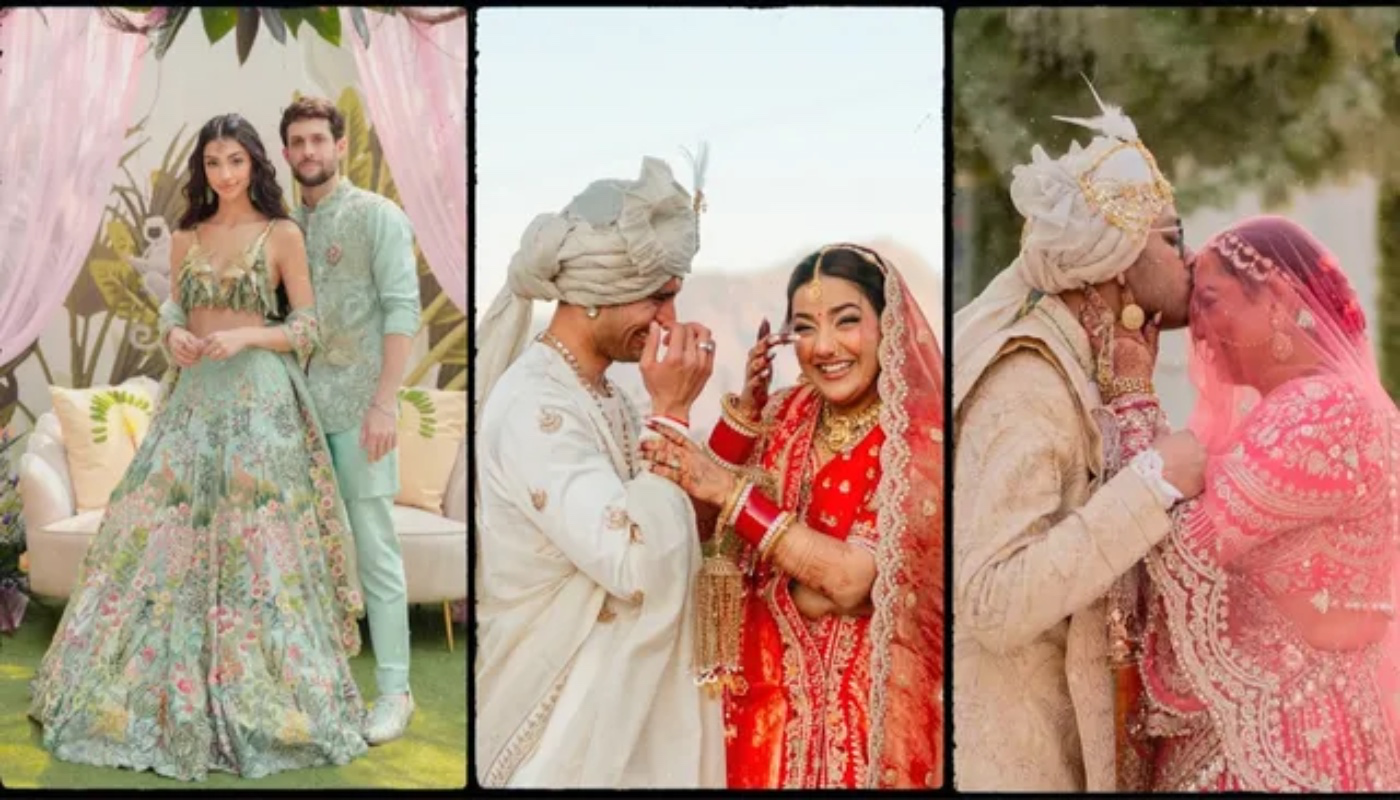
by A wedding used to exist primarily in the memories of the people who attended it. Today, it can exist simultaneously in a photographer’s archive, a bride’s Instagram grid, a TikTok montage, a YouTube vlog, Pinterest boards, beauty-brand campaigns, and thousands of viewers’ saved collections.
That transformation has changed more than how weddings are documented. It has changed how people imagine what a wedding — and particularly what a bride — is supposed to look like.
The modern influencer wedding is rarely presented as one isolated day. It is a visual narrative: the engagement announcement, the bridal shower, the dress fittings, skincare appointments, makeup trials, gym routines, “bridal prep,” henna, hair appointments, wedding-day reveals, professional photographs, honeymoon content and carefully edited behind-the-scenes moments. Every stage can become content.
For audiences, this creates an unusual form of comparison. They are not simply looking at a wedding. They are looking at an apparently complete lifestyle package in which the bride’s body, face, clothes, skin, hair, posture and photographs all appear coordinated into one polished aesthetic.
The result can be psychologically complicated.
Research has repeatedly connected social-media appearance comparison with body-image concerns. A 2025 systematic review and meta-analysis covering 83 studies and 55,440 participants found a significant association between higher online social comparison and greater body-image concerns, as well as eating-disorder symptoms. The researchers also found an association between greater social comparison and lower positive body image.
Wedding content can make that comparison particularly intense because weddings already carry enormous cultural expectations around appearance.
The issue, therefore, is not that influencers are inherently harmful or that beautiful wedding imagery should disappear. It is that a highly commercialized, algorithmically amplified version of bridal beauty can quietly turn a celebration into an appearance benchmark.
And once the benchmark becomes visible every day, it can become difficult to remember that it was never a universal standard in the first place.
The Wedding Has Become a Before-and-After Story
One of the most important changes in contemporary wedding culture is the transformation of the bride into a “project.”
Influencer wedding content often begins long before the ceremony. There may be preparation videos, skincare routines, fitness content, beauty appointments, meal-related content, dress fittings and transformation imagery.
None of these activities is inherently problematic. Preparing for an important event can be enjoyable. Exercise can be pleasurable. Skincare can be a form of self-care. Makeup can be creative. Choosing clothes can be exciting.
The cultural problem emerges when these activities are repeatedly framed as necessary steps toward becoming an acceptable version of oneself.
The implied story can become:
Before the wedding: ordinary.
During bridal preparation: improving.
On the wedding day: finally perfected.
That narrative can encourage people to view their ordinary bodies as unfinished.
Wedding-specific body-image research demonstrates that appearance pressure around marriage did not begin with Instagram. A study of brides and bridesmaids published in Body Image found that more than half of participants planned to lose weight before their wedding, while approximately two-thirds planned to exercise more. Importantly, looking good for wedding photographs was the most frequently cited reason for wanting to look good on the wedding day.
This matters because social media did not invent bridal body anxiety.
It intensified an existing cultural script and made it continuously visible.
The difference today is that a bride no longer compares herself only with relatives, friends, magazines or celebrities. She can compare herself with hundreds of brides before breakfast.
Why Influencer Weddings Feel More Personal Than Celebrity Weddings
Celebrity weddings have long shaped beauty ideals, but influencer weddings occupy a different psychological space.
A traditional celebrity can feel distant. Their wealth, professional styling, access to photographers and entertainment-industry infrastructure are obvious.
Influencers often construct a sense of intimacy.
They speak directly to followers. They show preparation routines. They discuss products. They reveal details about their dresses and beauty appointments. They may film themselves getting ready in bedrooms or bathrooms that appear more recognizable than a movie star’s red carpet environment.
This creates a powerful illusion of similarity.
The viewer may think:
“She is just a woman getting married.”
But the content itself may be produced through professional photography, specialist makeup, controlled lighting, styling teams, editing, brand partnerships and extensive planning.
The intimacy is real as a communication style, but it does not necessarily mean the circumstances are ordinary.
This distinction is crucial for body inclusivity.
A highly curated image can become more influential when it looks attainable.
The New Bridal Comparison Is Not Only About Weight
Body anxiety surrounding weddings is often reduced to one question: “Do brides feel pressured to lose weight?”
That is too narrow.
Contemporary wedding content can create an entire hierarchy of bodily expectations.
The desired body may be expected to look:
- toned in sleeveless clothing
- narrow around the waist
- proportionate in photographs
- smooth under fitted dresses
- elegant in traditional clothing
- “snatched” in posed images
- flawless from every camera angle
- youthful in close-up shots
- photogenic in candid photographs
The pressure can extend beyond body size to posture, skin texture, facial symmetry, hair density, arms, stomachs, shoulders, backs, hands and even the way someone sits or stands.
The body becomes something to monitor from multiple photographic angles.
This is especially significant because weddings are unusually photograph-heavy events.
A person is not merely experiencing the wedding physically. They are anticipating how they will appear in hundreds of photographs.
That creates a subtle shift from How do I feel? to How will I look?
When the Camera Becomes an Imaginary Audience
A wedding photograph can preserve an emotional memory.
But when wedding content is created for public consumption, the photograph can also become a performance.
The bride may not only be thinking about how she looks to the people physically present. She may imagine how she will appear to people online.
This expands the audience dramatically.
The cousin at the wedding becomes one viewer.
The Instagram follower becomes another.
The stranger who discovers a reel months later becomes another.
The algorithm becomes another.
Suddenly, an intimate life event exists within a potentially endless audience.
Research into Instagram imagery helps explain why this matters. Experimental research involving 230 young women found that exposure to influencer imagery increased negative mood, body dissatisfaction and appearance comparison compared with control images. Appearance comparison played an important mediating role in the relationship between influencer imagery and these outcomes.
Wedding content is not identical to the sexualized imagery examined in that research, so the findings should not be treated as direct proof that wedding reels cause body anxiety.
But they illuminate an important mechanism.
Images do not have to explicitly say, “Your body should look like this.”
Comparison can communicate the message without words.
The Algorithm Turns One Wedding Into Hundreds
Historically, someone might have attended a wedding and encountered a particular beauty ideal once.
Social platforms allow that same aesthetic to be repeated continuously.
A viewer watches one bridal transformation.
Then another appears.
Then another.
The platform learns that the person watches wedding content.
More bridal makeup appears.
More bridal fitness content appears.
More “what I did before my wedding” videos appear.
More wedding dresses appear.
More body-focused content appears.
The user can eventually feel as if everyone is preparing for marriage in exactly the same way.
But this is not a random sample of humanity.
It is a recommendation system.
The algorithm can transform an aesthetic niche into an apparent social norm.
That distinction is one of the most important forms of digital literacy in the age of influencer weddings.
A feed is not a census.
It is not a representative sample of brides.
It is a selection shaped by engagement, viewing history, platform systems, creator strategies and commercial incentives.
Yet repeated exposure can make a particular aesthetic feel culturally inevitable.
“Bridal Glow” Can Become a Moral Vocabulary
Beauty language often sounds harmless because it is wrapped in positivity.
Words such as “glow,” “radiance,” “transformation,” “bridal prep,” “best version,” and “big day ready” appear celebratory.
But language can carry hidden assumptions.
If “glowing” becomes associated with disciplined eating, expensive skincare, treatments, exercise, professional makeup and carefully controlled photographs, then glowing can quietly become synonymous with doing everything correctly.
A person who does not participate may begin to wonder whether they are failing at being a bride.
This is where body anxiety can intersect with class anxiety.
Not every person has access to extensive beauty preparation.
Not every bride has a professional makeup artist, nutrition coach, personal trainer, aesthetician, photographer or wardrobe stylist.
Yet influencer content can package all of these resources as ordinary components of preparation.
The result is a dangerous comparison between someone’s everyday resources and another person’s professionally produced wedding content.
The Commercial Side of the “Perfect Bride”
Influencer wedding content sits at the intersection of celebration and commerce.
Wedding-related industries include fashion, cosmetics, skincare, haircare, jewelry, photography, fitness, hospitality and wellness.
The bride is therefore not only an individual preparing for marriage.
She is also an extraordinarily valuable consumer.
This creates an environment where insecurity can become commercially useful.
If someone believes her skin is not bridal enough, there is a product.
If she believes her body is not wedding-ready, there is a program.
If her hair does not resemble an influencer’s, there is a treatment.
If her photographs do not look editorial, there is another service.
There is nothing inherently wrong with buying wedding services.
The issue is what happens when every perceived imperfection is transformed into a consumer problem.
A healthy marketplace can offer choices.
A more troubling marketplace can first manufacture dissatisfaction and then sell relief.
The “Wedding Weight” Is a Cultural Idea
Long before influencer culture, weddings were associated with weight-loss expectations.
A 2008 study of 272 women preparing for marriage found that most were attempting to lose weight and that many reported using multiple weight-management strategies, including some extreme behaviors.
More recent research shows that the issue remains relevant.
A 2024 study examining 329 brides-to-be found that media influence was associated with thin-ideal internalization and appearance comparison. Those factors were, in turn, associated with body dissatisfaction and disordered-eating outcomes. The study reported that its model explained 39% of the variance in disordered eating within the sample.
This does not mean every bride exposed to wedding content will develop an eating disorder.
It does mean that the period surrounding marriage can be an especially important context for studying appearance pressure.
The wedding can function as a deadline.
And deadlines can make body dissatisfaction feel urgent.
Why a Wedding Deadline Changes the Psychology
Ordinary appearance pressure can be postponed.
Wedding pressure has a date.
That creates a countdown.
Six months until the wedding.
Four months.
Eight weeks.
Thirty days.
Two weeks.
The language of countdowns can make the body feel like a project with a deadline for completion.
Influencer content can intensify this effect through timelines:
“My bridal prep started six months before.”
“Three months to wedding.”
“Thirty-day bridal transformation.”
“Last-minute bridal glow.”
The viewer is not simply seeing a body.
She is seeing a body attached to a timetable.
That can encourage the belief that physical appearance should change according to the wedding calendar.
The Bride as a Visual Product
There is a deeper cultural issue beneath all of this.
Modern weddings often contain an extraordinary amount of visual symbolism.
The venue must look beautiful.
The invitation must look beautiful.
The flowers must look beautiful.
The food must look beautiful.
The dress must look beautiful.
The photographs must look beautiful.
And eventually, the bride herself can begin to feel like another aesthetic component.
This is where body inclusivity offers an important challenge.
A person is not décor.
A bride is not a centerpiece.
Her body does not exist to complete the visual composition of a wedding.
Yet the language of social media can subtly encourage precisely that perspective.
When wedding content focuses overwhelmingly on transformation, silhouettes, poses, angles and “flattering” shots, the emotional experience of marriage can become secondary to visual presentation.
South Asian Weddings Add Another Layer
The issue becomes especially complex in South Asian contexts because weddings are often deeply communal events.
A wedding can involve parents, grandparents, siblings, cousins, friends, neighbors and extended social networks.
Appearance may therefore be evaluated by a much larger social circle.
Research on beauty ideals among young women in Azad Jammu and Kashmir has documented how social media and culturally embedded beauty expectations interact, with participants describing tensions between personal perceptions and external standards. The study also highlights the intersection of globalized beauty ideals with local cultural expectations.
Wedding content can amplify those intersections.
A bride may encounter one set of expectations from family.
Another from local fashion culture.
Another from South Asian cinema.
Another from Western influencer culture.
Another from beauty brands.
Another from Instagram.
These expectations do not always agree.
One culture may celebrate fuller bodies while another celebrates a narrower silhouette. One bridal tradition may emphasize elaborate makeup and jewelry while another embraces minimalism. Some communities value traditional clothing and modesty while others increasingly favor Westernized bridal aesthetics.
Social media does not erase these differences.
Instead, it places them next to one another.
The result can be a hybrid beauty ideal that is simultaneously culturally traditional and globally influenced.
Pakistani Bridal Content and the Pressure of Visibility
In Pakistan, wedding culture is particularly visual.
Bridal dresses, jewelry, makeup, photography, venues and décor can all become highly shareable content.
Research examining Pakistani weddings and Instagram has discussed the role of social comparison within close-knit communities and the way Instagram contributes to changing wedding practices.
That environment can make comparison especially complicated.
The comparison is not necessarily with strangers.
It can be with someone from the same school.
A university acquaintance.
A cousin.
A colleague.
A neighbor.
A former classmate.
An influencer from the same city.
A bride whose wedding was attended by people you know.
This makes the comparison feel socially relevant.
The viewer can think, “People around me are doing this.”
And when a beauty ideal comes from someone who feels culturally similar, it can carry greater psychological weight than a distant celebrity image.
Bridal Beauty Is Also Becoming More Global
At the same time, wedding culture is increasingly transnational.
A South Asian bride can save a Korean-inspired skincare routine, book a Western-style editorial photographer, wear a traditional lehenga, choose a minimalist makeup look inspired by European bridal trends and recreate poses popularized by American influencers.
This cultural mixing can be creative and empowering.
But it can also create a confusing standard.
Instead of one beauty ideal, brides may feel expected to satisfy several simultaneously.
The body should look traditional in one context and contemporary in another.
The makeup should be glamorous but natural.
The skin should appear radiant but effortless.
The body should look slim but curvy in specific places.
The wedding should feel culturally authentic but internationally fashionable.
These contradictions reveal an important truth:
Modern bridal beauty is not one standard.
It is a constantly shifting negotiation between cultural tradition, global media, commerce and personal identity.
The “Effortless” Bride Is Often the Most Labor-Intensive
One of the strangest contradictions in influencer culture is the celebration of effortless beauty.
A bridal look may be described as:
“natural”
“effortless”
“barely there”
“just glowing”
“simple”
Yet producing that appearance can require considerable labor.
Skincare.
Haircare.
Makeup.
Styling.
Lighting.
Photography.
Posing.
Editing.
Clothing alterations.
Professional preparation.
The final image may look effortless precisely because so much effort has been hidden.
This can distort perceptions of normal appearance.
The viewer sees the finished image, not the production process.
Body inclusivity requires making that invisible labor visible.
Not to shame the bride.
Not to criticize makeup.
Not to accuse influencers of deception.
Simply to recognize that a photograph is a finished product.
Why “Just Ignore Social Media” Is Not Enough
People are often told to stop comparing themselves.
That advice sounds sensible but underestimates the environment.
Comparison is not simply a personal weakness.
Humans naturally evaluate themselves in relation to others.
Social media multiplies the number of people available for comparison and makes their most curated moments constantly accessible.
The 2025 meta-analysis on online social comparison demonstrates how strongly comparison tendencies are associated with body-image outcomes across a large body of research.
So the solution cannot simply be:
“Have more confidence.”
Instead, healthier digital environments require a combination of individual awareness, media literacy, diverse representation and responsible content creation.
The Important Difference Between Inspiration and Instruction
Wedding content can be genuinely useful.
A bride might discover a makeup artist.
She may learn how a particular dress is constructed.
She may find an affordable décor idea.
She may discover a hairstyle that makes her feel beautiful.
She may learn how another culture celebrates marriage.
The problem begins when inspiration becomes instruction.
“There is one way to look bridal.”
“There is one body that photographs well.”
“There is one face that deserves close-ups.”
“There is one timeline for preparation.”
“There is one acceptable level of transformation.”
Those messages reduce a celebration of individuality into a standardized beauty exam.
A healthier wedding culture can preserve inspiration while rejecting compulsory imitation.
The Rise of the “Real Bride” Is Important — But Not Automatically Inclusive
There has been a growing appetite for authenticity online.
Creators increasingly show behind-the-scenes footage, imperfect moments, emotional reactions and less polished images.
This can challenge the fantasy of the flawless wedding.
But “real” does not automatically mean inclusive.
A bride can be unfiltered and still represent only a narrow body type.
A candid photograph can still reinforce a limited beauty ideal.
An authentic-looking reel can still sell products.
The goal should therefore not simply be “more authenticity.”
It should be broader representation.
Different body sizes.
Different ages.
Different disabilities.
Different skin tones.
Different cultural traditions.
Different gender expressions.
Different relationships with makeup.
Different approaches to clothing.
Different levels of financial access.
Different ideas of what beauty means.
Representation becomes meaningful when people can see themselves without having to first become someone else.
Wedding Photography Can Either Intensify or Reduce Anxiety
Photography deserves particular attention because it sits at the center of contemporary wedding culture.
The camera can encourage self-surveillance.
People may learn which angles they believe make their bodies appear smaller.
They may worry about arms, stomachs, posture, facial angles or photographs taken from below.
But photography can also become liberating.
A photographer who understands body diversity can document movement instead of demanding rigid posing.
They can capture laughter instead of constant facial control.
They can photograph people as they actually inhabit their bodies.
They can avoid treating natural folds, curves or variations as mistakes that need correction.
The technology is not the problem.
The visual philosophy behind it matters.
What Influencers Can Change
Influencers occupy a complicated position.
They are not solely responsible for social standards.
They operate inside an existing culture and are also shaped by audience demand, advertising systems and platform incentives.
But they have meaningful power over what becomes visible.
An influencer can post only transformation narratives.
Or she can show multiple stages of preparation without presenting the earlier body as inferior.
She can talk about choosing a dress because she loves it rather than because it hides something.
She can show a wedding photograph without turning her body into a before-and-after story.
She can disclose when content is sponsored.
She can avoid presenting beauty services as mandatory.
She can normalize rest rather than relentless preparation.
Most importantly, she can separate personal preference from universal advice.
“My wedding look” is different from “the correct bridal look.”
That small linguistic distinction can have a large cultural effect.
What Brands Can Change
Brands also influence the visual vocabulary of weddings.
Beauty and fashion companies can expand shade ranges, sizing and imagery.
Wedding campaigns can feature bodies that do not fit a single silhouette.
Bridal brands can stop treating larger sizes as special collections and instead integrate them naturally into campaigns.
Beauty companies can demonstrate products on diverse skin tones and textures.
Photographers can showcase varied bodies rather than using inclusivity as an occasional campaign theme.
The wedding industry has an opportunity to recognize that diversity is not a niche market.
It is the reality of marriage.
What Audiences Can Change
Audiences are not powerless either.
A viewer can learn to ask:
Who made this image?
Who was paid to make it?
What resources went into producing it?
Is this someone’s personal preference or an implied rule?
Am I looking at an ordinary moment or a professional production?
Does this content inspire me, or does it make me monitor my body?
Those questions do not require abandoning social media.
They make social media more intentional.
A wedding reel can be beautiful without becoming a measuring stick.
Body Neutrality May Be Especially Valuable During Wedding Planning
Body positivity is often understood as learning to love every part of one’s appearance.
But wedding planning can be an environment where body neutrality may feel more realistic.
A bride does not have to look at herself in the mirror and think she is perfect every day.
She can simply recognize:
“My body does not need to change to deserve this celebration.”
That distinction is powerful.
It removes the requirement to feel beautiful every minute while protecting the right to participate fully in the wedding.
The wedding dress does not need to transform the body.
The body does not need to transform for the dress.
The photograph does not need to erase reality.
The celebration does not need to be earned through physical change.
The Future of Bridal Content Could Be More Human
There is an opportunity emerging within wedding culture.
Instead of documenting only perfection, wedding creators can document personality.
Instead of “bridal transformation,” there can be “bridal preparation.”
Instead of “fixing flaws,” there can be choosing what makes someone feel comfortable.
Instead of “wedding body,” there can simply be a body getting married.
That may sound like a small linguistic shift.
It is actually a cultural one.
Because language teaches people what deserves attention.
When the phrase “wedding body” becomes ordinary, it implies that the body itself must become extraordinary for one day.
When we say “your body at your wedding,” the emphasis changes.
The person remains the subject.
Weddings Do Not Need a Uniform Body
The most important question surrounding influencer wedding culture is not whether brides should stop caring about appearance.
People are allowed to care about fashion.
They are allowed to enjoy makeup.
They are allowed to lose weight if they personally choose to do so.
They are allowed to exercise.
They are allowed to invest in beauty.
They are allowed to dream about a particular wedding aesthetic.
Body inclusivity does not require everyone to reject beauty.
It requires beauty to stop functioning as a prerequisite for belonging.
There should be room for the bride who spends a year planning her appearance and the bride who does almost nothing differently.
There should be room for the person who wants elaborate makeup and the person who wants none.
There should be room for a fitted dress, a flowing dress, a traditional outfit, a minimalist outfit or something completely unconventional.
There should be room for every body within the wedding story.
From “Wedding Ready” to Simply Ready to Live the Moment
Influencer wedding culture has made bridal beauty more visible than ever.
That visibility can offer inspiration, creativity and community.
But it can also transform private insecurities into public comparison.
The evidence surrounding social media and body image makes clear that appearance comparison matters. Research involving engaged women shows that wedding-specific appearance pressure deserves particular attention. Research into influencer imagery further demonstrates how visual comparison can affect body satisfaction.
The answer is not to make every wedding less beautiful.
It is to make the definition of beauty less restrictive.
A wedding should not be a deadline by which a body must become acceptable.
It should not be a public examination of someone’s skin, waist, arms, face or silhouette.
It should not require a person to look like the algorithm’s latest bride.
The most meaningful shift may be from treating the wedding as a moment when the body must finally become “ready” to recognizing that the body was already worthy of being there.
The future of inclusive wedding culture is therefore not a rejection of glamour. It is a broader understanding of who gets to be glamorous.
Not one body.
Not one silhouette.
Not one complexion.
Not one cultural aesthetic.
Not one version of femininity.
Millions of people will continue to celebrate marriage in millions of different ways. Social media can either compress those celebrations into a narrow visual template or expand our understanding of what a beautiful wedding can look like.
The more diverse that digital wedding album becomes, the less any individual bride has to see herself as a problem waiting to be corrected.
And perhaps that is the most important future-facing idea of all: the bride should never have to become content before she is allowed to become the center of her own celebration.
Sources: Body Image, Eating Behaviors, PubMed, ScienceDirect, Journal of Arab & Muslim Media Research, Vogue India, Vogue, Pakistan Journal of Social Science Review, Dialogues in Health