 by
by For decades, advertising operated on a relatively narrow visual vocabulary. Beauty campaigns often presented a recognizable type of person: young, conventionally attractive, able-bodied, thin, polished and close to whatever racial or cultural ideal dominated the market being targeted. The people outside that picture were not necessarily told that they were undesirable. They were simply made less visible.
Social media changed the mechanics of that visibility.
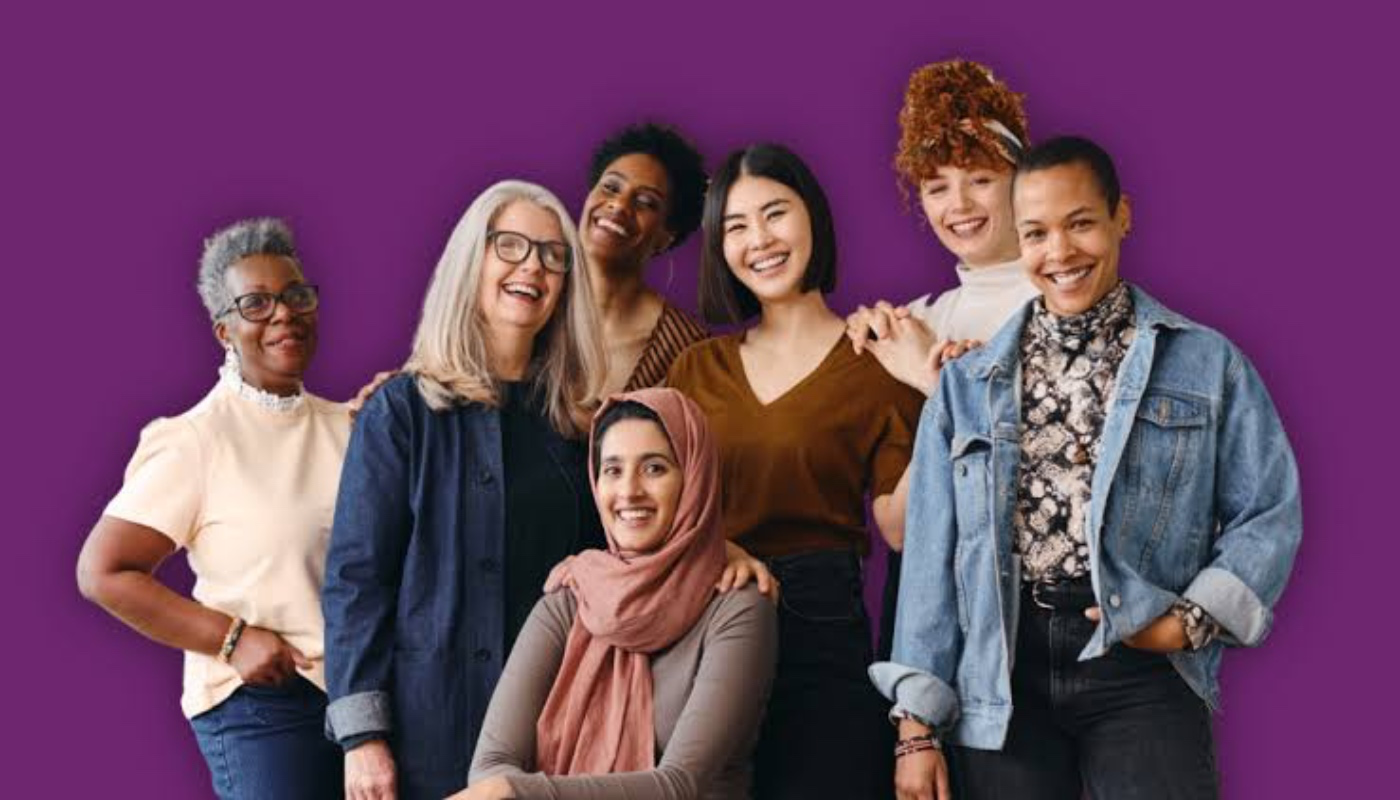
Today, a brand can place thousands of faces into a single scrolling feed. Different skin tones, body shapes, ages, disabilities, gender expressions, hair textures, cultural identities and personal styles can appear beside one another within seconds. Representation is no longer restricted to a billboard, television commercial or magazine cover. It can become a hashtag, a campaign challenge, a creator partnership, a comment section, a product launch and a viral conversation.
That transformation has created an important cultural opportunity.
It has also created a marketing opportunity.
For brands, inclusivity can build emotional connection, distinguish a company from competitors and make advertising feel more culturally relevant. For consumers, seeing someone who looks like them represented in a campaign can communicate something powerful: you belong here too.
But the same image can operate in another way.
Inclusivity can become an aesthetic. Diversity can become a campaign color palette. Representation can become a content category. And identities that were historically excluded can become commercially valuable precisely because their visibility now generates engagement.
This creates the central tension of inclusive social-media marketing: when does representation create meaningful cultural change, and when does it simply become another way of selling?
The answer is rarely completely one or the other.
Modern consumers are not passive recipients of advertising. They comment, criticize, remix, repost, parody and investigate corporate behavior. Social media has therefore made it increasingly difficult for brands to separate what they say from what they do. A campaign celebrating diversity may receive millions of views, but audiences can also immediately ask whether the company’s products, hiring practices, pricing, casting decisions and everyday customer experience reflect the same values.
Inclusivity has consequently moved beyond representation.
It has become a test of credibility.
The Rise of the Inclusive Feed
One of the most significant changes social media introduced was the normalization of visual diversity.
Traditional advertising was expensive and highly controlled. Brands had limited space, limited campaign periods and limited opportunities to communicate. A single advertisement had to represent a carefully selected image of the ideal customer.
Social media operates differently.
Instagram, TikTok, YouTube and other platforms reward continuous content. A brand can show multiple communities throughout a campaign rather than selecting one face to represent an entire population.
That flexibility has allowed companies to present a broader definition of who their customer is.
A beauty company can feature people with different skin tones. A clothing company can display different body proportions. A personal-care company can show older consumers. A campaign can include people with disabilities rather than treating disability as an unusual subject that requires its own special awareness campaign.
This matters culturally because visibility influences what society perceives as ordinary.
When certain bodies repeatedly appear in everyday commercial imagery, they can begin to feel less like exceptions. A wheelchair user in an advertisement does not necessarily need to be presented as an inspirational story. A person with textured hair does not need to be positioned as a symbol of overcoming adversity. An older woman does not have to be portrayed as extraordinary simply because she is visible.
Ordinary representation can itself be transformative.
Yet social media also creates a problem: representation is measurable.
Likes, shares, comments, saves and views turn cultural visibility into performance data. Brands can see which representations receive attention and which do not. Inclusivity therefore enters the same algorithmic environment as every other form of marketing.
The question becomes not only who is represented? but also which representations perform?
Inclusivity Is Now Part of Brand Identity
Consumers increasingly encounter companies through their social feeds before they encounter them through traditional advertising.
A brand’s identity may therefore be constructed through a sequence of images rather than a single campaign.
One post might highlight racial diversity. Another might feature disability representation. Another might celebrate different ages. Another might spotlight a creator whose cultural background differs from the company’s traditional audience.
Together, these posts communicate a message about who the brand believes belongs in its world.
This is where inclusivity becomes a branding strategy.
The goal is not necessarily limited to selling one product. It is also about establishing an emotional identity around the company.
A consumer may think:
This brand understands people like me.
That feeling has commercial value.
It can create identification, loyalty and a sense of community. Instead of purchasing only because of a product’s functional qualities, consumers may purchase because the brand appears to reflect values that matter to them.
This is particularly powerful among younger audiences who encounter companies in cultural spaces rather than simply through conventional advertisements.
However, there is a critical distinction between identity-based marketing and identity-based representation.
A company can feature diverse people without changing the way its products or services accommodate those people.
A foundation campaign can show a wide spectrum of skin tones while offering inadequate shade availability. A clothing campaign can feature body diversity while providing limited sizing. A disability-focused advertisement can attract attention while the brand’s website remains inaccessible.
Representation can therefore exist without structural inclusion.
That distinction is one of the most important issues in contemporary inclusive marketing.
The Fenty Effect and the Commercial Value of Being Seen
The beauty industry provides one of the clearest examples of how inclusivity can become a commercial differentiator.
Fenty Beauty became particularly influential by making broad shade representation central to its product strategy and public identity. Its approach helped demonstrate that diversity could be positioned not as a charitable addition to beauty marketing but as part of the core commercial proposition.
This represented an important shift.
For years, consumers with deeper or less commonly served skin tones frequently had to search across brands, mix products or accept imperfect matches. When a brand visibly communicates that a wider range of consumers was considered during product development, the message is different from simply placing diverse models in an advertisement.
The product itself becomes part of the representation.
That distinction helps explain why inclusive marketing can be so commercially effective. Consumers can distinguish between a brand that shows diversity and one that appears to have designed its offering around a broader customer base.
Academic research published in 2026 examining global beauty brands including Fenty Beauty, L’Oréal, Shiseido and Amorepacific similarly identified different approaches to DEI marketing, including differences between communication, product diversity and culturally sensitive strategies.
The larger lesson is that inclusion becomes more credible when it exists beyond the campaign image.
A consumer cannot use a photograph.
They can use a product.
The Emotional Economics of Representation
Why does representation matter so much?
Because advertising is not only about information.
It is also about social belonging.
Humans interpret themselves partly through cultural mirrors. We learn what kinds of people are celebrated, desired, fashionable, professional, beautiful or successful by observing the environments around us.
For someone who has repeatedly encountered narrow representations, seeing themselves included in commercial culture can feel meaningful.
That emotional response is valuable to brands.
An advertisement that creates recognition may generate stronger engagement than an advertisement that simply communicates a product benefit.
Social media intensifies this process because consumers can publicly express that recognition.
A comment such as “I finally see someone who looks like me” becomes part of the campaign itself.
The audience does some of the marketing.
This is one reason inclusive campaigns can travel so quickly online. People share representation not only because they like a product, but because the content communicates something about identity.
The brand gains organic visibility.
But this is where ethical complexity begins.
When personal identity becomes a source of engagement, the boundary between representation and commodification becomes increasingly difficult to see.
When Identity Becomes Content
Social platforms have transformed identity into something that is frequently displayed, categorized and circulated.
Brands operate inside this system.
A person can be represented simultaneously as a customer, creator, community member and marketing asset.
This is not automatically exploitative. Creators can benefit financially and professionally from visibility. Communities can gain cultural recognition. Brands can reach audiences that traditional advertising overlooked.
The problem emerges when identity is valued primarily because it produces engagement.
A brand may discover that certain types of diversity generate particularly high interaction. Those identities can then become repeatedly featured because they perform well.
Representation begins responding to the algorithm.
This creates a subtle paradox.
The more commercially successful a particular form of diversity becomes, the greater the temptation for brands to reproduce its visual language.
Inclusivity can become formulaic.
The same carefully styled diversity may appear across dozens of campaigns: different ethnicities standing together, carefully curated body variety, a disabled model positioned in a visually inspirational setting, an older woman smiling confidently at the camera.
The individuals are different.
The advertising structure remains similar.
The Problem of “One Trait” Diversity
Recent research examining body-positive and diverse fashion and beauty content on Instagram found that brands often included diverse models but frequently represented only one diversity characteristic at a time. Racial diversity appeared more often than body, facial or generational diversity, and diverse models could still be presented within sexualized advertising frameworks.
This finding exposes a major weakness in simplistic ideas about representation.
A campaign can look diverse without actually reflecting the complexity of people’s identities.
Consider an imaginary campaign featuring a woman who is Black.
She may represent racial diversity.
But what about age? Disability? Body shape? Hair texture? Socioeconomic background? Cultural identity? Personal style?
No individual needs to embody every possible category. That would itself become reductive.
The issue is whether brands recognize that diversity is multidimensional.
Intersectionality matters because people do not experience identity in isolated categories.
Someone can simultaneously experience cultural expectations surrounding race, gender, age, disability, body size, class and beauty.
When marketing reduces diversity to a checklist, it can produce the appearance of inclusion without reflecting lived complexity.
Social Media Makes Consumers Better at Detecting Contradictions
Traditional advertising allowed brands to control the conversation more tightly.
Social media does not.
A company can publish an inclusive campaign in the morning and encounter thousands of comments questioning its practices by afternoon.
Consumers can compare campaigns across countries.
They can search old advertisements.
They can compare product availability.
They can examine sizing.
They can ask disabled customers whether a supposedly inclusive experience is actually accessible.
They can compare what a brand says during Pride Month with what it says or does during the rest of the year.
This creates a new form of accountability.
Inclusivity is increasingly difficult to communicate as a purely symbolic message because the audience can investigate the institution behind the message.
In this environment, social media turns corporate consistency into part of the marketing story.
Dove and the Long-Term Construction of an Inclusive Brand
Dove offers a particularly important case because its relationship with inclusive beauty did not begin with the current social-media era.
Its Campaign for Real Beauty developed into a long-running brand identity around challenging conventional beauty standards.
Over time, Dove expanded this approach into projects addressing representation, body confidence, appearance-related pressure and the portrayal of women and girls online.
Its Project #ShowUs, for example, created a large image collection intended to provide media and advertisers with a broader vision of beauty.
This illustrates an important difference between a one-off diversity campaign and a sustained brand platform.
A one-off campaign says:
Look at our diverse advertisement.
A long-term platform attempts to say:
This is how our brand understands representation.
The latter can create greater cultural influence because it accumulates over time.
But long-term purpose marketing still requires scrutiny.
Research examining Dove’s body-positive advertising has found that positive representation can influence attitudes, but other research has shown that the psychological effects of such campaigns are not uniformly beneficial for every audience.
A study involving young women in Japan, for example, examined Dove’s “Real Beauty ID” video and found limited evidence that it protected participants from the effects of subsequent exposure to celebrity social-media imagery. Among participants with stronger internalization of thin ideals, exposure to the video was not associated with the positive body-image outcomes the campaign might intuitively suggest.
That finding is particularly important.
It reminds us that a positive message does not automatically produce a positive psychological outcome.
Human beings interpret advertising through their existing experiences, cultural environments and internalized standards.
Inclusivity Does Not Affect Every Culture in the Same Way
Global marketing creates another layer of complexity.
A representation considered progressive in one country may have a different meaning elsewhere.
Beauty ideals vary considerably across cultures. So do ideas about family, gender, modesty, aging, skin tone, hair, disability, body presentation and social status.
A global brand therefore cannot simply export one version of inclusivity and assume that it will have identical cultural effects everywhere.
Even the language of “confidence” can carry different meanings.
In one market, a campaign encouraging consumers to reject conventional beauty expectations may feel liberating.
In another, consumers may interpret the same imagery through local cultural expectations that the brand has not fully considered.
Cultural adaptation therefore matters.
The Japanese research surrounding Dove’s social-media campaign is useful precisely because it complicates the assumption that a campaign designed around positive representation will automatically produce positive effects across populations.
Global inclusion requires more than putting different nationalities into the same advertisement.
It requires listening to the cultural meanings attached to representation.
The South Asian Question: Who Gets Included?
South Asia provides a particularly important environment for examining inclusive marketing.
The region contains enormous linguistic, ethnic, religious, cultural and socioeconomic diversity.
Yet commercial beauty imagery has historically often centered on relatively narrow aesthetic ideals.
Social media has disrupted that pattern by allowing creators and consumers to produce their own visual cultures.
Dark skin, textured hair, regional fashion, different body types, disability representation and local beauty traditions can gain visibility without waiting for mainstream advertising agencies to approve them.
Brands have responded.
But the response can produce another contradiction.
A company may discover that cultural diversity sells.
Traditional clothing, regional aesthetics, local languages and distinctive cultural identities can become highly marketable.
The culture is being represented.
But it is also being packaged.
This does not make commercialization automatically harmful. Culture has always moved through commerce. Fashion, food, beauty and entertainment are deeply connected to markets.
The important question is whether communities retain agency over how their identities are represented.
Inclusive marketing becomes more meaningful when people are participants in defining the representation rather than simply objects placed inside a campaign.
Disability Representation Changes the Meaning of “Inclusive”
Disability provides another important case study.
For a long time, advertising frequently treated disabled people as invisible consumers.
When disability appeared, it was often framed around charity, inspiration or overcoming adversity.
Social media has created space for disability creators to challenge these patterns.
Brands have increasingly collaborated with disabled creators and featured disabled people in campaigns.
Research published in the Journal of Retailing and Consumer Services found that inclusive advertising featuring disabled people on Instagram could positively influence consumer well-being, brand engagement and purchase intention in studies involving Pakistani consumers.
That is culturally significant.
It demonstrates that inclusive representation is not merely a Western advertising conversation.
Consumers in non-Western markets can respond positively to representation that reflects a broader understanding of who belongs in commercial culture.
But disability representation still needs to move beyond symbolism.
Accessibility is itself a form of inclusion.
A campaign featuring disabled people while offering an inaccessible website, store environment or product experience creates a contradiction between visual inclusion and practical exclusion.
The most meaningful question is therefore not:
Did the campaign include a disabled person?
It is:
Did the brand make the customer experience more accessible?
The Psychology of Being Included in Advertising
Inclusive marketing can affect consumers psychologically in several ways.
First, representation can reduce the feeling of cultural absence.
When people repeatedly see others like themselves, the social environment may feel more welcoming.
Second, representation can challenge assumptions about who is considered beautiful, fashionable or commercially valuable.
Third, inclusion can create identification with brands.
But psychological responses are not guaranteed.
Advertising can also create a new pressure:
If this is the new ideal, do I need to look like this version of diversity?
That is an under-discussed problem.
A culture can move from one beauty ideal to multiple beauty ideals without eliminating appearance pressure.
Instead of one narrow template, consumers may encounter several commercially attractive templates:
the effortlessly natural woman,
the confidently curvy woman,
the athletic woman,
the fashionable hijabi woman,
the “authentic” bare-faced woman,
the visibly disabled model presented as inspirational,
the mature woman portrayed as eternally youthful.
Even diversity can become aestheticized.
The message shifts from “you must look like this” to “you should embody the correct version of individuality.”
That is still a form of pressure.
When “Authenticity” Becomes a Marketing Style
Authenticity has become one of the most valuable words in social-media marketing.
Brands frequently emphasize unfiltered images, real people, candid stories and creator-led content.
But authenticity is difficult to manufacture.
The moment a brand turns authenticity into a campaign strategy, it becomes commercially structured.
A supposedly spontaneous photograph may be carefully selected.
A “real customer” may be participating in a professional campaign.
A creator may genuinely believe in a product while also being paid to promote it.
None of these facts automatically invalidate the representation.
Advertising is advertising.
The more important question is whether audiences are given enough information to understand the commercial relationship and whether the representation itself is respectful.
Authenticity should not mean pretending marketing is not marketing.
It should mean reducing the gap between the image a company sells and the reality it provides.
The Algorithm Has Its Own Definition of Diversity
There is another actor in this conversation that is easy to overlook: the platform algorithm.
Brands do not simply choose what audiences see.
Platforms rank and distribute content according to systems that prioritize various forms of engagement.
This means an inclusive campaign can become successful partly because it generates conversation.
But algorithms do not understand inclusion in the same way humans do.
They measure interaction.
A controversial campaign may generate enormous engagement.
A thoughtful campaign may receive less.
A striking visual representation may outperform a nuanced discussion about accessibility.
Consequently, brands can become incentivized to make inclusion visually immediate.
This can favor recognizable symbols over complicated structural issues.
It is easier to photograph diversity than to explain supply-chain accessibility, employment practices or product-development decisions.
Social media rewards what can be seen quickly.
Inclusion is often much harder to photograph than exclusion.
From Representation to Participation
The next evolution of inclusive marketing may therefore involve moving from representation toward participation.
Representation asks:
Who appears in our campaign?
Participation asks:
Who helped shape the campaign?
This is a more demanding question.
Were creators consulted?
Were communities involved before the campaign was designed?
Were disabled users involved in testing?
Were people from different cultural backgrounds involved in product development?
Were customer complaints incorporated into future decisions?
Were diverse employees given meaningful roles rather than appearing only in external-facing campaigns?
These questions shift inclusivity from advertising imagery to organizational behavior.
They also make inclusion harder to fake.
A photograph can be staged.
A product-development process is more difficult to disguise.
The Consumer Is Becoming a Cultural Auditor
One of the most fascinating consequences of social media is the transformation of the consumer.
Consumers are no longer simply buyers.
They are investigators, reviewers, commentators and archivists.
They screenshot old campaigns.
They compare products.
They share customer experiences.
They ask creators questions.
They examine contradictions.
This means brands increasingly operate under a form of distributed cultural scrutiny.
A campaign can no longer be evaluated only by its advertising department.
The audience evaluates it too.
That can be uncomfortable for companies, but it can also encourage genuine progress.
If consumers consistently demand better representation, accessibility, sizing, shade ranges or culturally sensitive imagery, brands have commercial reasons to respond.
Capitalism does not automatically produce social progress.
But consumer expectations can influence which forms of representation become commercially sustainable.
The Danger of Performative Inclusivity
The term “performative” is frequently used to criticize corporate diversity campaigns.
It can be useful, but it should be applied carefully.
A campaign is not necessarily meaningless because a company benefits financially from it.
Commercial benefit and social benefit can coexist.
A brand can make money while providing products to underserved consumers.
A creator can be paid while bringing visibility to an underrepresented community.
A campaign can sell products while challenging stereotypes.
The more useful question is whether the commercial relationship produces durable value beyond the advertisement.
Does the representation continue?
Does the product support the message?
Does the company listen when consumers criticize it?
Does inclusion disappear once the campaign ends?
Does the brand treat the represented community as a market only, or as a community whose needs genuinely influence business decisions?
These questions create a more nuanced framework than simply declaring a campaign “authentic” or “performative.”
Inclusivity Works Best When It Stops Being Exceptional
Perhaps the most meaningful future of inclusive marketing is one in which representation becomes ordinary.
A disabled person should not always need to appear in an “inclusion campaign.”
A plus-size consumer should not only appear during a body-positive campaign.
An older woman should not only appear in advertisements about aging.
A person with dark skin should not be included only when a company wants to demonstrate diversity.
When inclusion becomes routine, it loses some of its novelty—and that can be a good thing.
The goal of representation is not necessarily to make diversity spectacular.
It is to make diversity normal.
That is a subtle but important cultural difference.
A society does not become more inclusive simply because advertisements contain more categories of people. It becomes more inclusive when those people are understood as ordinary participants in every part of cultural and commercial life.
What Responsible Inclusive Marketing Could Look Like
A stronger model of inclusive marketing would connect representation with substance.
It could include:
- Product ranges designed around a genuinely broad customer base.
- Accessible websites, stores and digital experiences.
- Long-term creator relationships rather than one-off diversity campaigns.
- Consultation with the communities being represented.
- Diverse decision-makers behind campaigns.
- Transparent advertising relationships.
- Representation across ordinary campaigns rather than only awareness campaigns.
- Culturally adapted strategies in different countries.
- Meaningful responses to criticism.
- Continued investment after the campaign’s initial attention fades.
None of these guarantees perfect inclusion.
But together, they reduce the distance between what a brand communicates and what it actually provides.
The Future: Beyond the Diversity Checklist
Social media marketing is entering a period where audiences are becoming more sophisticated about representation.
Consumers have already learned to recognize obvious stereotypes.
The next challenge is subtler.
It is recognizing when diversity itself has become a marketing formula.
The future of inclusive advertising will therefore not necessarily belong to the brand showing the largest number of different faces.
It may belong to the brand capable of creating a more coherent relationship between representation, product design, accessibility, community participation and corporate behavior.
That does not mean companies should stop marketing inclusion.
Quite the opposite.
Inclusive marketing can help broaden cultural visibility, challenge restrictive stereotypes and make previously overlooked consumers feel recognized. Research has shown that inclusive advertising can influence consumer responses and, in some contexts, contribute to more positive experiences of representation.
But inclusivity should not be judged solely by how attractive a campaign looks.
The deeper measure is what happens after the post disappears from the feed.
Does the product remain accessible?
Does the representation continue?
Does the company listen?
Does the customer experience match the campaign?
Does the brand make room for people who were previously ignored without demanding that they perform a particular version of diversity?
Those questions move the conversation from marketing aesthetics to cultural responsibility.
Conclusion: When Inclusion Becomes More Than a Campaign
Social media has changed what consumers expect to see from brands.
The old advertising model often asked people to identify with an idealized customer. The emerging model asks brands to recognize the customers who already exist.
That is a significant cultural shift.
Inclusivity has become commercially valuable because visibility matters. People want to see themselves reflected in the products they purchase and the cultural spaces they occupy. Brands have discovered that representation can generate trust, conversation, loyalty and engagement.
But commercial value does not automatically make inclusion meaningless.
Nor does a beautiful inclusive campaign automatically make a company socially responsible.
Both possibilities can exist at once.
The most interesting question is therefore not whether brands “use” inclusivity as marketing.
Of course they do. Marketing is precisely what brands do.
The more important question is what kind of inclusion they create through that marketing.
If diversity exists only inside an Instagram post, its cultural effect may remain limited.
If that post reflects deeper changes in product development, accessibility, creative decision-making and consumer participation, marketing can become one part of a broader cultural transformation.
That is where the future of inclusive advertising may be heading.
Not toward a world in which every campaign announces how diverse it is, but toward one in which diverse people are so routinely included that the announcement becomes unnecessary.
The ultimate achievement of inclusive marketing may therefore be its own normalization.
When representation stops being a special campaign and becomes an ordinary expectation, brands will no longer be selling the idea that everyone belongs.
They will simply have to prove that they do.
Sources: Dove, British Journal of Health Psychology, Wiley Online Library, ScienceDirect, Journal of Retailing and Consumer Services, International Journal of Advertising, WPP, Journal of Sociology and Education, Korean Society of Cosmetology