 by
Introduction: When an Advertisement Becomes a Cultural Statement
An advertisement is supposed to sell something. A dress, a skincare product, a fitness membership, a pair of jeans or perhaps a new idea of what a particular brand represents. Yet, in today’s media environment, an advertisement featuring someone outside conventional beauty standards can become a cultural controversy before consumers even consider the product being promoted.
A plus-size model wearing a luxury fashion label, a dark-skinned woman representing a beauty company, a disabled person appearing in a mainstream clothing campaign, or an older individual featured in an advertisement traditionally aimed at younger consumers can generate conversations that extend far beyond marketing. These images can provoke arguments about beauty, morality, health, commercial responsibility, social progress and the changing definition of representation.
This is precisely why body diversity in advertising remains politically charged.
The issue is not simply whether brands should feature people with different body types. It concerns who gets to occupy public visual space, whose appearance is considered commercially desirable, and which bodies society believes should be celebrated, accommodated or kept outside aspirational culture.
For decades, advertising has helped establish narrow expectations surrounding attractiveness. Thinness, youthfulness, conventional facial features, particular skin tones and specific physical proportions have repeatedly appeared as visual shorthand for desirability and success. Although these standards have gradually expanded, their underlying influence remains visible across fashion, beauty, fitness and lifestyle marketing.
The arrival of body-positive movements and inclusive advertising has challenged this arrangement. However, greater visibility has also produced resistance. Some audiences interpret representation as overdue social progress, while others regard it as an ideological statement, an unnecessary departure from traditional aesthetics or a marketing strategy designed to exploit cultural conversations.
The resulting tension reveals something important: bodies are never entirely neutral within advertising. They carry social meanings connected to class, gender, race, disability, sexuality, health and cultural identity.
Understanding why body diversity remains controversial therefore requires looking beyond the advertisements themselves. It requires examining the systems that determine which bodies become visible, how audiences interpret those images, and why commercial representation has become part of broader political debates.
1. Advertising Has Never Been Completely Neutral About Bodies
Advertising frequently presents itself as a reflection of consumer preferences. Brands often explain their casting decisions through commercial considerations, suggesting that models are selected because they communicate a particular lifestyle or appeal to a specific audience.
However, advertising does not simply reflect existing beauty standards. It also helps produce and reinforce them.
When consumers repeatedly encounter slender bodies in fashion campaigns, youthful faces in skincare advertisements and conventionally athletic physiques in fitness promotions, these images gradually become familiar visual expectations.
The repetition matters.
An individual may understand intellectually that beauty exists in different forms while simultaneously absorbing messages suggesting that certain appearances are more desirable, successful or socially acceptable.
Advertising reinforces these associations through carefully constructed visual storytelling. A thin model might be photographed in an expensive outfit against an elegant architectural background, while a larger body might historically have appeared primarily in weight-management advertising.
The difference is not merely physical representation. It concerns the social meaning assigned to each body.
One is presented as an aspiration. The other is positioned as something requiring improvement.
This distinction becomes especially significant when considering the history of commercial beauty culture. For generations, the fashion and cosmetics industries have benefited from selling products that promise transformation toward narrowly defined ideals.
Body diversity challenges this business model because it questions the assumption that consumers must first change their appearance to deserve confidence, fashionable clothing or participation in mainstream beauty culture.
The controversy therefore has economic as well as cultural dimensions.
A brand that genuinely expands its representation may also challenge the assumptions underlying the products, messages and advertising strategies that previously defined its market.
2. The Politics of Who Gets to Be Considered Beautiful
Beauty is often discussed as though it were entirely personal. People have different preferences, appreciate different features and develop individual definitions of attractiveness.
However, beauty standards also operate through institutions.
Fashion magazines, entertainment industries, advertising agencies, casting directors and digital platforms collectively influence which appearances receive visibility and which remain marginal.
The political dimension emerges when representation challenges established hierarchies.
For example, featuring a plus-size woman in a mainstream luxury fashion campaign does more than introduce another model. It challenges the longstanding association between thinness, sophistication and high-fashion desirability.
Similarly, including people with visible disabilities in everyday clothing advertisements questions the assumption that the ideal consumer must fit a narrow definition of physical ability.
These decisions can appear ordinary to audiences accustomed to inclusive representation. Yet they become culturally significant because they disrupt established visual expectations.
The debate also exposes an important distinction between personal preference and institutional exclusion.
Nobody is required to find every body type attractive. However, individual preferences should not determine whether entire groups of people are permitted to participate in mainstream commercial representation.
A fashion advertisement does not need to convince everyone that a particular model is beautiful. It simply needs to recognise that the model, like other consumers, belongs in the visual world of fashion.
This distinction is central to understanding body inclusivity.
Representation is not a demand for universal aesthetic agreement. It is a challenge to the assumption that only one appearance deserves visibility.
3. The Commercialisation of Body Positivity
One of the most complicated developments in inclusive advertising is the transformation of body positivity from a social movement into a commercial opportunity.
Body positivity emerged from longer histories of fat activism, particularly movements challenging discrimination against larger-bodied people. Its contemporary popularity expanded through social media, where individuals began sharing experiences that mainstream advertising had frequently overlooked.
Brands soon recognised the commercial potential.
Campaigns featuring diverse models offered opportunities to communicate authenticity, modernity and social awareness. Companies could distinguish themselves from competitors by appearing more connected to changing consumer expectations.
However, commercial adoption created a difficult question: Can a movement challenging beauty-related discrimination retain its meaning when corporations turn it into a selling strategy?
The answer is not necessarily negative.
Commercial visibility can introduce inclusive messages to audiences that might never encounter activist communities. It can also create opportunities for models and creators who historically faced limited access to mainstream advertising.
Nevertheless, the distinction between meaningful inclusion and superficial marketing remains important.
A company may feature a larger model in one campaign while continuing to produce clothing collections with extremely limited size availability.
A beauty brand may celebrate diverse appearances in promotional imagery while failing to offer products suitable for a broad range of consumers.
An advertisement may communicate acceptance without changing the commercial structures that determine who can actually purchase, wear or use the product.
This contradiction produces scepticism.
Consumers increasingly evaluate whether a brand’s messaging corresponds with its business practices. They want to know whether inclusive representation extends beyond a carefully selected campaign.
A particularly revealing example emerged in June 2024, when Fashion Nova faced criticism over a campaign presented as body-positive. Although the brand highlighted models across a range of sizes, critics argued that the advertisements continued to favour similar hourglass proportions and relatively narrow beauty ideals.
The controversy demonstrated that including different clothing sizes does not automatically produce meaningful body diversity.
A campaign can technically feature multiple sizes while maintaining remarkably similar expectations surrounding proportions, facial features and presentation.
The deeper issue is that representation can become another aesthetic trend unless brands examine the assumptions behind their casting decisions.
4. Why Plus-Size Representation Still Provokes Strong Reactions
Among the different dimensions of body diversity, plus-size representation remains particularly controversial.
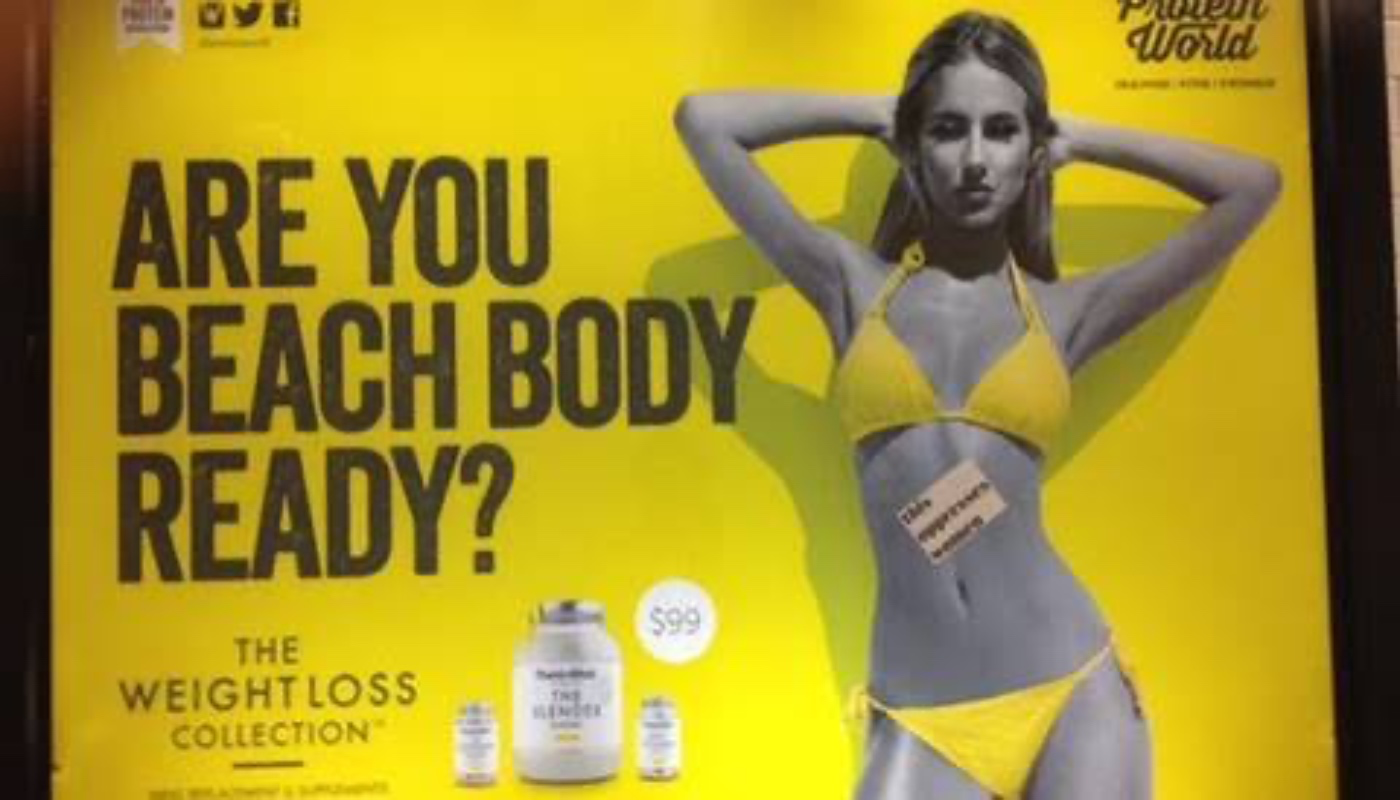
Larger bodies have historically been treated differently across commercial industries. In mainstream fashion, they were frequently excluded from aspirational campaigns, while weight-loss advertising often portrayed them as problems requiring intervention.
This created a contradictory cultural environment.
Consumers were encouraged to purchase clothing, beauty products and lifestyle experiences while simultaneously receiving messages that their bodies were unsuitable for certain forms of public visibility.
When plus-size models entered mainstream advertising, they challenged this contradiction.
However, their inclusion frequently attracted arguments about health, responsibility and the influence of advertising on social behaviour.
Some critics claim that featuring larger bodies promotes unhealthy lifestyles. Others argue that advertising should not be expected to communicate public-health messages through model selection.
Both positions raise questions about the responsibilities of commercial communication, but they should not be confused with the basic question of whether people of different sizes deserve representation.
A clothing advertisement featuring a larger model is not automatically a medical statement.
It is primarily a commercial image showing how a garment looks on a particular person.
Treating every appearance of a larger body as an endorsement of a specific health condition creates an unfair standard. Thin models are rarely expected to represent the complete health circumstances of everyone who shares their body type.
Advertising is not a diagnostic instrument.
A particularly relevant academic study appeared in Psychology & Marketing in September 2024.
Researchers Vishakha Chauhan, Mansi Gupta and Gopal Das examined how featuring plus-size models influences consumer responses to brands. Across six studies, including one field study and five experimental studies, they found that advertisements featuring plus-size models could increase brand evangelism, with consumer empowerment helping explain the relationship.
The researchers also identified empathy as an important factor influencing how consumers responded to inclusive advertising.
This research challenges the assumption that body diversity necessarily damages commercial effectiveness.
It suggests that audiences can develop stronger relationships with brands when they feel represented rather than excluded.
Nevertheless, commercial acceptance does not eliminate the social controversy surrounding larger bodies. It simply demonstrates that the relationship between representation and consumer behaviour is more complicated than traditional marketing assumptions suggest.
5. The Politics of Thinness: Why Inclusion Is Not About Replacing One Ideal With Another
An important weakness in some discussions of body positivity is the tendency to frame representation as a competition between body types.
This creates the impression that making room for larger bodies somehow requires reducing the visibility of thinner individuals.
Such an interpretation misunderstands the purpose of body diversity.
The objective is not to establish a new preferred body type. It is to challenge the expectation that one physical appearance should dominate every commercial environment.
Thin people should remain visible in advertising. Athletic bodies should remain visible. Larger bodies, naturally ageing bodies, disabled bodies and bodies with different proportions should also have opportunities to appear without being treated as exceptions.
The issue is not the existence of a particular beauty ideal but the concentration of commercial desirability around a narrow physical template.
This distinction matters because thinness itself can become politically charged when audiences interpret body-inclusive messaging as criticism of their own appearance.
Some consumers experience inclusive campaigns as an attempt to redefine what society considers attractive. Others worry that traditional representations are being deliberately displaced.
Brands can avoid reinforcing this false competition by presenting body diversity as an expansion of commercial representation rather than a reversal of established hierarchies.
The goal should be a visual culture in which different bodies can coexist without needing to justify their presence.
6. Social Media Has Made Every Advertisement a Public Debate
Before social media became central to advertising, consumer reactions were often mediated through letters, television discussions, magazine criticism and market research.
Today, an advertisement can generate thousands of public responses within hours.
Instagram, TikTok, YouTube and other platforms have changed the relationship between brands and audiences. Consumers are no longer simply receiving advertising messages. They can immediately interpret, challenge, criticise, remix and redistribute them.
This has created opportunities for people who were historically excluded from mainstream representation.
Plus-size creators can challenge clothing brands over inaccessible sizing. Disabled consumers can question advertisements that portray accessibility as an afterthought. People with visible skin conditions can challenge heavily retouched beauty imagery.
However, social media also intensifies disagreement.
A campaign intended to celebrate representation may be interpreted as political activism. A casting decision can become a discussion about social values. A single promotional photograph can be removed from its original context and circulated as evidence of a much larger cultural argument.
The commercial consequences can be significant.
Brands must now consider not only whether a campaign communicates effectively but also how its imagery may be interpreted across different communities.
Yet there is a danger in allowing anticipated online controversy to determine who appears in advertising.
If brands consistently avoid people whose appearance might provoke criticism, the result may be a return to familiar visual standards.
In that situation, social media becomes both an instrument of inclusion and a mechanism through which exclusion can be reinforced.
The challenge is learning to distinguish meaningful consumer criticism from demands that certain groups should remain invisible.
7. Representation Across Race, Skin Tone and Body Size
Body diversity cannot be separated from race and colourism.
Beauty standards are shaped by overlapping systems that influence how different bodies are perceived. A person’s size, skin tone, hair texture, facial features and cultural background can collectively determine whether they are considered commercially desirable.
This intersection becomes particularly visible in South Asian advertising.
For decades, beauty marketing across parts of South Asia has been influenced by colourist preferences. Fairness-oriented messaging, skin-lightening products and advertisements featuring lighter-skinned protagonists have contributed to narrow expectations surrounding feminine attractiveness.
Although conversations about skin-tone inclusivity have expanded, the relationship between body diversity and colourism remains important.
A campaign might feature a plus-size model while continuing to privilege lighter skin. Another might include darker-skinned models while presenting only conventionally slender bodies.
Such campaigns may increase visibility along one dimension while maintaining exclusion along another.
Research published in Body Image in March 2025 offers particularly relevant evidence.
The study, titled Representation Matters: Exposure to Advertisements Featuring Models With Different Skin Shades Affects Body Image, Well-Being and Advertising Effectiveness Among South Asian Women in the UK, examined responses from 194 South Asian women.
Participants were exposed to advertisements featuring South Asian models with darker skin, South Asian models with lighter skin, White models or product-only imagery.
The researchers found that exposure to advertisements featuring White models reduced participants’ skin-shade satisfaction and confidence. Advertisements featuring South Asian models also produced encouraging results, including reduced anxiety, while darker-skinned South Asian models increased feelings of inspiration.
Although this study focused specifically on skin-tone representation rather than body size, its findings demonstrate why inclusive advertising should be understood through overlapping appearance-related experiences.
For South Asian audiences, a genuinely inclusive campaign must consider more than clothing sizes.
It should also question the cultural assumptions surrounding skin tone, age, hair texture, facial features and other characteristics historically associated with beauty.
This perspective is relevant to Pakistan, India, Bangladesh and diaspora communities, where international advertising trends interact with local histories of colourism and class-based appearance expectations.
A campaign cannot meaningfully represent a population if it simply reproduces the same narrow aesthetic hierarchy through different casting choices.
8. Disability Representation and the Boundaries of Commercial Visibility
Body diversity discussions often focus heavily on size, but disability representation exposes another important limitation within advertising.
People with disabilities remain underrepresented in many mainstream commercial environments, particularly when advertisements present everyday fashion, beauty and lifestyle experiences.
When disabled individuals do appear, their representation can become highly symbolic.
They may be portrayed primarily through narratives of courage, inspiration or overcoming adversity rather than as ordinary consumers participating in everyday activities.
Although such campaigns can challenge exclusion, they risk creating another restrictive expectation: disabled people must inspire audiences to deserve visibility.
A person using a wheelchair should be able to appear in a clothing advertisement because they wear clothing, not because their presence must communicate a motivational message.
Similarly, people with limb differences, visible scars, mobility aids or other physical characteristics should not have to become symbols of extraordinary achievement before commercial culture recognises their everyday identities.
Research by Jordan Foster and David Pettinicchio, published in Critical Studies in Media Communication and discussed by the University of Toronto’s Munk School in February 2025, examined representation across online advertisements from Benefit, Sephora and Dove.
Their analysis of 300 images found that disability representation remained rare, even as certain other forms of diversity, particularly racial representation, became more visible.
The researchers also highlighted the exclusion of people who experience multiple dimensions of difference simultaneously.
This finding raises an important question for the advertising industry.
Does a campaign become inclusive simply because it features different races, ages or sizes, or must it also consider people whose identities and physical experiences overlap?
Meaningful representation requires moving beyond isolated examples of diversity.
It means recognising that consumers do not exist in separate categories.
9. When Inclusion Becomes a Corporate Political Risk
The political sensitivity surrounding body diversity is also connected to the changing relationship between businesses and social issues.
For years, many companies gradually adopted public commitments to diversity, equity and inclusion. Inclusive advertising became one way to communicate these commitments.
However, corporate engagement with social issues has increasingly attracted political criticism.
In the United States, debates surrounding corporate diversity initiatives have become particularly visible, with businesses facing competing expectations from consumers, employees, investors and political groups.
Some audiences expect companies to demonstrate social responsibility. Others argue that corporations should avoid cultural and political debates altogether.
This creates a difficult environment for advertising departments.
A brand may receive criticism for featuring larger bodies, while another may face criticism for appearing to withdraw from inclusive messaging.
There is no universal response that guarantees public approval.
However, the situation reveals why body diversity is not merely a creative decision.
It can affect corporate identity, market positioning and relationships with different consumer communities.
The challenge becomes especially complicated when a company operates internationally.
An advertisement that is welcomed in one market may encounter resistance in another because cultural expectations surrounding gender, modesty, physical appearance and social identity differ.
This does not mean companies should abandon inclusive representation whenever disagreement arises.
Instead, they need to understand the societies in which they operate and develop campaigns that respect cultural differences without treating exclusion as an unavoidable cultural requirement.
10. The Difference Between Representation and Tokenism
One of the strongest criticisms of inclusive advertising concerns tokenism.
Tokenism occurs when an individual from an underrepresented group is included primarily to demonstrate diversity rather than being integrated meaningfully into the campaign.
In body-related advertising, this can happen when a company features one plus-size model among several conventionally thin models but gives that individual limited visibility.
It can also occur when the larger model is photographed differently, positioned separately or presented as an extraordinary exception.
The visual message may unintentionally reinforce the hierarchy the campaign claims to challenge.
A particularly important distinction is whether diverse bodies are allowed to participate in ordinary commercial storytelling.
Are they shown wearing fashionable clothing, enjoying leisure activities, participating in professional environments and engaging with friends?
Or are they constantly positioned within advertisements explicitly announcing that their bodies are different?
The latter approach can make inclusion feel conditional.
A larger woman should not have to appear in a body-positive campaign every time she is featured. She should also be able to sell perfume, handbags, jewellery, formal clothing and luxury experiences.
Likewise, an older person should not appear exclusively in advertisements about ageing.
The most meaningful representation often occurs when diversity becomes ordinary rather than exceptional.
This requires brands to change their creative habits, casting processes and visual assumptions.
11. The Problem of the Almost-Inclusive Body
Another complication is the emergence of what might be described as the almost-inclusive body.
Some advertisements have expanded beyond extremely narrow beauty standards without fully abandoning them.
A campaign may feature a model described as plus-size while retaining conventionally idealised proportions. Another may include different body shapes but use carefully selected poses, lighting and retouching to maintain a familiar appearance.
This can create the impression of diversity without substantially challenging the underlying standard.
A September 2025 study published in Body Image, titled No One Wants to See Curvy Women: The Absence of Diverse Models in Magazine Advertisements: A 10-Year Perspective, examined fashion magazine advertising between 2010 and 2020.
The researchers found that diverse body characteristics remained minimally represented throughout the period, despite the increasing popularity of body-positive conversations.
Their findings suggested that advertising had expanded certain forms of diversity without producing a comparable transformation in body-size representation.
This is an important distinction.
A brand can become more diverse in terms of ethnicity while continuing to favour a narrow range of body proportions.
It can include different ages while maintaining conventional expectations around facial appearance.
It can celebrate body positivity while avoiding the bodies that most directly challenge established beauty hierarchies.
The result is selective inclusion.
The industry appears to move forward, but the central definition of the ideal advertising body remains relatively unchanged.
12. How Advertising Influences Psychological Well-Being
The controversy surrounding body diversity becomes particularly important when considering its psychological implications.
People encounter advertising during ordinary activities: scrolling through social media, watching television, shopping online, travelling through public spaces or reading digital publications.
Repeated exposure to idealised bodies can influence how individuals evaluate their own appearance.
Social comparison is a major part of this process.
Consumers may compare their bodies with the people they see in advertisements, consciously or unconsciously evaluating differences in size, shape, skin tone, age and physical features.
When advertising repeatedly presents a limited appearance as desirable, individuals who do not resemble that ideal may feel disconnected from the commercial world around them.
This does not mean every advertisement directly causes body dissatisfaction. Psychological responses depend on individual experiences, social environments, media literacy and numerous other factors.
Nevertheless, representation can influence whether people feel recognised or excluded.
A consumer who sees someone with a similar body type modelling an outfit may find it easier to imagine wearing that garment.
A person with visible skin differences may feel more comfortable engaging with a beauty brand when its advertising acknowledges that skin does not always appear perfectly uniform.
A disabled consumer may find ordinary representation meaningful when commercial imagery includes bodies and experiences that are rarely visible elsewhere.
Importantly, representation does not require every consumer to feel confident all the time.
Its value lies partly in reducing the message that only certain bodies belong in public spaces.
Research into digitally modified advertising imagery also provides useful insight.
A study published in the Journal of Advertising Research examined how image modification and body size influence perceptions of authenticity in Instagram advertising.
Researchers found that advertisements featuring plus-size models without digital enhancement could generate more favourable advertising attitudes and purchase intentions, with perceived authenticity playing an important role.
This finding suggests that audiences may value more than the presence of different body types.
They may also respond to whether those bodies appear realistically represented.
Authenticity, therefore, is not simply about casting different models. It also concerns how their bodies are photographed, edited and presented.
13. Global Advertising: One Conversation, Different Cultural Pressures
Body diversity is a global conversation, but its political meaning changes across cultural environments.
In Western markets, debates frequently centre on body positivity, fat acceptance, commercial representation and the relationship between beauty standards and personal identity.
In South Asia, these conversations intersect with colourism, class, gender expectations, modesty and deeply established ideas about marriageability and feminine presentation.
In parts of East Asia, advertising operates within distinct cultural beauty expectations involving slenderness, youthfulness and particular facial aesthetics.
In Brazil, body culture has its own complex history, with commercial imagery often negotiating between the celebration of physical curves and the persistence of idealised proportions.
Across African markets, conversations about body representation interact with diverse cultural understandings of beauty, skin tone, fashion, colonial histories and imported commercial standards.
These differences make universal advertising strategies difficult.
A global campaign cannot assume that a single image will carry identical cultural meaning everywhere.
However, cultural sensitivity should not become an excuse for excluding people who fall outside conventional beauty expectations.
Brands can adapt storytelling, styling and communication to local contexts while retaining a commitment to broader representation.
The United Nations-supported Unstereotype Alliance provides an interesting example of how international advertising representation is being examined.
Its 2025 Unstereotype Metric findings identified differences between markets, including greater skin-tone diversity in Brazilian advertising, stronger ethnic-origin diversity in South African advertising and higher-than-global-average body-size diversity among male characters in Indian advertising.
The findings demonstrate that inclusive representation does not develop uniformly across countries or demographic categories.
They also highlight an important opportunity.
Instead of treating Western advertising as the universal standard for inclusivity, global brands should examine the cultural knowledge, creative talent and consumer experiences already present in different regions.
Representation becomes more meaningful when it emerges from local communities rather than being imposed through a standardised international campaign template.
14. Why Men Also Belong in the Body Diversity Conversation
Body diversity advertising has historically concentrated heavily on women.
This reflects the longstanding commercial scrutiny directed toward women’s appearance, particularly in fashion, beauty and lifestyle industries.
However, men also experience restrictive body expectations.
Advertising frequently associates masculinity with muscularity, height, broad shoulders, physical strength and visible athletic definition.
Fitness campaigns may present highly muscular bodies as the primary symbol of male attractiveness, while clothing advertisements frequently rely on narrow assumptions about height and proportions.
Men who are shorter, slimmer, larger, disabled or physically different from conventional masculine ideals can also experience exclusion.
The political dimension becomes visible when inclusive campaigns challenge traditional masculinity.
For example, featuring men with different body types in fashion advertising questions the assumption that male desirability must always be communicated through physical strength or athletic appearance.
It also creates space for men to engage with fashion and personal presentation without feeling required to meet a particular physical standard.
Importantly, body inclusivity should not create a new hierarchy in which muscular men are criticised for their appearance.
The goal is to make commercial representation less restrictive.
Men deserve the same freedom to exist outside narrowly defined aesthetic expectations.
15. The Advertising Industry’s Commercial Argument
One reason body diversity continues to generate debate is that brands operate within commercial environments.
Advertising campaigns involve financial investment, audience research, creative direction and market positioning.
Companies therefore frequently ask whether inclusive representation will improve consumer engagement or affect purchasing decisions.
This commercial calculation is not inherently problematic.
Brands need to understand their audiences. However, problems arise when market assumptions are treated as objective evidence that certain groups should remain invisible.
Historically, advertisers have sometimes assumed that mainstream audiences would not respond positively to models outside conventional beauty standards.
Academic research increasingly challenges the simplicity of that assumption.
The 2024 Psychology & Marketing research on plus-size representation, for example, identified positive relationships between inclusive advertising, consumer empowerment and brand evangelism.
Similarly, research on authentic, unretouched plus-size imagery has demonstrated the potential commercial value of more realistic representation.
These findings do not establish that every inclusive campaign will succeed. Marketing outcomes depend on product quality, execution, audience demographics and brand credibility.
However, they demonstrate that the commercial case for representation cannot be dismissed through outdated assumptions.
There is also a larger business consideration.
Consumers are not simply looking for advertisements that tell them they are beautiful. They want to see products presented on bodies that resemble the range of people who might actually purchase them.
For clothing retailers, this can have practical implications.
Showing a garment on several body types provides information that a single model cannot communicate.
It can help customers better understand fit, proportions and styling possibilities.
In this sense, body diversity can improve advertising as a form of consumer communication, rather than existing solely as a statement about social values.
16. The Responsibility of Brands: Beyond Casting a Diverse Model
If brands genuinely want to move beyond controversy, their responsibilities must extend beyond selecting models for individual campaigns.
The first requirement is consistency.
Representation should appear across advertising seasons, product categories and commercial platforms rather than being limited to occasional diversity-focused promotions.
Second, brands should examine the relationship between representation and product accessibility.
A retailer cannot meaningfully celebrate larger bodies while offering extremely limited size ranges.
A beauty company cannot claim broad inclusivity while neglecting significant variations in skin tones or consumer needs.
Third, companies should reconsider their approach to digital editing.
Skin texture, natural body proportions, stretch marks, scars and other ordinary physical characteristics should not automatically be removed to preserve unrealistic visual perfection.
Fourth, brands should involve people from the communities they intend to represent.
This means including diverse perspectives in casting, styling, photography, creative direction and decision-making processes.
Finally, companies should evaluate inclusion through more meaningful indicators than the number of diverse models featured in a campaign.
They should consider whether representation is sustained, whether individuals are portrayed with dignity and whether consumers can recognise themselves in the products being advertised.
The future of inclusive advertising depends less on occasional symbolic gestures and more on structural changes in how commercial imagery is created.
17. The Future: Moving From Controversial Representation to Ordinary Visibility
The next stage of body diversity advertising may not be defined by increasingly dramatic campaigns.
Instead, progress could emerge through normalisation.
Imagine a fashion advertisement in which women of different sizes appear together without the campaign explicitly describing itself as body-positive.
Imagine a skincare campaign featuring different ages, skin tones, facial textures and visible skin conditions without presenting anyone as an exception.
Imagine fitness advertising that includes people with different physical abilities and body compositions without suggesting that every participant must pursue the same aesthetic outcome.
These examples illustrate an important shift.
Inclusion becomes more powerful when it no longer needs to announce itself as an unusual departure from commercial convention.
However, normalisation must not mean forgetting the histories that made representation necessary.
Brands should remain aware of the structural inequalities that shaped advertising for generations.
The challenge is to build a commercial environment where diversity is consistently present without reducing individuals to symbols of social progress.
Emerging research also suggests that the industry should look beyond headline diversity statistics.
A 2026 study published in the Proceedings of the National Academy of Sciences examined 793,199 records across 25 years of advertising, magazine covers, runway shows and editorials.
Its findings identified a significant contradiction: although representational diversity had increased, the median model physique remained relatively stable.
The research also found that non-White models were disproportionately represented among plus-size models, suggesting that different dimensions of diversity were sometimes concentrated within the same already-marginalised individuals.
This raises questions about whether the industry is genuinely expanding its understanding of beauty or simply adding selected exceptions to an unchanged ideal.
The implications are substantial.
Future advertising should not rely on a small number of individuals to represent every form of diversity.
It should create opportunities for people to appear across multiple dimensions of identity without making their physical characteristics the central explanation for their presence.
Conclusion: The Right to Be Seen Should Not Depend on Cultural Agreement
Body diversity in advertising remains politically charged because it challenges more than traditional beauty standards.
It challenges the systems that determine whose appearance is considered desirable, whose identity is commercially valuable and whose body is allowed to occupy aspirational public space.
For generations, advertising helped make narrow physical ideals appear ordinary. The expansion of representation has disrupted those expectations, creating opportunities for people who were previously excluded while exposing the resistance that accompanies cultural change.
The resulting debate is not entirely straightforward.
Brands can commercialise social movements. Inclusive campaigns can become tokenistic. Representation can be inconsistent, and diversity messaging can sometimes conceal unchanged business practices. Consumers can also disagree about the aesthetics, intentions and responsibilities of particular advertisements.
These complications deserve serious consideration.
However, they should not obscure the fundamental distinction between celebrating diversity and prescribing how people should look.
Body-inclusive advertising does not require consumers to abandon their personal preferences. It does not demand that every individual appreciate every physical appearance. Nor does it require brands to turn every campaign into a political statement.
It asks something considerably more basic: that commercial visibility should not be restricted to a narrow definition of physical acceptability.
A larger body should be able to appear in a luxury fashion campaign without becoming a controversy about public health. A darker-skinned woman should be able to represent a beauty product without being treated as a departure from conventional aesthetics. A disabled person should be able to participate in everyday advertising without being reduced to an inspirational message.
These are not demands for universal approval. They are demands for ordinary recognition.
The advertising industry has considerable influence over the images people encounter every day. With that influence comes the opportunity to create a visual culture that reflects more of the world rather than repeatedly presenting a limited version of it.
Ultimately, progress will not be measured by how many brands publish body-positive slogans or feature a diverse model during a particular campaign season.
It will be measured by whether different bodies can appear across mainstream commercial culture without having to justify their presence.
Perhaps the most meaningful future for body diversity advertising is one in which an advertisement featuring an unfamiliar body type no longer becomes a political event.
It simply becomes an advertisement.
And the person appearing in it is allowed to be what every consumer should be allowed to be: visible, ordinary and worthy of representation.
Sources: Body Image, Psychology & Marketing, Journal of Advertising Research, Critical Studies in Media Communication, Proceedings of the National Academy of Sciences, University of Toronto Munk School, Unstereotype Alliance, Elsevier, Wiley, Taylor & Francis, United Nations