 by
Introduction: The Wedding Dress That Is Supposed to Fit Every Dream, Except Every Body
A wedding dress is rarely just another garment. It represents anticipation, cultural identity, family expectations, personal expression, romance, and the beginning of a new chapter. For many brides, finding the right outfit is one of the most emotionally significant parts of wedding preparation. It is a moment imagined long before an engagement, sometimes shaped by childhood memories, family traditions, fashion magazines, films, and generations of wedding photographs.
Yet there is an uncomfortable contradiction at the heart of the bridal fashion industry: an occasion celebrated for bringing people together has historically maintained some of fashion’s most restrictive expectations about women’s bodies.
While mainstream fashion has gradually expanded its conversations around body diversity, extended sizing, and representation, bridal fashion has moved considerably more slowly. Brides who fall outside conventional sample sizes frequently encounter limited collections, inaccessible fitting rooms, expensive customisation, restrictive silhouettes, and the suggestion that they should simply imagine how a dress might look rather than experience it properly.
This is particularly striking because weddings are celebrated across cultures and communities, involving people with extraordinarily diverse body shapes, proportions, ages, and physical characteristics. The global wedding industry sells the promise of personalisation, yet many bridal retailers continue to operate with narrow assumptions about the bodies they expect to dress.
The problem is not simply that some wedding dresses are unavailable in larger sizes. It is that the entire shopping experience, from advertising and runway presentations to boutique inventory, designer consultations, pricing, and alterations, has historically been organised around a limited understanding of the ideal bride.
Understanding why bridal fashion has been so resistant to size inclusivity requires looking beyond individual designers. The issue involves manufacturing economics, luxury branding, traditional beauty standards, retail practices, wedding culture, and the psychological significance attached to bridal appearance.
More importantly, it requires recognising that every bride deserves to experience the excitement of choosing her wedding outfit without first having to negotiate whether her body belongs in the room.
1. The Historical Image of the Ideal Bride
For generations, bridal fashion has been shaped by a remarkably consistent visual ideal.
In Western fashion imagery, the traditional bride has frequently appeared young, slender, conventionally attractive, and dressed in a carefully structured white gown. This image became deeply embedded through fashion photography, bridal magazines, celebrity weddings, advertising campaigns, and popular entertainment.
The white wedding dress itself became particularly influential following Queen Victoria’s 1840 marriage to Prince Albert. Her choice of a white gown helped popularise a style that gradually became associated with bridal elegance, refinement, and romantic aspiration.
Over time, the idealised bridal image evolved beyond the colour or construction of the dress. It also established expectations about how a bride should look while wearing it.
The narrow waist, delicate shoulders, flat stomach, and carefully proportioned silhouette became familiar elements of bridal advertising.
These visual conventions were never representative of every woman who married. Nevertheless, their repetition helped establish a particular body type as the unquestioned centre of bridal fashion.
The consequences are cultural rather than merely aesthetic.
When the same body type dominates bridal campaigns for decades, consumers begin to associate that appearance with what a wedding dress is supposed to look like. Other bodies may be included occasionally, but their representation can appear exceptional rather than ordinary.
The industry therefore inherits a historical problem: it must challenge beauty standards that it has spent generations reinforcing.
Changing that expectation requires more than introducing a few larger dresses. It requires changing the visual and commercial definition of the bride herself.
2. The Sample Size Problem: When Brides Cannot Try on Their Dream Dresses
One of the most significant barriers to size inclusivity is the way bridal boutiques purchase and display wedding dresses.
Unlike ordinary ready-to-wear clothing stores, bridal boutiques generally do not maintain complete size ranges for every design.
A salon may carry only one or two samples of a particular gown. These samples are frequently produced in relatively small sizes, reflecting the traditional preferences of designers, runway presentations, and retail buyers.
Consequently, a bride may discover a beautiful gown online, arrange an appointment, travel to a boutique, and learn that the dress cannot actually be tried on in her size.
A 2026 investigation by Vogue highlighted this problem within luxury bridal retail. It explained that many high-end salons carry samples around bridal sizes 8 or 10, which correspond to considerably smaller US street sizes. Some boutiques may have an additional larger sample, but extensive size ranges remain uncommon.
For brides outside these measurements, the fitting experience can become an exercise in approximation.
Stylists may leave the back of a dress open, use clips to hold excess fabric, attach additional panels, or simply hold the garment against the bride’s body.
This practice is sometimes described as paper-doll dressing.
Although these techniques can provide a rough indication of a dress’s appearance, they cannot reproduce the experience of wearing a properly fitted garment.
A bride cannot fully assess the neckline, waist placement, bust support, movement, or overall proportions when the sample does not accommodate her body.
This creates a particularly frustrating situation because the customer is expected to make an expensive purchasing decision without receiving the same opportunity to evaluate the product as other customers.
The problem is not that every boutique must stock every dress in every available size. That would create substantial inventory challenges.
The more reasonable expectation is that retailers should maintain representative samples, communicate size availability transparently, and develop systems that allow brides of different sizes to experience the designs before committing financially.
3. Why Bridal Fashion Has Different Manufacturing Economics
The economics of bridal fashion help explain why its size-inclusivity journey differs from that of mainstream clothing.
Many wedding gowns involve intricate construction, specialised fabrics, delicate lace, hand embroidery, boning, internal corsetry, beadwork, and extensive finishing.
Unlike a basic T-shirt or everyday dress, a luxury wedding gown may require considerable skilled labour and multiple stages of production.
Some couture-inspired gowns involve hundreds of hours of craftsmanship.
Producing samples in additional sizes therefore requires more than purchasing extra fabric. Designers may need to construct additional garments, adjust patterns, modify internal structures, and employ specialist workers.
Independent designers, in particular, often operate with smaller production budgets and limited inventory.
Their financial decisions involve balancing creative ambitions against the practical realities of running a business.
A boutique purchasing a sample is also making an investment. The dress occupies valuable display space, requires maintenance, and may remain in inventory for an extended period.
If a salon believes that a particular design will sell infrequently, it may hesitate to purchase multiple samples.
However, this financial explanation becomes problematic when it is repeatedly used to justify excluding an entire customer segment.
A limited sample budget does not automatically mean that larger bodies should remain absent from collections.
It means the industry must reconsider how it distributes its existing resources.
For instance, boutiques could invest in a carefully selected range of representative sample sizes rather than producing duplicate samples in narrowly concentrated measurements.
Designers could also collaborate with retailers to share the cost of extended-size samples.
The question should not be whether inclusivity costs money. Almost every meaningful improvement in product development requires investment.
The question is whether businesses recognise inclusivity as part of their long-term commercial responsibility.
4. The Luxury Fashion Paradox: Exclusivity Versus Accessibility
Luxury bridal fashion occupies a particularly complicated position.
Luxury brands frequently advertise craftsmanship, individuality, exceptional service, and personal attention. Their customers are encouraged to believe that their purchases reflect personal taste rather than ordinary commercial consumption.
However, the luxury experience can become surprisingly restrictive when a customer does not fit the brand’s traditional sizing expectations.
A bride may be prepared to spend thousands of dollars on a designer gown but still struggle to find a sample that accommodates her body.
This exposes an important contradiction.
Luxury fashion often presents itself as highly personalised, yet its retail systems can remain remarkably standardised.
The problem becomes more visible when a bride is told that a designer can technically produce her preferred dress in a larger size, but the boutique does not have a sample available.
The distinction between manufacturing possibility and retail accessibility matters.
Being able to order a garment is not the same as being able to try it on.
Furthermore, some customers encounter additional charges for extended sizing or specialised adjustments. While certain alterations genuinely require extra labour, automatically treating larger measurements as an expensive exception can reinforce the perception that those customers are receiving something beyond the standard offering.
Size inclusivity should not depend on whether a bride can afford to overcome the limitations of the industry.
A luxury experience should be defined by the quality of service, craftsmanship, and attention provided, not by how closely a customer resembles a runway model.
5. The Financial Burden of Being Outside the Sample Size
For many brides, wedding expenses already involve difficult financial decisions.
There are venues, photography, catering, jewellery, transportation, accommodation, decorations, and family-related commitments.
The wedding outfit is another major expense, and its final cost can extend beyond the original price tag.
When a bride cannot find her preferred dress in a suitable size, she may need to consider:
- Custom manufacturing.
- Additional pattern adjustments.
- Specialist alterations.
- Extra fabric or structural modifications.
- Multiple fittings.
- Travel to a more inclusive boutique.
- Purchasing a gown without having tried on the actual design.
These additional expenses can create an unequal financial experience.
Two brides might admire the same collection and have similar budgets, but one may have access to several ready-to-try samples while the other must pay additional fees simply to obtain a comparable experience.
This raises questions about fairness within the bridal marketplace.
There is also an important distinction between customisation and corrective customisation.
Customisation is generally associated with personal choice. A bride may want a different neckline, longer sleeves, a modified train, or additional embroidery because those changes reflect her preferences.
Corrective customisation, however, occurs when modifications become necessary because the original product was not designed or stocked with her body in mind.
The industry should be careful not to market the second situation as an exclusive luxury benefit.
Personalisation should enhance a bride’s experience, not compensate for an avoidable lack of representation.
6. The Psychological Cost of Bridal Shopping
The emotional consequences of limited sizing deserve considerably more attention.
Wedding dress shopping is often presented as a joyful milestone. Friends and relatives accompany the bride, photographs are taken, and the experience is imagined as a celebration of personal beauty.
But when the available samples do not fit, the experience can become unexpectedly uncomfortable.
A bride may arrive feeling excited and leave questioning her appearance.
She may begin comparing herself with the models in the catalogue, wondering why a dress looks effortless on someone else but cannot be properly tried on her own body.
This experience can be especially difficult because wedding fashion carries symbolic expectations.
A wedding dress is not simply an outfit purchased for one evening. It is frequently connected to years of personal imagination and cultural storytelling.
Consequently, an unsuccessful fitting can feel more significant than an ordinary shopping disappointment.
Research supports the importance of these experiences.
The Knot’s 2019 Fashion Study for Size Inclusivity surveyed 1,003 women aged 18–49 and identified substantial differences in wedding dress shopping experiences according to clothing size.
Among brides wearing size 12 and above, approximately one-third reported difficulty finding dresses in or near their size. Nearly half also reported feeling self-conscious before shopping, approximately twice the proportion reported among brides below size 12.
The findings demonstrate that the emotional experience of bridal shopping cannot be separated from the availability of appropriately sized garments.
When customers repeatedly encounter inaccessible products, the message can become internalised.
They may interpret a retailer’s lack of inventory as evidence that their bodies are unusual, difficult, or inappropriate for traditional bridal fashion.
That interpretation is particularly damaging because the exclusion is structural, not personal.
A dress that does not fit a customer is not evidence that the customer’s body is wrong.
It may simply be evidence that the garment was not adequately designed or stocked for the diversity of people who want to wear it.
7. Bridal Fashion Can Reintroduce Body Pressure at an Emotionally Vulnerable Time
Another reason the issue deserves attention is that wedding preparations frequently bring together several sources of social pressure.
Brides may encounter expectations concerning appearance, photographs, family approval, cultural traditions, and the desire to look a particular way on their wedding day.
Within this environment, conversations about dress sizes can become especially sensitive.
A fitting appointment that should involve discussing fabric, construction, and personal preferences may instead become dominated by comments about measurements.
Some brides may encounter suggestions that they should change their bodies to accommodate a particular dress.
Others may begin considering restrictive appearance-related goals because they believe that the wedding outfit will look better if their bodies change.
It is important not to assume that every bride experiences this pressure. Many enjoy the process and feel confident regardless of the availability of particular sizes.
Nevertheless, the industry should recognise that its language and retail practices can influence how customers interpret their bodies.
The responsibility of a bridal consultant is to help a customer find clothing that works for her preferences and measurements.
It should not be to make her feel that her body must become more acceptable before she deserves to wear the dress she loves.
A more inclusive environment would prioritise comfort, construction, fit, and personal expression over unsolicited body commentary.
8. The Difference Between Offering Larger Sizes and Designing for Different Bodies
One of the most important distinctions in the size-inclusivity conversation is the difference between extended sizing and genuine inclusive design.
A designer may advertise a collection that extends into larger sizes.
However, simply increasing the measurements of a smaller pattern does not guarantee that the resulting garment will fit comfortably or function properly.
Different body proportions can require different construction decisions.
For example, a wedding dress may need adjustments to:
- Bust support and cup construction.
- Waist placement.
- Shoulder proportions.
- Armhole depth.
- Sleeve circumference.
- Corset structure.
- Bodice length.
- Hip shaping.
- Fabric distribution.
- Weight balance and garment support.
A gown that fits one customer beautifully may require different structural considerations for another.
This is particularly important in bridal fashion because many dresses rely on internal construction to achieve their intended appearance.
Corsetry, boning, structured bodices, and carefully positioned seams all influence how a dress sits on the body.
Consequently, inclusive sizing requires technical knowledge rather than simply expanding a measurement chart.
Vogue’s 2026 reporting highlighted the importance of this distinction through examples of designers investing in fittings across different sizes.
Justin Alexander’s leadership discussed the importance of checking garment construction, structural support, grading, and lace placement on both smaller and larger models.
This approach recognises that fit must be evaluated, not assumed.
Similarly, Alexandra Grecco has discussed the importance of using models with different measurements in bridal presentations, including producing additional samples when necessary.
These examples demonstrate that inclusive design is possible, although it requires planning, financial commitment, and a willingness to reconsider established production practices.
The ultimate goal should be to create beautiful garments that function as intended across a wider range of bodies.
9. Why Runway Representation Matters More Than a Marketing Photograph
Fashion runways have considerable influence over the products retailers choose to purchase.
Bridal designers present their collections to buyers, journalists, stylists, and industry professionals during fashion weeks and specialised trade events.
These presentations help establish which designs are commercially desirable.
However, when runway presentations repeatedly feature a narrow range of body types, they can reinforce the perception that those bodies represent the intended customer.
This creates a commercial feedback loop.
Designers produce samples in familiar industry sizes.
Fashion shows feature models who fit those samples.
Retail buyers see limited evidence of how the collections might work on different bodies.
Boutiques subsequently purchase a narrow range of samples.
Customers then encounter restricted choices when visiting stores.
Because fewer larger samples are available, designers receive less direct feedback about their fit and commercial potential.
The absence of demand can therefore become partly self-perpetuating.
The Knot explored this issue in its reporting on bridal fashion inclusivity, highlighting how limited runway samples influence what retailers choose to stock.
This demonstrates why representation cannot be reduced to advertising.
A campaign featuring a plus-size bride is valuable, but it does not automatically mean the collection is available in her size.
True representation should extend from the runway to the showroom, from the showroom to the boutique, and ultimately into the garment itself.
A brand cannot reasonably claim comprehensive inclusivity if its visual identity celebrates diversity while its purchasing and manufacturing systems continue to exclude it.
10. The Wedding Industry’s Influence on Bridesmaid and Guest Fashion
The limitations of bridal fashion extend beyond the person wearing the wedding gown.
Bridesmaids, mothers of the couple, wedding guests, and other participants also experience sizing restrictions.
Bridesmaid collections often involve coordinated garments that must accommodate several individuals with different measurements.
This creates additional logistical challenges.
A bride may select a beautiful colour palette and dress design, only to discover that some members of her wedding party cannot order the same garment in their required sizes.
Alternatively, certain participants may be directed towards a separate design that does not match the rest of the group.
Although offering different silhouettes can be a positive choice, the distinction becomes problematic when people are separated because the original collection does not accommodate them.
The same issue appears in mother-of-the-bride fashion.
Older women may have different preferences regarding sleeve coverage, neckline construction, garment length, or support.
Yet age diversity and size diversity are often treated as separate concerns, even though customers can experience both simultaneously.
An inclusive wedding industry should recognise that there is no single physical template for the people participating in a wedding.
Coordinated fashion does not require identical bodies.
It requires thoughtful design and an understanding that different individuals may need different garment constructions to achieve a cohesive visual result.
11. South Asian Bridal Fashion: Customisation Does Not Automatically Mean Inclusivity
The global discussion becomes particularly interesting when examining South Asian bridal fashion.
In countries such as Pakistan, India, and Bangladesh, bridal clothing frequently involves elaborate craftsmanship, extensive embroidery, traditional textiles, and custom tailoring.
Unlike the standard sample-based system common in many Western bridal boutiques, South Asian wedding outfits are often ordered through designer studios, boutiques, or specialist tailoring establishments.
A bride may select a design and have the garment produced according to her measurements.
At first glance, this appears to offer a more flexible approach.
However, custom production does not automatically eliminate body-related exclusion.
The distinction between technical accommodation and cultural acceptance remains important.
South Asian bridal fashion is influenced by powerful beauty ideals surrounding femininity, elegance, family expectations, and ceremonial appearance.
Wedding advertisements, fashion editorials, celebrity weddings, and designer campaigns have frequently promoted narrow visual ideals.
The influence of Bollywood and other South Asian entertainment industries has also contributed to familiar expectations surrounding bridal glamour.
Although representation has diversified, the conventional bridal image continues to influence consumer preferences and commercial storytelling.
For some brides, the pressure is not simply to find an outfit in their measurements. It is to find one that aligns with a particular understanding of how a bride should look.
This can involve expectations around fitted silhouettes, waist definition, specific blouse designs, or particular ways of styling traditional garments.
Lehengas, ghararas, shararas, sarees, and heavily embellished bridal suits can all be adapted to different bodies, but the quality of that adaptation depends on the designer’s pattern-making expertise and the tailor’s understanding of garment construction.
A custom blouse, for example, may require careful attention to bust support, shoulder placement, armhole construction, and back coverage.
Simply producing the same design in larger measurements may not deliver an equally comfortable or visually balanced result.
There is also the social dimension of the fitting process.
Brides may encounter unsolicited comments from relatives, sales representatives, or acquaintances about how a particular outfit should look.
In some environments, bridal shopping becomes intertwined with discussions about dieting, appearance, and meeting family expectations.
These conversations can make an otherwise joyful cultural tradition emotionally demanding.
Importantly, this is not a universal South Asian experience. Families, designers, communities, and individual brides have very different relationships with body image and wedding fashion.
Many South Asian designers also provide highly personalised services and demonstrate considerable technical flexibility.
The larger issue is that customisation should not be mistaken for an absence of restrictive beauty standards.
A bride should be able to request a particular design because she loves it, not because she feels compelled to disguise or correct her body.
12. African, Middle Eastern, and Other Cultural Perspectives
Bridal fashion is not a single global industry with identical practices everywhere.
Different societies have distinct wedding traditions, garment structures, and expectations.
In many African communities, wedding clothing may incorporate colourful textiles, coordinated family outfits, elaborate headwraps, embroidery, and traditional forms of dress.
These garments can provide significant opportunities for personalisation.
However, access to inclusive design still depends on the designers, manufacturers, retailers, and tailors involved.
In parts of the Middle East, bridal fashion may combine contemporary couture with traditional silhouettes, elaborate embellishment, and luxurious fabrics.
The emphasis on craftsmanship and custom fittings can provide flexibility, but it does not automatically ensure that every body type is represented in marketing or accommodated by every designer.
In East Asia, bridal fashion also reflects diverse preferences, from Western-style white gowns to traditional wedding garments and contemporary interpretations of historical clothing.
Across these markets, size inclusivity must be understood in relation to local clothing systems rather than measured exclusively against Western retail standards.
A useful global approach would recognise three separate questions:
First, can a bride access the design she wants?
Second, can the garment be constructed to fit her comfortably and securely?
Third, does the cultural and commercial environment make her feel equally welcome wearing it?
These questions are connected, but they are not interchangeable.
A country may have extensive custom tailoring but limited representation in bridal advertising.
Another market may have inclusive advertising but restricted access to larger samples.
Genuine progress requires attention to all three dimensions.
13. The Hidden Problem of Bridal Sizing Standards
Another source of confusion is the absence of consistent sizing across bridal brands.
Bridal sizes do not necessarily correspond to the numbers customers encounter in everyday clothing.
A customer who regularly purchases one size in mainstream fashion may require a considerably different bridal size.
Different designers also use different measurement charts.
This creates unnecessary uncertainty.
For customers already navigating limited sample availability, inconsistent sizing can make the experience even more complicated.
The issue is not simply numerical.
Size labels carry cultural meaning.
A bride may become discouraged when she discovers that her bridal size is larger than her usual clothing size, even when the difference reflects the designer’s sizing system rather than a meaningful change in her body.
Retailers can reduce this confusion by prioritising actual measurements, providing transparent size charts, and training consultants to explain the difference without judgment.
Customers should be encouraged to select garments according to fit and comfort rather than treating a particular number as an achievement.
The garment exists to serve the person wearing it.
The person does not exist to validate the garment’s sizing system.
14. The Cost of Treating Size Inclusivity as a Speciality Market
One of the less obvious problems within bridal fashion is the tendency to separate inclusive sizing into a specialist commercial category.
Some retailers specifically market themselves towards plus-size brides.
These businesses play an important role by providing access to garments and services that may be unavailable elsewhere.
However, the existence of specialist boutiques should not become an excuse for mainstream retailers to avoid improving their own collections.
When larger customers are consistently directed towards separate stores, inclusivity becomes geographically and commercially fragmented.
A bride may have access to a dedicated plus-size boutique but still be unable to shop the designer collections she originally admired.
She may also encounter fewer choices in terms of price, aesthetic, location, and designer partnerships.
The issue is not that specialist businesses should disappear.
They can offer valuable expertise and a supportive shopping environment.
The problem is when they become the only realistic option for an entire group of customers.
Size inclusivity should be integrated into mainstream bridal retail rather than treated as a separate service available only through selected businesses.
This distinction is important for the fashion industry’s broader understanding of equality.
A customer should not need to search for a specialised retailer simply to experience an ordinary shopping appointment.
15. Brands That Are Beginning to Challenge the Industry
Despite these challenges, the bridal industry is not entirely stagnant.
Some designers and retailers are demonstrating that size inclusivity can be integrated into luxury positioning and commercial strategy.
Alexandra Grecco is one example.
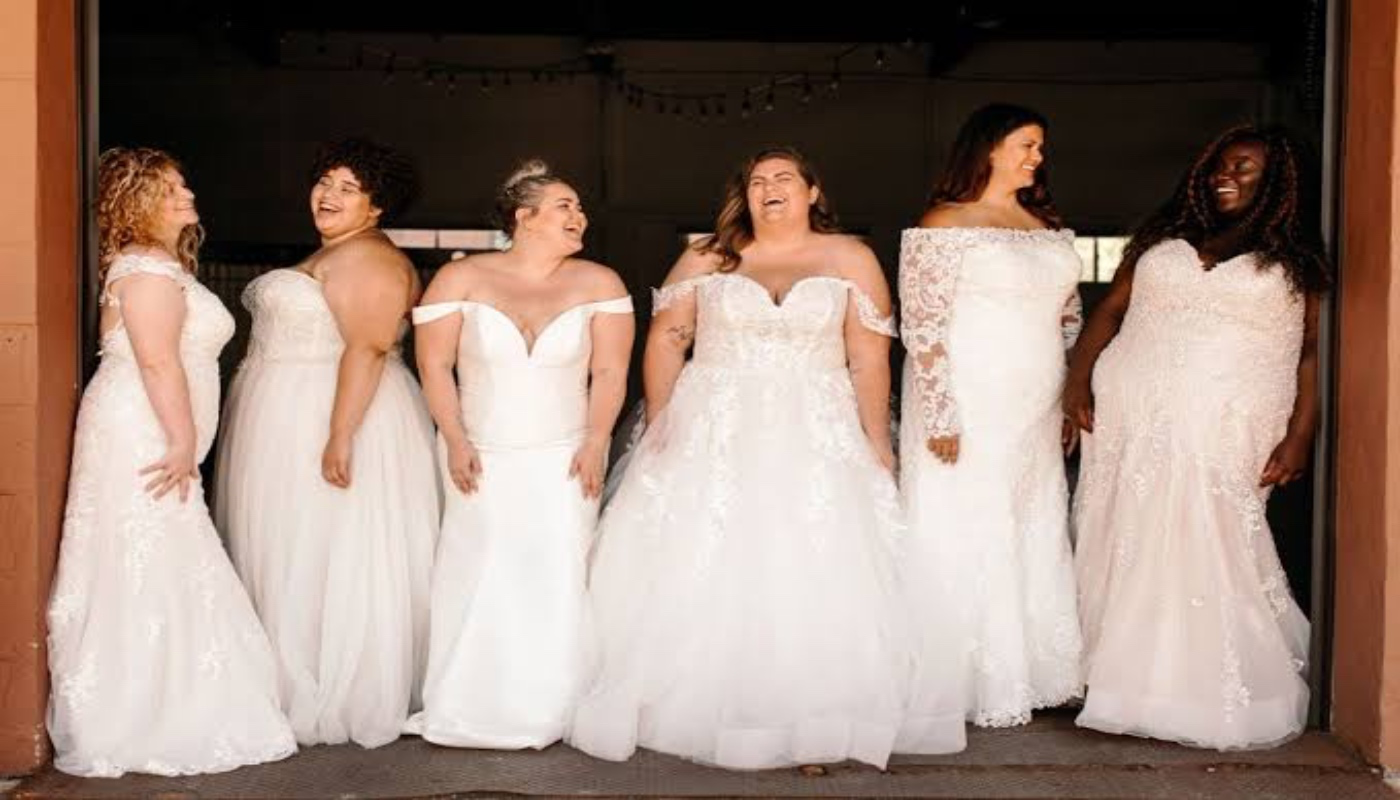
The designer has discussed her commitment to showing bridal designs on models with different measurements, including producing additional samples for runway presentations.
Her approach challenges the idea that one standard sample size must determine who can be represented.
The brand has also been recognised for its broader sample availability and extended sizing.
Another example is Loho Bride, whose founder, Christy Baird, has discussed building a welcoming bridal environment through staff training, inclusive communication, and a selection of gowns designed with extended sizing in mind.
Justin Alexander has also discussed fitting selected gowns on models in both smaller and larger sizes to evaluate grading, structural support, and garment construction.
These examples are important because they address different levels of the problem.
Some focus on manufacturing and pattern development.
Others focus on retail experiences and customer communication.
Together, they demonstrate that inclusive bridal fashion requires cooperation across the industry rather than isolated marketing initiatives.
It is also important to recognise that progress is uneven.
A designer may offer extended sizes but have limited international retail availability.
A boutique may stock inclusive samples but carry only a small number of designers.
A collection may appear diverse in advertising without providing sufficient fitting opportunities.
The objective should therefore be to evaluate inclusivity through the entire customer journey rather than relying on a single positive example.
16. The Business Case for a More Inclusive Bridal Industry
Size inclusivity is frequently discussed as an ethical responsibility, but it also has commercial implications.
The wedding industry depends on customers making emotionally significant purchases.
Brides invest in products that they want to remember, photograph, and associate with one of the most important days of their lives.
A positive retail experience can strengthen customer confidence and encourage recommendations.
A negative experience can have the opposite effect.
When customers cannot try on dresses, feel uncomfortable during consultations, or encounter additional financial barriers, retailers risk losing sales.
There is also a significant opportunity for brands that understand underserved customers.
Consumers are not simply looking for larger versions of existing designs.
They want beautiful collections, fashionable silhouettes, quality construction, transparent pricing, and the same level of customer service available to everyone else.
The opportunity is therefore much broader than creating a separate rack of larger gowns.
Designers can develop collections that accommodate different proportions while maintaining their distinctive aesthetic.
Retailers can improve inventory strategies through customer data and demand analysis.
Brands can also build stronger relationships with customers by including diverse models in their campaigns and providing accurate information about garment availability.
Inclusivity does not guarantee commercial success, and businesses must still make financially sustainable decisions.
However, assuming that a significant group of customers represents an unprofitable market without adequately serving them creates a self-fulfilling limitation.
The industry cannot accurately measure demand when it consistently restricts access to the products customers want to purchase.
17. What Bridal Boutiques Can Do Differently
Meaningful progress requires practical changes in everyday retail operations.
Bridal boutiques do not necessarily need to stock every design in every size.
However, they can take several steps to create a more inclusive experience.
Invest in representative sample sizes.
Retailers should reconsider the narrow concentration of their existing samples and select a broader range of sizes that reflects the customers they serve.
Provide accurate online information.
Customers should be able to identify sample availability before booking appointments.
This saves time and reduces the disappointment associated with arriving at a store only to discover that the preferred gown cannot be tried on.
Train consultants in inclusive communication.
Staff should understand how to discuss fit, alterations, measurements, and garment construction without making unnecessary comments about a customer’s body.
Improve fitting-room accessibility.
The physical environment should accommodate customers with different mobility requirements and body dimensions.
Develop partnerships with designers.
Retailers can collaborate with brands to arrange additional samples, special fittings, and extended-size ordering options.
Avoid unnecessary size-based surcharges.
Where additional costs are genuinely required, they should be explained transparently and based on actual production requirements rather than automatically attached to a particular size category.
These changes may require investment, but they can help transform the bridal shopping experience from a restrictive transaction into a genuinely welcoming service.
18. What Designers Must Understand About the Future of Bridal Fashion
Designers have an equally important responsibility.
A genuinely inclusive collection begins during the design process, not after a garment has already been developed.
This means considering different body proportions during pattern development, testing structural elements across sizes, and ensuring that fabric placement and embellishment remain visually balanced.
It also means challenging the assumption that inclusivity requires compromising creativity.
There is no reason a larger bride should have fewer opportunities to wear contemporary silhouettes, dramatic necklines, minimalist designs, elaborate lace, or fashion-forward couture.
Inclusive design should expand creative possibilities rather than narrow them.
Designers can also reconsider how they approach fashion shows.
Instead of treating diverse models as occasional additions, brands can incorporate different body types into the regular presentation of their collections.
This would help buyers and customers understand that the designs are intended for a broader range of people.
Most importantly, designers should involve actual customers in the development process.
Feedback from brides who wear extended sizes can reveal issues that may not be obvious during conventional fittings.
Their experiences can help improve comfort, construction, support, and overall garment performance.
The future of bridal fashion depends on understanding that bodies are not standardised, and successful design must account for that reality.
19. Social Media Is Changing What Brides Expect
Social media has introduced another important influence.
For decades, bridal inspiration was largely controlled by fashion magazines, designer advertisements, celebrity weddings, and professional photography.
Today, platforms such as Instagram, Pinterest, TikTok, and YouTube allow brides to encounter a much wider range of wedding experiences.
Customers can see different body types wearing traditional and contemporary wedding clothing.
They can follow bridal stylists, watch fitting appointments, discuss shopping experiences, and exchange recommendations.
This has created greater visibility for customers who were historically underrepresented in mainstream bridal imagery.
It has also made it easier to identify retailers that offer extended sizing and designers who approach fit more thoughtfully.
However, social media has its own limitations.
Highly edited photographs, carefully selected angles, and idealised wedding aesthetics can reproduce unrealistic expectations.
A diverse image does not necessarily reveal whether the dress is available in multiple sizes or whether the wearer experienced an accessible fitting process.
Consequently, consumers and brands must distinguish between representation and practical inclusion.
The most valuable digital content is not simply a photograph of a beautiful bride.
It is information that helps customers understand where a garment is available, how it fits, what alterations may be needed, and whether the retailer provides an equally welcoming experience.
Social media can make excluded customers more visible, but meaningful change still depends on what happens inside the fashion industry.
20. Moving Beyond the Idea That Every Bride Must Look the Same
Perhaps the deepest challenge facing bridal fashion is its attachment to a singular definition of bridal beauty.
The wedding industry has historically sold a recognisable visual fantasy.
The ideal bride is frequently presented as graceful, polished, romantic, and perfectly proportioned.
But real weddings are not identical, and neither are the people celebrating them.
Some brides prefer dramatic couture.
Others want minimalist dresses, traditional garments, trousers, jumpsuits, or family heirlooms.
Some want to emphasise particular features, while others prioritise comfort and movement.
There is no universal bridal silhouette that every person should aspire to wear.
Size inclusivity becomes meaningful when the industry accepts that beauty is not dependent on fitting into one prescribed shape.
This does not mean abandoning traditional bridal fashion.
A bride who loves a fitted corset gown should be able to wear one.
A bride who prefers a flowing silhouette should have equally beautiful choices.
Someone who wants a traditional South Asian bridal outfit should be able to access it without feeling that her body requires correction.
The goal is not to replace one restrictive standard with another.
It is to make room for individual expression.
Conclusion: The Future of Bridal Fashion Must Make Room for Every Body
Bridal fashion has been slow to embrace size inclusivity because its limitations are embedded throughout the industry.
They appear in historical beauty standards, designer sample sizes, manufacturing economics, luxury retail practices, runway representation, inconsistent sizing systems, and cultural expectations surrounding the ideal bride.
The problem cannot be solved by producing a handful of larger gowns or introducing occasional diverse advertising campaigns.
It requires a more fundamental shift in how designers develop collections, how boutiques invest in samples, how consultants communicate with customers, and how the industry defines bridal beauty.
There are genuine financial and technical challenges involved. Independent designers cannot necessarily manufacture unlimited samples, and intricate garments require careful construction across different proportions.
Recognising these realities is important.
However, financial limitations should encourage better planning and collaboration rather than become permanent justifications for exclusion.
The progress demonstrated by designers and retailers investing in inclusive samples, diverse runway presentations, and thoughtful garment construction offers a promising direction.
The next stage should involve making these practices more consistent across mainstream bridal fashion.
Ultimately, a wedding dress should represent the person wearing it, not an industry-approved body type.
A bride should not have to imagine herself inside a dress because the boutique has failed to provide an appropriate sample. She should not have to pay a premium simply to access the same level of service as another customer. And she should never leave a fitting appointment believing that her body is the obstacle to her dream.
The wedding industry celebrates individuality through personal vows, meaningful traditions, carefully chosen decorations, and distinctive ceremonies.
Its approach to clothing should reflect that same appreciation for difference.
The future of bridal fashion will not be defined by how successfully it preserves one traditional image of the bride. It will be defined by how many different people can recognise themselves in its collections, enter its boutiques with confidence, and find a garment that makes them feel genuinely celebrated.
A wedding dress should fit the bride.
The bride should never have to fit the industry’s definition of a wedding dress.
Sources: Vogue, The Knot, The Knot Worldwide, Who What Wear, Stylist, Fashionista, Glamour, Cosmopolitan, San Francisco Chronicle, Auburn University