 by
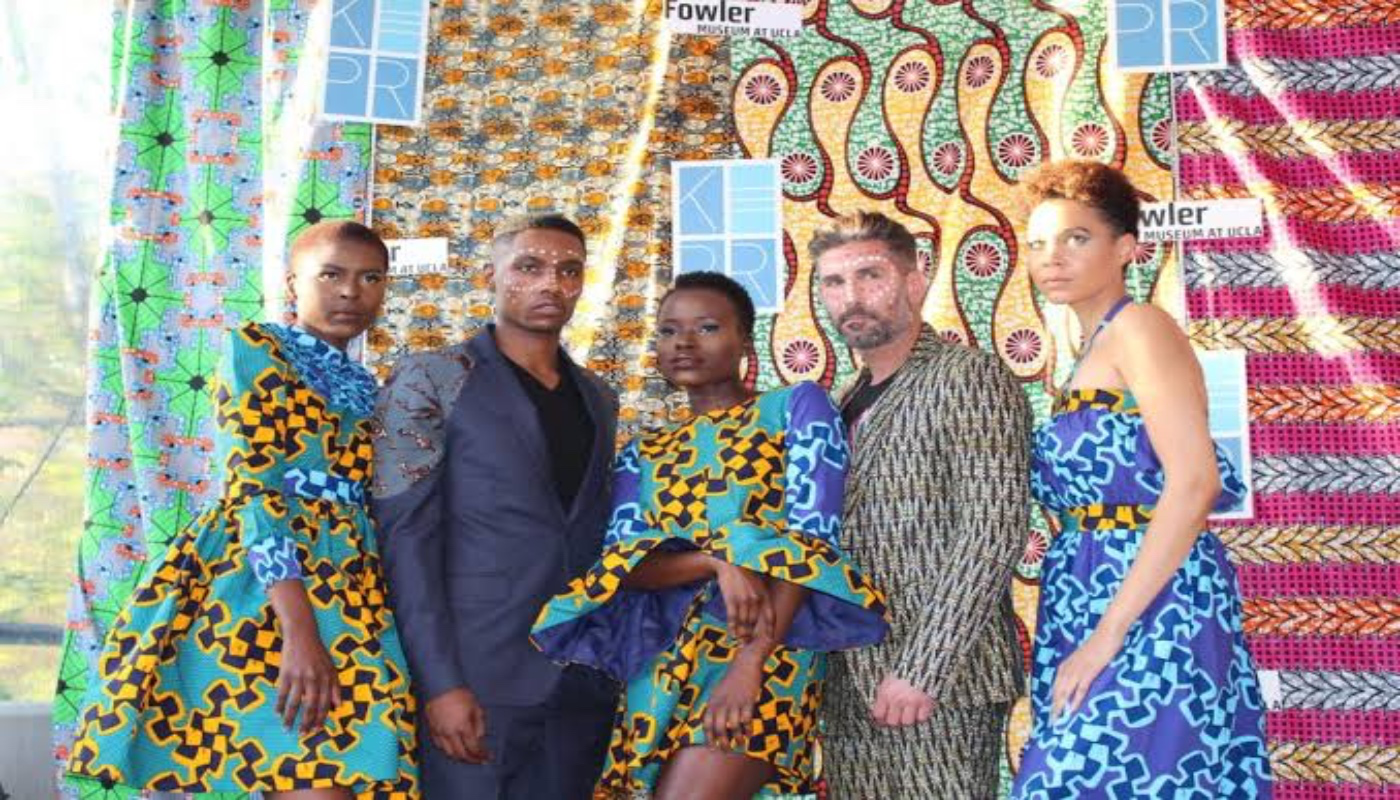
by African fashion has never been merely about clothing. A piece of printed fabric can carry family memory, regional identity, celebration, status, craftsmanship, migration, and modern self-expression—all at once. In many communities, clothing is part of how people announce who they are and where they come from.
That makes the growing movement toward size-inclusive African print fashion particularly significant.
When designers create Ankara dresses, wax-print separates, boubous, kaftans, indigo garments, or contemporary pieces in a broader range of sizes, they are doing more than adjusting a pattern. They are making a statement about who gets to participate in cultural fashion.
The shift is especially interesting because African print fashion has long occupied a complicated position between heritage and reinvention. The fabrics commonly described as African wax prints have a global history: many were commercially developed from Indonesian batik traditions and manufactured in Europe before becoming deeply embedded in West and Central African cultures. Over generations, however, African consumers gave these textiles their own meanings, names, styling traditions, social uses, and cultural significance.
Today, designers are extending that evolution again.
They are asking a deceptively simple question: What happens when the full visual richness of African fashion is designed for more bodies?
The answer reaches beyond measurements. It touches belonging, confidence, representation, commerce, cultural continuity, and the psychological experience of seeing yourself reflected in clothing that was once treated as unavailable to you.
African Print Has Always Been About More Than Fabric
To understand the importance of size inclusivity in African print design, it helps to first understand why these textiles carry such cultural weight.
African wax prints, often referred to as Ankara or Dutch wax, became particularly influential across West and Central Africa. Their bold colors, repeating motifs, geometric structures, and visual intensity made them highly recognizable.
But their meaning was never fixed simply by where the cloth was manufactured.
Factory-printed textiles acquired local names and symbolic meanings and became associated with occasions including weddings, funerals, anniversaries, celebrations, and political events. Six-yard lengths of cloth could be used to create coordinated outfits, while uncut fabric could also function as a form of stored wealth.
This is important because it challenges a simplistic understanding of “traditional African fashion.”
Tradition is not necessarily a frozen historical costume.
It can be a living practice.
A grandmother wearing a printed wrapper, a daughter commissioning an Ankara gown for a wedding, or a young designer transforming a familiar motif into a modern two-piece outfit are all participating in cultural continuity.
Size inclusivity therefore becomes part of that continuity.
If fashion changes across generations in silhouette, construction, and styling, there is no cultural reason for its understanding of the wearer to remain frozen around a narrow size range.
The Size Question Is Also a Question of Belonging
Fashion exclusion can be surprisingly quiet.
There does not have to be an explicit statement saying, “This clothing is not for you.”
Sometimes exclusion happens through a size chart.
A beautiful dress exists. A striking print exists. The craftsmanship is there. The cultural references are there.
But the garment stops at a particular measurement.
The customer is effectively told that the cultural expression they admire is available—just not in their body’s dimensions.
This distinction matters.
A person can admire African fashion while simultaneously feeling that the fashion industry does not imagine them as its intended wearer.
That is why size-inclusive design can have a psychological dimension beyond ordinary retail convenience.
Research into clothing and body image has repeatedly found that fit and sizing can influence how people experience themselves. Well-fitting clothing can contribute to greater body confidence, while inconsistent sizing and poor fit can intensify dissatisfaction with clothing and appearance.
The lesson is not that clothing can magically create self-esteem.
It cannot.
Rather, clothing can either add another moment of exclusion to someone’s daily experience—or remove one.
From “Can You Make It?” to “It Was Designed for You”
One of the most meaningful developments in African fashion is the movement from informal accommodation toward intentional design.
Historically, many African fashion markets have naturally incorporated tailoring and custom sewing. A customer could bring fabric to a tailor and have a garment constructed according to personal measurements.
This already provided a degree of flexibility that standardized mass-market fashion sometimes lacked.
But custom tailoring has its limitations.
It can be expensive. It requires access to skilled makers. It may not be available to someone living outside the designer’s region. It can also place the responsibility for solving fit entirely on the customer.
Contemporary size-inclusive designers are increasingly experimenting with another model: building a wider range of bodies into the design process from the beginning.
That difference is profound.
There is a psychological distinction between asking, “Can you alter this for me?” and discovering, “This collection was designed with bodies like mine in mind.”
The second communicates belonging.
The Rise of Purposefully Inclusive African Fashion Brands
Several contemporary brands demonstrate how different this movement can look.
Ghanaian designer Selina Bebaako-Mensah, for example, built her fashion practice around African-inspired clothing and identified the difficulties plus-size customers encountered when searching for stylish garments. Her approach included custom-made shopping experiences, directly connecting inclusivity with the practical realities of customers.
Other African and African-founded brands have increasingly combined African textiles with contemporary silhouettes and extended sizing.
Bibiré, founded by Nigerian-born designer Busayo Shittu, is an African-inspired luxury womenswear brand that offers sizes extending into the plus-size range. Its approach demonstrates how inclusive sizing can exist alongside elevated fashion rather than being treated as a separate “special” category.
ASAKE-OGE, a Yoruba-rooted fashion label with a multigenerational design history, similarly offers extended sizing across many of its garments, while some unisex pieces extend further. Its made-to-order approach demonstrates how traditional cultural references can coexist with individualized fit.
These examples are significant because they challenge an old fashion assumption: that larger sizes necessarily require a separate aesthetic.
They do not.
A dramatic print can remain dramatic.
A tailored silhouette can remain sophisticated.
A culturally significant motif does not lose its meaning simply because the pattern has been graded for another body.
African Designers Are Reconsidering the Architecture of the Garment
Size inclusivity is sometimes misunderstood as simply making garments bigger.
That is not how good inclusive design works.
Scaling a pattern proportionally can create problems because bodies do not expand uniformly.
Shoulders, bust, waist, hips, sleeves, rise, armholes, and garment length can change at different rates.
That means a genuinely size-inclusive approach often requires more thoughtful pattern development.
This is where African fashion’s strong relationship with tailoring can become an advantage.
Custom and semi-custom production allows designers to think about proportion rather than treating a single standardized body as the universal template.
A contemporary African designer may use adjustable wrap construction, generous sleeves, strategically placed seams, elastic or flexible waist systems, layered silhouettes, flowing kaftans, boubous, tailored separates, extended pattern grading, made-to-measure production, adjustable closures, and convertible designs.
These are not merely techniques for “hiding” a body.
That distinction is important.
Inclusive design should not automatically mean designing garments around the assumption that larger bodies need to disappear.
Instead, the goal can be freedom of choice.
A customer might want something loose.
Another might want something fitted.
Another might want architectural tailoring.
Another might want a dramatic cropped jacket.
Another might want a traditional silhouette.
Inclusivity becomes meaningful when all of these possibilities remain open.
The Boubou and Kaftan Offer an Important Cultural Case Study
Some traditional and contemporary African silhouettes already challenge Western assumptions about how clothing must fit.
The boubou is an especially interesting example.
Its flowing construction can accommodate a wide range of bodies while maintaining a strong visual presence.
But there is a potential trap.
If designers rely exclusively on loose silhouettes for larger customers, size inclusivity can become another form of limitation.
“Here is your size” should not mean “here is your oversized garment.”
A truly inclusive African fashion landscape should allow larger customers access to the same diversity of design language available to smaller customers.
This is why brands offering dresses, skirts, trousers, jackets, and structured pieces in extended sizes matter.
The significance lies not simply in the number.
It is in the normalization.
When extended sizing appears as part of the main shopping experience rather than as an afterthought, it changes the visual hierarchy of the brand.
Print Scale Matters Too
One of the most fascinating technical challenges in African print design is the relationship between body shape and pattern scale.
African prints are rarely timid.
They can feature enormous florals, geometric repetitions, contrasting colors, symbols, abstract forms, and complex borders.
For decades, mainstream fashion advice often suggested that larger bodies should avoid bold patterns.
Size-inclusive African designers provide an opportunity to challenge that idea.
A large body does not automatically require a small print.
In fact, bold pattern can become an important tool for visual presence.
The question should not be, “Does this print make the body look smaller?”
It can instead be, “How does the print interact with the body?”
A designer might position a motif to create rhythm across a garment.
A border can become a structural element.
A repeated geometric design can emphasize movement.
Contrasting panels can create architectural interest.
A large floral can become the focal point of an entire dress.
This reframes the conversation from camouflage to composition.
The body is no longer the problem the print must solve.
The body becomes part of the design.
When Cultural Pride Meets Body Confidence
African print clothing often has a celebratory visual language.
The colors can be saturated.
The textiles can be instantly recognizable.
The silhouettes can carry cultural references.
Wearing such clothing publicly can therefore involve more than looking fashionable.
It can be an act of cultural visibility.
For someone who has previously struggled to find garments in their size, that visibility can carry another layer: the experience of participating without apology.
Research on dress fit supports the idea that clothing and body confidence can be closely intertwined. Well-fitting clothing can help people feel more confident, while poor fit can intensify awareness of perceived bodily flaws.
That does not mean every person wearing an inclusive garment will automatically feel empowered.
Body image is complicated.
Social pressures do not disappear because a designer extends a size chart.
But representation can alter the emotional context surrounding fashion.
Instead of entering a store already expecting disappointment, a customer may enter expecting possibility.
That is a meaningful psychological shift.
The Social Power of Seeing Larger Bodies in African Fashion
Representation does not only affect the person wearing the clothes.
It affects the person looking at them.
Fashion imagery teaches audiences who is considered stylish, desirable, professional, sophisticated, youthful, glamorous, or culturally representative.
If campaigns repeatedly feature only narrow body types, viewers absorb an implicit message about who belongs within the visual identity of fashion.
Including different bodies disrupts that message.
This is particularly important for African fashion because the industry operates across multiple visual cultures.
A designer may sell in Lagos, Accra, Johannesburg, London, New York, Toronto, or Dubai.
A single campaign can therefore reach audiences living under very different beauty standards.
An extended-size African print collection can become a meeting point between cultural identity and global body-diversity conversations.
Selling larger sizes without showing larger bodies still leaves a representation gap.
Representation and availability reinforce each other.
Why African Fashion Cannot Simply Copy Western Inclusivity
There is a temptation to frame African size inclusivity as Africa “catching up” with Western fashion.
That interpretation is too simplistic.
African fashion industries have their own histories, infrastructures, and relationships with tailoring.
In many African markets, clothing production has historically involved local seamstresses, tailors, dressmakers, and informal fashion businesses.
Sizing systems can therefore operate differently from those in large Western retail chains.
African fashion should not be evaluated solely against the framework of European or American mass retail.
Instead, African designers can contribute their own solutions to the global size-inclusivity conversation.
Made-to-measure production, flexible silhouettes, local tailoring knowledge, and direct relationships with customers can all offer alternative models.
The future may therefore involve African fashion teaching global fashion something, rather than simply imitating it.
Tradition Does Not Mean Restriction
Perhaps the most important cultural point is that tradition itself is constantly negotiated.
Consider how African print clothing has changed.
Textiles once used in particular social contexts now appear in streetwear.
Traditional silhouettes have been shortened, layered, and reconstructed.
Prints have moved onto sneakers, handbags, jackets, and contemporary separates.
Designers combine African textiles with denim, leather, knitwear, and minimalist tailoring.
Gender boundaries have also become more fluid.
Orange Culture, founded in Lagos by Adebayo Oke-Lawal, provides a documented example of a Nigerian brand combining African references with contemporary silhouettes while challenging conventional ideas surrounding gender and identity.
That broader transformation is useful for understanding size inclusivity.
If African designers can reinterpret silhouette, gender, fabrication, and styling while maintaining cultural references, they can also reinterpret assumptions about the body that gets to wear those references.
Tradition survives not by refusing change.
It survives by remaining meaningful through change.
The Global African Diaspora Is Expanding the Conversation
African fashion no longer belongs exclusively to a geographic market.
The African diaspora has helped create new audiences for Ankara, kente-inspired textiles, indigo, Adire, wax prints, and African-inspired contemporary design.
That has created a fascinating feedback loop.
Designers in Africa influence diaspora fashion.
Diaspora consumers influence designers.
Social media accelerates the exchange.
A designer can receive orders from customers across continents without opening physical stores in every market.
This creates pressure for better sizing.
A brand selling internationally cannot assume that one country’s sizing conventions will automatically work elsewhere.
Brands therefore increasingly need detailed measurements, size guides, and clearer fit communication.
The result is that size inclusivity becomes part of African fashion’s globalization.
The Diaspora Also Complicates the Meaning of “African Fashion”
There is no single African body.
There is no universal African aesthetic.
And there is no single African experience of beauty.
Africa contains enormous cultural, geographic, and ethnic diversity.
African diaspora communities add additional layers shaped by migration and local cultures.
An African-inspired designer working in the United States may be responding simultaneously to African heritage and American retail realities.
A British-Nigerian designer may be designing for customers who navigate both Nigerian cultural expectations and British fashion systems.
A Ghanaian designer serving customers in Accra and London may encounter radically different sizing infrastructures.
This makes size inclusivity a cross-cultural issue rather than a single-market problem.
The question becomes:
How can cultural fashion remain culturally specific while becoming accessible across different bodies, markets, and identities?
There is no single answer.
And that is precisely why experimentation matters.
Inclusive Fashion Can Preserve Cultural Textiles by Creating More Reasons to Wear Them
There is also an economic dimension to this conversation.
Cultural textiles survive partly because people continue buying and wearing them.
If younger consumers associate traditional prints with clothing that feels restrictive, outdated, or unavailable in their size, they may gradually move toward other forms of dress.
But if designers make those same textiles relevant to contemporary wardrobes—and accessible across sizes—the cultural material can remain part of everyday life.
This is not about preserving tradition in a museum-like state.
It is about keeping cultural materials economically and socially active.
Designers using locally produced fabrics can also support textile workers, pattern makers, tailors, and other parts of the fashion ecosystem.
That creates an important intersection:
Cultural preservation + local production + inclusive design.
Size Inclusivity Can Also Encourage Better Sustainability
At first glance, body inclusivity and sustainability may seem like separate conversations.
They are not.
Poor fit can result in returns, discarded garments, and clothing that remains unworn.
Inclusive sizing can therefore become part of a broader rethink of how garments are produced.
African designers already have an interesting opportunity here because made-to-order and small-batch production are relatively common among independent labels.
Instead of producing enormous quantities in a narrow size range and hoping they sell, designers can use customer measurements, preorders, and smaller production runs.
That can potentially reduce overproduction while improving fit.
Of course, made-to-order production is not automatically sustainable.
Shipping, fabric sourcing, labor conditions, and production methods still matter.
But inclusive sizing can become part of a larger effort to build fashion systems around actual customers rather than abstract averages.
Why “Flattering” Should Not Be the Only Language of Inclusion
There is another subtle issue.
Size-inclusive fashion is often marketed using words such as “flattering,” “slimming,” “figure-enhancing,” or “curve-loving.”
These terms may sound positive, but they can reproduce the same hierarchy they are supposed to challenge.
If every garment is described as flattering because it makes the body appear smaller, then thinness remains the ultimate goal.
A stronger approach is to talk about comfort, movement, craftsmanship, proportion, expression, versatility, cultural meaning, personal style, and confidence.
This is not about banning the word “flattering.”
It is about expanding the vocabulary.
A woman should be able to wear an enormous Ankara print because she loves the print—not because someone convinced her it somehow disguises her body.
The Importance of Inclusive Marketing
There is a difference between making a garment available and making a customer feel welcome.
Inclusive marketing therefore matters.
If the website displays extended sizes but every model looks identical, customers may reasonably question whether the larger sizes were genuinely considered during design.
If plus-size customers appear only in separate campaigns, inclusion can feel compartmentalized.
If the same collection is photographed across multiple body types, the message changes.
The garment becomes the common denominator.
That is powerful.
The customer sees:
“This is the collection.”
Not:
“This is the collection, and here is the separate section for people like me.”
That distinction may seem small.
Culturally, it is enormous.
Beyond Women: Size Inclusivity Can Expand Across Gender
The size conversation should not be limited to women’s fashion.
African fashion has long contained silhouettes that do not fit neatly into contemporary Western gender categories.
Robes, tunics, wrappers, shirts, trousers, flowing garments, and coordinated sets can move between gendered interpretations depending on styling and context.
Orange Culture’s work offers a documented example of a Nigerian brand deliberately questioning conventional gendered fashion and emphasizing clothing’s ability to move beyond traditional categories.
ASAKE-OGE’s extended unisex sizing provides another contemporary example of how culturally rooted prints can intersect with broader ideas of gender flexibility.
This suggests that the future of inclusive African fashion could be broader than “plus-size women’s fashion.”
It could become a conversation about body diversity across the entire fashion system.
The Rise of the Customer as a Co-Designer
Digital commerce is changing the relationship between designer and customer.
Customers can now send measurements.
They can request alterations.
They can provide feedback publicly.
They can post photographs wearing garments.
They can explain where a garment succeeded or failed.
This gives independent designers a level of information that traditional fashion houses may not always possess.
Some African brands have emerged directly from the recognition that customers were struggling to find stylish, size-inclusive clothing.
That experience can become design knowledge.
In this model, inclusivity is not simply imposed from above.
It develops through conversation.
The Emotional Meaning of “Finally Finding Something”
For many shoppers, the emotional impact of inclusive fashion is difficult to quantify.
It can be the relief of entering a website and seeing your size listed.
It can be ordering without mentally preparing yourself for disappointment.
It can be attending a wedding in an outfit that feels culturally meaningful and physically comfortable.
It can be receiving compliments on the print rather than questions about where you found something that fits.
It can be looking at a campaign and seeing a body that resembles yours wearing the exact garment you want.
These experiences may appear ordinary.
They are ordinary.
And that is precisely why they matter.
Inclusion becomes powerful when it stops feeling extraordinary.
But Size Inclusivity Still Has Work to Do
It would be misleading to portray the current movement as complete.
Extended sizing remains inconsistent.
Some brands offer larger sizes only in selected garments.
Some rely on loose silhouettes instead of fully grading structured pieces.
Some size charts remain unclear.
International sizing can be confusing.
Production costs can increase when patterns require additional development.
Fabric widths may create challenges for certain designs.
Small designers may not have the capital to stock every size.
And demand forecasting becomes more complicated when brands expand their ranges.
There is also the question of whether “plus size” itself is an adequate category.
A customer who falls outside a brand’s standard range may not identify with the label.
Another may prefer numerical sizing.
Another may simply want accurate body measurements without categories.
The most inclusive systems may therefore move increasingly toward measurement-based design and flexible fit rather than relying entirely on arbitrary size labels.
Technology Could Change African Inclusive Fashion Again
Digital patternmaking, 3D garment simulation, body scanning, and made-to-order production could become increasingly important.
Technology can help designers test proportions across multiple body dimensions before producing physical garments.
It can also support more detailed customization.
But technology should not replace cultural knowledge.
A perfectly engineered garment can still fail if it does not understand why a particular textile, silhouette, or motif matters to its community.
The strongest future may combine:
Traditional craftsmanship + modern patternmaking + customer data + cultural storytelling.
That combination could allow African designers to build highly personal garments without sacrificing cultural identity.
What the Future Could Look Like
The next phase of African size-inclusive fashion may move beyond simply asking how many sizes a designer offers.
Instead, customers may begin asking broader questions.
Were different bodies included during development?
Are the same designs available across the full range?
Are the garments photographed on diverse bodies?
Does the brand explain fit honestly?
Can customers access alterations?
Are measurements clearly provided?
Are larger sizes structurally redesigned where necessary?
Are local artisans benefiting?
Are cultural references being treated respectfully?
These questions move the industry from size expansion to design accountability.
And that is where the conversation becomes much more interesting.
African Print Fashion Is Becoming More Inclusive Without Becoming Less African
The most powerful misconception about cultural preservation is that it requires cultural immobility.
It does not.
African fashion has always changed.
Textiles traveled across continents.
Patterns were reinterpreted.
Local consumers gave imported technologies new cultural meanings.
Designers transformed familiar fabrics into contemporary silhouettes.
Diaspora communities carried styles across borders.
Today’s designers are simply continuing that long history of adaptation.
Size inclusivity is another chapter.
When an Ankara dress is redesigned for a broader range of bodies, the cultural identity of the garment does not disappear.
When an indigo outfit is made in extended sizes, tradition does not become less authentic.
When a boubou is reimagined through contemporary tailoring, heritage does not become weaker.
Culture becomes more available.
The Deeper Cultural Shift: From Visibility to Participation
For years, conversations about body inclusivity have emphasized representation.
Representation remains important.
But representation is only the beginning.
A larger body appearing in a fashion campaign is visibility.
A larger body being able to purchase the garment, wear it comfortably, style it creatively, and participate in the cultural experience surrounding it is participation.
The distinction is crucial.
African print designers who embrace inclusive sizing are therefore contributing to something larger than a fashion trend.
They are expanding participation in cultural expression.
That can influence younger generations, who may grow up seeing African fashion as something available to many different kinds of bodies rather than a narrow visual ideal.
It can influence retailers, who may recognize previously underserved customers.
It can influence independent tailors and pattern makers.
It can influence diaspora consumers.
And it can influence the designers who come next.
Conclusion: A Bigger Future for African Fashion
African print fashion has always carried a conversation between past and present.
The fabrics may carry historical journeys across continents. The motifs may acquire meanings in particular communities. The silhouettes may echo generations of craftsmanship while responding to contemporary life.
Size inclusivity adds another dimension to that conversation.
It asks who gets to wear the story.
The answer increasingly appears to be: more people, more bodies, and more ways of expressing identity.
From Ghanaian designers responding directly to the needs of plus-size customers to Nigerian-born labels offering extended luxury sizing, from made-to-order Yoruba-inspired collections to contemporary brands experimenting with relaxed silhouettes and inclusive pattern development, a broader movement is taking shape.
Its importance is not simply commercial.
It is cultural.
It is psychological.
It is social.
When fashion stops asking bodies to qualify for cultural expression, clothing becomes less about fitting an ideal and more about helping people participate in their own stories.
The future of African print design may therefore not be about choosing between tradition and inclusivity.
It may be about recognizing that inclusivity can itself become part of tradition’s evolution.
The most meaningful garment is not necessarily the one that makes a person look smaller, younger, slimmer, or closer to an imposed ideal.
It may simply be the one that allows them to walk into a room feeling that the culture, craftsmanship, color, and beauty they are wearing were meant for them too.
And as African designers continue taking their work onto global runways, digital marketplaces, and diaspora wardrobes, that idea could become one of the fashion industry’s most important exports:
Heritage does not become smaller when more people are allowed to belong to it.
Sources: Smithsonian National Museum of African Art, British Museum, Rijksmuseum, Body Image, ScienceDirect, PubMed, The Guardian, BellaNaija, FashionGHANA, She Leads Africa