 by
by Bollywood has long sold transformation as part of the dream.
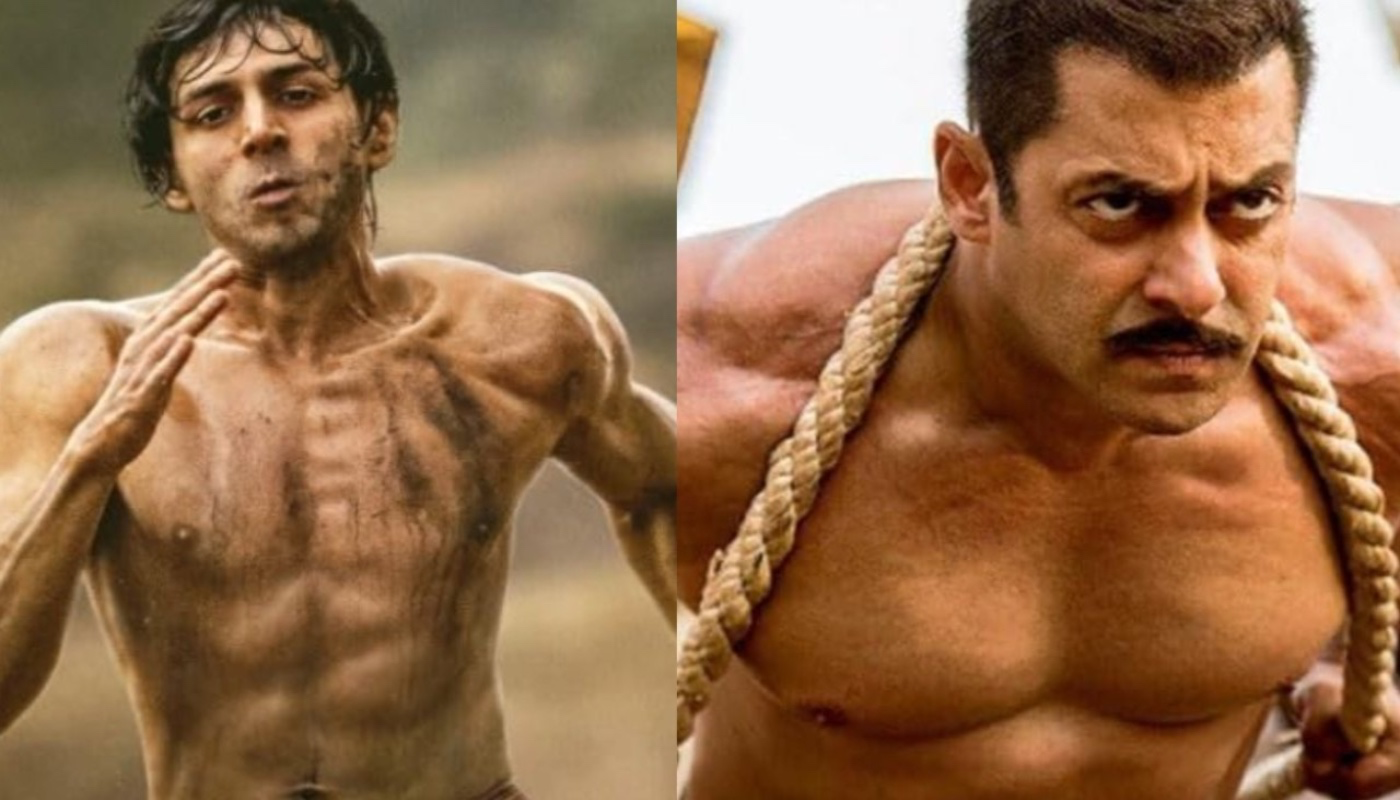
The actor enters the frame one way and emerges another: leaner, more muscular, older, younger, heavier, athletic, rugged, glamorous, or almost unrecognisable. Promotional campaigns celebrate the “before and after.” Interviews catalogue diets and workouts. Magazine covers turn months of preparation into visual spectacle. Social media compresses an exhausting process into a few photographs and a motivational caption.
But behind the familiar transformation montage is a more complicated cultural question: when does changing the body for a role become an artistic commitment, and when does it become an expectation that actors must continually reshape themselves to remain employable?
Bollywood actors themselves have increasingly spoken about this distinction.
Some describe transformation as a deeply creative part of acting. Farhan Akhtar has discussed how becoming Milkha Singh for Bhaag Milkha Bhaag required not merely changing his physique but emotionally inhabiting the discipline of an athlete. Aamir Khan’s transformations for films such as Ghajini and Dangal demonstrated how radically an actor’s body can become part of cinematic storytelling. Ranbir Kapoor has described physical transformation as an “occupational hazard” of working in a visual medium.
Others have spoken about the darker side of appearance culture. Vidya Balan has described years in which her weight became a public subject and recalled being repeatedly told to lose weight for films. Taapsee Pannu recently spoke about pushing herself excessively while chasing a flat midriff. Sobhita Dhulipala has questioned conventional beauty standards and the narrow definitions of attractiveness she encountered early in her career.
Taken together, these voices reveal something more significant than celebrity fitness culture.
They show how the Bollywood body has become a workplace, a marketing image, a storytelling device and, increasingly, a public possession.
The Bollywood Body Is More Than a Body
An actor’s body is unusually visible labour.
For most professions, physical appearance is not constantly examined by millions of strangers. An actor’s face and body, however, can become part of posters, trailers, interviews, advertisements, social-media clips, paparazzi photographs and fan discussions.
That visibility creates a peculiar contradiction.
Actors may have more control over their appearance than many other workers because transformation can be an artistic choice. At the same time, they can have less control because casting decisions, promotional expectations and audience perceptions can attach professional value to physical appearance.
This is why physical transformation cannot be understood simply as a story about discipline.
A transformation for a specific character may be purposeful. An actor playing a boxer, athlete, soldier or historical figure may reasonably need a body that communicates physical capability. An actor portraying someone who has experienced a dramatically different stage of life may alter their appearance to make the character believable.
The question changes when the transformed body becomes the new baseline.
Once an actor appears exceptionally muscular for one film, audiences may expect the physique to remain. Once an actress appears extremely lean in a promotional campaign, the appearance can become part of her public identity. Once an actor undergoes an extraordinary change for a role, interviews may focus more on the body than the performance that justified it.
The cultural danger is not transformation itself.
It is the idea that the transformed body is automatically a superior body.
That distinction matters enormously for body inclusivity.
Aamir Khan and the Transformation as Cinematic Storytelling
Few Bollywood examples demonstrate the extraordinary possibilities of physical transformation more clearly than Aamir Khan.
For Dangal, Khan underwent a dramatic physical transformation to portray wrestler Mahavir Singh Phogat at different stages of his life. Contemporary reporting described the scale of the change as substantial, while Khan himself cautioned audiences against treating the process as a casual fitness template. (GQ India)
The significance of the transformation was not simply aesthetic.
The body had narrative meaning.
The character’s physical appearance had to communicate different stages of his life and relationship with wrestling. The transformation therefore functioned as a cinematic language: age, athleticism, physical capability and character history could be communicated visually before the character even spoke.
This is where transformation can be artistically meaningful.
Cinema is a visual medium. Bodies communicate.
A runner looks different from a wrestler. A professional athlete occupies physical space differently from an office worker. A character who has spent years training for combat may plausibly move and appear differently from someone who has not.
The problem emerges when the audience extracts the body from its narrative context.
A carefully constructed film transformation can become an Instagram transformation challenge. A professional actor working with trainers, nutrition professionals, choreographers and filmmakers can become a social-media comparison point for ordinary people living entirely different lives.
That is why Aamir Khan’s own warning that such an extreme transformation should not simply be copied is culturally important. (GQ India)
It separates professional performance preparation from everyday body expectations.
Farhan Akhtar: When Transformation Becomes Emotional Labour
Farhan Akhtar’s experience with Bhaag Milkha Bhaag offers another useful case study.
The actor trained extensively to portray legendary Indian athlete Milkha Singh, changing his physical form to reflect the character’s athletic development. Years later, when reflecting on the film, Akhtar made an observation that deserves more attention than the transformation photographs themselves.
He said the process was more emotionally challenging than physically challenging. (NDTV)
That statement changes how transformation can be understood.
The public usually sees the visible outcome.
The actor experiences the repetition.
Training. Recovery. Eating differently. Maintaining discipline. Repeating movements. Learning the physical language of another person. Performing while maintaining the demands of the role. Managing the psychological distance between one’s everyday identity and the character being constructed.
In Akhtar’s case, the physical work was connected to an attempt to understand Milkha Singh’s determination. The body was therefore not simply decoration. It became part of the actor’s method of approaching character.
This is an important distinction for audiences.
A transformed body shown on a poster represents the conclusion of a process. It does not show the entire process.
That gap between the visible result and invisible labour can produce unrealistic expectations when transformation culture migrates from cinema into everyday social media.
Ranbir Kapoor and the Idea of Transformation as an “Occupational Hazard”
Ranbir Kapoor offered an unusually direct description of the changing expectations placed on actors.
Discussing his preparation for Shamshera, he described physical transformation as an “occupational hazard” because acting is a visual profession. (India Today)
The phrase is revealing precisely because it does not frame transformation as entirely voluntary.
An occupational hazard is something associated with the conditions of a job.
That does not mean every transformation is forced. It does, however, acknowledge that contemporary screen acting increasingly comes with physical expectations.
The phrase also reflects a broader change in Indian cinema.
Earlier generations certainly faced appearance pressures. Actors were expected to fit ideas of glamour, romance, heroism and conventional attractiveness. But the contemporary actor operates in a far more image-saturated environment.
A film no longer exists only in theatres.
Its stars appear on Instagram before filming begins. Their workout photographs become content. Their diets become interview subjects. Their airport appearances are photographed. Their promotional styling becomes dissected online.
The body therefore becomes visible before, during and after the character.
This creates a potentially endless cycle:
role → transformation → publicity → audience expectation → next role → another transformation.
The body can never quite return to being private.
Vidya Balan and the Gendered Cost of Looking “Right”
If male actors often speak about transformation as preparation for physically demanding roles, women’s experiences reveal another dimension: the expectation to modify the body simply to be considered appropriate for the role.
Vidya Balan has spoken extensively about this.
In a 2025 Filmfare interview, Balan recalled being told before Kismat Konnection that she needed to lose weight because her male co-star was younger. She also said that for years, films arrived with an additional expectation that she should shed weight. (Filmfare)
That is fundamentally different from an actor voluntarily preparing to portray an athlete.
The question is no longer:
“What does this character require?”
It becomes:
“What does the industry believe a woman should look like?”
Balan’s comments are important because they expose how appearance can become an unofficial casting requirement.
Her experience also demonstrates why conversations about body transformation cannot be separated from gender.
Men may be praised for becoming bigger, stronger or more physically imposing for certain roles. Women have historically encountered stronger expectations around thinness, youthfulness and conventional glamour.
That does not mean men experience no appearance pressure.
It means the pressures can operate differently.
A male actor’s muscular transformation can be marketed as evidence of commitment and masculinity. A female actor’s body may be evaluated as part of whether she looks sufficiently youthful, glamorous or conventionally desirable.
These are not identical cultural expectations.
When Weight Becomes a Professional Conversation
Balan has described a period when she felt her weight had effectively become a public issue rather than a private characteristic. In earlier interviews, she spoke about the frustration of being judged physically and about learning to view her body with greater acceptance. (The Times of India)
Her later position is especially significant because it does not pretend that body acceptance happens overnight.
That nuance is frequently missing from online body-positive discourse.
There is a tendency to divide celebrities into two categories: those who love their bodies and those who are insecure.
Real experiences are rarely that simple.
Balan has spoken about body acceptance as an evolving process. Her comments acknowledge that a person can simultaneously understand intellectually that appearance does not determine worth and still feel affected by years of external criticism.
That is an important psychological lesson.
Body image is not formed by one comment.
It is built through repetition.
A casting conversation here. A magazine headline there. A social-media comment. A comparison with another actor. A stylist’s suggestion. A director’s preference. A photograph that receives praise. Another that receives criticism.
Eventually, external evaluation can become internal self-surveillance.
The person begins asking themselves the same questions the industry once asked them.
Taapsee Pannu and the Flat-Stomach Myth
Taapsee Pannu’s recent comments offer another revealing case study.
In 2026, Pannu spoke publicly about her past obsession with achieving a flat midriff and acknowledged that she had pushed herself too hard while pursuing what she believed was the ideal physique. She subsequently emphasized that normal variations in the body should not automatically be interpreted as a problem. (The Indian Express)
Her comments matter because the flat stomach is not simply a film-industry expectation anymore.
It has become a social-media expectation.
Fitness imagery, carefully posed photographs, clothing trends and edited images can make a completely flat abdomen appear like an ordinary permanent state.
But human bodies change throughout the day.
Posture changes. Clothing changes how the body appears. Lighting changes it. Hydration changes it. Digestion changes it. Movement changes it.
The danger lies in confusing a carefully constructed image with a neutral representation of reality.
Pannu’s reflection effectively challenges that confusion.
Her experience also demonstrates how celebrity honesty can work in the opposite direction from celebrity transformation culture.
Instead of saying, “Look what I achieved,” the message becomes:
“I once chased this ideal too intensely, and I learned that the ideal itself needed questioning.”
That is a culturally different kind of influence.
Sobhita Dhulipala and the Wider Meaning of “Transformation”
Sobhita Dhulipala’s perspective expands the conversation beyond weight.
She has spoken about encountering narrow beauty expectations early in her career, including comments about complexion and conventional attractiveness. She recalled being told during advertising auditions that she was not fair or pretty enough and said those experiences exposed how narrow some people’s definition of beauty could be. (The Indian Express)
This matters because physical transformation does not only mean losing or gaining weight.
It can mean:
- changing hair texture or colour
- altering styling
- changing makeup
- modifying skin presentation
- building muscle
- losing body fat
- changing clothing
- adopting a particular posture
- appearing younger
- conforming to a particular beauty aesthetic
In other words, transformation is partly about which bodies are culturally legible as desirable.
Dhulipala has also questioned what conventional beauty actually means and discussed the influence of colonial ideas on Indian beauty standards. (Hindustan Times)
Her perspective introduces a crucial complication.
There is no single Bollywood beauty standard.
Beauty expectations are shaped by gender, skin colour, class, region, genre, character type, fashion, advertising and changing global aesthetics.
A body that is considered unconventional in one setting may be celebrated in another.
This is why body inclusivity cannot simply replace one rigid ideal with another.
The objective should be greater space for difference.
The Colonial Shadow Behind the Modern Beauty Industry
Indian beauty culture cannot be separated entirely from history.
Ideas about fairness, refinement and social desirability have existed in South Asian societies through complex historical processes, and colonialism added another layer to the hierarchy of appearance.
Contemporary Indian entertainment operates within this inherited landscape while simultaneously absorbing global influences.
Hollywood contributes one set of ideals.
Korean entertainment contributes another.
Indian cinema creates its own hybrids.
Social media then blends all of them together.
A young viewer can encounter a Bollywood actress, a Korean idol, a Hollywood actor, an influencer and a fitness creator within five minutes.
The resulting beauty standard is not necessarily Indian, Western or Asian.
It is algorithmic.
It is assembled from multiple industries and repeated until it feels universal.
Dhulipala’s comments about the narrowness of conventional beauty therefore resonate beyond Bollywood. (Vogue India)
The question is no longer simply whether an actor fits Bollywood’s traditional aesthetic.
It is whether modern entertainment is creating a globalised aesthetic that leaves even less room for ordinary variation.
The “Before and After” Problem
Transformation stories are compelling because humans naturally respond to visible change.
Before and after photographs create narratives of achievement.
But the format contains an implicit hierarchy.
The “after” is usually presented as the desired endpoint.
This can be harmless when discussing a character’s transformation for a film. It becomes more complicated when celebrity transformation is presented as personal self-improvement without context.
The audience may see:
before = insufficient
after = successful
That binary can quietly reinforce body dissatisfaction.
A body does not become morally better because it became leaner.
Nor does gaining muscle automatically make someone more disciplined.
Nor does maintaining a certain waistline prove superior character.
These associations are cultural constructions.
The entertainment industry has enormous power to challenge them because celebrities are not merely physical examples. They are storytellers and cultural symbols.
Transformation Can Be Inclusive Too
It would be simplistic to argue that actors should never transform physically for roles.
Transformation can expand representation.
An actor who changes their appearance to portray a character outside their usual screen image can demonstrate that performers are not fixed to one visual identity.
Taapsee Pannu’s recent discussion of Gandhari illustrates another version of this. She credited the film’s hair, makeup and costume teams with helping create a character visually distinct from her usual public appearance. (Hindustan Times)
This is an important reminder that not every transformation needs to happen to the body itself.
Cinema has many tools.
Costume can transform.
Hair can transform.
Makeup can transform.
Lighting can transform.
Movement can transform.
Production design can transform.
Performance can transform.
Digital effects can transform.
The more filmmaking embraces these tools, the less pressure there may be to treat an actor’s body as the primary mechanism for communicating every physical difference.
The Psychology of Constant Self-Monitoring
The deeper cultural issue is not whether an actor exercises.
It is whether appearance becomes a permanent performance.
Psychologically, constant evaluation can encourage self-objectification: viewing one’s body from the imagined perspective of an observer rather than experiencing it simply as one’s own body.
For actors, this can be particularly complicated because their professional identity already involves being watched.
The camera watches.
The audience watches.
The press watches.
Social media watches.
And eventually, the actor may begin watching themselves through all of those imagined eyes.
This does not mean every actor who transforms experiences psychological harm.
That would be an unjustified assumption.
Some actors clearly enjoy training and describe physical preparation as empowering. Some discover new confidence through learning athletic skills. Some genuinely enjoy the discipline required by a demanding role.
The relevant question is therefore not:
“Is transformation good or bad?”
It is:
“Who defines the transformation, why is it required, and what happens when the actor does not conform?”
That is a much more useful cultural framework.
Social Media Changed the Meaning of Celebrity Bodies
Earlier Bollywood stars were also scrutinised, but the contemporary digital environment has dramatically increased the speed of that scrutiny.
A film transformation once arrived primarily through magazines, television interviews and promotional campaigns.
Today, audiences can watch the transformation in real time.
An actor posts a gym photograph.
A trainer posts a workout clip.
A paparazzi image appears.
A fan account compares photographs.
A publication announces the actor’s “new look.”
A comment section debates the body.
The transformation becomes content before the film even releases.
This creates a feedback loop between entertainment and social media.
The actor’s body sells the film.
The film sells the body.
The audience’s fascination creates more coverage.
More coverage creates greater pressure to maintain the image.
The distinction between promotion and personal appearance becomes increasingly blurred.
Why Male Transformation Is Not Pressure-Free
Much public discussion of body image historically focuses on women, understandably because women have faced intense and longstanding scrutiny around weight, age and beauty.
But male actors also experience increasingly visible physical expectations.
Muscularity has become strongly associated with heroism in mainstream Indian cinema.
Action roles often require visible strength.
Romantic leads may be expected to appear youthful and athletic.
Characters associated with power are frequently designed around physical presence.
This can produce its own form of body pressure.
The difference is often in the language.
Male transformation is more likely to be described through terms such as discipline, strength, commitment and preparation.
Women’s transformation is more frequently discussed through beauty, attractiveness and appearance.
The distinction itself deserves examination.
Both can place the body under professional surveillance.
Both can encourage audiences to interpret appearance as evidence of worth.
The Actor as Worker, Not Just Image
One of the most useful shifts in this conversation is to remember that actors are workers.
Physical transformation requires labour.
It can involve trainers, choreographers, costume designers, makeup artists, nutrition professionals and production schedules.
It can affect how an actor prepares for work, rests between scenes and manages other professional responsibilities.
Treating transformation purely as glamorous celebrity behaviour hides this labour.
At the same time, presenting extreme transformation as heroic without context can romanticise an unrealistic standard.
The better approach is to acknowledge both realities.
Transformation can be legitimate artistic labour.
Transformation can also become an unhealthy cultural expectation when appearance is treated as the price of professional legitimacy.
Both statements can be true.
Bollywood’s Next Challenge: Separating Character From Celebrity
One of the most important developments in contemporary entertainment may be the gradual separation of the actor from the body of a single role.
An actor should be able to play a glamorous character without becoming permanently responsible for looking glamorous.
An actor should be able to portray an athlete without being expected to maintain an athlete’s physique forever.
An actress should be able to play a romantic lead without being judged against a single narrow body template.
An actor should be able to age without treating ageing as a professional failure.
This is particularly important as streaming platforms expand the range of stories available to Indian audiences.
Characters can now be older, younger, ordinary, unconventional, physically diverse, regionally specific and socially complex.
The more varied the stories become, the less logical it is to demand that every performer fit one visual template.
What Audiences Can Learn From Actors’ Own Words
The most valuable lesson from these actors is not a specific diet, workout or transformation technique.
It is the diversity of their experiences.
Aamir Khan’s transformations demonstrate the extraordinary physical commitment that some roles demand, while his caution against copying an extreme process highlights the difference between professional preparation and everyday behaviour. (GQ India)
Farhan Akhtar’s reflections show that transformation can be emotionally demanding, not merely visually impressive. (NDTV)
Ranbir Kapoor’s description of transformation as an occupational hazard acknowledges that physical demands can become embedded in the profession itself. (India Today)
Vidya Balan’s experiences reveal how appearance expectations can become attached to women’s employability and casting. (Filmfare)
Taapsee Pannu’s recent comments challenge the assumption that a perfectly flat stomach is a necessary marker of fitness or beauty. (The Indian Express)
Sobhita Dhulipala’s reflections widen the discussion to complexion, conventional beauty and the cultural assumptions that determine who is considered attractive. (The Indian Express)
None of these stories produces one universal answer.
That is precisely the point.
Beyond “Love Your Body”: A More Realistic Conversation
Body inclusivity sometimes gets reduced to a simple message: love your body.
But people do not always feel love toward their bodies.
Some days they feel confident.
Some days they feel uncomfortable.
Some days they want to change their hairstyle, clothes, fitness routine or appearance.
A more realistic cultural goal is body respect.
Respect allows people to care for their bodies without believing that their bodies determine their worth.
For actors, this distinction is especially useful.
An actor can train intensely for a role while respecting the body.
An actor can gain muscle without suggesting that muscularity is universally superior.
An actor can lose weight for a character without presenting thinness as a measure of virtue.
An actress can wear glamour without implying that glamour is a professional requirement for every woman.
An actor can age without treating youth as the only acceptable form of screen beauty.
Body inclusivity does not demand the elimination of transformation.
It demands freedom from the assumption that transformation is always necessary.
What the Future of Bollywood Could Look Like
The next phase of body representation in Bollywood may not be defined by abandoning physical transformation.
It may be defined by making transformation more contextual.
If an actor changes their body for a role, audiences can understand the character reason rather than turning the transformation into a universal beauty standard.
If a film uses costume and makeup instead of demanding a dramatic bodily change, that can also be recognised as legitimate filmmaking.
If a performer refuses to change their body for a role, that decision can be treated as part of a professional conversation rather than automatically interpreted as a lack of commitment.
Most importantly, casting can gradually become less dependent on the assumption that one physical template represents desirability, heroism or credibility.
That shift is already visible in pockets of Indian entertainment.
Actors such as Vidya Balan have challenged the idea that a particular body must precede serious female stardom. Sobhita Dhulipala has questioned narrow beauty definitions. Taapsee Pannu has publicly reflected on the psychological consequences of chasing an ideal physique. Meanwhile, actors such as Farhan Akhtar and Aamir Khan demonstrate how physical transformation can serve storytelling when it is genuinely rooted in character.
The future does not require choosing between transformation and acceptance.
It requires understanding their difference.
Conclusion: The Body Should Serve the Story, Not Become the Story
Bollywood’s fascination with physical transformation reveals a larger cultural obsession with visible change.
We like the dramatic reveal because it is easy to understand.
What is harder to understand is the person behind it.
An actor is not simply a body entering a new shape. They are a performer interpreting a character, a worker navigating an industry, and a public figure living under unusually intense visual scrutiny.
Their bodies may change for roles.
They may train because they enjoy it.
They may experiment with appearance.
They may reject expectations.
They may struggle with the pressure.
They may feel empowered by transformation at one point and exhausted by it at another.
None of these experiences cancels out the others.
The most useful question for Bollywood going forward is therefore not whether actors should transform.
It is whether they are allowed to remain fully human when they do not.
Physical transformation can be extraordinary cinema. It can communicate history, athleticism, age, profession, strength and character in ways dialogue cannot.
But a cinematic transformation should not quietly become a cultural commandment.
The body that changes for a role should not become the body everyone is expected to imitate.
The actor who becomes stronger for a character should not become proof that strength has only one appearance.
The actress who refuses to reshape herself should not become less employable because she rejected a visual expectation.
And the audience should be able to watch a transformed actor and appreciate the performance without turning that body into a measurement of their own worth.
That is where body inclusivity becomes more than representation.
It becomes freedom.
Freedom for actors to transform when the story requires it.
Freedom to refuse when it does not.
Freedom to age, change, fluctuate and exist outside the frame of perfection.
And ultimately, freedom for cinema to tell richer stories because its performers are no longer required to look like the same ideal person in every chapter.
Sources: Filmfare, The Indian Express, Times of India, GQ India, India Today, NDTV, Hindustan Times, Vogue India, Telegraph India, Bollywood Hungama