 by
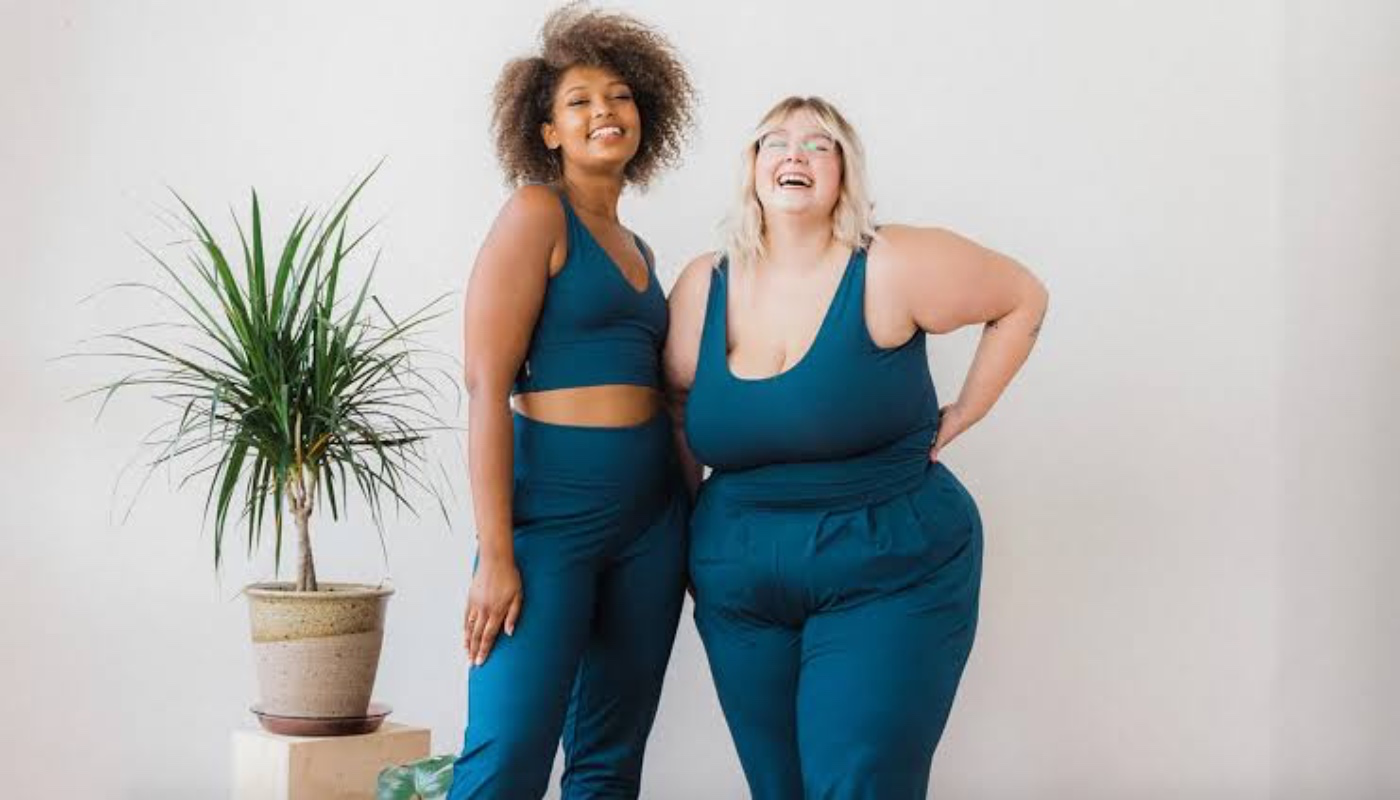
by Fashion has spent decades asking people to choose between two identities: the conscious consumer who cares about the planet, and the consumer who needs clothing outside conventional sizing. Increasingly, that binary is becoming harder to defend.
For years, sustainable fashion was often presented through a narrow visual language: minimalist wardrobes, neutral linen, carefully curated capsules, and models whose bodies rarely reflected the full diversity of the people expected to buy those clothes. At the same time, plus-size fashion frequently existed in a separate commercial universe, with its own sections, separate campaigns, restricted trend selections, and, in many cases, fewer options at higher prices.
The rise of sustainable and size-inclusive hybrid brands is beginning to challenge that division.
These businesses attempt to solve two problems simultaneously: how clothing can be made and consumed with less environmental harm, and how people across a wider spectrum of body sizes can participate in fashion without being treated as an afterthought. The combination sounds straightforward, but in practice it forces fashion companies to rethink everything from pattern-making and inventory to materials, resale and customer psychology.
This matters because clothing is never merely functional. What people can buy, where they can find it, how much it costs, how it is photographed and whether it is designed with their body in mind all communicate something about who is considered worthy of fashion.
The hybrid movement therefore represents more than another sustainability trend. It is part of a broader cultural shift toward asking whether an environmentally responsible fashion system can also be socially accessible.
Sustainability Cannot Be Fully Inclusive If People Cannot Access the Clothes
The modern sustainability conversation has rightly focused on textile waste, resource consumption, carbon emissions, worker conditions, recycling and overproduction. The Ellen MacArthur Foundation’s vision for a circular fashion system emphasizes designing products to be used more, made to be made again, and produced from safe, recycled or renewable inputs.
But there is another question underneath those ambitions:
Who gets to participate in this supposedly better fashion system?
If a person wants to purchase an organic cotton dress but the largest available size does not fit them, the sustainability credentials of that garment do not solve their immediate exclusion. If a brand offers recycled fabrics but only produces its most fashionable silhouettes in a narrow size range, environmental responsibility has been separated from social accessibility.
This gap has been recognized by sustainability-focused fashion platforms. Good On You has highlighted the shortage of genuinely size-inclusive sustainable fashion, noting that many more ethical brands have historically stopped around 2XL or offered only limited extended sizing.
That gap has cultural consequences.
A person excluded from sustainable fashion is effectively pushed toward a smaller set of alternatives. Sometimes those alternatives may be fast fashion, specialist retailers, custom clothing, secondhand marketplaces or simply wearing whatever is available rather than what they actually want.
The ethical choice becomes constrained by access.
This is why the hybrid model is important. It asks sustainability to move beyond the question of “How was this garment made?” and toward “Who was this garment designed for?”
The Two Movements Are More Connected Than They Initially Appear
At first glance, body inclusivity and environmental sustainability can seem like unrelated fashion movements.
One is concerned with representation, accessibility and body diversity. The other focuses on materials, production, waste and environmental impact.
Yet both challenge the same underlying assumption: that fashion should be built around a narrow definition of the ideal consumer.
Traditional fashion systems have often prioritized speed, seasonal novelty and standardized production. The result is a system in which certain bodies, aesthetics and consumption habits become commercially normalized while others are treated as specialist categories.
The circular-fashion model proposes something fundamentally different. Instead of designing garments for short-term consumption, the circular model emphasizes products that remain useful for longer, retain value and can eventually re-enter the system.
Size-inclusive design can strengthen that philosophy.
A garment that genuinely fits someone is more likely to become part of a person’s long-term wardrobe than a garment that technically exists in their size but fits poorly, restricts movement or fails to reflect their desired style.
That makes fit itself a sustainability issue.
If a person repeatedly buys clothing that does not fit because suitable alternatives are unavailable, the problem is not simply individual consumption. It can reflect a structural shortage of well-designed options.
Research into plus-size fashion has documented how limited availability, inconsistent sizing and restricted choices can turn shopping into an emotionally difficult experience. Studies have also found that clothing functions as a significant part of identity construction, making exclusion from fashionable clothing more consequential than simply having fewer products to choose from.
The hybrid brand therefore treats fit not as a luxury but as part of the garment’s useful life.
From “Plus-Size Collection” to One Collection
One of the most significant cultural changes in inclusive fashion is the gradual rejection of the idea that larger bodies require an entirely separate fashion universe.
The distinction may appear semantic, but it changes the shopping experience.
A traditional structure might have a main collection and then a “plus-size” extension. This can mean different silhouettes, reduced color choices, fewer trend-driven products or a separate online category.
A more integrated model asks a different question:
Why should the same design philosophy stop at a particular measurement?
Universal Standard provides one of the clearest examples of this philosophy. The brand has built its identity around an extended size range and states that its clothing is available from sizes 00 to 40, with the same styles and prices across the range. It also emphasizes fit-testing garments across sizes rather than simply grading a smaller sample upward.
That distinction is important.
Size inclusion is not simply a larger number printed on a size chart. It involves pattern engineering, sampling, fit testing, fabric behavior and construction.
Universal Standard describes its approach as engineering garments across the size range, including fit and wear testing before products are released.
This represents a broader philosophical shift:
Instead of asking how to enlarge an existing garment, designers can ask how the garment should be constructed for different bodies from the beginning.
That principle is especially relevant to sustainability because better fit can contribute to longer-term use.
Why “Made for Everyone” Is More Complicated Than It Sounds
Inclusive sizing creates real production challenges.
A company that offers ten or twenty size points cannot simply treat sizing as an additional line on a spreadsheet. Patterns need to be developed, sampled and evaluated. Different proportions can change how seams, waistbands, armholes, pockets and closures function.
Body shape also cannot be reduced to a single number.
Two people wearing the same numerical size can have very different proportions. One may need more room through the hips; another may have a different waist-to-hip ratio; another may need additional length.
That means genuinely inclusive fashion requires moving beyond the assumption that a mathematical grading formula can solve every fit problem.
The economic side is equally complicated.
Producing more sizes can increase the number of samples and inventory decisions a smaller company has to manage. A sustainability-focused label may already be producing in limited quantities to reduce excess inventory. Expanding the size range without understanding demand can therefore create its own production challenges.
But the answer does not have to be abandoning inclusion.
Instead, emerging brands are experimenting with different systems: made-to-order production, limited runs, preorders, adaptable garments, custom sizing, modular designs and direct-to-consumer models.
Good On You’s coverage of sustainable size-inclusive brands illustrates how varied these approaches can be. Examples include brands using custom sizing, deadstock materials, limited production runs and recycled materials.
The future of inclusive sustainability may therefore depend less on one universal business model and more on flexible production systems.
Made-to-Order Fashion Can Change the Equation
One of the most interesting overlaps between sustainability and inclusivity is the made-to-order model.
Traditional fashion often requires brands to predict how many garments they will sell in each size before production happens. That creates a difficult calculation.
If a company produces too many garments, excess inventory becomes a sustainability concern.
If it produces too few larger sizes, customers may encounter constant stock shortages.
If it produces only limited extended sizes, it may conclude that demand is insufficient when the real issue is that consumers cannot reliably purchase the products in the first place.
Made-to-order production can partially change this relationship.
Rather than manufacturing large quantities in advance, brands can create garments after orders are placed. This can reduce some forms of unsold inventory while making broader sizing more commercially viable.
Citizen Wolf, for example, has been recognized for its custom-sizing model, producing garments according to individual customer measurements rather than relying entirely on conventional standardized sizing.
This approach also changes the psychological relationship between shopper and garment.
Instead of asking:
“What size am I in this brand?”
the consumer can begin with:
“What measurements and proportions make this garment work for me?”
That is a subtle but meaningful change.
The Psychological Impact of Being Able to Choose
Clothing exclusion can affect people long before they make a purchase.
For some consumers, entering a store or browsing a website involves an unconscious calculation: Will they have my size? Will the outfit look good on someone like me? Will I have to settle?
Research on fashion consumption has documented how limited options can create emotional labor around shopping, while studies of plus-size consumers describe exclusion from mainstream fashion as both a material and symbolic experience.
This is where size-inclusive sustainability becomes psychologically interesting.
The most meaningful effect may not be that a consumer suddenly feels “beautiful” because a brand included them in a campaign.
It may be something quieter:
They stop having to think about exclusion every time they shop.
That distinction matters.
Body-inclusive fashion does not need to tell people that they should love every part of their body. Nor should sustainability turn into another moral standard that consumers are expected to perform perfectly.
Instead, accessible fashion can create ordinary experiences of participation.
A person can simply see a jacket, like it, check their size and buy it.
No special explanation.
No separate category.
No implication that their body is an exception.
That normality may be one of the most powerful outcomes of inclusive design.
The Emotional Labor of “Ethical Shopping”
There is another psychological tension that hybrid brands are beginning to expose.
Sustainable fashion can itself become a source of pressure.
Consumers may already feel expected to research fibers, investigate factories, understand certifications, avoid fast fashion, calculate environmental impact and purchase more responsibly.
Now imagine adding another question:
“Is there anything sustainable here that actually fits me?”
For shoppers who already experience size exclusion, ethical consumption can become another inaccessible ideal.
Research into plus-size ethical consumption has examined this tension: marginalized consumers can face ethical dilemmas because the marketplace does not always provide products that meet both their practical needs and their ethical preferences.
This is why sustainability should not be framed as a personal morality contest.
A consumer buying a garment from a less sustainable retailer because it is one of the few options available in their size is navigating a structural constraint.
That does not mean environmental concerns disappear. It means responsibility should not be placed entirely on consumers when the market itself has failed to provide meaningful choices.
Hybrid brands can help close that ethical-consumption gap.
Representation Is Becoming More Operational
For years, brands could treat diversity primarily as an advertising question.
Hire a few different models.
Create a campaign.
Add inclusive language.
Then return to conventional production.
The newer generation of inclusive brands is increasingly pushing representation deeper into the product itself.
A model wearing a size 24 is one form of representation.
A size 24 customer being able to buy the same garment photographed on a size 4 model is another.
The latter changes the actual commercial infrastructure.
Universal Standard’s approach is particularly notable because its stated philosophy places sizing at the center of product development rather than solely marketing. The company says it fit-tests across its size range and offers garments from 00 to 40.
That distinction helps explain why inclusion is increasingly being understood as a design system rather than a campaign aesthetic.
The cultural message becomes stronger when the product confirms what the advertisement promises.
The Rise of the “Hybrid” Brand
The term hybrid is useful because these businesses do not fit neatly into older fashion categories.
They may combine:
- sustainable or lower-impact materials
- extended sizing
- ethical manufacturing
- made-to-order production
- custom measurements
- resale or recycling
- limited collections
- gender-inclusive design
- transparent supply chains
- direct-to-consumer retail
- diverse representation
Not every company does all of these things.
And this distinction matters because “sustainable” is not a binary label.
A brand may perform strongly in one environmental area and have weaknesses elsewhere. It may use recycled materials but manufacture in a supply chain with limited transparency. Another may use organic fibers but offer only modest size ranges. A third may have outstanding inclusivity but rely on materials with greater environmental impacts.
Good On You’s rating methodology recognizes that fashion sustainability involves multiple dimensions, including environmental impact, labor rights and animal welfare.
The same multidimensional thinking should be applied to size inclusion.
A brand offering 3XL is not automatically fully inclusive.
A brand offering recycled polyester is not automatically sustainable.
A campaign featuring diverse bodies is not proof of structural change.
The hybrid model becomes meaningful when multiple parts of the business begin moving in the same direction.
Girlfriend Collective and the Normalization of Extended Sizing
Girlfriend Collective has become a frequently cited example of how sustainability and extended sizing can coexist within a mainstream-looking fashion proposition.
Good On You has documented the brand’s 2XS–6XL range and its use of recycled materials and certifications.
What is culturally significant about examples like this is not simply the number of sizes.
Activewear has historically carried complicated messages about bodies. It can be about movement, comfort and functionality, but it can also be surrounded by visual expectations about what an “athletic” body is supposed to look like.
An inclusive activewear range challenges the assumption that sustainability and fitness aesthetics belong to a narrow body type.
It also creates a different kind of representation: bodies are shown doing things rather than merely being displayed.
That distinction can matter psychologically.
The message becomes less about “look at this diverse body” and more about “this body participates in ordinary life.”
Global Inclusion Cannot Mean One Western Size Chart
One of the biggest challenges for the sustainable-inclusive movement is globalization.
Fashion crosses borders, but sizing systems do not.
A size 18 in one country does not necessarily correspond perfectly to another country’s measurements. Cultural expectations around proportions, height, modesty, clothing construction and preferred silhouettes can also differ.
Research in Malaysia, for example, has documented concerns among plus-size women around fit, affordability, accessibility, representation and inconsistent sizing in the ready-to-wear market.
Research involving Canada and Iran has similarly explored how institutional pressures shape plus-size consumers’ experiences in very different fashion markets.
These examples are important because “global inclusivity” cannot simply mean exporting one American or European size chart everywhere.
A genuinely global approach requires local understanding.
In South Asia, for instance, clothing categories often intersect with cultural dress traditions. A person’s wardrobe may include Western silhouettes alongside shalwar kameez, kurtas, sarees, abayas, modest layering or regionally specific garments.
The sustainable-inclusive conversation therefore has an opportunity to become more culturally intelligent.
Instead of asking:
“How do we make Western fashion bigger?”
brands can ask:
“What kinds of clothing do different communities actually want to wear, and how can those garments be designed responsibly across body sizes?”
That is a much more expansive question.
Asia’s Role in Reimagining Size Inclusion
The conversation is particularly interesting across Asian fashion markets because body ideals are not identical across countries.
South Korea, Japan, India, Pakistan, Malaysia and other markets have their own histories of beauty standards, clothing traditions and retail structures.
Research published in PLOS ONE examining size-inclusive advertising in South Korea found that South Korean female consumers showed interest in plus-size models, while also demonstrating the complex relationship between body representation, perceived attractiveness and consumer responses.
The finding is culturally significant because it challenges the assumption that size-inclusive representation is exclusively a Western body-positivity phenomenon.
Consumers everywhere can recognize the difference between a fashion system that includes them and one that does not.
But inclusion will not look identical everywhere.
In one market, it may mean expanding Western-style denim.
In another, it may mean developing more inclusive ethnic wear.
In another, it may mean adapting modest fashion for a wider range of bodies.
Sustainability can be localized in the same way.
Repair traditions, tailoring, textile crafts, resale cultures and garment longevity already exist in many societies. The future hybrid brand could learn from those practices rather than treating sustainability as something invented by contemporary Western fashion marketing.
The Secondhand Question
There is an obvious sustainability argument for secondhand fashion: extending the useful life of existing garments can reduce demand for newly produced products.
But secondhand fashion has a major size-inclusivity problem.
If fewer garments are originally produced in larger sizes, fewer garments enter the resale market in those sizes.
This creates a paradox.
Secondhand shopping is often promoted as an accessible sustainable solution, but its effectiveness depends on what exists to resell.
A size-inclusive primary market therefore has implications beyond first purchase.
When more diverse sizes enter circulation, more diverse sizes can potentially become available for resale, swapping, donation and reuse.
This is one reason circular fashion and inclusive design should not be treated as separate conversations.
The garments entering the system today influence what will be available tomorrow.
Repairability Is an Inclusive Design Issue Too
Sustainability is often associated with what a garment is made from.
But durability matters just as much.
A garment that can be repaired, altered or adapted can stay in use longer.
For size-inclusive consumers, adaptability can be especially valuable.
Adjustable waistbands, generous seam allowances, wrap constructions, modular components, replaceable fastenings and flexible silhouettes can allow clothing to accommodate changes in body proportions over time.
This does not mean every garment needs to be transformable.
It means designers can reconsider the idea that clothing should be disposable once it no longer fits perfectly.
Universal Standard’s Fit Liberty program offers an unusual example of this philosophy. For eligible products, the brand has offered customers the ability to exchange an item for another size if their size changes within a specified period.
The concept subtly challenges a deeply embedded fashion assumption:
that the body should adapt to the garment.
Instead, the garment can be designed around the reality that bodies change.
That is both an inclusivity principle and a longevity principle.
Sustainability Should Not Become Another Body Standard
There is a potential danger in the movement.
As sustainable fashion becomes culturally desirable, brands may unintentionally create a new ideal consumer: someone who is environmentally conscious, minimalist, educated about textiles, financially able to purchase ethical products and comfortable embracing a particular aesthetic.
That person can become just as exclusionary as the old fashion ideal.
Body inclusivity should therefore not be turned into another lifestyle performance.
People do not have to love minimalism.
They do not have to wear linen.
They do not have to own five garments.
They do not have to buy expensive ethical clothing.
And they certainly should not be made to feel that their bodies need to become “sustainable” before they deserve fashionable clothing.
The goal is broader than that.
The goal is to make responsible fashion more accessible, not to create another hierarchy of morally superior consumers.
The Problem With Calling Everything Sustainable
The rise of hybrid brands also creates a branding challenge.
As sustainability becomes commercially attractive, companies have an incentive to describe themselves using environmental language.
That makes verification important.
Terms such as “eco-friendly,” “conscious” or “responsible” can mean very different things depending on the company.
Consumers therefore benefit from looking for concrete evidence:
- What materials are being used?
- Where are garments produced?
- How long are they designed to last?
- Does the brand disclose its supply chain?
- Are workers’ conditions addressed?
- How broad is the size range?
- Are all styles actually available across that range?
- Are larger sizes priced differently?
- Does the brand provide detailed measurements?
- What happens to returns?
- Does the company support repair, resale or recycling?
- Are sustainability claims independently certified where appropriate?
Good On You’s methodology is one example of an effort to evaluate fashion companies across environmental, labor and animal-welfare dimensions rather than accepting sustainability marketing at face value.
This kind of scrutiny is increasingly important because inclusion itself can become a marketing tool.
A brand can feature diverse bodies without restructuring its product range.
A brand can advertise recycled materials without addressing labor practices.
A brand can use inclusive language while maintaining inconsistent sizing.
The hybrid model only works when the claims are supported by the infrastructure.
The Cultural Shift From “Special Size” to “Standard Customer”
Perhaps the deepest cultural change is happening in language.
For decades, “plus-size” has often functioned not only as a clothing category but as a social category.
The label can determine where a shopper looks, what products they see and how they imagine themselves within the fashion system.
Research on market categorization has shown that the division between mainstream and plus-size fashion can create both symbolic and physical forms of visibility and invisibility.
The more integrated hybrid model challenges that division.
Instead of:
main collection + special collection
it moves toward:
one collection, multiple bodies.
Instead of:
sustainable fashion for a particular aesthetic consumer
it moves toward:
more responsible fashion as an accessible category.
That is a significant cultural change because it makes inclusion ordinary.
And ordinary inclusion may ultimately be more transformative than spectacular representation.
The Business Case Is Real, But It Should Not Be the Whole Argument
There is a temptation to justify inclusivity entirely through market potential.
The global plus-size clothing market is large, and industry research continues to document demand for broader sizing.
That matters.
Companies respond to commercial incentives.
But reducing inclusion to a business opportunity creates its own problem: it implies that people deserve access because they represent profitable customers.
There is a stronger cultural argument.
Clothing is a basic form of participation in public life. People use it to work, study, celebrate, travel, exercise, socialize, worship and express identity.
Being able to participate in those activities without searching through a restricted fashion landscape is not simply a market privilege.
It is part of social belonging.
The strongest hybrid brands can acknowledge both realities: inclusivity can be ethically meaningful and commercially viable.
Those ideas do not have to compete.
Why Small Brands May Matter So Much
Large retailers have enormous production capabilities, but smaller independent brands have another advantage: experimentation.
A small label can test preorder models.
It can introduce custom sizing.
It can produce limited runs.
It can communicate directly with customers.
It can ask communities what they actually need.
It can build a product around a particular body proportion rather than assuming that a universal grading formula will work.
That makes independent brands important laboratories for fashion’s future.
Some of the sustainable size-inclusive examples highlighted by Good On You use small-scale production, local manufacturing, deadstock fabrics, custom sizing or limited runs.
The challenge is scaling those ideas without losing the principles that made them meaningful.
A company that grows rapidly may encounter the same inventory, supply-chain and cost pressures that shaped conventional fashion.
The real test is therefore not whether a small brand can be inclusive.
It is whether inclusion can remain structurally embedded as the company grows.
Technology Could Make the Hybrid Model More Flexible
Digital fashion technology may also influence this transition.
Better body measurement systems, virtual fitting tools, digital pattern development and made-to-order manufacturing could eventually make it easier for companies to produce garments for a broader range of bodies without relying entirely on enormous inventories.
But technology is not automatically inclusive.
A body-scanning system trained on narrow datasets can reproduce existing biases.
Virtual try-on systems can misrepresent garments on different body shapes.
Algorithms can recommend products based on past purchasing patterns that already reflect exclusion.
Technology becomes useful when it expands the range of bodies considered during design rather than simply automating an existing narrow model.
The principle should remain simple:
technology should widen access, not automate exclusion.
What Consumers Are Really Asking For
The evolution of sustainable plus-size fashion suggests that consumers increasingly want several things at once.
They want clothing that looks current.
They want clothing that fits.
They want prices that feel fair.
They want to see bodies like theirs represented.
They want materials and production methods that align with their values when possible.
They want transparency.
They want to shop without embarrassment.
And they want fashion to remain enjoyable.
This last point is easy to overlook.
Sustainable fashion sometimes carries an aesthetic of restraint. Inclusive fashion, meanwhile, has often been reduced to conversations about basic fit and accessibility.
The hybrid movement can challenge both assumptions.
A sustainable wardrobe does not have to be visually boring.
A size-inclusive wardrobe does not have to be purely functional.
Ethical clothing can be glamorous.
Circular clothing can be experimental.
Extended sizing can include dramatic silhouettes, color, prints, occasion wear and trend-led pieces.
The future is not about making sustainable fashion and inclusive fashion merely tolerable.
It is about making them desirable.
The Future May Be Less About “Plus Size” and More About Flexible Fashion
The most interesting long-term possibility is that the language of size itself could eventually become less rigid.
Instead of designing around a limited collection of standardized numerical categories, fashion could increasingly incorporate:
- custom measurements
- flexible fits
- multiple proportions
- adaptive construction
- adjustable garments
- body-neutral design
- made-to-order production
- repair services
- resale systems
- digital fitting
- modular clothing
This would not eliminate numerical sizing overnight.
But it could reduce the power that a single number has over a person’s shopping experience.
It could also make fashion more responsive to the reality that bodies are not static objects.
People gain or lose muscle.
Pregnancy changes bodies.
Aging changes proportions.
Life changes bodies.
And even without major changes, two people who wear the same nominal size may need completely different constructions.
A genuinely sustainable fashion system should be designed for that reality rather than pretending that bodies are permanently standardized.
Inclusion and Sustainability Can Strengthen Each Other
The rise of sustainable and size-inclusive hybrid brands is significant precisely because neither movement is complete on its own.
Sustainability without inclusion can create an environmentally responsible fashion system that still excludes millions of consumers.
Inclusion without sustainability can expand access while leaving the wasteful production structures of fashion untouched.
The hybrid model attempts to connect the two.
It asks brands to consider the environmental life of a garment alongside the social life of the person wearing it.
It asks whether responsible materials matter if the garment is inaccessible.
It asks whether size inclusion is meaningful if clothing is poorly constructed or designed for short-term consumption.
And it asks whether fashion can become more circular without making certain bodies wait at the edge of the system.
These are not easy questions.
There are genuine production costs, supply-chain challenges and design complexities involved in creating broader ranges responsibly. Sustainability itself is not a single measurable characteristic, and no brand should be treated as flawless simply because it uses recycled materials or extended sizing.
But that complexity is precisely why the hybrid movement deserves attention.
It moves the conversation beyond slogans.
Conclusion: A Fashion System Designed for More Than One Kind of Person
The future of fashion may not belong to the brand with the most dramatic sustainability campaign or the widest size chart alone.
It may belong to companies that understand that these issues are interconnected.
A garment’s environmental story does not begin and end with its fabric. It also includes whether the garment is worn, how long it remains useful, whether it fits, whether it can be repaired, whether it can enter resale, and whether the person wearing it ever felt that the fashion system was designed with them in mind.
The sustainable, size-inclusive hybrid brand therefore represents something larger than a product category.
It represents a different philosophy of fashion.
One in which inclusion is part of design rather than an advertising strategy.
One in which sustainability is more than a fabric label.
One in which bodies are treated as diverse realities rather than deviations from a standard.
And perhaps most importantly, one in which consumers are not forced to choose between caring about the planet and finding clothes that allow them to participate in fashion.
The next chapter of sustainable fashion should not simply ask how much less we can consume.
It should ask how intelligently we can design, how inclusively we can produce, how long we can keep garments in use, and how many different people can genuinely belong within the system.
That is where sustainability becomes more than an environmental ambition.
It becomes a question of access, dignity, creativity and cultural belonging.
And that is the promise of the hybrid fashion movement: not a perfect industry, but a more expansive definition of who the future of fashion is actually being built for.
Sources: Ellen MacArthur Foundation, Good On You, Universal Standard, PLOS ONE, SAGE Journals, Wiley Online Library, PubMed, Southern Illinois University, Universiti Teknologi MARA, Concordia University, SciELO, Vogue Business