 by
Introduction: When the World Begins to See Beauty Differently
For generations, the global beauty industry has promoted narrow ideals of attractiveness through cosmetics, advertising, fashion, and entertainment. Particular skin tones, facial features, and hair textures have frequently received greater commercial attention, leaving many consumers struggling to find products that reflect their appearances. Across Africa, this imbalance has encouraged a growing movement of entrepreneurs determined to create beauty businesses that recognise local needs, celebrate cultural identities, and challenge inherited assumptions about desirability.
From Lagos and Accra to Johannesburg and Cape Town, African entrepreneurs are influencing how beauty products are developed, marketed, and understood. Their businesses combine regional traditions, contemporary cosmetic science, entrepreneurial innovation, and culturally grounded storytelling. Increasingly, their influence extends beyond the continent, reaching consumers throughout Europe, North America, and other international markets.
Their contribution is especially relevant to body inclusivity because beauty standards affect more than purchasing decisions. They influence self-perception, social acceptance, and the features people believe they must change to feel attractive. When a company develops cosmetics for previously overlooked complexions or celebrates naturally textured hair, it challenges the cultural hierarchy that determines whose appearance receives recognition.
However, this transformation is not without complications. African beauty entrepreneurs must navigate colourism, unequal access to capital, international competition, and the commercial pressure to satisfy established beauty preferences.
Understanding their influence therefore requires looking beyond successful products to examine how these businesses reshape identity, representation, economic participation, and the meaning of beauty itself.
1. Challenging the Historical Geography of Beauty
The international beauty industry has traditionally concentrated considerable commercial power in Europe and North America. Although African communities possess extensive traditions of skincare, haircare, body adornment, and cosmetic expression, African knowledge has not always received equivalent recognition in global markets.
This imbalance has influenced perceptions of expertise. Internationally established products have often been associated with scientific sophistication and prestige, while traditional African ingredients and practices have sometimes been dismissed as outdated or insufficiently developed.
African entrepreneurs are challenging this division by demonstrating that innovation can emerge from different geographical and cultural centres.
Nigerian entrepreneur Tara Fela-Durotoye, founder of House of Tara International, offers an important example. Her work helped professionalise makeup artistry in Nigeria through beauty services, training, and locally developed cosmetics.
House of Tara’s significance extends beyond the products it sells. By creating professional opportunities and developing an enterprise around African consumers, Fela-Durotoye helped challenge the assumption that beauty expertise must originate outside the continent.
This represents an important change in cultural authority. African professionals are increasingly visible not simply as consumers or advertising models but as founders, educators, product developers, and decision-makers.
Such participation matters because representation involves more than appearing in a campaign. It also concerns who determines product requirements, establishes professional standards, and receives investment.
When African entrepreneurs create their own businesses, they help shift the industry away from a model in which local consumers must continually adapt to externally established standards.
2. Foundation Shades and the Politics of Recognition
Foundation illustrates how a seemingly ordinary beauty product can reflect larger questions of inclusion.
For consumers whose complexions fall outside traditionally prioritised shade ranges, finding suitable makeup has sometimes required mixing products, accepting mismatched undertones, or abandoning particular formulas altogether.
A foundation that appears too orange, grey, pink, or light can make an everyday purchase unnecessarily frustrating. More importantly, repeated exclusion can communicate that certain consumers are secondary considerations in an industry intended to serve diverse populations.
African beauty entrepreneurs have helped challenge this imbalance by developing products around a wider understanding of skin diversity.
Nigerian-born entrepreneur Sharon Chuter, founder of UOMA Beauty, built her brand around individuality and inclusive cosmetics. When the brand launched in 2019, its foundation collection featured 51 shades across six formulas, reflecting an approach that considered differences in complexion alongside formulation needs.
This approach challenged the idea that inclusion could be achieved simply by adding a handful of darker shades to an existing collection.
Consumers have different undertones, pigmentation patterns, and preferences concerning coverage and finish. A genuinely inclusive range must consider these differences rather than treating darker skin as a single category.
The psychological significance is equally important. Finding a suitable foundation can help consumers feel recognised by an industry in which they may previously have struggled to find products that worked for them.
Nevertheless, shade diversity must remain a sustained commitment. Brands need to maintain stock, develop consistent formulas, and ensure that darker shades receive the same attention as lighter ones.
A large shade range is meaningful only when its products are accessible, accurately formulated, and supported by reliable availability.
3. Melanin-Rich Skin and the Challenge to Colourism
African beauty entrepreneurs are participating in a broader cultural reconsideration of skin tone.
Colourism, or preferential treatment based on lighter skin within particular social settings, has influenced beauty practices across numerous societies. Its effects vary between communities, but it can reinforce associations between lighter complexions, attractiveness, status, and social acceptance.
These attitudes are not exclusive to Africa. They also appear in parts of South Asia, East Asia, the Caribbean, and Latin America, although their histories and expressions differ.
Within African beauty markets, entrepreneurs face the complicated task of serving consumers whose preferences have been shaped by these social pressures without reinforcing harmful ideals.
Brands that celebrate melanin-rich skin challenge the assumption that darker complexions need to be concealed or visually minimised. Skincare and makeup can instead focus on hydration, protection, texture, and personal expression.
This distinction is important because consumers should be able to enjoy beauty products without being told that their natural skin tone is a flaw requiring correction.
However, inclusive advertising cannot independently eliminate colourism. Family expectations, entertainment, historical inequalities, and social institutions also influence beauty preferences.
Entrepreneurs can contribute to change by representing different complexions respectfully, avoiding language that equates lighter skin with superiority, and developing products that address consumer needs without presenting natural pigmentation as a problem.
The objective is not to replace one narrow ideal with another. It is to create space for people to appreciate their appearances without having their worth measured against a hierarchy of skin tones.
4. African Ingredients and the Global Skincare Conversation
International interest in African botanical ingredients has created opportunities for entrepreneurs to connect regional resources with contemporary skincare.
Shea butter, baobab oil, moringa oil, and marula oil have attracted attention from businesses seeking ingredients associated with particular environments and cultural traditions.
African entrepreneurs are helping move these resources beyond their treatment as occasional additions to imported products. They are developing brands around ingredient knowledge, regional sourcing, product formulation, and culturally grounded storytelling.
Ghanaian entrepreneur Adjoa Sika, founder of Skin Gourmet, represents an approach that places African botanical ingredients and minimally processed formulations at the centre of the brand’s identity.
South African entrepreneur Linda Gieskes-Mwamba, associated with Suki Suki Naturals, has also contributed to a beauty landscape that draws on African ingredients while addressing contemporary skincare and haircare needs.
These businesses demonstrate that African innovation does not need to rely exclusively on imitating international product categories. Regional resources and established knowledge can inspire distinctive approaches to formulation and branding.
They also challenge the assumption that prestige must be imported.
Nevertheless, the international popularity of African ingredients raises important questions about ownership and economic fairness. Increased demand does not automatically ensure that the communities cultivating and processing these resources receive an equitable share of the resulting value.
Responsible businesses must consider supplier compensation, environmental sustainability, traceability, and long-term effects on local ecosystems.
Cultural heritage should not become a decorative marketing device disconnected from the people who sustain it.
The strongest approach creates commercial opportunities while respecting the communities, landscapes, and knowledge systems connected to the ingredients being promoted.
5. Combining Traditional Knowledge With Cosmetic Science
African beauty entrepreneurs are demonstrating that traditional knowledge and modern science do not need to compete.
Traditional skincare practices developed within specific environments and cultural contexts. Contemporary cosmetic science offers methods for evaluating ingredient composition, product stability, safety, and performance.
Combining these approaches can support innovation while maintaining appropriate standards.
Congolese-rooted entrepreneur Thérèse M’Boungoubaya, founder of Koba, has explored African-sourced ingredients, including safou, a fruit traditionally associated with food in its cultural context.
Her work illustrates the challenges involved in transforming a culturally familiar resource into a commercially viable skincare ingredient. Developing a suitable cosmetic formulation requires more than identifying an interesting botanical. Businesses must establish reliable sourcing, investigate processing methods, assess safety, and ensure consistency.
This distinction matters because natural origin does not automatically guarantee that an ingredient is safe or effective for every application.
African botanical resources deserve serious scientific investigation rather than romanticisation. Entrepreneurs who invest in research and product development help demonstrate that culturally significant ingredients can inspire contemporary innovation.
Their work also challenges the false division between indigenous knowledge and technological advancement.
The future of African beauty can combine cultural memory, scientific expertise, and modern manufacturing without requiring one to erase the others.
6. Textured Hair, Cultural Identity, and Personal Freedom
Hair is another important area in which African beauty entrepreneurs are influencing global aesthetics.
Across different societies, hair communicates personal style, cultural affiliation, and social identity. For many people of African descent, textured hair has also been subjected to discriminatory standards that privilege straightness or portray natural curls and coils as less professional.
These expectations have influenced workplace policies, school rules, beauty services, and personal grooming decisions.
Entrepreneurs working in textured haircare challenge the assumption that tightly curled hair must be corrected before it can be considered attractive or polished.
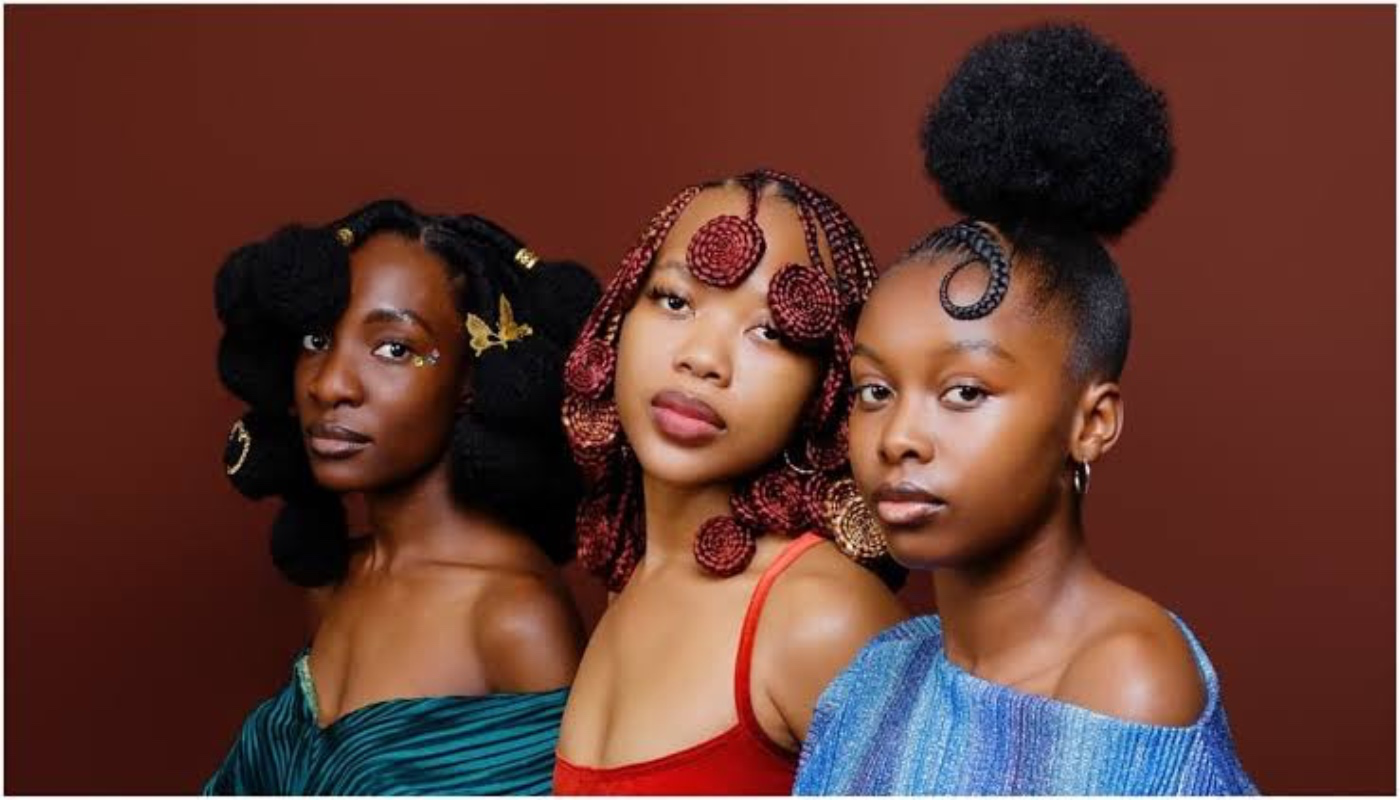
Products designed for curls, coils, braids, and protective styles address practical needs while expanding the range of textures represented in commercial beauty culture.
This contribution should not be interpreted as a demand that everyone wear natural hair. Personal appearance involves individual preferences, and consumers should be free to straighten their hair, wear braids, embrace natural textures, or experiment with different styles.
The central issue is freedom from coercion.
People should not have their professionalism or personal worth judged according to whether their hair conforms to a narrow aesthetic expectation.
Entrepreneurs can support this freedom by developing suitable products and representing different textures as ordinary parts of contemporary beauty.
For younger consumers, such representation can provide alternative cultural reference points. Seeing naturally textured hair represented positively may challenge the impression that only certain appearances deserve effortless acceptance.
The contribution of textured haircare therefore extends beyond product development to questions of dignity, identity, and self-definition.
7. Beauty Entrepreneurship as Economic Empowerment
African beauty businesses can generate opportunities beyond the products they sell.
Makeup artists, salon professionals, educators, retailers, manufacturers, and distributors all contribute to the beauty economy. When locally established companies invest in these networks, they can create professional pathways and support entrepreneurship.
House of Tara illustrates this broader role through its emphasis on makeup artistry, training, and beauty retail.
Such enterprises demonstrate that beauty can become a source of professional development rather than merely a consumer activity.
However, commercial growth does not automatically guarantee fair employment, stable incomes, or equal advancement. Businesses must also consider working conditions, professional standards, and access to training.
African entrepreneurs face additional challenges that vary considerably between countries. These can include limited access to investment, manufacturing infrastructure, reliable electricity, affordable packaging, and international distribution networks.
Currency fluctuations, import costs, and regulatory requirements may also make expansion difficult.
Consequently, international recognition is not simply a measure of talent. It can also reflect access to financial resources and established commercial networks.
Supporting African beauty entrepreneurship therefore requires more than celebrating successful founders. It involves strengthening the conditions that allow a wider range of businesses to develop, employ people, and compete internationally.
8. Redefining Luxury Beyond Imported Prestige
Luxury beauty depends on more than product performance. Packaging, retail environments, pricing, storytelling, and cultural associations all influence how consumers perceive prestige.
African entrepreneurs are challenging the assumption that luxury must be associated with European heritage or established international fashion houses.
Epara Skincare, founded by Nigerian-born entrepreneur Ozohu Adoh, occupies the premium skincare market with products developed for women of colour.
Its positioning challenges a familiar commercial assumption: that luxury skincare should be developed around a narrow consumer profile before being adapted for everyone else.
By placing women of colour at the centre of a premium skincare brand, Epara demonstrates that inclusion and luxury can coexist.
African-inspired luxury can also involve botanical ingredients, contemporary formulations, and culturally specific storytelling.
However, African beauty should not be confined to one visual identity. The continent encompasses diverse populations, environments, histories, and aesthetic preferences.
African entrepreneurs should be able to develop minimalist, glamorous, experimental, scientific, playful, or technologically sophisticated brands without being expected to represent a single continental identity.
Authentic representation requires room for difference.
The industry’s progress becomes meaningful when African businesses can participate in luxury markets on their own terms rather than being restricted to externally defined expectations of what African beauty should look like.
9. The African Diaspora and Cross-Cultural Influence
African beauty entrepreneurship operates within a global network shaped by migration, cultural exchange, and shared experiences among people of African descent.
Diaspora communities can connect products developed in African countries with consumers in Europe, North America, and other international markets. They may also create demand for products that reflect familiar ingredients, haircare practices, and cultural identities.
However, African beauty and Black beauty are related rather than interchangeable categories.
African countries contain many ethnic, linguistic, and cultural communities. Meanwhile, the African diaspora includes people whose identities have developed through different histories and social circumstances.
A Nigerian-founded cosmetics company, a Ghanaian skincare business, and a Black-owned American haircare brand may share concerns about representation while operating in different commercial and cultural environments.
Recognising these differences makes cross-cultural collaboration more meaningful.
Consumers in South Asia may recognise how shade availability and colourism influence their beauty experiences. Caribbean consumers may connect with conversations about textured hair. European consumers may encounter African botanical ingredients through products that challenge familiar assumptions about luxury.
These connections create opportunities for mutual learning.
International expansion, however, should not require African businesses to dilute their cultural identities. The goal is to create markets in which cultural specificity can be understood and valued.
10. Social Media and the Democratisation of Beauty Expertise
Digital platforms have changed how beauty products are discovered, evaluated, and discussed.
African entrepreneurs can demonstrate product application, explain ingredients, respond to questions, and communicate directly with international audiences without depending entirely on traditional media organisations.
Consumers can also share experiences, compare products, and introduce lesser-known businesses to wider audiences.
This changes the distribution of cultural authority. African consumers are increasingly able to influence which products become visible and which beauty concerns receive attention.
Nevertheless, digital visibility does not eliminate inequality. Paid advertising, influencer partnerships, and algorithmic preferences can favour companies with larger budgets or established audiences.
Social media can also intensify appearance-related anxiety. Filters, retouched photographs, carefully controlled lighting, and repetitive product promotions may encourage consumers to compare themselves with unrealistic representations.
African beauty brands face the same pressures.
Companies promoting inclusion should therefore consider whether their campaigns reinforce the ideals they claim to challenge. Celebrating diverse complexions while using excessive retouching or presenting natural features as imperfections can undermine an otherwise positive message.
Digital platforms offer opportunities for representation, but responsible communication remains essential.
The most constructive approach combines visibility with transparency and allows consumers to encounter diverse appearances without being encouraged to treat ordinary human variation as a problem requiring constant correction.
11. Moving Beyond Representation to Challenge Colourism
The growth of African beauty entrepreneurship does not mean restrictive beauty standards have disappeared.
In some communities, lighter skin, particular facial features, straightened hair, or specific body ideals continue to receive disproportionate social approval.
These preferences are shaped by complex histories involving colonial hierarchies, local class structures, media representation, and family expectations. Their influence differs across countries and communities.
Beauty entrepreneurs consequently face a contradiction: their products may celebrate diversity while operating in markets where consumers still experience pressure to change their appearance.
A brand might offer extensive foundation shades while presenting lighter skin as the ultimate aspiration. A skincare company might celebrate botanical ingredients while describing natural pigmentation as an imperfection.
These examples demonstrate why inclusion must be evaluated through more than product availability.
Advertising language, model selection, consistent product access, and brand messaging all influence how consumers interpret a company’s values.
Entrepreneurs cannot independently eliminate deeply embedded social attitudes, but they can avoid reinforcing them unnecessarily.
They can present pigmentation as a natural characteristic, represent textured hair respectfully, and avoid equating beauty with conformity.
The objective is to expand the freedom people have to make choices without having their appearance treated as a measure of their value.
12. The Risk of Turning African Identity Into a Trend
As international interest in African-inspired beauty grows, cultural appreciation can become entangled with commercial appropriation.
African ingredients, patterns, and traditions may attract attention from global companies with greater marketing budgets and distribution networks than the communities connected to those resources.
Cultural exchange can support innovation and recognition. Problems arise when businesses profit from cultural knowledge without acknowledging its origins or considering the interests of the people who sustain it.
African beauty can also be reduced to a narrow collection of international marketing associations: ancestral rituals, earthy colours, natural ingredients, and exoticised imagery.
Although these elements may reflect particular traditions, they cannot represent the entire continent.
African consumers do not share one skincare routine, complexion, hair texture, or aesthetic philosophy.
A genuinely inclusive industry must allow African entrepreneurs to express contemporary identities as well as cultural heritage.
Research, digital innovation, advanced manufacturing, professional artistry, and experimental design deserve recognition alongside traditional ingredients and established practices.
African beauty should not have to look traditional to be considered authentic, nor should it imitate Western luxury to be considered sophisticated.
Its value lies in the freedom to encompass both, alongside countless other possibilities.
13. Building Fairer Supply Chains and Business Structures
The future of African beauty entrepreneurship depends partly on whether cultural visibility can translate into lasting economic participation.
International recognition can increase demand, but businesses still require manufacturing facilities, quality control, distribution, financing, and regulatory expertise.
Smaller companies may struggle to secure the investment needed to expand production or enter overseas retail markets.
Shipping expenses, customs requirements, currency instability, and inconsistent access to packaging can make international competition particularly difficult.
These barriers influence inclusion because they determine which entrepreneurs can grow and which remain confined to smaller markets.
Investment in local research and development could strengthen the industry’s capacity to create formulations suited to regional needs. Better access to financing and manufacturing infrastructure could also help founders expand without surrendering disproportionate control to larger companies.
Ethical sourcing is equally important.
When demand for African botanicals increases, the people cultivating, collecting, and processing those ingredients should have opportunities to participate fairly in the resulting value.
Sustainable practices matter because commercial success that damages ecosystems or undermines local livelihoods would contradict the promise of responsible beauty.
The use of locally sourced ingredients does not automatically guarantee ethical business practices. Transparent supply chains, responsible purchasing, and meaningful community partnerships provide stronger grounds for evaluating a company’s impact.
Ultimately, international growth should create opportunities throughout the production process rather than concentrating recognition and profits exclusively at the branding stage.
14. What the Global Beauty Industry Can Learn
African beauty entrepreneurs offer several important lessons to international companies.
First, consumer diversity should inform product development from the beginning. Treating inclusion as a later adjustment often produces incomplete solutions. Brands should consider different skin tones, undertones, hair textures, and preferences during research and formulation.
Second, cultural knowledge can inspire innovation without replacing scientific evaluation. African botanical traditions offer opportunities for product development, but responsible companies must still investigate ingredient safety, formulation stability, and substantiated performance.
Third, representation must extend beyond advertising. Featuring diverse models is valuable, but it does not automatically create an inclusive industry. People represented in campaigns should also have opportunities to become founders, researchers, executives, suppliers, and decision-makers.
Fourth, consumers should not have to abandon their identities to participate in luxury or mainstream beauty culture. Sophisticated products can respect darker complexions, textured hair, and culturally distinctive aesthetics.
Finally, inclusion should be measured through sustained practice rather than temporary attention.
This means maintaining shade availability, listening to consumers, supporting fair employment, and ensuring that marketing messages remain consistent with a company’s stated values.
African entrepreneurs are not the only people advancing these principles. Their work nevertheless demonstrates why established assumptions about beauty deserve continued scrutiny.
The industry becomes more innovative when more people can influence what is made, how it is presented, and whose needs receive serious consideration.
15. The Psychological Importance of Seeing Yourself Reflected
Beauty products can influence everyday experiences beyond their immediate cosmetic purpose.
For someone who has struggled to find a suitable foundation shade, discovering a product that matches their complexion may reduce frustration and make makeup more accessible.
For a person whose hair texture has repeatedly been criticised, encountering products and campaigns that treat textured hair as desirable may provide a different cultural reference point.
For consumers who rarely see their communities represented in premium skincare, discovering brands built around their needs can challenge assumptions about who belongs in luxury spaces.
These experiences should not be exaggerated into claims that buying a product automatically creates confidence or resolves discrimination.
Self-perception is influenced by relationships, personal experiences, and wider cultural conditions.
Nevertheless, representation affects the messages people receive about their appearances. Repeated exposure to images that exclude particular complexions or textures may reinforce the impression that those features fall outside accepted beauty.
More varied representation can challenge that impression by making diversity visible and ordinary.
African beauty entrepreneurs contribute when they create products and campaigns around consumers who have historically received less attention.
Their influence becomes particularly meaningful when it changes not only who appears in advertising but also who participates in product development and commercial decision-making.
Consumers are not simply asking to be seen. They are asking for their needs, preferences, and experiences to be treated as legitimate foundations for innovation.
Conclusion: A More Inclusive Future for Global Beauty
African beauty entrepreneurs are reshaping global aesthetics by challenging narrow standards, developing products for underserved consumers, elevating African ingredients, and building businesses that connect cultural identity with contemporary innovation.
Their influence extends across makeup, skincare, haircare, luxury beauty, digital marketing, and professional education.
Entrepreneurs such as Tara Fela-Durotoye, Sharon Chuter, Linda Gieskes-Mwamba, Adjoa Sika, Thérèse M’Boungoubaya, and Ozohu Adoh demonstrate different ways of connecting business development with representation, cultural knowledge, and consumer inclusion.
Their work should not be reduced to a single narrative about African beauty. What connects these examples is the significance of creating products and businesses from perspectives that the global industry has not always adequately represented.
Their achievements also reveal the limits of representation without structural change. More foundation shades cannot eliminate colourism on their own. Botanical ingredients do not automatically guarantee ethical sourcing. Social media visibility does not ensure equal access to capital.
The next stage of progress will depend on translating cultural recognition into lasting improvements in product development, investment, research, employment, sourcing, and decision-making.
For BodyInclusivity, this transformation carries an important lesson: inclusion is not simply about expanding the list of appearances considered beautiful. It is about creating conditions in which different people can participate in defining beauty without being required to conform to one ideal.
African entrepreneurs are helping move the industry in that direction.
Their contribution is not that they have discovered a new universal standard of beauty. Rather, they are making the limitations of universal standards increasingly difficult to defend.
A more inclusive future will recognise African beauty as diverse, contemporary, innovative, and globally influential while respecting the communities and experiences that give it meaning.
When more people have the resources and authority to shape beauty culture, the industry gains more than a broader market. It gains a richer understanding of human identity itself.
Sources: Vogue, Business of Fashion, Allure, Forbes, Beauty West Africa, Chamber of Commerce, Council of Fashion Designers of America