 by
by Introduction: When Visibility Becomes Resistance
In Hollywood, beauty has never been neutral. It has been curated, policed, rewarded, and weaponized. For decades, the global entertainment industry projected a narrow visual language of femininity—smoothened edges, controlled textures, and standardized aesthetics that often excluded women of color, especially Black women with natural hair, deeper skin tones, and non-conforming features. Within this system, beauty was not just appearance; it was access. It influenced casting decisions, magazine covers, brand endorsements, and even narrative agency within storytelling itself.
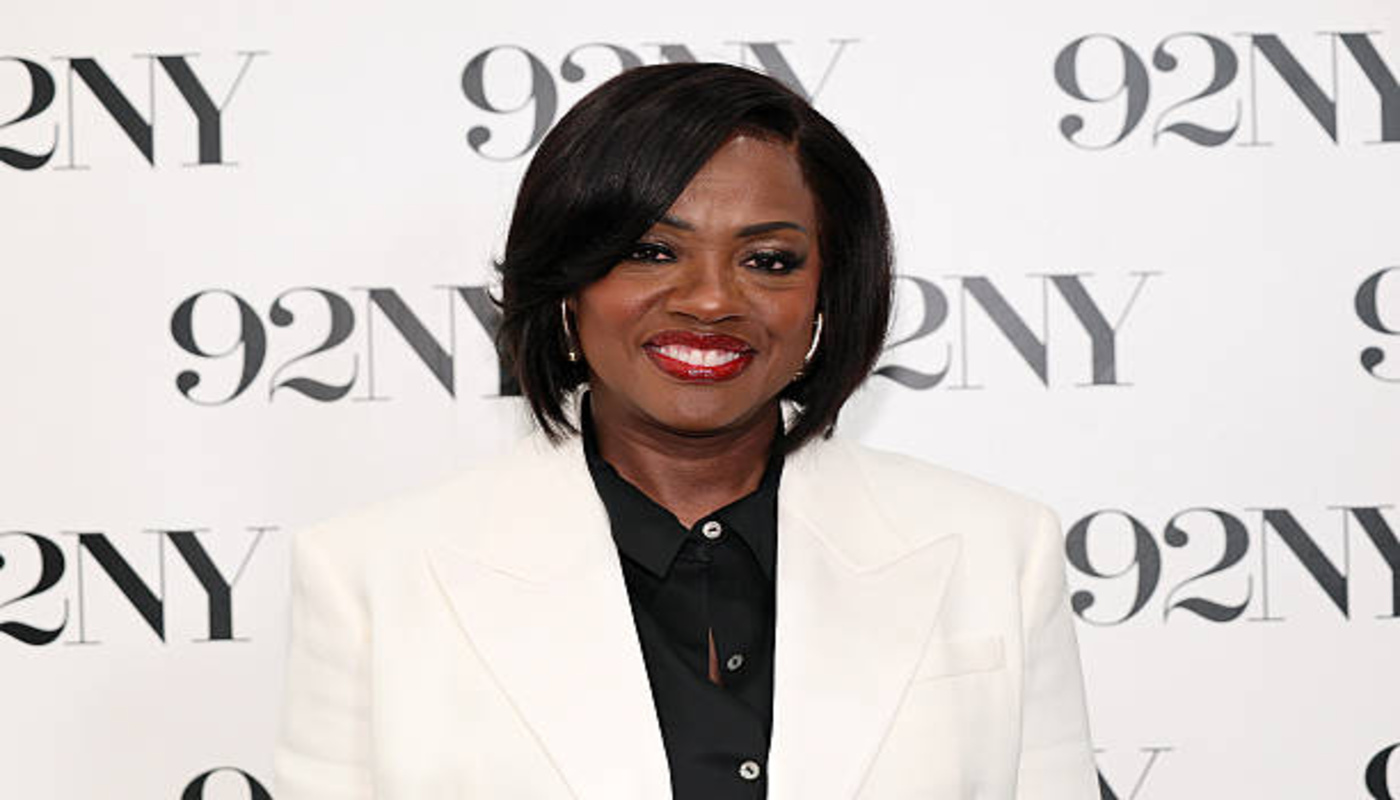
Against this backdrop, Viola Davis emerges not merely as an acclaimed actor but as a cultural force whose presence disrupts aesthetic expectations while expanding them. Her embrace of natural beauty—particularly her public visibility without conforming to Eurocentric styling expectations—has become a form of cultural commentary in itself. This is not framed through performance alone, but through her red carpet appearances, award acceptance speeches, interviews, and advocacy moments where she has spoken openly about representation, dignity, and the historical erasure of Black women in media.
Her significance is not rooted in rebellion for its own sake, but in normalization—an insistence that authenticity should not require justification.
Hollywood’s Historical Beauty Framework and the Cost of Conformity
To understand Viola Davis’s cultural impact, it is necessary to first examine the system she operates within. Hollywood’s beauty ideal has historically been shaped by Eurocentric standards that prioritize lightness, symmetry, straight hair textures, and highly controlled styling aesthetics. These norms were not simply stylistic preferences; they were institutional filters embedded in casting, advertising, and magazine culture.
For Black women, this translated into a persistent pressure to alter or “soften” their natural appearance. Hair straightening, skin-lightening products, and restrictive styling expectations became normalized pathways to visibility. Within this framework, natural Black hair was often labeled as “unprofessional,” “unruly,” or “too political,” especially in earlier decades of film and television.
What makes Viola Davis’s visibility so significant is not that she alone challenged these norms, but that she did so while occupying the highest tiers of Hollywood recognition. When an actress reaches the level of Academy Award recognition, Emmy wins, and global critical acclaim while maintaining authenticity in appearance, the message shifts from personal choice to structural possibility.
Her presence forces a recalibration of what success can look like without assimilation.
Viola Davis as a Case Study in Authentic Representation
Viola Davis’s career trajectory is often cited as one of the most respected in contemporary acting, but the cultural analysis of her presence extends beyond craft. Her visibility consistently intersects with questions of representation, dignity, and emotional truth.
In interviews, including those with publications such as The New York Times and Vanity Fair, Davis has spoken about the emotional and psychological weight of growing up in poverty and how that shaped her understanding of visibility and self-worth. While these narratives are often discussed in terms of resilience, they also inform her approach to authenticity on screen and off.
Unlike many Hollywood figures whose public image is carefully segmented into “performance persona” and “private persona,” Davis’s presence has often been interpreted as integrated rather than fragmented. This integration becomes culturally important because it resists the idea that Black women must modify themselves depending on the audience.
Her natural beauty presence—whether in minimal makeup appearances, close-up camera work in How to Get Away with Murder, or red carpet events—reinforces a visual continuity that challenges fragmentation itself.
The Politics of Natural Hair in Public Visibility
One of the most significant aspects of Viola Davis’s cultural influence lies in the visibility of her natural hair in high-profile environments. In Hollywood, hair has historically functioned as a coded language of professionalism and desirability. Straightened hair was often read as “polished,” while natural textures were mischaracterized as informal.
Davis’s consistent appearance with natural textures in award circuits and press events disrupts this binary. It is not simply about wearing hair in its natural state; it is about doing so in spaces where conformity has historically been rewarded.
This matters because visibility in elite spaces changes perception at scale. When audiences see natural Black hair on global stages like the Oscars or Emmy Awards, it reframes what is considered “formal” or “award-worthy.”
In this sense, Davis’s presence is not performative activism. It is structural normalization.
The 2017 Oscars Speech: Beauty, Identity, and Narrative Ownership
One of Viola Davis’s most culturally referenced moments came during her 2017 Academy Awards acceptance speech for Best Supporting Actress for Fences. While the speech is often quoted for its emotional resonance and tribute to “ordinary people” who do not get to tell their stories, it also carries deeper implications about visibility and narrative ownership.
Davis stated: “You cannot win an Emmy for roles that are simply not there.”
This statement, while centered on storytelling, indirectly speaks to aesthetic representation as well. Absence in storytelling often correlates with absence in visual representation. When certain women are not written into narratives, they are also not visually centered in cultural imagination.
Her presence on that stage, with her natural beauty intact and unaltered to fit restrictive norms, reinforced a broader message: excellence does not require aesthetic compromise.
The cultural power of that moment lies in its simplicity. She did not frame her appearance as political—it became political because of the context in which it existed.
Emotional Labor and the Weight of Representation
While Viola Davis’s visibility is often celebrated, it also carries a form of emotional labor that is rarely acknowledged. Being one of the most visible Black actresses in Hollywood means constantly being positioned as representative of broader identity narratives.
This includes expectations of speaking for diversity, addressing systemic inequality, and symbolizing progress in moments of industry recognition. In multiple interviews, Davis has reflected on the emotional complexity of representation—how visibility can be both empowering and burdensome.
Her embrace of natural beauty adds another layer to this responsibility. She is not only representing artistic excellence but also embodying an aesthetic that has historically been marginalized. This dual visibility amplifies her cultural weight in ways that extend beyond personal branding.
It is important, however, not to romanticize this burden. Representation without structural change can become symbolic consumption rather than systemic transformation. Davis’s presence highlights both progress and the distance still to travel.
Intersectionality: Race, Gender, and Aging in Beauty Standards
Viola Davis’s cultural significance also becomes more pronounced when examined through intersectionality. Beauty standards in Hollywood are not applied uniformly—they are stratified by race, gender, and age.
For Black women, aging in Hollywood often comes with reduced visibility or typecasting into limited roles. Yet Davis’s career demonstrates a different trajectory: sustained prominence, critical acclaim, and continued leading roles across different life stages.
Her natural beauty presence intersects with aging differently than industry norms suggest. Instead of attempting to conform to youth-centric aesthetics, her visibility reflects a broader spectrum of maturity and lived experience.
This challenges the idea that beauty must be frozen in time to remain valuable. Instead, it reframes beauty as evolving identity—one that carries depth, authority, and emotional complexity.
In this way, Davis becomes part of a broader shift toward redefining what maturity looks like for women on screen.
Global Cultural Impact: Beyond Hollywood
The influence of Viola Davis’s natural beauty visibility is not confined to Hollywood. In global contexts—from African cinema to South Asian entertainment industries—the conversation around natural beauty, hair texture, and authenticity is deeply resonant.
In many regions, Western media has historically shaped beauty aspirations, often prioritizing lighter skin tones and Eurocentric facial aesthetics. However, the increasing visibility of actresses like Viola Davis contributes to a counter-narrative that validates diverse aesthetics on a global stage.
In African beauty discourse, for example, natural hair movements have gained significant cultural traction, emphasizing identity reclamation and historical pride. Similarly, in parts of South Asia, conversations around skin tone diversity and authenticity in beauty representation are increasingly visible in media critique.
Davis’s presence becomes part of this global visual shift—not as a singular influence, but as part of a wider ecosystem of representation that challenges inherited beauty hierarchies.
Social Media and the Democratization of Aesthetic Discourse
The rise of social media has amplified Viola Davis’s cultural significance in unexpected ways. Platforms such as Instagram, TikTok, and X (formerly Twitter) have transformed red carpet moments into global conversation points within seconds.
Images of Davis at award shows, premieres, or interviews often circulate widely, not because they are sensational, but because they challenge dominant aesthetic expectations in real time. Users frequently engage in discussions about representation, hair politics, and beauty norms in response to her appearances.
Unlike earlier decades where media interpretation was controlled by editorial gatekeepers, social media allows audiences to collectively interpret and reframe visual culture. In this environment, Davis’s natural beauty becomes not just representation but discourse.
Importantly, this discourse is not always uniform. While many celebrate her authenticity, others may still reflect internalized beauty hierarchies shaped by global media exposure. This tension itself is culturally significant—it reveals that aesthetic transformation is not linear, but negotiated.
Industry Shifts and the Slow Expansion of Beauty Norms
The entertainment industry has shown incremental shifts in response to broader cultural movements around diversity and inclusion. Brands, casting directors, and media platforms have increasingly recognized the value of representing a wider range of aesthetics.
However, these shifts are uneven. While campaigns and red carpets may showcase diversity, structural decision-making in casting and production often remains influenced by traditional standards.
Viola Davis’s sustained success within this environment demonstrates that change is possible, but also highlights its fragility. Her visibility alone does not dismantle systems, but it does expand what is considered commercially and artistically viable.
Her presence in major productions and award circuits normalizes the idea that natural beauty is not a deviation—it is part of the mainstream visual language of success.
Comparative Cultural Context: Parallel Voices in Representation
While Viola Davis stands as a central figure in this conversation, she is part of a broader constellation of Black actresses and creatives who have challenged beauty norms in different ways.
Artists like Lupita Nyong’o, Issa Rae, and Danai Gurira have each contributed to reshaping global perceptions of Black beauty through distinct artistic and stylistic choices. Together, these figures demonstrate that there is no singular expression of natural beauty; rather, there is a spectrum of representation that resists homogenization.
What distinguishes Davis’s cultural positioning is her longevity and range across roles, genres, and industry phases. Her presence bridges generations of representation, connecting earlier struggles for visibility with contemporary conversations about authenticity.
Psychological Implications: Visibility and Self-Perception
The psychological impact of seeing natural beauty represented at the highest levels of media should not be underestimated. Representation theory in media studies suggests that repeated exposure to diverse aesthetics can influence self-perception, especially among young audiences.
When audiences see Viola Davis occupying spaces of prestige without conforming to restrictive beauty norms, it expands the psychological vocabulary of what is possible. It challenges internalized narratives that equate success with assimilation.
However, this impact is complex. Representation alone cannot undo systemic bias, but it can create cognitive openings—moments where alternative possibilities become imaginable.
In this sense, Davis’s visibility functions as both mirror and intervention.
Rewriting Beauty as Authority: The Shift from Ornament to Presence
One of the most understated cultural shifts associated with Viola Davis’s visibility is the way she redefines beauty as authority rather than ornamentation. In traditional Hollywood logic, beauty has often been treated as a decorative layer added to a performer’s value—an enhancement that increases desirability, softness, or visual appeal. But Davis consistently disrupts this framework by embodying a presence where beauty is inseparable from gravitas, intellect, and emotional depth. Her natural aesthetic does not function as a stylistic “choice” that invites commentary; instead, it operates as an extension of her authority in the frame. Whether in close-up performance work or public appearances, her features are not softened to fit a consumable ideal—they are allowed to carry texture, expression, and emotional weight.
This shift is significant because it challenges the idea that refinement must equal conformity. In earlier Hollywood eras, Black women in particular were often styled in ways that minimized natural texture or reshaped identity to align with dominant beauty expectations. Davis’s sustained visibility reverses that logic by demonstrating that naturalness does not diminish professionalism or star power. Instead, it amplifies it. This reframing has subtle but far-reaching consequences: it influences how casting directors think about “lead presence,” how audiences interpret emotional authenticity, and how younger performers understand what it means to occupy space without aesthetic compromise. Her beauty, in this sense, becomes inseparable from credibility—an evolution that quietly destabilizes decades of visual hierarchy.
Emotional Realism and the Politics of Being Seen Unfiltered
Viola Davis’s embrace of natural beauty also intersects with a broader cultural demand for emotional realism in media representation. Hollywood has long excelled at producing visually perfected images of people who feel emotionally distant—characters and celebrities who appear polished but psychologically inaccessible. Davis disrupts this pattern through an aesthetic and performative approach that allows emotional transparency to coexist with visual authenticity. Her natural appearance, especially in high-resolution close-up performances, reinforces the sense that what audiences are witnessing is not filtered identity, but lived emotional experience translated through craft.
This matters culturally because it reorients how audiences process vulnerability. For Black women in particular, media representation has historically oscillated between hyper-visibility and erasure—either overexposed through stereotypes or underrepresented in complex emotional narratives. Davis’s presence introduces a different mode: one where emotional depth is not mediated through aesthetic alteration. Instead, the face itself—its texture, expression, and natural movement—becomes a site of narrative truth. This has psychological implications for audiences who are often conditioned to associate “polished” appearance with emotional credibility. By resisting that association, Davis expands the emotional vocabulary of what authenticity can look like on screen.
Importantly, this form of representation is not static. It evolves with each role, interview, and public appearance, reinforcing the idea that authenticity is not a fixed state but an ongoing negotiation. In doing so, Davis contributes to a broader cultural shift toward valuing emotional realism over visual perfection, encouraging audiences to trust expressions that are not artificially refined but fully human.
Legacy Beyond Individual Representation: Toward Collective Aesthetic Freedom
While Viola Davis’s impact is often discussed in individual terms, its deeper cultural significance lies in how it contributes to collective aesthetic freedom. Representation that centers one figure risks becoming symbolic containment—where a single individual is celebrated while structural norms remain unchanged. However, Davis’s influence operates more as a widening of possibility rather than a singular exception. Her sustained success in Hollywood helps shift what is considered viable for many others, gradually expanding the visual boundaries of who can be seen as a leading woman, a prestige actor, or a global cultural figure.
This expansion is not immediate or uniform. Industry systems are slow to change, and beauty hierarchies remain deeply embedded in production, marketing, and casting practices. However, cultural perception often evolves through repetition rather than revolution. Each appearance by Davis in a major production, each award-stage moment, and each unfiltered public image contributes to a cumulative re-education of audience expectations. Over time, this repetition begins to weaken the assumption that beauty must adhere to a narrow standard to be commercially or artistically successful.
The broader implication is that aesthetic freedom becomes a shared cultural resource rather than an individual achievement. When audiences grow accustomed to seeing diverse forms of beauty in positions of prestige, the psychological threshold for acceptance lowers across the industry. This creates space for more varied casting, more inclusive storytelling, and more nuanced character design. In this sense, Davis’s legacy is not confined to her own body of work—it is embedded in a slow but ongoing restructuring of visual culture itself, where natural beauty is no longer an exception to be highlighted, but a norm to be expected.
Conclusion: From Visibility to Structural Reimagination
Viola Davis’s embrace of natural beauty in Hollywood is not a singular aesthetic choice—it is a cultural event that continues to reverberate across industries, audiences, and global beauty narratives. Her presence exposes the constructed nature of beauty standards while simultaneously expanding the visual language of success.
Yet the significance of her visibility lies not in its exceptionality, but in its normalization. The true cultural shift occurs not when one figure breaks barriers, but when those barriers begin to lose their authority over time.
Davis’s legacy in this context is still unfolding. It exists in the young viewer who sees natural hair on an award stage without contradiction. It exists in casting conversations that expand their definition of “leading woman.” It exists in global beauty dialogues that are slowly moving toward plurality rather than uniformity.
The future of beauty representation in media will not be defined by a single aesthetic becoming dominant, but by the coexistence of many forms of beauty being allowed to exist without justification.
Viola Davis does not simply represent natural beauty in Hollywood—she helps redefine the conditions under which beauty itself is understood.
Sources: The New York Times, Vanity Fair, Vogue, The Guardian, Entertainment Weekly, Academy of Motion Picture Arts and Sciences, Hollywood Reporter