 by
by In contemporary pop culture, beauty is rarely just about appearance. It is a performance—a carefully constructed set of behaviors, aesthetics, gestures, and visual cues that communicate identity, desirability, status, and belonging. For decades, celebrities, particularly women in the entertainment industry, have been expected to participate in this performance according to rigid cultural rules. They were encouraged to appear effortlessly beautiful while investing enormous labor into maintaining that image. They were expected to be glamorous but not strange, provocative but not unsettling, visible but not disruptive.
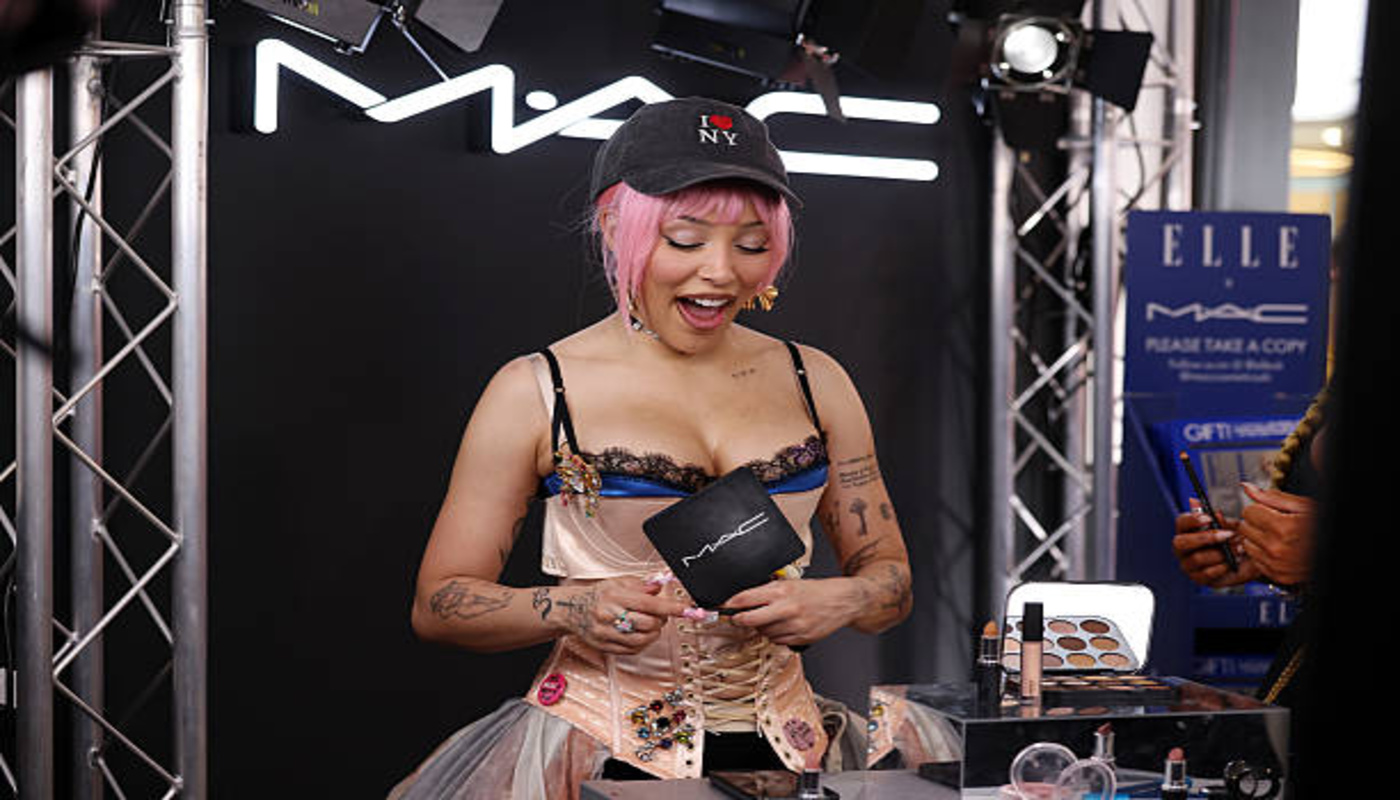
Against this backdrop, Doja Cat has emerged as one of the most fascinating cultural figures of the 2020s. Rather than simply redefining beauty standards, she challenges the very idea that beauty must be performed consistently, predictably, or respectfully according to social expectations. Through dramatic aesthetic transformations, experimental fashion choices, public performances, and an often deliberately unpredictable relationship with celebrity culture, Doja Cat has become a case study in how modern beauty norms are being questioned and reconstructed.
Her cultural significance extends far beyond music. She represents a growing shift in how audiences understand beauty, authenticity, self-expression, and identity in the digital age. Instead of presenting beauty as a fixed destination, she treats it as a fluid creative medium—one that can be playful, confrontational, artistic, absurd, or even uncomfortable.
Understanding Doja Cat’s impact therefore requires examining not only her personal style but also the larger cultural systems she disrupts. Her influence reveals changing attitudes toward femininity, race, celebrity performance, digital culture, and body image around the world.
Beauty as Performance: The Traditional Pop Star Formula
Historically, female pop stars have existed within highly controlled beauty frameworks. Whether examining Hollywood’s Golden Age, the MTV era, or contemporary social media culture, a consistent pattern emerges: women in entertainment are expected to maintain visual coherence.
Audiences often reward familiarity. A recognizable hairstyle, signature makeup look, consistent fashion aesthetic, and stable public image help create a marketable brand. The celebrity becomes a product whose appearance must remain identifiable and commercially appealing.
This expectation is especially pronounced for women. Male artists have often been allowed greater freedom to appear unconventional, disheveled, eccentric, or experimental without risking their public appeal. Female performers, meanwhile, have frequently faced pressure to remain conventionally attractive according to dominant beauty standards.
Beauty performance therefore becomes labor. It requires maintenance, discipline, and consistency. It also demands emotional management. Celebrities must navigate public scrutiny while projecting confidence and desirability.
Doja Cat repeatedly disrupts this formula.
Rather than cultivating a singular visual identity, she embraces constant transformation. One month she appears in glamorous couture; another month she adopts avant-garde body art; another moment she experiments with shaved hairstyles, elaborate prosthetics, or surreal makeup looks. The result is a celebrity image that resists stability.
This instability is not accidental. It actively challenges the expectation that female beauty should be predictable and easy to consume.
The Power of Refusing Consistency
One of the most remarkable aspects of Doja Cat’s public image is her refusal to become visually static.
In contemporary influencer culture, consistency is often treated as a requirement for success. Social media algorithms reward recognizable aesthetics. Influencers build entire careers around maintaining carefully curated visual identities.
Doja Cat often moves in the opposite direction.
Her transformations can feel abrupt, dramatic, and intentionally disruptive. Instead of reassuring audiences with familiarity, she frequently introduces uncertainty. Viewers never know exactly what version of her they will encounter next.
This unpredictability has important cultural implications.
Traditional beauty systems depend upon repetition. The more frequently audiences encounter the same aesthetic ideals, the more natural those ideals begin to seem. Consistency reinforces norms.
Transformation disrupts them.
By constantly altering her appearance, Doja Cat reminds audiences that beauty is constructed rather than inherent. She exposes the performative nature of celebrity aesthetics by refusing to pretend that appearance is fixed or natural.
In doing so, she creates space for broader conversations about identity, creativity, and self-presentation.
Challenging the Relationship Between Femininity and Beauty
For generations, conventional femininity has been strongly linked to specific beauty practices. Long hair, polished makeup, carefully coordinated clothing, and socially approved forms of attractiveness have often been presented as essential components of feminine identity.
Doja Cat’s public image frequently complicates these assumptions.
One of the most discussed cultural moments occurred when she publicly revealed a shaved head and later shaved eyebrows. The transformation generated widespread conversation across social media and entertainment news outlets.
What made the moment culturally significant was not simply the haircut itself. Rather, it challenged deeply embedded assumptions about femininity.
Long hair has historically functioned as a powerful symbol of conventional beauty. Across many cultures, it is associated with youth, desirability, and femininity. By removing it, Doja Cat disrupted a visual expectation that many audiences rarely question.
Importantly, she did not present the transformation as a rejection of beauty altogether. Instead, she demonstrated that beauty can exist outside traditional frameworks.
The cultural message was subtle yet profound: femininity does not require compliance with established aesthetic rules.
For younger audiences especially, this example carries psychological significance. It suggests that identity and self-worth are not dependent upon meeting a predetermined visual standard.
Beauty, Humor, and Absurdity
Another distinctive feature of Doja Cat’s approach is her use of humor and absurdity.
Many celebrity beauty brands rely on aspiration. They encourage audiences to admire, imitate, and desire a particular image. The celebrity becomes an idealized figure positioned above ordinary life.
Doja Cat frequently undermines this dynamic.
Her public persona often incorporates irony, satire, memes, and exaggerated performances. She appears willing to look ridiculous, strange, or intentionally unsettling in ways that many celebrities avoid.
This matters because beauty culture often takes itself very seriously.
Entire industries depend upon convincing consumers that appearance determines social value. Beauty routines are marketed as pathways to confidence, success, romance, and personal fulfillment.
Humor disrupts these narratives.
When beauty becomes playful rather than sacred, its power changes. Audiences begin to see aesthetic standards as cultural constructs rather than objective truths.
Doja Cat’s willingness to embrace absurdity therefore functions as a form of cultural resistance. She invites viewers to question why certain appearances are considered acceptable while others are viewed as strange.
Race, Representation, and Hybrid Beauty Identities
Doja Cat’s influence must also be understood within broader conversations about race and representation.
For much of modern media history, dominant beauty standards have been shaped by Eurocentric ideals. Features associated with whiteness often occupied the center of advertising campaigns, fashion industries, and entertainment industries.
Although progress has been made, these historical influences continue to shape contemporary beauty culture.
As a multiracial artist operating within a global entertainment landscape, Doja Cat contributes to ongoing discussions about beauty diversity. Her appearance, style experimentation, and artistic choices challenge simplistic racial categories and fixed beauty archetypes.
Importantly, her influence extends internationally.
Digital platforms allow audiences from vastly different cultural backgrounds to engage with her work. Young people in Asia, Africa, Latin America, Europe, and North America encounter her aesthetic experimentation within their own local beauty cultures.
This creates opportunities for cross-cultural conversations about representation, identity, and belonging.
Rather than embodying a singular beauty ideal, Doja Cat often occupies multiple aesthetic spaces simultaneously. Her image reflects the increasingly hybrid nature of contemporary identity in a globalized world.
Social Media and the Rise of Visual Rebellion
The emergence of social media has transformed beauty culture in profound ways.
Platforms such as Instagram, TikTok, and YouTube have democratized image production. Individuals can now become creators, influencers, and trendsetters without traditional gatekeepers.
Yet social media has also intensified beauty pressures.
Filters, editing tools, algorithmic rewards, and constant comparison contribute to environments where perfection appears increasingly attainable and increasingly mandatory.
Within this context, Doja Cat’s visual experimentation becomes particularly significant.
She often rejects the polished uniformity that dominates influencer culture. Her looks can be theatrical, exaggerated, surreal, or intentionally unconventional.
These choices function as forms of visual rebellion.
Rather than optimizing herself for universal approval, she frequently prioritizes artistic expression. This approach challenges the assumption that appearance should always be designed to maximize attractiveness.
For audiences exhausted by endless perfection, such disruption can feel liberating.
It expands the range of what people imagine is possible in self-presentation.
The Psychology of Disruptive Beauty
Psychologically, disruptive beauty can have powerful effects.
Human beings are naturally drawn toward familiar patterns. We often prefer faces, styles, and appearances that conform to recognizable norms. Familiarity creates comfort.
When public figures challenge these norms, audiences may initially experience discomfort or confusion.
However, repeated exposure to unconventional beauty can gradually expand perceptions of what is acceptable, attractive, or meaningful.
Researchers studying media influence have long noted that representation shapes perception. What people see repeatedly becomes normalized.
Doja Cat’s significance lies partly in her ability to introduce alternative possibilities into mainstream visibility.
She demonstrates that beauty can include contradiction, experimentation, transformation, and unpredictability.
This does not mean audiences must imitate her choices. Rather, exposure to diverse forms of self-expression broadens collective understanding of beauty itself.
Such expansion can reduce the psychological pressure associated with narrow beauty ideals.
Fashion as Artistic Provocation
Fashion has always functioned as more than clothing. It serves as a cultural language capable of communicating status, identity, politics, rebellion, and creativity.
Doja Cat frequently uses fashion as a form of artistic provocation.
Her appearances at major fashion events often generate intense discussion because they challenge expectations regarding celebrity presentation. Rather than merely showcasing luxury garments, she transforms fashion into performance art.
These moments invite audiences to reconsider the purpose of beauty and style.
Must fashion always flatter?
Must makeup always enhance conventional attractiveness?
Must public appearances always reinforce aspirational fantasies?
Doja Cat’s work suggests otherwise.
She treats fashion as a site of experimentation rather than compliance. This approach aligns with broader artistic traditions that use visual disruption to provoke reflection.
In this sense, her influence extends beyond celebrity culture into larger conversations about creativity and self-expression.
Global Youth Culture and Identity Exploration
Young people today are growing up in environments characterized by unprecedented visual diversity.
Through social media, they encounter aesthetic influences from countless cultures, subcultures, and communities. Traditional beauty authorities no longer hold exclusive control over what is considered attractive.
Doja Cat resonates strongly within this environment because her image reflects contemporary identity exploration.
Many young people no longer view identity as fixed or singular. Instead, they embrace fluidity, experimentation, and reinvention.
Her aesthetic transformations mirror these broader cultural shifts.
Rather than presenting a finalized version of herself, she appears comfortable with evolution. This mindset resonates with younger generations navigating rapidly changing social landscapes.
Importantly, her influence is not limited to fashion or beauty choices. It also encourages a broader philosophy of self-definition.
The message is not simply “look different.”
The message is that identity itself can remain open to transformation.
The Limits and Complexities of Beauty Disruption
It would be simplistic, however, to portray Doja Cat as existing entirely outside beauty culture.
Like all celebrities, she operates within industries that remain heavily invested in appearance. Her image still circulates through fashion systems, entertainment markets, advertising ecosystems, and digital platforms.
This creates an important tension.
Disruption itself can become marketable.
Fashion industries often absorb rebellion and transform it into commercial trends. What begins as resistance can eventually become mainstream.
Doja Cat’s influence therefore highlights a broader cultural paradox. Even challenges to beauty norms can be incorporated into beauty culture.
Yet this complexity does not diminish her significance.
Instead, it reveals how cultural change often occurs. Transformations rarely happen outside systems entirely. More often, they emerge through ongoing negotiations within those systems.
Her impact lies not in escaping beauty culture but in expanding its possibilities.
Redefining Visibility
At its core, Doja Cat’s cultural influence concerns visibility.
Traditional beauty standards determine who gets seen, celebrated, admired, and valued. They influence whose faces appear in media and whose stories receive attention.
By embracing unconventional aesthetics while maintaining mainstream visibility, Doja Cat challenges assumptions about who can occupy cultural space.
She demonstrates that visibility does not require complete conformity.
This is particularly meaningful in a media environment where many individuals feel pressured to modify themselves for acceptance.
Her public presence suggests that creative risk and self-expression can coexist with success.
That message resonates far beyond celebrity culture.
Another important layer of Doja Cat’s cultural disruption lies in how her visual identity interacts with algorithm-driven platforms that increasingly shape beauty perception. In the current digital ecosystem, aesthetics are not only personal expressions but also algorithmic outputs—filtered through engagement metrics, recommendation systems, and trend cycles that reward certain kinds of visual consistency. Influencers are often incentivized to maintain a recognizable “brand face,” a stable aesthetic signature that can be easily categorized and repeatedly surfaced to audiences. Doja Cat resists this logic by constantly fragmenting her visual identity, shifting between hyper-polished glamour, experimental prosthetics, surreal makeup concepts, and deliberately unclassifiable appearances. This fragmentation interrupts the algorithm’s preference for predictability and challenges the notion that visibility must depend on aesthetic uniformity. Instead of optimizing herself for constant recognizability, she embraces instability as a creative strategy. Culturally, this introduces a new understanding of identity as something non-linear and discontinuous, especially within digital spaces where selfhood is often reduced to a curated grid or feed. Her presence reveals the tension between human artistic fluidity and machine-driven categorization, highlighting how beauty culture is now shaped as much by code as by tradition. In this sense, her disruption is not only visual but structural, questioning how platforms themselves influence what kinds of bodies, faces, and aesthetics are allowed to circulate widely and be considered desirable.
At a broader cultural level, Doja Cat’s evolving aesthetic language also points toward the future of body inclusivity as an ongoing negotiation rather than a fixed achievement. While mainstream beauty discourse often frames inclusivity as the expansion of existing standards to include more “acceptable” variations, her work suggests a deeper shift: the dismantling of the idea that beauty must be standardized at all. By treating her appearance as a fluid, artistic medium, she contributes to a cultural environment where transformation, contradiction, and reinvention are normalized rather than judged. This has significant psychological implications for younger audiences growing up in highly visual cultures, where identity formation is constantly mediated through images. Instead of aspiring toward a single ideal, they are increasingly exposed to figures who embody multiplicity and change. However, this also raises important questions about sustainability and interpretation—whether constant reinvention becomes another form of pressure, or whether it truly opens space for liberation. The answer likely exists in tension. Doja Cat’s influence does not resolve the contradictions of beauty culture, but it exposes them more clearly, inviting audiences to sit with ambiguity rather than certainty. In doing so, she helps shape a future in which body inclusivity is less about reaching a final definition and more about protecting the freedom to continuously redefine oneself.
Conclusion: Toward a More Expansive Future of Beauty
Doja Cat’s disruption of traditional beauty performance represents more than a series of memorable fashion moments or aesthetic transformations. It reflects broader cultural shifts in how beauty, identity, and self-expression are understood in the twenty-first century.
By refusing visual consistency, challenging conventional femininity, embracing humor and absurdity, experimenting with fashion as art, and resisting easy categorization, she expands the possibilities of public beauty. Her influence encourages audiences to view appearance not as a fixed requirement but as an evolving creative practice.
Importantly, her cultural significance does not rest on replacing one beauty ideal with another. Instead, she contributes to a growing movement toward beauty plurality—a recognition that there is no single correct way to look, perform, or express oneself.
For body inclusivity advocates, this shift carries profound implications. More expansive beauty cultures create room for greater diversity, authenticity, and psychological freedom. They reduce the power of narrow standards and increase opportunities for individuals to define themselves on their own terms.
As digital culture continues to reshape global conversations about appearance, figures like Doja Cat illustrate that beauty’s future may be less about perfection and more about possibility. The most meaningful disruption is not convincing people to look a certain way. It is helping them realize they have more choices than they were ever told.
Sources: Vogue, Harper’s Bazaar, ELLE, Rolling Stone, Billboard, The New York Times, The Guardian, Teen Vogue, Dazed, Interview Magazine, W Magazine, Allure, Refinery29, Business of Fashion, Paper Magazine, Cosmopolitan, Glamour, Variety, BBC Culture, CNN Style