 by
by For generations, beauty has rarely been presented as a neutral idea. It has been shaped by history, colonialism, media, fashion, advertising, class, gender and the people given permission to appear desirable. In many parts of the world, lighter skin was repeatedly positioned as closer to an accepted beauty ideal, while darker complexions were expected to be softened, corrected, concealed or explained.
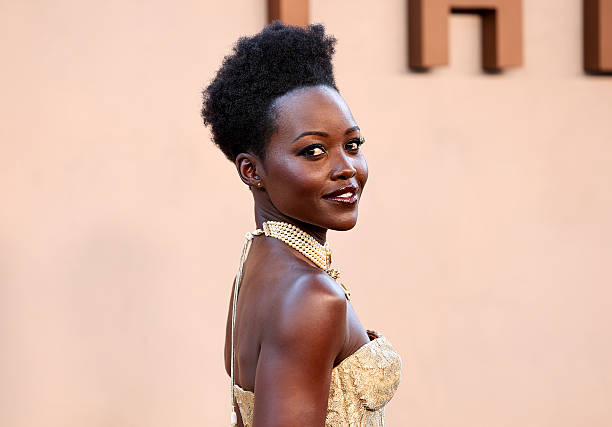
Then Lupita Nyong’o entered the global cultural imagination.
Her arrival in Hollywood did not single-handedly eliminate colorism, nor did one actress suddenly make the entertainment industry inclusive. The reality is much more complicated. Dark-skinned women had been challenging narrow beauty standards long before Nyong’o became internationally famous, from African models and actresses to Black women across the Caribbean, the United States and the diaspora.
What Nyong’o did was bring a particular kind of visibility into an unusually powerful combination of spaces: award-winning cinema, luxury beauty advertising, fashion magazines, children’s literature and mainstream celebrity culture. She became not merely an example of dark skin being visible, but an example of dark skin being centered.
That distinction matters.
Representation is not only about whether someone is present in an image. It is also about what the image communicates. Who gets to be glamorous? Who gets to be the romantic figure? Who gets to be photographed without being visually altered? Who gets to wear vivid colors, experimental makeup and elaborate hairstyles without the audience being asked to treat their appearance as unusual?
Nyong’o’s career helped make those questions harder to ignore.
Her cultural significance is especially powerful because she has spoken openly about having once internalized the very beauty hierarchy that her public image would later challenge. As a child growing up in Kenya, she has described feeling that her complexion was an obstacle to beauty and recalling the impact of seeing lighter skin repeatedly associated with desirability. In a 2014 Essence Black Women in Hollywood speech, she described praying that she would wake up lighter-skinned. Her story transformed an abstract conversation about colorism into something deeply personal: the realization that beauty standards can become internal voices.
Her influence therefore cannot be understood simply through red-carpet photographs or beauty campaigns. It is better understood as a story about psychological representation, cultural memory and the gradual expansion of who is allowed to see themselves as beautiful.
The Problem Was Never Simply “Beauty”
The phrase “dark-skinned beauty” can sometimes make colorism sound like a disagreement about personal taste.
It is not.
Colorism operates through social hierarchies in which skin tone can influence perceptions of attractiveness, desirability, belonging and status. It can overlap with racism, class structures, colonial histories and gender expectations, although these forces do not operate identically in every society.
Nyong’o has repeatedly connected her childhood experiences to broader beauty standards. In interviews, she has discussed seeing advertisements in which lighter skin appeared to be associated with professional success and social acceptance. She has also spoken about growing up in an environment where European standards of beauty influenced perceptions of African women. (Glamour)
This is important because beauty advertising does more than sell products.
It tells stories.
A commercial that presents lighter skin as the route to confidence is not simply promoting a cosmetic product. It can quietly establish an equation:
lighter equals better,
lighter equals more attractive,
lighter equals more successful.
When those messages appear repeatedly during childhood and adolescence, they can become part of the cultural background against which people evaluate themselves.
Nyong’o’s story illustrates this process without reducing every experience of dark-skinned women to the same narrative. Colorism varies dramatically across communities. The meanings attached to skin tone in Nairobi are not identical to those in Lagos, Johannesburg, Kingston, London, Mumbai or New York.
But the existence of those differences does not erase the common thread: skin tone has frequently been assigned social meaning.
Her public career challenged that meaning by presenting dark skin not as something requiring explanation, but as an ordinary foundation for glamour, artistry and authority.
Alek Wek and the Power of Seeing Someone Before You
One of the most revealing parts of Nyong’o’s story is that her transformation did not begin with her own fame.
It began with seeing another dark-skinned woman.
Nyong’o has consistently credited South Sudanese-British model Alek Wek with changing her perception of herself. When Wek became highly visible in fashion during the 1990s, Nyong’o saw someone whose deep complexion was not merely accepted but celebrated. She described seeing Wek in magazines and on television and recognizing something of herself in that visibility. (British Vogue)
This is one of the most important lessons in the psychology of representation.
People do not always need a lecture to reconsider what they have been taught. Sometimes they need an image that contradicts the lesson.
For a young dark-skinned girl accustomed to seeing beauty represented through lighter complexions, the appearance of a dark-skinned woman being treated as unquestionably beautiful can create a psychological interruption.
It says:
There is another possibility.
Nyong’o later understood her own public visibility through the same framework. She has spoken about how meaningful it was to realize that she might become for someone else what Wek had been for her. (Glamour)
The cultural chain is powerful.
Alek Wek helped Nyong’o see herself.
Nyong’o then became visible to another generation.
That generation can, in turn, create its own definitions of beauty.
Representation therefore works less like a single event and more like cultural inheritance.
From “Unusual” to Unquestionably Beautiful
There is a subtle difference between representation and normalization.
Representation asks whether someone is included.
Normalization asks whether their inclusion feels unremarkable.
For decades, dark-skinned women could appear in fashion and entertainment while still being framed as exceptions. Their appearance could be treated as distinctive, exotic or noteworthy rather than simply beautiful.
Nyong’o’s rise complicated that framework.
Her appearance became part of mainstream fashion imagery, luxury beauty campaigns and Hollywood glamour without requiring her complexion to be diluted into a more familiar standard.
That mattered because luxury beauty has historically carried enormous symbolic power. A beauty advertisement is not simply an advertisement. It is an institutional statement about who belongs within a brand’s imagined customer base.
In 2014, Nyong’o became a Lancôme ambassador, becoming the first Black woman to represent the brand. At the time, she emphasized her belief that beauty should be an expression of freedom rather than something dictated externally. (British Vogue)
The significance went beyond selling cosmetics.
A global luxury brand placing a dark-skinned African woman at the center of its beauty imagery communicated something to consumers around the world: this face belongs here.
Not at the margins.
Not as an afterthought.
At the center.
Beauty Campaigns Can Change the Marketplace
There is also a practical dimension to representation.
Dark-skinned consumers have historically encountered difficulties finding complexion products that genuinely accommodate their skin tones. Nyong’o herself has described a formative experience in which a relative attempted to apply foundation that was too light for her complexion. She recalled being upset because the product did not make her feel transformed in the glamorous way she expected from beauty makeovers. (Teen Vogue)
That story captures a larger problem with cosmetics: when the product range does not include you, the market can communicate that you were not considered.
Inclusive representation and inclusive product development therefore need to exist together.
An advertisement featuring a dark-skinned model cannot compensate for a foundation range that excludes dark complexions. Conversely, a broader shade range means less if the imagery surrounding the products continues to prioritize lighter faces.
Nyong’o’s beauty career became significant partly because it connected these two issues: visibility and access.
Her presence in campaigns helped broaden the visual idea of who luxury beauty was for, while her interviews repeatedly drew attention to the emotional consequences of exclusion.
This is where her influence becomes more substantial than celebrity endorsement.
She became part of a larger cultural pressure on the beauty industry to recognize that darker skin is not a niche category.
It is part of the human spectrum.
The Psychology of Being Seen
One of the most profound dimensions of Nyong’o’s influence is psychological.
When people repeatedly encounter images of people who look like them occupying desirable social roles, those images can influence their understanding of what is possible.
This does not mean that seeing a celebrity automatically produces confidence. Nor does it mean representation alone can heal the effects of racism or colorism.
But visibility can challenge internalized assumptions.
Nyong’o herself has described the importance of positive role models and representation. In a British Vogue conversation connected to Lancôme, she said that if she had encountered a book like her later children’s story Sulwe as a child, she might have learned to love her skin earlier. She also emphasized that seeing yourself represented can make you feel less alone and more accepted. (British Vogue)
That insight is particularly important for children.
Children do not arrive in the world with a fully developed hierarchy of beauty. They learn through repetition.
They learn from advertisements.
They learn from cartoons.
They learn from films.
They learn from compliments.
They learn from which classmates are described as pretty.
They learn from which dolls are available.
They learn from whose faces dominate magazines.
They learn from which skin tones are treated as ordinary and which are treated as exceptional.
This is why Nyong’o’s later decision to create Sulwe was culturally significant.
She was no longer simply occupying a screen.
She was speaking directly to children.
Sulwe
: Taking the Conversation to Childhood
Nyong’o’s children’s book Sulwe, published in 2019, represented a natural evolution of the conversation she had begun publicly years earlier.
The story follows a dark-skinned young girl who struggles with her appearance and ultimately develops a different understanding of her own beauty. Nyong’o has explained that the story grew out of the response to her 2014 speech and her realization that many children needed to encounter the message much earlier than adolescence. (Teen Vogue)
This shift from celebrity speech to children’s literature is important.
A red-carpet appearance reaches adults who already possess an understanding of social beauty hierarchies.
A children’s story can intervene before those hierarchies become deeply entrenched.
The target therefore changes.
Instead of telling adults that dark skin deserves appreciation, Sulwe asks a more fundamental question:
What if a child never learns that her skin needs to be compared with somebody else’s?
That is a more ambitious cultural project.
It moves the conversation away from celebrating dark skin only after someone has suffered because of it and toward creating environments in which that suffering does not have to be the starting point.
The Importance of Naming Colorism
Another major contribution of Nyong’o’s public discussions has been her willingness to name colorism directly.
During a 2021 conversation with Librarian of Congress Carla Hayden, Nyong’o discussed colorism and described it as a preference for lighter skin. She connected the subject to her childhood experiences and to her relationship with her younger sister, whose lighter complexion received forms of admiration that made Nyong’o more aware of her own difference. (Library of Congress Blogs)
Naming matters.
Social problems become harder to address when they remain invisible or unnamed.
A person who believes she simply “doesn’t feel pretty” may interpret the experience as an individual failure.
A person who recognizes colorism can begin to ask different questions:
Where did this preference come from?
Why are certain features rewarded?
Who benefits from the hierarchy?
Why are some images repeated while others are excluded?
How did colonial history, media representation, class and cultural preference intersect?
The conversation moves from personal inadequacy toward social analysis.
That does not remove individual responsibility or personal taste. It simply makes room for the possibility that taste itself can be culturally conditioned.
Africa Is Not One Beauty Culture
One of the dangers of discussing Nyong’o’s influence is treating Africa as a single cultural environment.
It is not.
The continent contains extraordinary linguistic, ethnic, historical and cultural diversity. Beauty ideals differ between countries and communities, and they have changed across generations.
Nyong’o’s Kenyan experience should therefore not be presented as a universal African story.
At the same time, her comments about the influence of European beauty standards reveal a wider historical question. Colonialism did not merely reshape political borders and economic structures. In many societies, it also influenced ideas about status, respectability, appearance and social hierarchy.
The legacy is not identical everywhere, and it should not be reduced to a simple formula in which every African beauty preference is automatically “Western.”
Cultures also create their own beauty traditions.
People exercise agency.
Communities reinterpret outside influences.
Beauty standards evolve through exchange rather than moving in a single direction.
This nuance is essential because celebrating dark-skinned beauty should not require rejecting every lighter-skinned person or declaring one complexion more authentic than another.
The goal is not to replace one hierarchy with its reverse.
The goal is to dismantle the hierarchy itself.
Her Global Meaning Extends Beyond Africa
Nyong’o’s influence also demonstrates how representation can travel across borders.
Her story resonated with people beyond Kenya and beyond Africa. Her own public reflections have acknowledged that the message of Sulwe and her earlier speech reached people of color more broadly. (Teen Vogue)
That matters because colorism exists across multiple regions, although it takes different forms.
In parts of South Asia, lighter skin has historically been associated with beauty, marriageability and social status.
Across parts of Latin America and the Caribbean, skin color can intersect with class and racial hierarchy.
Within Black communities in the United States and the wider diaspora, colorism has a complex history intertwined with slavery, segregation, class and racial identity.
In African societies, local histories interact with colonial legacies, media and contemporary economic structures.
These contexts cannot simply be merged.
But Nyong’o’s visibility offers a shared cultural image through which different communities can ask their own questions.
What happens when dark skin is consistently represented as desirable?
What happens when it is attached to intelligence, authority, elegance, romance and creativity rather than merely struggle?
What happens when children see dark-skinned women represented without the narrative requiring them to overcome their appearance first?
Those questions have global relevance.
Hollywood Had to Confront the “Marketability” Argument
Nyong’o’s rise also challenged an old entertainment-industry assumption: that certain appearances are easier to sell internationally.
She has spoken about being told that her dark complexion could affect her prospects. In a 2016 Vogue interview, she discussed the experience of hearing that her skin color might limit her career and rejected the idea that she should think of herself as a cultural category rather than an individual artist. (Glamour)
Her success did not prove that Hollywood had solved its racial biases.
It demonstrated something more precise.
The assumptions used to predict who could become a mainstream star were not fixed truths.
An actress with very dark skin could become an Academy Award winner, a major beauty ambassador and an international fashion figure.
The achievement was meaningful partly because it exposed the difference between market assumptions and human possibility.
Glamour Without Assimilation
Another important part of Nyong’o’s cultural impact is the way she uses fashion and beauty.
Her public appearances have demonstrated that dark skin does not need to be paired with muted styling in order to appear sophisticated.
She has frequently appeared in vivid colors, sculptural silhouettes, bold makeup and natural hairstyles.
The significance is not that every dark-skinned woman should dress like Nyong’o.
That would simply create another standard.
The significance is that she expanded the visual vocabulary available to dark-skinned women.
A dark complexion can coexist with bright color.
It can coexist with metallic makeup.
It can coexist with shaved hairstyles, short hair, natural textures, elaborate headpieces or unconventional fashion.
It does not have to be softened.
That principle became particularly visible in her relationship with hair representation. After a magazine altered her natural hair digitally for a cover, Nyong’o publicly objected, arguing that the representation of Black hair and texture mattered, particularly for children. (Teen Vogue)
Although hair and skin are distinct issues, they are connected by a larger question:
Who gets to appear in their natural state without being treated as unfinished?
The Connection Between Skin and Hair Politics
Dark-skinned beauty has often been discussed separately from Black hair politics, but the two conversations frequently overlap.
Both involve features that have historically been measured against Eurocentric standards.
Straight hair has often been treated as more polished.
Lighter skin has often been treated as more desirable.
Smaller facial features have frequently been positioned as more conventionally feminine.
These ideas can reinforce one another.
Nyong’o’s public image disrupted that combination by refusing to separate glamour from Blackness.
Her hairstyles became part of her fashion identity rather than obstacles to overcome.
Her skin remained central rather than something to visually neutralize.
This is significant because inclusive beauty is not simply about adding darker foundation shades to an existing system.
It requires questioning the assumptions embedded in the system itself.
Why “Representation” Alone Is Not Enough
It would be tempting to describe Nyong’o’s career as proof that the beauty industry has changed completely.
That would be inaccurate.
One highly visible dark-skinned actress cannot erase colorism.
A luxury campaign cannot eliminate discrimination.
A bestselling children’s book cannot replace institutional change.
And representation can itself become superficial when companies use diversity as a marketing aesthetic without changing who has decision-making power.
The more meaningful question is whether representation changes systems.
Are dark-skinned models hired consistently?
Are darker foundation shades developed with the same attention as lighter ones?
Are Black women involved in product development?
Are editors willing to preserve natural hair and skin texture?
Are dark-skinned actresses offered diverse roles rather than being repeatedly placed into narratives about race?
Are children exposed to beauty diversity before they develop insecurity?
These questions move the discussion from visibility to accountability.
Nyong’o’s significance lies partly in the fact that her career opened space for these conversations, but the responsibility for continuing them belongs to the wider cultural ecosystem.
Avoiding the Opposite Trap
There is another nuance worth protecting.
The celebration of dark skin should never become another rigid beauty prescription.
Body inclusivity and beauty inclusivity are strongest when they expand choice rather than replace one hierarchy with another.
A dark-skinned woman should not have to prove that her complexion is beautiful.
She should not be required to love every aspect of her appearance every day.
She should not have to perform confidence for the benefit of other people.
And she should not be told that dark skin is valuable only because it is now fashionable.
The deeper objective is freedom from compulsory comparison.
The point is not:
Dark skin is beautiful instead of light skin.
The point is:
Skin tone should not determine the amount of beauty, dignity or possibility a person is allowed to possess.
That distinction is fundamental.
From Being Seen to Seeing Oneself
Perhaps the most powerful part of Nyong’o’s story is the movement from external validation to internal recognition.
As a young girl, she wanted someone else to tell her that her complexion was beautiful.
Seeing Alek Wek helped.
Later, being publicly celebrated helped.
But the ultimate transformation was not becoming famous enough for other people to approve of her appearance.
It was changing the terms on which she understood herself.
That is why her story resonates beyond celebrity culture.
Many people experience beauty standards as an invisible negotiation: Am I attractive enough? Am I acceptable enough? Do I resemble the people who are celebrated? Does my appearance make me easier or harder to love?
Nyong’o’s public journey offers another possibility.
Perhaps the question should not always be whether we meet an existing standard.
Perhaps the standard itself deserves examination.
The Next Generation of Dark-Skinned Representation
The cultural landscape Nyong’o entered is not the same landscape that exists today.
Social media has created opportunities for creators to build audiences without waiting for traditional gatekeepers.
Independent beauty brands have expanded complexion offerings.
Black-owned beauty businesses have gained greater visibility.
Fashion has become more attentive to representation, even if progress remains inconsistent.
Young creators can now challenge images immediately, critique advertising publicly and create their own visual cultures.
But greater visibility also creates new pressures.
Social media can diversify beauty while simultaneously intensifying comparison. Algorithms can expose people to more faces while still rewarding particular facial features, editing techniques and aesthetic trends.
Therefore, the future of inclusivity cannot simply mean more dark-skinned faces appearing online.
It must mean greater freedom in how those faces are presented.
Dark skin should be allowed to exist without excessive editing.
Black features should not need to be digitally altered.
Natural hair should not be treated as a special statement every time it appears.
Dark-skinned women should be allowed to be glamorous, ordinary, intellectual, funny, romantic, athletic, powerful, vulnerable and complex.
In other words, representation should eventually become boring in the best possible sense.
Lupita Nyong’o’s Most Lasting Contribution
The most important part of Nyong’o’s legacy may not be a particular magazine cover, award or campaign.
It may be the cultural permission she helped create.
Permission to be visible.
Permission to be photographed as beautiful.
Permission to enter luxury spaces.
Permission to be celebrated without being lightened.
Permission for a dark-skinned child to imagine herself as the protagonist rather than the side character.
And perhaps most importantly, permission to question the idea that beauty must come from somewhere outside oneself.
Nyong’o once needed to see another woman before she could fully imagine herself within the world of beauty. Her career transformed that experience into a cycle of representation: the person who once needed a reflection became a reflection for others.
That is why her cultural influence is larger than celebrity.
Conclusion: Changing the Mirror
Lupita Nyong’o did not invent the celebration of dark skin. Women with deep complexions have always been beautiful, and generations of Black and African women had already challenged restrictive beauty systems long before Hollywood recognized her.
What changed was the scale, visibility and context in which she carried that message.
She entered a global industry that had often treated darker skin as less commercially desirable and became one of its most recognizable faces. She moved from a personal story of colorism to a broader conversation about representation. She took that conversation from an awards-stage speech into children’s literature. She participated in luxury beauty campaigns while speaking openly about the psychological consequences of exclusion. And through her public image, she demonstrated that dark-skinned beauty does not need to be softened, qualified or made palatable to belong at the center of mainstream culture. (British Vogue)
Yet the most valuable lesson from her influence is not that one woman changed everything.
It is that cultural change happens through accumulation.
One model makes someone feel seen.
One actress makes a child imagine herself differently.
One campaign forces a beauty company to reconsider its audience.
One book gives a child language for an insecurity she could not previously explain.
One photograph becomes a reference point for another generation.
That is how mirrors change.
Not all at once, and not because society suddenly becomes enlightened, but because the images available to people slowly become wider, more truthful and more representative of the world that already exists.
Lupita Nyong’o’s greatest contribution to conversations around dark-skinned beauty may therefore be this: she helped make visibility feel less like an exception and more like a right.
The future of beauty inclusivity will depend on taking that principle even further—not simply asking for darker faces to be included in the old definition of beauty, but building a culture in which there is no single definition that anyone must fit.
Because the ultimate victory over colorism is not convincing the world that dark skin can be beautiful.
It is creating a world in which a child with dark skin never has to wonder whether it is.
Sources: British Vogue, Vogue, Essence, Library of Congress, Allure, Teen Vogue, Glamour, TIME, ABC News, Good Morning America, Vanity Fair, CBS News