 by
by Why Adaptive Fashion Is Becoming a Human Rights Conversation
For most people, getting dressed is so ordinary that it barely registers as an event. A shirt is pulled over the head. A button is fastened. A zipper closes. A pair of trousers is stepped into. Then the person walks out the door.
But what if the shirt cannot be pulled over your head? What if a button requires a level of dexterity you do not have? What if a trouser seam becomes uncomfortable when you sit for hours? What if a garment designed for a standing body does not work from a wheelchair? What if clothing that technically fits leaves you dependent on another person simply to put it on?
Suddenly, fashion stops being merely about style.
It becomes about access.
That shift is at the heart of the growing adaptive-fashion movement. Adaptive fashion refers broadly to clothing, footwear and accessories deliberately designed or modified to make dressing, wearing and using garments easier for people with different physical, sensory, cognitive or mobility needs. Features can include magnetic closures, adjustable openings, side or front access, easier fastenings, seated-friendly construction, sensory-conscious materials and designs that accommodate mobility aids or orthotics.
The significance of this movement extends far beyond the fashion industry. The World Health Organization estimates that approximately 1.3 billion people—around 16% of the world’s population—experience significant disability. WHO also emphasizes that disability is shaped not only by individual circumstances but by environmental barriers and social attitudes.
That makes clothing an unexpectedly important cultural question.
If a society says people should participate equally in education, employment, public life and community life, what happens when something as basic as getting dressed has been designed around only one kind of body?
This is why adaptive fashion is increasingly being discussed through the language of dignity, autonomy, equality and human rights.
From “Special Clothing” to a Question of Equal Participation
For decades, disability and clothing were often treated as separate conversations.
Fashion was associated with creativity, beauty, identity and aspiration. Disability-related clothing, meanwhile, was frequently approached through a medical or caregiving framework. Garments might prioritize ease of dressing or practicality, but aesthetics, trend relevance and self-expression were often secondary.
That division carries a cultural message.
It suggests that some people are entitled to fashion while others are merely entitled to functional clothing.
Adaptive fashion challenges that hierarchy.
A person who needs a magnetic closure does not necessarily want a garment that looks medical. A wheelchair user may want tailored trousers rather than clothing designed exclusively around comfort. A person with sensory sensitivities may want soft seams without having to surrender contemporary design. Someone using a prosthetic or orthotic device may want to wear the same visual language as everyone else.
The issue is therefore not simply whether someone can physically put on clothing.
It is whether they can participate in fashion culture on comparable terms.
That distinction matters because clothes communicate far more than utility. They can express age, profession, culture, gender, personality, community and aspiration. Fashion is one of the most immediate ways people present themselves to the world.
When clothing prevents or restricts that expression, exclusion happens at an intimate level.
The Human Rights Argument Begins With Autonomy
The strongest reason adaptive fashion has entered a human-rights conversation is not that everyone deserves fashionable clothes.
It is that people deserve meaningful control over their own lives.
The United Nations Convention on the Rights of Persons with Disabilities places accessibility and independent living within a rights-based framework. Article 19 recognizes the equal right of people with disabilities to live independently and participate in their communities, while Article 9 establishes accessibility as a condition for equal participation.
Clothing is not explicitly listed as a standalone human right in the Convention.
That distinction is important.
It would be too simplistic to claim that international law creates a universal legal entitlement to a particular adaptive garment.
The more nuanced argument is that clothing can become part of the practical infrastructure through which recognized rights are exercised.
Consider independence.
If a person can choose their outfit, put it on, adjust it and remove it without unnecessary assistance, clothing can support autonomy. If ordinary garments make those actions impossible, clothing can become one more barrier layered onto an already inaccessible environment.
The same logic applies to participation.
Going to university, attending work, visiting friends, appearing at a wedding, shopping independently or simply leaving the house may require getting dressed first.
A barrier that exists before someone even reaches the front door can be easy for society to overlook.
Yet for the person experiencing it, that barrier is real.
Why Independence Is More Than a Practical Benefit
The emotional significance of dressing independently is often underestimated.
Being helped with dressing is not inherently negative. People support one another in families, partnerships, care settings and communities. Interdependence is part of ordinary human life.
The problem occurs when assistance is imposed by design rather than chosen by the individual.
There is an enormous psychological difference between:
“I want help today.”
and:
“I have no choice but to depend on someone because clothing was never designed with me in mind.”
That distinction transforms adaptive fashion from a convenience into a question of agency.
Research on adaptive apparel increasingly emphasizes independence, dignity and user-centered design rather than treating people with disabilities simply as recipients of care. Research has also identified continuing gaps around disability types, cultural factors and social barriers.
This is significant because the future of adaptive fashion should not be about designers deciding what disabled people need from a distance.
It should be about designing with them.
Clothing Can Affect the Psychology of Belonging
There is another dimension that makes adaptive fashion culturally powerful: belonging.
Clothes tell people whether they are being imagined.
When an industry repeatedly creates products for a particular population, that population receives a subtle message:
“You were considered.”
When an industry consistently ignores a population, the opposite message can emerge:
“You were not part of the original picture.”
This is particularly significant for young people.
Childhood and adolescence are periods when clothing becomes connected to friendship, identity and peer belonging. Wanting the same kind of jeans, sneakers, dresses or jackets as classmates is not superficial. It can be part of wanting to participate in ordinary social life.
The origin story of Runway of Dreams illustrates this vividly. Founder Mindy Scheier described how her son wanted jeans like other children but faced practical barriers because of his disability and leg braces. She began modifying clothing, eventually developing a broader initiative focused on adaptive fashion.
The important cultural detail is not simply that a pair of jeans was difficult to wear.
It is that the jeans represented participation.
The question was never merely, “Can this child wear denim?”
It was closer to, “Can this child experience himself as part of the same social world as his classmates?”
That is a much larger question.
When Clothing Says “Patient” Instead of “Person”
Adaptive fashion also challenges the visual language historically associated with disability.
Some adaptive clothing has traditionally been heavily functional, with visible fastenings, clinical aesthetics or designs that appear closer to medical equipment than mainstream apparel.
Function is essential. But function without identity can become another form of exclusion.
A person does not stop being fashionable because they require accommodation.
They remain someone who may want minimalism, maximalism, traditional clothing, streetwear, formalwear, cultural dress, sportswear or something entirely personal.
This is where body inclusivity intersects with disability inclusion.
Inclusive fashion cannot simply ask whether a garment accommodates a body.
It must also ask whether that person recognizes themselves in the garment.
The distinction is subtle but transformative:
Accessibility asks, “Can you use it?”
Inclusive design asks, “Can you use it and still feel like yourself?”
The Mainstream Fashion Industry Is Beginning to Listen
The transformation is no longer confined to small specialist designers.
Tommy Hilfiger, working with Runway of Dreams, launched an adaptive children’s collection in 2016. The initiative modified mainstream designs with features intended to make dressing easier, including alternative closures and adjustments for different needs.
The experiment eventually became part of a broader commercial and cultural movement.
Tommy Hilfiger Adaptive now includes features such as magnetic buttons, one-handed zippers, openings designed to accommodate braces and orthotics, seated-wear construction and sensory-conscious details such as flat seams and softer materials.
The Tommy Hilfiger case also illustrates an important shift: adaptive fashion became not only a product-development exercise but a question of partnerships, customer understanding and building a broader movement.
That evolution matters.
A human-rights-oriented approach cannot depend on one designer becoming a hero.
The goal must be structural change.
Representation Changes the Meaning of the Runway
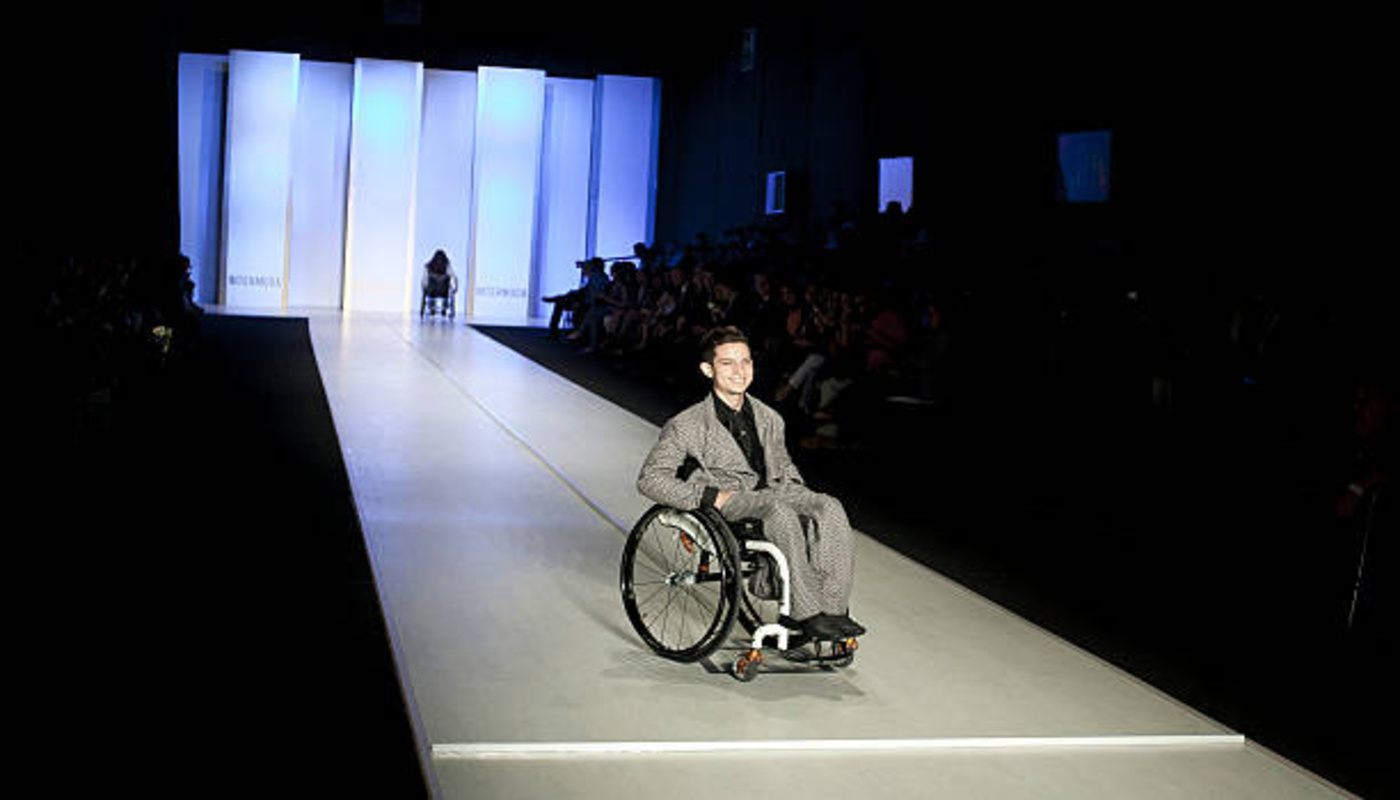
The runway itself is another battleground.
For decades, mainstream fashion imagery established a narrow visual definition of who looked fashionable. Disability was rarely included in that image.
That absence had consequences.
When disabled people are not seen in campaigns, fashion shows, magazines or retail imagery, consumers may unconsciously learn to associate fashion with non-disabled bodies.
Runway of Dreams has deliberately challenged that pattern. Its virtual adaptive runway shows have brought together models with different abilities and featured adaptive collections from mainstream brands.
Its Campaign for Inclusion expanded the concept into a multi-brand fashion and beauty campaign featuring people with disabilities in adaptive and universally designed products.
Representation here does something particularly important.
It does not simply make disabled people visible.
It makes them visible as fashion participants.
That distinction matters.
A charity campaign may show disability.
A fashion campaign can show disability alongside desire, creativity, glamour, professionalism and personal style.
The second image is culturally disruptive because it refuses to reduce a person to their impairment.
Adaptive Fashion Is Also About the Right to Be Seen as Stylish
There is an uncomfortable assumption embedded in many discussions of disability inclusion: that practical access should be enough.
But people do not stop caring about appearance because their bodies require accommodation.
They still want to feel attractive, polished, youthful, elegant, powerful, traditional, experimental or simply comfortable in their own style.
Fashion can therefore provide something that medical or assistive frameworks often cannot: an avenue for self-definition.
This is particularly important because disabled people have historically been represented through narratives of tragedy, dependency or inspiration.
Adaptive fashion offers a different cultural story.
The person is not inspirational merely because they got dressed.
They are a consumer.
They are a fashion participant.
They have taste.
They can reject trends.
They can love trends.
They can complain about bad tailoring.
They can want something impractical simply because they like it.
That ordinariness is itself powerful.
The Global South Complicates the Conversation
Much of the mainstream adaptive-fashion discussion has emerged from North American and European fashion markets.
But disability does not exist only within those markets.
The majority of the world’s people with disabilities live in low- and middle-income countries. WHO estimates that nearly 80% of the world’s people with disabilities live in low- and middle-income countries.
That fact should fundamentally change how adaptive fashion is discussed.
A global adaptive-fashion movement cannot simply export Western product categories into every culture.
Clothing is cultural.
A design that works beautifully in one society may not fit another society’s clothing traditions, climate, modesty expectations, family structures, retail systems or economic realities.
A wheelchair user wearing a sari, a woman wearing a salwar suit, a person wearing a thobe, a child wearing a school uniform or someone wearing traditional African textiles may have entirely different design requirements.
Accessibility must therefore be culturally literate.
India Shows Why Cultural Adaptation Matters
India offers an especially useful example because clothing carries enormous cultural, social and religious meaning.
Recent work on adaptive clothing in India has explored how accessible garments can retain familiar forms rather than forcing consumers into visibly medicalized clothing. Indian adaptive initiatives have experimented with front-opening designs, side openings, Velcro closures and other modifications while maintaining recognizable silhouettes.
That approach challenges an important assumption:
Accessibility does not require cultural erasure.
A person should not have to abandon familiar clothing traditions simply because their body interacts differently with garments.
This matters across South Asia, where clothing can be tied to family celebrations, religious observance, weddings, professional identity and everyday cultural belonging.
The future of adaptive fashion in such contexts may therefore lie not in replacing traditional fashion but in adapting it.
A kurta can be adaptive.
A sari can be reconsidered through accessible construction.
A salwar suit can incorporate easier openings.
A school uniform can be redesigned around diverse mobility needs.
The question becomes: how can cultural clothing evolve without losing its cultural identity?
Africa Offers Another Lesson: Adaptive Design Can Be Locally Rooted
Adaptive fashion is also developing through local design thinking in African contexts.
A University of Nairobi design project explored adaptive clothing for physically disabled women while incorporating African colors and patterns. Its premise is revealing: accessibility and cultural aesthetics do not need to exist as competing priorities.
Other African adaptive-fashion initiatives have explored tactile markers, magnetic closures and easier-grip features.
These examples broaden the conversation.
Adaptive fashion is not simply something wealthy Western brands “give” to the rest of the world.
People in different regions are creating their own responses based on local knowledge.
That is a crucial distinction for a genuinely inclusive future.
The Problem of Affordability
Human rights language also forces the fashion industry to confront price.
A garment can be beautifully designed and technically accessible yet remain effectively inaccessible if the people who need it cannot afford it.
This is one of the greatest challenges facing adaptive fashion.
Specialized design can require additional research, construction, materials and testing. Smaller production runs can increase prices. Import duties and shipping can make international products even less accessible.
This creates a paradox.
The people most affected by structural exclusion may have the fewest resources to purchase specialized solutions.
That is why adaptive fashion cannot be treated purely as a luxury-market opportunity.
Commercial growth is useful when it increases choice.
But if accessibility becomes synonymous with premium pricing, the movement risks reproducing the inequalities it claims to challenge.
“Inclusive” Does Not Automatically Mean Accessible
There is another danger: turning adaptive fashion into branding language without meaningful change.
A campaign featuring one disabled model does not automatically make a brand inclusive.
A single adaptive collection does not solve accessibility.
A product page with an accessibility statement does not guarantee an accessible shopping experience.
The entire ecosystem matters.
Can customers find the products?
Are measurements explained clearly?
Are photographs available from different body positions?
Can someone shop independently online?
Are retail changing rooms accessible?
Can customers open packaging?
Can staff answer questions respectfully?
Can garments be returned without unreasonable barriers?
Is the adaptive range available beyond one country?
Does the company consult disabled consumers?
These questions move the discussion from representation to infrastructure.
And infrastructure is where lasting inclusion is built.
Designing With People, Not Merely For Them
One of the most important lessons emerging from adaptive-fashion research is the value of user-centered design.
A designer can look at a wheelchair and assume they understand what a wheelchair user needs.
They may be wrong.
A person sitting for long periods may prioritize different garment construction than someone who transfers frequently. A person with limited dexterity may have completely different priorities from someone with sensory sensitivities. Someone who dresses independently may want different features from someone who receives assistance.
Disability is not a single experience.
That is why adaptive fashion should resist the idea of one universal disabled customer.
Research into adaptive apparel has identified gaps involving different disability groups and cultural factors, reinforcing the need for broader and more nuanced research.
The best design process therefore begins with listening.
Not assuming.
Not prescribing.
Listening.
The Future May Be Universal Design Rather Than Separate Categories
One particularly promising direction is universal design.
Instead of creating one mainstream collection and a separate “special” collection, brands can increasingly design garments with flexibility from the beginning.
Adjustable closures can benefit people with disabilities, older adults, people recovering from temporary injuries and parents dressing children.
Sensory-friendly construction can appeal to many consumers.
Easy-open packaging helps more than one demographic.
Adjustable fits can benefit bodies across ages and abilities.
This does not mean every garment must accommodate every possible need.
That would be unrealistic.
Instead, it means designers can stop treating accessibility as an afterthought.
The goal is a spectrum of options.
Some garments may be highly specialized.
Others may be universally usable.
The important thing is that consumers have meaningful choice.
Aging Makes This a Broader Social Question
Adaptive fashion is also connected to demographic change.
Bodies change over the course of life.
Strength, mobility, dexterity and sensory preferences can change with age. Temporary injuries can alter how someone dresses. Pregnancy, recovery, rehabilitation and other life circumstances can also make conventional garments difficult to use.
This means adaptive design should not be framed exclusively as “clothing for disabled people.”
That framing can unintentionally reinforce separation.
Accessible design is ultimately about recognizing bodily variation.
Disability inclusion expands that conversation, but the underlying principle applies much more broadly:
Bodies are not static.
Fashion that acknowledges this reality can become more humane for everyone.
The Emotional Politics of Dressing
Perhaps the deepest cultural significance of adaptive fashion lies in something deceptively simple: clothing can affect how a person feels before they even leave home.
Being unable to dress independently can create frustration.
Having to repeatedly explain why ordinary clothing does not work can be exhausting.
Being offered only garments that look clinical or outdated can affect self-expression.
Being excluded from fashion imagery can reinforce a sense of invisibility.
None of these experiences should be reduced to a single psychological outcome. People with disabilities have diverse personalities, coping strategies, communities and experiences.
But the broader principle is clear: environments influence how people experience themselves.
Inaccessible environments can create barriers that restrict participation, while changing those environments can facilitate greater social participation.
Clothing is one small environment that sits directly against the body.
That makes it unusually intimate.
Fashion Has the Power to Change Social Expectations
Every major expansion of fashion inclusion has involved changing the public imagination.
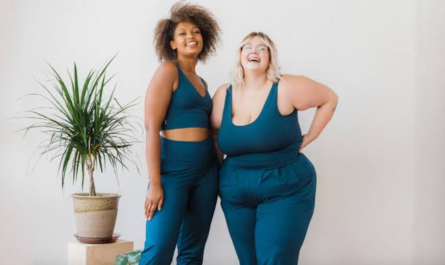
Plus-size fashion challenged the assumption that style belonged to smaller bodies.
Gender-fluid fashion challenged rigid clothing categories.
Modest fashion expanded the industry’s understanding of who could participate in contemporary style.
Adaptive fashion now challenges another assumption:
That fashionable bodies must be able-bodied bodies.
The cultural impact may ultimately extend beyond the garments themselves.
A child who sees a disabled model in a campaign learns something.
A designer who studies adaptive construction learns something.
A retailer who installs accessible fitting rooms learns something.
A non-disabled consumer who sees adaptive clothing normalized learns something.
Representation can change the boundaries of what society considers ordinary.
But Inclusion Must Avoid Turning Disability Into Inspiration
There is an important ethical distinction here.
Disabled people should not have to perform extraordinary resilience to earn cultural attention.
Fashion media should be careful about framing every disabled model as “inspiring” simply for participating.
That can unintentionally turn ordinary life into spectacle.
A more mature approach treats disabled people as professionals, consumers, designers, creators and citizens.
Their presence does not need a sentimental explanation.
They are there because they belong there.
Adaptive fashion becomes most powerful when disability is no longer treated as an emotional marketing device.
The Economic Argument Matters Too—But It Should Not Replace the Rights Argument
There is a strong commercial case for adaptive fashion.
Mainstream brands increasingly recognize that people with disabilities represent a substantial and historically underserved consumer population. Industry reporting has highlighted the commercial potential of adaptive apparel and the growing participation of major retailers.
That matters.
Markets can accelerate innovation.
Competition can improve products.
Investment can expand availability.
But economic value should not be the only reason accessibility matters.
If inclusion is justified solely because disabled consumers represent a profitable market, then inclusion becomes vulnerable whenever a particular initiative does not immediately generate strong returns.
Human rights provides a stronger foundation.
A person does not become worthy of accessibility because they are commercially attractive.
They are worthy of equal participation because they are human.
The commercial argument can support the rights argument.
It should not replace it.
What a Truly Inclusive Fashion Future Would Look Like
The next phase of adaptive fashion should be measured by more than the number of brands offering adaptive products.
Progress could look like:
Fashion schools teaching adaptive and universal design as part of mainstream curricula.
Disabled designers being hired not only as consultants but as creative decision-makers.
Brands testing products with diverse disabled consumers before launch.
Retail spaces offering genuinely accessible fitting environments.
E-commerce platforms making adaptive shopping easier to navigate.
Traditional and cultural garments being adapted without losing their identity.
Adaptive clothing becoming available at multiple price points.
Advertising showing disabled people in ordinary fashion contexts rather than only awareness campaigns.
Governments and institutions recognizing accessibility as part of broader participation policies.
And perhaps most importantly, consumers no longer having to choose between function and identity.
The Most Important Shift Is From Accommodation to Belonging
Accommodation is valuable.
But it can still imply that the mainstream is somewhere else.
Someone is accommodated into an existing system.
Belonging is different.
Belonging means the system was designed with the possibility of your presence in mind.
That is the deeper promise of adaptive fashion.
It is not simply about making a zipper easier to use.
It is about asking why the zipper was considered the default in the first place.
It is not simply about changing a trouser cut.
It is about questioning which body the original pattern assumed.
It is not simply about adding a disabled model to an advertisement.
It is about changing who the fashion industry imagines when it creates the next collection.
A Human Rights Conversation, One Garment at a Time
Adaptive fashion will probably never solve every barrier faced by people with disabilities.
Clothing cannot fix inaccessible transportation, discrimination in employment, inadequate social protection, inaccessible buildings or unequal healthcare.
Nor should fashion be romanticized as a substitute for policy.
But clothing occupies a unique position in daily life.
We wear it to school.
We wear it to work.
We wear it to weddings.
We wear it to religious gatherings.
We wear it on dates.
We wear it when we meet friends.
We wear it when we introduce ourselves to strangers.
We wear it when we want to disappear.
We wear it when we want to be noticed.
Because clothing accompanies people through so many forms of participation, the ability to choose and use it can intersect with autonomy, dignity and belonging.
That is why the adaptive-fashion movement deserves to be understood as more than a trend.
The most meaningful future is not one where adaptive clothing exists in a hidden corner of the internet labeled “special needs.”
It is one where accessibility becomes ordinary enough that people can find what works for them without having to explain why their existence requires an exception.
Fashion has always reflected society.
Now it has an opportunity to help redesign society’s assumptions about whose bodies belong in the picture.
The ultimate goal is not simply a larger adaptive-fashion market.
It is a world in which accessibility is understood as part of participation, personal style is recognized as part of dignity, and disabled people are no longer asked to choose between being accommodated and being themselves.
When a garment allows someone to dress independently, express their culture, enter a workplace confidently, attend a celebration comfortably or simply decide what they want to wear without unnecessary barriers, the garment is doing more than covering a body.
It is helping remove a barrier between a person and the life they want to live.
And perhaps that is where adaptive fashion’s most important cultural transformation begins: not by making disability fashionable, but by making inclusion part of what fashion has always claimed to be—an expression of who gets to belong.
Sources: World Health Organization, United Nations, Office of the United Nations High Commissioner for Human Rights, Vogue, Harvard Business Review, TIME, Runway of Dreams, Council of Fashion Designers of America, Wiley, Taylor & Francis, University of Nairobi, Disability News Africa, Advances in Consumer Research