 by
by Introduction: A New Center of Beauty Is Emerging
For decades, global beauty standards were largely exported from a narrow set of cultural hubs—Parisian minimalism, Hollywood glamour, and later, South Korean “glass skin” aesthetics. These centers didn’t just influence makeup trends; they shaped how beauty itself was defined: what was considered “flawless,” “natural,” “bold,” or “elevated.” But over the last decade, a quiet yet powerful shift has been unfolding. The Middle East—long a producer of rich cosmetic traditions, artisanal kohl practices, henna artistry, and ceremonial beauty rituals—has re-entered the global beauty conversation not as an “inspiration source,” but as a trend-setting force in its own right.
At the forefront of this transformation are Middle Eastern beauty influencers who have redefined how makeup is worn, taught, and consumed across platforms like Instagram, YouTube, and TikTok. Their influence is not simply aesthetic; it is structural. It changes how brands formulate products, how global consumers understand contouring, how modest fashion integrates beauty, and how representation reshapes identity in digital spaces.
What makes this shift particularly significant is that it challenges the historical direction of beauty influence. Instead of Western brands exporting standards outward, we are now witnessing a multi-directional beauty ecosystem where Arab, South Asian, and diasporic creators are actively reshaping global norms.
This article explores how Middle Eastern beauty influencers are not just participating in beauty culture—but redefining it through technique, identity, commerce, and cultural storytelling.
The Rise of Middle Eastern Beauty Ecosystems
To understand the influence of Middle Eastern beauty creators, it is important to recognize that this is not a sudden emergence but the digital amplification of a long-standing cultural tradition.
The region has historically placed high cultural value on beauty practices that are both expressive and ritualistic. Kohl eyeliner, for example, has been used for centuries not only as adornment but also as symbolic protection and cultural identity marker. Similarly, henna artistry has functioned as a form of celebratory body expression across weddings, festivals, and rites of passage.
What social media did was translate these deeply rooted traditions into global visual languages.
The rise of high-speed internet penetration in Gulf countries, alongside strong luxury consumption markets in cities like Dubai, Riyadh, and Kuwait City, created fertile ground for beauty content creation. Unlike Western beauty influencer culture that initially grew from “DIY authenticity” narratives, Middle Eastern beauty content evolved within a hybrid space: high-glam production quality combined with culturally embedded aesthetics.
Platforms such as Instagram became especially powerful in the region due to their visual-first nature. Makeup tutorials were not just instructional—they were aspirational, cinematic, and often intertwined with fashion, lifestyle, and identity.
This ecosystem gave rise to influencers who were not only content creators but also brand builders, entrepreneurs, and cultural translators.
Globalization of Contour Culture
One of the most significant contributions to global beauty culture from the Middle Eastern influencer space has been the popularization of advanced contouring and high-definition glam techniques.
While contouring existed in professional makeup artistry long before social media, it was often confined to editorial shoots or stage makeup. Through tutorial-driven content, these techniques became accessible to everyday consumers.
What made this shift culturally significant was not just the technique itself, but its reframing of facial structure as something sculptable, customizable, and expressive. For many global users, this introduced a more dramatic aesthetic vocabulary than the previously dominant Western “no-makeup makeup” trend.
At the same time, Middle Eastern glam content helped reposition bold makeup styles as aspirational rather than excessive. The emphasis on strong brows, defined eyes, and high-definition base makeup challenged the assumption that minimalism is inherently more “natural” or “refined.”
In doing so, it created a parallel beauty narrative: one where intensity is not excess, but artistry.
Hijabi Beauty and the Expansion of Representation
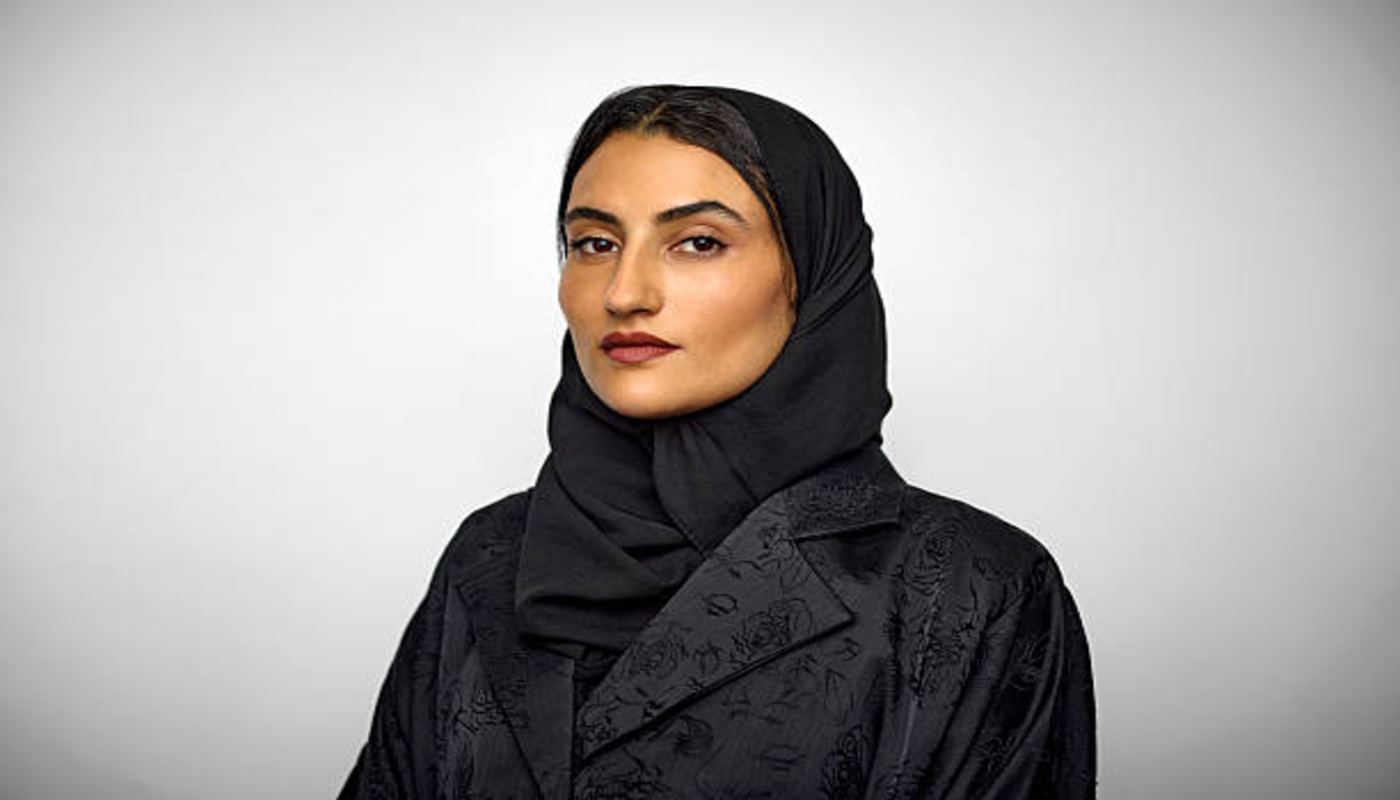
One of the most profound cultural shifts driven by Middle Eastern and Muslim influencers is the normalization of hijabi beauty representation in mainstream beauty spaces.
Hijabi beauty creators have played a pivotal role in expanding how beauty content is framed in Western-dominated platforms. By integrating hijab styling with makeup tutorials, skincare routines, and fashion content, they helped challenge the assumption that visibility in beauty culture requires conformity to a single aesthetic or dress code.
This representation is not simply symbolic. It has direct commercial implications. Many global brands, which historically underrepresented hijabi models in campaigns, began rethinking inclusivity strategies in response to digital demand and influencer visibility.
The presence of hijabi beauty creators also redefined the concept of “face framing.” Makeup tutorials began to focus more heavily on eye makeup, brow shaping, and skin finish—areas that remain visible under head coverings. This shift influenced product marketing globally, increasing demand for long-wear eye products, smudge-proof formulations, and brow-centric beauty tools.
More importantly, it expanded emotional representation. For many viewers, seeing hijabi influencers present glamorous, confident, and professional beauty content helped dismantle the idea that modesty and self-expression are mutually exclusive.
Instagram Glamour and the Arab Aesthetic Language
The Instagram era amplified a distinct visual style often associated with Middle Eastern beauty culture: high-definition glam, sculpted features, bold lashes, and luminous skin.
Influencers across the region helped popularize this aesthetic across Arabic-speaking audiences and beyond.
This style emphasizes precision, symmetry, and transformation-based artistry. It reflects a broader regional preference for makeup as performance and presentation—where the process of transformation is as important as the final look.
At the same time, a newer generation of digital creators blends beauty content with lifestyle storytelling, humor, and personal narrative. This hybrid format resonates strongly with Gen Z audiences, who increasingly expect authenticity layered with aspiration.
What distinguishes this aesthetic ecosystem is its refusal to conform to a single “clean beauty” narrative. Instead, it embraces contrast: matte and glow, structure and softness, minimal base with dramatic eyes.
This duality has influenced global trends, particularly in contour palettes, high-pigment eyeshadows, and lash-focused products.
Bridging Luxury and Everyday Beauty
Middle Eastern beauty influencers also occupy a unique position in the global beauty economy: they operate at the intersection of luxury branding and everyday accessibility.
Some creators have been instrumental in positioning beauty as both aspirational and attainable.
Their storytelling around fragrance, for instance, highlights how scent culture in the Middle East—long tied to hospitality, memory, and identity—is being translated into global luxury markets. Fragrance content often emphasizes emotional connection rather than purely aesthetic appeal, aligning with a broader regional understanding of beauty as multisensory experience.
This bridging of luxury and accessibility has also influenced how global consumers engage with beauty products. Instead of viewing makeup solely as corrective or decorative, it is increasingly framed as experiential and identity-driven.
TikTok, Short-Form Beauty, and the Acceleration of Influence
The rise of TikTok has accelerated the global visibility of Middle Eastern beauty techniques. Short-form video content rewards immediacy, transformation, and visual contrast—all elements strongly present in Middle Eastern glam traditions.
Techniques such as bold under-eye highlighting, exaggerated cut creases, and dramatic lip contouring have found renewed popularity through viral tutorials. Unlike earlier YouTube-era beauty content, TikTok compresses transformation into seconds, making dramatic makeup styles more appealing and shareable.
This rapid diffusion raises important questions about cultural attribution, especially in beauty spaces where trends are often rebranded without acknowledgment of origin.
Cultural Identity, Modesty, and Digital Expression
One of the most nuanced aspects of Middle Eastern beauty influence lies in its negotiation of identity, modesty, and visibility.
Unlike many Western beauty narratives that center exposure and self-display, Middle Eastern beauty content often operates within layered cultural frameworks. These include considerations of modest fashion, familial identity, and social perception, all of which influence how beauty is performed and shared.
Rather than limiting expression, this complexity has produced highly innovative visual languages. Eye makeup artistry, for instance, has evolved into a central expressive medium due to its prominence in hijabi styling. Similarly, facial makeup techniques often emphasize balance, symmetry, and definition rather than minimal correction.
This has expanded global understanding of beauty as culturally relative rather than universal.
Psychological Impact on Global Beauty Consumers
The global diffusion of Middle Eastern beauty aesthetics has had a complex psychological impact on audiences.
On one hand, it has broadened representation, allowing consumers to see beauty beyond Eurocentric frameworks. It has also validated boldness, structure, and transformation as legitimate forms of self-expression.
On the other hand, the high-glam aesthetic—when consumed without cultural context—can create pressure around perfectionism. The emphasis on sculpted features and flawless finish may reinforce aspirational beauty standards that feel difficult to achieve in everyday life.
This duality reflects a broader truth about social media beauty culture: democratization and pressure often coexist.
What is important, however, is that Middle Eastern beauty influencers have expanded the available vocabulary of beauty. They have not replaced one standard with another; they have multiplied possibilities.
Critiques and the Question of Global Homogenization
As Middle Eastern beauty aesthetics become more globally visible, critiques have emerged around homogenization and trend flattening.
One concern is that distinctive regional styles risk being absorbed into a global “Instagram glam” template, losing cultural specificity in the process. Another is that algorithm-driven platforms tend to amplify the most visually intense content, which may not fully represent the diversity of beauty practices within the region.
There is also an ongoing conversation about how global brands adopt Middle Eastern-inspired techniques without always acknowledging their cultural origins.
These critiques are not arguments against influence—they are calls for contextual awareness.
The Future of Middle Eastern Influence in Global Beauty
Looking forward, the influence of Middle Eastern beauty creators is likely to deepen rather than diminish. Several trends suggest continued expansion:
- Increased global demand for high-pigment, long-wear formulations
- Growth of fragrance as a storytelling-driven beauty category
- Continued blending of modest fashion and beauty content
- Expansion of founder-led beauty brands with cultural narratives
- Greater cross-regional collaborations between creators and global brands
Most importantly, the future of beauty is becoming increasingly decentralized. No single region dominates the conversation in the way it once did.
Instead, beauty culture is evolving into a network of interconnected aesthetics—where Middle Eastern glam sits alongside K-beauty minimalism, Western editorial styles, and African beauty innovation.
Expanding the Lens: Algorithmic Visibility and the Politics of Aesthetic Virality
One of the most overlooked forces behind the global rise of Middle Eastern beauty influence is not just creativity, but algorithmic visibility. Social media platforms do not distribute content evenly; they amplify what performs visually in the shortest time frame. In this system, Middle Eastern glam—defined by sharp contouring, high contrast eyes, and dramatic transformation—naturally aligns with what algorithms reward: instant “before-and-after” clarity, strong visual payoff, and high replay value. This has allowed creators from the region to gain global traction even when their content is not explicitly targeting Western audiences. However, this visibility comes with a paradox. While their aesthetics circulate widely, the cultural context behind them is often flattened or stripped away. A technique rooted in regional traditions or lived beauty practices can quickly become a “global trend” without attribution. This raises a deeper structural question: when algorithms prioritize aesthetic intensity over cultural explanation, who truly owns a trend? The result is a beauty economy where Middle Eastern creators are simultaneously hyper-visible and under-contextualized. Their influence is undeniable, yet frequently rebranded through a global lens that favors universality over specificity. Understanding this dynamic is essential to appreciating how digital platforms don’t just reflect beauty trends—they actively shape what beauty becomes recognizable as global.
The Emotional Grammar of Glam: Why Transformation-Based Beauty Resonates Globally
Middle Eastern beauty influence also resonates deeply because it speaks to an emotional grammar of transformation. Unlike minimal beauty philosophies that emphasize subtle enhancement, many Middle Eastern glam traditions center visible change—the idea that makeup is not merely correction, but metamorphosis. This resonates strongly in a global cultural moment where identity itself feels fluid, performative, and digitally constructed. For many audiences, especially younger users navigating social media identity formation, transformation-based makeup offers a sense of control and reinvention. It becomes a visual language for expressing different versions of the self: bold, soft, formal, celebratory, or cinematic. This emotional versatility is a key reason why contour-heavy and eye-focused techniques have gone viral beyond the region. Yet this is not simply about aesthetics; it reflects a deeper cultural alignment with storytelling through appearance. In many Middle Eastern beauty traditions, makeup is tied to occasions, gatherings, and social visibility, where looking “done” is not excess but respect for presence and celebration. When these practices enter global platforms, they challenge dominant Western narratives that often frame heavy makeup as artificial or performative in a negative sense. Instead, they offer an alternative interpretation: that transformation is not concealment, but expression. This reframing has quietly reshaped how global audiences emotionally relate to makeup itself.
Beauty as Cultural Translation: From Regional Practice to Global Commodity
As Middle Eastern beauty aesthetics move through global markets, they undergo a process of translation—one that is both creative and commercially driven. Influencers, brands, and content platforms act as intermediaries between cultural practice and consumer product. Techniques that originated in specific cultural contexts are reinterpreted into universal tutorials, product lines, and marketing campaigns. This translation enables global accessibility, but it also introduces tension. On one hand, it allows broader audiences to engage with techniques they might otherwise never encounter, expanding the vocabulary of beauty. On the other hand, it risks detaching those techniques from their cultural narratives, turning them into stylistic “looks” rather than lived practices. For example, eye-focused makeup styles rooted in modest fashion contexts are often rebranded simply as “bold eye trends,” disconnected from the realities that shaped their evolution. Similarly, fragrance traditions tied to memory, hospitality, and ritual become luxury commodities marketed primarily through aspirational imagery. This process is not inherently negative—it is how global beauty economies function—but it highlights the importance of attribution and context. Without cultural grounding, influence can become invisible even as it spreads widely. Middle Eastern beauty creators occupy a unique position within this system: they are both originators and translators, constantly negotiating how much of the story remains intact as it scales.
The Future of Global Beauty: Toward a Multi-Center Aesthetic World
Looking ahead, the influence of Middle Eastern beauty creators signals a broader restructuring of global beauty power. Instead of a single dominant center dictating trends, we are moving toward a multi-centered aesthetic world where influence circulates through interconnected cultural nodes. In this landscape, Middle Eastern glam exists alongside K-beauty innovation, African skincare traditions, Latin American color storytelling, and Western editorial experimentation. What distinguishes the Middle Eastern contribution is its emphasis on high-impact visual storytelling and transformation-based artistry, which continues to shape global product development and content strategy. However, the future will likely depend on how well the industry manages cultural specificity within global scalability. As brands continue to adopt Middle Eastern-inspired techniques, there will be increasing pressure to move beyond surface-level inspiration toward meaningful collaboration and attribution. At the same time, audiences are becoming more culturally literate, increasingly able to recognize when aesthetics are borrowed without context. This awareness may push the beauty industry toward more transparent storytelling and crediting practices. Ultimately, the rise of Middle Eastern beauty influence is not just about makeup trends—it is part of a larger cultural rebalancing. It suggests a future where beauty is not exported from a single authority, but continuously co-created across regions, identities, and digital communities, reshaping what it means to define global beauty in the first place.
Conclusion: A Broader Definition of Beauty Is Taking Shape
The rise of Middle Eastern beauty influencers marks more than a trend cycle. It represents a structural shift in how beauty is created, shared, and understood globally.
By introducing bold techniques, redefining representation, and merging cultural tradition with digital innovation, these creators have expanded the emotional and visual vocabulary of makeup itself.
More importantly, they have challenged the idea that beauty must be singular, minimal, or universally defined. Instead, they have demonstrated that beauty can be layered—cultural, expressive, luxurious, modest, bold, and deeply personal all at once.
In a global landscape increasingly shaped by digital platforms, Middle Eastern beauty influence is not just reshaping makeup trends. It is reshaping how people see themselves in the mirror.
Sources:
Vogue, BBC, Harper’s Bazaar, Allure, Forbes, Business of Fashion, CNN Style, The National News