 by
by Introduction: When the Runway Stops Being a Single-Sized Fantasy
There was a time when runway fashion functioned like a closed loop of aspiration—beautiful, elevated, and almost untouchable. The models walking those stages were not just presenting clothes; they were presenting an idea of who was allowed to be seen as beautiful. For decades, that idea was narrow: tall, extremely thin, and shaped by rigid industry standards that left little room for variation.
But something has shifted in the global fashion imagination. The runway is no longer a singular narrative. It is slowly becoming a conversation. And at the center of that shift is a growing movement toward body inclusivity—an approach that challenges the long-standing exclusivity of fashion imagery by expanding who gets to be visible on some of the world’s most influential stages.
For teenagers growing up in an era where identity is shaped as much by social media as by real-life environments, this shift is not just aesthetic—it is psychological. Adolescence is a period where self-esteem is especially sensitive to external validation. What teens see as “normal,” “beautiful,” or “acceptable” can quietly influence how they see themselves.
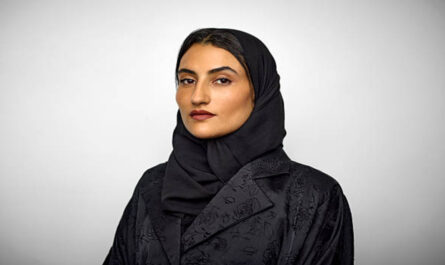
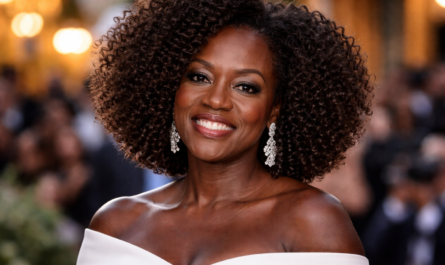
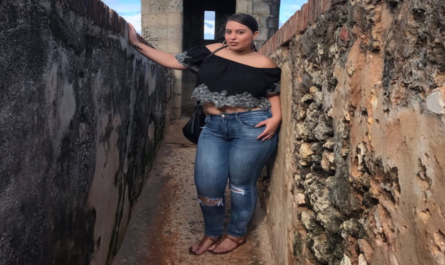
So when body-inclusive runways feature diverse sizes, shapes, abilities, skin tones, and gender expressions, they are not just reshaping fashion. They are reshaping emotional reference points. They are quietly asking a powerful question: What if beauty was never meant to look like only one thing?
This article explores how body-inclusive runways influence teen self-esteem across cultures, media ecosystems, and psychological development—revealing both the progress made and the complexities that remain.
The Traditional Runway and the Psychology of “Ideal Beauty”
To understand the impact of body-inclusive runways, we must first understand what they are responding to.
Historically, fashion runways have functioned as gatekeepers of beauty ideals. For decades, designers and casting directors favored extremely uniform body standards. This created a visual language that became globally exported through magazines, television broadcasts, and later digital platforms.
For teenagers, repeated exposure to these narrow representations can shape what psychologists refer to as “appearance-based social comparison.” In simple terms, young people begin to measure their own bodies against a curated ideal that is rarely representative of real-world diversity.
This is not merely about fashion preference. It becomes internalized. Teen self-esteem is particularly vulnerable to comparison-based thinking because identity formation is still in progress. The runway, therefore, becomes more than entertainment—it becomes a silent teacher of value.
In many cultures, this influence is amplified by local beauty norms layered on top of global media. In South Asia, East Asia, Europe, and the Americas, teens may experience different cultural pressures, but the underlying mechanism is similar: visibility equals validation.
When only one body type is consistently centered, everything else becomes “othered.” And what is “othered” often becomes emotionally marginalized.
The Emergence of Body-Inclusive Runways: A Cultural Turning Point
The rise of body-inclusive fashion is not a single event—it is a cultural accumulation of activism, representation advocacy, and shifting consumer expectations.
One of the most visible turning points came through campaigns and runway appearances that began expanding size representation and embracing diverse body types as part of mainstream fashion storytelling.
Brands like Savage X Fenty, led by Rihanna, became widely recognized for showcasing models of different sizes, gender identities, and backgrounds in highly visible runway productions. Unlike traditional shows that emphasized uniformity, these presentations leaned into celebration and multiplicity.
Similarly, models like Ashley Graham and Paloma Elsesser have become prominent figures in high-fashion spaces, appearing in major runway shows and global campaigns that challenge conventional casting norms. Their presence is not symbolic alone—it is structural. It signals that fashion audiences are willing to engage with broader definitions of beauty.
For teenagers watching these moments—whether on streaming platforms, Instagram clips, or TikTok edits—the psychological impact is layered. Representation becomes not just inspirational but corrective. It begins to counter the long-standing narrative that only one type of body is “worthy” of fashion visibility.
Teen Self-Esteem: A Developmental Lens
Teen self-esteem is not static. It is constructed through a constant negotiation between internal identity and external feedback.
During adolescence, the brain is particularly sensitive to peer validation and social comparison. This is also the age when individuals begin forming more stable self-concepts around appearance, identity, and belonging.
In this context, media plays a significant role. The images teens consume are not passive—they are absorbed, interpreted, and often emotionally coded. When media repeatedly presents narrow beauty standards, teens who do not see themselves reflected may experience feelings of exclusion or inadequacy.
Body-inclusive runways disrupt this cycle in meaningful ways. By broadening representation, they introduce variability into what teens perceive as “normal.” This does not automatically eliminate insecurity, but it expands the visual vocabulary of beauty.
Psychologically, this is significant. Exposure to diverse body types in aspirational contexts can reduce the intensity of upward comparison. When teens see bodies similar to their own on high-status platforms like runways, it can subtly reframe self-perception from “I am outside beauty standards” to “I am part of beauty’s spectrum.”
Representation vs. Tokenism: The Nuanced Reality
While body-inclusive runways are often celebrated, their influence on teen self-esteem is not uniformly positive or simple. One of the most important cultural critiques involves the difference between representation and tokenism.
Representation occurs when diversity is meaningfully integrated into systems of visibility. Tokenism occurs when inclusion is symbolic but not structural—when a few diverse models are included without broader systemic change.
Teen audiences are highly perceptive to authenticity, especially in the digital age. If body diversity appears staged or inconsistent, it may not have the intended positive psychological effect. In some cases, it can even reinforce feelings of isolation by highlighting difference rather than normalizing it.
This is where consistency matters. When inclusive casting becomes routine rather than exceptional, it begins to reshape baseline expectations. Teens stop perceiving diverse bodies as “special cases” and begin perceiving them as standard participants in fashion culture.
The psychological difference is subtle but important: normalization reduces emotional friction. Tokenization increases it.
Social Media Amplification: The Runway No Longer Ends at the Stage
In previous decades, runway shows were limited to fashion editors, buyers, and industry insiders. Today, they are global digital events.
Clips from runway shows circulate on TikTok, Instagram Reels, YouTube Shorts, and fashion commentary pages within minutes. This amplification means that body-inclusive messaging reaches teens directly and repeatedly.
However, social media also introduces complexity. Algorithms do not always prioritize diversity. A teen might see a body-inclusive runway clip followed immediately by highly filtered, edited, or idealized influencer content.
This contrast can create cognitive dissonance. On one hand, teens are exposed to diverse bodies in aspirational contexts. On the other hand, they are simultaneously exposed to heavily curated personal feeds that may still reflect narrow beauty ideals.
The result is not confusion, but negotiation. Teens learn to interpret beauty as fragmented rather than singular. This can be empowering when diversity is consistent—but destabilizing when inclusivity is inconsistent.
Body-inclusive runways, therefore, do not operate in isolation. Their influence depends heavily on the broader media environment in which they are consumed.
Cross-Cultural Perspectives: Beauty Beyond Western Fashion Centers
Body inclusivity is not experienced uniformly across the world. Cultural context plays a major role in how runway representation is interpreted.
In Western fashion capitals like New York, London, Milan, and Paris, body-inclusive runways are often framed as progressive industry reform. They challenge long-standing norms within high fashion systems.
In South Asian, Middle Eastern, and East Asian contexts, beauty standards are influenced by additional cultural layers—family expectations, traditional aesthetics, media imports, and localized advertising norms. For teenagers in these regions, exposure to inclusive runways can be both liberating and culturally complex.
For example, a teen in Karachi or Mumbai may see inclusive runway representation alongside local beauty messaging that still emphasizes narrow ideals. This creates a dual reference system: global inclusivity versus local tradition.
In such cases, body-inclusive runways can act as “global counter-narratives.” They provide alternative possibilities that may not yet be fully reflected in local media industries.
However, the impact is not automatic. Cultural acceptance evolves gradually, and teens often navigate tension between global representation and local expectations.
The Emotional Psychology of Seeing Oneself Reflected
One of the most powerful aspects of body-inclusive runways is psychological mirroring.
When teens see models who resemble them in size, shape, or physical diversity walking confidently in high-fashion spaces, it can trigger a shift in self-perception. This phenomenon is linked to what psychologists describe as “self-referential processing”—the brain’s tendency to assign greater emotional significance to familiar or relatable stimuli.
Representation does not simply communicate “you are included.” It communicates “you are visible in spaces of prestige.”
This distinction matters deeply for self-esteem. Visibility in aspirational contexts can counteract internalized stigma, especially for teens who have experienced exclusion or body-based teasing.
However, the emotional impact is not uniform. For some teens, representation can be empowering. For others, especially those who have internalized strong negative beliefs about their bodies, it may initially trigger discomfort before acceptance develops.
This is why representation alone is not a solution—but it is a foundation.
Fashion Industry Responsibility: Beyond Aesthetic Inclusion
The rise of body-inclusive runways has also placed responsibility on the fashion industry to ensure that inclusion is not superficial.
True impact on teen self-esteem requires more than casting diversity. It requires:
- Consistent representation across seasons
- Diversity in leadership roles, not just models
- Inclusive sizing in retail, not just runway presentation
- Avoidance of framing diversity as “special collections” only
When inclusion is limited to runway moments but absent from everyday consumer experience, teens may perceive a disconnect. This can weaken the psychological credibility of representation.
On the other hand, when inclusivity extends into design, marketing, and brand identity, it reinforces authenticity. Teens are more likely to internalize inclusive messaging when it appears stable rather than performative.
The Role of Emotional Education in Fashion Consumption
An often-overlooked factor in teen self-esteem is media literacy—specifically emotional literacy around fashion consumption.
Body-inclusive runways can have greater positive impact when teens are equipped to interpret media critically. This includes understanding:
- The difference between edited and unedited imagery
- The commercial motivations behind fashion campaigns
- The diversity of real human bodies outside curated media
Without this context, even inclusive representation can be misinterpreted or overshadowed by competing media narratives.
Educational environments, parents, and digital platforms all play a role in shaping this literacy. When teens are able to critically engage with fashion imagery, they are less likely to internalize harmful comparisons and more likely to appreciate diversity as normal rather than exceptional.
Limitations and Ongoing Challenges
Despite progress, body-inclusive runways face ongoing challenges:
- Inconsistent representation across luxury fashion houses
- Limited inclusion of very diverse body types in some regions
- Commercial pressures that still favor traditional aesthetics in certain markets
- Risk of performative inclusivity during trend cycles
These limitations matter because teen self-esteem is highly sensitive to consistency. Inconsistent messaging can dilute the psychological impact of representation.
Additionally, inclusion must continue to expand beyond size diversity to include disability representation, age diversity, and gender diversity in more meaningful ways.
Expanding the Conversation: Digital Comparison, Identity Formation, and the “Afterimage” of the Runway
One of the most overlooked dimensions of body-inclusive runways is how their impact continues long after the show ends. For teenagers, the runway is rarely experienced as a single, contained event—it becomes an “afterimage” that circulates through screenshots, edits, commentary videos, and algorithm-driven feeds. This matters because teen identity formation today is deeply intertwined with fragmented media exposure rather than linear viewing. A body-inclusive moment on a runway might appear empowering in isolation, but it is immediately placed into a broader digital ecosystem where it competes with highly filtered influencer aesthetics, beauty ads, and trend-driven content. The result is not simply exposure to diversity, but exposure to contradiction. Psychologically, this can create a kind of ongoing internal negotiation: what is “real” beauty versus what is “performed” beauty? For teens still developing stable self-concept frameworks, this negotiation becomes part of everyday identity processing. However, the presence of inclusive runway imagery can still function as an anchoring reference point. Even if it does not dominate the feed, it introduces cognitive flexibility—the idea that beauty is not a fixed template. Over time, repeated exposure to such variability can reduce the intensity of rigid self-judgment, allowing teens to interpret their own appearance through a wider, less punitive lens.
Another important layer is how body-inclusive runways subtly reshape the emotional meaning of confidence. Traditional runway culture often projected confidence through uniformity and control—models appearing as polished embodiments of an ideal. In contrast, inclusive runways expand the emotional vocabulary of confidence itself. Confidence is no longer tied exclusively to fitting a narrow physical standard; it becomes associated with presence, movement, authenticity, and self-assurance across diverse bodies. For teenagers, this redefinition is significant because adolescence is often a period where confidence is mistakenly equated with physical conformity. When teens see models of different body types walking with the same authority and visibility, it disrupts the assumption that confidence must be earned through proximity to a single ideal. Instead, confidence is reframed as something embodied and expressive rather than conditional. This shift does not erase insecurity, but it destabilizes the belief that insecurity is evidence of inadequacy. In psychological terms, it introduces alternative scripts for self-worth—scripts that are not dependent on size or shape. Over time, these alternative scripts can become internalized, especially when reinforced through repeated media exposure and peer conversations. The runway, in this sense, becomes not just a display of fashion but a rehearsal space for expanded emotional identities.
Finally, it is important to consider how body-inclusive runways influence teen aspirations beyond appearance, particularly in relation to career imagination and social participation. When representation expands on high-visibility platforms like fashion weeks, it does more than affect how teens see their bodies—it also affects how they see possibility structures in society. Teens who witness diverse models occupying prestigious cultural spaces may begin to associate success, visibility, and professional legitimacy with a broader range of identities. This can have a subtle but meaningful effect on self-esteem, because self-worth during adolescence is often tied not only to appearance but also to perceived future potential. If cultural industries appear more accessible and less exclusionary, teens may feel a stronger sense of belonging in creative, professional, or public-facing fields. However, this influence is not without tension. If inclusivity is perceived as limited or inconsistent, it can also highlight the gap between representation and reality, potentially creating frustration rather than empowerment. Therefore, the psychological impact of inclusive runways depends heavily on continuity across media, industry practice, and everyday social environments. When aligned, these systems can reinforce a powerful message: that visibility is not symbolic, but structural—and that identity, in all its diversity, has a place not just on the runway, but in the world beyond it.
Conclusion: A New Visual Language for a New Generation
Body-inclusive runways represent more than a fashion trend. They represent a shift in cultural storytelling—one that acknowledges that beauty is not singular, static, or exclusive.
For teenagers, this shift is quietly transformative. It does not erase insecurity or comparison, but it expands the emotional and visual framework through which self-worth is understood. It introduces the idea that visibility is not reserved for a narrow category of bodies, but is shared across a spectrum of human variation.
The runway, once a distant and exclusive stage, is slowly becoming a mirror with more reflections. Not perfect, not complete, but evolving.
And for a generation growing up in a visually saturated world, that evolution matters. Because self-esteem is not only built in private thoughts—it is shaped by public images, cultural signals, and repeated affirmations of belonging.
Body-inclusive runways do not just change who walks the stage. They change who feels they were always allowed to imagine themselves there.
Sources:
Vogue, Business of Fashion, BBC Culture, The New York Times, Elle, Harper’s Bazaar, The Guardian, Psychology Today