 by
by Introduction: When Beauty Becomes a Market System
In the 21st century, beauty is no longer just a cultural idea—it is an economic engine. What people find attractive is no longer shaped slowly by cinema, magazines, or regional traditions alone. Instead, it is now produced, distributed, and consumed through platforms that reward visibility, repetition, and engagement.
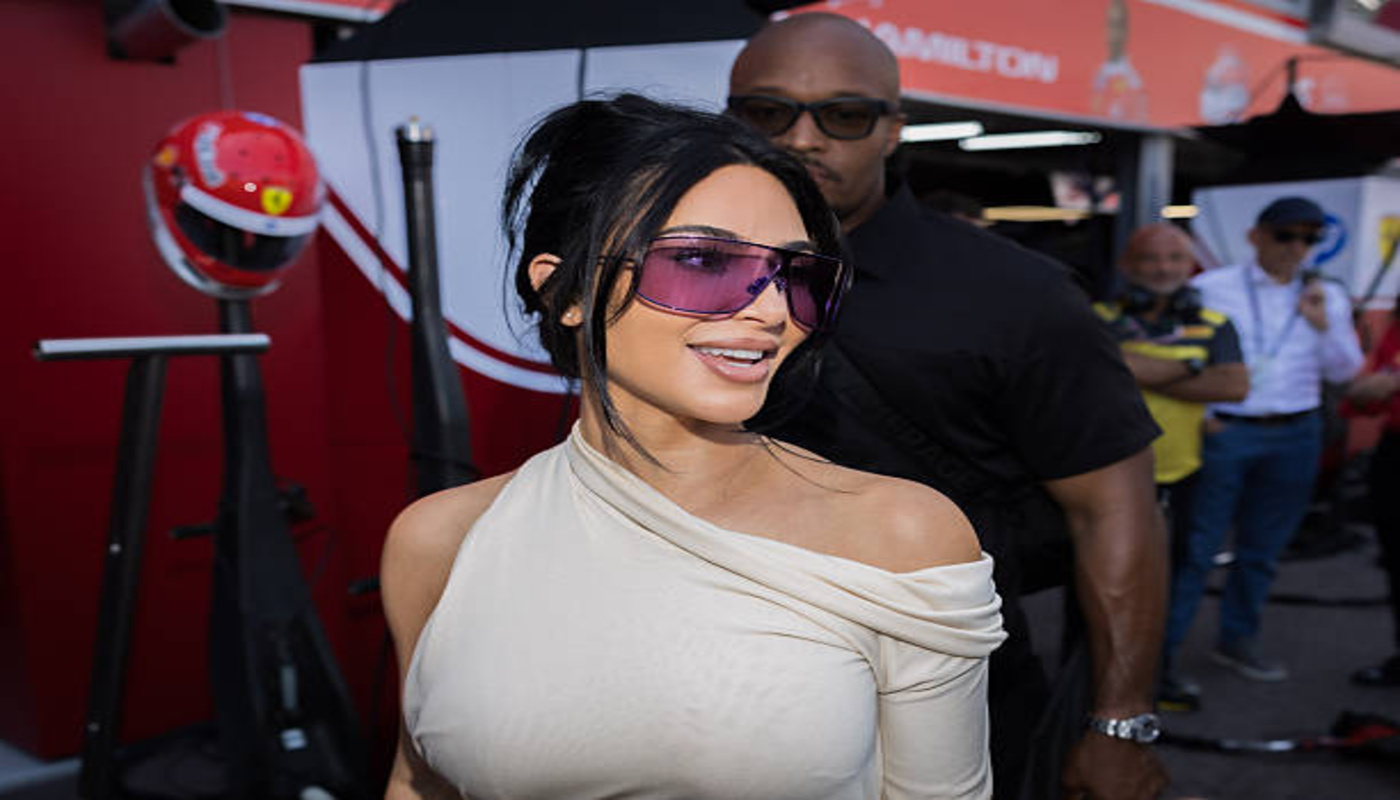
Few public figures embody this transformation more clearly than Kim Kardashian.
Her cultural presence has become inseparable from the evolution of digital beauty economies. Whether admired, criticized, or studied, she represents a turning point in how body trends circulate globally—not as static ideals, but as fast-moving financial systems.
The key question is no longer “what is the ideal body?” but rather:
How do bodies become profitable trends in the attention economy?
This article explores how Kardashian’s influence reflects deeper structural changes in media, capitalism, and digital culture—where aesthetics are not just social preferences but monetized data cycles.
1. From Beauty Standards to Beauty Markets
Historically, beauty standards were slow-moving. In the mid-20th century, film studios, fashion magazines, and advertising agencies controlled the dominant aesthetic narratives. Trends lasted years, sometimes decades. A “look” was stable because media channels were limited.
But digital platforms changed everything.
Now, beauty is not a fixed standard—it is a marketplace of constantly competing aesthetics. Social media does not merely display bodies; it evaluates them in real time through:
- Likes
- Shares
- Saves
- Algorithmic reach
- Engagement velocity
These metrics turn appearance into data. And data becomes economic value.
Kim Kardashian emerged at the exact moment this shift accelerated. Her rise coincided with the transformation of personal branding into a scalable economic model. Unlike traditional celebrities, whose images were controlled by studios, she operated in an environment where the audience itself helped shape visibility.
This created a new kind of beauty economy: one driven not by gatekeepers, but by feedback loops.
2. The Attention Economy and the Monetization of Appearance
The attention economy is built on a simple principle: human focus is limited, and therefore valuable.
In this system, visibility becomes currency. But not all visibility is equal—only attention that can be converted into action (purchases, engagement, subscriptions) has economic power.
Kim Kardashian became central to this shift because her public image consistently operated at the intersection of:
- Entertainment
- Fashion
- Lifestyle marketing
- Social media performance
Her influence demonstrated that a body in the digital age is not just seen—it is activated. Each image is a trigger for consumption behavior, whether direct (buying a product) or indirect (aspirational alignment with a brand identity).
This is where body trends become economic instruments.
Aesthetic preference is no longer passive. It is engineered through repetition, platform amplification, and commercial reinforcement.
3. The Body as a Platform for Commerce
One of the most significant developments in modern beauty economics is the transformation of the body into a distribution channel for commerce.
In traditional advertising, bodies were used to sell products. In influencer culture, bodies are the product ecosystem itself.
This shift changes everything:
- Clothing is no longer just worn—it is content
- Beauty routines are not private—they are monetized tutorials
- Physical appearance becomes brand identity
- Lifestyle becomes a business model
Kim Kardashian’s influence reflects this shift clearly. Her presence across reality television, social media, and fashion entrepreneurship helped normalize the idea that personal aesthetics could be directly monetized.
The body is no longer separate from commerce. It is infrastructure.
4. SKIMS and the Economics of “Fit Diversity”
A key example of this transformation is her shapewear and apparel brand SKIMS.
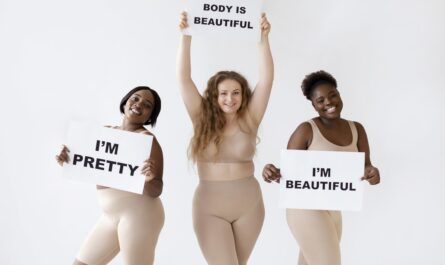
While shapewear existed long before SKIMS, the brand succeeded by reframing the conversation around bodies and clothing. Instead of positioning garments as tools for hiding or correcting, it presented them as tools for fit customization across different body types.
This subtle shift has major economic implications.
1. Expansion of Market Segments
Rather than a single “ideal body,” SKIMS operates across multiple sizing categories. This increases addressable market size significantly.
2. Normalization of Body Variability
Bodies are no longer treated as deviations from a norm—they are variations that require tailored solutions.
3. Continuous Consumption Cycle
Instead of one-time purchases, consumers are encouraged to build evolving wardrobes for different fits, moods, and occasions.
This is where inclusivity intersects with capitalism. Representation becomes both cultural progress and economic expansion strategy.
SKIMS illustrates how body inclusivity can function as a growth model within consumer markets.
5. The Algorithmic Production of Beauty Trends
One of the most important changes in modern culture is that beauty trends are now shaped by algorithms rather than institutions.
Platforms like Instagram and TikTok do not simply reflect culture—they actively shape it by prioritizing content that generates engagement.
This creates a feedback loop:
- Aesthetic gains attention
- Algorithm amplifies it
- Brands respond with products
- Consumers adopt the look
- Trend becomes normalized
- Algorithm reinforces visibility
In this system, influencers like Kim Kardashian are not sole creators of trends—they are high-impact accelerators within a data-driven cycle.
The result is a shift from seasonal fashion cycles to real-time aesthetic evolution.
Trends no longer arrive slowly. They emerge, peak, and decline in compressed digital timeframes.
6. Globalization of Aesthetic Economies
While Kardashian’s influence is often discussed in Western contexts, the underlying system she represents is global.
Across regions like South Asia, East Asia, the Middle East, and Latin America, beauty economies are being reshaped by the same forces:
- Platform-based visibility
- Influencer monetization models
- Fast-paced trend cycles
- Global exposure to digital aesthetics
However, this does not mean beauty standards are becoming identical. Instead, what is globalizing is the structure of influence, not the content of aesthetics.
Local beauty cultures adapt global trends, remix them, and reinterpret them within cultural contexts. The result is hybrid aesthetics shaped by both tradition and digital capitalism.
Kim Kardashian’s influence, in this sense, is less about exporting a single ideal and more about exporting a system of aesthetic circulation.
7. The Psychology of Aspiration in Digital Culture
Aspiration has always driven consumer behavior. What has changed is its intensity and frequency.
In algorithmic environments, users are constantly exposed to curated lifestyles, bodies, and identities that feel both personalized and socially validated.
This creates a psychological condition where aspiration is:
- Continuous rather than occasional
- Personalized rather than general
- Visually intensified rather than abstract
- Reinforced through repetition
Figures like Kim Kardashian function as stable reference points in this system. Her visibility across media platforms creates continuity in an otherwise rapidly shifting aesthetic landscape.
The economic implication is significant: when aspiration becomes constant, consumption becomes habitual.
Desire is no longer episodic. It becomes infrastructural.
8. Beauty Capitalism and the Idea of “Fixability”
Modern beauty economies are increasingly built on the concept of fixability—the belief that appearance can always be optimized.
This includes:
- Skincare systems
- Fashion shaping garments
- Fitness programs
- Digital filters
- Cosmetic enhancements
- Styling techniques
The key idea is not perfection, but continuous improvement.
Kim Kardashian’s influence reflects this broader cultural logic where appearance is treated as adjustable and iterative rather than fixed.
Brands like SKIMS reinforce this by offering products that mediate how bodies appear in clothing and media environments.
The result is a consumer ecosystem built on perpetual optimization rather than final satisfaction.
9. Influencers as Economic Infrastructure
Influencers are often misunderstood as content creators or marketers. In reality, they function as infrastructure within digital economies.
Kim Kardashian represents this shift clearly.
Her influence operates across multiple layers:
- Trend generation
- Product validation
- Cultural normalization
- Aesthetic distribution
- Consumer behavior shaping
In this sense, she is not just participating in beauty trends—she is part of the system that makes those trends economically functional.
Influencers today are embedded within the architecture of digital capitalism. They are not external voices—they are structural components.
10. Contradictions in Inclusive Beauty Economies
One of the most complex aspects of modern body trends is the coexistence of inclusion and commodification.
On one hand, digital culture has expanded representation, allowing a wider range of bodies to be visible in mainstream media.
On the other hand, this visibility is often tied to monetization strategies.
Inclusivity becomes both:
- A cultural shift toward representation
- A business strategy for market expansion
Kim Kardashian’s influence exists within this contradiction. Her role illustrates how representation and capitalism are not opposites—they are often intertwined.
This does not diminish the value of inclusion, but it complicates how we understand it.
11. From Aesthetic Cycles to Data Cycles
The future of body trends is not shaped by designers alone, but by data.
We are moving from:
- Seasonal fashion cycles → Real-time aesthetic cycles
- Editorial gatekeeping → Algorithmic selection
- Static beauty ideals → Dynamic micro-trends
In this environment, trends will become:
- Faster
- More fragmented
- More personalized
- More data-responsive
Influence will also become more distributed. However, early architects of influencer capitalism, like Kim Kardashian, remain culturally significant because they helped establish the systems that now define digital aesthetics.
12. The Rise of “Aesthetic Micro-Economies” in Digital Culture
One of the most significant evolutions in body trend economics is the fragmentation of beauty into what can be described as aesthetic micro-economies. Instead of one dominant beauty standard shaping global culture, digital platforms now sustain hundreds of smaller, overlapping aesthetic niches—each with its own internal logic, audience, and monetization structure. These include minimalist aesthetics, hyper-glam styles, fitness-centric bodies, retro-inspired looks, and hyper-filtered digital identities. What matters is not uniformity but scalability within a niche.
Kim Kardashian’s cultural significance lies in how she helped normalize the idea that aesthetics can be economically segmented. Her influence demonstrated that beauty is not a singular ideal but a portfolio of visual identities that can be packaged and sold. In this environment, each aesthetic micro-category behaves like a mini-market, driven by engagement metrics and brand collaboration opportunities. Influencers no longer compete for a universal standard of beauty—they compete within specialized aesthetic economies.
This shift has deep economic implications. It allows brands to hyper-target consumers while also increasing pressure on individuals to continuously adapt their appearance to match evolving niche expectations. The result is a fragmented but highly efficient beauty marketplace, where identity itself becomes customizable economic data. In this system, body trends are no longer top-down—they are distributed across thousands of algorithmically sustained micro-markets.
13. The Emotional Economy Behind Body Trends
Beyond financial structures, body trends also operate within an emotional economy—one that is often invisible but deeply influential. This economy is built on feelings such as aspiration, insecurity, validation, and belonging. Digital platforms amplify these emotions by continuously exposing users to curated bodies and lifestyles that feel simultaneously familiar and unattainable. The result is an emotional cycle that fuels engagement, which in turn fuels monetization.
Kim Kardashian’s influence plays into this system not through direct messaging alone, but through the emotional architecture of visibility. Her presence in media ecosystems has contributed to normalizing highly curated self-presentation as a standard mode of digital existence. This creates emotional benchmarks where users compare their everyday lives to highly edited, strategically produced images.
From an economic perspective, emotions become predictive tools. Platforms learn what triggers engagement and optimize feeds accordingly. This turns emotional responses into measurable data points, which advertisers and brands use to refine targeting strategies. In this way, feelings are not just reactions—they are inputs into a larger commercial system.
The consequence is a feedback loop where emotional states are continuously shaped by exposure to idealized bodies, and those emotional states then reinforce consumption patterns. Body trends, therefore, are not only visual economies but also emotional infrastructures that sustain digital capitalism.
14. From Celebrity Influence to Platform Dependency
The traditional concept of celebrity influence was once based on cultural authority—actors, musicians, and public figures shaped trends through curated appearances in films, television, and magazines. However, in the current digital environment, influence has shifted from individual authority to platform dependency. What matters now is not only who is visible, but how platforms distribute visibility.
Kim Kardashian’s rise reflects this transition. While she began in traditional media ecosystems, her sustained influence has been amplified by platform logic—where algorithms determine reach, engagement determines relevance, and relevance determines commercial opportunity. In this system, influence is not owned by individuals but co-produced with platforms.
This creates a structural dependency where even the most powerful cultural figures must continuously adapt to algorithmic expectations. Content must remain visually optimized, emotionally engaging, and commercially viable to maintain visibility. The platform becomes the gatekeeper, and influence becomes conditional.
Economically, this shift has democratized access while also intensifying competition. More individuals can participate in beauty economies, but fewer can sustain long-term visibility without adapting to platform logic. Kardashian’s cultural role highlights how even top-tier influence is no longer autonomous—it is negotiated within digital infrastructures that prioritize engagement efficiency over cultural continuity.
15. The Future of Body Trends as Predictive Capital
The next stage in the economics of body trends is likely to be shaped by predictive capital—the use of data analytics, artificial intelligence, and behavioral modeling to forecast aesthetic preferences before they fully emerge. In this system, trends will no longer simply be observed and monetized; they will be anticipated, engineered, and deployed strategically across platforms and industries.
Kim Kardashian’s influence becomes historically important in this context because it represents an early form of human-driven predictive modeling. Her visibility demonstrated how certain aesthetics could consistently generate engagement across multiple platforms and consumer categories. Brands learned to interpret these patterns, gradually moving toward data-driven decision-making in beauty, fashion, and lifestyle marketing.
In a predictive economy, body trends may become increasingly personalized, with algorithms tailoring aesthetic recommendations to individual users based on behavior patterns, demographic data, and emotional responses. This could lead to highly individualized beauty ecosystems where no two consumers experience the same trend cycle.
However, this also raises critical cultural questions. If aesthetics are predicted before they fully form, does creativity become constrained by data? And if beauty is increasingly shaped by algorithmic forecasting, what happens to cultural spontaneity?
Ultimately, the future of body trends will likely exist at the intersection of human influence and machine prediction, where cultural identity is continuously negotiated between algorithmic systems and individual expression.
Conclusion: Bodies in the Age of Economic Visibility
Kim Kardashian’s cultural influence is often framed as celebrity impact or aesthetic trendsetting. But at a deeper level, it reflects a structural transformation in how bodies function within capitalism.
Bodies are no longer just social or cultural expressions. They are:
- Data points
- Market signals
- Branding systems
- Consumption triggers
In this environment, beauty is not simply about appearance—it is about circulation, visibility, and economic conversion.
The most important shift is not that body trends exist, but that they now operate as self-reinforcing economic systems powered by attention, aspiration, and algorithmic feedback.
Understanding this shift is essential for understanding modern culture itself. Because in today’s world, bodies are not just seen—they are priced, processed, and perpetually reimagined within the machinery of digital capitalism.
Sources:
Vogue, The New York Times, The Guardian, Forbes, Business of Fashion, BBC Culture, Time Magazine, Harvard Business Review