 by
by There was a time when intimacy could disappear behind a closed door.
A couple could be deeply affectionate without proving it to an audience. Someone could feel profoundly loved without having photographs to demonstrate it. A relationship could be meaningful without being publicly announced, constantly documented, aesthetically presented, or measured against someone else’s version of romance.
That boundary has become increasingly complicated.
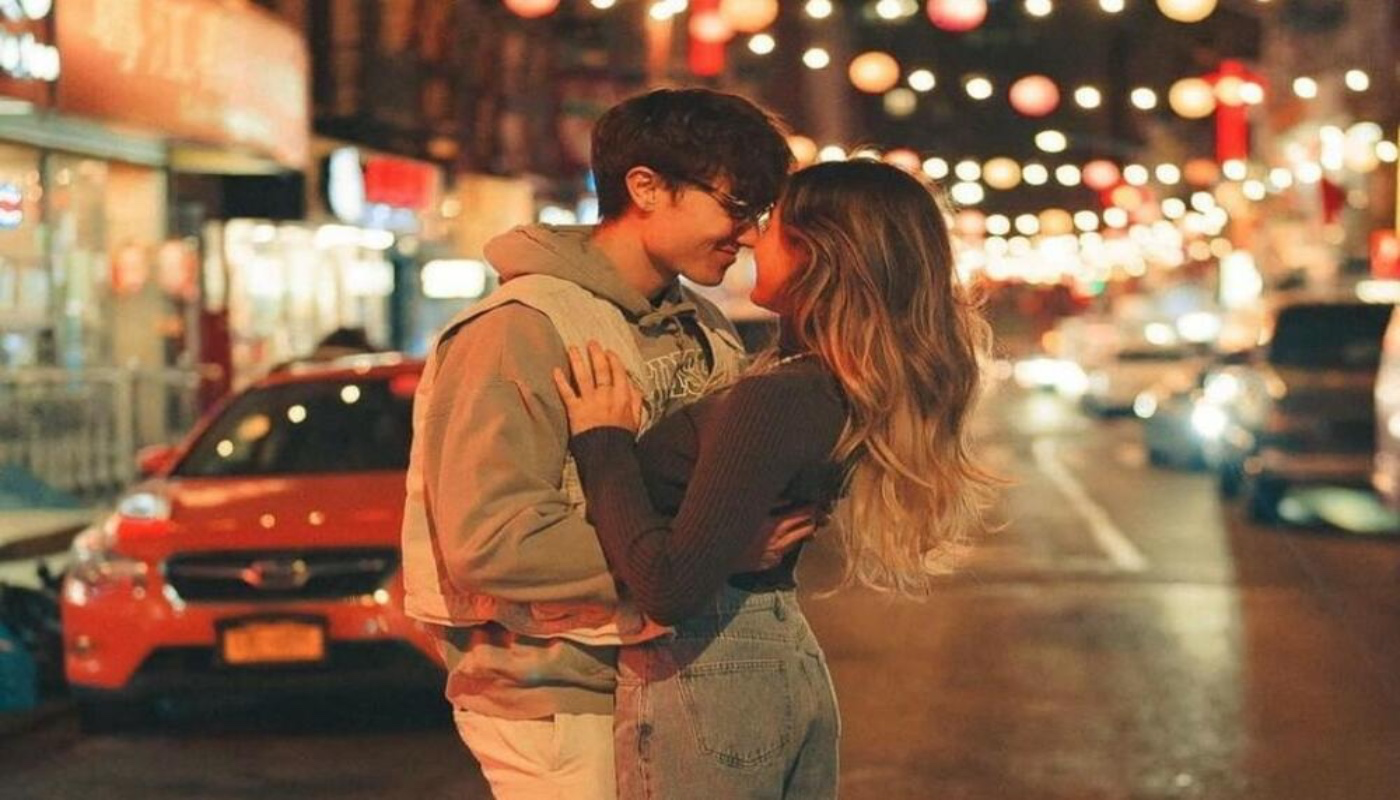
Today, intimacy is often visible. Couples hold hands in photographs, post anniversaries, share gifts, upload holiday pictures, celebrate proposals online, dedicate songs to one another, document date nights and sometimes narrate the smallest details of their relationships to friends, followers and strangers. Even when people do not post themselves, they encounter other people’s relationships through carefully selected images and videos.
The result is a new cultural question: What happens when private feelings begin to be measured against public standards of intimacy?
The answer is not simply that social media makes people insecure. Human beings have always compared themselves with others, and public expressions of affection have always been shaped by culture, religion, class, age, gender and social expectations. What has changed is the scale, frequency and visual intensity of that comparison.
A person may begin asking questions that sound deceptively simple.
Why doesn’t my partner post me?
Why don’t we look like those couples?
Why aren’t our dates more romantic?
Why don’t I receive flowers?
Why isn’t my relationship as physically affectionate?
Why does everyone else seem chosen, desired and celebrated?
And eventually, the most painful question can emerge:
If my relationship doesn’t look like theirs, does that mean I am not worthy of the kind of love they appear to receive?
This is where public intimacy becomes relevant to body inclusivity and self-worth. The issue is not merely romance. It concerns the body, appearance, desirability, visibility, belonging and the social messages people absorb about what a “lovable” person is supposed to look like.
Public intimacy standards can become another form of appearance culture: instead of asking whether our bodies resemble the ideal, we begin asking whether our relationships resemble the ideal.
When Love Becomes Something That Can Be Seen
Public intimacy has always existed.
Couples have traditionally communicated affection through gestures such as walking together, holding hands, exchanging gifts, sitting closely or publicly acknowledging one another. These behaviors can provide reassurance and social recognition.
Research supports the idea that affectionate behavior can matter to relationship wellbeing. A 2025 cross-cultural study involving participants from Indonesia, Nepal and Poland found positive associations between affectionate displays and relationship satisfaction, while also identifying substantial cultural differences in how affection was expressed publicly and privately.
That distinction matters.
Affection itself is not the problem.
Wanting affection is not the problem.
Enjoying romantic photographs is not the problem.
Sharing happiness publicly is not the problem.
The cultural difficulty begins when one particular form of visible intimacy becomes treated as evidence of personal worth.
A photograph of someone receiving flowers can become more than a photograph.
A public proposal can become more than an engagement.
A partner’s affectionate caption can become more than words.
They can become cultural symbols suggesting:
This person is desired.
This person is important.
This person is worth celebrating.
And when someone does not receive those visible signals, they may interpret the absence personally.
The emotional equation becomes:
visible affection = value
and consequently:
lack of visible affection = lack of value.
Real relationships, however, are far more complicated.
The Difference Between Being Loved and Looking Loved
One of the most important distinctions in modern relationship culture is the difference between experiencing intimacy and performing intimacy.
Experiencing intimacy happens inside the relationship.
It may involve listening after a difficult day, remembering someone’s preferences, making tea when they are tired, respecting boundaries, laughing at an inside joke, showing up during an ordinary crisis or simply creating a sense of safety.
Performing intimacy happens in a social environment.
It may involve photographs, public declarations, matching outfits, elaborate dates, anniversary posts, romantic captions or visible physical affection.
Neither category is inherently superior.
Some people genuinely enjoy sharing their relationships. Others prefer privacy. Some couples are affectionate in public and intensely private online. Others rarely display affection publicly while maintaining a deeply connected private relationship.
The danger emerges when society treats performance as a reliable measurement of emotional depth.
A relationship can look extraordinary online and feel ordinary behind the camera.
A relationship can look understated online and feel profoundly intimate in private.
A couple can post every anniversary and still experience conflict.
Another couple can have no social-media presence together and still build a deeply supportive partnership.
The visual evidence is incomplete.
Yet human beings are naturally drawn toward visible evidence because uncertainty is uncomfortable.
When someone cannot directly observe another person’s relationship, they may use photographs and public behavior as clues. Social media intensifies this process by presenting an endless stream of those clues.
The problem is that the clues are curated.
The Couple Aesthetic and the New Romance Ideal
Modern relationship culture increasingly has an aesthetic.
There are “date-night” outfits, engagement photography styles, honeymoon imagery, matching cafés, anniversary dinners, coordinated wardrobes, flowers arranged in particular ways and carefully framed moments designed to communicate romance.
The couple itself can become a visual identity.
This has created opportunities for people who were historically excluded from conventional romantic imagery. Different ethnicities, body sizes, disabilities, gender expressions, ages and relationship structures can become visible in ways that earlier media rarely allowed.
That is an important cultural development.
Representation can communicate something powerful:
People like me are capable of being desired, partnered, celebrated and publicly loved.
For people whose bodies have traditionally been excluded from romantic advertising and mainstream beauty culture, seeing themselves represented in intimate contexts can be particularly meaningful.
But visibility can also create another expectation.
Once a certain kind of romantic image becomes widespread, people can begin to believe that their own relationships should produce equally photogenic evidence.
This is where body inclusivity intersects with intimacy.
The question is no longer only:
“Does my body fit the beauty ideal?”
It becomes:
“Does my body look like the body that gets publicly loved?”
When Desirability Becomes a Public Performance
Beauty standards have historically influenced ideas about who is considered desirable.
The preferred body changes across time and cultures, but the social mechanism remains familiar: some bodies are repeatedly represented as desirable while others are made less visible.
Social media can intensify that mechanism because people are simultaneously consumers and producers of images.
A person does not simply look at advertisements anymore.
They look at classmates, friends, influencers, celebrities, newlyweds, couples on vacation and strangers whose relationships are presented through polished photographs.
Research published in Body Image has found connections between social-media appearance preoccupation, body surveillance, body shame and body-image concerns among both women and men. One 2024 study of 939 undergraduate students found that appearance-related social-media preoccupation was associated with appearance-focused concerns through mechanisms including body surveillance and shame.
A 2025 meta-analysis examining 68 papers and 218 effect sizes likewise found a positive association between social-media use and self-objectification.
These findings concern appearance, but their implications extend into intimacy.
When people become accustomed to viewing themselves from the outside, they may begin imagining themselves as an image within their relationships too.
How do I look next to my partner?
Do we look like a romantic couple?
Does my partner look more attractive than me?
Will people think I am lucky to have them?
Will people wonder why they chose me?
Does my body make the photograph less beautiful?
The romantic relationship becomes another stage on which the body is evaluated.
The Hidden Comparison: “Would Someone Show Me Off?”
One of the most emotionally loaded consequences of public intimacy culture is the phrase people rarely say aloud:
“Would someone be proud to show me off?”
This question sounds romantic, but it contains a complicated mixture of self-esteem, desirability and social validation.
For someone who has repeatedly received messages that their body is not conventionally attractive, public acknowledgment from a partner can feel like proof that those messages were wrong.
Being posted can feel validating.
Being introduced publicly can feel validating.
Being photographed can feel validating.
Receiving an affectionate comment can feel validating.
But if self-worth becomes dependent on those gestures, the validation becomes fragile.
A person’s sense of desirability begins to fluctuate according to someone else’s public behavior.
One day they feel beautiful because their partner posted them.
Another day they feel invisible because their partner did not.
One photograph can temporarily repair years of insecurity.
One omission can reopen them.
This does not mean that the person is “too sensitive.” It means the public gesture has acquired a psychological meaning much larger than the gesture itself.
The Silence Around People Who Prefer Privacy
There is another group often overlooked in conversations about public intimacy: people who genuinely prefer privacy.
A culture saturated with couple content can make private relationships look suspiciously absent.
If someone does not post their partner, observers may assume there is a problem.
If someone refuses public affection, people may interpret it as emotional distance.
If someone does not celebrate an anniversary online, the relationship may appear less significant.
These assumptions can create unnecessary pressure.
Privacy is not automatically secrecy.
Public affection is not automatically emotional security.
A couple can consciously decide that some parts of their relationship belong only to them.
That choice can be especially meaningful in cultures where romantic relationships have traditionally been treated as matters involving families and communities rather than only individuals.
Culture Changes What “Romantic” Looks Like
There is no universal global standard for public intimacy.
What looks romantic in one society may look inappropriate, uncomfortable or excessive in another.
The 2025 study comparing Indonesia, Nepal and Poland illustrates this clearly. Participants differed in both public and private displays of affection, while attitudes toward public displays also varied significantly across the three countries. Polish participants reported higher levels of public affection than Indonesian participants, while negative attitudes toward public affection were most common among Indonesian participants.
These differences should not be reduced to simplistic ideas such as “traditional cultures are less affectionate” or “Western cultures are more loving.”
That would confuse visibility with emotional depth.
A culture can discourage public affection while valuing profound emotional commitment.
Another can normalize public physical affection without guaranteeing relationship satisfaction.
The meaning of affection depends on context.
In South Asian societies, for example, romantic visibility can intersect with family reputation, religious expectations, gender norms and ideas of modesty. A couple may therefore experience a different relationship between private affection and public behavior than a couple living in a culture where romantic touch is socially routine.
For someone raised within a conservative environment but consuming highly romanticized global social-media content, however, conflicting standards can emerge.
Their offline world may say:
“Love should remain private.”
Their online world may say:
“Love should be visible.”
The individual is left negotiating two different definitions of intimacy.
When Social Media Imports Other People’s Relationship Rules
One of the most subtle effects of digital culture is that it removes geographical boundaries from relationship expectations.
A person in Karachi can watch a couple in Los Angeles.
Someone in Lahore can follow an engagement photographer in Paris.
A person in Jakarta can consume relationship content from New York.
Someone in Nairobi can watch wedding traditions from Seoul.
The result is cultural cross-pollination.
This can be enriching.
People discover new ways of expressing affection, communicating boundaries and celebrating partnerships.
But it can also produce unrealistic expectations because social-media users are not simply consuming entertainment. They are absorbing relationship scripts.
A relationship script tells people what love is supposed to look like.
It can include:
- constant communication;
- elaborate surprises;
- expensive gifts;
- physical affection;
- public declarations;
- coordinated photographs;
- perfectly styled dates;
- dramatic proposals;
- frequent compliments;
- constant reassurance;
- and highly visible couple content.
The more frequently these scripts appear, the more normal they can feel.
Eventually, ordinary intimacy may start looking inadequate.
The “Grand Gesture” Problem
Grand romantic gestures are emotionally powerful because they are visible.
A huge bouquet is visible.
A proposal surrounded by friends is visible.
A surprise vacation is visible.
A public declaration is visible.
A private act of emotional responsibility is much harder to photograph.
Nobody uploads a viral reel titled:
“He listened to me without trying to fix everything.”
Nobody gets millions of views for:
“She remembered the boundary I told her six months ago.”
Yet these ordinary behaviors can be fundamental to relational security.
The visual economy of social media naturally rewards dramatic moments because dramatic moments are easier to package.
This can unintentionally distort people’s understanding of intimacy.
If romance is constantly represented through peaks, ordinary relationships can begin to feel emotionally insufficient.
Why Body Image and Romantic Validation Become Entangled
Body image is not only about whether someone likes their appearance.
It is also about what they believe their appearance means socially.
For some people, body dissatisfaction is tied to assumptions about attractiveness, acceptance and desirability.
Romantic culture can reinforce those assumptions.
Consider the cultural message surrounding the “ideal couple photograph.”
Both people are conventionally styled.
Both appear confident.
Their bodies are presented in flattering poses.
The setting is beautiful.
Their affection is obvious.
The image communicates harmony.
A viewer with body-image concerns may unconsciously compare not just their own appearance with the photograph, but their entire romantic identity.
They may wonder:
Would I be photographed like that?
Would someone hold me like that?
Would someone choose me for an engagement shoot?
Would my body look beautiful in a wedding photograph?
Would someone want to post me?
The body becomes connected to the imagined experience of being loved.
This is one reason body inclusivity cannot stop at clothing, fitness or beauty advertising.
Romantic representation matters too.
Who Gets to Be Seen as Desirable?
For decades, popular culture has frequently concentrated romantic narratives around relatively narrow body ideals.
Thin women.
Muscular men.
Youthful faces.
Conventionally attractive couples.
Highly stylized bodies.
These patterns can create a cultural association between desirability and conformity.
But inclusive representation can disrupt that association.
When people see larger-bodied couples, disabled couples, older couples, interracial couples and people with different gender presentations experiencing tenderness, commitment and attraction, the cultural vocabulary of desirability expands.
That does not mean replacing one ideal with another.
The goal is not to declare that every body must now be celebrated aesthetically.
It is to weaken the assumption that only certain bodies are naturally romantic protagonists.
Body inclusivity therefore has an intimate dimension.
It asks not only:
“Can this body appear in fashion?”
but also:
“Can this body be desired, held, celebrated and represented without becoming an exception?”
The Male Body Has Its Own Intimacy Standards
Public intimacy standards also affect men, although the expectations can look different.
Men have traditionally faced cultural pressure to appear emotionally controlled, physically capable and conventionally masculine.
Contemporary social media adds new visual expectations.
The desirable male partner may be expected to be muscular, stylish, romantic, financially successful, protective and publicly expressive.
Meanwhile, men can encounter contradictory messages.
They are expected to demonstrate affection but not appear overly dependent.
They should be emotionally available but not appear weak.
They should be romantic but not seem performative.
They should look physically strong while appearing effortless.
Research on social-media appearance preoccupation increasingly includes men. The 2024 Body Image study found that appearance surveillance was associated with drives toward leanness and muscularity among men, illustrating that appearance-based social comparison is not exclusively a women’s issue.
This matters because romantic validation can become attached to male appearance too.
A man may wonder whether he looks masculine enough beside his partner.
Whether he appears successful enough.
Whether his body communicates desirability.
Whether his relationship photograph confirms the identity he feels expected to perform.
Women Are Often Asked to Perform Lovability Through Appearance
Women experience another layer of pressure because femininity and desirability have historically been closely linked.
A woman may be expected to be attractive but not appear overly concerned with attractiveness.
She may be expected to look effortless while investing considerable effort.
She may be expected to be desirable to her partner and socially acceptable to everyone observing the relationship.
Public intimacy can intensify this contradiction.
A romantic photograph becomes another moment in which the woman’s body is visible to evaluation.
Is the dress flattering?
Does she look feminine?
Does she look youthful?
Is she thin enough?
Does she “match” her partner?
Does she look happy enough?
Does the couple look aspirational?
The relationship can therefore become another environment in which women monitor themselves.
The Difference Between Reassurance and Dependency
There is nothing unhealthy about wanting reassurance from a partner.
Human relationships involve reassurance.
Being told “I love you” matters.
Receiving affection matters.
Being appreciated matters.
The distinction lies in whether reassurance complements self-worth or becomes its primary source.
If someone thinks:
“My partner’s affection makes me feel loved.”
that is ordinary human connection.
If someone thinks:
“Without public proof of my partner’s affection, I have no evidence that I am worthy.”
the emotional burden has shifted.
The relationship is now carrying the weight of the person’s entire self-concept.
That is difficult for both people.
No partner can permanently regulate another person’s self-esteem through photographs, compliments or public displays.
When “Being Chosen” Becomes the Ultimate Validation
Romantic culture frequently celebrates being chosen.
The language is everywhere:
“He chose her.”
“She finally found her person.”
“They chose each other.”
These expressions can be beautiful.
But they can also unintentionally suggest that being partnered is evidence of having achieved something.
Single people may feel left behind.
People in less publicly affectionate relationships may feel inadequate.
People whose partners are private may feel unseen.
People who have experienced rejection may interpret relationship status as a referendum on their attractiveness.
And people in relationships may begin competing over the visibility of their love.
Who received the bigger bouquet?
Who had the more elaborate proposal?
Who posted whom first?
Who received more anniversary comments?
The relationship becomes partly social currency.
The Quiet Harm of Quantifying Affection
Digital platforms encourage measurement.
Likes.
Comments.
Views.
Shares.
Followers.
Saves.
These numbers can infiltrate romantic life.
A photograph that receives thousands of reactions may feel more significant than one that receives fifty.
A partner’s public comment may seem meaningful because other people can see it.
An anniversary post may feel disappointing if it receives less engagement than a friend’s.
The human brain is not necessarily designed to treat these metrics as emotional measurements, but digital environments make the association easy to form.
The result is a strange transformation:
affection becomes measurable.
But measurable does not mean meaningful.
A relationship cannot be accurately assessed through engagement statistics.
The Problem With Comparing Private Reality to Public Highlights
The internet creates a structural disadvantage for anyone comparing themselves with others.
You experience your own relationship continuously.
You see the disagreements.
The boring evenings.
The missed calls.
The awkward conversations.
The financial pressures.
The exhaustion.
The misunderstandings.
Other people’s relationships usually arrive as selected moments.
You see the flowers, not the entire week.
The wedding photograph, not the arguments about planning.
The holiday picture, not the travel stress.
The affectionate caption, not the private conversations that preceded it.
This is why comparison can become psychologically unfair.
You compare your complete reality with someone else’s edited evidence.
The same principle applies to body image.
A person sees their own body from every angle, under every light, during every ordinary moment.
They see someone else’s body through selected photographs.
Public intimacy operates similarly.
You know your relationship in full resolution.
You see everyone else’s relationship through highlights.
The Unexpected Value of Privacy
Privacy can therefore become a form of resistance to performance culture.
Not secrecy.
Not shame.
Privacy.
There is something psychologically significant about knowing that an intimate moment does not need an audience to be real.
A couple can enjoy dinner without photographing it.
Someone can receive flowers without posting them.
A partner can say something beautiful without it becoming a caption.
A person can feel attractive without needing photographic evidence that someone else finds them attractive.
These private experiences can help separate intrinsic emotional value from public approval.
That distinction is particularly important for people whose bodies have historically been subjected to external evaluation.
Representation Should Expand Choice, Not Create Another Obligation
There is an important balance to preserve.
The answer to harmful intimacy standards is not to establish a new rule saying everyone must become publicly affectionate.
That would simply replace one standard with another.
The purpose of inclusive representation should be to expand the range of relationships people can imagine—not prescribe how relationships should look.
A private couple should be valid.
A highly affectionate couple should be valid.
A couple who posts everything should be valid.
A couple who posts nothing should be valid.
A person who loves romantic gestures should be valid.
A person who prefers quiet acts of care should be valid.
The cultural goal is not uniformity.
It is freedom from compulsory performance.
What Healthier Intimacy Culture Could Look Like
A healthier culture of intimacy would make several distinctions clearer.
It would distinguish being loved from being displayed.
It would distinguish desirability from conventional attractiveness.
It would distinguish privacy from shame.
It would distinguish romance from spectacle.
It would distinguish representation from prescription.
It would also make room for people whose bodies have historically been absent from romantic narratives.
Imagine media where larger bodies are not automatically treated as inspirational.
Older couples are not treated as unusual.
Disabled people are not represented only through stories of overcoming.
Men can be affectionate without their masculinity being questioned.
Women can be desired without their bodies being reduced to aesthetic objects.
Couples can be ordinary.
Not every intimate story needs to be aspirational.
Some can simply be human.
Rethinking the Question “Does My Relationship Look Right?”
Perhaps one of the most useful cultural shifts is to replace the question:
“Does my relationship look like theirs?”
with:
“Does my relationship feel meaningful to the people inside it?”
That does not mean ignoring genuine problems.
Public affection cannot compensate for disrespect.
A beautiful photograph cannot create emotional safety.
A romantic caption cannot replace communication.
And privacy should never be used as an excuse to conceal harmful behavior.
But appearance alone cannot tell us what happens inside a relationship.
The more society recognizes this, the less pressure people may feel to turn intimacy into evidence.
The Future of Romantic Visibility
The future will probably not be less visual.
Social platforms continue to make relationships increasingly visible, searchable and shareable. Artificial intelligence, personalized feeds and increasingly sophisticated image-editing technologies may make romantic presentation even more polished.
That creates a new responsibility.
The cultural conversation around body inclusivity must expand beyond the body standing alone in front of a camera.
It must consider the body inside relationships.
Who gets photographed?
Who gets desired?
Who gets proposed to?
Who gets represented as romantic?
Who gets portrayed as someone’s dream partner?
Who is allowed to be soft, sensual, ordinary and loved?
And perhaps most importantly:
Who gets to believe that they deserve love without needing the internet to confirm it?
Public intimacy will continue to evolve. Cultures will continue negotiating the boundaries between private affection and public expression. Different societies will maintain different expectations, and individuals within those societies will continue to make their own choices.
The healthier direction is not to eliminate public romance.
It is to stop treating public romance as a universal measurement of private worth.
A person should be able to enjoy a partner’s public affection without needing it to prove their value.
They should be able to post their relationship without turning it into a performance of perfection.
They should be able to keep intimate moments private without interpreting privacy as evidence of inadequacy.
And they should be able to look at another couple’s beautiful photograph and think, simply:
That is their story.
Not a verdict on their own.
Because intimacy is ultimately more complicated than what fits inside a frame.
Love can be visible.
Love can be quiet.
Love can be photographed.
Love can remain unseen.
None of those forms, by themselves, determines whether a person is worthy of being loved.
The most inclusive culture of intimacy may therefore be one in which people are no longer required to look desirable, partnered, celebrated or publicly adored in order to feel that they belong.
The future of body inclusivity is not only about making more bodies visible.
It is about making more lives imaginable—including lives in which worth does not depend on being publicly chosen, publicly displayed or publicly validated.
And that may be one of the most meaningful forms of intimacy culture we can build: a world where being loved is an experience, not a performance.
Sources: PLOS ONE, Body Image, PubMed, Social Science Quarterly, Psychological Reports