 by
by Introduction: When Healing Became a Luxury Aesthetic
There was a time when “going on retreat” implied stepping away from noise, digital overload, or emotional burnout in search of silence, simplicity, and restoration. Retreats were associated with spiritual practice, meditation, or therapeutic recovery—often humble, intentionally disconnected from consumer culture. But in the last decade, a striking transformation has occurred: wellness retreats have evolved from private spaces of healing into highly visible symbols of lifestyle status, especially within influencer culture.
Scroll through Instagram or TikTok and you will likely encounter images of pastel sunrise yoga sessions in Bali, matcha bowls arranged like art installations, infinity pools overlooking tropical valleys, and linen-clad influencers journaling in minimalist villas. These moments are carefully curated—not just to document rest, but to communicate identity, success, and belonging to a certain aspirational class.
Influencer wellness retreats are no longer just about wellness. They are about visibility, branding, and symbolic capital. They represent a merging of self-care with performance, healing with aesthetics, and rest with content creation. The question is no longer “How do I feel after this retreat?” but also “How does this retreat look on my feed?”
To understand how this shift happened, we need to examine the intersection of influencer economics, digital identity, luxury wellness tourism, and the psychological need for curated perfection in an attention-driven economy.
The Origins: From Spiritual Retreats to Commercial Wellness Tourism
Historically, retreats were rooted in religious and philosophical traditions. Monasteries, meditation centers, and ashrams offered structured withdrawal from everyday life for contemplation and discipline. In South Asia, spiritual retreat traditions such as yoga ashrams emphasized simplicity, service, and inner transformation over aesthetics or comfort.
However, as global travel expanded and wellness became a commercial industry, retreats began to shift from spiritual sanctuaries into lifestyle experiences. By the early 2000s, wellness tourism emerged as a rapidly growing sector, blending hospitality, fitness, nutrition, and spa culture into a packaged luxury offering.
This transformation accelerated further with the rise of digital media. Wellness was no longer just practiced—it was documented, shared, and monetized. Luxury resorts began designing “Instagrammable” spaces: perfectly lit yoga decks, aesthetically plated detox meals, and curated interiors designed for visual storytelling.
In this evolving ecosystem, wellness became less about internal transformation and more about external representation. The retreat was no longer just a place—it became a narrative tool.
Influencer Culture and the Monetization of Self-Care
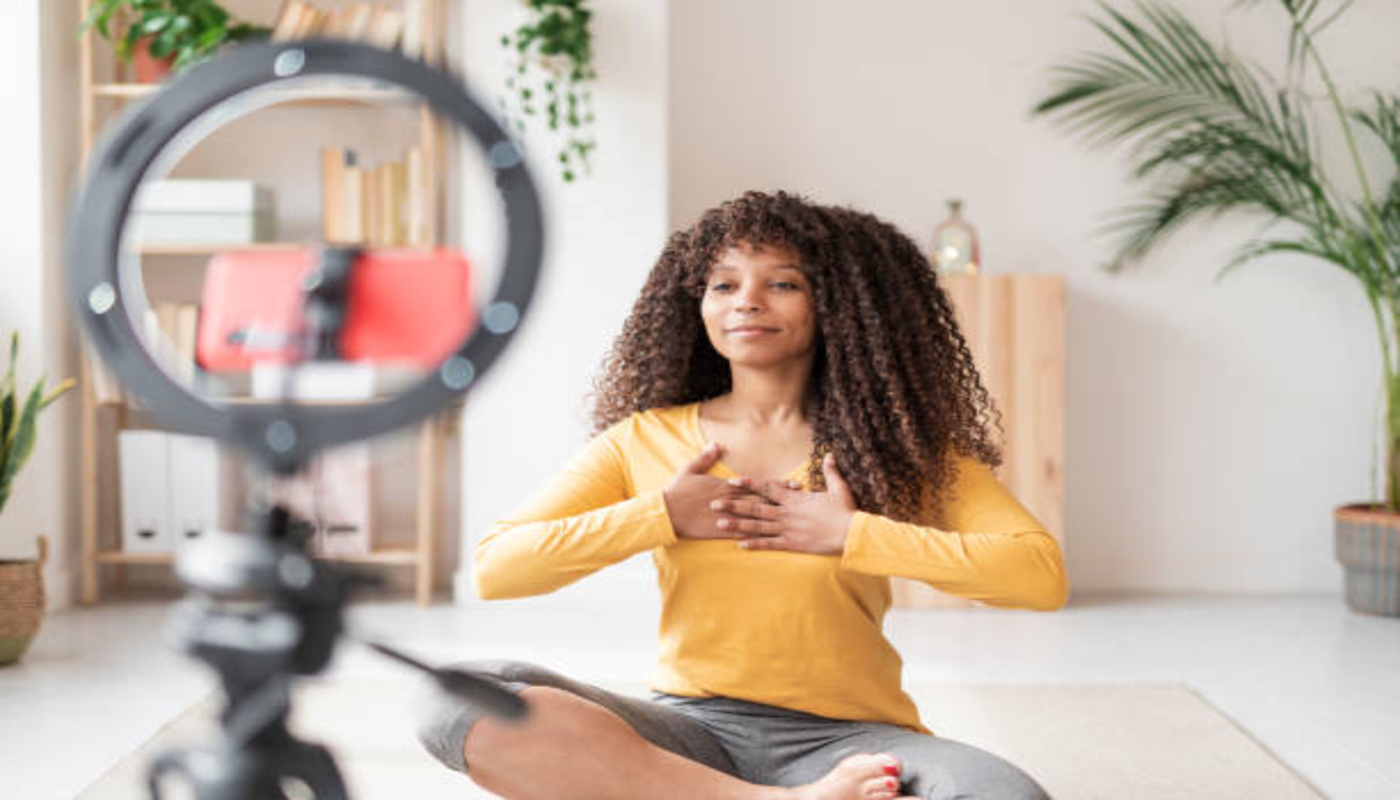
Influencer culture fundamentally changed how wellness retreats are perceived. Influencers do not just consume experiences; they translate them into content ecosystems. Every retreat becomes a content cycle: arrival posts, morning routine reels, reflective captions, sponsored detox teas, and sunset yoga sequences.
What makes influencer retreats distinct is that they operate at the intersection of personal experience and commercial exchange. Many influencers attend retreats through brand partnerships, sponsorships, or collaborations with luxury resorts and wellness companies. In return, their experience becomes marketing material.
This creates a feedback loop:
- Wellness retreats gain visibility through influencer exposure
- Influencers gain aspirational capital through association with luxury wellness
- Audiences internalize retreats as symbols of success and self-worth
Over time, wellness retreats shift from being restorative experiences to cultural markers. They signal that someone has access to time, money, global mobility, and aesthetic literacy.
The result is a subtle but powerful redefinition: wellness is no longer just health-related—it becomes socially performative.
The Aesthetic Economy of Healing
One of the most significant drivers behind wellness retreats becoming status symbols is what can be called the aesthetic economy of healing. In this system, visual harmony becomes a proxy for emotional wellbeing.
Neutral-toned villas, linen clothing, ceramic cups, ocean views, and minimalist architecture are not random design choices—they are part of a visual language that communicates calm, control, and affluence. These aesthetics have been widely popularized through influencer culture and lifestyle branding movements.
The paradox is that emotional healing—often messy, non-linear, and deeply internal—is translated into highly controlled visual frames. Vulnerability becomes curated. Rest becomes staged. Silence becomes content.
This aestheticization of healing creates an implicit hierarchy:
- The more visually perfect your retreat appears, the more “healed” you are perceived to be
- The more expensive and exclusive the location, the more legitimate the wellness experience seems
- The more shareable the moment, the more socially valuable it becomes
In this way, wellness retreats become less about recovery and more about representation.
Social Media as the Engine of Wellness Status
Social media platforms have not just reflected this transformation—they have actively shaped it. Instagram, in particular, has functioned as the primary distribution system for wellness aspiration. Its visual-first architecture rewards aesthetic coherence, lifestyle storytelling, and emotional symbolism.
Influencer wellness retreats thrive in this environment because they produce highly legible content:
- Sunrise yoga = discipline and mindfulness
- Green smoothies = purity and health
- Ocean views = freedom and escape
- Journaling = emotional depth and self-awareness
These symbols are instantly recognizable and easily consumable. They require no explanation, only visual recognition.
Over time, audiences begin to associate these images with a desirable identity: the “well-balanced,” “high-vibrational,” “emotionally evolved” individual. The retreat becomes shorthand for personal transformation.
However, this creates an important distortion: the appearance of wellness becomes more visible than the process of wellness itself. What is seen is not the emotional labor, discomfort, or inner recalibration—but the final curated frame.
The Economics of Exclusivity: Wellness as a Luxury Tier
One of the most defining features of influencer wellness retreats is exclusivity. These experiences are often priced far beyond the reach of average consumers or located in geographically remote luxury destinations.
This exclusivity is not accidental—it is central to the branding. Scarcity enhances perceived value. When a retreat is difficult to access, it becomes more desirable. When it is expensive, it becomes more aspirational. When it is geographically distant, it becomes more symbolic of escape.
Luxury hospitality brands have recognized this and built entire business models around wellness exclusivity. Private island resorts, boutique detox programs, and curated spiritual packages are designed not just for relaxation but for identity signaling.
In this context, wellness retreats begin to resemble luxury fashion items. Just as a handbag or designer outfit signals status, a wellness retreat signals a particular lifestyle tier: one associated with flexibility, financial privilege, and global mobility.
This raises an important cultural tension. Wellness, which is often framed as universal and human, becomes stratified through access. The language of healing is universal, but the experience is not.
Psychological Dimensions: The Pressure to Perform Healing
While influencer wellness retreats appear serene on the surface, they introduce a complex psychological layer beneath the aesthetics. When healing becomes visible, it also becomes performative.
Influencers often operate under implicit expectations:
- Document transformation
- Maintain aesthetic consistency
- Present emotional clarity
- Show gratitude, growth, and alignment
This can create a subtle pressure to “perform wellness” even when internal experiences may not match external presentation.
For audiences, this performance also has consequences. Constant exposure to idealized wellness narratives can lead to comparative emotional benchmarking—the tendency to evaluate one’s own emotional state against curated representations of others’ lives.
In this framework, a retreat is no longer just a private experience. It becomes a public emotional statement: “I am doing well,” “I am evolving,” or “I have achieved balance.”
This can deepen feelings of inadequacy among viewers who may not have access to similar experiences or who experience wellness in more ordinary, unglamorous settings.
Global Perspectives: Wellness Retreats Beyond Western Influencer Culture
Although influencer wellness retreats are often associated with Western social media culture, the phenomenon is increasingly global.
In South and Southeast Asia, destinations like Bali, Goa, and Sri Lanka have become central hubs for wellness tourism. These locations are frequently framed through a lens of spiritual authenticity combined with luxury aesthetics. However, this global demand also raises questions about cultural extraction and reinterpretation.
Traditional practices such as yoga, Ayurveda, and meditation—deeply rooted in South Asian philosophical systems—are often repackaged into commercial retreat experiences designed for international audiences. While this has increased global awareness of these practices, it has also contributed to their aesthetic simplification.
Meanwhile, in Europe and North America, wellness retreats often emphasize clinical self-optimization: cold plunges, biohacking, fasting protocols, and performance recovery. In contrast, Asian and tropical retreats are often marketed through emotional softness, spiritual awakening, and sensory escape.
This global contrast reveals how wellness is not a single concept but a culturally shaped narrative.
The Role of Digital Capital: Why Retreats Matter for Influencer Identity
For influencers, wellness retreats are not just vacations—they are investments in digital capital.
Digital capital refers to the value generated through visibility, engagement, and perceived lifestyle authority. A wellness retreat provides multiple forms of content:
- High-engagement visual posts
- Story sequences showing daily routines
- Long-form reflective captions
- Brand collaborations and sponsorships
- Behind-the-scenes lifestyle storytelling
This makes retreats strategically valuable. They generate content that is emotionally resonant, visually consistent, and algorithmically favored.
More importantly, they reinforce the influencer’s identity as someone who embodies aspirational living. Wellness becomes part of personal branding architecture.
The Tension Between Authenticity and Aesthetic Control
One of the central contradictions of influencer wellness retreats is the tension between authenticity and aesthetic control.
True rest is often unstructured. It may involve boredom, emotional processing, discomfort, or even disconnection from productivity. But influencer culture requires coherence. Every moment must be narratively legible.
This creates a filtering effect: only the most visually and emotionally coherent moments are shared, while messy or ambiguous aspects of healing are excluded.
As a result, audiences receive a curated version of wellness that emphasizes clarity over confusion, beauty over process, and resolution over ambiguity.
Conclusion: Rethinking Wellness Beyond Visibility
Influencer wellness retreats have become status symbols not because wellness itself is superficial, but because digital culture has transformed visibility into value. In an attention-driven economy, even rest becomes legible, shareable, and socially comparative.
What was once private healing has become public narrative. What was once inward reflection has become outward performance. And what was once universal human need has become stratified through access, aesthetics, and algorithmic visibility.
The future of wellness culture may depend on reclaiming ambiguity—allowing rest to be unphotographed, healing to be unstructured, and wellbeing to exist without needing validation through visibility.
Because the most radical form of wellness today may not be the most beautiful image on a feed—but the moment that never gets posted at all.
The Algorithmic Shaping of Wellness Desire
One of the most overlooked forces behind the rise of influencer wellness retreats as status symbols is the algorithm itself. Social media platforms do not just host wellness content—they actively shape what kind of wellness becomes desirable. Algorithms reward content that is visually engaging, emotionally legible, and easily digestible within seconds. This means that wellness experiences that translate well into aesthetic imagery—sunlit yoga sessions, smoothie bowls, luxury spa treatments, infinity pools—are disproportionately amplified. Over time, users are repeatedly exposed to a narrow visual vocabulary of what “wellness” looks like, and this repetition quietly trains perception. What begins as inspiration gradually becomes expectation. People start associating wellness not with accessibility or personal well-being practices, but with specific environments, travel destinations, and aesthetic markers. This creates a subtle hierarchy where certain forms of rest are seen as more legitimate than others. A quiet evening walk or affordable therapy session does not circulate with the same visibility as a luxury retreat in Bali. In this way, algorithms do not just reflect cultural values—they actively compress them into a curated, monetizable version of healing that aligns with attention economics rather than emotional diversity.
The Emotional Labor Behind Curated Wellness Identities
Behind the calm visuals and serene captions often associated with influencer wellness retreats lies an under-acknowledged layer of emotional labor. Influencers are not simply participants in wellness culture; they are also its narrators, responsible for translating personal experiences into coherent digital storytelling. This requires constant emotional framing—deciding how much vulnerability to show, how much positivity to emphasize, and how to maintain an aesthetic tone that aligns with audience expectations. Even moments of rest become structured around content production timelines, lighting conditions, and platform engagement cycles. This creates a paradox where rest is continuously interrupted by the obligation to document rest. The emotional experience of a retreat, which might naturally include confusion, discomfort, or quiet unease, is often filtered into a polished narrative of transformation and gratitude. Over time, this can produce a split between lived experience and performed experience. The influencer must simultaneously inhabit the role of someone “healing” and someone “presenting healing.” This duality reflects a broader shift in digital culture where emotional authenticity is not abandoned but reorganized into shareable formats. The result is not necessarily inauthenticity, but emotional compression—where complex inner states are reduced into visually coherent, publicly consumable emotional signals.
How Wellness Retreats Reflect Global Inequality in Mobility
Influencer wellness retreats also reveal deeper global inequalities, particularly around mobility, time, and economic freedom. The ability to attend a retreat in a distant, aesthetically curated location presupposes a level of financial stability and geographic mobility that is not universally available. This creates an implicit divide between those who can “escape” for wellness and those whose daily environments do not allow such withdrawal. In many cases, retreat destinations are located in regions where labor and land are significantly cheaper, making luxury wellness experiences accessible to affluent global travelers while remaining economically out of reach for local populations. This dynamic introduces an uncomfortable tension: spaces marketed as sites of healing for some are simultaneously embedded within unequal economic structures for others. Additionally, the very idea of retreating from stress becomes unevenly distributed. For individuals working multiple jobs, caregiving responsibilities, or unstable economic conditions, wellness is often integrated into survival rather than separation from it. Meanwhile, influencer retreats construct wellness as a temporary removal from responsibility, reinforcing the idea that rest must be geographically and financially “earned.” This divergence highlights how wellness culture, while emotionally universal in language, is structurally shaped by global inequality in access to time, space, and leisure.
The Future of Wellness: From Performance Back to Presence
As influencer wellness retreats continue to evolve, a counter-movement is beginning to emerge—one that questions the necessity of visibility in healing practices. Increasingly, there is growing cultural fatigue around over-curated wellness aesthetics, with audiences expressing interest in more grounded, less performative forms of self-care. This shift does not reject wellness itself but challenges its translation into constant digital display. In response, some wellness practitioners and creators are beginning to emphasize “unfiltered” experiences: retreats with limited phone use, emphasis on silence over documentation, and a return to practices that resist immediate aestheticization. However, this tension is unlikely to resolve neatly, as long as wellness remains intertwined with digital identity economies. The deeper question is not whether wellness should be shared, but what is lost when visibility becomes a requirement for validation. If wellness is always performed, it risks becoming another form of productivity—something to be optimized, tracked, and displayed. The emerging cultural challenge, then, is to reclaim wellness as an experience that can exist without audience participation. Not as a rejection of digital culture, but as a reminder that not all forms of healing need to be witnessed to be meaningful. In that space of non-performance, wellness begins to return to something quieter, slower, and more personally grounded.
Sources
Global Wellness Institute, Pine & Gilmore, Erik Cohen, Graeme Turner, Oxford Internet Institute, Instagram / Meta Creator Reports, Vogue, Forbes, BBC, Business of Fashion